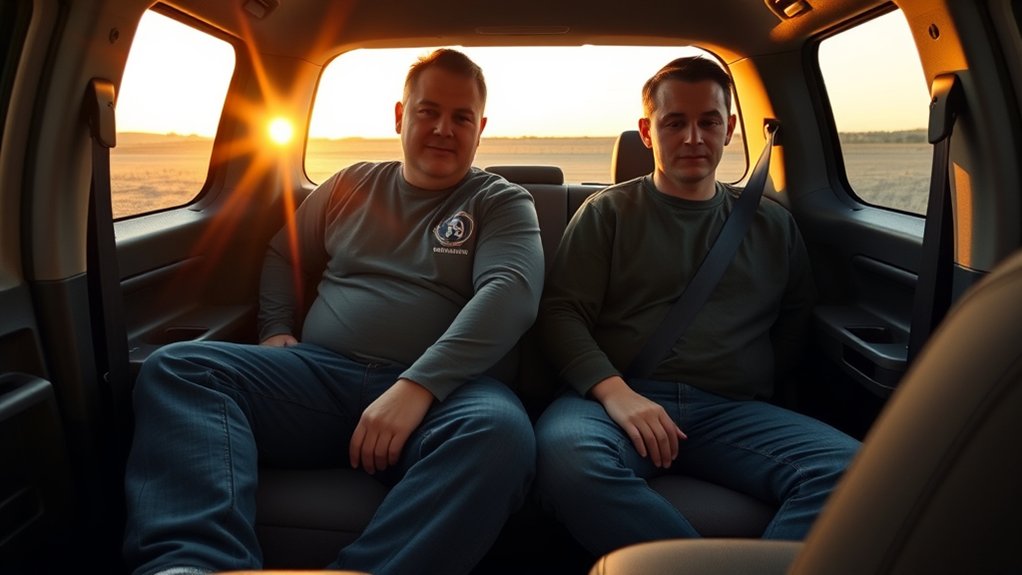
Yes. Two adults can sit in the back seat of either a Toyota Tacoma or Nissan Frontier, but both have under 34 inches of rear legroom, so space is limited. The Frontier is often judged slightly more accommodating, though neither truck is well suited to extended passenger duty. Short urban trips are usually manageable for average-size adults. Taller passengers and families should verify seat fit, posture, and child-seat clearance in person before purchase, with more practical comparisons ahead.
Which Truck Has the Better Back Seat?

Which truck has the better back seat for two adults? On measurements alone, neither midsize pickup establishes a clear safety-margin advantage. The Tacoma provides under 34 inches of rear legroom, a figure that signals restricted knee clearance for taller adults and reduced long-haul comfort.
The Frontier also delivers limited rear space, yet its seat design is generally viewed as slightly more accommodating. For buyers seeking freedom of movement without stepping into a full-size class, that distinction matters.
From a practical, regulatory-aware perspective, rear-seat evaluation should prioritize posture, belt fit, ingress, and fatigue over brochure claims. User reports consistently indicate the Tacoma back seat feels cramped sooner, while the Frontier back seat remains more tolerable for short trips.
That does not make either truck ideal for sustained passenger duty. It suggests only that the Frontier holds a narrow comfort edge for two adults. A measured test drive with actual passengers remains the most defensible purchasing step.
Can 2 Adults Fit in a Tacoma Back Seat?
Two adults can fit in a Tacoma back seat, but fit should not be confused with sustained comfort. Measurement matters: rear legroom is typically under 34 inches, a figure that can constrain knee clearance and seat posture for taller adults.
For short urban trips, many occupants report acceptable comfort. On longer drives, however, the limited back seat space can increase fatigue, especially for broader or heavier passengers.
Individual fit varies. One reported 6’2″ passenger found the Tacoma rear seat workable, yet that does not establish a universal standard for adults.
A 6’2″ passenger may fit in the Tacoma rear seat, but individual comfort does not generalize to all adults.
Relative to full-size trucks, the Tacoma provides noticeably less rear passenger volume, so expectations should remain grounded in dimensions rather than marketing language.
From a safety-minded, regulatory-aware perspective, buyers seeking freedom to travel with adult passengers should conduct a real-world seating test before purchase. Bringing actual passengers helps verify legroom, posture, ingress, and overall comfort under realistic conditions.
Can 2 Adults Fit in a Frontier Back Seat?
Yes—two adults can fit in a Nissan Frontier back seat, but the practical limit is set by measurements rather than seatbelt count. Rear passenger legroom is under 34 inches, which establishes the real boundary for usable space. For many adults, that dimension supports basic compliance with occupancy needs, yet it does not guarantee comfort, posture freedom, or easy knee clearance behind taller front occupants.
The Frontier is configured to carry four or five passengers, but safe expectations should track body size, not brochure capacity. Two average-size adults can usually ride in the back seat for short urban trips without issue. Taller or broader passengers may encounter cramped positioning, reduced comfort, and tighter entry or exit angles.
Because fit varies by torso length, hip width, and front-seat adjustment, a hands-on seating test is the most reliable standard. That approach gives buyers practical certainty and preserves mobility without assuming every listed seating position delivers equal real-world comfort.
Which Back Seat Is Better for Longer Trips?
For longer trips, neither back seat establishes a strong comfort advantage for adult passengers. In measurement terms, the Tacoma provides under 34 inches of rear legroom, a figure that places clear limits on adult comfort during long trips. The Frontier delivers similar rear legroom, so it does not reveal materially more space or movement freedom for passengers.
From a practical safety perspective, restricted leg positioning can increase fatigue and reduce the sense of ease that matters on extended drives.
Restricted rear leg positioning can heighten fatigue and diminish the comfort that becomes increasingly important on longer drives.
The Tacoma may feel slightly more current in layout, while the Frontier’s more dated interior can subtly reduce perceived comfort over time. However, user feedback indicates that larger adults often struggle in both trucks’ rear seats when travel extends beyond short distances.
Compared with full-size pickups, each remains significantly constrained. For buyers seeking road-trip flexibility within realistic size limits, neither truck clearly wins; both are better understood as occasional-use rear seating rather than a dependable adult zone for repeated highway travel.
Tall Adults and Families Should Test Which Truck?
When taller adults or families are evaluating these midsize trucks, the most reliable approach is to test both in person with the intended rear passengers seated behind a normally adjusted front seat. That procedure reflects the real constraint: rear legroom remains under 34 inches in both the Tacoma and Frontier, a measurement that can materially affect posture, knee clearance, and overall comfort.
For taller adults, published dimensions alone do not settle the question. Owner reports show inconsistent outcomes, with some finding the Tacoma back seat particularly cramped while others tolerate or even prefer the Frontier.
Families should also recognize that the Tacoma is not widely viewed as a family-focused choice because of limited rear passenger comfort on longer drives. Although the Tacoma offers multiple cab configurations, neither truck should be assumed acceptable without a supervised fit check.
A practical, liberating purchase decision comes from verifying child-seat placement, seatbelt geometry, head clearance, and adult comfort before selecting either model.
Frequently Asked Questions
Can an Adult Fit in the Back Seat of a Tacoma?
Yes, an adult can fit in a Tacoma’s rear seating, but back seat comfort and adult space remain limited by Tacoma dimensions under 34 inches legroom; passenger capacity permits use, though safety-focused buyers should verify fit personally.
How Much Legroom Does the Back Seat of a Nissan Frontier Have?
The Nissan Frontier’s rear seat provides under 34 inches of adult legroom. Those interior dimensions limit back seat comfort and passenger experience, though seating capacity remains usable; occupants should verify fitment, restraint compliance, and trip duration.
Which Nissan Frontier to Stay Away From?
Avoid the 2022 Frontier like a plague: Nissan Frontier reliability concerns center on confusing controls, dated Nissan Frontier features, and sub-34-inch Frontier interior space. Buyers seeking liberation may prefer Tacoma backseat comfort and stronger Tacoma safety ratings.
What Toyota Tacoma Has the Biggest Back Seat?
The Tacoma Double Cab has the biggest back seat, offering best back seat dimensions, improved rear passenger comfort, greater Tacoma interior space, practical seating capacity options among mid size trucks, though occupant fit should be verified safely.
Conclusion
For buyers comparing rear-seat usability, both the Tacoma and Frontier can seat two adults in back, but actual comfort depends on cab configuration, legroom measurements, and shoulder width. The Frontier generally offers a slightly more accommodating rear bench for longer trips. Still, should any seating choice be judged without checking child-seat fit, seat-belt geometry, and head restraint positioning? A careful test sit remains the safest, most standards-aware way to confirm real-world comfort and compliance.

