
Last updated: July 4, 2026
Getting your Toyota Tacoma ready for an emissions test usually comes down to one thing: the truck’s OBD2 readiness monitors. These self-checks need enough normal driving to confirm that the emissions systems have tested themselves. A drive cycle can help, but it does not guarantee a pass if the Check Engine Light is on, a repair is unfinished, or your state uses different inspection rules.
Quick Answer
To help a Toyota Tacoma complete emissions readiness monitors, start with no active Check Engine Light, keep the fuel level around 1/4 to 3/4 full, begin after a cold start, then complete mixed driving with idle time, steady highway cruising, city driving, and a full cool-down. Confirm readiness with an OBD2 scanner before testing.
Key Takeaways
- A drive cycle helps your Tacoma’s computer run emissions self-checks, but it cannot fix active faults.
- Do not go for testing with the Check Engine Light on unless your local program specifically tells you otherwise.
- There is no universal mileage number for readiness. Some monitors complete quickly, while EVAP and catalyst monitors may need more than one trip.
- Battery disconnection, code clearing, or recent repairs can reset monitors to “not ready.”
- Use an OBD2 scanner before the inspection so you know which monitors are complete, incomplete, or not supported.
At a Glance
| Time Required | About 40 to 60 minutes for one routine, plus a full cool-down if a monitor still needs another trip |
| Difficulty | Easy, but you need a safe route with steady-speed driving |
| Tools Needed | OBD2 scanner, fuel in the proper range, and your Tacoma owner’s manual or repair information |
| Cost | Usually no shop cost if the truck has no faults and you already have a scanner |
Understanding Emissions Testing for Your Toyota Tacoma
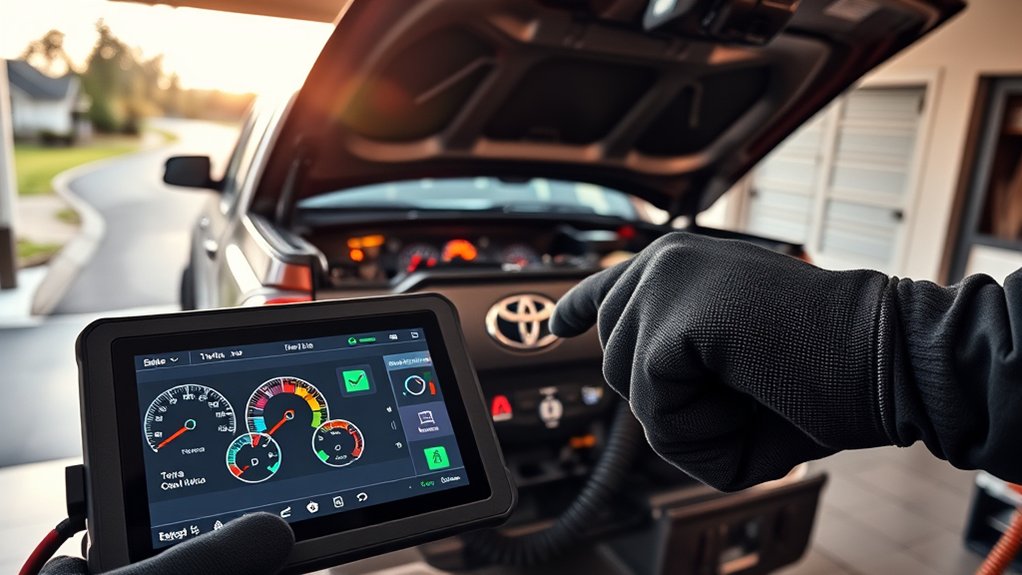
Many emissions programs use an on-board diagnostic system check to see whether your Tacoma’s emissions system is working as designed. State and local inspection programs vary, so always follow your DMV notice and your local emissions-program rules. The U.S. EPA keeps a list of state and local inspection and maintenance programs because testing rules differ by area: EPA Vehicle Emissions Inspection & Maintenance information for motorists.
Your Tacoma’s computer runs self-tests called readiness monitors. These monitors check systems such as the catalyst, oxygen sensors, evaporative emissions system, fuel system, and misfire detection. When a monitor shows “complete” or “ready,” that specific self-test has run. When it shows “incomplete” or “not ready,” the test has not finished yet.
Before you drive, check three basics. First, the Check Engine Light should be off. California’s Bureau of Automotive Repair explains that a vehicle will not pass Smog Check with the Check Engine Light on: California BAR Smog Check requirements. Second, the fuel tank should not be nearly empty or completely full. Third, the truck should be safe to drive at city and highway speeds.
Warning: Do not watch a scan tool while driving. Have a passenger monitor live data, pull over safely before checking readiness, or review the scanner after the trip.
What Are Readiness Monitors and Why Do They Matter?
Readiness monitors are built-in OBD2 checks that confirm whether emissions-related systems have completed their tests. Oregon DEQ explains that each emissions control system has its own monitor and readiness status: Oregon DEQ On-board Diagnostics FAQ.
These monitors matter because an inspection station may not be able to complete the emissions test if too many monitors are still incomplete. Your local rules decide how many incomplete monitors are allowed, if any. That is why checking your scanner before the official inspection can save you a wasted trip.
Continuous vs. Non-Continuous Monitors
Continuous monitors run often while the engine is operating. These usually include misfire, fuel system, and comprehensive component checks. If one of these systems has a problem, the Check Engine Light may turn on quickly.
Non-continuous monitors need specific conditions before they run. These can include catalyst, oxygen sensor, oxygen sensor heater, EGR, and EVAP checks, depending on your Tacoma’s year and engine. These monitors often need a cold start, steady cruising, stop-and-go driving, or a full cool-down.
What Scanner Statuses Mean
- Complete, ready, or OK: The monitor has finished its self-test since the last reset.
- Incomplete, not ready, or inc: The monitor has not finished yet.
- Not supported or N/A: Your Tacoma does not use that monitor, so it normally does not count against readiness.
- Pending code: The computer has seen a possible fault, even if the Check Engine Light is not on yet.
Before You Start the Drive Cycle
A clean drive cycle starts before you leave the driveway. If you recently disconnected the battery, replaced the battery, cleared codes, or finished an emissions repair, the monitors may be reset. California BAR advises drivers to allow time after a battery disconnect or replacement so the readiness monitors can reset before a Smog Check: BAR Smog Check preparation guidance.
Use this pre-checklist before attempting a Toyota Tacoma emissions drive cycle:
- Make sure the Check Engine Light is off with the engine running.
- Scan for stored and pending diagnostic trouble codes.
- Keep fuel around 1/4 to 3/4 full. EVAP checks may not run if the tank is too full or too low.
- Start after the truck has sat long enough for a true cold start.
- Confirm the coolant temperature rises normally. A stuck-open thermostat can keep some monitors from running.
- Tighten the fuel cap until it clicks, if your Tacoma uses a traditional cap.
- Choose a safe route with both steady highway speed and slower city driving.
Note: If your Tacoma is an older OBD2 model, your state may test it differently. For example, California lists OBD checks for most 2000 and newer vehicles and tailpipe testing for pre-2000 vehicles. Always follow your inspection notice.
Why Completing the Drive Cycle Matters
Completing a drive cycle gives the Tacoma’s engine computer enough operating conditions to test emissions components. A short trip to the store may warm the engine, but it may not trigger the catalyst, EVAP, or oxygen sensor monitors.
A useful drive cycle combines several conditions:
- Cold start and warm-up time
- Idle time with the truck in park
- Steady highway cruising
- Moderate city-speed driving
- Gentle acceleration and deceleration
- Full cool-down between trips when needed
Oregon DEQ explains that there is no set mileage needed to complete a drive cycle. The required driving varies by vehicle and can include highway driving, stop-and-go driving, and letting the engine cool completely between trips.
Monitor Status Verification
Use your OBD2 scanner before and after the drive. Write down which monitors are incomplete before you start. After the trip, scan again. If the same monitor remains incomplete, you can focus on that system instead of repeating random driving.
For example, an incomplete EVAP monitor may need the right fuel level and a cold soak. An incomplete catalyst monitor may need steady cruising after the engine is fully warm. An oxygen sensor heater monitor may run early during warm-up, but a bad heater circuit can keep it incomplete or set a code.
Emission Compliance Requirements
Inspection rules are not identical everywhere. Some programs allow one incomplete non-continuous monitor on certain vehicles. Others may reject the test if required monitors are incomplete. Your scanner can tell you the truck’s status, but your state program decides whether that status is acceptable.
Do not clear codes right before the test. Clearing codes also clears readiness data, which can turn a repaired truck into a “not ready” truck. Fix the problem, complete the drive cycle, then verify that the monitors are ready.
Step-by-Step Toyota Tacoma Emissions Drive Cycle
The exact Toyota drive cycle can vary by model year, engine, and emissions system. Use the steps below as a practical Tacoma-friendly routine, then confirm the final monitor status with your scanner. For model-specific instructions, check your Toyota manual or service information through Toyota Owners manuals and warranties.
- Start cold. Let the Tacoma sit long enough for the engine to cool fully. Start the engine without heavy electrical loads if possible.
- Idle for about 5 to 10 minutes. Let the coolant temperature rise and allow early checks to begin.
- Drive gently through city streets. Use light acceleration and several stop-and-go segments for 10 to 15 minutes.
- Cruise steadily on the highway. Hold a safe, legal speed in the 55 to 65 mph range for about 15 to 20 minutes when traffic allows.
- Avoid hard throttle and sudden braking. Smooth inputs help the computer see stable test conditions.
- Include a medium-speed segment. Drive around 35 to 45 mph for several minutes if your route allows.
- Return to idle. Park safely and let the engine idle for 2 to 3 minutes.
- Shut the truck off and let it cool. Some monitors may need another cold start and second trip.
- Scan readiness again. Confirm which monitors changed from incomplete to complete.
Pro Tip: Run your readiness check the day before the official inspection. If a monitor is still incomplete, you still have time for another drive cycle or diagnosis.
Essential Driving Scenarios for Monitor Readiness
Different monitors need different driving conditions. Repeating the same short trip may not help if the missing monitor needs another condition.
EVAP Monitor
The EVAP system checks for fuel-vapor leaks. It can be picky about fuel level, outside temperature, and cool-down time. If this monitor stays incomplete, make sure the fuel cap is tight, the tank is not full, and the truck has had a full cold soak before the next attempt.
Catalyst Monitor
The catalyst monitor often needs the engine fully warm and a steady cruise. A safe highway segment at a consistent speed usually helps. If the catalyst monitor will not complete and you have a pending P0420 or similar code, diagnose the fault instead of repeating the drive cycle.
Oxygen Sensor and Heater Monitors
Oxygen sensor heater checks often run during warm-up. Oxygen sensor performance checks may need closed-loop operation after the engine warms. A bad sensor, heater circuit, exhaust leak, or wiring issue can prevent completion.
EGR and Air System Monitors
Some Tacomas may use monitors for EGR or secondary air systems, depending on model year and engine. These checks may need steady speed, deceleration, or specific temperature conditions. If your scanner shows one of these monitors incomplete, look for related pending codes and check model-specific service information.
Checking Your OBD2 Monitors
A basic OBD2 scanner can usually show readiness status. More advanced scan tools may also show pending codes, freeze-frame data, fuel trims, oxygen sensor data, and monitor test results.
Follow this simple scanner routine:
- Plug the scanner into the OBD2 port, usually under the driver-side dashboard.
- Turn the key on or start the engine, depending on the scanner instructions.
- Open the readiness or I/M monitor menu.
- Record which monitors are complete, incomplete, or not supported.
- Check for stored and pending codes.
- After the drive cycle, scan again before going to the test station.
If the scanner shows the Check Engine Light command as “on,” the truck needs diagnosis even if the bulb is burned out or not visible on the dash.
Troubleshooting Tips for Incomplete Monitors
If one or more monitors stay incomplete, do not keep driving at random. Use the scanner result to narrow the issue.
| Problem | Likely Cause | What To Do |
| EVAP monitor incomplete | Fuel level, fuel cap, temperature, or no cool-down | Set fuel around 1/4 to 3/4, tighten the cap, and try again after a cold soak |
| Catalyst monitor incomplete | Not enough warm steady-speed driving or a pending catalyst issue | Complete a safe highway cruise and check for pending P0420-type codes |
| Oxygen sensor monitor incomplete | Sensor, heater, wiring, exhaust leak, or not enough warm-up | Check pending codes and inspect related wiring or exhaust leaks |
| Several monitors incomplete | Recent battery disconnect, code clearing, or ECU reset | Drive for several normal trips and avoid clearing codes again |
| Check Engine Light on | Active emissions-related fault | Diagnose and repair the fault before trying to set readiness |
Do not use high-octane fuel as a readiness fix unless your Tacoma’s manual requires it. Octane does not complete monitors. Correct repairs, correct fuel level, safe mixed driving, and enough time are what help the truck finish its checks.
Final Steps for Emissions Test Preparation
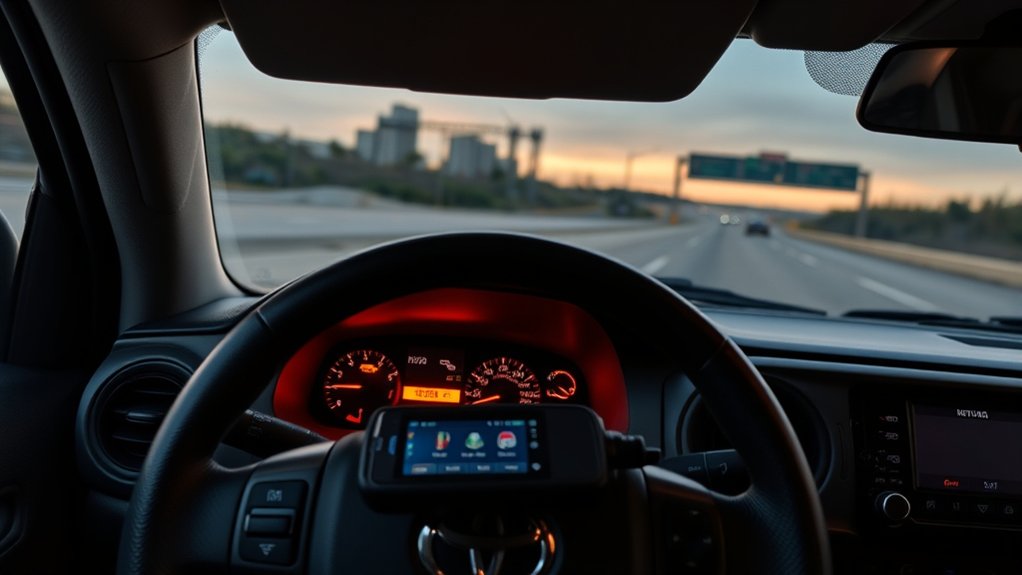
Before you head to the station, do one final check. Scan the Tacoma with the engine off and again with the engine running if your tool supports it. Confirm that required monitors are complete, no pending codes are present, and the Check Engine Light command is off.
Bring any paperwork your state requires. Some inspection programs ask for a registration renewal notice, while others only need the vehicle. If your truck recently failed, bring the inspection report to your mechanic so they can see which part of the test failed.
If your Tacoma needs emissions repairs, check your owner’s warranty documents. Toyota notes that emissions coverage varies under federal and California regulations, and the Warranty & Maintenance Guide gives the details for your vehicle.
Realistic Examples of Monitor Readiness
Here are realistic situations Tacoma owners may run into before an emissions test:
- After a battery replacement: Several monitors show incomplete. Drive normally for a few days, then scan again before testing.
- After clearing a P0420 code: The catalyst monitor resets. If the underlying issue remains, the code may return after the monitor runs.
- After tightening a loose fuel cap: The EVAP monitor may need a cold soak and more than one trip before it completes.
- After a thermostat repair: Monitors may complete more reliably once the engine reaches normal operating temperature.
- After a successful repair: Do not clear codes again unless required for diagnosis. Let the computer run the monitors and confirm readiness.
The goal is not to trick the test. The goal is to make sure the Tacoma has completed its self-checks and that real emissions faults have been repaired before inspection.
Frequently Asked Questions
How many readiness monitors need to be complete to pass emissions?
Most required monitors need to be complete, but the exact rule depends on your state, model year, fuel type, and inspection program. Some programs allow one incomplete non-continuous monitor on certain vehicles. Others may reject the test if required monitors are incomplete. Check your local emissions-program rules before testing.
How do you complete a Toyota Tacoma drive cycle?
Start with a cold engine, idle for several minutes, drive gently in city traffic, cruise steadily at highway speed for 15 to 20 minutes when safe, include a medium-speed segment, then let the truck cool down. Scan readiness afterward. Exact requirements vary by Tacoma year and engine.
How do you complete a drive cycle to pass an inspection?
Repair any active fault first, avoid clearing codes right before the test, keep fuel in the proper range, complete mixed driving, and verify readiness with an OBD2 scanner. A drive cycle helps monitors run, but it does not guarantee a pass if a fault is still present.
How many miles do you have to drive to reset emissions monitors?
There is no fixed mileage number. Some monitors may complete during one good drive cycle, while others need several trips, a cold start, steady highway driving, stop-and-go driving, or a full cool-down. Use a scanner instead of relying on mileage alone.
Will my Tacoma pass emissions if the Check Engine Light is on?
Usually no. An illuminated Check Engine Light means the OBD system has detected a problem, often emissions related. Diagnose and repair the fault before going for an official emissions test.
Why did my monitors become incomplete after a repair?
Disconnecting the battery, replacing the battery, clearing codes, or reflashing the computer can reset readiness data. After the repair, the Tacoma needs enough driving under the right conditions to run the monitors again.
Conclusion
Preparing your Toyota Tacoma for emissions testing is mostly about confirming that the truck is repaired, safe to drive, and ready according to its OBD2 monitors. A good drive cycle includes a cold start, idle time, city driving, steady highway cruising, and a cool-down period. Still, your scanner and your local inspection rules matter more than any single mileage number.
Before you test, make sure the Check Engine Light is off, scan for pending codes, confirm the required monitors are complete, and avoid clearing codes at the last minute. If a monitor stays incomplete, troubleshoot that monitor instead of repeating random drives.
Sources
- U.S. EPA Vehicle Emissions Inspection & Maintenance information for motorists — supports state/local emissions-program variation and I/M overview.
- U.S. EPA Vehicle Emissions Inspection & Maintenance policy and technical guidance — supports OBD/I/M program guidance and readiness-monitor context.
- California Bureau of Automotive Repair Smog Check guidance — supports Check Engine Light, battery disconnect, and inspection-method caveats.
- Oregon DEQ On-board Diagnostics FAQ — supports readiness-status definitions, drive-cycle variation, and no fixed mileage rule.
- Toyota Owners Manuals and Warranties — supports checking Toyota model-specific manuals and emissions warranty documents.
