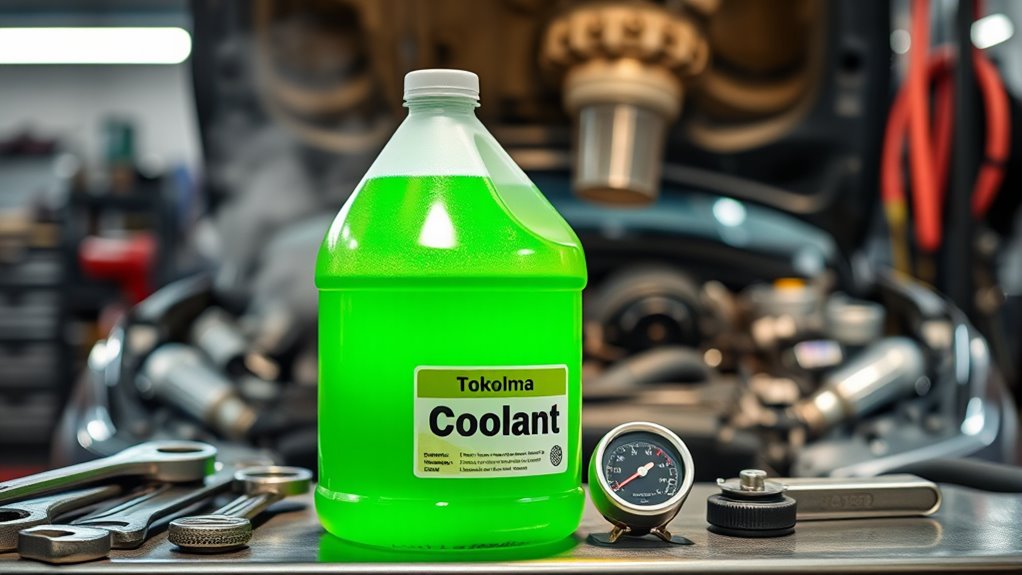
Tokoolma coolant is a vehicle-specific engine coolant formulated with antifreeze compounds and corrosion inhibitors, often using OAT chemistry for longer service life. It should be matched to the owner’s manual, not chosen by color alone, because compatibility affects heat control and engine protection. Concentrate requires distilled or deionized water, usually at a 50/50 mix. Buyers should check service intervals, signs of degradation, and supplier details. More specifics can clarify the safest choice.
Key Takeaways
- Tokoolma coolant is an engine coolant with antifreeze and corrosion inhibitors, often using OAT for longer service life.
- Check your vehicle owner’s manual to confirm compatibility; coolant choice should match specifications, not color.
- Use the correct mix, usually 50/50 with distilled water, and avoid tap water to reduce corrosion.
- Service intervals vary, but coolant should be inspected regularly and typically replaced every 30,000 miles or about two years.
- Watch for overheating, low levels, rust, sediment, or a sweet smell, which can signal coolant problems or leaks.
What Is Tokoolma Coolant?
Tokoolma coolant is a specialized engine coolant formulated to regulate operating temperature and reduce the risk of overheating, functioning much like conventional antifreeze blends. It is typically a water-based mixture containing antifreeze compounds and additives intended for corrosion protection and stable heat transfer.
Tokoolma coolant helps regulate engine temperature with antifreeze compounds and additives for corrosion protection and steady heat transfer.
In many formulations, Organic Acid Technology supports extended service life by reducing deposit formation and maintaining chemical balance. As a result, engine temperature remains more controlled under demanding conditions.
Tokoolma coolant is produced in several colors, yet color is only an identifier; vehicle specifications remain the controlling standard for selection. Matching the correct formulation is thus a technical requirement, not a cosmetic choice.
Regular maintenance, including level checks and system flushing, preserves performance and limits degradation over time. For drivers seeking dependable thermal management, the coolant represents a precise engineered fluid rather than a generic substitute, and its value lies in compatibility, protection, and disciplined servicing.
Is Tokoolma Coolant Right for Your Car?
Tokoolma Coolant may be suitable for a broad range of vehicles, including conventional and hybrid models, but compatibility must be verified against the owner manual before use.
Its formulation can provide corrosion protection, yet its performance depends on correct dilution and adherence to the specified coolant-to-water ratio.
Service intervals should also be followed closely, since regular checks and flushes are necessary to maintain thermal control and prevent overheating or corrosion-related damage.
Vehicle Compatibility
Vehicle compatibility depends on whether the coolant’s formulation matches the manufacturer’s required specification, not on branding or color alone.
Tokoolma coolant is engineered to meet multiple OEM specifications, so vehicle compatibility is possible across many makes and models. The owner’s manual remains the primary reference for confirming the correct coolant type and technology for each engine.
In newer vehicles, formulations based on Organic Acid Technology (OAT) or Hybrid Organic Acid Technology (HOAT) may be required, especially where the cooling system was designed around those chemistries.
Color is an unreliable indicator; the product label must be checked for the actual formulation. Selecting the wrong coolant can compromise protection and cause engine damage.
A precise match supports informed choice and mechanical autonomy.
Service Interval Guidelines
Service intervals should be confirmed against the owner’s manual, since coolant replacement schedules vary by make, model, and engine design.
Tokoolma coolant may require service intervals different from conventional formulas, so compatibility checks are essential. The vehicle’s specifications should be reviewed to verify approved coolant chemistry and any factory limits on age, mileage, or additive depletion.
As a general benchmark, coolant change intervals often fall near 30,000 miles or two years, though Tokoolma may specify another range. A full flush is commonly recommended every 100,000 to 150,000 miles to reduce corrosion and restore system efficiency.
Frequent level checks support early fault detection and protect the cooling system from thermal stress. Careful adherence preserves mechanical autonomy and performance.
Tokoolma Coolant Types Explained
Tokoolma coolant is offered in ethylene glycol and propylene glycol formulations, with additive packages tailored to different vehicle requirements and operating environments.
Its OAT and HOAT variants provide varying service intervals and protection profiles, including extended corrosion resistance and compatibility with both older and newer engines.
Selection should be based on the vehicle specification and required formulation, since color alone does not reliably indicate suitability.
Tokoolma Coolant Types
Different Tokoolma coolant formulations are designed for distinct cooling-system requirements, with Organic Acid Technology (OAT) providing long-life protection and Hybrid Organic Acid Technology (HOAT) offering added corrosion resistance.
Tokoolma coolant types are consequently defined by chemistry, not appearance. Color-coding may vary, with green or orange examples, yet compatibility should be judged by formulation.
These coolant types are typically premixed with water, reducing dilution error and preserving the intended performance range across freezing winters and high-heat operation.
For precise selection, manufacturer recommendations remain authoritative, because system materials and service intervals differ. A detached assessment should prioritize specification data over assumptions, allowing users to select a coolant that supports reliable thermal control and durable protection without dependence on visual cues or unnecessary intervention.
Choosing the Right Type
Selecting the correct Tokoolma coolant requires matching the formulation to the vehicle’s cooling-system specifications, since IAT, OAT, and HOAT products serve different maintenance intervals and material compatibility needs.
The vehicle owner’s manual should determine the coolant type, because misuse can trigger engine damage and diminish freedom from avoidable repairs.
- IAT: shorter life, suited to older systems, often green.
- Organic Acid Technology (OAT): long service life, strong for extended intervals.
- Hybrid Organic Acid Technology (HOAT): balanced corrosion control and broad compatibility.
- Concentrates: respect proper mixing ratios with demineralized water.
Organic Acid Technology (OAT) supports high-mileage demands; Hybrid Organic Acid Technology (HOAT) serves mixed performance needs.
Correct selection preserves thermal stability, reduces corrosion, and keeps the system operating without constraint.
Why Coolant Color Shouldn’t Be Your Guide
Coolant color is an unreliable guide to type or compatibility because multiple formulations can share the same hue while serving very different chemical functions.
In practice, coolant color may suggest patterns—Organic Acid Technology often appears orange or yellow, while Inorganic Acid Technology is commonly green or blue—but those associations are not universal across coolant types or brands.
Chemical composition, corrosion inhibitors, and additive packages determine performance, not appearance. For that reason, the owner’s manual remains the primary reference for selection.
Product labels should also be checked to confirm formulation details and compatibility before purchase. Reliance on color alone risks misidentification and weakens informed control over vehicle maintenance.
Mixing coolants from different chemistries can trigger reactions that form sludge, reducing cooling efficiency and compromising system protection.
A disciplined, specification-based approach preserves mechanical integrity and supports autonomous decision-making.
Tokoolma Coolant Mix Ratios and Water Type
Tokoolma coolant is commonly mixed at a 50:50 ratio with distilled water, providing balanced freeze protection and heat transfer under standard conditions.
Concentrate products require exact dilution, while RTU formulations are pre-mixed and should not be altered unless the manufacturer specifies otherwise.
Water quality is critical; distilled or deionized water is preferred because tap water can introduce minerals that promote scaling and corrosion in the cooling system.
Mix Ratio Basics
A proper Tokoolma coolant mixture is typically 50% coolant and 50% distilled water, a balance that supports heat transfer while maintaining freeze protection under normal operating conditions.
This mix ratio helps Tokoolma coolant reach peak performance in the cooling system, while reducing risk from incorrect ratios. Distilled water is preferred because it avoids minerals that can erode internal passages and limit mechanical freedom.
- Stable thermal control
- Strong freeze protection
- Cleaner system chemistry
- Greater operational confidence
In severe climates, a 70/30 blend may be specified for added freeze protection, but the product label should guide every adjustment.
Formulations vary, and precision preserves performance.
Concentrate vs RTU
Two Tokoolma coolant formats are used in service: concentrate and ready-to-use (RTU), and each demands a different approach to water management.
Concentrate must be blended with demineralized water at prescribed mixing ratios, commonly near 50/50 for standard duty, to deliver balanced freeze and boil protection.
RTU arrives pre-mixed, so it can be deployed directly for top-offs or full service without additional dilution.
Selection affects operational freedom: concentrate offers flexibility, while RTU reduces preparation time.
Tap water is unsuitable because dissolved minerals can accelerate corrosion and promote deposit formation inside the cooling circuit.
For either format, the manufacturer’s guidelines remain the controlling reference for coolant type, mixing ratios, and water specification, preserving system integrity and extending service life without unnecessary dependence.
Water Quality Matters
Water quality becomes the next control variable once Tokoolma coolant is selected, because the mixing medium directly affects corrosion resistance, deposit formation, and heat transfer efficiency.
Distilled water or deionized water is preferred; tap water can introduce contaminants, minerals, and chlorine that accelerate corrosion and scale. The standard 50:50 ratio balances freeze and boil protection while preserving pump and seal performance.
- distilled water supports cleaner passages
- contaminants reduce heat transfer and raise risk
- the 50:50 ratio stabilizes engine temperature
- proper mixing extends system freedom from overheating
Regular checks keep the mix ratio within specification, ensuring coolant chemistry remains effective over time.
With disciplined water quality control, the cooling system operates with greater reliability and less mechanical constraint, giving the engine room to stay within its designed thermal range.
Tokoolma Coolant Service Life
Tokoolma coolant typically provides a service life of about 5 years or 100,000 miles, though the exact interval depends on the specific formulation. This service life should be treated as a technical estimate, not a universal rule.
Regular checks every 30,000 miles support engine protection by identifying degradation before it compromises thermal control. Over time, the fluid can become acidic, which reduces corrosion resistance and raises the risk of component damage if replacement is delayed.
Regular checks every 30,000 miles help catch coolant degradation early, preserving corrosion resistance and protecting engine components.
A coolant flush is consequently a practical maintenance step, because it removes contaminants and limits buildup within the system. Buyers should compare product claims against the manufacturer’s guidelines, since different Tokoolma variants may specify different replacement intervals.
For those seeking dependable operation and reduced maintenance uncertainty, selecting the correct formulation at the time to buy is essential. Consistent service discipline preserves performance, extends coolant usefulness, and protects the cooling circuit from avoidable wear.
Signs Your Tokoolma Coolant Needs Attention
Warning signs often appear before a Tokoolma coolant problem becomes severe: low reservoir levels may indicate leakage or normal loss beyond acceptable limits, engine overheating can point to inadequate coolant circulation or broader system failure, and steam from the radiator or under the hood suggests boiling fluid or an active leak.
- Low coolant reduces thermal margin and can free an engine from stable operation.
- Engine overheating signals compromised heat transfer and demands immediate diagnostics.
- A sweet smell often confirms coolant leaks, especially near hoses, seals, or the radiator.
- Sediment or rust indicates contamination; a coolant flush may restore system integrity.
Each symptom merits prompt review, because unresolved coolant leaks and contamination can escalate into warped components, pressure loss, and restricted flow.
For drivers seeking liberation from avoidable failure, early detection preserves control, reliability, and mechanical independence.
How to Check Tokoolma Coolant Levels
A proper coolant check begins with the vehicle parked on a level surface and the engine fully cool, reducing the risk of burns from pressurized fluid.
The technician or owner should locate the coolant reservoir, a translucent tank with minimum and maximum markings, then read the coolant levels against those indicators. If the fluid sits near or below the minimum line, check your owner’s manual for the specified formulation, then add the appropriate Tokoolma coolant mixed with distilled water in the recommended ratio.
Locate the coolant reservoir, then top up with the specified Tokoolma mix if levels fall near minimum.
This controlled adjustment supports peak engine performance without exposing the system to unnecessary strain. The fluid should also be inspected for color and clarity; signs of contamination, including rust or sludge, suggest the coolant no longer provides reliable protection and may require a coolant flush.
Such inspections are best repeated every 15,000 miles, creating a disciplined maintenance interval that preserves thermal stability and keeps the cooling system functioning with maximum autonomy and efficiency.
How to Flush Out the Wrong Coolant
Draining the incorrect coolant should begin with the engine fully cool and a catch pan positioned beneath the radiator and engine block to control runoff and prevent contamination.
Next, the technician should drain existing coolant, then introduce a flush solution blended with distilled water into the cooling system. Running the engine briefly circulates the mixture, loosening deposits and preparing the system for coolant replacement.
After the recommended interval, the mixture is drained completely, and the system is rinsed with clean water until contaminants removed is evident and no chemical residue remains. This sequence restores mechanical independence from incompatible fluid.
- Clean passages support thermal stability.
- Residue can damage seals and passages.
- Precision protects the engine block.
- Correct coolant type preserves long-term function.
Finally, the system is refilled with the correct coolant type specified in the owner’s manual, using proper dilution if concentrate is selected.
Where to Buy Tokoolma Coolant
Tokoolma coolant is typically available through automotive supply stores, online retailers, and authorized dealerships, where product sourcing is more likely to support authenticity and quality control. Buyers should verify compatibility with the vehicle manufacturer’s specifications, since an incorrect formulation can compromise cooling system performance.
Detailed product descriptions and specifications on retailer pages often clarify the exact Tokoolma coolant type, concentration, and intended applications, enabling informed selection without dependence on marketing claims. Customer reviews and ratings add another layer of assessment by indicating reliability, packaging integrity, and consistency across shipments.
For bulk purchases, direct contact with distributors may yield special pricing, volume discounts, and more flexible fulfillment options. A technically disciplined approach to sourcing preserves mechanical autonomy and reduces avoidable repair costs.
Careful comparison of suppliers, documentation, and return policies supports a more liberated, evidence-based purchase decision.
Frequently Asked Questions
Does It Matter What Kind of Coolant I Buy?
Yes, coolant type matters. Different coolant types, coolant colors, and coolant additives affect vehicle compatibility, engine temperature, and coolant lifespan. He should follow maintenance tips and manufacturer specifications to avoid corrosion, overheating, or damage.
Does Cheap Coolant Make a Difference?
Yes—cheap coolant can matter: a 20% lower-cost formula may lose 40% fluid lifespan. Its coolant composition often yields measurable performance differences, weaker engine protection, reduced temperature stability, poorer corrosion resistance, and greater environmental impact.
What Is the Best Brand of Coolant for My Car?
The best coolant brand depends on vehicle specifications; Toyota Genuine suits Toyota, while Valvoline or Prestone fit many cars. Coolant types, additives, color, compatibility, brands, maintenance, and lifespan should match the manual and certifications.
How Do I Know Which Coolant to Buy?
He should consult the manual first; the wrong coolant can scorch engines like a thousand suns. He then matches coolant types to vehicle specifications, ignores coolant colors, checks antifreeze properties, seasonal considerations, environmental impact, and coolant additives.
Conclusion
In the end, Tokoolma coolant is only as effective as the care behind it. The wrong type, a careless mix ratio, or a guess based on color alone can transform a simple maintenance task into a mechanical catastrophe of extravagant proportions. For any vehicle, the sensible approach is exact specification matching, correct water use, and routine inspection. Proper coolant selection is not trivial housekeeping; it is a decisive safeguard against overheating, corrosion, and costly engine damage.