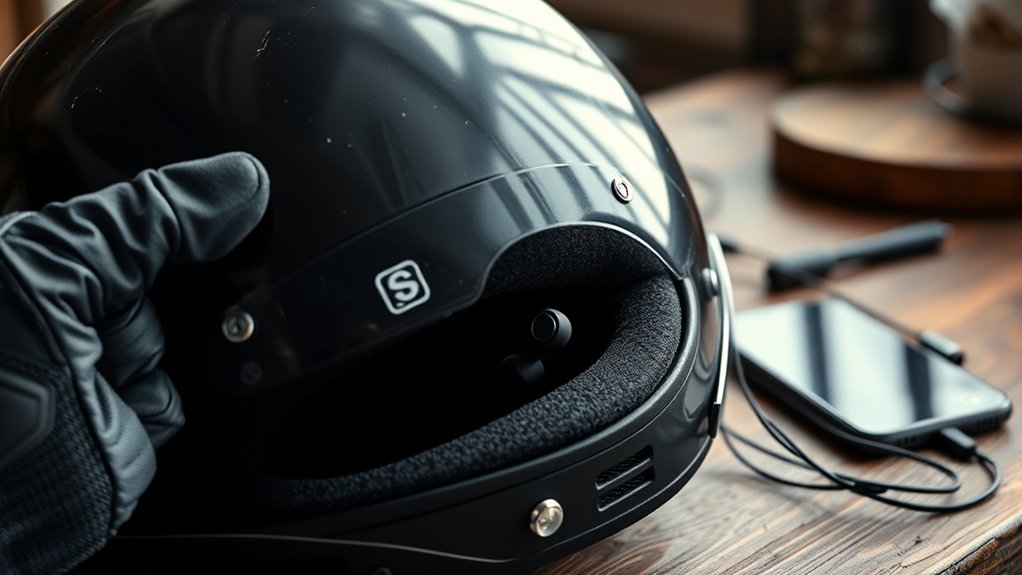
Small earbuds for a crash helmet should be low-profile, stable, and sized for a consistent seal. Bulky models often create pressure points and loosen under vibration. Wired options usually provide more reliable audio than Bluetooth buds at speed, though integrated helmet Bluetooth systems often outperform both for long rides. Passive noise isolation matters more than active noise cancellation because wind noise can exceed safe exposure levels. Proper fit also preserves comfort, focus, and awareness; the details below explain why.
Can You Wear Earbuds Under a Helmet?
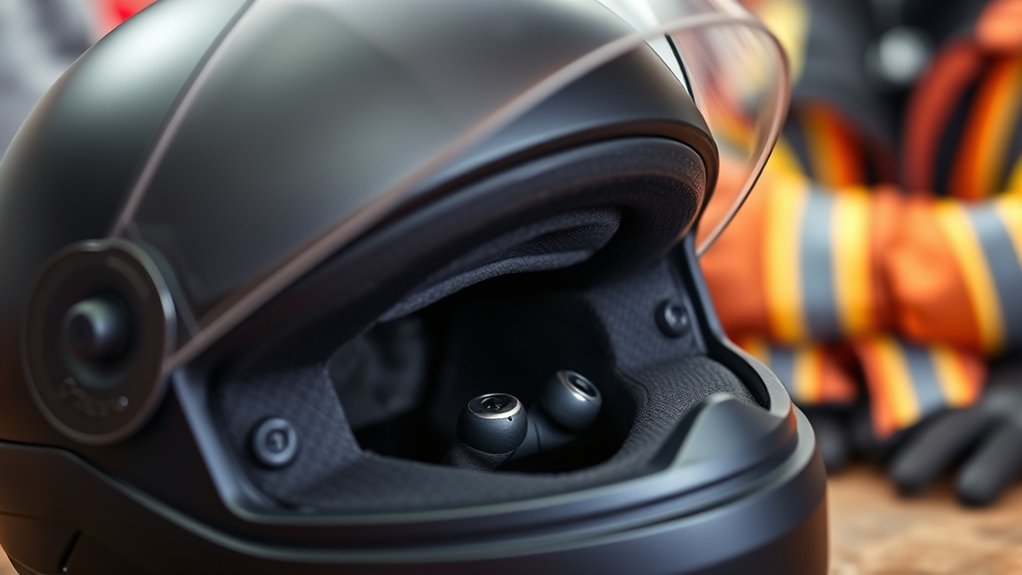
Whether earbuds can be worn under a crash helmet depends primarily on fit, profile, and the resulting safety tradeoffs. In practice, a motorcycle helmet compresses the ear area, so standard earbuds may loosen, shift, or create pressure points that undermine comfort during extended riding. This matters because discomfort becomes distraction, and distraction degrades control.
From a risk perspective, low profile or custom-molded earbuds present the most defensible approach because they resist wind and vibration better than bulkier designs. Effective hearing protection also depends less on active noise reduction than many buyers assume; wind noise often overwhelms electronic systems, making passive isolation more reliable.
Even so, isolation cannot come at the cost of situational awareness. Earbuds should not block essential ambient sounds such as traffic, horns, or sirens. A rider seeking freedom on the road should verify fit and performance in a riding posture before relying on any setup in real-world conditions.
Which Earbuds Fit a Helmet Best?
The earbuds that fit a helmet best are typically low-profile in-ear models that sit flush with the outer ear and maintain seal integrity under liner pressure. Ideal fit minimizes hotspot loading, preserves comfort, and reduces dislodgement risk. Custom-molded units generally outperform standard tips by improving passive noise isolation and stability. Noise cancelling can help, but wind turbulence often limits effectiveness; standards-minded riders consequently prioritize seal quality first. Testing in a riding posture remains essential before relying on any solution.
| Type | Helmet fit | Risk note |
|---|---|---|
| Low-profile silicone | Good | May loosen |
| Custom-molded | Excellent | Higher cost |
| Foam-tip compact | Very good | Tip wear |
| Bulky Bluetooth earbuds | Poor | Pressure points |
Durability also matters. Models with replaceable tips, detachable parts, or reinforced housings better tolerate repeated insertion and removal. For liberation without distraction, the safer path is compact construction, verified comfort, and retention that survives real helmet pressure.
Wired or Wireless Earbuds for Riding?
The wired-versus-wireless decision is typically assessed against three control factors: signal stability, helmet-interface comfort, and power-path reliability.
Wired earbuds generally reduce Bluetooth dropout risk caused by body shielding at speed and often present a lower-profile fit under a helmet, while wireless units introduce charging dependency and retention concerns under vibration.
In both configurations, secure tip sizing and pressure management remain critical to limit distraction, fatigue, and in-helmet movement during extended rides.
Signal Stability Issues
Signal stability is a primary control factor when selecting earbuds for helmet use, because audio interruptions at speed can compromise usability and increase rider frustration. In technical terms, wired designs outperform wireless options because Bluetooth links degrade under body shielding, highway velocity, and wind noise, reducing good sound quality.
- Wired connections maintain signal stability without radio dropouts, supporting predictable performance across varied motorcycle gear configurations.
- Bluetooth systems may falter when the rider’s body blocks transmission, creating intermittent audio and elevated operational annoyance.
- Motorcycle-specific earbuds can better manage external interference, lowering distraction risk and limiting volume escalation that may contribute to hearing loss.
For riders pursuing liberated movement, the lower failure rate of wired units also reduces the chance of losing an earbud in transit, preserving continuity and cost control.
Helmet Fit Comfort
Beyond connection reliability, helmet fit comfort determines whether earbuds remain usable once the helmet is fully seated and the rider is in motion. A low-profile design protects helmet fit and comfort by limiting pressure points. Correct ear tips, especially silicone, improve noise isolation and reduce fatigue. Lightweight construction lowers strain during long rides. Compatibility should be verified in a riding posture.
| Factor | Risk if ignored | Control |
|---|---|---|
| Profile | Hot spots | Low-profile design |
| Ear tips | Slippage | Correct sizing |
| Material | Irritation | Silicone or foam |
| Weight | Ear strain | Lightweight build |
| Helmet interface | Seal disruption | Riding-position test |
Wired units often remain more secure inside tight cheek pads; wireless models may liberate movement yet can dislodge if helmet channels and ear geometry are mismatched badly.
Charging Vs Cable Reliability
While wireless earbuds eliminate cable management, wired earbuds generally present the lower operational risk for riding because audio delivery is not dependent on Bluetooth stability, battery reserve, or charging discipline.
- Signal integrity: wired earbuds maintain audio clarity at speed, whereas wireless earbuds can suffer interference from body blockage, vibration, and helmet movement.
- Energy dependence: average battery life near 5.5 hours creates a hard endurance limit; long-distance motorcycle riders must manage charging cycles or carry a case.
- Physical control: cable reliability requires routing discipline to prevent snags on straps or zippers, yet wired earbuds often cost less and tolerate harsh use better.
For riders seeking liberation through fewer failure points, wired systems remain the more standards-aligned choice in high-noise environments where uninterrupted sound matters most.
How to Improve Earbud Fit Under a Helmet
Improve helmet compatibility by selecting earbuds with a low-profile housing that does not create pressure points or alter the helmet’s intended fit. This reduces discomfort risk and preserves retention performance. Earbuds should sit flush enough to avoid shell-to-ear interference during long rides or repeated head checks in crosswind conditions.
A standards-driven approach prioritizes a secure, repeatable fit. Silicone or foam tips in multiple sizes should be tested to establish seal consistency without excessive insertion force. Custom-molded options provide the most controlled interface, improving stability and long-duration comfort for riders seeking more freedom with fewer adjustments.
An over-ear retention design further limits dislodging when the helmet is donned or removed.
Over-ear retention improves stability and reduces dislodging risk during helmet donning and removal.
Pre-purchase evaluation should occur in a riding position, not at a counter. The user should verify that the earbuds remain secure, maintain comfort, and resist wind disruption while the helmet is fully fastened.
Any hotspot, slippage, or pressure buildup indicates unacceptable system compatibility.
Why Noise Isolation Matters More Than ANC
Hearing protection is the controlling priority in helmet audio selection, and for that reason passive noise isolation generally matters more than ANC in motorcycle use. At highway speeds, wind noise commonly reaches 95-105 dB, a range associated with cumulative hearing damage. Properly sealed earbuds reduce passive noise by forming a barrier, while Active Noise Cancellation may add artifacts and can be less effective against turbulent broadband wind noise.
- Risk control: Superior noise isolation lowers exposure before audio playback is increased, supporting safer listening margins and preserving long-term hearing.
- Signal clarity: Sealed earbuds with foam tips improve audibility of music and navigation by limiting wind noise and engine intrusion at the ear canal.
- Fatigue reduction: Lower acoustic stress improves focus on long rides, giving the rider a greater sense of freedom through reduced distraction, less discomfort, and more consistent situational concentration.
For helmet use, isolation-first design is usually the more defensible standard.
When Helmet Bluetooth Beats Earbuds
When a secure ear-canal seal cannot be maintained under a crash helmet, an integrated helmet Bluetooth system is often the more controlled solution. For riders prioritizing predictable performance, a Bluetooth helmet avoids dislodgement, cable snagging, and repeated fit corrections that can divert attention.
In a full-face helmet, built-in speaker pockets support repeatable placement, improving sound quality without relying on pressure inside the ear canal. That architecture is often the best option when the objective is stable audio under load.
Built-in speaker pockets deliver consistent placement and stable audio, making full-face helmets a more controlled solution under load.
From a risk-management perspective, helmet systems also support hands-free phone calls, navigation prompts, and simultaneous music playback without manual handling. This reduces task saturation and helps preserve visual focus during speed changes and lane decisions.
Many units are engineered for reducing wind noise through microphone processing and speaker tuning. The result is a more comfortable, purpose-built setup that gives riders cleaner function, fewer distractions, and a greater sense of unrestricted movement on longer rides.
Frequently Asked Questions
What Are the Best Earbuds to Wear Under a Helmet?
The best earbuds under a helmet prioritize noise cancellation, comfort level, sound quality, and durability factors; wireless options vary by price range. Brand recommendations include Shure SE215, Jabra Elite Active 75t, and MEE Professional M6 Pro.
How to Choose Helmet Headphones?
Helmet headphones should be chosen by prioritizing sound quality, comfort fit, noise isolation, battery life, and waterproof features; brand comparisons and user reviews help verify compliance, durability, and reliable performance, supporting safer, less restricted riding freedom.
What Are the Best In-Ear Headphones for a Helmet?
The best in-ear headphones for helmets balance sound quality, comfort level, and noise isolation; evaluation should prioritize durability factors, battery life, brand recommendations, and price range to maximize rider autonomy while minimizing fit-related risk.
How to Fit Earbuds in a Helmet?
Earbuds fit in a helmet by prioritizing helmet compatibility, low-profile shells, and foam tips; applying fitting techniques that preserve earbud comfort, sound isolation, and noise cancellation; securing wire management; and validating pressure-free stability for long rides.
Conclusion
Selecting compact earbuds for a crash helmet is a constraint-driven safety choice, not a comfort accessory acquisition. Fit, low profile, cable management, and passive noise isolation should be assessed against helmet retention, pressure points, and distraction risk. ANC is often secondary to seal quality and situational awareness. Where compliance, communication reliability, or long-duration comfort are crucial, integrated helmet Bluetooth may be the superior system. In this scenario, the earbud functions like a gasket: small, but decisive.
