The Eb14e presents a practical mix of commuting utility and casual ride comfort. Its 720Wh battery, 500W motor, and 20 mph top speed suggest adequate urban performance, while the adjustable suspension adds some flexibility on rough pavement. Still, the claimed 50 lb frame and roughly 65 lb total weight raise questions about portability. Price, service support, and warranty terms may determine whether it is a sensible purchase.
Is the Eb14e Right for You?
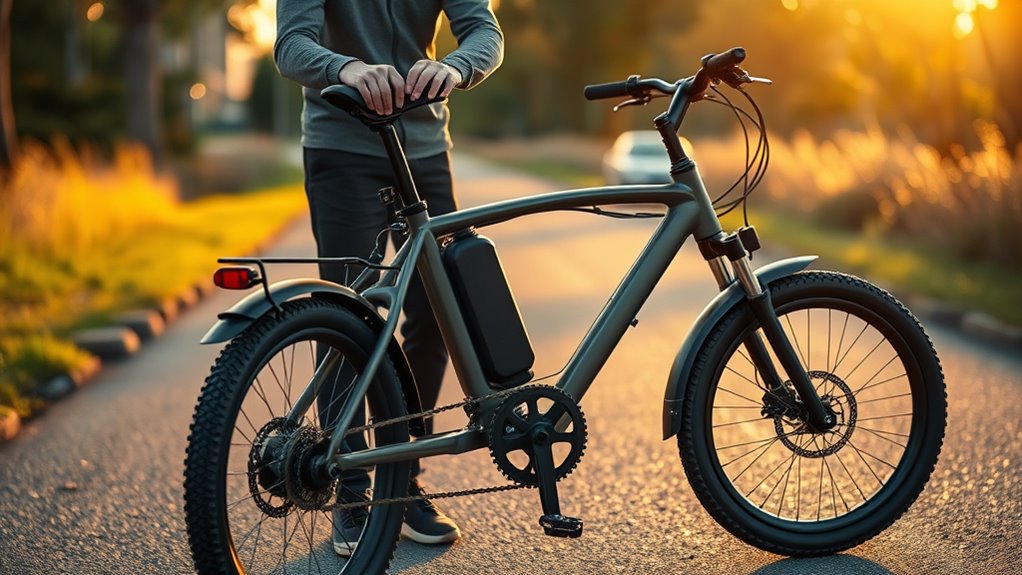
The Eb14e suits riders seeking a practical e-bike for commuting and casual recreation, combining a lightweight 50 lb frame with a step-through design for easier handling and access.
Its versatility supports city travel, errands, and relaxed weekend use without demanding a complex setup. The 720Wh battery capacity gives the Eb14e a usable range for most daily routines, while the 500W power output provides enough assistance for steady urban movement.
Hydraulic disc brakes add controlled stopping performance, a key advantage in traffic and on mixed surfaces. The lightweight frame improves maneuverability and makes storage or transport less burdensome.
For riders who value independence, the Eb14e offers accessible operation, stable handling, and functional comfort. It is well suited to users wanting a dependable e-bike for commuting, with enough adaptability to handle recreational rides and varied urban conditions.
Eb14e Range, Power, and Speed
Range, power, and speed define how the Eb14e performs in daily use, complementing its practical frame and commuter-friendly design.
Its eb14e range is shaped by a battery capacity near 500Wh, supporting a realistic range of 20–40 miles under normal conditions. Terrain, rider weight, and assistance level affect outcome, so range is best treated as a functional estimate rather than a fixed promise.
Motor power commonly spans 250W to 750W, giving the bike enough output for steady acceleration and effective hill climbing. A torque sensor refines motor response by matching pedal force with pedal-assist, improving efficiency and control.
The top speed reaches 20 mph in assist mode, aligning with urban commuting and short leisure travel. Bike weight, typically 40 to 70 pounds, also matters, since added mass influences handling, transport, and off-bike storage.
Together, these figures present a balanced, freedom-oriented utility profile.
Eb14e Comfort and Ride Feel
Comfort on the EB14E comes from a tuned combination of suspension, contact points, and control systems. The EB14E uses adjustable suspension to smooth broken pavement and light trails, improving ride comfort without dulling response.
Ergonomic grips and a padded saddle reduce pressure and fatigue, supporting longer sessions with less strain. A torque sensor meters pedal assistance according to input, so acceleration feels natural and controlled rather than abrupt.
Hydraulic disc brakes add strong stopping power and fine modulation, giving the rider clear command in traffic, descents, or sudden obstacles. The lightweight frame improves maneuverability, making steering corrections easy while preserving stability at speed.
Together, these elements create a ride that feels composed, efficient, and responsive. For riders seeking mobility with less physical compromise, the EB14E delivers a practical balance of comfort, control, and freedom.
Eb14e Weight and Portability
Alongside its composed ride quality, the EB14E’s weight plays a major role in everyday practicality. The Eb14e sits within the common e-bikes range, where mass supports stability yet can complicate transport. Its weight is tuned for balance, which improves handling on streets and in crowded lanes.
For riders focused on liberation through urban commuting, this matters: a bike that feels secure in motion must still be manageable off it. At roughly 65 pounds, lifting the Eb14e can be demanding, especially where stairs, car racks, or tight storage are involved. Buyers should assess transport needs before choosing, then confirm they can manage the bike without strain.
Folding e-bikes offer stronger portability by reducing storage space and easing travel logistics. That advantage can be decisive for city riders who move between home, work, and transit.
In short, the Eb14e favors stability and control, but portability depends on the rider’s ability to manage its weight.
Eb14e Price, Service, and Warranty
Priced typically between $1,500 and $2,500, the Eb14e sits in the mid-range category for quality e-bikes and offers a warranty package that usually includes 2 years on the frame and 1 year on electrical components.
This Eb14e price positions it for riders seeking reliable performance without premium excess. The warranty coverage reduces ownership risk, especially for the drivetrain and electrical components that most affect daily use.
Regular maintenance remains necessary to preserve function and safety. Typical service intervals may include brake adjustments and battery checks, often costing $50 to $100 per visit.
Replacement parts, including batteries and tires, are generally available through authorized dealers, which simplifies repairs and limits downtime.
After-sales service is another practical advantage. Retailers often provide customer support for troubleshooting, setup, and ongoing maintenance guidance.
For buyers prioritizing autonomy, accessible service, clear warranty terms, and dependable parts support make the Eb14e a technically sound option.
Frequently Asked Questions
What Are the Key Things to Consider Before Buying an Electric Bike?
Key considerations before buying an electric bike include battery capacity, motor power, frame material, weight limit, range distance, charging time, tire type, suspension system, warranty options, and maintenance needs.
Class rating, braking quality, local serviceability, and real-world terrain also matter. A buyer seeking mobility and autonomy should prioritize efficient power delivery, durable components, and dependable support.
Hydraulic brakes, suitable tires, and accessible repairs improve safety, comfort, and long-term freedom.
How to Buy an AE Bike?
To buy an electric bike, one should first match electric bike types to riding styles. Then compare motor power, battery capacity, and range considerations like a compass in open air.
Weight distribution, frame materials, charging time, and maintenance tips shape performance and freedom. Class compliance matters, as do safety ratings.
Budget options should be weighed against reliability, because a well-chosen machine can turn daily travel into quiet liberation.
What Makes a Good Ebike?
A good ebike combines adequate motor power, usually 250W to 750W, with battery capacity above 500Wh for reliable range estimation.
Strong frame material, balanced weight distribution, and ride comfort improve control and efficiency.
Quality tire quality and hydraulic brakes enhance safety.
Practical maintenance tips, solid brand reputation, and warranty coverage support long-term freedom from hassle.
Clear component standards make service easier and ownership more independent, especially on varied terrain.
Conclusion
Overall, the Eb14e appears well suited to commuters and casual riders who want a step-through frame, dependable 500W assistance, and a 20–40 mile range from its 720Wh battery. But is the approximately 65-pound weight acceptable for daily lifting or mixed transit use? Its adjustable suspension improves comfort, while the $1,500–$2,500 price range and solid warranty strengthen its value proposition. For riders prioritizing practicality over portability, it remains a credible option.