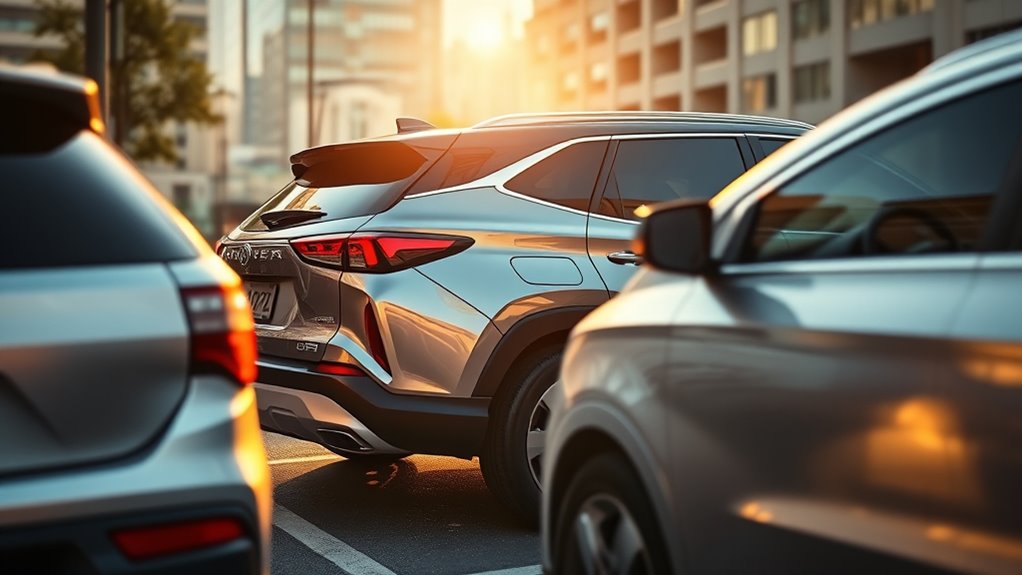
The Cruiser HEV AWD does offer parking assist on some versions, but the answer depends on trim and market. In practice, the system can help identify spaces and guide low-speed maneuvering, yet it is not always included as standard equipment. The camera setup also plays a role, but it is not the same as full parking assist. The real question is which Cruiser model has it, and that is where the details matter.
Does the Cruiser HEV AWD Have Parking Assist?
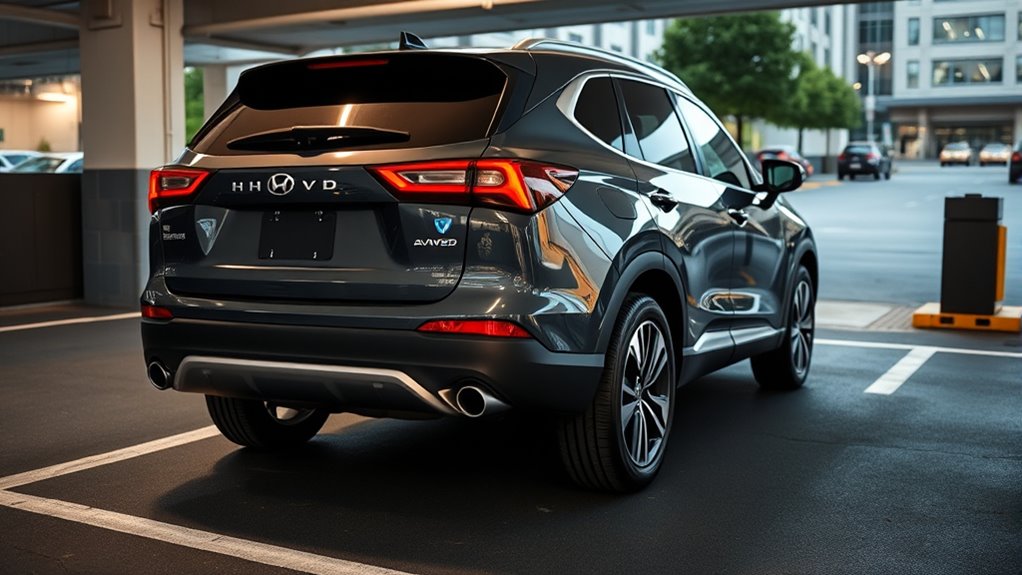
Yes—the 2026 Toyota RAV4 HEV AWD does offer parking assist, particularly in higher trims such as the Limited. This Parking Assist setup is positioned as part of the vehicle’s advanced safety offering, giving drivers additional support in tight, congested settings.
In practice, the system is designed to reduce the burden of low-speed parking decisions and help preserve calm control in urban traffic. It is not universal across every trim, so availability depends on specification level.
The feature is most notable for its convenience and confidence-building role. It can help detect suitable spaces and nearby obstacles, which may appeal to drivers seeking more freedom from stressful maneuvers.
Still, user responses are mixed: some value the support, while others prefer not to depend on it regularly. Even so, the system stands as a practical aid for those who want Parking Assist aligned with advanced safety goals.
How Parking Assist Works
The Cruiser HEV AWD’s parking assist system uses multiple sensors and cameras to help guide the vehicle into parallel or perpendicular spaces with limited driver input.
Multiple sensors and cameras help guide the Cruiser HEV AWD into parallel or perpendicular parking spaces with ease.
This advanced parking assist scans for open spaces, measures clearances, and then directs steering while the driver manages braking and shifting. When a suitable space is found, the system presents guidance through the Multi-Information Display, including sonar graphics that show nearby objects.
As the vehicle nears obstacles, audio tones and visual cues intensify, giving the driver clearer feedback about surroundings. The process is designed to reduce stress and widen access to precise parking in crowded areas.
Performance can depend on lighting, weather, space markings, and obstacle shape, so attentive supervision remains essential. Even with automation, the driver retains responsibility for control and safety, ensuring the system serves freedom through assistance rather than replacement.
How to Turn It On
Parking Assist on the Cruiser HEV AWD is enabled by pressing the button to the right of the steering column, which illuminates when active.
Once engaged, the system can also be monitored through the parking cameras and the sonar graphic shown in the Multi-Information Display.
It turns on automatically below 6 miles per hour, with front and rear sensors providing obstacle detection as needed.
Enable Park Assist
Press the Park Assist button located to the right of the steering column until its indicator lights up, enabling the Cruiser HEV AWD system. Once active, Park Assist supports controlled movement through parking sensors that monitor nearby objects.
The system also engages automatically when speed falls below 6 miles per hour, giving the driver greater freedom to focus on the path ahead.
- A sonar graphic appears in the Multi-Information Display.
- Front sensors operate in Drive for forward awareness.
- In Reverse, both front and rear sensors become active.
As the vehicle closes in on obstacles or other vehicles, warning beeps and visual alerts provide timely notice. This setup helps the driver navigate tight spaces with confidence while keeping the process direct, efficient, and self-directed.
Use Parking Cameras
With Park Assist already available, the Cruiser HEV AWD can also display its parking cameras by pressing the dedicated button to the right of the steering column until the indicator lights illuminate. Once engaged, the system shows a rear view when Reverse is selected, supporting parking with clear guidance. The Multi-Information Display also presents a sonar graphic, while warning beeps rise in frequency as obstacles draw nearer. These features help drivers maneuver with greater confidence and more freedom in tight spaces.
| Action | Result | Note |
|---|---|---|
| Press button | Camera activates | Indicator lights on |
| Shift to Reverse | Rear view appears | Automatic engagement |
| Approach obstacle | Beeps increase | Check surroundings visually |
The Owners Manual outlines system limits, so visual confirmation remains essential.
When Parking Assist Works Best
The 2026 Cruiser HEV AWD parking assist system works best at low speeds, activating automatically as the vehicle nears a parking space and operating most effectively below 6 miles per hour.
At this pace, its sonar sensors measure nearby objects and deliver audio and visual alerts that support parking, safety, and driver-assistance features. The system is suited to parallel and reverse parking, helping drivers move with greater confidence and less strain.
User feedback also shows the camera setup improves awareness by presenting a clear view of the vehicle’s surroundings and potential obstacles.
- Best used during slow, deliberate parking maneuvers
- Helpful in parallel parking and reverse parking
- Most effective when paired with active driver attention
For people seeking freedom from parking stress, the system offers practical support without replacing judgment.
Drivers remain responsible for scanning mirrors, checking blind spots, and controlling the vehicle with care.
Parking Assist Limits in the Cruiser HEV AWD
Despite its usefulness, the Cruiser HEV AWD Parking Assist system has clear limits and should be treated as a driving aid rather than a substitute for driver awareness. Its alerts can improve low-speed maneuvering, yet they do not remove the need for judgment, attention, and freedom to decide in real time.
The system only engages below 6 miles per hour, so it is not designed to manage higher-speed movement or complex parking decisions. Audio tones and a color-coded display can signal proximity, with red indicating critical closeness, but these cues depend on conditions that may reduce accuracy.
Environmental factors, such as poor sensor visibility, can affect performance. For this reason, the driver must still check surroundings manually before and during parking. Even with Parking Assist and additional features that support convenience, safe control remains with the person behind the wheel, not the technology.
How the Camera System Helps Parking
Elevating visibility during low-speed maneuvers, the Cruiser HEV AWD’s camera system provides a Bird’s-Eye View that helps the driver judge surrounding space more accurately while parking.
Four cameras combine to show the vehicle’s perimeter, improving awareness of curbs, posts, and other obstacles. The layout supports parallel and reverse parking, where tight clearances demand careful control and calm judgment.
Four cameras show the vehicle’s perimeter, helping drivers spot curbs and obstacles during parallel and reverse parking.
By presenting a broader perspective, the system helps reduce the friction that often comes with urban parking, allowing more confident positioning in constrained spaces.
- Four-camera coverage improves detection of nearby objects.
- Bird’s-Eye View supports precise alignment in tight areas.
- Parking sensors add real-time proximity alerts for safer maneuvering.
Together, the camera system and parking sensors create a practical aid for low-speed movement.
The result is clearer spatial awareness, less hesitation, and more control when entering or leaving compact parking spots.
Parking Assist vs. Camera Guidance
Parking confidence in the Cruiser HEV AWD comes from two complementary aids: parking assist and camera guidance. Parking assist handles the steering work, while the driver keeps authority over acceleration and braking. Camera guidance supplies a clear visual field, helping the system and driver judge clearance in confined spaces. Together, they reduce strain and support cleaner maneuvers.
| Function | parking assist | camera guidance |
|---|---|---|
| Primary role | Automates steering | Improves visibility |
| Sensor basis | Sonar and cameras | Camera display |
| Driver input | Braking and throttle | Visual judgment |
In parallel and perpendicular spaces, the pairing is especially useful. Parking assist can place the vehicle with measured precision, and camera guidance verifies nearby objects that might otherwise be missed. User feedback suggests the combination improves confidence and accuracy, making parking feel less constrained and more controlled.
Trim Differences and Feature Availability
Trim-level availability determines whether the Cruiser HEV AWD’s parking assist functions are included, with features varying across the RAV4 lineup.
The Limited trim standardizes self-parking, while other trims may rely on camera guidance alone or omit the technology entirely.
Careful comparison of trim-specific equipment is necessary to confirm which parking assist features are actually offered.
Trim-Level Availability
Feature availability on the 2026 Toyota RAV4 Cruiser HEV AWD depends on trim selection. The model includes parking assist features, yet access to advanced self-parking technology is not uniform across every variant.
Toyota Safety Sense supports the broader safety package, but buyers should confirm which trim offers the desired function before purchase. Higher trims, including the Limited, are more likely to include more capable parking support, while entry versions may differ in scope.
- Some trims provide basic parking assist only.
- Higher trims may add advanced self-parking technology.
- Verification by VIN or brochure prevents confusion.
The system uses cameras and sonar sensors to guide parking with greater ease, supporting safer, more autonomous movement. User comfort and familiarity can affect how often the feature is used.
Feature Differences by Trim
Among the RAV4 lineup, self-parking capability appears to be concentrated in higher trims rather than universally fitted across the range. The 2026 Toyota RAV4 Limited is confirmed with this function, while the Cruiser HEV AWD does not specifically list it, implying it may be absent or optional.
This difference matters for buyers seeking greater ease and autonomy in tight spaces, because available driver-assistance features can change considerably by grade. The self-parking system relies on sensors and cameras to guide the vehicle into a space, but that support is not guaranteed on every configuration.
For that reason, trim-by-trim verification remains essential. Checking the exact specification sheet is the clearest way to determine whether a chosen model includes the parking aid desired.
Should You Rely on Parking Assist?
Parking assist in the Cruiser HEV AWD can be a helpful convenience, but it should not be treated as a substitute for driver judgment. Parking Assist improves ease, yet Safety still depends on active attention. The system may miss obstacles or react less reliably in poor lighting, rain, snow, or cluttered spaces.
Drivers remain responsible for checking mirrors, scanning the area, and moving at a controlled pace.
- Treat alerts as support, not command.
- Confirm clearance with mirrors and direct observation.
- Learn the system’s limits, tones, and warnings.
Used well, parking assist can reduce stress and support cleaner maneuvers, which matters for drivers seeking more freedom in daily travel.
Used blindly, it can create false confidence and narrow awareness. A clear understanding of the feature, paired with steady driver involvement, delivers the best balance of convenience and control.
Frequently Asked Questions
Which Toyota Models Have Parking Assist?
Toyota models with parking assist include the 2026 Toyota RAV4 Limited, 2026 Toyota Highlander, and 2026 Toyota Corolla.
These parking features are part of broader Toyota technology designed to support hands-free parallel and perpendicular parking. Availability varies by trim, so not every version includes it.
The system uses cameras and sensors to reduce stress, improve convenience, and give drivers more freedom in tight parking situations.
How Do I Tell if My Car Has Park Assist?
A car’s Park Assist can be identified by looking for a dedicated button, dashboard icons, and a sonar image glowing on the display like a small map of nearby walls.
Parking sensors at the front and rear usually trigger warning tones in Drive or Reverse.
System indicators in the cluster or mirror confirm activation.
The owner’s manual and trim sheet provide the final, reliable proof of availability.
What Is the Disadvantage of RAV4 Hybrid?
The RAV4 Hybrid’s main disadvantages are limited cargo space, modest towing capacity, and a higher starting price than some rivals.
Its strong RAV4 efficiency can appeal to practical buyers, but hybrid performance may feel less responsive during hard acceleration.
Some drivers also note that interior materials do not always match premium competitors.
For those seeking maximum utility, lower cost, or a more powerful drive, these tradeoffs matter.
How Do I Turn on Toyota Parking Assist?
A driver easing into a tight grocery-bay slot can activate Toyota Parking Assist by pressing the button to the right of the steering column until the indicator light comes on.
As Toyota technology, it activates automatically below 6 mph, with a sonar graphic in the display.
Drive uses front sensors; Reverse uses front and rear sensors.
Beeping increases near obstacles, supporting parking features with careful, liberated maneuvering.
Conclusion
In the Cruiser HEV AWD, parking assist is available on some trims but not all, making confirmation by specific model essential. Toyota’s driver-assist systems can reduce parking stress, yet they remain limited at low speeds and in tight spaces. A useful reminder is that nearly 20% of all parking-lot accidents happen while backing up, underscoring why cameras and sensors help, but never replace careful driving. The safest approach is still active attention behind the wheel.

