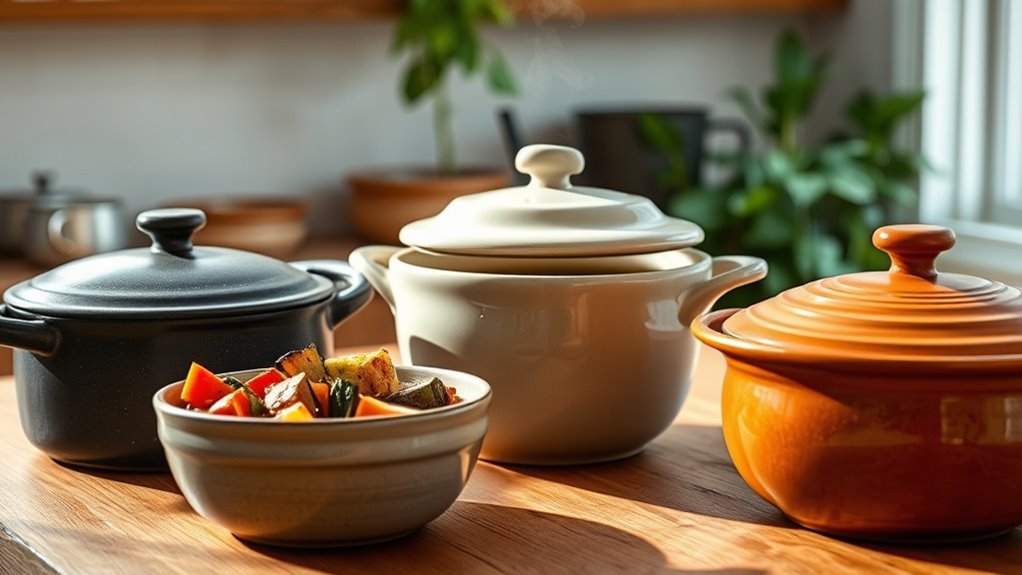
Top rated food pottery should be safe, durable, and easy to clean. Buyers should look for non-toxic clay, lead-free glaze, and clear food-safe labeling, ideally with FDA compliance. Stoneware and porcelain are usually the best choices because they are dense and less porous. Smooth glaze, no cracks, and high firing all signal better quality. Size should also match use, from ramekins to large serving bowls. The right piece often rewards closer attention than it first seems.
Key Takeaways
- Choose stoneware or porcelain with non-toxic, lead-free glazes for the safest food use.
- Look for food-safe labeling or FDA-compliant certification before buying.
- Inspect for smooth glaze, no cracks, and no crazing to reduce bacteria and leaching risks.
- Match size to use: ramekins for sauces, small bowls for sides, and larger pieces for meals.
- Prefer high-fired, well-crafted pieces that resist stains, heat changes, and daily wear.
What Makes Food Pottery Safe?
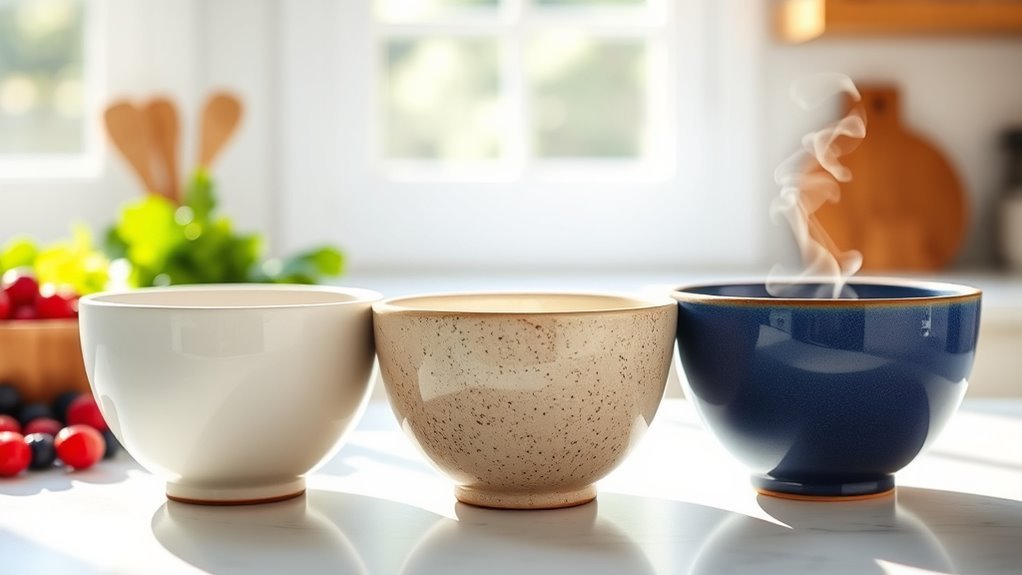
Food pottery earns its safety through a combination of material quality, glazing, and firing standards. Non-toxic clay forms the base, while food-safe labeling signals that the vessel is intended for contact with meals rather than merely decorative display.
Lead-free glazes matter because they reduce the risk of harmful leaching, preserving the integrity of what is served. High firing temperatures strengthen the body, improving durability and creating a less porous surface that resists bacterial retention and cleans more readily.
Lead-free glazes and high firing temperatures help keep pottery durable, sanitary, and safer for everyday use.
Such construction also supports temperature resistance, allowing the piece to endure oven or microwave heat without cracking or shedding unwanted substances. Certification from bodies such as the FDA offers another layer of assurance, indicating that recognized safety criteria have been met.
In this way, safe food pottery combines chemistry, engineering, and regulation, giving users more autonomy over what touches their food and less dependence on guesswork.
How to Tell Good Food Pottery From Bad
Good food pottery usually begins with a food-safe clay body, verified by labeling or testing that indicates it will not leach harmful materials.
Its surface should show a smooth, even glaze with no cracks, rough patches, or bare spots that could trap residue or bacteria.
Shape also matters, since a well-balanced, functional form tends to signal careful craftsmanship and reliable everyday use.
Food-Safe Clay Bodies
A reliable piece of food pottery usually begins with the clay body itself: stoneware and porcelain, fired to high temperatures, are generally the safest choices because they become dense, durable, and non-porous. Discerning buyers examine whether the piece is labeled food-safe by the maker and backed by testing. That mark signals a pottery designed for daily use, not guesswork.
| Clay body | Food use | Notes |
|---|---|---|
| Stoneware | Yes | Strong, dense |
| Porcelain | Yes | Fine, non-porous |
| Unknown clay | No | Avoid uncertainty |
A careful glance at the glaze matters too; lead- or cadmium-based formulas undermine safety. FDA compliance, certification, and artisan reputation reveal whether liberation from risk is real, or merely marketed.
Smooth Glaze Finish
The glaze should read as a clean, continuous surface, since a smooth finish helps keep food particles from settling into tiny crevices and makes washing more effective.
A careful touch can reveal whether the smooth glaze finish is truly even; it should feel free of bumps, rough patches, or other imperfections. Consistent color and translucency also signal discipline in application, while uneven tones may suggest careless workmanship.
Cracks or crazing in the glaze deserve close scrutiny, because they can shelter bacteria and weaken the vessel. Reliable makers often mark their pieces as food-safe and non-toxic, giving buyers a clearer basis for trust.
In practice, a discerning eye looks for clarity, restraint, and integrity, not decoration that masks flaws.
Functional Shape Checks
Beyond glaze quality, shape reveals much about whether food pottery will work well in daily use. A discerning eye notes functional shape as a matter of ease, not ornament alone.
- Wide bases signal steadiness on crowded tables.
- Flared rims support controlled pouring and cleaner serving.
- Weight and balance should feel grounded, not fragile or awkward.
- Handles and lips ought to fit the hand without strain.
- Food safety remains essential, with labels confirming lead- and cadmium-free construction.
Pieces that seem too light or uneven may hide poor materials or weak firing. Good pottery also tolerates thermal changes, though manufacturer guidance should still be checked.
The best forms quietly support ordinary rituals, granting users practical freedom rather than forcing caution.
Best Clay and Glaze Choices for Food Use
For food use, stoneware and porcelain are typically the most reliable clay bodies because their dense structure resists porosity, helps block liquid absorption, and reduces the retention of odors.
Stoneware, especially when high-fired, offers sturdy performance for daily use and a calmer path toward dependable meals. A food-safe glaze matters just as much: it should be labeled non-toxic and free of lead or cadmium, so the surface supports safe consumption without hidden compromise.
Stoneware, when high-fired and glazed safely, offers dependable daily use with quiet confidence.
High-fired pottery, usually above 2,200°F, tends to withstand heat changes better and serves oven or microwave use with greater confidence.
Careful inspection also remains essential; cracks and chips can shelter bacteria and weaken hygiene. Smooth, well-finished surfaces are preferable, while glossy finishes generally wipe clean more easily and resist staining better than matte ones, which may demand more vigilance.
Which Food Pottery Sizes Fit Real Meals?
Size matters once clay and glaze have been chosen, because the right vessel should match the meal rather than force the meal to fit the vessel.
In practice, food pottery sizes organize freedom at the table: small bowls serve restraint, while larger forms invite abundance. A careful eye reads depth as well as width, since shape governs comfort and spill control.
- Small bowls, about 6-8 inches, suit side dishes and desserts.
- Medium bowls, around 10-12 inches, handle salads and main courses.
- Large serving platters, 15-18 inches, support family-style meats, vegetables, and pasta.
- Ramekins, 3-5 inches, hold dips, sauces, or single baked portions.
- Mugs and cups, 8-12 ounces, fit coffee, tea, or soup.
Shallow dishes tend to preserve delicate salads, while deep bowls better contain stews and casseroles.
The most useful sizes do not dominate the meal; they frame it, letting diners choose portions without clutter or constraint.
How to Care for Food-Safe Pottery
Food-safe pottery benefits from careful cleaning and thorough drying, since both help preserve the glaze and reduce wear over time.
Mild soap and soft washing methods are generally preferred, as abrasive cleaners can scratch the surface and shorten its useful life.
After washing, a complete air-dry in a cool, dry place helps limit moisture damage and keeps the piece in better condition.
Cleaning And Drying
Proper care begins with a careful wash: food-safe pottery should be cleaned by hand with mild detergent, never with abrasive scrubbers that can wear down the surface and compromise its safety. This cleaning routine preserves the finish and supports food-safe use without surrendering durability.
After washing, drying must be thorough, because trapped moisture invites mold, staining, and gradual weakness.
- Check food-safe labeling before use.
- Inspect for chips or cracks regularly.
- Dry each piece fully, inside and out.
- Store in a cool, dry place.
- Handle handmade forms with extra care.
Such disciplined maintenance keeps pottery available for daily freedom, serving meals without unnecessary risk or constraint.
Gentle Washing Tips
A gentle hand wash with mild soap and a soft sponge helps preserve the finish of food-safe pottery while reducing the risk of scratches. These gentle washing tips favor control over force, allowing the surface to remain intact without the abrasion that rough pads or harsh cleaners can cause.
Careful observers note that pottery should cool fully before washing, since sudden temperature change may trigger cracking through thermal shock. For stubborn marks, a small paste of baking soda and water may lift residue when applied lightly and rinsed away completely.
After each hand wash, drying thoroughly and storing pieces in a dry, cool place protects them from chips, cracks, and avoidable stress. Such habits support durable use and quiet independence from careless damage.
When Premium Food Pottery Is Worth the Price
Premium food pottery becomes worth the price when durability, safety, and craftsmanship meaningfully exceed what mass-produced pieces offer.
Premium food pottery earns its price when durability, safety, and craftsmanship surpass mass-produced alternatives.
In premium pottery, high-quality clay and glazing can extend service life while supporting food-safe certifications and cleaner culinary use. Distinctive artisanal shapes and hand-finished surfaces also give each piece a deliberate presence, letting tableware serve both function and quiet self-expression.
- High-fired clay resists chips and thermal stress
- Certified glazes reduce exposure to harmful substances
- Hand-painted details increase uniqueness and value
- Eco-minded production supports local artisans
- Refined forms elevate daily meals and display
For buyers seeking practical freedom from disposable habits, premium options may justify their cost when they combine beauty, ethical sourcing, and dependable performance.
The price then reflects more than appearance; it signals safer eating, longer use, and a closer relationship with the maker’s craft.
Frequently Asked Questions
How Do I Know if My Pottery Is Food Safe?
It is food safe when labels confirm food safe materials, glaze safety standards, and non-toxic firing. Absent those, cautious DIY pottery testing can inspect porosity and cracks, yet the maker’s specification remains the most reliable guide.
What Is the Golden Rule for Pottery?
The golden rule for pottery is proper wedging, ensuring pottery materials contain no trapped air. Observers note that careful glazing techniques, suitable pottery finishes, steady moisture, slow drying, and patient practice preserve form, strength, and freedom from failure.
What Is the Most Sought After Pottery?
The most sought after pottery is often vintage or antique work by renowned makers, especially American Studio Pottery, Wedgwood, Royal Doulton, and Moorcroft; collectors also prize distinctive ceramic trends, pottery styles, and artisan techniques.
What Are the Four S’s in Ceramics?
The four S’s are Shape, Surface, Strength, and Safety. At first glance, glaze types, firing temperatures, and historical techniques shape each criterion, while discerning makers seek freedom from harmful materials and fragile form.
Conclusion
In the world of food pottery, the wrong bowl can seem almost villainous, while the right one can elevate a simple meal into something strangely regal. Safe pottery is not merely pretty; it is glazed, fired, and sized with care, ready for daily use rather than shelf-bound drama. Premium pieces, though often pricey, reward the buyer with durability, comfort, and quiet elegance that can make even soup feel faintly grand.
