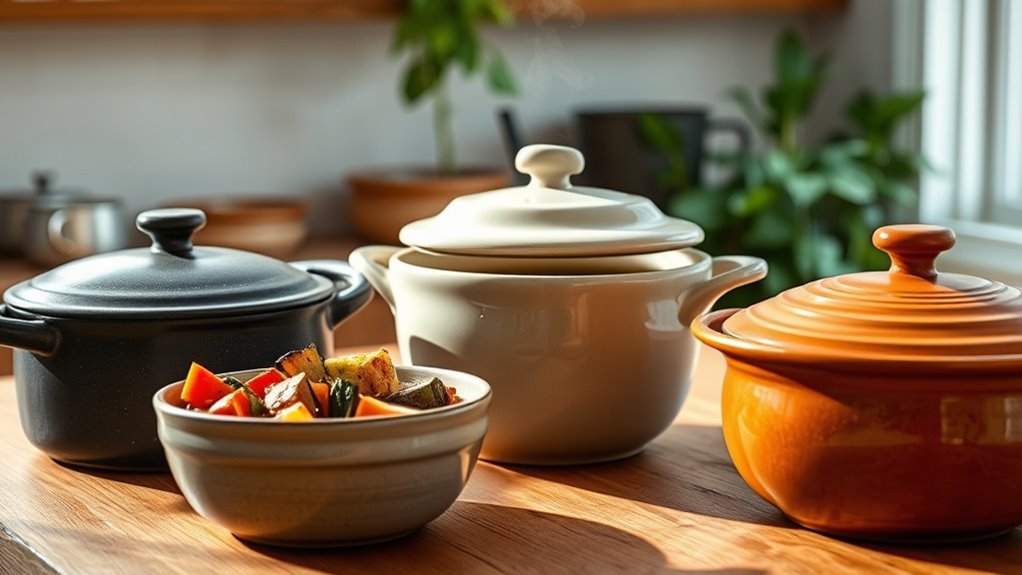
Food-safe pottery is dishware whose glaze does not release harmful amounts of lead or cadmium into your food. If you are shopping for plates, bowls, or mugs, the glaze matters more than the star rating. This guide shows how to judge any piece: what to look for in the clay and glaze, what labels really mean, and how to care for it. We do not rank specific brands here, because ratings change and we have not tested them.
Key Takeaways
- The glaze matters most. Lead and cadmium in glazes are the main safety risk.
- In the US, the FDA sets limits on lead and cadmium that can leach from ceramic tableware. It does not certify individual pieces, so the maker or importer is responsible for meeting them.
- Stoneware and porcelain are dense and less porous than earthenware, but a dense body does not make a glaze safe.
- Handmade, antique, and imported traditional pieces carry the most risk. Ask for lab test results.
- Check the maker’s care label for dishwasher, microwave, and oven use.
What Makes Food Pottery Safe?
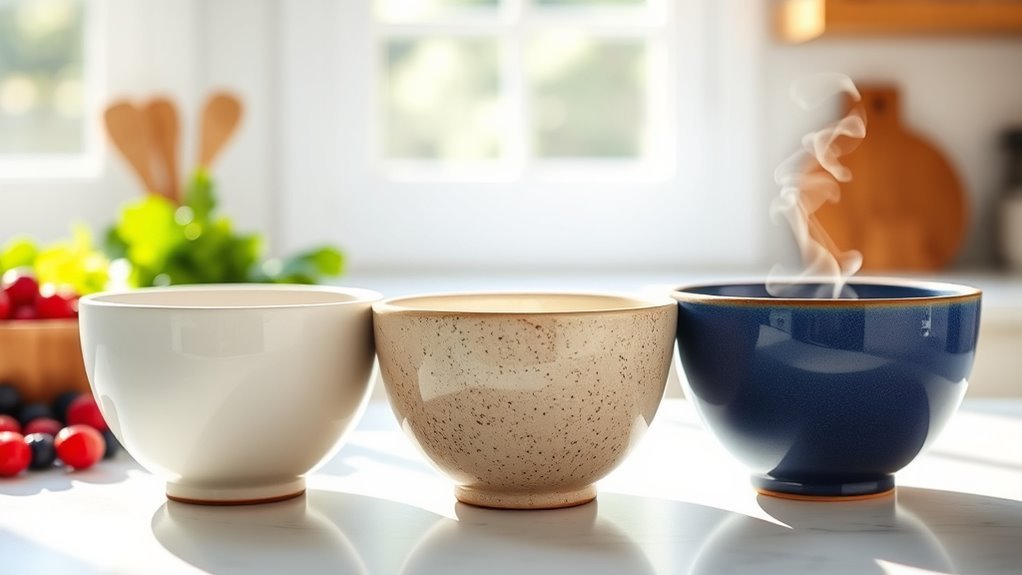
Three things decide whether a ceramic dish is safe for food: the glaze, the firing, and the clay body.
- Glaze: Some glazes use lead or cadmium for color and shine. If the glaze is not formulated and fired correctly, these metals can leach into food, especially acidic foods and drinks such as tomato sauce, citrus, vinegar, coffee, and wine.
- Firing: A glaze must be fully melted and properly fired. An under-fired glaze can be unstable.
- Clay body: Dense, well-fired clay soaks up less liquid and cleans more easily.
“Food safe” on a label is a maker’s claim. It is only as reliable as the maker’s testing. Pieces sold as decorative only are often marked not for food use, and you should respect that label.
How to Tell Good Food Pottery From Bad
Food-Safe Clay Bodies
- Porcelain: Fired very hot and nearly non-porous. Easy to clean.
- Stoneware: Dense and strong when fully fired, with low porosity. A common choice for everyday dishes.
- Earthenware: Fired at lower heat and more porous. It relies heavily on its glaze, so make sure the glaze is fully sealed and tested.
- Unglazed pottery: Can absorb liquids and stains. Better for cooking pots made for that purpose or for decoration than for serving.
Check the Glaze
- The glaze should be smooth and even, with no bare patches where food touches.
- Crazing is a web of fine cracks in the glaze. It can trap food and bacteria and let liquid reach the clay. Avoid crazed pieces for food.
- Chips and cracks expose the clay body. Retire damaged pieces.
- A chalky or powdery residue on the glaze after washing is a commonly cited warning sign. Stop using that piece for food.
Best Clay and Glaze Choices for Food Use
For daily dishes, choose stoneware or porcelain from a maker that states its glaze is lead-free and cadmium-free and can show lab results. Glossy, fully fused glazes are easy to wipe clean. Matte glazes can be perfectly safe, but ask the maker if the surface feels rough or dry. Be most careful with handmade, antique, and imported traditional pottery. If you cannot confirm the glaze, keep it for display only.
Dishwasher, Microwave and Oven Use
- Dishwasher: Follow the label. Many stoneware and porcelain pieces are dishwasher safe, but handmade glazes, gold or metallic trim, and decals can fade or wear. If there is no label, hand wash.
- Microwave: Avoid metallic trim. Use only if the maker says it is microwave safe. A damp, porous piece can heat unevenly.
- Oven: Check the maker’s maximum temperature, and avoid sudden temperature changes, which can crack ceramic.
How to Care for Food-Safe Pottery
Cleaning and Drying
- Wash with mild soap and a soft sponge. Abrasive pads can scratch the glaze.
- Let a hot piece cool before washing it. Sudden temperature change can crack it, which is called thermal shock.
- For stubborn marks, rub gently with a paste of baking soda and water, then rinse well.
- Dry fully and store in a dry place.
- Inspect for chips, cracks, and crazing regularly.
Do Top-Rated and Premium Pieces Mean Safer?
Not automatically. Star ratings and high prices tell you about looks and durability, not about lead or cadmium. A good sign is a maker that publishes its safety statement and lab test results. Handmade pieces can be safe when the potter uses tested glazes, so ask. Read reviews for chipping, crazing, and glaze wear, since those problems show up over time.
Frequently Asked Questions
How Do I Know if My Pottery Is Food Safe?
Look for a maker statement that the piece is food safe and for lab test results on lead and cadmium. Without them, treat the piece as decorative. You cannot judge glaze safety by looks alone.
Is Handmade Pottery Safe for Food?
It can be, if the potter uses properly formulated, fully fired glazes and tests them. Ask the potter for documentation before using a piece for food, especially for acidic foods.
Are Old or Imported Ceramic Dishes Safe?
Use caution. Antique and traditional pieces may have lead glazes. Use them for display unless you have proof they are safe.
What Is Crazing in Pottery?
Crazing is a network of fine cracks in the glaze. It can trap food and let liquid soak into the clay, so avoid using crazed pieces for food.
Conclusion
Safe pottery comes down to the glaze, a fully fired body, and a maker you can trust to test. Choose stoneware or porcelain from sellers who publish their safety information, check the care label for dishwasher and microwave use, and retire any piece that chips, crazes, or leaves a chalky residue.
