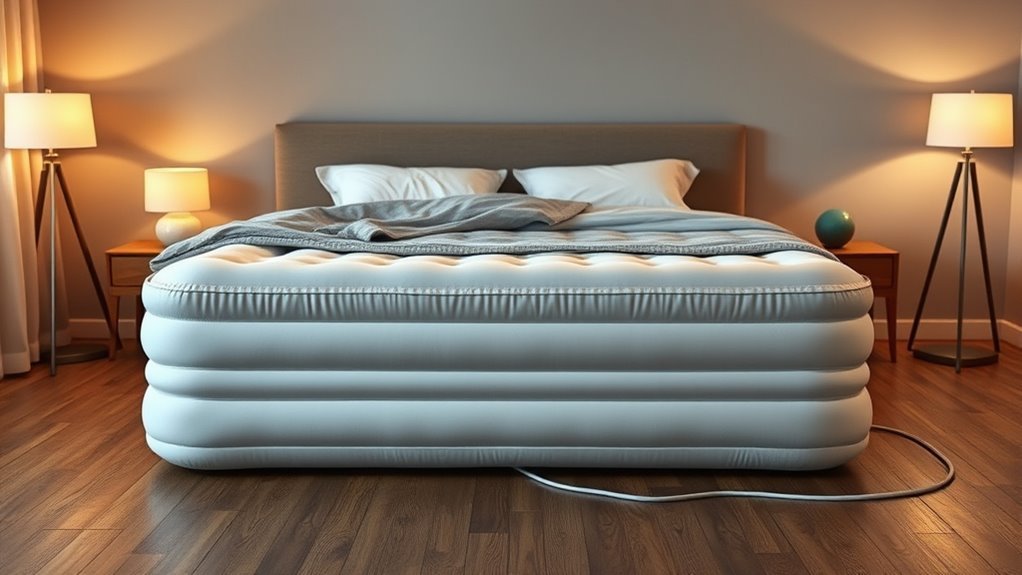
A 240V inflatable bed is best understood as an electric air mattress designed for a compatible 220–240V mains supply. The exact voltage, frequency, plug, pump design, size, and weight capacity vary by model and country, so the electrical rating on the bed or pump should always be checked before use. A good model can provide a convenient temporary bed for guests, while camping use may call for a battery, manual, USB, or self-inflating alternative when mains electricity is unavailable.
Quick Answer
Choose a 220–240V inflatable bed only when its rating label matches your local electricity supply. A built-in pump makes inflation easier, but overnight firmness still depends on valve sealing, seams, material stretch, temperature, load, and construction. For camping without mains power, use a battery, USB, manual, or self-inflating model instead.
Key Takeaways
- Check the pump or mattress rating label for voltage and frequency before plugging it in; do not assume every electric air bed is compatible with 220–240V power.
- A normal built-in pump usually inflates and deflates the mattress but does not continuously maintain firmness unless the manufacturer specifically provides that feature.
- New vinyl air beds can soften during their first few uses because the material stretches, so a small initial top-up does not automatically mean the mattress leaks.
- Valve condition, seams, construction, weight capacity, surface protection, and correct inflation matter more than arbitrary wattage or star-rating targets.
- For camping, verify that a safe electrical supply is actually available; otherwise choose a battery-powered, USB, manual, or self-inflating sleeping system.
At a Glance
| Time Required | Usually a few minutes to inflate, plus a short inspection before use; exact pump times vary by model. |
| Difficulty | Easy for normal setup and leak checks. |
| Tools Needed | Correct electrical supply, built-in or approved low-pressure pump, mild soapy water for leak testing, and a compatible repair kit if needed. |
| Cost | Normal setup has no added cost when the pump is included; repair materials or a suitable power solution may cost extra. |
What a 240V Inflatable Bed Is
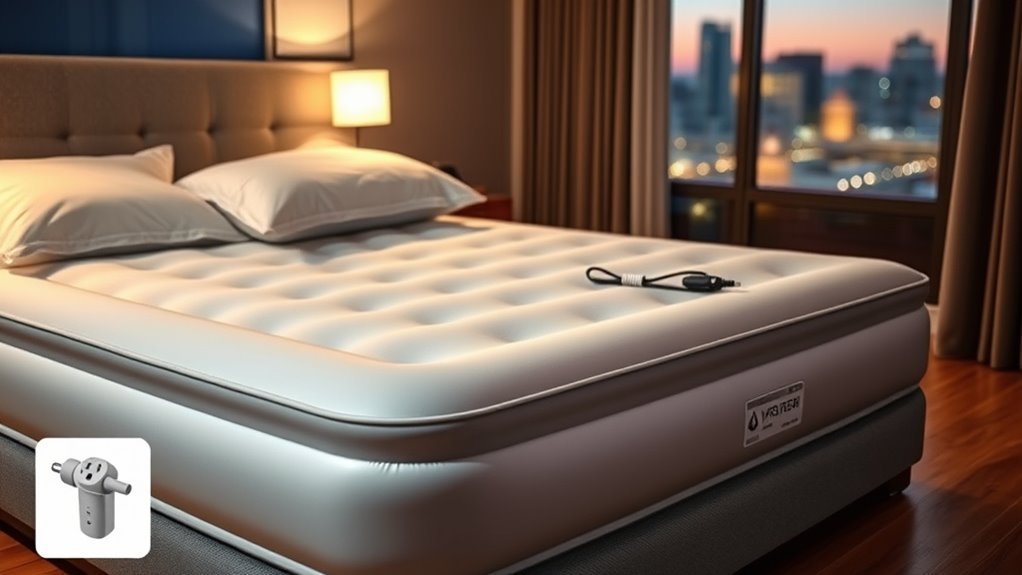
A 240V inflatable bed is generally an air mattress sold for regions using a compatible higher-voltage mains supply. In practice, many appliances are marked 220–240V rather than exactly 240V. The correct specification is the voltage range printed on the mattress, pump, power supply, or rating label.
The term does not describe the mattress construction itself. A 220–240V model may use PVC, TPU, flocked fabric, internal beams, coils, or other support structures. It may have a built-in electric pump or use a separate pump.
A built-in pump can make inflation and deflation convenient, but it should not be assumed to provide automatic pressure control. Some specialized beds have a secondary pump or automatic firmness system, while ordinary models require the user to switch the pump on when air needs to be added or removed.
Warning: Check the electrical rating before use. A plug adapter changes plug shape but does not automatically convert voltage. Equipment designed only for 110–120V should not be connected directly to a 220–240V supply unless the manufacturer specifically permits it or an appropriate conversion system is used. HSE guidance recommends confirming that electrical equipment is suitable for the supply before connecting it.
For temporary guest accommodation, a raised electric air bed can provide quick setup and compact storage. Camping is different: if a safe mains connection is unavailable, a battery-powered, USB, manual, or self-inflating design is usually more practical.
Why a 240V Air Bed Stays Firm
The electrical voltage does not determine how well an air bed stays firm. Overnight firmness primarily depends on the valves, seams, mattress material, internal construction, inflation level, load, and surrounding temperature.
- A well-sealed valve limits air escaping from the inflation port.
- Sound seams and undamaged material reduce gradual leakage.
- Internal beams or coils help the mattress maintain its intended shape under load.
- Correct inflation reduces excessive sagging without overinflating the mattress.
- Some specialized models have automatic or secondary pumps, but this feature must be confirmed in the product specifications.
New vinyl air beds can also feel softer after initial inflation because the material stretches. Intex explains that new airbeds may need additional air during their first few uses as the material stretches naturally. That behavior should not automatically be diagnosed as a puncture.
Temperature can also change how firm an air-filled mattress feels. If the room becomes substantially cooler, the air inside contracts and the mattress may feel softer even when no meaningful leak is present.
What to Look for in a 240V Air Bed
Start with electrical compatibility rather than pump speed. Confirm the exact voltage range, frequency, plug type, and manufacturer instructions. Then compare mattress construction, capacity, height, valve design, pump operation, storage size, warranty, and intended use.
For an indoor guest bed, a built-in electric pump and raised profile may be convenient. For travel or camping, pack size and the ability to inflate without household mains electricity can matter more.
Pump Power And Speed
Do not judge an air bed by an arbitrary minimum wattage. Pump design, mattress volume, airflow, pressure, and valve arrangement all affect inflation time.
Manufacturer specifications are more useful than a universal target. For example, current Intex product information for one 18-inch queen Dura-Beam Ultra Plush model lists an approximate inflation time of about four minutes, while other models and brands may inflate faster or slower.
- Check the specified voltage and frequency first.
- Compare the manufacturer’s stated inflation and deflation times.
- Check whether the pump requires manual shutoff or has a true automatic shutoff feature.
- Look for accessible controls that allow small firmness adjustments.
- Consider pump noise if the bed will be used near sleeping children or other guests.
A thermal protection cutoff is not necessarily the same as normal automatic shutoff. For example, SoundAsleep explains that the safety cutoff on some pumps protects against overheating and should not be confused with an ordinary auto-off function.
Air Retention And Support
Good air retention comes from the complete mattress system rather than from voltage or star ratings. Examine valve quality, welded seams, wall material, internal support construction, and warranty coverage.
Flocked surfaces can make the sleep surface feel less slippery, while internal beams or coils help distribute load and maintain shape. The mattress should also be used within the manufacturer’s stated weight limit.
Raised beds can make getting in and out easier for some adults, but an 18-inch height should not be treated as a guarantee of spinal alignment or orthopedic support. Comfort and body support depend on the entire design and the sleeper.
Pro Tip: When a new air bed feels softer after its first night, add a modest amount of air and reassess it before searching for a leak. New vinyl often stretches during the first several uses.
Size, Portability, And Extras
Choose twin, full, queen, or king dimensions based on the available floor space and the manufacturer’s actual inflated measurements. Raised beds can be bulky even when their sleeping dimensions look familiar.
- Check the inflated length, width, and height.
- Confirm the stated maximum weight capacity.
- Compare packed dimensions and product weight if the bed will travel frequently.
- Look for a carry bag if compact storage matters.
- Check whether a manual inflation valve remains usable if the electric pump is unavailable.
- Consider adjustable firmness, built-in pillows, headboards, or dual chambers only when those features are useful for your situation.
Customer reviews can help reveal patterns such as difficult packing, noisy pumps, valve problems, or repeated leaks, but review scores alone are not a technical measure of air retention or durability.
Best 240V Air Beds for Guests and Camping
The safest way to find the best 240V air bed is to compare specific regional SKUs, because a familiar brand name does not guarantee that every version uses the same voltage. Several products commonly mentioned in air-mattress roundups illustrate this problem.
| Model mentioned in the original guide | What to know |
| SoundAsleep Dream Series | SoundAsleep states that its Dream Series is intended for 110V wall power and should not be plugged directly into 220/240V power. |
| King Koil Luxury Air Mattress | The current US manufacturer page lists a 120V/210W built-in pump, so that version is not a direct 220–240V option. |
| Intex Dura-Beam | Intex sells numerous regional models and pump types. Verify the exact SKU and rating plate rather than assuming all Dura-Beam beds use the same voltage. |
| Serta Raised Air Mattress | Specifications vary by model and market. Confirm the pump’s voltage directly from the product label or manual before purchase. |
| EXPED MegaMat Duo | This is a self-inflating camping mat with a supplied Top Up Pump, not a mains-powered 240V air bed. |
| Coleman camping air beds | Some current Coleman camping systems use battery-powered pumps, making them useful where household mains electricity is unavailable. |
Top 240V Picks
A true top 240V pick should have a label explicitly showing compatibility with the local 220–240V supply. Intex’s international support information notes that international electric-pump products can use 220–240V power while US and Canadian versions can use 110–120V, illustrating why regional model verification matters.
Before choosing any SoundAsleep Dream Series, Serta Raised Air Mattress, Intex Dura-Beam, Coleman SupportRest or similar model, check the exact version rather than relying on the brand name. A listing imported from another market can look nearly identical while using a different motor or plug.
For an indoor guest room, prioritize verified voltage compatibility, a convenient built-in pump, adequate capacity, comfortable height, a reliable valve, and easy storage. For camping, access to electricity becomes the first question.
Guest And Camping Uses
For guests at home, a mains-powered air bed is convenient because it can be inflated and deflated without a separate pump. Set it up on a clean, flat floor with enough clearance from furniture, heaters, sharp objects, and walkways.
Camping requires a different approach. Do not assume a campsite provides a suitable socket simply because it provides electricity. Use only an electrical supply and connection arrangement permitted by the campsite and suitable for the appliance.
If reliable mains power is unavailable, a self-inflating mat such as the EXPED MegaMat Duo, a battery-pump air bed, a USB-pump model, or a mattress inflated with a manual pump can be more appropriate.
Outdoor ground protection also matters. Clear stones, thorns, sticks, and other sharp objects before placing an inflatable mattress inside a tent.
Intex Dura-Beam vs. King Koil Luxury Plush
The Intex Dura-Beam Ultra Plush and King Koil Luxury Air Mattress can be compared for construction and convenience, but they should not automatically be described as two equivalent 240V products.
A current US Intex Dura-Beam Deluxe Ultra Plush Queen listing specifies an 18-inch raised profile, Fiber-Tech construction, a built-in electric pump, a 600-pound maximum weight limit, and an approximate four-minute inflation time. The voltage of any regional version still needs to be checked before purchase.
The current King Koil Luxury Air Mattress page lists a 120V/210W built-in pump for the US-market model and states a 600-pound capacity for its queen version. That makes the cited US model unsuitable for direct connection to a 220–240V outlet.
- Intex Dura-Beam: numerous sizes and regional versions; confirm the exact SKU and voltage.
- King Koil Luxury: fast built-in-pump operation and raised options, but the current US pump specification is 120V.
- Firmness: both designs allow the user to adjust firmness by adding or removing air.
- Portability: compare actual product weight and packed dimensions for the specific size being considered.
- Best choice for 220–240V regions: whichever specific model explicitly carries the correct electrical rating and meets your size, capacity, and comfort requirements.
How to Inflate and Deflate a 240V Air Bed Fast
Place the mattress on a clean, flat surface and inspect the area for objects that could puncture it. Unfold the mattress fully so the pump and cord are not trapped underneath.
- Read the rating label. Confirm that voltage and frequency match the available electrical supply.
- Close manual valves. Make sure any secondary inflation or deflation ports are correctly sealed.
- Connect the pump as instructed. Use the manufacturer’s required outlet and connection method.
- Start inflation. Allow the mattress to take shape without sitting or lying on it.
- Stop at the recommended firmness. Do not continue forcing air into a bed that is already firm.
- Switch the pump off. Follow the manufacturer’s instructions regarding unplugging after inflation.
- Inspect the mattress. Check the valve, seams, and sleeping surface before use.
Inflation time varies. Some beds inflate in roughly one or two minutes, while larger models may require several minutes. Follow the time specified for the exact model rather than using one target for every air bed.
For deflation, use the pump’s deflate setting or designated deflation valve if provided. Allow the air to leave before gently folding or rolling the mattress. Do not force a tightly folded mattress while large pockets of air remain trapped inside.
How to Keep a 240V Air Bed Firm Overnight
Start by inflating the bed according to its instructions and giving a new vinyl mattress time to stretch. If it softens during its first several uses, a modest top-up may be normal.
- Make sure every valve and pump control is returned to its fully closed position after inflation.
- Stay below the manufacturer’s stated weight capacity.
- Protect the underside from sharp or abrasive surfaces.
- Keep the mattress away from heat sources and large temperature swings.
- Check seams and valves if softness continues after the initial stretch period.
- Do not deliberately overinflate the mattress to compensate for expected overnight softening.
Intex advises keeping an air mattress properly inflated while in use and warns against overinflation. Manufacturer instructions should take priority because valve and pump systems differ.
A softer new air bed is not automatically leaking: initial material stretch is common, while repeated loss after the material has settled deserves a valve, seam, and puncture check.
Setup, Storage, and Portability Tips
Before setup, choose an area large enough for the fully inflated mattress and leave safe clearance from walls, furniture, heaters, doors, and sharp objects.
Keep the power cord where it will not create a trip hazard or become pinched under the mattress. Inspect the cord and plug before use. Do not use damaged electrical equipment.
After use, fully deflate the mattress using the method specified by the manufacturer. Fold or roll it loosely enough to avoid repeatedly stressing the same seams, then place it in its carrying bag if one is supplied.
Store the bed indoors in a cool, dry location, protected from sharp objects, excessive heat, moisture, and pests. Make sure the mattress is dry before long-term storage.
Product weights vary substantially. A compact single-height camping bed can be light, while a tall queen air mattress with an integrated pump and additional layers can weigh considerably more. Check the actual specification rather than assuming all air beds fall within one weight range.
Note: A voltage-compatible indoor air bed is not automatically a good off-grid camping bed. Consider the availability of electricity, packed size, ground protection, insulation, and the ability to reinflate the mattress without household mains power.
Troubleshooting Leaks and Air Loss
If an air bed becomes noticeably softer, first decide whether you are seeing normal initial stretching, temperature-related firmness change, or a real air leak.
For a new vinyl mattress, inflate it again and observe it over the next several uses. If the material has already settled and significant softness continues, inspect the bed systematically.
- Check the pump control and valves. Make sure every valve is closed and correctly seated.
- Listen closely. A larger leak may produce a faint hiss.
- Inspect high-stress areas. Check seams, corners, the area around the pump, and the underside.
- Use mild soapy water where permitted. Apply a small amount to a suspected area and look for growing bubbles that indicate escaping air.
- Mark the leak. Dry the area and mark its location before deflating the bed.
- Use the correct repair method. Follow the mattress manufacturer’s patch instructions and allow adhesive to cure fully before reinflating.
Some damage cannot be repaired reliably at home. For example, certain manufacturers advise that particular seam leaks are not repairable. Contact the manufacturer when damage affects the seam, built-in pump housing, electrical components, or a large structural area.
Never use flammable aerosol tire-sealant products inside an air mattress. Intex specifically warns against using flammable substances for air-mattress repair.
Warning: Inflatable air mattresses are not safe sleep surfaces for infants. The U.S. Consumer Product Safety Commission warns that infants can suffocate on an air mattress or become trapped between the mattress and nearby furniture or walls. Use an appropriate crib, bassinet, or play yard that meets applicable safe-sleep requirements instead.
Frequently Asked Questions
Is There an Air Mattress That Stays Inflated?
Yes. A well-made air mattress with an undamaged shell, sealed valve, sound seams, and correct inflation can remain firm for normal overnight use. No inflatable bed should be assumed to hold exactly the same pressure indefinitely, however. New material can stretch, temperature can affect perceived firmness, and a damaged valve or puncture can cause genuine air loss.
How Long Does an Inflatable Bed Stay Inflated?
There is no universal number of days. An intact mattress can remain inflated beyond a single night, but firmness depends on construction, valve sealing, material stretch, temperature, load, and whether the manufacturer recommends leaving the bed inflated for extended periods. Follow the care instructions for the specific model.
How Do You Keep an Air Mattress Inflated All Night?
Inflate it according to the manufacturer’s instructions, close every valve completely, stay within the weight limit, protect the underside from sharp objects, and allow a new vinyl bed to complete its initial stretching period. If substantial softness continues afterward, inspect the valve, seams, pump area, and mattress surface for leaks.
Which Inflatable Bed Is the Strongest?
There is no universal “strongest” inflatable bed because manufacturers do not use one standardized strength score. Compare the stated weight capacity, material and seam construction, internal support system, warranty, repair options, and verified owner experience. A high weight rating alone does not prove greater puncture or seam durability.
Can I Plug a 120V Air Mattress Into a 240V Outlet With a Travel Adapter?
Not unless the product’s rating label says it accepts that voltage. A basic travel adapter normally changes the physical plug connection, not the supply voltage. For example, SoundAsleep says its Dream Series is intended for 110V operation and requires suitable voltage-conversion equipment for use with 220/240V power.
Why Does a New Air Mattress Feel Softer After the First Night?
New vinyl can stretch after the mattress is first inflated, increasing its internal volume and making it feel softer even though little or no air has escaped. Add air as the manufacturer recommends and monitor the mattress over its first few uses. Persistent or increasing softness after the material settles can indicate a leak.
Conclusion
A 240V inflatable bed can be a convenient temporary sleeping solution when the exact model is designed for the available 220–240V electrical supply. Voltage compatibility should come before pump speed, height, or marketing claims. After that, compare capacity, construction, valves, inflation method, packed size, and warranty.
For reliable overnight support, inflate the mattress correctly, allow new material to stretch, protect it from punctures, and investigate persistent softness rather than automatically overinflating it. Camping users should also consider whether mains power is practical at all; battery, USB, manual, or self-inflating systems may be better away from home.
Sources
- U.S. Consumer Product Safety Commission — Air Mattresses Are Not for Infants — infant suffocation and safe-sleep warning.
- UK Health and Safety Executive — Work Using Electrically Powered Equipment — checking equipment suitability for the electrical supply.
- Intex — Air Mattress Safety Information — inflation, overinflation, repair, child-safety, and general use guidance.
- Intex — Airbed Tips — initial material stretching and early firmness top-ups.
- SoundAsleep — Air Mattress FAQ — 110V Dream Series compatibility and pump-operation guidance.
- King Koil — Luxury Air Mattress Specifications — current US pump voltage, capacity, construction, and inflation information.
