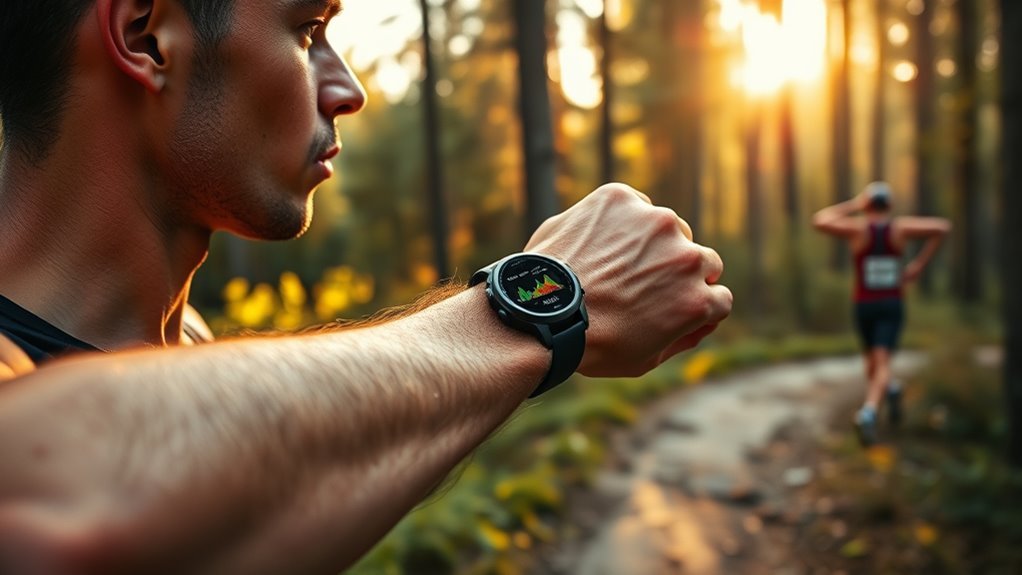
Garmin VO₂ Max estimates aerobic fitness, specifically the body’s maximum oxygen use during intense exercise, expressed relative to body weight. It is not a direct lab measurement, but an algorithm based mainly on running pace and heart rate. Accuracy is usually reasonable, often within about ±3–5 mL/kg/min, with better results during hard, steady runs. Optical heart rate errors and poor input data can skew results, while trends over time are more informative than single values, especially with consistent conditions.
Key Takeaways
- Garmin VO₂ Max estimates aerobic fitness from heart rate and running pace, not direct oxygen measurements.
- It is usually reasonably accurate, with typical error around ±3–5 mL/kg/min.
- Accuracy improves during harder runs, especially above about 70% of maximum heart rate.
- Optical wrist heart-rate errors, bad max heart-rate settings, and uneven terrain can reduce reliability.
- Use Garmin VO₂ Max mainly to track fitness trends over time, not as a precise lab-grade value.
What Garmin VO₂ Max Measures
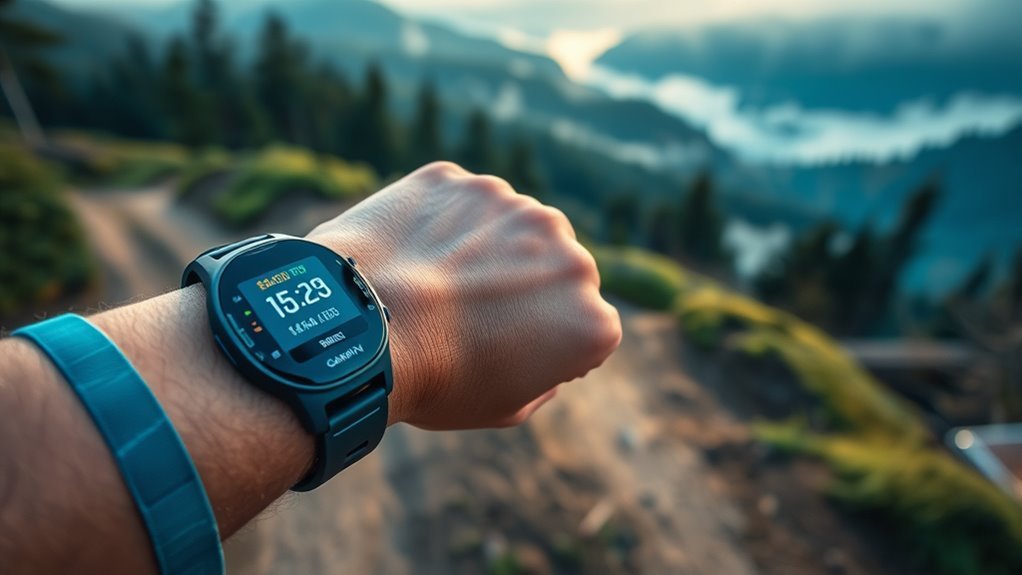
Garmin VO₂ Max is an estimated index of aerobic fitness that reflects the maximum volume of oxygen the body can utilize per minute per kilogram of body weight during running.
Garmin VO₂ Max estimates aerobic fitness by showing how much oxygen your body can use during running.
In practical terms, Garmin VO₂ Max does not measure gas exchange directly; it provides a VO₂ max estimation derived from performance data to infer aerobic fitness. The result is thus a model-based indicator of capacity, not an exact physiological reading.
Its interpretation depends on heart rate zones, running pace, and related inputs, which together shape the estimate’s accuracy. Because it expresses the maximum volume of oxygen in relative terms, it is most useful for comparing one person’s fitness across time rather than for defining absolute worth.
For individuals seeking liberation through self-knowledge, the value lies in observing whether the number rises, falls, or stabilizes. Such trends can reveal adaptations, recovery status, or emerging limitations with greater utility than the isolated score alone.
How Garmin Estimates VO₂ Max
The estimation process hinges on the Firstbeat algorithm, which infers VO₂ max from the relationship between running pace, heart rate, and heart-rate variability rather than from direct gas-exchange measurement.
In Garmin VO2 max, the system treats faster running at a lower heart rate as evidence of stronger oxygen use and higher cardiovascular fitness. This VO2 max estimation is computed from wrist-sensor data gathered during activity, then adjusted through models that also reflect training load and effort intensity.
Its analytical value rises when runs exceed roughly 70% of maximum heart rate, where the signal is more stable and informative. Optical heart rate error can weaken the result, especially during motion or poor sensor contact.
Consequently, accurate is the garmin depends on data quality and physiological context. The output is most useful for tracking change over time, helping users assess whether aerobic capacity is improving, rather than defining an absolute fitness truth.
How Accurate Garmin VO₂ Max Is?
How accurate is Garmin VO₂ max in practice? In controlled use, Garmin VO₂ max is usually reasonably accurate, with validation error commonly reported at ±3–5 mL/kg/min.
For trained runners, independent studies find wrist-based estimates near a 5% mean absolute error, a level that can support self-knowledge and structured training decisions. The estimate depends heavily on heart rate behavior, especially the user’s true maximum heart rate and the stability of optical sensing during movement.
When running is performed consistently at higher intensities, above roughly 70% of the heart rate threshold, algorithmic estimates tend to tighten; one Firstbeat Analytics study reported about 95% accuracy with error below 3.5 mL/kg/min.
Even so, fitness testing conditions matter. Environmental factors such as terrain and weather can alter output, so repeated sessions under similar conditions provide the most reliable reading of Garmin VO₂ max.
Why Garmin VO₂ Max Can Be Wrong
Garmin VO₂ Max estimates can be distorted by heart rate errors, particularly when optical sensors misread pulse during motion or when maximum heart rate is entered inaccurately.
Terrain and heat also weaken precision because hills, trail surfaces, and thermal stress alter effort and cardiovascular response in ways the algorithm may not fully account for.
As a result, the estimate may deviate from laboratory values even when the device is functioning normally.
Heart Rate Errors
Although Garmin’s VO₂ max estimate is built from heart rate and pace data, its accuracy can be reduced when optical sensors miss beats during dynamic movement, creating distorted inputs for the algorithm.
Because optical heart rate is vulnerable to dropped beats, the resulting heart rate profile may not remain accurate enough to support a reliable Garmin VO₂ max value or training status interpretation.
The estimate also depends on correct maximum heart rate settings; if that parameter is wrong, the model’s output shifts materially.
Research suggests typical error margins of ±3–5 mL/kg/min, with larger deviations in very fit or unfit individuals.
Even environmental factors can alter physiological responses and widen variability.
Differences in workout effort further complicate comparisons, so repeatable conditions and clean data remain essential for liberation through informed self-monitoring.
Terrain And Heat
Heat, humidity, and elevation can all distort Garmin VO₂ max estimates by changing the physiological cost of a given pace. In hot or humid conditions, cardiovascular strain rises, so the same speed requires more effort, reducing accuracy.
At altitude, lower oxygen availability can depress performance and make Garmin VO₂ Max appear lower than true aerobic capacity.
Variable terrain adds another bias: trail running, steep grades, and unstable footing elevate heart rate and slow pace independent of fitness.
Recent devices use accelerometer data to partly correct for underfoot changes, yet extreme environmental factors can still overwhelm the model.
For a liberated interpretation, training status should be read as context-dependent, not absolute. Environmental conditions shape the metric; they do not define the athlete.
How to Improve Garmin VO₂ Max Accuracy
Improving Garmin VO₂ max accuracy starts with cleaner inputs and more consistent testing conditions. Garmin VO₂ max estimates become more accurate when age, sex, height, and weight are entered correctly, because these variables shape the fitness model. A calibrated maximum heart rate also matters, since heart rate error can distort training zones and the inferred fitness level.
For best results, the wearer should use repeated runs that push effort above 70% of maximum, allowing the watch to observe sustained cardiovascular load during a VO₂ max test.
- Verify profile data before each update.
- Reassess maximum heart rate with periodic field testing.
- Prefer a chest strap for steadier heart rate capture.
Environmental stability helps too: similar terrain, pace, and temperature reduce noise in the estimate. When input quality improves, the device can better reflect physiological capacity rather than measurement error, supporting a more accurate interpretation of endurance potential.
Why VO₂ Max Trends Matter More
VO₂ max trends over time provide a more reliable indicator of fitness adaptation than any single estimate, as sustained increases reflect improved aerobic capacity.
Garmin’s repeated measurements are consequently useful for tracking progress across training phases and identifying whether workload is producing the expected response.
A decline in the trend may indicate overtraining or other physiological stress, supporting timely adjustments to training load.
Trend Changes Over Time
Although single VO₂ max readings can vary, the more meaningful indicator is the direction of change over time, since sustained upward trends generally reflect improved aerobic capacity and effective training. Garmin’s VO₂ max estimate is thus most valuable for tracking trends, not fixating on isolated numbers.
- A rise from 46 to 49 over several weeks suggests measurable fitness progress.
- Sudden declines may function as overtraining indicators or reflect illness, warranting adjustment.
- When paired with resting heart rate and lactate threshold, the estimate yields a clearer physiological profile.
This evidence-based approach supports autonomous training decisions by showing whether adaptation is occurring or whether recovery is needed.
Small fluctuations are expected; persistent movement upward or downward carries the real diagnostic value.
Track Fitness Progress
Tracking VO₂ max over time provides a more reliable measure of fitness progress than any single reading, because consistent increases usually reflect improved aerobic capacity and training adaptation.
Garmin VO₂ max estimates can thus help track fitness progress by showing whether performance is advancing from week to week. For example, a rise from 46 to 49 suggests a meaningful shift in aerobic capacity, especially when workout conditions remain comparable.
Sudden declines may signal excessive load, illness, or insufficient recovery, and should prompt review rather than panic. When paired with resting heart rate, Garmin VO₂ max gains sharper diagnostic value, offering a clearer picture of adaptation and resilience.
Used consistently, these estimates help athletes make evidence-based choices and reclaim control over training decisions.
When to Trust Garmin VO₂ Max
Trust in Garmin’s VO₂ max estimate is strongest when the data come from controlled, high-quality runs rather than casual sessions.
Garmin VO₂ max is an estimated index of aerobic fitness, derived from heart rate, pace, and heart-rate variability, so its accuracy depends on disciplined input. High-effort efforts above 70% heart rate, repeated under similar conditions, help the device measure VO₂ max with less noise and better interpretive value.
Garmin VO₂ max depends on disciplined input, with repeated high-effort runs improving accuracy and interpretive value.
- Use consistent routes, surfaces, and pacing.
- Prioritize runs with stable heart rate signals and sound technique.
- Read the number as trend analysis, not as an absolute verdict.
Typical error margins of ±3–5 mL/kg/min mean the estimate should not dominate judgment. Instead, it is best trusted as one signal among others, including resting heart rate and lactate threshold.
Used this way, the metric supports clearer self-knowledge and more autonomous training decisions, rather than fixed conclusions about capacity.
Garmin VO₂ Max vs Lab Testing
Garmin’s VO₂ max estimate and laboratory testing address the same physiological construct, but they do so through very different methods. Garmin VO₂ max uses algorithms that infer capacity from heart rate and pace, whereas lab testing measures oxygen consumption directly through gas analysis. The laboratory method is the gold standard and is usually more accurate, while wearable estimates may deviate by ±3–5 mL/kg/min and, in some cases, by about 10%.
| Method | Basis | Reliability |
|---|---|---|
| Garmin VO₂ max | Heart rate and pace | Trend-focused |
| Lab testing | Gas analysis | Gold standard |
| Garmin input | Age, sex, height, weight | User-dependent |
| Lab input | Controlled protocol | Minimizes variability |
For autonomy in training, Garmin VO₂ max remains useful for tracking change over time, but lab testing provides the definitive baseline. When personal data are entered accurately, Garmin estimates improve, yet they remain estimates, not direct measurement.
Frequently Asked Questions
What Is a Good VO2 Max Score for Garmin?
A good Garmin VO2 Max score is typically 40–55 mL/kg/min for recreational runners, with higher Fitness Levels above 60 indicating elite status; Training Impact, Measurement Methods, Athlete Comparison, and Health Indicators vary individually.
What Was Lance Armstrong’s VO2 Max?
Like a well-tuned engine, Lance Armstrong’s VO2 max was about 84 mL/kg/min. Evidence places him among elite athletes, with cycling performance shaped by rigorous athletic training; fitness tracking data cannot fully capture such physiological power.
Is 47.7 a Good VO2 Max?
Yes, 47.7 is generally a good VO2 max. It reflects solid fitness levels, with training impact and health indicators varying by age factors and gender differences; as a performance metric, it suggests above-average aerobic capacity.
Does Garmin Overestimate VO2 Max?
Yes, Garmin can overestimate VO2 max. Like a compass drifting in a storm, one lab comparison showed errors near 10%. Garmin accuracy depends on heart rate, fitness tracking inputs, performance metrics, and data reliability.
Conclusion
Garmin’s VO₂ max estimate is best understood as a useful approximation rather than a laboratory measurement. It infers aerobic capacity from heart rate, pace, power, and movement patterns, so accuracy depends on data quality and running conditions. Evidence suggests it is often reliable enough to track trends, yet it can diverge from lab results under heat, hills, fatigue, or poor sensor fit. The theory holds that consistency, not absoluteness, makes the metric valuable for training.
