
Choosing between Garmin vivoactive vs Venu comes down to how much smartwatch and training depth you need. The lighter vívoactive models cover everyday health, GPS workouts and long battery life, while the Venu line adds more premium features on selected models.
Garmin vívoactive 6 is the best overall pick because it combines up to 11 days of battery life with more than 80 sports apps in a light 42.2 mm watch. The Garmin vívoactive 5 is the best value if you want the same basic AMOLED size and battery target for less.
We checked the linked models against current Garmin specifications, current listing matches, feature comparisons and recall searches, then kept the original scores only where the article already supplied them.
Garmin vivoactive vs Venu Compared
| Product | Best for | Battery | Display | Calls | Score |
|---|---|---|---|---|---|
|
Mid-range
|
Best overall | Up to 11 days | 1.2″ AMOLED | No | 86/100 |
|
Budget
|
Best value | Up to 11 days | 1.2″ AMOLED | No | 83/100 |
|
Premium
|
Best health features | Up to 12 days | 1.4″ AMOLED | Yes | 92/100 |
|
Premium
|
Best large display | Up to 8 days | 2″ AMOLED | Yes | 88/100 |
|
Premium
|
Best battery life | Up to 14 days | 1.4″ AMOLED | Yes | 90/100 |
Garmin vivoactive vs Venu: Our Top Picks
1. Garmin vívoactive 6
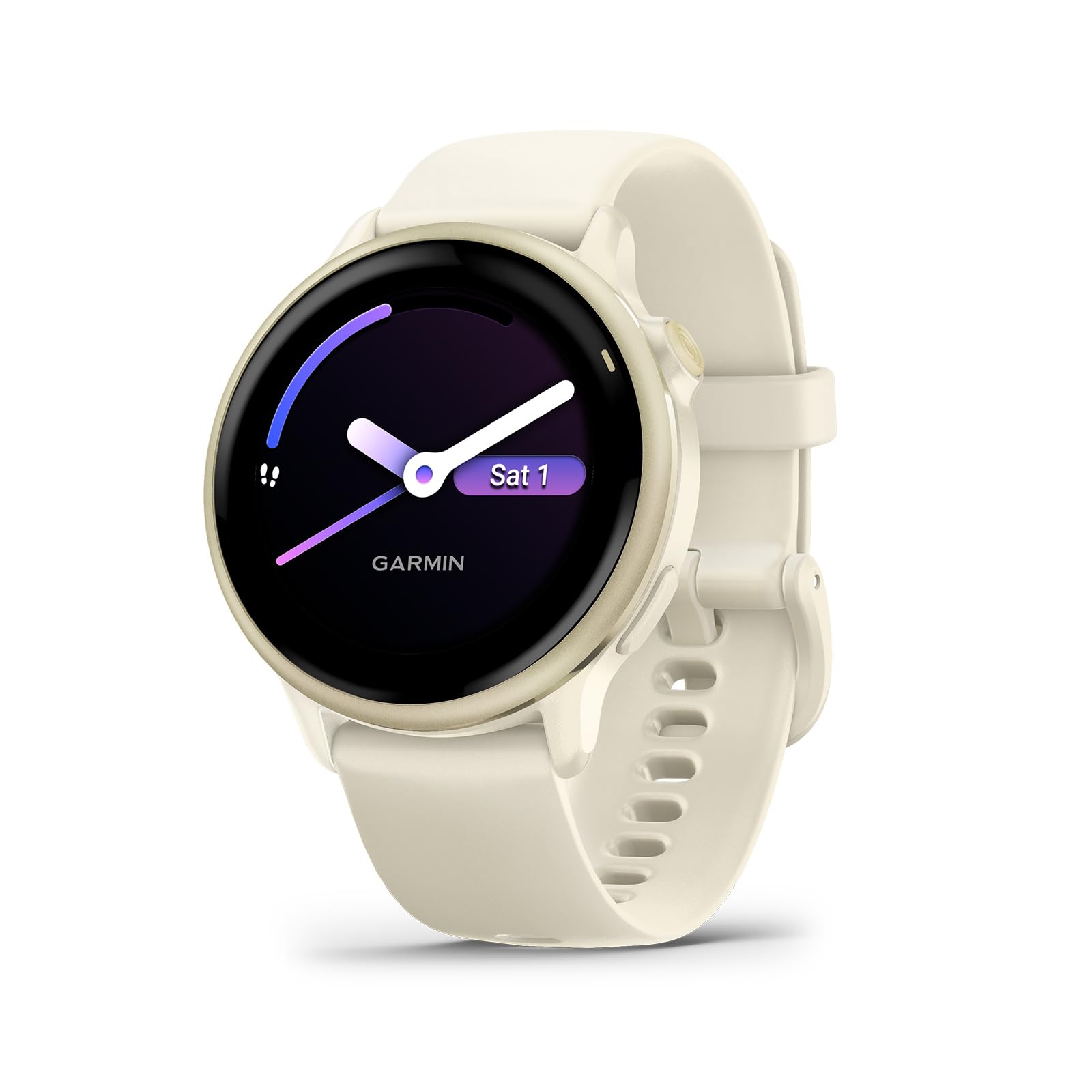
Bottom line: The Garmin vívoactive 6 is the best all-around pick for most people because it stays light, lasts up to 11 days, and covers more than 80 sports apps without pushing into premium-watch complexity.
- Battery: up to 11 days, less charging between normal wear
- Display: 1.2-inch AMOLED, compact and easy to read
- Water rating: 5 ATM, suitable for swimming
- Calls: no built-in speaker or microphone
- Mapping: no built-in maps
The vívoactive 6 is built around everyday health and fitness tracking. Body Battery, sleep coaching, HRV status, GPS activities, Garmin Pay and music storage cover the features most people use day to day. Its 42.2 mm case and 36 g weight with the included band also keep it easier to wear overnight than many larger watches.
Compared with the vívoactive 5, the newer model keeps the same 11-day smartwatch battery target and 1.2-inch AMOLED size, but Garmin gives it more than 80 sports apps and 8 GB of storage. That makes it the stronger long-term choice if you rotate through different activities or keep more music on the watch.
- Up to 11 days of smartwatch battery life
- More than 80 sports apps for broad activity coverage
- Light 36 g weight with included band
- 8 GB storage plus music and Garmin Pay
- No built-in speaker or microphone for wrist calls
- Smaller display than the Venu 3, Venu 4 and Venu X1
- No built-in mapping
The linked listing is the same Garmin vívoactive 6 model used throughout this roundup. Amazon prices change often, so compare the current checkout total with the features you actually need.
2. Garmin vívoactive 5

Bottom line: The Garmin vívoactive 5 is the value pick when you want Garmin health tracking, GPS, music and an AMOLED screen without paying for newer training extras you may never use.
- Battery: up to 11 days, strong endurance for daily tracking
- Display: 1.2-inch AMOLED, same basic size as vívoactive 6
- Water rating: 5 ATM, suitable for swimming
- Calls: no built-in speaker or microphone
- Mapping: no built-in maps
Garmin rates the vívoactive 5 for up to 11 days in smartwatch mode and gives it more than 30 preloaded GPS and indoor sports apps. You still get Body Battery, sleep coaching, nap detection, HRV status, Garmin Pay and music storage, so the core daily experience remains well rounded.
The tradeoff is age and feature depth. It has 4 GB of storage rather than the vívoactive 6’s 8 GB, and the newer watch expands the sports-app list. If your routine is mostly walking, running, cycling, gym work and general wellness tracking, the older model can still cover the essentials cleanly.
- Up to 11 days of smartwatch battery life
- More than 30 sports apps plus Garmin Coach support
- Light 36 g weight with included band
- AMOLED display, music storage and Garmin Pay
- Older generation than the vívoactive 6
- Only 4 GB storage versus 8 GB on vívoactive 6
- No built-in speaker, microphone or maps
The vívoactive 5 remains a current Garmin product, but the vívoactive 6 is its newer generation. That makes this model most attractive when the current Amazon price gap is meaningful to you.
3. Garmin Venu 4
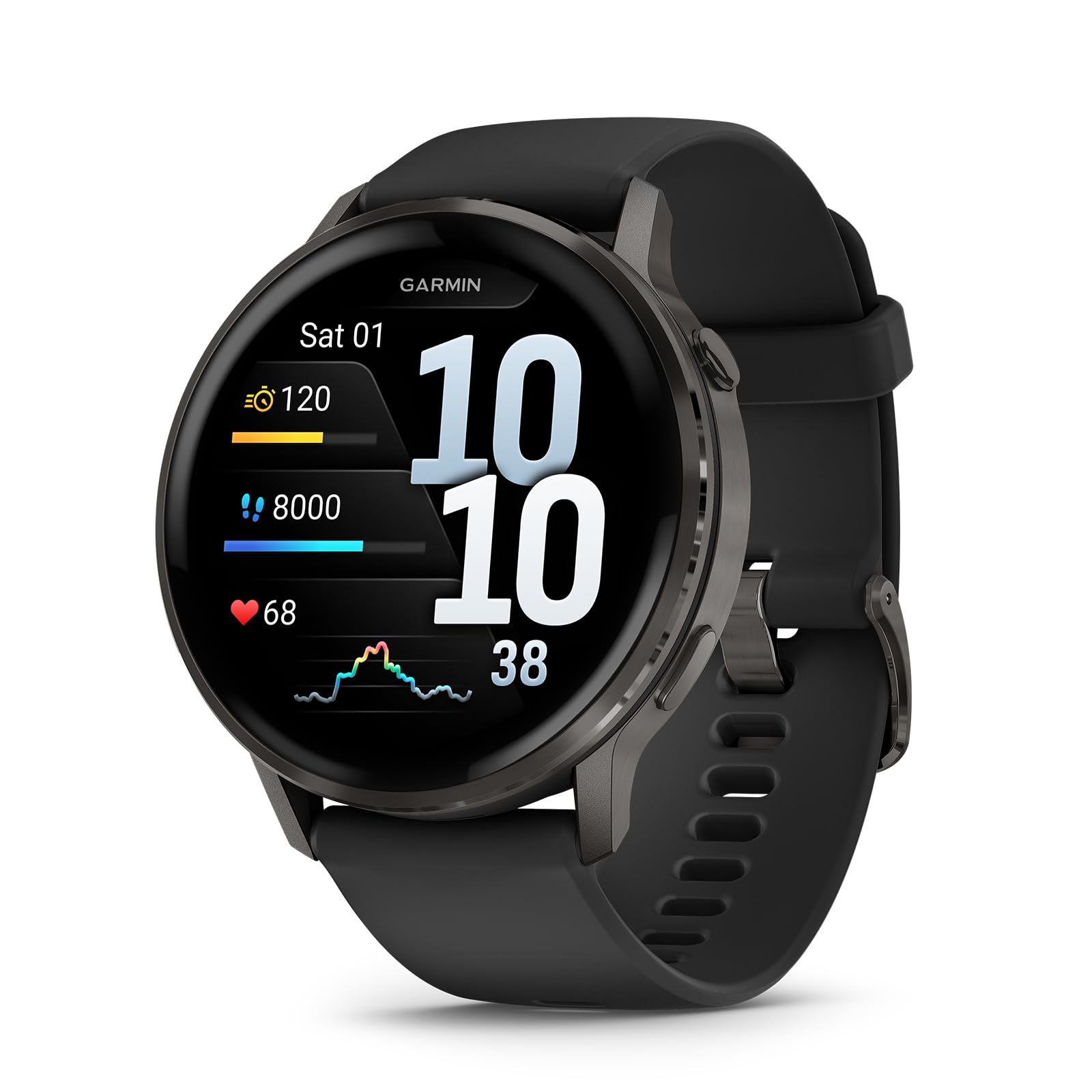
Bottom line: The Garmin Venu 4 is the best choice here for deeper health and training features in a traditional round watch, especially if multi-band GPS, Training Readiness, ECG support and wrist calls matter to you.
- Battery: up to 12 days on the linked 45 mm size
- Display: 1.4-inch AMOLED, larger than both vívoactive models
- Water rating: 5 ATM, suitable for swimming
- Calls: built-in speaker and microphone with a paired phone
- Mapping: no built-in maps
The linked Venu 4 is the 45 mm version. Garmin lists a 1.4-inch AMOLED display, stainless-steel bezel, speaker and microphone, LED flashlight, multi-band GPS, music storage and Garmin Pay. Its training tools include Training Readiness and improved Training Status, which separate it from the older Venu 3 and both vívoactive models in this comparison.
Health features also run deeper. The watch supports the Garmin ECG App where available, HRV status, Body Battery, sleep insights and lifestyle logging. The main compromise is that this 45 mm version weighs 56 g with its included band, and its up-to-12-day smartwatch battery is shorter than the Venu 3’s up-to-14-day rating.
- Training Readiness and improved Training Status
- Multi-band GPS for stronger positioning support
- Built-in speaker, microphone and LED flashlight
- ECG App support plus broad health tracking
- Up to 12 days is shorter than Venu 3’s 14-day rating
- Heavier than the vívoactive models
- No built-in mapping like Venu X1
This is the 45 mm Venu 4, so do not confuse its battery figures with the smaller 41 mm version. The 41 mm model has a lower smartwatch battery rating.
4. Garmin Venu X1
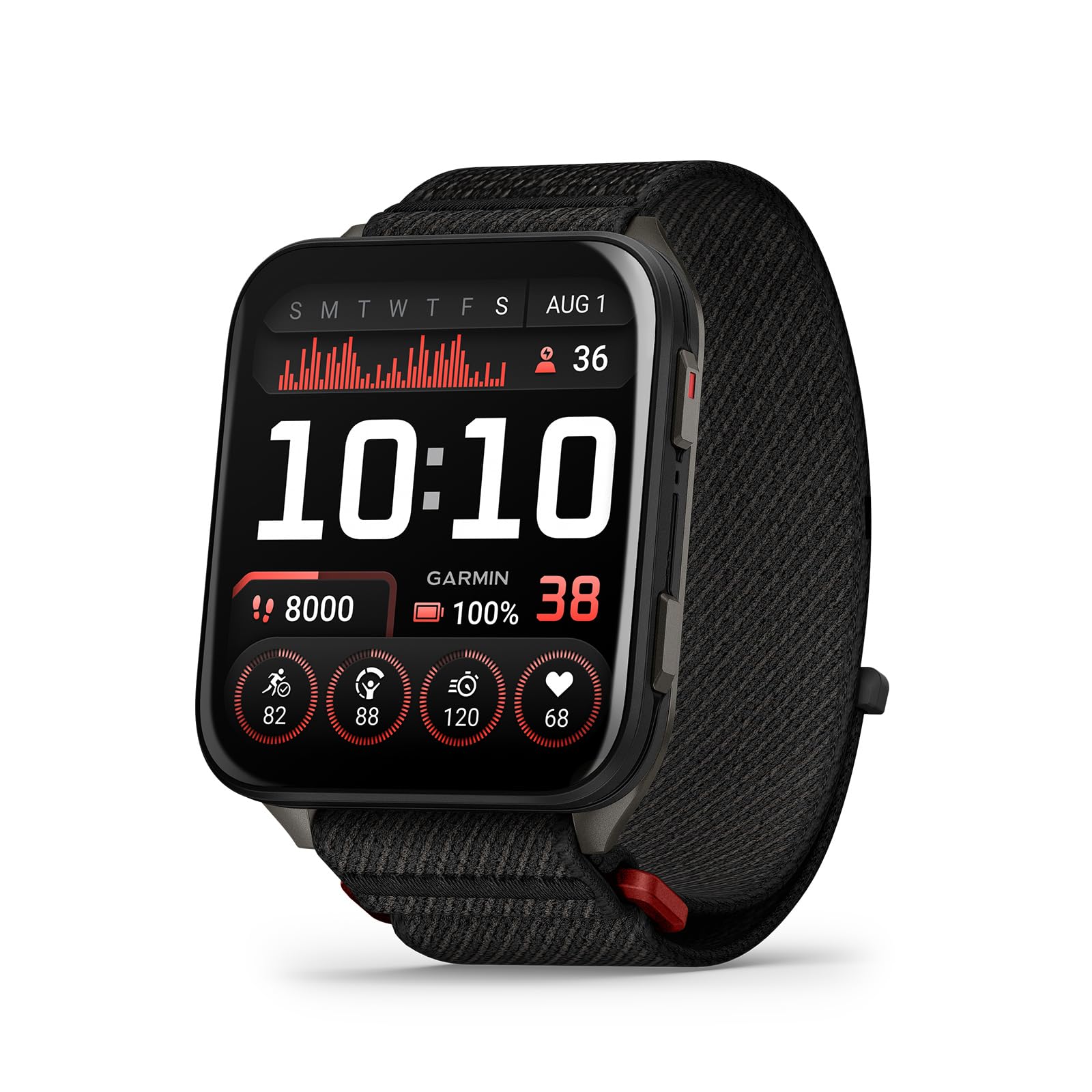
Bottom line: The Garmin Venu X1 is the display-and-maps pick. Its 2-inch AMOLED, built-in mapping and thin 7.9 mm case make it the most screen-focused watch in this group.
- Battery: up to 8 days, shortest rating in this group
- Display: 2-inch AMOLED, the largest display here
- Water rating: 5 ATM, suitable for swimming
- Calls: built-in speaker and microphone with a paired phone
- Mapping: built-in maps, unique among these five
Garmin pairs the large display with a sapphire lens, a fiber-reinforced polymer case and titanium caseback. The watch weighs 40 g with its ComfortFit nylon band, so the broad rectangular screen does not automatically mean a heavy watch. Built-in mapping is the biggest practical difference if you want routes and map detail directly on your wrist.
The Venu X1 also includes Training Readiness, Training Status, more than 100 sports apps, music storage, Garmin Pay, an LED flashlight and call support through a paired compatible phone. The clear catch is battery: Garmin rates it for up to 8 days in smartwatch mode, below every other model in this roundup.
- Large 2-inch AMOLED with built-in maps
- Sapphire lens and thin 7.9 mm case
- Training Readiness and Training Status
- More than 100 sports apps plus speaker and microphone
- Up to 8 days is the shortest smartwatch battery rating here
- Rectangular 41 x 46 mm footprint may not suit every wrist
- Premium features may be unnecessary for basic activity tracking
The Venu X1 is the only watch in this group with built-in mapping. That makes its screen size more useful than a simple display upgrade if you plan to follow routes on the watch.
5. Garmin Venu 3

Bottom line: The Garmin Venu 3 is the battery-first Venu choice, with up to 14 days in smartwatch mode plus a 1.4-inch AMOLED, speaker and microphone for paired-phone calls.
- Battery: up to 14 days, longest rating in this group
- Display: 1.4-inch AMOLED, roomy without the X1 footprint
- Water rating: 5 ATM, suitable for swimming
- Calls: built-in speaker and microphone with a paired phone
- Mapping: no built-in maps
The Venu 3 remains a capable everyday health smartwatch. It supports the Garmin ECG App where available, sleep coaching, Body Battery, HRV status, music storage, Garmin Pay and wheelchair mode. Its 45 mm case weighs 47 g with the included band, placing it between the lighter vívoactive watches and the heavier 45 mm Venu 4.
The key distinction is training depth. Garmin’s current comparison shows Venu 3 does not include Training Readiness or Training Status, while Venu 4 does. Venu 3 also lacks multi-band GPS and the LED flashlight. In return, it offers the longest smartwatch-mode battery rating of these five watches.
- Up to 14 days of smartwatch battery life
- Built-in speaker and microphone for paired-phone calls
- ECG App support, music storage and Garmin Pay
- 1.4-inch AMOLED in a traditional round design
- No Training Readiness or Training Status
- No multi-band GPS
- No built-in maps or LED flashlight
Venu 4 is the newer generation and adds several advanced features. Venu 3 still makes sense when battery life and call support matter more than those newer training and navigation tools.
Garmin vívoactive 6 vs Garmin vívoactive 5: Is the Upgrade Worth It?
The upgrade is mainly about feature breadth, not battery life. Both watches are rated for up to 11 days and use a 1.2-inch AMOLED display, but the vívoactive 6 expands storage and activity support.
- Sports apps: vívoactive 6 has more than 80, while vívoactive 5 has more than 30.
- Storage: vívoactive 6 has 8 GB versus 4 GB on vívoactive 5.
- Size and weight: both are 42.2 mm and 36 g with the included band, so upgrading does not mean a bulkier watch.
- Battery: both reach up to 11 days in smartwatch mode, so battery alone is not a reason to upgrade.
Which Smartwatch Should You Buy?
- Best balance for most people: get the Garmin vívoactive 6 for broad sports support without premium complexity.
- Lowest-cost path to the core Garmin experience: get the Garmin vívoactive 5.
- Advanced health, GPS and training features: get the Garmin Venu 4.
- Large screen and built-in maps: get the Garmin Venu X1.
- Longest smartwatch battery plus wrist calls: get the Garmin Venu 3.
How We Chose
- Exact model match: we checked each linked ASIN against the named Garmin model and variant evidence available online.
- Decision-driving specs: battery life, display size, water rating, call hardware, maps and training features received the most weight.
- Primary sources first: Garmin product pages, comparison tools, manuals and press releases were used for factual corrections.
- Safety checks: we searched official recall sources and Garmin notices before keeping each model recommended.
- Owner feedback standard: we did not add owner-trend claims unless the same pattern could be supported by multiple independent non-Amazon sources.
Garmin vivoactive vs Venu Buying Guide
Battery Life
Battery matters most when you want continuous sleep, recovery and activity data without planning daily charging. The Garmin Venu 3 leads this group at up to 14 days, while Venu X1 trades endurance for its larger display and maps. Always expect GPS, music and always-on display settings to shorten the headline figure.
Display Size and Watch Fit
A bigger display is easier for maps, workout fields and notifications, but case shape matters on smaller wrists. The Garmin Venu X1 gives you a 2-inch rectangular AMOLED, while Venu 3 and the linked 45 mm Venu 4 use 1.4-inch round AMOLED displays. Both vívoactive models use a compact 1.2-inch round display.
Health Features
All five watches cover everyday wellness features, but the depth changes by model. The Garmin Venu 4 combines ECG App support, HRV status, Body Battery, sleep insights and newer lifestyle features. Venu 3 also supports ECG, while the vívoactive models focus on mainstream health and fitness tracking without the same premium feature stack.
Training Features
Do not assume every Venu has the same training tools. Garmin lists Training Readiness and Training Status on the Garmin Venu 4 and Garmin Venu X1, but not on Venu 3. The vívoactive models are better suited to people who want many sport profiles, guided workouts and general fitness metrics without deeper training analysis.
Calls, Voice and Smart Features
If wrist calls matter, choose Garmin Venu 4, Garmin Venu X1 or Garmin Venu 3. Each has a built-in speaker and microphone and can handle calls when paired with a compatible phone. The vívoactive 5 and 6 still provide notifications, music storage and Garmin Pay, but they do not include that speaker-and-microphone hardware.
Maps and GPS
The Garmin Venu X1 is the clear choice when you want built-in maps. Venu 4 does not include built-in mapping in Garmin’s comparison, but it does add multi-band GPS. For ordinary runs, rides and daily activity recording, the built-in GPS on the vívoactive and Venu 3 models may be all you need.
Water Resistance
Every watch here carries Garmin’s 5 ATM water rating. That keeps the comparison simple if pool use is part of your routine. Choose between these models based on fit, battery and features rather than expecting one of them to provide a higher water rating than the others.
Mistakes to Avoid When Buying a Smartwatch
- Buying by feature count alone: pay for the features you will use every week.
- Ignoring case size: compare the physical dimensions with a watch that already fits you.
- Assuming all Venu models share training tools: Venu 3 lacks Training Readiness and Training Status.
- Using headline battery as a guarantee: GPS, music and always-on display reduce runtime.
- Confusing GPS with maps: all these watches track location, but Venu X1 is the built-in-mapping option here.
FAQs
Which Garmin should you choose: vívoactive or Venu?
Choose vívoactive when you want a lighter, simpler fitness smartwatch with long battery life and a lower price tier. Choose Venu when you want more premium features such as wrist calls, ECG support, advanced training metrics or built-in maps, depending on the model. Your best choice comes down to which extra features you will actually use.
Which watch has the best battery life?
The Garmin Venu 3 has the longest smartwatch-mode rating in this roundup at up to 14 days. Venu 4 follows at up to 12 days for the linked 45 mm model, both vívoactive models reach up to 11 days, and Venu X1 reaches up to 8 days. GPS, music and always-on display use reduce those figures.
Can you make calls from these Garmin watches?
You can make and take calls on the Garmin Venu 3, Venu 4 and Venu X1 when each is paired with a compatible smartphone. The vívoactive 5 and vívoactive 6 do not have a built-in speaker and microphone, so they are better if notifications and fitness features matter more than wrist calling.
Which Garmin in this comparison has built-in maps?
The Garmin Venu X1 is the model here with built-in mapping. Its 2-inch AMOLED gives those maps more room than the other watches provide. Venu 4 has multi-band GPS and strong navigation-related tracking, but Garmin’s current comparison does not list built-in mapping for it. Choose X1 if maps on the watch are a priority.
Are these Garmin watches good for swimming?
Yes. Garmin rates all five watches in this roundup at 5 ATM, and the vívoactive models include swim activity support. A 5 ATM rating is appropriate for common swimming use, but it is still smart to follow Garmin’s care guidance and avoid treating a smartwatch like specialized diving equipment.
Which model has the strongest training features?
Garmin Venu 4 and Venu X1 have the strongest training feature sets in this group because Garmin lists Training Readiness and Training Status on both. Venu 3 does not include those two features, while the vívoactive models focus more on general health, sports apps and guided workouts. Pick based on how much training analysis you need.
Is Garmin Venu 4 better than Venu 3?
Venu 4 adds features that Venu 3 lacks, including multi-band GPS, an LED flashlight, Training Readiness and Training Status. Venu 3 counters with a longer smartwatch battery rating of up to 14 days versus up to 12 days on the linked 45 mm Venu 4. The better fit depends on advanced features versus battery endurance.
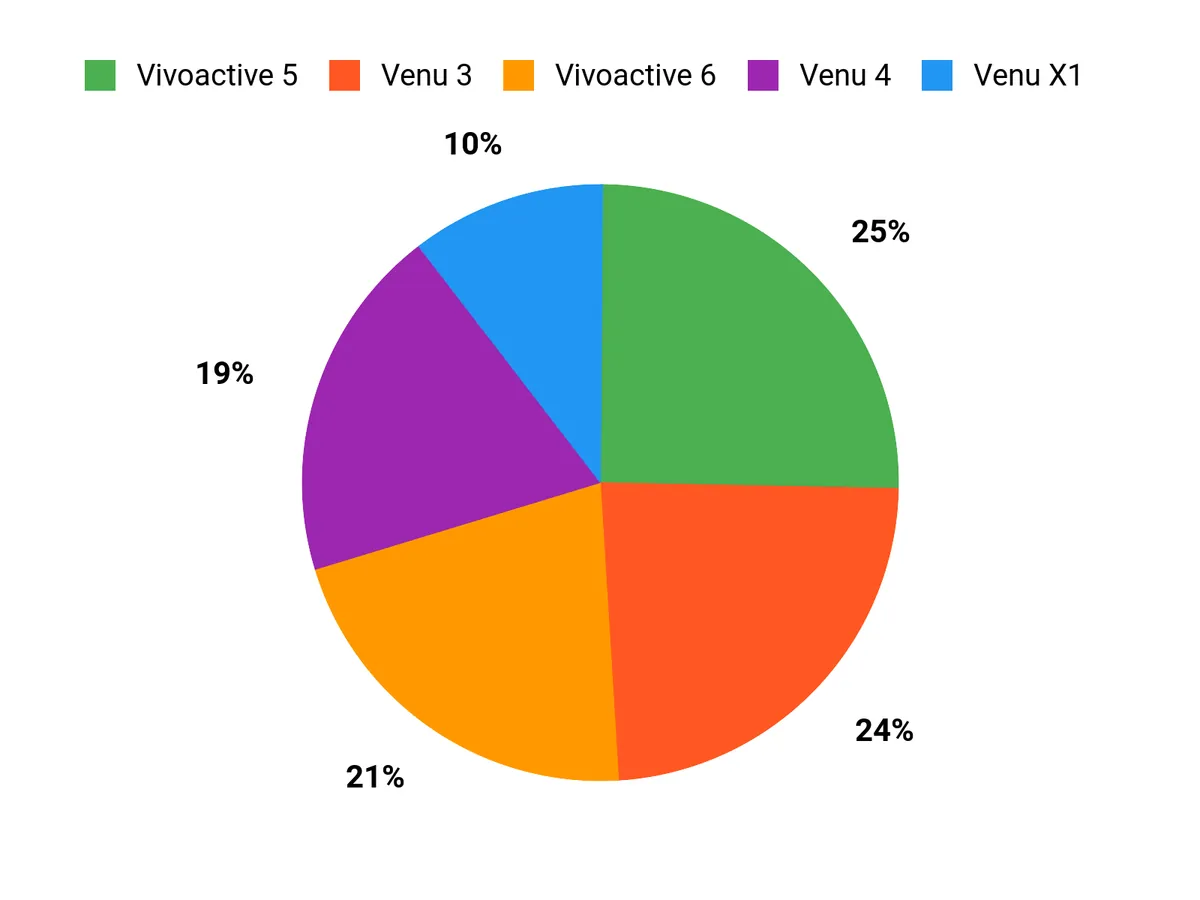
Customer Preferences
The biggest split is simple: vívoactive 5 and 6 favor lighter everyday fitness tracking, Venu 4 favors advanced health and training tools, Venu X1 favors maps and screen size, and Venu 3 favors battery life with call support. Pick the feature group you will use most often rather than paying for functions that will stay buried in menus.
Final Verdict
For Garmin vivoactive vs Venu, the Garmin vívoactive 6 is the strongest all-around choice for most buyers because it balances battery life, light weight and broad activity support. The Venu line becomes more compelling when calls, advanced training tools or maps are worth the extra cost to you.
For a lower-cost option, compare the Garmin vívoactive 5. For the premium round-watch pick, compare the Garmin Venu 4.
Product Images and Amazon Links
| Product | Image | Amazon |
|---|---|---|
| Garmin vívoactive 6 |
|
Check Price on Amazon |
| Garmin vívoactive 5 |
|
Check Price on Amazon |
| Garmin Venu 4 |
|
Check Price on Amazon |
| Garmin Venu X1 |
|
Check Price on Amazon |
| Garmin Venu 3 |
|
Check Price on Amazon |
