
Toyota 4wdemand is an electronically controlled part-time 4-wheel-drive system that switches between rear-wheel drive and 4WD as traction demands change. It starts in 2WD for better fuel efficiency and reduced drivetrain drag, then sends power to both axles when needed. Four-High suits snow, mud, and loose surfaces, while Four-Low supports slow technical driving. It is best used off pavement, since dry-road use can cause binding. More details follow on operation and vehicle applications.
Key Takeaways
- 4wdemand is a part-time 4WD system that normally drives the rear wheels for better fuel efficiency.
- An electronically controlled transfer case sends power to the front axle when 4WD is engaged.
- It is best used on snow, mud, gravel, and other low-traction surfaces.
- Four-High suits slippery conditions, while Four-Low is for slow, technical off-road driving.
- Keep 4WD disengaged on dry pavement to avoid driveline binding and extra wear.
What Is Toyota 4wdemand?
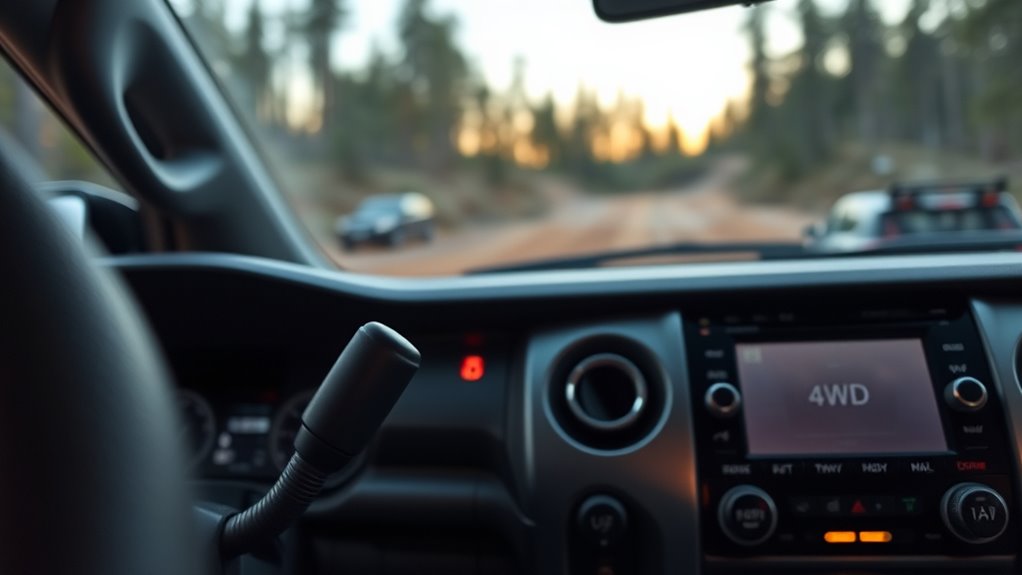
Toyota 4wdemand is Toyota’s part-time four-wheel-drive system designed to improve traction by automatically engaging the front wheels when conditions require it.
Toyota 4wdemand is Toyota’s part-time four-wheel-drive system, improving traction by engaging the front wheels when needed.
It is a 4wdemand package built around a part-time 4WD layout, giving the driver a practical choice between reduced-drag two-wheel drive and four-wheel drive authority when roads or terrain become unstable. A transfer case manages engine power to the front and rear axles, supporting traction on snow, mud, or loose surfaces.
In normal driving, the system can remain in 2WD to support fuel efficiency and reduce mechanical load. When conditions deteriorate, 4wdemand allows manual selection of 4WD modes, including Four-High for routine slippery travel and Four-Low for situations demanding greater torque.
The result is a controlled drivetrain that preserves mobility without unnecessary compromise. For drivers seeking autonomy on changing terrain, the system offers technical precision and measured capability.
How 4wdemand Works
How 4wdemand works is straightforward: the system operates as a part-time four-wheel-drive setup that lets the driver select 4WD when traction conditions demand it. In normal use, 4wdemand functions as rear-wheel drive, conserving fuel and keeping operation simple until added control is required.
A transfer case manages the shift between 2WD and 4WD, allowing smooth engagement without unnecessary complexity. In part-time systems, this manual selection gives the driver direct authority over power delivery.
- Rear wheels propel the vehicle in 2WD mode.
- 4WD sends power to both front and rear axles.
- The transfer case coordinates mode changes efficiently.
- Select models add a locking rear differential for tougher surfaces.
This architecture supports confident movement over mud, snow, gravel, and steep grades.
Why 4wdemand Starts in RWD
4wdemand starts in rear-wheel drive to improve efficiency during normal driving, since sending power only to the rear axle reduces unnecessary drag on the front drivetrain. This RWD strategy supports better fuel efficiency because fewer components are driven until additional capability is required.
It also contributes to balanced handling, as the front wheels remain free to steer and the vehicle can respond with greater predictability. By reserving 4WD for demand-driven engagement, the system preserves traction only when road conditions justify it, such as on low-grip surfaces.
Balanced handling keeps the front wheels free to steer, while traction engages only when conditions demand it.
The automatic shift from RWD to 4WD is seamless, allowing the drivetrain to adapt without driver action. This approach limits unnecessary mechanical load, helping prevent drivetrain binding and reducing wear over time.
For drivers seeking freedom from constant intervention, the design offers controlled motion, efficient operation, and reliable traction management.
When to Use 4wdemand Modes
Drivers can switch between 2WD and 4WD in 4wdemand to match traction needs with current road or trail conditions. In normal travel, 2WD keeps the rear wheels engaged and supports fuel efficiency without unnecessary drivetrain load. When surfaces lose grip, 4WD can be selected to restore control and improve performance.
- Use 2WD on dry pavement and predictable routes.
- Select Four-High on snow, mud, or loose trails.
- Choose Four-Low for slow, technical climbs or descents.
- Return to 2WD when traction is stable again.
Four-High is suited to slippery conditions where steady motion matters more than low-speed torque.
Four-Low provides additional torque for difficult terrain, helping the vehicle move deliberately and with precision.
Applied correctly, 4wdemand gives drivers freedom to respond to changing conditions while preserving efficiency, control, and safe mobility across varied terrain.
4WDemand Vs Full-Time 4WD: Key Differences
Unlike full-time 4WD, 4wdemand is a part-time system that requires manual engagement rather than remaining active at all times. In Part-Time 4WD, rear-wheel drive is the default, and 4WD is selected only when extra traction is needed. This design improves fuel efficiency because driveline drag remains lower during normal operation, allowing more efficient travel without unnecessary mechanical demand.
Full-Time 4WD, by contrast, continuously powers both axles and removes the need for driver intervention. Its torque distribution is usually managed by torque-sensing differentials that permit wheel-speed variation, which supports stability on mixed surfaces.
Part-Time 4WD generally uses a fixed torque split, making it simpler but less adaptable. Full-Time 4WD also commonly integrates traction control and low-range gearing, expanding capability across varied conditions.
For drivers seeking control and mechanical freedom, the difference is clear: one system stays ready at all times, while the other remains efficient until engaged.
Where 4wdemand Performs Best
Built for loose and uneven terrain, the 4wdemand part-time 4-wheel drive system performs best when maximum traction is needed on surfaces such as mud, snow, and gravel. In these conditions, 4wdemand enables deliberate control, letting the driver shift from 2WD to 4WD only when off-road demands increase.
The transfer case distributes power evenly to the front and rear wheels, supporting grip during shifts to rough ground. Its low-range gearing adds torque for steep climbs and technical sections, where precise movement matters more than speed.
- Mud and ruts
- Snow-covered roads
- Gravel tracks
- Steep off-road climbs
This part-time layout suits drivers seeking freedom from constant drivetrain engagement while keeping mechanical simplicity. It performs best where traction must be commanded, not assumed, and where manual authority over the vehicle enhances confidence on difficult terrain.
4wdemand Limitations to Know
4wdemand Part-Time 4-Wheel Drive has notable limitations that affect its use on high-traction surfaces.
Because the system requires manual engagement, incorrect operation on dry pavement can cause driveline binding, increasing wear and potential damage.
Its design is best suited to off-road or slippery conditions, so it is less effective in everyday driving where continuous traction management is needed.
Driveline Binding Risks
A key limitation of part-time 4-wheel drive is driveline binding, which can occur when the system is engaged on dry pavement or other high-traction surfaces. In Part-Time 4WD, manual engagement ties axle speeds together, creating mechanical stress when traction conditions differ.
- Front and rear axles rotate at mismatched rates.
- Turning on dry ground intensifies binding and handling instability.
- Transfer case and differential components face elevated wear risk.
- Repeated misuse can shorten drivetrain life and raise repair costs.
To preserve control and mechanical integrity, activation should be limited to low-traction conditions where wheel slip can occur.
This constraint is not a weakness of purpose; it is a technical boundary that supports reliable operation and informed freedom of use.
Surface Use Limits
Surface limits define how Part-Time 4WD should be used to avoid binding and preserve drivetrain integrity.
Part-Time 4WD is intended for surfaces that permit wheel slip, such as dirt, gravel, mud, or snow. On these low-traction routes, the front and rear axles can rotate at different speeds without stress.
On dry pavement, however, locked engagement can create driveline windup, heat, and component wear because the tires cannot slip enough to relieve torque. For this reason, 4WD should remain disengaged on firm roads and used only when traction is limited.
The system also requires manual mode changes, so drivers must anticipate terrain before conditions shift.
Used correctly, 2WD supports efficiency, while 4WD restores capability where freedom of movement demands controlled wheel slip.
Toyota Models With 4wdemand
Toyota models equipped with 4wdemand include vehicles such as the Tacoma and 4Runner, with availability depending on specific trims and configurations.
These models use a part-time transfer case to shift between 2WD and 4WD as driving conditions require. The system provides improved traction on low-traction surfaces while preserving fuel efficiency during normal driving.
Toyota 4WDemand Models
Several Toyota trucks and SUVs are equipped with 4WDemand, a part-time 4-wheel-drive system designed to let drivers switch between 2WD and 4WD as road conditions change. Toyota Tacoma and 4Runner models use this setup to improve traction in snow, mud, and other demanding terrain, while preserving freedom on dry roads.
- Part-time operation reduces unnecessary drivetrain load.
- A transfer case sends power evenly front to rear in 4WD.
- Grip increases on slippery surfaces and off-road climbs.
- Returning to 2WD on pavement limits binding and supports efficiency.
This system suits drivers who want controlled capability without permanent mechanical drag. Its design supports adaptable mobility, letting the vehicle respond to changing terrain with measured, practical authority.
Available Toyota Trims
Available trims equipped with 4WDemand are typically found in Toyota’s Tacoma and 4Runner lineups, where part-time 4-wheel drive is offered on select configurations for drivers who need added traction without full-time drivetrain engagement.
In these Toyota models, 4WDemand is commonly paired with a transfer case that lets the system shift between 2WD and 4WD according to terrain demands. The arrangement supports a controlled, manual engagement strategy, which suits drivers seeking practical freedom from constant drivetrain loading.
Tacoma trims aimed at utility use and 4Runner trims built for outdoor travel often include this setup. By limiting 4WD to selected trims, Toyota keeps the part-time system accessible while preserving a straightforward mechanical layout for varied driving conditions.
4WDemand System Benefits
In Toyota models such as the Tacoma and 4Runner, 4WDemand adds practical capability by letting drivers engage part-time 4WD only when road or trail conditions require it. This preserves efficiency in 2WD while granting control when freedom from poor surfaces matters most. The system uses an electronically controlled transfer case for quick, smooth shifts.
- Delivers strong traction on snow, mud, and gravel
- Splits power evenly in 4WD for balanced grip
- Supports Four-Low for technical off-road control
- Fits daily driving and remote travel needs
With 4WDemand, Toyota models gain adaptable performance without constant mechanical drag. The result is a disciplined system that expands mobility, improves confidence, and enables exploration beyond paved routes.
Frequently Asked Questions
What Does “Part-Time 4wd” Mean in a Toyota Vehicle?
Part-time 4WD means the Toyota operates in 2WD normally, then manually engages four-wheel drive for demanding driving conditions. System benefits include better traction and performance differences off-road. Maintenance tips: avoid dry pavement engagement.
How Does the 2026 4runner Part-Time 4WD Work?
About 50% of driving occurs in favorable terrain conditions. The 2026 4Runner’s drive system uses electronic engagement to switch between rear-wheel drive and 4WD, splitting torque front and rear for improved traction control.
What Is the Difference Between 4WD and Part-Time 4WD?
4WD stays engaged continuously, sending power to all wheels through drivetrain components, while part-time 4WD normally runs in 2WD and is selected for slippery terrain. Full time 4WD and traction control improve off road performance.
When Should a Part-Time Four-Wheel Drive System Be Engaged?
Part-time four-wheel drive should be engaged on slippery terrain; 70% of traction loss occurs there. It suits specific engagement conditions, terrain types, and driving scenarios, delivering performance benefits on snow, mud, gravel, or steep inclines.
Conclusion
In conclusion, Toyota’s 4WDemand is a smartly engineered part-time 4-wheel-drive system that behaves like a vigilant co-pilot, waiting in RWD until extra traction is demanded. It shines on slippery roads, dirt, and light off-road trails, yet it is not a miracle worker for deep mud or severe terrain. Compared with full-time 4WD, it is simpler, more efficient, and impressively practical—an electronically controlled system that turns ordinary driving into a remarkably capable balancing act.

