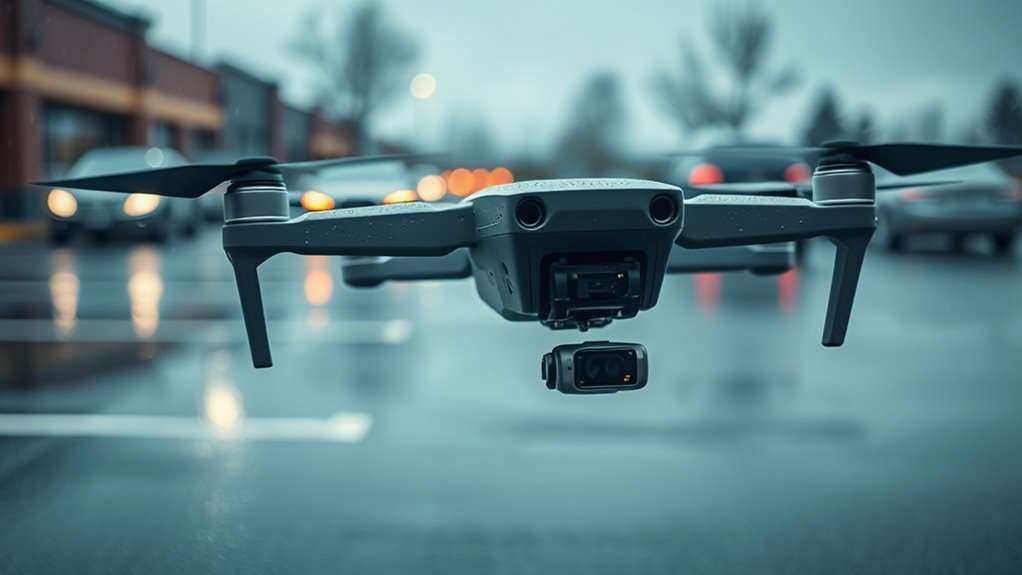
Flying a drone in the rain is rarely a simple yes or no. Most consumer DJI models offer little protection against moisture, while a few enterprise units carry IP ratings that suggest limited resistance to light rain. But an IP code does not guarantee immunity from water intrusion, sensor errors, or electrical faults. The real issue is how much exposure a model can tolerate before failure begins to show.
Can You Fly a DJI Drone in the Rain?
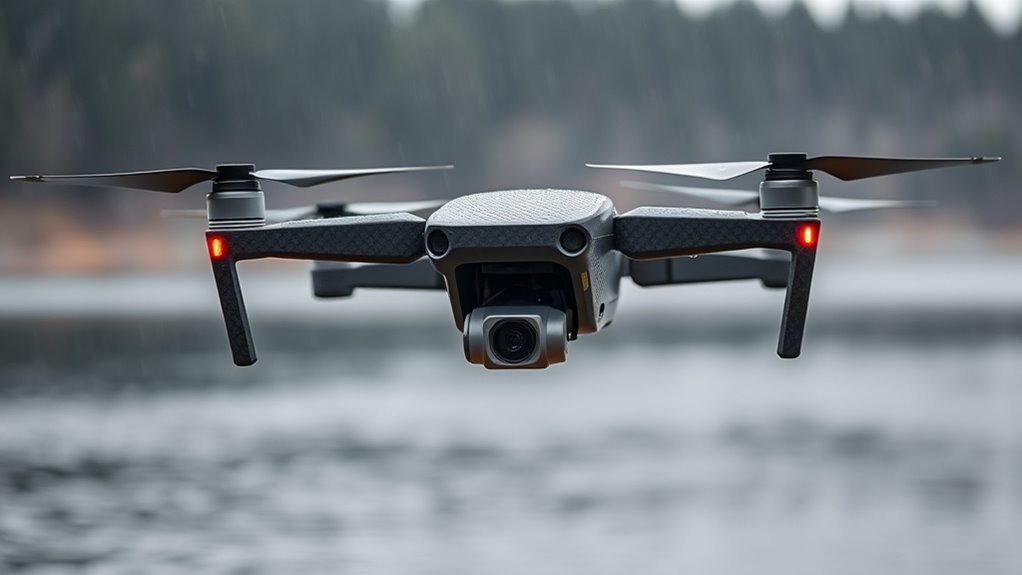
Most consumer DJI drones are not rated for water resistance, which makes flight in rain generally inadvisable because moisture can enter the airframe and damage sensitive electronics.
For most DJI consumer units, water ingress remains the primary failure mode when flying in the rain, since seals, motors, and circuit boards were not engineered for wet exposure.
Some DJI Enterprise platforms, including Matrice variants, carry IP ratings such as IP55, indicating limited protection and partial water resistance.
Even then, light rain is the practical upper boundary, not a guarantee of safety.
DJI cautions against operation in rainfall exceeding 100 mm in 24 hours, because sustained moisture can overwhelm protective design and accelerate corrosion, sensor drift, and intermittent electrical faults.
Liberation from dependence on hazardous assumptions requires strict adherence to manufacturer guidance.
Before any drone launch, the operator should verify model-specific specifications, weather thresholds, and operational limits.
In technical terms, flying in the rain is a controlled risk, not an accepted norm.
What Does an IP Rating Mean?
An IP rating, or Ingress Protection rating, provides a standardized measure of a device’s resistance to solid particles and water intrusion. In technical terms, it separates dust protection and water protection into two numerals, enabling objective comparison without marketing ambiguity. The first digit ranges from 0 to 6 and describes resistance to solids; 6 indicates complete dust-tightness. The second digit ranges from 0 to 9 and describes resistance to liquids; 0 offers none, while 9 covers high-pressure jets. This structure helps assess moisture ingress risk in a liberated, evidence-based way.
| Digit | Meaning |
|---|---|
| First digit | Solid particle protection |
| Second digit | Liquid protection |
| Example | IP55: dust-protected, water-jet resistant |
An IP55 device is not fully waterproof; it resists exposure, but does not eliminate all ingress. Higher ratings generally indicate stronger barriers against moisture ingress.
Which DJI Drones Are Rain-Ready?
Which DJI drones are rain-ready depends primarily on whether the model carries an official ingress protection rating. Most consumer drones, including the Mavic series, lack an IP rating and are not rain-ready; their electronics are not designed for wet weather exposure, so flight performance and reliability can degrade quickly.
Most DJI consumer drones, including Mavic models, lack IP ratings and are not rain-ready.
By contrast, the DJI Matrice 300 RTK is an IP45 platform intended for light rain and limited wet-condition operations. It is not waterproof, but it is engineered with measurable resistance that gives operators more freedom in marginal conditions.
- Consumer drones: no official rain protection
- DJI Matrice 300 RTK: IP45, light-rain capable
- Some Enterprise models: IP55, stronger resistance
- Manufacturer specs: the decisive operational reference
Even for IP-rated drones, DJI advises avoiding rainfall above 100 mm per 24 hours. The rating signals capability, not invulnerability; disciplined preflight evaluation remains essential for autonomous, liberated operations.
What Rain Does to DJI Drones
Rain introduces a primary risk of water ingress in DJI drones, especially in consumer models that lack an IP rating and as a result have limited protection against moisture exposure.
Once water reaches motors, cameras, or circuit boards, it can trigger sensor errors, electrical faults, and corrosion that may persist after the flight.
If exposure occurs, the aircraft should be powered down, dried thoroughly, and inspected before any further operation.
Water Ingress Risks
Most consumer DJI drones are not IP-rated, leaving their electronics, motors, and cameras vulnerable to water ingress during even light rain. For consumer drones, the absence of an IP rating means moisture can bypass seals and trigger electrical faults, corrosion, and loss of control authority.
Rain also alters aerodynamics and can degrade sensor functionality, reducing stability and autonomy.
- Moisture can enter motor housings quickly.
- Cameras may fog or fail.
- Water can cause erratic movement and false obstacle warnings.
Immediate landing and drying the drone reduce damage risk.
DJI advises avoiding rain above 100mm/24 hours, but lighter precipitation still poses measurable exposure. For operators seeking liberation through flight, the practical rule is simple: avoid wet skies, and if contact occurs, treat the drone as compromised until thoroughly dried.
Electronics And Sensors
Moisture introduced by rain can bridge contacts on DJI circuit boards, creating short circuits that disable sensitive electronics such as motors, flight controllers, and cameras.
Even light rain can disturb electronics, with droplets and conductive films forcing unstable current paths through exposed circuitry.
Sensors are also vulnerable: raindrops may trigger false obstacle readings, confusing navigation logic and causing erratic maneuvers or automatic landings.
Aerodynamic effects compound the problem, as moisture alters airflow and adds vibration, reducing lift and drone stability.
Visibility degrades when water accumulates on the camera lens, reducing image clarity and complicating FPV control.
Over time, prolonged rain exposure promotes corrosion inside the airframe, gradually weakening components and shortening service life.
Drying After Exposure
After a DJI drone has been exposed to rain, immediate shutdown is the first step to limit electrical damage and reduce the chance of short circuits in sensitive components.
When a drone gets wet, the operator should wipe down all external surfaces, especially ports and battery bays, to reduce residual water exposure. Then let it dry in a well-ventilated area for 24–48 hours so moisture removal can occur fully.
- Open all compartments.
- Use desiccant packs for added absorption.
- Inspect for signs of water damage or corrosion.
- Power on only after a full check.
This protocol preserves autonomy by minimizing avoidable failure.
Conservative drying after exposure is not optional; it is the practical boundary between recovery and irreversible degradation.
How Water Harms Drone Electronics
Water ingress presents an immediate electrical hazard because moisture can bridge contacts on circuit boards and trigger short circuits in drone electronics.
Sensitive components such as motors, battery connectors, sensors, and cameras may also suffer performance degradation as corrosion develops and fluid interference alters signal integrity.
Inadequate water resistance increases the likelihood of irreversible damage, making repairs or replacements more likely after exposure.
Water Ingress Risks
When rain enters a drone’s body or electronic compartments, it can bridge exposed contacts on circuit boards and trigger short circuits, causing immediate failure in models without waterproof protection. This water ingress is a direct hazard because drones are not waterproof, and even brief moisture exposure can produce electronic failures in sensitive components.
- Corrosion may accumulate on boards and connectors over time.
- Sensor contamination can distort obstacle detections and destabilize control.
- Fogged lenses reduce image quality and impair FPV awareness.
- Extra drag from wet airframe surfaces raises battery consumption.
The result is a measurable loss of reliability, autonomy, and operational freedom. Once moisture reaches critical pathways, the craft’s performance degrades rapidly, and recovery becomes uncertain without immediate drying and inspection.
Motor And Sensor Damage
Moisture exposure can rapidly damage both motors and sensors by bridging circuit-board contacts and creating short circuits that interrupt normal operation.
In a drone’s electronics, rainwater may penetrate housings, causing motor and sensor damage through direct electrical disruption and mechanical drag. Water in the motor assembly increases load, reduces efficiency, and can overheat windings during sustained operation.
Sensors exposed to moisture may register false obstacle returns, producing erratic flight behavior and destabilizing control loops. Moisture accumulation on camera lenses also degrades visual input, limiting navigation accuracy.
Over time, exposure to moisture promotes corrosion, which weakens component integrity and can convert temporary faults into persistent failures.
For operators seeking freedom in open environments, these effects sharply narrow safe flight margins and demand strict weather discipline.
Corrosion And Short Circuits
Rain can create immediate electrical faults in drones by bridging exposed contacts on circuit boards, producing short circuits that interrupt normal operation. These events often precede corrosion, because moisture exposure leaves conductive residue on drone components, especially motors, connectors, and battery terminals.
- Water ingress increases electrical damage.
- Missing IP rating leaves open assemblies vulnerable.
- Corrosion weakens contacts and raises resistance.
- Short circuits trigger operational failures and shutdowns.
Even light rain can begin the degradation process, and repeated exposure compounds the risk. Over time, oxidation and residue can spread beyond the initial wet area, impairing reliability and making repairs costly.
For operators seeking autonomy in the field, dryness is not a luxury; it is a technical requirement for preserving performance, safety, and service life.
How to Prepare a DJI Drone for Wet Weather
Before any DJI drone is flown in wet weather, it should be verified that the model has an appropriate IP rating, since most consumer drones are not formally water-resistant and must remain dry. To prepare a DJI drone for drones in wet conditions, the operator should confirm protection against dust and water, inspect the shell, and ascertain that battery compartments and the microSD slot are fully sealed. | Check | Action |
| — | — |
|---|---|
| IP rating | Confirm suitability for rain |
| Battery compartments | Close and dry them |
| Arms | Keep unfolded in rain |
| Battery type | Use recommended DJI batteries |
| Damage | Inspect for compromised seals |
This discipline reduces water ingress during flight and supports reliable lift, autonomy, and command response. Folding arms in precipitation should be avoided, because moisture may enter joints and stress structural interfaces. Only compatible DJI batteries should be installed, as electrical stability depends on matched power delivery. A brief inspection for cracks, worn gaskets, or other compromised waterproofing elements is essential before any attempt to fly.
What to Do If Your Drone Gets Wet
If a drone becomes wet, the operator should immediately power down both the aircraft and the remote controller to reduce the likelihood of short circuits and secondary electrical damage. Swift de-energizing preserves electrical protection and limits moisture-driven failure. The battery should then be removed at once, because retained charge can accelerate damage if internal contacts remain damp.
- Gently shake the drone to expel trapped water.
- Wipe all exterior surfaces with a dry cloth.
- Place the unit in a warm, dry environment for 24–48 hours.
- Use desiccant packets or uncooked rice to absorb residual moisture.
After drying, the drone must be inspected with precision for corrosion, residue, or structural damage before any restart. A careful examination of connectors, motors, and battery terminals is essential.
The objective is not haste but liberation from avoidable failure: controlled drying, disciplined inspection, and measured reactivation preserve reliability and reduce long-term risk.
Rain Flight Tips to Stay Safer
A prudent flight in wet weather begins with verification of the drone’s ingress protection rating, since models with higher ratings such as IP55 or IP67 offer greater resistance to moisture, while most consumer drones have no formal protection and remain vulnerable to water damage.
These rain flight tips prioritize IP ratings, water resistance, and disciplined launch checks. Before takeoff, confirm that battery compartments and microSD card slots are sealed, dry, and free of debris.
Even light rain can introduce moisture damage that accumulates into corrosion, electrical faults, and degraded drone performance. If precipitation starts in flight, immediate landing preserves control and limits water ingress.
After recovery, a post-flight inspection should identify droplets, fogging, or residue on seams and vents. The aircraft should then dry fully for 24–48 hours, with desiccants placed nearby to accelerate moisture removal.
Such procedures preserve autonomy, reduce repair exposure, and keep operations within rational, self-directed boundaries.
When to Skip Flying in the Rain
Most consumer drones should be grounded in rain because they lack formal water resistance, and even light moisture can infiltrate motors, wiring, and control boards, leading to corrosion, erratic flight behavior, or outright failure.
Drone pilots should skip flying whenever weather conditions include rain, mist, or sustained humidity, since these platforms remain vulnerable to water despite marketing claims.
- Light rain can seep into seams and bearings.
- IP ratings such as IP54 or IP55 offer only limited protection against water.
- DJI advises avoiding precipitation above 100 mm in 24 hours.
- If rain starts midflight, land immediately to fly safely.
This approach preserves performance, battery integrity, and control authority.
For pilots seeking liberation through reliable operations, restraint is not weakness; it is disciplined risk management.
Wet air may seem harmless, yet cumulative exposure can shorten service life and turn a routine sortie into a recovery effort.
When the sky turns uncertain, the rational choice is to postpone, protect the aircraft, and wait for drier conditions.
Frequently Asked Questions
Is It Safe to Fly a Drone in the Rain?
No, it is generally not safe to fly a drone in the rain.
Drone safety depends on weather conditions, and moisture damage can quickly impair flight stability, battery performance, and sensors.
Even brief drizzle may create visibility issues and increase corrosion risk.
Unless an IP-rated model is explicitly approved for wet use, conservative drone maintenance and strong pilot experience favor postponing flight until conditions are dry and controlled.
Can You Fly DJI Drones in the Rain?
Most DJI drones should not be flown in rain; one wet landing can seem harmless, like a paper map in drizzle, yet moisture damage compounds quietly.
Without official drone waterproofing, flight stability drops, sensor performance degrades, and battery life can shorten.
Visibility issues and reduced camera quality further increase risk.
Only select enterprise models with IP ratings may operate in damp conditions.
The operator should follow manufacturer operating guidelines precisely.
What Happens if a DJI Drone Gets Wet?
A DJI drone that gets wet may suffer electronics damage, sensor functionality errors, and degraded flight performance.
Without adequate water resistance, moisture can reach motors, cameras, and batteries, creating corrosion and short circuits.
Proper drone maintenance requires immediate emergency procedures: land, power off, remove the battery, and dry the unit for 24–48 hours before reuse.
Battery safety and careful recovery tips are essential, even for models with limited IP protection.
Can a DJI Mini 4 Pro Fly in Rain?
No, a DJI Mini 4 Pro should not fly in rain. Its drone waterproofing is not rated for wet weather conditions, so flight stability, battery performance, camera functionality, and signal interference may all degrade.
Technical analysis favors pilot precautions and damage prevention over risk. Even light drizzle can drive moisture into motors and electronics, threatening reliability.
For liberated, autonomous operation, dry conditions remain the rational threshold for launch and recovery.
Conclusion
To sum up, DJI drones should be treated as weather-limited systems unless a specific IP rating indicates otherwise. Light rain may appear harmless, but moisture can compromise sensors, connectors, and flight stability long before visible damage occurs. The critical objection—that brief exposure is usually fine—fails because risk is cumulative and often internal. For operators, the technical lesson is simple: verify the model’s protection level, respect environmental limits, and avoid assuming any consumer drone is rain-ready.
