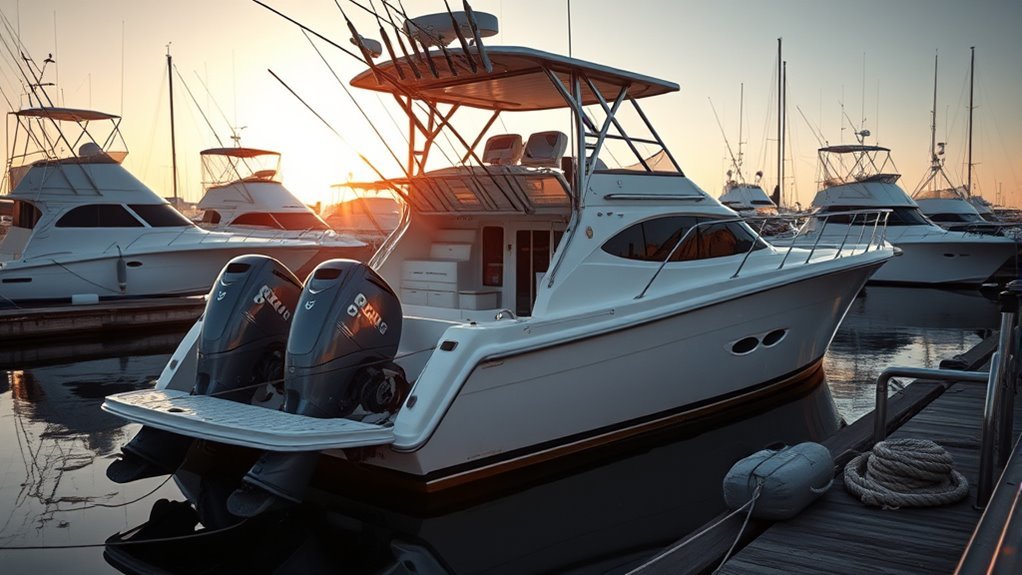
A fishing boat can cost less than $10,000 for a basic unpowered utility hull, around $30,000 to $60,000 for many complete 18- to 20-foot fishing packages, and well over $300,000 for premium offshore center consoles. Size matters, but engine count, construction, electronics, trailer requirements, dealer fees, storage, fuel, insurance, and maintenance can change the real cost dramatically.
Quick Answer
For 2026 budgeting, many complete 18- to 20-foot fishing boats fall around $30,000 to $60,000, 21- to 25-foot coastal boats often run $60,000 to $160,000+, and premium 26- to 36-foot offshore boats can range from roughly $150,000 to well above $500,000. Used pricing depends heavily on age, engine hours, condition, and equipment.
Key Takeaways
- Length Is Only the Starting Point: Two boats of similar length can differ by more than $100,000 because of construction, engines, electronics, fishing systems, comfort features, and brand positioning.
- Complete Packages Cost More Than Bare Hulls: A low advertised hull price may exclude the engine, trailer, freight, dealer preparation, electronics, taxes, registration, or destination charges.
- There Is No Universal 10% All-In Ownership Rule: Discover Boating uses roughly 10% or less as a maintenance rule of thumb, while fuel, insurance, storage, dockage, registration, taxes, and financing must be budgeted separately.
- Engines and Electronics Are Major Cost Drivers: Multiple high-horsepower outboards, radar, large multifunction displays, sonar, autopilot, trolling motors, towers, and livewell systems can add tens of thousands of dollars.
- Used Boats Can Offer Better Value: Early depreciation can benefit secondhand buyers, but a professional survey, engine inspection, sea trial, service-history review, and title check are important before closing the deal.
Fishing Boat Price Ranges by Size Class
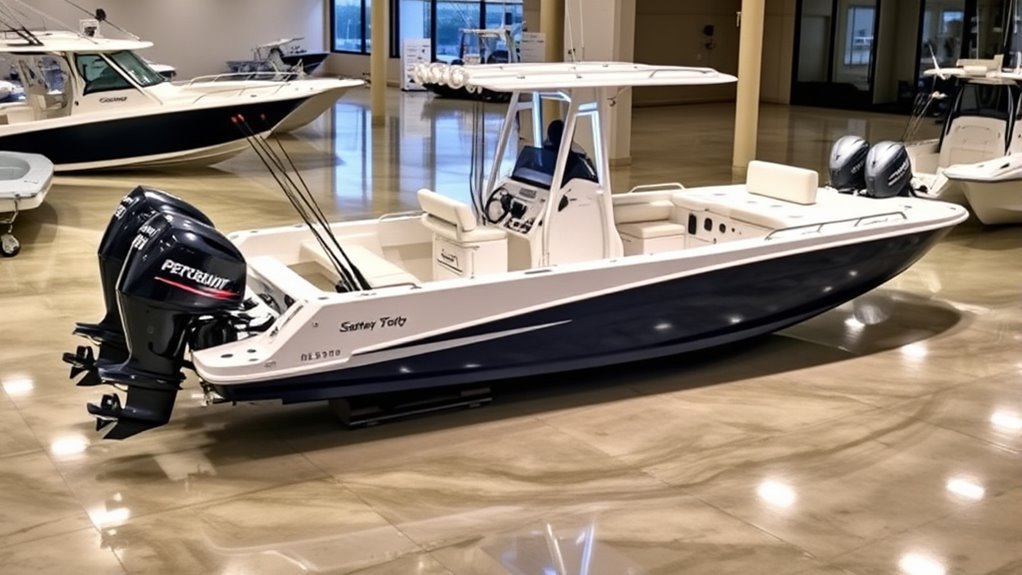
Boat length is one of the strongest price drivers because larger hulls generally require more structure, more propulsion, more fuel capacity, heavier trailers or marina storage, and larger systems. However, there is no official national price schedule by length. The ranges below are best used as 2026 planning ranges, not appraisals. Current manufacturer pricing shows how wide the spread can be.
| Class (Length) | Typical Layout | New-Boat Planning Range | Used-Market Guidance | Common Power |
|---|---|---|---|---|
| Small (16–20 ft) | Jon Boat, Bass Boat, Skiff, Small Center Console | Under $10,000 for some bare utility hulls; roughly $25,000–$70,000+ for many complete powered packages | Highly condition-dependent; compare exact model year, engine hours, trailer, and electronics | 25–150 HP single on many models |
| Mid-Size (21–25 ft) | Bay Boat, Dual Console, Deep-V Center Console | About $60,000–$160,000+ depending on brand, power, and equipment | Often attractive at 3–6 years old if maintenance and survey results are strong | 150–400 HP total; single or twins depending on hull |
| Offshore (26–30 ft) | Offshore Center Console, Walkaround | About $150,000–$350,000+, with premium models higher | Engine history, corrosion exposure, electronics age, and survey condition strongly affect value | Often twin outboards |
| Large Offshore (31–36+ ft) | Tournament Center Console, Express Fisherman | About $300,000–$600,000+, with highly optioned boats exceeding this range | Professional survey and detailed multi-engine service records become especially important | Twin, triple, or more high-output outboards depending on design |
Small Fishing Boats (16 to 20 Feet): From Basic Hulls to $70,000+
Compact fishing boats serve inland lakes, rivers, flats, protected bays, and nearshore water when conditions permit. At the low end, an unpowered aluminum utility hull can still cost less than $10,000. For example, the 2026 TRACKER GRIZZLY 1860 Utility was listed at a base price of $8,395 when checked, but that is not comparable to a complete boat-motor-trailer fishing package.
Complete 18- to 20-foot packages move much higher. The 2026 TRACKER TARGA V-18 WT, including a 150-horsepower Mercury and trailer, was listed at $41,995. A Carolina Skiff 19 LS also illustrates how engine choice and dealer-package details can move a roughly 19-foot boat into the upper-$30,000 to low-$40,000 range before taxes and other local charges.
Mid-Size Inshore & Coastal Boats (21 to 25 Feet): About $60,000 to $160,000+
The 21- to 25-foot class is popular because it can combine fishing space, family seating, coastal capability, and trailerability. Price differences become larger in this class because buyers may choose heavier fiberglass construction, hardtops, larger fuel capacity, premium upholstery, integrated electronics, livewells, freshwater systems, and either one large outboard or twins.
A current real-world example is the Sea Hunt Gamefish 25, which was listed at a starting price of $158,568 when checked. That illustrates why a well-equipped 25-foot saltwater fishing boat can sit near or above the top of a broad $60,000-to-$160,000 planning range.
Twin-Engine Offshore Boats (26 to 30 Feet): About $150,000 to $350,000+
Moving into 26- to 30-foot offshore boats usually adds heavier construction, twin-engine propulsion, larger fuel tanks, more electrical capacity, larger navigation displays, offshore safety equipment, additional pumps, and more complex plumbing. These boats are designed for longer coastal or offshore runs, but safe operating distance always depends on weather, crew experience, fuel reserve, communications, sea state, and the specific vessel.
Premium pricing can rise quickly. Boston Whaler’s build-and-price listings showed the 28-foot 280 Outrage starting at $299,839 when checked. Dealer preparation, taxes, registration, installed options, and locally added equipment can push the out-the-door figure higher.
Tournament Offshore Machines (31 to 36+ Feet): $300,000 to $600,000+
Large offshore center consoles can carry twin, triple, or additional high-output outboards along with towers, multiple livewells, sea-chest plumbing, large sonar transducers, radar, autopilot, outriggers, premium seating, and substantial fuel capacity. At this level, configuration matters as much as length.
For perspective, the Regulator 31 configurator showed an MSRP of $552,895 as equipped when checked. That demonstrates why a 31-foot premium offshore boat can cost more than some larger but more simply equipped vessels.
The purchase price is only the first number to calculate. Maintenance, insurance, fuel, storage, dockage, registration, taxes, financing, and upgrades should be budgeted separately because no single percentage accurately predicts every owner’s annual cost.
Primary Cost Drivers: Why Prices Escalate Rapidly
Two fishing boats of similar length can differ in price by more than $100,000 because length does not tell you the full story. Construction method, engine count, horsepower, fuel capacity, helm electronics, fishing hardware, upholstery, hardtops, towers, plumbing, electrical systems, dealer-installed accessories, and brand positioning all influence the final price.
Hull Materials and Propulsion Architecture
Fiberglass construction can involve molded laminates, composite reinforcement, stringer systems, structural adhesives, flotation materials, finished liners, and substantial skilled labor. Some premium builders use resin-infusion or other controlled-lamination methods to reduce excess resin and improve consistency. Aluminum boats use a different cost structure involving marine-grade alloy, welding, framing, finishing, and corrosion-control details.
Propulsion is frequently one of the largest individual line items on a powered fishing boat, but there is no dependable rule stating that engines always represent a fixed percentage of the total vessel price. The cost depends on horsepower, engine count, steering, digital controls, gauges, rigging, propellers, batteries, installation, and whether the engine is bundled into a factory package.
- Smaller Single-Outboard Packages: Often use 25- to 150-horsepower engines and keep rigging relatively simple.
- Large Single-Outboard Packages: May use 200- to 450-horsepower engines plus electronic controls, hydraulic or electric steering, and more robust electrical systems.
- Twin-Outboard Setups: Add a second engine plus additional rigging, batteries, steering components, controls, propellers, and twice the routine engine-service workload.
- Triple or Multi-Engine Offshore Setups: Can add six figures to the propulsion and rigging portion of a premium build, especially when high-output engines and integrated steering systems are used.
Pro Tip: Match the engine package to the boat manufacturer’s approved ratings, your normal passenger and gear load, and the performance you actually need. For applicable smaller outboard boats, the U.S. Coast Guard capacity label includes maximum horsepower information. Do not exceed the boat’s rated capacity or horsepower.
Marine Electronics, Navigation, and Rigging
Modern fishing boats can range from one basic chartplotter/fishfinder to a networked glass helm with radar, sonar, autopilot, VHF, engine data, cameras, digital switching, and thermal imaging. Installation labor, networking hardware, transducers, antennas, mounting, and electrical upgrades can be as important to the final bill as the displays themselves.
- Entry Electronics: A single multifunction display with GPS and sonar may cost from hundreds to several thousand dollars after the display, transducer, charts, mounting hardware, and installation are counted.
- Mid-Tier Coastal Suite: Dual displays, CHIRP sonar, VHF, networking, and an upgraded transducer can move the electronics budget into several thousand dollars or more.
- Offshore Electronics: Large displays, radar, autopilot, high-power sonar, satellite services, AIS, cameras, or thermal imaging can push the package into the tens of thousands.
- Fishing Hardware: Trolling motors, shallow-water anchors, outriggers, livewell upgrades, towers, additional rod storage, electric reels, and lighting can materially change the final build price.
What the Advertised Boat Price May Not Include
A manufacturer’s advertised starting price is useful for comparison, but it is not always the amount you will write on the final check. Before comparing two boats, ask for an itemized out-the-door quote so that both offers include the same categories.
- Freight and Destination: Moving a boat from the factory or distributor to the dealer may be separate.
- Dealer Preparation: Battery installation, commissioning, rigging checks, fluids, detailing, and launch preparation may be charged separately.
- Trailer: Some smaller fishing boats are sold as boat-motor-trailer packages; others list the trailer separately.
- Electronics and Accessories: The display, trolling motor, batteries, charger, shallow-water anchors, canvas, and safety gear shown in photos may be optional.
- Taxes, Title, and Registration: These depend on state and local rules.
- Financing: Interest and loan fees can materially increase total cost over several years even though they are not part of MSRP.
- Delivery and Storage: Large offshore boats may require professional transport or immediate marina arrangements.
Note: Compare boats using the final configured price, not only the lowest advertised MSRP. Manufacturer disclaimers commonly state that dealer preparation, taxes, registration, freight, and installed options may be additional.
The Real Cost of Boat Ownership: Ongoing Annual Expenses
The purchase invoice is only the beginning. Discover Boating lists insurance, maintenance, storage, marina fees, fuel, registration, equipment, and seasonal preparation among the normal ownership costs. Its maintenance guidance uses roughly 10% of boat cost or less as a broad maintenance rule of thumb, especially with lower costs often seen in a newer boat’s early years. That should not be interpreted as a universal all-in ownership percentage.
| Expense Category | Small Trailer Boat | Mid-Size Coastal Boat | Offshore Boat |
|---|---|---|---|
| Insurance | Can be relatively modest for liability-only coverage | Higher with agreed-value physical-damage coverage | Can increase substantially with vessel value, offshore navigation limits, location, and storm exposure |
| Engine Service | Usually one engine; follow its annual/hour-based schedule | Larger engine or twins increase parts and labor | Multiple large engines multiply routine service and repair exposure |
| Storage / Marina | Potentially $0 at home, excluding cover and trailer costs | Dry storage, seasonal dockage, or marina slip | Large slips, haul-outs, bottom care, shore power, and marina services can become major expenses |
| Fuel | Calculate from actual gallons per hour and use | Longer runs and larger engines increase consumption | Long offshore runs and multiple engines can make fuel one of the largest variable costs |
| Trailer Maintenance & Tires | Bearings, tires, lights, winch, brakes if equipped | Tandem-axle trailer may add more tires and brake components | Some larger boats are impractical to tow regularly and require professional transport or wet storage |
| Registration, Taxes & Safety Gear | State-specific | State-specific | State-specific, with potentially more offshore safety equipment |
| Best Budgeting Method | Add actual local quotes | Add actual local quotes | Add actual local quotes; avoid relying on one percentage |
How to Estimate Your Annual Fuel Cost
Fuel is too usage-dependent for a single national dollar estimate. A better method is:
Average gallons per hour × annual running hours × your expected fuel price per gallon = estimated annual fuel cost.
Use the engine manufacturer’s performance data or your own fuel-management display when possible. Offshore owners should also budget a safe fuel reserve rather than assuming every gallon in the tank is available for the planned route.
Routine Engine Service
Many modern outboards use an annual or approximately 100-hour basic service interval, although the exact schedule depends on model and operating conditions. Yamaha, for example, identifies annual/100-hour maintenance items such as engine and lower-unit oil service, filters, corrosion checks, and other scheduled inspections. Follow the owner’s manual for the exact engine rather than applying one generic schedule to every brand.
Warning: Do not assume a marina will accept your boat or your existing insurance policy. Ask the specific marina about slip availability, vessel-size limits, hurricane or storm procedures, proof-of-insurance requirements, liability limits, environmental fees, shore-power charges, and seasonal restrictions before buying a boat that cannot be stored at home.
Think in Five-Year Cost, Not Just Purchase Price
A lower purchase price does not automatically make a boat cheaper to own. A used boat with aging electronics, neglected engines, old batteries, worn trailer brakes, deteriorated upholstery, or deferred fiberglass work can consume the purchase-price savings quickly. A new boat may cost more up front but include stronger warranty coverage and fewer immediate replacement items.
When comparing two boats, estimate five years of loan interest, insurance, maintenance, storage, fuel, registration, taxes, expected electronics or battery replacement, trailer work, and likely resale value. This gives a more useful comparison than MSRP alone.
Buying New vs. Used: Maximizing Your Budget
New boats offer factory warranty coverage, current engine technology, a known service starting point, and the ability to choose electronics and options. The trade-off is depreciation. BoatUS reported in 2026 that many dayboats follow an S-shaped depreciation curve, with a common 10% to 15% decline in the first year, roughly 20% lost by year five, and larger cumulative losses by year ten. Actual depreciation differs substantially by brand, model, condition, engine package, region, and market demand.
Buying a pre-owned boat between three and six years old can allow the first owner to absorb some early depreciation. However, do not assume a particular engine is safe simply because its hours appear low. Maintenance records, corrosion, diagnostic history, compression or other manufacturer-appropriate tests, oil condition, lower-unit condition, cooling-system history, and how the engine performs during a sea trial matter more than a generic engine-life number.
Note: A professional pre-purchase survey is especially valuable on higher-value used boats. BoatUS describes the survey as the boating equivalent of an inspection and appraisal. Discover Boating cites roughly $20 per foot as a general survey expectation, although location and vessel complexity can change the quote. Surveyors can be located through organizations such as NAMSGlobal.
Used Fishing Boat Inspection Checklist
- Hull and Structure: Look for impact damage, stress cracking, repairs, moisture problems, delamination, corrosion, soft areas, and transom concerns appropriate to the hull material.
- Engine: Review service records, engine hours, fault history, corrosion, fluids, cooling performance, propeller and lower-unit condition, and manufacturer-specific diagnostic information where available.
- Sea Trial: Confirm cold starting, idle quality, steering, shifting, trim, acceleration, operating temperature, charging voltage, bilge systems, pumps, electronics, and full-load performance.
- Electrical System: Inspect batteries, chargers, wiring, terminals, breakers, shore-power equipment if fitted, and signs of amateur modifications.
- Fuel System: Check tank condition where accessible, hoses, filters, vents, fill hardware, and any signs of leaks or fuel odor.
- Electronics: Verify every display, transducer, radar, VHF, autopilot, trolling motor, pump, livewell, light, and networked accessory.
- Trailer: Inspect tires, bearings, brakes, bunks or rollers, winch, coupler, frame corrosion, lights, and load rating.
- Paperwork: Confirm hull identification number, title, registration, lien status, engine serial numbers, trailer paperwork, and included equipment in writing.
Trailer, Tow Vehicle, and Safety Costs
A trailerable fishing boat may save marina fees, but the combined boat, engine, fuel, batteries, gear, and trailer weight can require a substantial tow vehicle. Compare the fully loaded trailer weight with the vehicle’s tow rating, payload rating, hitch rating, axle limits, and braking requirements rather than using dry boat weight alone.
Safety equipment also belongs in the budget. The U.S. Coast Guard states that recreational boats generally need a properly sized, serviceable Coast Guard-approved wearable life jacket for each person aboard, with an additional throwable device required on many boats over 16 feet. Federal requirements are only part of the picture, so check the state rules where the boat will be registered and operated.
What the 2026 Boat Market Means for Buyers
The 2026 market is softer than the high-demand environment seen earlier in the decade, but that does not mean every manufacturer’s MSRP is falling. The National Marine Manufacturers Association reported that rolling-12-month new powerboat retail unit sales were down 7.1% through April 2026, while new freshwater fishing-boat sales were slightly up by 0.4%.
For buyers, softer overall demand may create more opportunities to compare dealer inventory, leftover model years, factory promotions, financing offers, and negotiated equipment packages. However, NMMA’s sales data measure market activity rather than providing a nationwide boat-price index, so do not assume every model has received an MSRP reduction.
Frequently Asked Questions
How much does a decent fishing boat cost?
A well-equipped new fishing boat in the roughly 18- to 22-foot range commonly lands somewhere around $30,000 to $85,000+, depending on hull material, engine size, trailer, electronics, and brand. Basic aluminum packages can cost less, while premium fiberglass center consoles can cost considerably more. Used examples vary too widely by age, engine condition, and equipment for one dependable national price.
Are boat prices going down in 2026?
The overall U.S. recreational powerboat market remained soft in the first part of 2026. NMMA reported rolling-12-month new powerboat unit sales down 7.1% through April, although freshwater fishing boats were slightly positive. That may improve negotiating leverage on some inventory, but it does not prove that MSRPs are falling across every fishing-boat brand or model.
How much does a Deadliest Catch commercial crab boat cost?
There is no standard “Deadliest Catch boat price.” Commercial Bering Sea crab vessels are specialized working ships whose values depend on age, steel or aluminum condition, machinery, refits, electronics, safety systems, permits or fishing rights where applicable, and survey condition. Used vessels can be seven-figure assets, while a custom new commercial build can cost many millions of dollars. They are not directly comparable with recreational fishing boats.
What is the typical price range for a 30-foot fishing boat?
A new offshore fishing boat around 30 feet can reasonably fall in the $200,000 to $400,000+ range, but premium configurations can exceed it. As a current reference point, Boston Whaler listed its 28-foot 280 Outrage at about $299,839, while Regulator’s 31-foot configurator showed more than $550,000 as equipped. Power, electronics, tower packages, and dealer-installed options create large differences.
How much should I budget each year to own a fishing boat?
Do not rely on one percentage. Add insurance, annual or hour-based engine service, fuel, storage or dockage, registration, taxes, trailer maintenance, seasonal preparation, safety equipment, cleaning, financing, and a repair reserve. Home-stored trailer boats can be relatively inexpensive to keep, while multi-engine offshore boats with marina slips can cost tens of thousands of dollars per year.
Is buying a used fishing boat worth it?
It can be. A used boat may let you avoid part of the steepest early depreciation and may include electronics, a trailer, or fishing accessories already installed. The savings only make sense if the hull, engines, electrical system, trailer, paperwork, and maintenance history check out. A survey and independent engine inspection are especially important on higher-value purchases.
Conclusion
Budgeting for a fishing boat means looking beyond length and showroom price. A simple aluminum utility hull may cost less than $10,000 before power and trailer, a complete 18-foot fishing package can run around $40,000, a well-equipped 25-foot coastal boat can approach $160,000, and premium 28- to 31-foot offshore models can cost $300,000 to more than $500,000.
The better buying strategy is to define where you will fish, how many people and how much gear you normally carry, whether you will trailer or use a marina, and which equipment you truly need. Then compare complete out-the-door prices and calculate insurance, storage, fuel, maintenance, financing, taxes, and expected depreciation separately. That produces a far more realistic ownership budget than relying on one universal percentage.
Sources
- TRACKER Boats — 2026 TARGA V-18 WT — current manufacturer package pricing for an 18-foot fishing boat.
- Sea Hunt Boats — Gamefish 25 — current manufacturer pricing and specifications for a 25-foot fishing boat.
- Boston Whaler — Build & Price — current manufacturer starting MSRP examples for premium offshore center consoles.
- Regulator Marine — 31 Boat Builder — current configurator pricing for a premium 31-foot offshore fishing boat.
- Discover Boating — Costs of Boat Ownership — maintenance, storage, insurance, marina, and other ownership-cost guidance.
- U.S. Coast Guard Boating Safety — federal recreational-boating safety and life-jacket requirements.