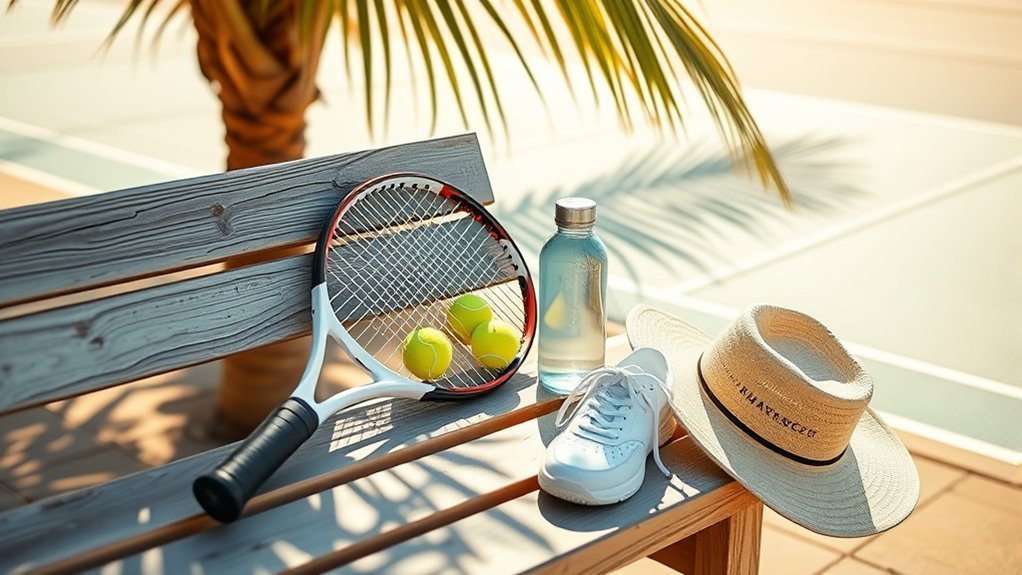
Beginner Guide Tennis Ocean introduces the equipment, techniques, and practice habits needed to start playing tennis. If you are new to the sport, your first priorities are choosing a comfortable racket, learning basic strokes, understanding the rules, and building consistent rallies. This guide explains those essentials and helps you decide whether additional instruction or a paid learning resource is worthwhile.
Quick Answer
Beginner Guide Tennis Ocean covers the fundamentals of starting tennis: racket selection, grips, forehand and backhand strokes, serving, court positioning, and basic scoring. Its practical approach suits new players who want an organized learning path. However, its publisher, purchase price, and specific product features have not been independently verified.
What Is Beginner Guide Tennis Ocean?
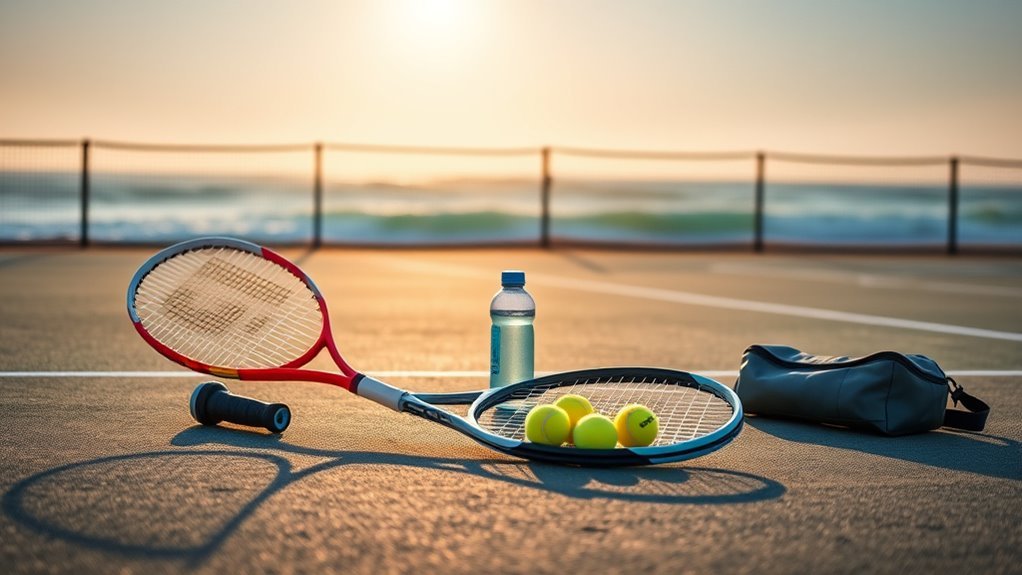
Beginner Guide Tennis Ocean is presented as an introduction to tennis for people with little or no playing experience. It brings together the skills, equipment, and learning methods needed to move from your first practice session toward recreational matches.
Rather than beginning with advanced tactics, the material focuses on grips, basic strokes, footwork, court awareness, and repeatable ball contact.
The learning approach follows a practical sequence:
- Understand the court and basic rules.
- Choose equipment that fits your body and playing level.
- Learn forehand and backhand techniques.
- Develop a controlled serve and return.
- Practice cooperative rallies before competitive matches.
- Use coaching feedback to correct technical mistakes.
This structure reflects the general approach in the LTA’s beginner tennis guidance, which emphasizes suitable equipment, consistent practice, and instruction.
One distinction matters before purchasing: the material described here provides useful beginner guidance, but an independently verified commercial listing for Beginner Guide Tennis Ocean was not established. Specific claims about its author, price, included lessons, or exclusive features therefore remain unconfirmed.
Who This Beginner Tennis Guide Is For
This beginner tennis guide suits people who want to understand the sport before investing heavily in equipment or lessons. It is also relevant to returning players who need to rebuild their fundamentals.
Your starting point should depend on your experience, physical needs, and preferred way of learning.
New Players
Complete beginners benefit from learning the rules and basic movements before worrying about winning matches.
A group lesson can introduce the ready position, simple groundstrokes, and serving technique while giving you immediate feedback.
Private instruction offers more individual attention, but it is not necessary for everyone. Many recreational players begin with group coaching or informal practice.
Some beginner programs also provide rackets and balls, allowing you to try the sport before purchasing your own equipment.
Children should use equipment suited to their size and ability. Adults can also benefit from slower balls and smaller practice courts.
Learning Goals
Your first goal should be controlled, repeatable contact, not maximum power. A clear progression makes it easier to recognize improvement and identify what needs more practice.
Useful beginner goals include:
- Developing a comfortable forehand and backhand.
- Learning to move into position before hitting.
- Serving into the correct service box.
- Maintaining short rallies with a partner.
- Understanding scoring and basic court etiquette.
- Building fitness and confidence through regular play.
You can pursue these goals for recreation, fitness, social interaction, or future competition.
What Tennis Basics Does It Cover First?
Beginner tennis starts with the four main strokes: forehand, backhand, volley, and serve. Each has a different purpose, but all require balance, timing, and racket control.
Understanding court markings and scoring helps you apply these skills during actual play.
| Basic Area | Purpose | Beginner Focus |
|---|---|---|
| Strokes | Develop ball control | Forehand, backhand, volley, and serve |
| Court layout | Understand positioning | Baseline, sidelines, service boxes, and net |
| Rallying | Improve consistency | Keep the ball in play with controlled shots |
| Footwork | Improve balance | Ready position, recovery, and lateral movement |
| Scoring | Prepare for matches | Love, 15, 30, 40, deuce, and game |
Understanding the Four Basic Strokes
A forehand is usually played on your dominant side, while a backhand is struck on the opposite side. Backhands can use one or two hands.
A volley is hit before the ball bounces, usually closer to the net. The serve starts each point and requires you to send the ball into the opposite service box.
Beginners should first practice smooth contact and controlled direction. Power and more advanced spin can develop later.
Understanding Tennis Scoring
Standard tennis scoring progresses from love to 15, 30, and 40. Winning another point normally wins the game, provided you have the required two-point advantage.
At 40-40, the score is called deuce. A player must then win two consecutive points to take the game.
The USTA scoring explanation also covers advantage, sets, and match scoring.
Learning to announce the score before serving is a simple habit that prevents confusion during friendly matches.
How It Teaches Grips and Serves
Grip instruction helps you control the racket face and guide the ball. The continental grip is commonly taught for serves, volleys, and slices, while an eastern or semi-western grip may be used for forehands.
A continental grip resembles holding the racket as though you were shaking hands with it. However, you do not need to use this grip for every stroke.
How to Practice Your First Serve
A reliable serve begins with a consistent toss and balanced movement. Focus on getting the ball into the correct service box before increasing speed.
- Stand behind the baseline with your body turned partly sideways.
- Hold the racket with a continental grip.
- Toss the ball smoothly using your non-dominant hand.
- Bring the racket upward toward the ball.
- Make contact above your head at a comfortable reach.
- Follow through naturally and recover your balance.
The first serve of a game begins from the right side of the center mark. The ball must travel diagonally into the opposite service box.
You get two attempts to make a valid serve. Missing both results in a double fault and the loss of the point.
These requirements are explained in the USTA serving rules.
When your toss becomes inconsistent, practice the toss separately before attempting another full serve. If it drifts too far away, catch the ball and reset rather than forcing an awkward swing.
What You Need Before You Start
You do not need expensive equipment to begin tennis. A properly fitted racket, suitable court shoes, comfortable clothing, tennis balls, and water are enough for most introductory sessions.
Fit and comfort matter more than appearance or advanced equipment features.
Choose a Beginner-Friendly Racket
A larger racket head provides a more forgiving hitting area, helping reduce the effect of off-center contact.
The USTA racket sizing guidance suggests that most beginners consider a head size of approximately 100–115 square inches.
Its general starting guidance also includes a racket weighing about 9.5–11 ounces and a standard adult length of 27 inches.
These are starting points, not requirements for every player. Strength, height, comfort, and swing style should influence your choice.
Choose the Right Tennis Balls
Standard yellow tennis balls are not always the easiest option for a new player. Lower-compression balls move more slowly and provide extra time to prepare.
The USTA ball progression explains the main options:
- Red balls: Slower and lower-bouncing, suitable for introductory practice on smaller courts.
- Orange balls: A progression from red balls, with greater speed and bounce.
- Green balls: Lower-compression balls suitable for progression toward standard tennis.
- Yellow balls: Standard balls used in most conventional adult matches.
These colors identify different playing characteristics, not merely visibility. Your coach can help select the right ball for your current ability.
Wear Suitable Shoes and Clothing
Tennis involves repeated sideways movement, short sprints, and sudden stops. Shoes designed for tennis provide the traction and lateral support needed for those movements.
Choose footwear appropriate for the court surface. General running shoes may not provide the same side-to-side stability.
Wear breathable athletic clothing that allows easy movement. Moisture-wicking fabric is useful during warm-weather sessions.
Bring a reusable water bottle, and take regular drinking breaks. A hat and suitable sun protection are also useful for outdoor play.
Note: Warm up before playing and increase your training gradually. If you have an existing injury or persistent pain, consult a qualified healthcare professional before continuing intensive practice.
How It Helps You Rally Faster
Longer rallies come from controlled contact, suitable equipment, and good positioning. Beginners generally improve more effectively by keeping the ball in play than by trying to hit every shot hard.
A forgiving racket and slower practice balls make it easier to develop timing.
Consistency comes before power: learn to return the ball reliably before trying to finish the point.
A Simple Rally Progression
Use these drills to build control without immediately playing full matches.
- Self-rally: Tap the ball upward with your racket and control its bounce.
- Partner control: Exchange gentle shots with a partner at a comfortable distance.
- Service-box rally: Stand closer to the net and keep the ball inside the service boxes.
- Longer rally: Move farther apart as your contact becomes more reliable.
- Point practice: Introduce serving, returns, and basic scoring.
During each drill, focus on tracking the ball, moving your feet, and meeting it at a comfortable distance from your body.
If your shots repeatedly hit the net, try preparing earlier and adjusting your racket path. If they travel too far, reduce swing speed and aim for a safer target.
Partner drills and coached sessions also provide feedback that solo practice cannot always offer.
What Sets This Guide Apart?
The approach described in Beginner Guide Tennis Ocean connects equipment selection with technical learning. Instead of treating racket choice, serving, and match play as unrelated subjects, it organizes them into a beginner-friendly progression.
Its practical value comes from several elements:
- Starting with fundamental skills rather than advanced tactics.
- Explaining equipment choices in terms of comfort and control.
- Using progressive drills to develop rally consistency.
- Encouraging instruction and feedback when technique becomes difficult.
- Connecting practice with recreational matches and local tennis communities.
This is a useful way to organize introductory learning, but it should not be mistaken for a verified comparison against other commercial tennis courses.
The content does not establish that the guide includes exclusive videos, personalized coaching, downloadable training plans, or other premium features.
Finding Beginner Tennis Sessions
Local programs can give you structured practice and opportunities to meet players at a similar level.
In Great Britain, Barclays Free Park Tennis offers free group sessions at participating park courts. Rackets and equipment are provided.
These social sessions are organized by trained volunteers and should not automatically be treated as substitutes for individual coaching.
You can also look for beginner classes, club sessions, recreational leagues, and friendly matches in your area.
Who Should Buy It?
Beginner Guide Tennis Ocean may suit readers who prefer organized written instruction before starting practical lessons. However, the purchase decision depends on its actual contents, price, and the support included.
The guide’s verified tennis topics are relevant to several groups.
- Complete beginners: Learn basic equipment requirements, strokes, and court rules.
- Parents: Understand age-appropriate rackets, slower balls, and introductory coaching.
- Returning adults: Refresh fundamental technique before joining recreational matches.
- Fitness enthusiasts: Learn the movements and equipment needed for tennis-based exercise.
- Adaptive players: Explore suitable equipment, accessible facilities, and modified playing arrangements.
The USTA’s adaptive tennis guidance outlines opportunities for players with disabilities.
Wheelchair tennis generally follows standard tennis rules, with an additional bounce permitted for wheelchair players.
What to Check Before Paying for the Guide
A paid guide should offer meaningful value beyond information available through introductory articles and free tennis programs.
Before purchasing, establish:
- Who created the guide and what tennis teaching experience they have.
- Whether the purchase includes written lessons, videos, drills, or personal feedback.
- Whether the material matches your experience and physical ability.
- Whether a sample lesson or complete contents list is available.
- The total purchase price, access conditions, and refund terms.
If these details are unavailable, you can still use the fundamentals explained here and begin with a local introductory session.
Frequently Asked Questions
What Are the 5 R’s in Tennis?
The five R’s described in this guide are Ready, Rally, Return, Risk, and Reinforce. They form a learning mnemonic rather than an official rule of tennis. Ready means preparing your position, Rally means keeping the ball in play, Return means responding to incoming shots, Risk means choosing shots wisely, and Reinforce means repeating sound technique.
What to Know Before Playing Tennis for the First Time?
Learn basic court markings, scoring, and serving rules before your first match. Wear suitable tennis shoes, bring water, and use a racket that feels comfortable. Warm up before playing, announce the score clearly, respect other players, and focus on controlled shots rather than power.
What Does L1, L2, and L3 Mean for Tennis Rackets?
L1, L2, and L3 identify racket handle sizes. L1 measures 4 1/8 inches, L2 measures 4 1/4 inches, and L3 measures 4 3/8 inches around the handle. Smaller and larger sizes also exist. Measure your hand and test the grip before purchasing. An overgrip can increase a slightly undersized handle.
What to Buy for Tennis Beginners?
Start with a comfortable racket, suitable tennis shoes, athletic clothing, tennis balls, and a reusable water bottle. A larger racket head and lower-compression balls can make introductory practice easier. Ask whether your first coaching session provides equipment before buying everything yourself.
Do You Need to Buy a Tennis Guide to Learn Tennis?
No, you can learn tennis without purchasing a guide. Free instructional resources, public courts, beginner group sessions, and equipment-loan programs offer accessible starting points. A paid guide becomes more useful when it provides structured lessons, clear demonstrations, or feedback that matches your learning needs.
Conclusion
Beginner Guide Tennis Ocean provides a practical framework for understanding equipment, basic strokes, serving, and early match preparation. Its strongest learning principle is simple: develop control before power and build your skills through regular practice.
Start with suitable equipment, practice short rallies, and use coaching when you need help with technique. Before purchasing the named guide, confirm its actual contents, publisher, and price so you know what additional value it provides.
Sources
- Lawn Tennis Association — How to Get Started Playing Tennis: Beginner equipment, instruction, practice, and participation.
- USTA — Tennis Scoring Rules: Points, games, deuce, and advantage.
- USTA — Racket Size, Weight, and Length: Beginner racket specifications and equipment selection.
- USTA — Tennis Skill Levels: Red, orange, green, and yellow ball progression.
- LTA — Tennis Racket Grip Sizes: Handle measurements, fitting methods, and overgrips.
- USTA — Tennis Serving Rules: Service positioning, faults, and service boxes.
- LTA — Barclays Free Park Tennis: Free participation and provided equipment.
- USTA — Wheelchair and Adaptive Tennis: Accessible participation and modified playing rules.
