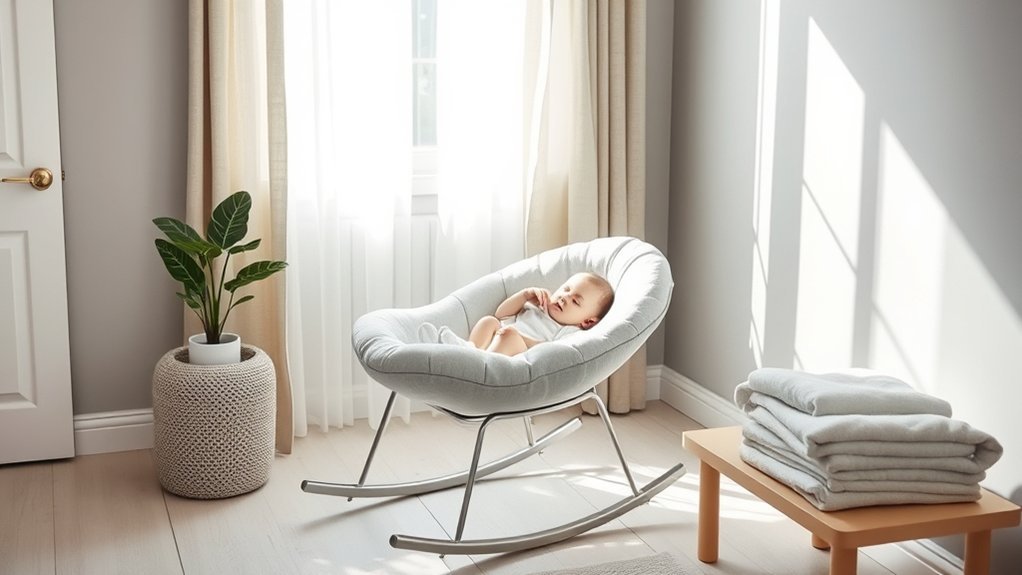
The Gravel Baby Rocker by Juniors is an infant-to-toddler seat designed for supervised play and gentle soothing. It combines rocking motion, two recline positions, a removable toy bar, music, and vibration. Its main appeal is the ability to convert from an infant seat into a toddler rocker, although safe use depends on your child’s development and the correct seating mode.
Quick Answer
The Juniors Gravel Baby Rocker offers a five-point harness, two recline positions, seven melodies, calming vibrations, and a removable toy bar. Its listed maximum child weight is 18 kg, with a recommended age range extending to three years in its convertible design. It is intended for supervised awake use, not sleep.
Is the Gravel Baby Rocker Worth It?
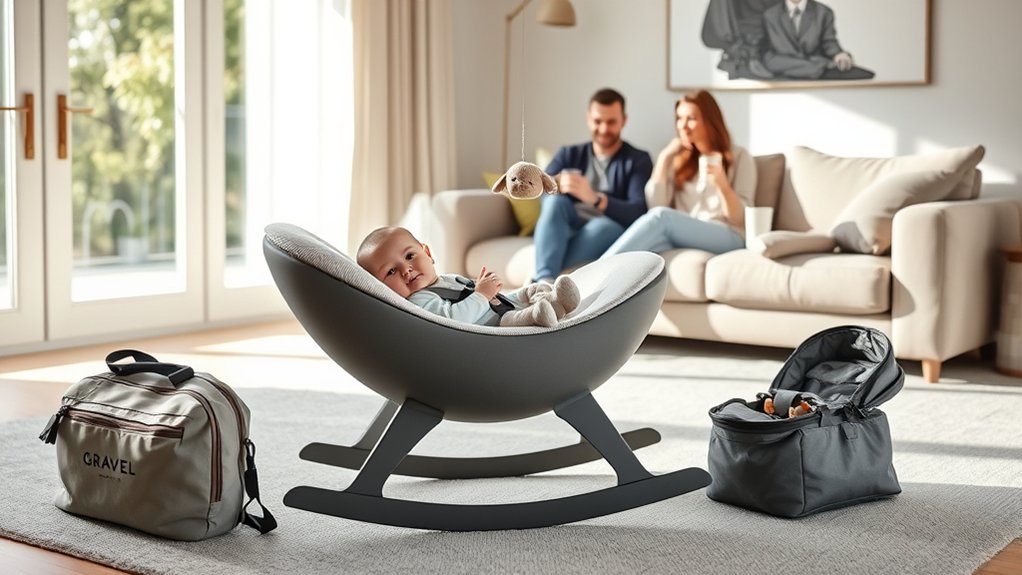
The Gravel Baby Rocker is worth considering if you want one seat that accommodates different stages of early childhood. Its convertible design offers more potential use than a basic infant-only rocker.
The official Babyshop product specifications identify several practical features:
- Two recline positions: Allow you to adjust the seating position according to the approved mode.
- Five-point harness: Helps keep your child positioned securely.
- Seven melodies: Provide an optional sound feature during supervised use.
- Calming vibrations: Offer another soothing option, although babies respond differently.
- Removable toy bar: Includes two interactive toys for awake play.
- Infant-to-toddler conversion: Extends its intended use beyond the earliest months.
The rocker requires three C batteries for its powered features. Consider this ongoing expense when comparing it with a simple manual bouncer.
Its value also depends on what you expect from it. A rocker can provide a convenient place for an awake baby while you remain nearby, but it cannot replace a crib, bassinet, or play yard.
There is also no reason to expect rocking or vibration alone to improve balance, intelligence, or motor development. Those benefits are not established for this specific product.
Who Is the Gravel Baby Rocker Best For?
The Gravel Baby Rocker suits families who want a soothing infant seat with the option to convert it for toddler use. Its combination of movement, music, and toys may appeal to caregivers seeking several functions in one product.
It may be particularly useful for:
- Parents who prefer a convertible rocker instead of purchasing separate infant and toddler seats.
- Families whose babies enjoy gentle rocking or vibration while awake.
- Caregivers who want an adjustable seat with a removable toy bar.
- Households that prefer a five-point restraint system for supported infant seating.
However, the rocker should not be your baby’s main place for play. Babies also need time to move freely, reach for toys, roll, and develop strength outside a seat.
For families seeking a simple, non-powered option, a traditional baby bouncer may be more suitable. The additional features are useful only if your baby enjoys them.
Gravel Baby Rocker Age Limits
The Juniors Gravel Baby Rocker is listed for use from birth, with a maximum recommended age of three years and a maximum child weight of 18 kg. However, these overall limits do not mean the infant recline mode remains suitable throughout that period.
The distinction between infant and toddler use matters because a child’s ability to sit, move, and climb changes the safety requirements.
Age and Weight Limits
The product’s retail specifications identify it as a convertible infant-to-toddler rocker. Its recommended age and weight information is summarized below.
| Specification | Listed information |
|---|---|
| Starting age | 0 months and older |
| Maximum recommended age | 3 years |
| Maximum child weight | 18 kg |
| Seating modes | Infant seat and toddler rocker |
| Recline positions | 2 |
The published listing does not establish a separate minimum infant weight or individual weight limit for each seating mode.
Use the instructions supplied with your exact model to determine when conversion is appropriate. Do not assume that the overall 18 kg rating applies to every position.
When to Stop Use
Stop using the infant recline mode when your child can sit up independently, reaches its specified limit, or becomes too mobile for that seating position.
The U.S. Consumer Product Safety Commission’s infant bouncer guidance explains that these seats are intended for babies who cannot yet sit unassisted.
For the Gravel model, follow these practical steps:
- Check the weight and developmental restrictions for the current seating mode.
- Stop infant-mode use when your baby can sit independently or exceeds its limits.
- Convert to toddler mode only as directed in the product manual.
- Stop using the rocker entirely if your child exceeds its approved limits, can climb out, or the seat becomes unstable.
A baby may reach a developmental milestone earlier than expected. Age alone is not enough to decide whether continued use is appropriate.
Is the Gravel Baby Rocker Safe?
The Gravel Baby Rocker includes a five-point harness and a sturdy base, but these features do not eliminate the risks associated with infant seats. Correct placement, supervision, and proper restraint use are essential.
The retailer’s published specifications do not provide enough information to independently confirm this particular model’s compliance with every applicable safety standard.
Follow these safety practices whenever your child uses the rocker:
- Place it on a firm, flat floor.
- Never use it on a bed, sofa, table, countertop, or other elevated surface.
- Fasten and adjust the harness every time.
- Stay nearby and watch your baby throughout use.
- Keep the seat away from stairs, cords, heaters, and other hazards.
- Check the frame, restraints, and toy attachments for damage before use.
- Never carry the rocker while your child is seated inside.
Warning: Never use the Gravel Baby Rocker for sleep, including supervised naps. If your baby falls asleep, transfer them to a firm, flat, approved sleep surface and place them on their back. A harness does not make an inclined seat safe for sleeping.
The CPSC’s safe sleep guidance warns against allowing infants to sleep in inclined rockers and similar products.
Babies can slump forward or sideways while sleeping in a seated position. This can interfere with breathing even when an adult is nearby.
For awake use, the NHS advises limiting time in bouncers and similar seats to no more than 20 minutes at a time.
Keep sessions short, offer frequent breaks, and respond if your baby seems uncomfortable.
Does the Gravel Baby Rocker Support Newborns Well?
The Gravel Baby Rocker is marketed for use from birth, but newborn suitability depends on more than an age label. Your baby must fit securely, maintain a safe head position, and remain comfortably supported while awake.
Newborns have limited head and neck control. Therefore, the seat’s recline angle, harness adjustment, and fit deserve particular attention.
Newborn Head Support
A suitable newborn seating position should support the baby’s body without forcing the head forward. The Gravel Rocker’s reclined design may provide comfortable support when correctly adjusted.
However, the retail specifications do not confirm a separate removable newborn insert or a minimum recommended weight of 5.5 pounds.
Before placing a newborn in the rocker, check three things:
- The baby’s head remains in a natural position rather than dropping forward onto the chest.
- The harness fits securely without allowing the baby to slide downward.
- The body remains centered without leaning heavily to either side.
Do not add pillows, rolled blankets, aftermarket head supports, or extra padding to improve the fit. Use only accessories approved for the exact model.
If your newborn repeatedly slumps or cannot maintain a safe position, stop using the rocker and discuss the concern with your pediatrician.
Recline and Harness
The Gravel Baby Rocker has two recline positions and a five-point safety harness. These features allow the seat to accommodate different stages while helping keep the child securely positioned.
Choose the position permitted for your child’s current developmental stage. Never change the recline or seating mode while your baby is inside.
| Feature | Why It Matters |
|---|---|
| Two recline positions | Provide different approved seating positions as the child develops. |
| Five-point harness | Helps prevent slipping and keeps the child positioned securely. |
| Seat materials | Should remain smooth, intact, and comfortable against the baby’s skin. |
| Stable base | Helps reduce movement and tipping when placed correctly on the floor. |
The harness should fit snugly without digging into the skin. Make sure the buckle closes properly and the straps are not twisted.
Even with correct positioning, the rocker should not replace holding, supervised floor play, or tummy time.
Is It Better Than a Baby Bouncer?
The Gravel Baby Rocker offers more built-in entertainment features than many basic baby bouncers, but neither design is automatically better. Your choice depends on your baby’s preferences, available space, and intended use.
A rocker generally moves back and forth, while a bouncer uses a spring-like movement that responds to the baby’s motion or a caregiver’s touch.
| Feature | Gravel Baby Rocker | Basic baby bouncer |
|---|---|---|
| Motion | Rocking with optional vibration | Responsive bouncing |
| Music | Seven melodies | Depends on model |
| Age range | Convertible infant-to-toddler design | Usually intended for early infancy |
| Power | Three C batteries for powered features | Manual or battery-powered, depending on model |
| Sleep suitability | Not suitable for sleep | Not suitable for sleep |
If you value a longer intended product lifespan, the Gravel model has an advantage over an infant-only seat. If you prefer simple movement without batteries or electronic features, a basic bouncer may meet your needs.
Neither product replaces active play. The NHS guidance on keeping babies active explains why prolonged time in reclining seats should be avoided.
How Portable Is the Gravel Baby Rocker?
The Gravel Baby Rocker can serve different areas of the home, but its exact portability is difficult to assess from the published specifications. The retailer does not provide a confirmed product weight, folded size, or carrying-handle specification.
Therefore, claims that it weighs approximately 6.5 pounds or folds into a compact travel package should not be treated as confirmed features.
Before buying, consider whether:
- The assembled rocker fits through your doorways.
- You have enough floor space for its base and rocking movement.
- The seat can be stored conveniently when not in use.
- Any folding or carrying mechanism is described in the supplied instructions.
Move the rocker only when it is empty. If your baby needs to move to another room, carry the baby separately and set up the seat again on a suitable floor.
Outdoor use also requires care. Avoid uneven ground, direct heat, and surfaces where the base could slip or tip.
How Easy Is the Gravel Baby Rocker to Clean?
The Gravel Baby Rocker’s published care instructions specify wipe cleaning. Machine washing is not confirmed for this model.
This distinction matters because washing an unsupported fabric cover or soaking electronic components could damage the product.
For routine cleaning:
- Remove your baby and switch off the powered features.
- Remove the toy bar if the instructions permit it.
- Wipe dirty surfaces with a soft, slightly damp cloth.
- Clean around the harness and buckle without soaking them.
- Allow all parts to dry completely before use.
Avoid harsh chemicals and abrasive cleaning tools unless specifically permitted by the manufacturer.
Check the fabric seams and straps for trapped food, milk, and other debris. Frequent spot cleaning can prevent buildup without requiring a full disassembly.
If your version has a removable cover, follow its sewn care label and the product manual. Do not assume that removable means machine washable.
When the Gravel Baby Rocker Isn’t a Good Fit
The Gravel Baby Rocker may not suit every family or infant. Its usefulness depends on secure positioning, available space, the baby’s comfort, and whether the additional electronic features are needed.
Consider these limitations before deciding.
| Situation | Why It May Be Limiting |
|---|---|
| Poor newborn fit | A baby who repeatedly slumps may not maintain a safe position. |
| Significant reflux | An inclined rocker is not a treatment and may worsen symptoms. |
| Small living space | The assembled base needs suitable floor space. |
| Above the approved limit | Continued use may increase the risk of instability or injury. |
| Machine-washable cover required | The published care instructions specify wipe cleaning. |
| Sleep or overnight use | The rocker is not an approved infant sleep surface. |
Reflux deserves particular attention. The American Academy of Pediatrics’ reflux guidance explains that semi-inclined positioning does not reliably improve reflux and can make it worse.
If your baby has persistent reflux, breathing concerns, poor weight gain, or unusual positioning needs, discuss seating choices with your pediatrician.
Note: Babies with medical conditions, significant muscle weakness, or special positioning needs may require individualized advice. A pediatrician can help determine whether a reclined infant seat is appropriate.
Finally, do not overlook floor play. The AAP’s tummy-time guidance recommends short, supervised sessions while babies are awake to help develop strength and movement skills.
A rocker can complement these activities, but it cannot provide the same freedom to move.
Frequently Asked Questions
What Are the Downsides of Using a Baby Rocker?
Baby rockers restrict movement and are not suitable for sleep. Extended use can reduce opportunities for active floor play. They also require correct harness use, constant supervision, and suitable floor placement. Some babies dislike rocking or vibration, while others quickly outgrow the infant seating mode.
What to Look for When Buying a Baby Bouncer?
Look for a stable base, secure harness, clear age and weight limits, and appropriate safety certification. Check whether the seat supports your baby’s current developmental stage. Easy cleaning, comfortable materials, available replacement parts, and straightforward assembly also matter. Avoid products marketed as sleeping places unless they meet applicable infant sleep requirements.
What Are Signs of High IQ in Babies?
There is no reliable way to identify a high IQ from a baby’s behavior alone. Early curiosity, attention, memory, and problem-solving skills may reflect developing abilities, but they do not establish future intelligence. Babies develop at different rates, and no rocker or bouncer has been shown to increase IQ.
Are Baby Rockers Worth Buying?
Baby rockers can be worth buying if your baby enjoys gentle movement and you need a supervised awake seating option. Convertible models may offer additional use as your child grows. However, they are optional baby gear rather than a necessity, and they should never replace safe sleep equipment or active play.
Can a Baby Sleep in the Gravel Baby Rocker?
No, the Gravel Baby Rocker should not be used for naps or overnight sleep. An inclined seating position may allow a sleeping baby’s head to fall forward and restrict breathing. Move a sleeping infant to a firm, flat crib, bassinet, or play yard and place them on their back.
Does the Gravel Baby Rocker Need Batteries?
Yes, the Gravel Baby Rocker requires three C batteries for its powered features. The retailer lists seven melodies and calming vibrations. Keep the battery compartment secure, and follow the supplied instructions when replacing batteries or cleaning the electronic components.
Conclusion
The Gravel Baby Rocker offers a useful combination of rocking, music, vibration, and convertible seating. Its five-point harness, two recline positions, and toddler conversion are practical features, but they do not remove the need for careful supervision.
Before buying, confirm that the exact model suits your child’s size and development. Check the supplied manual, inspect the seat and restraint system, and review the CPSC recall database where applicable.
Used correctly, the rocker can support short periods of supervised play and soothing. It should remain one part of your baby’s routine rather than a substitute for safe sleep, holding, or unrestricted movement.
Sources
- Babyshop — Juniors Gravel Baby Rocker: Product features, age range, weight limit, harness, batteries, and cleaning information.
- U.S. Consumer Product Safety Commission — Infant Bouncer Safety: Floor placement, restraint use, supervision, and developmental limits.
- U.S. Consumer Product Safety Commission — Safe Sleep: Safe infant sleep surfaces and the risks associated with inclined products.
- NHS — How to Keep Your Baby or Toddler Active: Recommended limits on time spent in bouncers and similar seats.
- American Academy of Pediatrics — Safest Sleep Solution for Babies With Reflux: Reflux positioning and safe sleep recommendations.
- American Academy of Pediatrics — Back to Sleep, Tummy to Play: Supervised tummy time and early physical development.
- U.S. Consumer Product Safety Commission — Recalls: Official product recall and safety warning database.
