
Imagine boarding a plane with your little one, a car seat ready for safer seating and a compact stroller ready to unfold when you need it most. You might wonder if you can bring both items without extra stress. In most cases, yes, but airline rules, stroller size limits, gate-check options, and car seat labels can affect how smoothly your trip goes.
Quick Answer
Most airlines allow you to travel with both a car seat and a stroller. A stroller can usually be checked at the ticket counter or gate, while an approved car seat may be used onboard if your child has a paid seat and the seat fits the aircraft.
Key Takeaways
- You can usually bring a car seat and stroller when flying with a child, but rules vary by airline.
- A car seat used on the plane should be approved for aircraft use and installed according to airline crew instructions.
- Compact strollers may qualify for carry-on storage, while larger strollers are often gate-checked or checked at the counter.
- Label both items, take photos before travel, and use protective bags when checking them.
- Check your airline’s stroller and car seat policy before your flight to avoid last-minute surprises.
At a Glance
| Best For | Parents flying with babies, toddlers, or young children who need safer transport and easier airport movement. |
| Difficulty | Easy with planning; harder if your stroller is bulky or the car seat is heavy. |
| Helpful Items | Car seat travel bag, stroller gate-check bag, luggage tags, wipes, installation manual, and a lightweight stroller. |
| Cost | Usually free to check one stroller and one car seat, though airline policies can vary. |
Benefits of Traveling With a Car Seat and Stroller
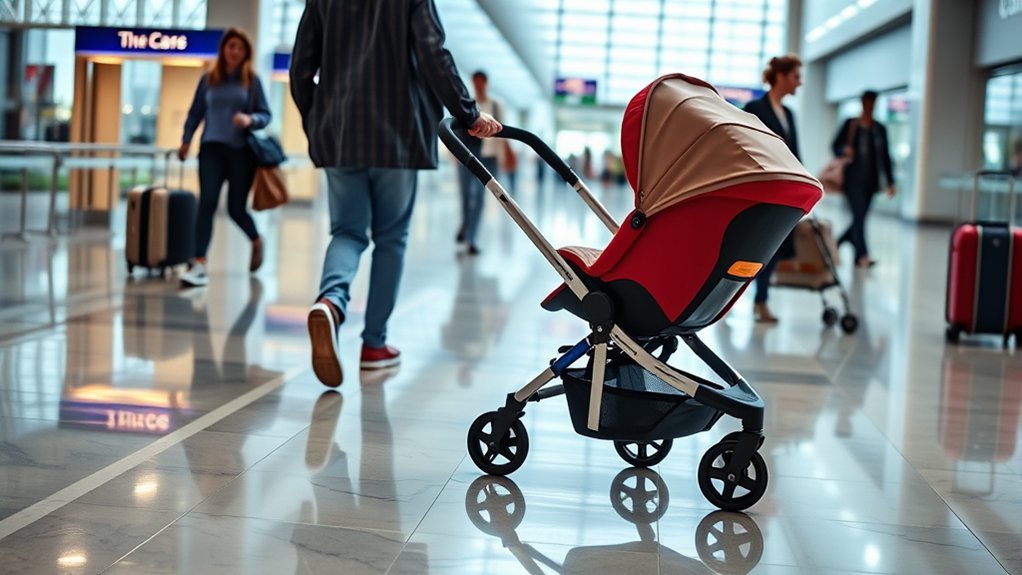
When you travel with a car seat and stroller, you can improve your child’s safety and streamline your entire journey. A familiar car seat gives your child a secure, known place to sit, while a stroller helps you move through parking lots, check-in lines, security areas, and long terminals with less strain.
For flights, a car seat can be useful when your child has their own ticketed seat and the seat is approved for aircraft use. It can also help your child stay more settled because the harness and seating position feel familiar. For road travel after landing, bringing your own car seat can prevent the stress of relying on rental gear that may not fit your child well or may not be available when you arrive.
Plus, a familiar stroller can reduce your child’s irritability during long airport waits. It gives tired toddlers a place to rest and helps you carry small bags, snacks, diapers, blankets, and other child travel essentials.
Lightweight strollers enhance mobility at your destination, making outings more manageable and enjoyable. Ultimately, the comfort of familiar items eases the travel experience, allowing both you and your child to embrace the trip with more confidence and peace of mind.
Pro Tip: If you already use a travel system at home, practice folding the stroller, removing the car seat, and carrying both pieces before travel day. A five-minute practice run can make the airport feel much easier.
Airline Regulations for Carrying Car Seats and Strollers

Traveling with a car seat and stroller simplifies your journey, but understanding airline regulations is key to a smooth experience. Most airlines allow families to check one car seat and one stroller per child without counting them as regular checked bags, but the exact rules can differ.
If you have an FAA-approved car seat, you may be able to use it on the flight when your child has a separate seat. Look for wording on the car seat label that says it is certified for use in motor vehicles and aircraft. Some airlines require the car seat to be installed in a window seat so it does not block another passenger’s exit path.
Smaller, collapsible strollers may fit onboard if they meet the airline’s carry-on size limits. Larger strollers, jogging strollers, double strollers, and folding wagons typically need to be checked at the ticket counter or gate.
Don’t forget to ask about pre-boarding if you’re traveling with kids under two or need extra time. Early boarding can make installing car seats, folding strollers, and storing carry-on items much easier.
Always check the specific airline for detailed car seat regulations and stroller policies before your trip. Rules can vary by aircraft, route, stroller size, child age, and whether your child has their own seat.
Warning: Do not assume every car seat can be used on an airplane. Booster seats without an internal harness are generally not used as aircraft restraint systems because airplane seats have lap belts only.
How to Check if Your Car Seat Is Airplane Ready
Before you leave home, inspect your car seat label and manual. The label should clearly state that the restraint is certified for use in motor vehicles and aircraft. If you cannot find this wording, check the manual or contact the manufacturer before your trip.
- Check the approval label: Look for aircraft-use wording on the side or bottom of the car seat.
- Measure the seat width: Narrower car seats are usually easier to install on aircraft seats.
- Bring the manual: A printed or saved digital manual can help if installation questions come up.
- Use the harness correctly: Your child should fit within the seat’s height and weight limits.
- Know your airline’s seating rules: Car seats are often placed at window seats and may not be allowed in exit rows.
If the car seat is heavy, consider a car seat travel cart or backpack-style travel bag. This can make it easier to move through the airport while keeping your hands free for your child.
Tips for a Smooth Travel Experience

Maneuvering through the airport with kids can feel overwhelming, but a little preparation goes a long way in ensuring a smooth travel experience.
Start by checking your airline’s regulations regarding car seats and strollers, especially size, weight, and gate-check restrictions. If your stroller is compact enough for overhead storage, confirm the folded dimensions before you rely on carrying it onboard.
Opt for a travel system that connects your car seat directly to your stroller if that setup fits your child and your route. This can be especially helpful when moving from parking to check-in, then from security to the gate.
Make sure your car seat is FAA-approved, marked with the proper aircraft-use label, and that you understand the installation process. Practice installing it with a lap belt because airplane seats do not use the same lower anchors found in many cars.
Utilize gate-checking options for strollers when possible. Gate-checking lets you use the stroller until boarding, then pick it up near the aircraft door or baggage area, depending on the airport and airline process.
Finally, consider TSA PreCheck if you travel often. It may speed up security screenings and reduce the amount of unpacking you need to do. With these tips and the right stroller accessories, you’ll move through the airport with less stress and more confidence.
Packing and Labeling Your Gear Before the Flight
Good labeling can save time if your stroller or car seat is misplaced. Add a durable luggage tag to each item with your name, phone number, and email address. You can also place a second tag inside the travel bag in case the outside tag comes off.
Use a padded car seat bag when checking a car seat. If you do not have one, a clear plastic airline bag may still help protect the fabric from dirt. For strollers, remove cup holders, snack trays, stroller fans, hooks, and loose accessories before gate-checking.
- Take photos before checking: Photograph the stroller and car seat from several angles before handing them over.
- Keep receipts: Receipts can help if you need to file a damage or loss claim.
- Attach tags early: Do this before reaching the gate to avoid rushing during boarding.
- Secure moving parts: Fold the stroller fully and lock the frame if it has a latch.
- Keep essentials with you: Do not leave medicine, travel documents, or must-have comfort items in a checked stroller bag.
Note: Gate-checked strollers are still handled like baggage, so protective bags and photos are helpful even when you hand the stroller over at the aircraft door.
Getting Through the Airport Efficiently
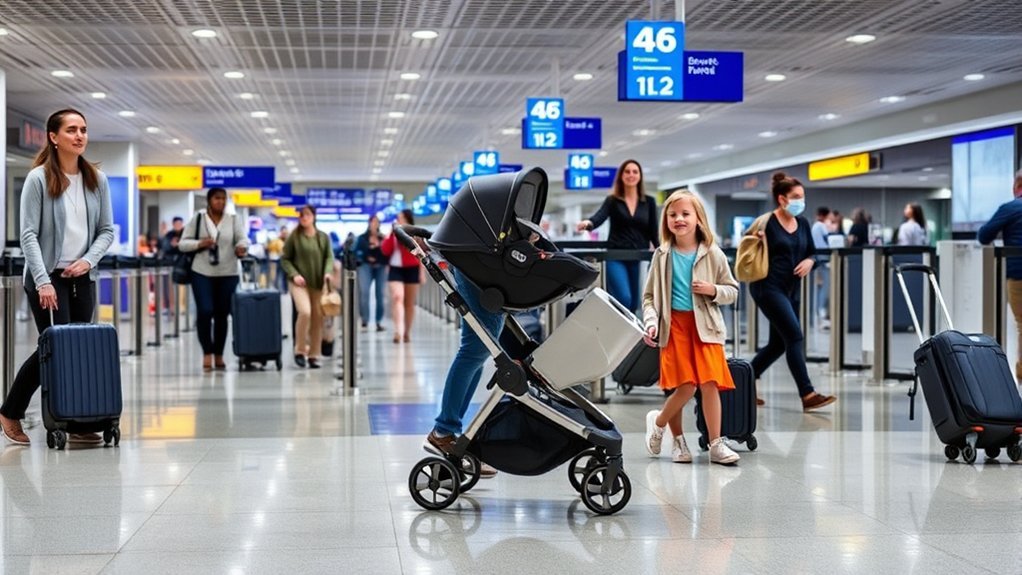
Maneuvering through the airport can be a breeze if you plan ahead and know what to expect. Start by considering a travel system that connects your car seat and stroller directly, simplifying airport navigation.
Don’t forget about gate-checking your stroller; you can use it right up to the plane door, making family travel smoother. If you have TSA PreCheck, you may move through security faster and with fewer steps.
At security, you may need to fold the stroller and send it through the X-ray machine if it fits. If it does not fit, security officers may inspect it separately. Your child will usually need to be removed from the stroller before screening.
Attach luggage tags to your car seat and stroller early to prevent delays at the gate. Finally, familiarize yourself with your airline’s policies regarding check-ins to guarantee a hassle-free experience.
With a little preparation, you can fly with confidence and ease.
Should You Check the Car Seat or Use It Onboard?
The best choice depends on your child’s age, your budget, and your travel plans after landing. If your child has a paid seat and your car seat is approved for aircraft use, using it onboard can provide a familiar and secure place to sit. It also keeps the car seat with you, reducing the risk of baggage damage.
Checking the car seat may be easier if your child will sit on your lap or if the seat is too wide or heavy to manage onboard. However, checked car seats can be exposed to rough handling. If you check it, use a protective bag and inspect it carefully after arrival.
| Option | Best When | Main Consideration |
|---|---|---|
| Use car seat onboard | Your child has a paid seat and the car seat fits aircraft rules. | You must carry it through the airport and install it correctly. |
| Gate-check car seat | You want to keep it with you until boarding but will not use it onboard. | Pickup location may vary by airport. |
| Check at ticket counter | You want fewer items to carry through security and the terminal. | Use a protective bag and inspect for damage after arrival. |
Handling Issues With Car Seats and Strollers During Travel

While managing air travel with children, unexpected issues with car seats and strollers can arise, making it essential to be prepared. Understanding car seat policies varies by airline, so check specific regulations before you fly. If your stroller gets damaged, report it immediately; claims often need to be filed quickly.
| Issue | Action |
|---|---|
| Lost Stroller | Report it to the airline staff before leaving the airport |
| Damaged Car Seat | Document damage with photos and ask about the claims process |
| Compensation | Review airline policies and keep baggage claim receipts |
Keep your receipts and take photos of any damage; this can support the claims process. Prioritizing stroller safety and understanding these steps can help you navigate travel hassles confidently.
If a car seat is visibly cracked, has broken foam, has missing parts, or has damage to the harness, do not use it until the manufacturer confirms whether it is still safe. When in doubt, treat a damaged car seat seriously because its job is to protect your child in a crash.
Related Guides
Frequently Asked Questions
Can I use my car seat on public transportation at the airport?
You may be able to use your car seat on some airport buses, shuttles, taxis, or rideshares, but rules vary by location and vehicle type. Check local car seat regulations and public transportation guidelines first. For taxis or rideshares, bring a car seat that you can install correctly and quickly.
Are there size restrictions for strollers on flights?
Yes. Airlines vary in stroller size restrictions. Some compact travel strollers may fit in the overhead bin, but larger strollers usually need to be gate-checked or checked at the ticket counter. Review your airline’s folded stroller size rules before travel.
Do airlines provide car seat straps or accessories?
Airlines typically do not provide car seat straps, travel carts, car seat bags, or stroller accessories. Bring your own gear and make sure it is compatible with your car seat or stroller before you leave home.
What should I do if my car seat gets damaged?
If your car seat gets damaged, take photos immediately and report it to the airline before leaving the airport. Keep baggage tags and receipts. Then contact the car seat manufacturer to ask whether the seat can still be used or should be replaced.
Is it necessary to label my stroller and car seat?
Yes. Labeling your stroller and car seat is a smart step. Stroller identification and car seat tagging help airline staff return your gear if it is misplaced. Use an outside tag and place a second tag inside the travel bag for extra protection.
Can I bring both a stroller and a car seat for free?
Many airlines allow families to check both a stroller and a car seat for free, but policies differ. Some airlines also have limits for wagons, large strollers, or oversized gear. Always confirm with your airline before your flight.
Can I gate-check a stroller and use a car seat on the plane?
Usually, yes. Many families gate-check the stroller and use an approved car seat onboard for a child with a paid seat. Confirm the airline’s car seat placement rules and stroller gate-check process before boarding.
Conclusion
Traveling with a car seat and stroller can transform your journey into a more comfortable and less stressful experience. By understanding airline regulations, checking your car seat label, protecting your gear, and preparing before airport day, you can move through check-in, security, boarding, and arrival with more confidence.
The idea that travel with little ones has to be chaotic is not always true. With the right tools, clear planning, and a few simple safeguards, flying with a stroller and car seat can be manageable. Embrace the adventure, protect your child’s gear, and remember that a little preparation goes a long way in creating lasting memories with your family.
