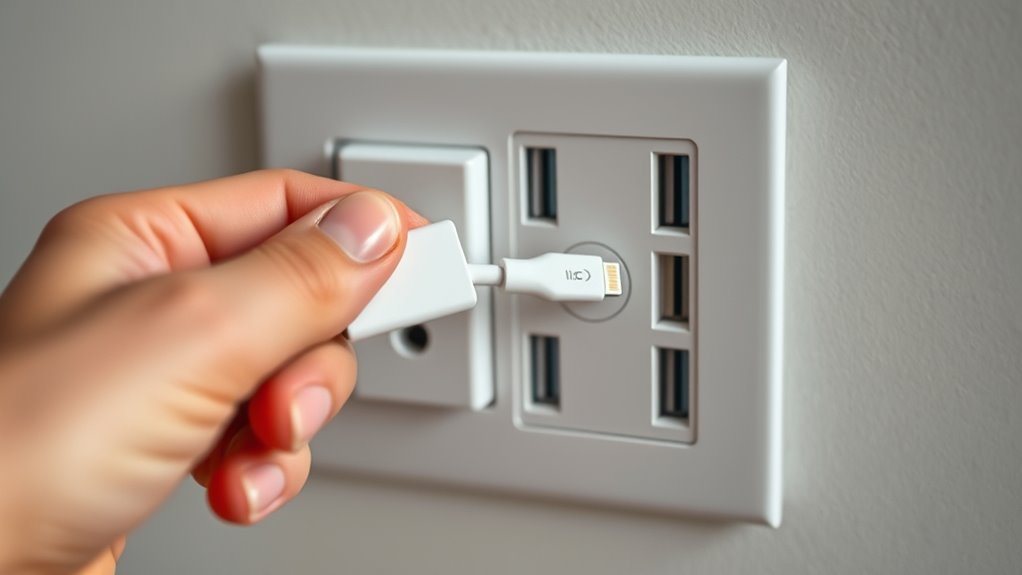
A Lightning cable cannot plug directly into a USB-C outlet because the connectors are different and serve different standards. Apple’s Lightning system requires either a USB-C to Lightning cable or a compatible adapter to charge and sync from USB-C power sources. The real issue is not only fit, but also compatibility, charging speed, and data support. The details determine whether a setup works properly or fails entirely.
Can You Plug a Lightning Cable Into USB-C?
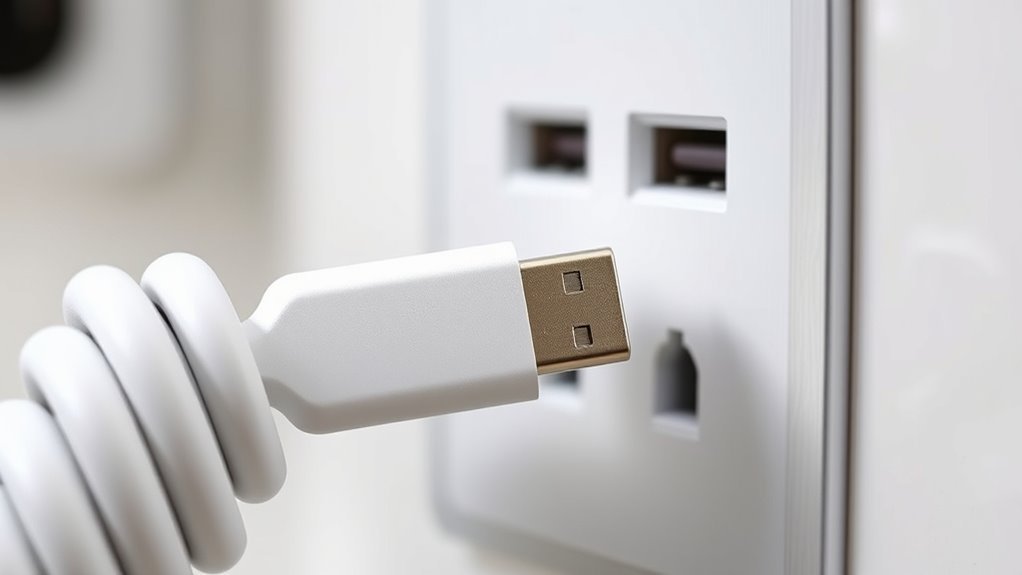
No, a Lightning cable cannot be plugged directly into a USB-C port because the connectors are physically different and not mechanically compatible.
Lightning uses Apple’s proprietary form factor, while USB-C follows an industry standard with a distinct reversible geometry and pin layout. This means direct mating is impossible without an adapter or a USB-C to Lightning cable.
Lightning’s proprietary design won’t mate directly with USB-C; an adapter or USB-C to Lightning cable is required.
In practice, Lightning remains limited to Apple devices, whereas USB-C is used across many manufacturers and supports greater charging capability and faster data transfer speeds.
Lightning is capped at 480 Mbps, or USB 2.0, while USB-C can reach up to 10 Gbps, giving it a clear advantage for data movement.
For users seeking to charge and sync liberated from older constraints, the distinction matters: USB-C offers broader interoperability, but Lightning still functions within its own ecosystem when paired correctly.
What Cable or Adapter Do You Need?
A Lightning device requires a USB-C to Lightning cable for direct connection to a USB-C outlet, enabling both charging and data transfer.
An official Apple cable provides the most reliable compatibility, while certified MFi third-party cables may also be suitable if performance and safety standards are met.
If fast charging is desired, the USB-C power adapter should support the required wattage, typically up to 18W for iPhones.
Compatible Cable Options
To connect a Lightning device to a USB-C outlet, a USB-C to Lightning cable is required, since it supports both charging and data transfer between compatible Apple devices.
This cable can charge your iPhone and, with a compatible USB-C power adapter, enable fast charging up to 18W. Its data transfer speeds remain tied to device and port capabilities, but the connection path is straightforward.
An MFi certified cable is strongly preferred because certification helps preserve interoperability and reduces compatibility issues. Third-party cables may function, yet they introduce variable performance and reliability.
For users seeking flexibility, a USB-C to Lightning adapter also exists, allowing standard Lightning cables to interface with USB-C hardware without altering the device’s core connectivity.
Adapter Requirements
Connecting a Lightning cable to a USB-C outlet requires a Lightning-to-USB-C adapter, which bridges the incompatible connector types and enables charging or data transfer. The adapter must preserve compatibility with the USB-C port and the Lightning device.
For reliable charging performance, select one that supports power delivery. Apple’s adapter is engineered for stable data transfer and direct integration.
- Lightning to USB-C adapter for connector conversion
- USB-C port access without forcing fit
- MFi certified for Apple-device reliability
- Apple-certified products for reduced risk
- third-party adapters only if tested, since some may degrade performance or damage hardware
A Lightning cable used with an adapter should be evaluated for electrical tolerance, signaling integrity, and long-term compatibility.
When Lightning Works With USB-C Chargers
Lightning cables can function with USB-C chargers when used through a USB-C to Lightning adapter or as part of a USB-C to Lightning cable, provided the device and adapter are compatible.
In that configuration, charging is generally supported, with Apple devices often reaching faster rates up to 18W on suitable power adapters.
Data transfer remains limited to 480 Mbps under USB 2.0 constraints, and third-party adapter performance may vary.
Charging Compatibility
When paired with a USB-C to Lightning cable, Lightning-compatible Apple devices can charge from USB-C power adapters without issue. The Lightning cable establishes compatibility between Apple devices and USB-C charging sources, enabling faster charging than standard USB-A leads.
Proper power adapters matter: a fast-charging USB-C adapter activates the cable’s rated 24W ceiling, supporting efficient, liberated mobile use.
- USB-C power adapters supply regulated output
- Lightning cable bridges device and charger
- Apple devices receive stable charging
- Faster charging depends on adapter support
- Compatibility should be verified before use
This arrangement does not imply universal support across every USB-C accessory. The practical result is straightforward: when the adapter and cable are matched correctly, charging is reliable, efficient, and technically sound.
Data Transfer Limits
Data transfer through a Lightning-to-USB-C connection is limited by the Lightning interface itself, which operates at USB 2.0 speeds of up to 480 Mbps even when paired with a USB-C outlet or adapter.
The Lightning cable can still move files, but its data transfer speeds do not exceed this ceiling, regardless of the USB-C port’s capability.
Power output is separate from throughput: a USB-C power adapter can deliver up to 24W while transfer occurs.
Compatibility issues may appear because not all USB-C adapters support data signaling.
For reliable operation, certified cables and MFi adapters are preferred, since they preserve protocol compliance and reduce failure risk.
This arrangement offers practical access, but not unrestricted performance.
Why Some USB-C Setups Don’t Work
Some USB-C setups fail because the Lightning connector is proprietary to Apple and does not behave as a universal USB-C accessory. In practice, a charging cable may connect physically yet still refuse audio, video, or full charging functions.
Device implementation matters: some USB-C ports, including those on Apple TV HD, omit power output for Lightning accessories, restricting use. Third-party power adapters can also underdeliver current, producing inconsistent performance and erratic charging behavior.
Some USB-C ports lack Lightning power output, and weak adapters can cause erratic charging and unreliable performance.
- USB-C port capability varies by device and host controller.
- Lightning connector signaling is not universally supported.
- Data transfer speeds may remain capped at USB 2 levels.
- Third-party websites often sell uncertified options with mixed results.
- Certified options reduce failure risk and improve reliability.
These limits shape autonomy: without verified compatibility, the setup can appear open while remaining technically constrained.
Choosing certified options is the practical path to stable operation.
How to Charge and Sync iPhone Safely
A USB-C to Lightning cable can safely charge and sync an iPhone when paired with a compatible USB-C power adapter or host device.
For reliable operation, the USB-C to Lightning cable should be Apple-certified, because MFi validation preserves compatibility and reduces electrical risk.
When connected to a computer or other USB-C host, the link can sync data and support data transfer speeds up to 480 Mbps, which is sufficient for backups, file exchange, and device management.
Charging performance depends on the power adapter’s wattage; up to 24W is suitable for peak iPhone or iPad charging.
If the goal is stable internet access, the same cable can connect an iPhone to a computer for Personal Hotspot use.
A user seeking technical freedom benefits from this simple rule: match certified hardware, verify compatibility, and avoid unsupported adapters.
Under those conditions, the iPhone can charge and sync with predictable, safe results.
Best Lightning-to-USB-C Cables for iPhone
Several MFi-certified Lightning-to-USB-C cables stand out for iPhone use because they combine safe charging, reliable data transfer, and broad device compatibility. These Lightning-to-USB-C cables support fast charging up to 24W and data transfer speeds up to 480 Mbps, giving users efficient power delivery and sync performance.
MFi-certified Lightning-to-USB-C cables offer safe charging, reliable syncing, and fast performance for iPhone users.
MFi certification indicates compliance with Apple standards, reducing risk while preserving dependable operation. High-quality options such as the Anker 331 USB-C to Lightning Cable can reach 50% charge in 30 minutes with an 18W or higher adapter, making them practical for mobile freedom.
- Compatible with Apple devices, including iPhone, iPad, AirPods, and Magic Keyboard
- Versatile connector design for USB-C power outlets and modern chargers
- High-quality options prioritize durability and stable performance
- Cable length should match portability or desk flexibility needs
- Fast charging and data transfer speeds remain central selection criteria
Frequently Asked Questions
Can You Plug a Lightning Cable Into a USB-C Port?
No, a Lightning cable cannot plug directly into a USB-C port; Lightning cable compatibility requires matching hardware or an adapter.
USB C advantages include broader device connectivity options and faster charging speed differences, but adapter quality concerns can affect reliability. Cable durability factors also matter in repeated use.
A usage scenarios comparison shows Lightning suits Apple-only devices, while USB-C aligns with future technology trends and wider liberation through interoperability.
Are Lightning to USB-C Adapters Safe?
Yes, Lightning to USB-C adapters are generally safe when they meet adapter compatibility and safety standards.
Certified models support reliable charging efficiency, stable data transfer, and broad device compatibility.
Cable quality and build quality strongly influence user experience, especially with higher-power USB-C sources.
Market availability includes many third-party options, but MFi-certified adapters remain the most analytically sound choice for consistent performance and reduced risk during liberated, practical use.
How Do I Convert My USB-C to a Lightning Connector?
Like a bridge spanning two incompatible shores, the solution is a USB-C to Lightning cable or MFi-certified adapter. This addresses Lightning compatibility issues, enables USB C accessories, and clarifies charging speed differences, usually up to 18W with proper power delivery.
A brief cable durability comparison favors certified builds. The adapter functionality overview should note device compatibility concerns and user experience reviews.
Future connector trends continue shifting toward USB-C liberation.
Is USB-C the Same as Lightning Cable?
No. USB-C is not the same as Lightning cable. The connector differences are fundamental: USB-C is an open standard used across many device types, while Lightning remains proprietary to Apple devices.
This affects charging speeds, accessory options, and compatibility issues. USB-C generally supports higher power and video output, with more cable lengths available.
Market trends show USB-C expanding rapidly, while Lightning is declining as ecosystems move toward greater interoperability and user freedom.
Conclusion
To sum up, a Lightning cable cannot simply enter a USB-C outlet and expect passage; the two standards meet only through the proper adapter or a USB-C to Lightning cable. When the correct bridge is used, charging and syncing proceed reliably, though performance still depends on power delivery and certification. Like a keyed lock matching its intended key, the connection works best when Apple’s Lightning interface is paired with USB-C through the right hardware.
