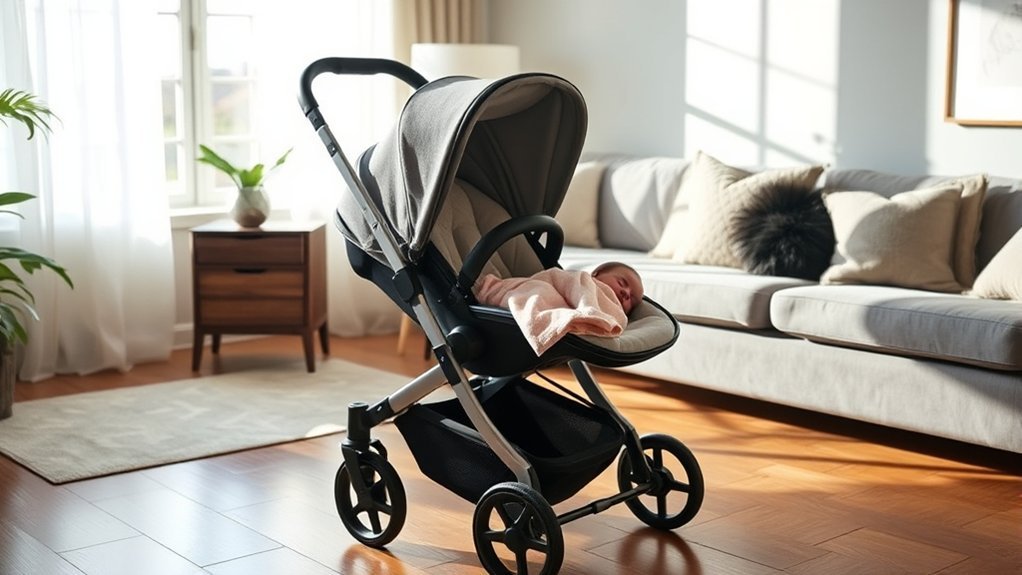
When it comes to using a stroller for your newborn, safety and comfort come first. A newborn can ride in a stroller from day one only if the stroller gives full head, neck, and body support. That usually means a bassinet stroller, a fully reclining newborn-approved seat, or a compatible infant car seat attached to the stroller frame. A regular upright stroller seat is not safe for a newborn because young babies cannot hold their heads steady yet.
Quick Answer
Yes, a newborn can be in a stroller if the stroller is approved for use from birth and allows a flat or near-flat position. Choose a bassinet, fully reclining seat, or infant car seat travel system. Avoid regular upright stroller seats until your baby has strong head and neck control.
Key Takeaways
- Newborns need a stroller that supports the head, neck, spine, and airway.
- The safest newborn stroller options are bassinets, fully reclining stroller seats, and compatible infant car seat travel systems.
- Do not place a newborn in an upright stroller seat unless the manufacturer clearly approves it for newborn use.
- A five-point harness, reliable brakes, good ventilation, and a stable frame are important safety features.
- Most babies can move into a regular stroller seat around 6 months, once they can sit with steady head and neck control.
Understanding Newborn Needs in Strollers
When you’re selecting a stroller for your newborn, it’s essential to prioritize proper support and safety. Newborns have limited muscle control, so they need help keeping their head, neck, and body in a safe position. A stroller that lets your baby lie flat, or nearly flat, helps reduce slumping and keeps their airway more open during short outings.
Newborns require adequate head and neck support, which you can find in strollers with a bassinet, a fully reclining seat approved for newborns, or an infant car seat attachment. Always check the stroller manual for age, weight, recline, and car seat compatibility limits. These details matter because a stroller that looks comfortable may still not be designed for newborn use.
Look for strollers that allow your baby to lie flat or rest in a supported reclined position. Features like a five-point harness, strong frame, locking brakes, breathable materials, and a smooth recline mechanism enhance safety. Regularly assess your baby’s readiness for stroller use. Your baby should only move to a more upright stroller seat once they can hold their head steady, which often happens around six months.
Warning: Never use pillows, loose blankets, rolled towels, or aftermarket inserts to prop up a newborn unless the stroller manufacturer specifically allows that accessory. Extra padding can shift, block airflow, or affect harness fit.
Types of Strollers Suitable for Newborns
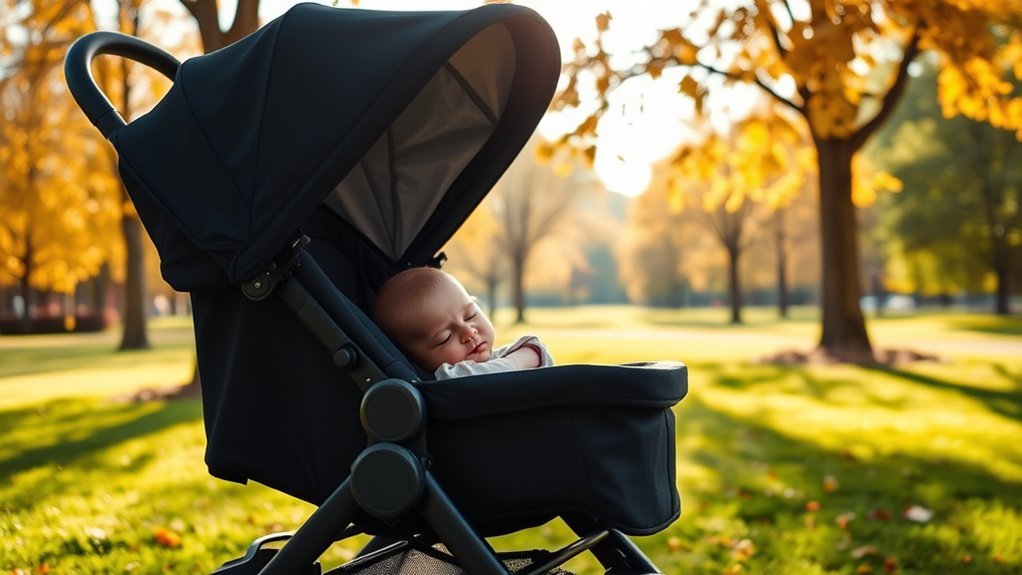
When choosing a stroller for your newborn, consider options like bassinet strollers that allow your baby to lie flat, promoting a safer resting position during walks. You might also explore travel systems that combine an infant car seat with a stroller, making transfers easier. Always check the stroller’s specifications to confirm it is approved for newborn use.
Bassinet Strollers Benefits
Although many strollers are available for parents, bassinet strollers are one of the best options for newborns because they provide essential support and comfort. These strollers offer a flat and fully reclining surface that supports your infant’s head, neck, and back during outings.
The removable bassinet attachment can also make short transitions from home to stroller easier, especially if your baby is already resting. Designed for infants from birth to about six months, bassinet strollers often include a protective canopy that shields your newborn’s delicate skin from sun, wind, and light rain. Many also have a sturdy frame and suspension system for a smoother ride, which helps reduce jarring on uneven sidewalks.
Infant Car Seat Compatibility
Many new parents find that choosing a stroller with infant car seat compatibility simplifies outings with their newborn. These strollers allow for a secure car seat attachment, so you can transfer your baby from car to stroller without waking them. Travel system strollers, which combine an infant car seat and stroller, offer versatility right from birth when used according to the manual.
Even with a travel system, avoid leaving your newborn in the car seat longer than necessary. Infant car seats are designed mainly for vehicle safety and short transfers, not long unsupervised naps outside the car. Always verify the stroller has a secure harness system, a firm car seat click-in connection, and the correct adapter for your car seat model. Popular models like the Baby Jogger City Mini GT2 and Chicco Bravo Quick-Fold are known for convenience, but you should still confirm the exact model’s newborn settings and car seat compatibility before buying.
Fully Reclining Strollers for Newborns
A fully reclining stroller can work for a newborn if the manufacturer approves it for use from birth. The seat should recline flat or nearly flat and keep your baby’s body supported without allowing them to slide forward. A deep recline is especially helpful for short neighborhood walks, doctor visits, or errands where a bassinet may feel bulky.
Before using this type of stroller, check whether the seat has enough side support, a snug harness, and a stable recline lock. Some strollers recline far enough for older babies but still are not suitable for newborns. The manual is the final guide.
When Can Your Baby Sit in a Stroller?
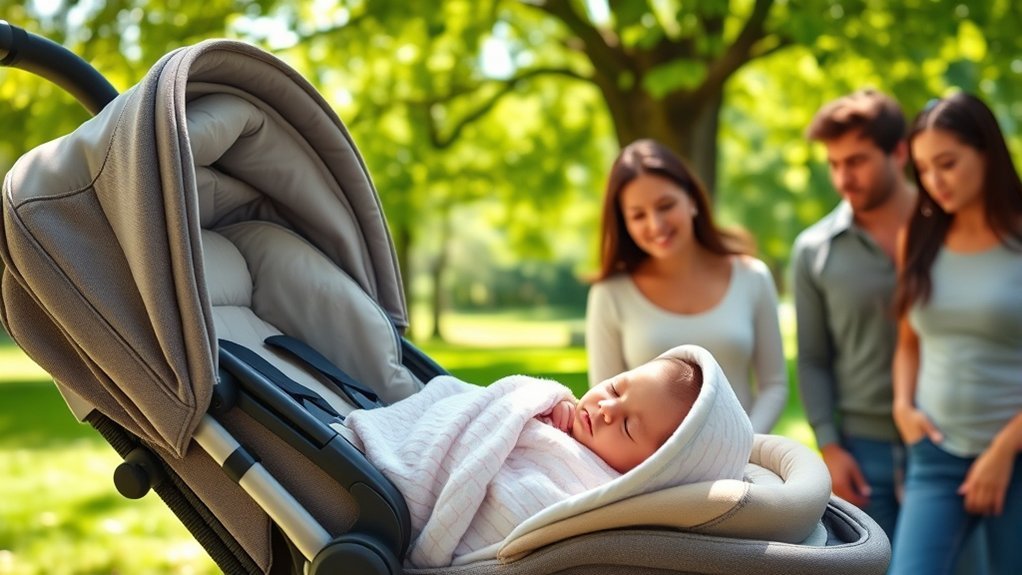
As your baby grows and develops, knowing when they can sit comfortably in a stroller is essential for their safety and comfort. Typically, your little one can start using a regular stroller seat without a car seat or bassinet between 6 to 8 months, once they can sit up with good control.
Before changing to an upright seat, your baby should show good head and neck control, sit with minimal assistance, and remain comfortable without slumping forward or sideways. Newborns should not be placed in regular strollers with upright seats because this can lead to unsafe positioning, including head flopping or chin-to-chest slumping. Always check the stroller’s manual for age and weight recommendations to confirm your baby’s readiness.
Note: Age is only a guide. Head control, sitting ability, weight limit, stroller design, and the manufacturer’s instructions are more important than the calendar month alone.
Key Features to Look for in a Newborn Stroller
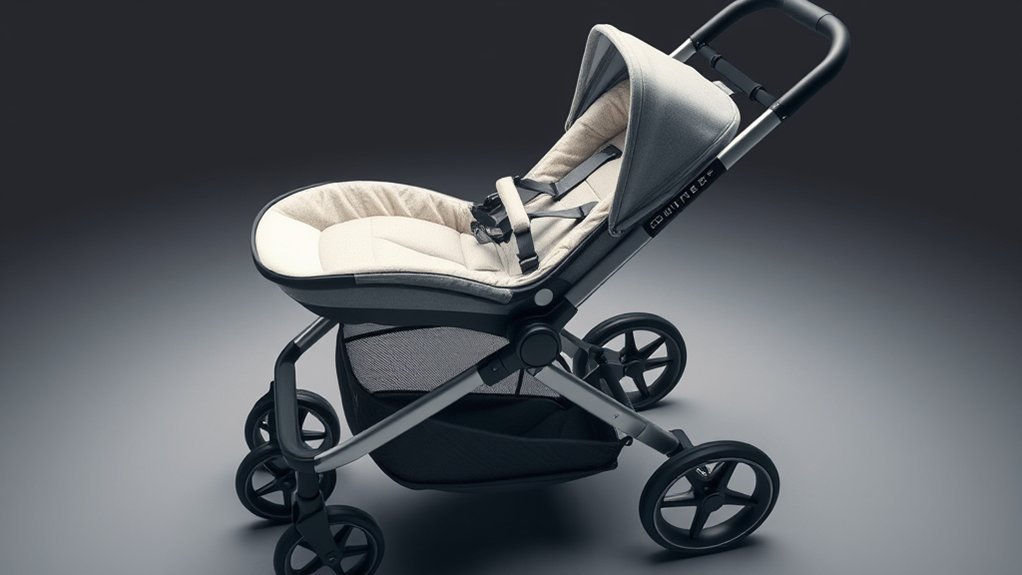
When selecting a stroller for your newborn, it’s essential to prioritize head and neck support. Look for features like a fully reclining seat, a bassinet option, and a reliable safety harness system to keep your baby secure during outings. These key elements improve comfort and help you use the stroller with more confidence.
Head and Neck Support
Ensuring proper head and neck support for your newborn is essential because their muscles are still developing. Look for strollers designed specifically for infants, as they often include a safe recline angle, deep seat support, and a five-point harness system to help prevent slumping during movement.
Prioritize options with bassinet attachments or compatibility with infant car seats if you plan to use the stroller from birth. Stroller ergonomics play a vital role in providing stability, so choose models with a sturdy design, wide wheelbase, and good suspension to enhance newborn comfort.
Fully Reclining Seat
Choosing a stroller with a fully reclining seat is a major step in supporting your newborn’s comfort and safety. A fully reclining seat allows your baby to lie flat or nearly flat, giving them the head and neck support they need during short outings.
When selecting a stroller, look for one with a smooth reclining mechanism that lets you adjust the seat without disturbing your baby. Many models also come with a secure five-point harness to keep your newborn safely in place while reclined. Check that the seat does not fold your baby into a curled position or let the chin rest on the chest.
Safety Harness System
A reliable safety harness system is essential for your newborn’s protection in a stroller. When selecting a stroller, keep these key features in mind:
- Five-Point Harness: Make sure the harness secures at the shoulders, waist, and between the legs to help prevent slipping or falling.
- Harness Adjustments: Look for strollers with adjustable straps so you can maintain a snug fit as your baby grows.
- Strap Padding: Choose harness systems with soft padding on the straps for comfort without compromising safety.
Regularly inspect the harness for wear and tear. A loose, twisted, or damaged harness can create a safety risk. The straps should lie flat and feel snug, but they should not press into your baby’s skin.
Brakes, Wheels, and Stability
A newborn stroller should feel stable when you push, stop, and turn. Test the brakes before every outing, especially on slopes, parking lots, and uneven sidewalks. Larger wheels and good suspension can make rides smoother, while a wide base can reduce the chance of tipping.
Avoid hanging heavy bags from the handlebar because this can make the stroller unstable. Use the storage basket underneath when possible, and stay within the stroller’s weight limits for both the seat and basket.
Canopy, Ventilation, and Weather Protection
A large canopy helps protect your newborn from direct sun, wind, and light weather. Good ventilation is just as important. Avoid covering the stroller with thick blankets because this can trap heat and reduce airflow. A breathable stroller cover or rain shield made for your exact stroller model is a safer choice when weather protection is needed.
Safety Tips for Using Strollers With Newborns

When using a stroller with your newborn, prioritizing safety is essential to protect their well-being during outings. Always choose a stroller with a fully reclining seat or a bassinet attachment to support their head and neck and reduce unsafe slumping.
Make sure you secure your newborn with the harness system, even if the seat is reclined. Avoid strollers with upright seats unless the manufacturer clearly says the seat is safe from birth. Also, monitor your baby’s comfort and temperature, making sure there is proper ventilation and no non-breathable covering that could cause overheating.
- Lock the brakes whenever you stop, even on flat ground.
- Keep one hand on the stroller near curbs, stairs, ramps, and parking lots.
- Do not leave your baby unattended in the stroller.
- Do not place a car seat on a stroller unless it is designed to click securely into that stroller.
- Keep toys, pacifier clips, blankets, and straps away from your baby’s face and neck.
- Check wheels, brakes, folding locks, and the harness before regular use.
Pro Tip: Before your first outing, practice folding, unfolding, reclining, braking, and attaching the car seat or bassinet at home. It is much easier to learn before you are holding a baby in a busy parking lot.
Assessing Stroller Age and Weight Limitations
Understanding stroller age and weight limitations is essential for ensuring your newborn’s safety and comfort. Stroller rules vary by model, so the manual should guide your final decision. Here are three key points to evaluate:
- Weight Guidelines: Many strollers have limits that range from small newborn minimums to toddler or preschooler maximums, depending on the model. Check both the minimum and maximum limits.
- Manufacturer’s Guidelines: Always consult the manual for specific age, weight, recline, adapter, and car seat recommendations to avoid safety hazards.
- Support Features: Look for strollers with fully reclining seats, bassinet attachments, or newborn-approved travel system compatibility, which provide necessary head and neck support for infants.
If your newborn was premature, has reflux, has breathing concerns, or has any medical condition that affects positioning, ask your pediatrician before using a stroller for longer outings.
Recommendations for the Best Newborn Strollers
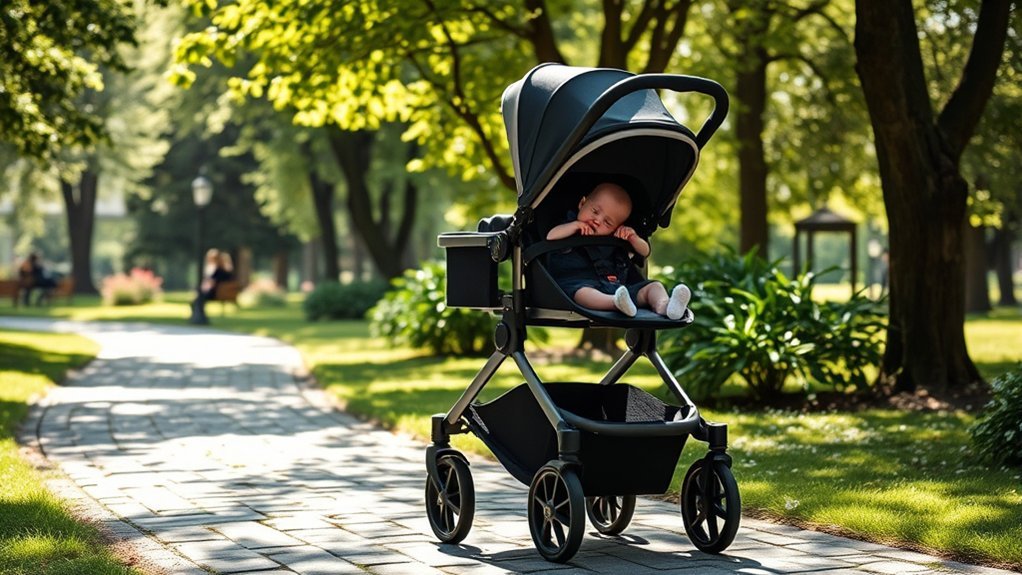
Choosing the right stroller for your newborn is essential for ensuring their safety and comfort during outings. The Baby Jogger City Mini GT2 Stroller is a popular choice because it offers a deep recline and a sun canopy with a peekaboo window, but you should confirm the exact model and setup are suitable for newborn use before relying on it from birth.
Look for strollers with a fully reclining seat or a bassinet option to support your baby’s head and neck properly. The Nuna MIXX Next Stroller is another well-known option, offering multiple recline positions that can grow with your infant. Additionally, consider travel systems that combine a stroller and infant car seat for smoother transitions from car to stroller. Always check for a five-point safety harness, reliable brakes, stable wheelbase, proper adapter fit, and a clear newborn-use statement in the manual.
Best Choice by Parent Need
- Best for newborn comfort: A bassinet stroller with a flat sleeping-style surface and protective canopy.
- Best for car errands: A travel system with a compatible infant car seat that clicks securely into the stroller.
- Best for small spaces: A compact stroller with a newborn-approved recline or compatible bassinet attachment.
- Best for uneven sidewalks: A stroller with good suspension, stable wheels, and a safe newborn recline option.
- Best for long-term use: A stroller that works from birth with a bassinet or car seat and later converts to a toddler seat.
Common Newborn Stroller Mistakes to Avoid
Even a good stroller can become unsafe if it is used the wrong way. Avoid placing a newborn in an upright seat too early, using loose blankets for support, or assuming all recline seats are newborn-safe. Also avoid placing bags on the handlebar, using unapproved car seat adapters, or letting your baby sleep in a car seat outside the car for long periods.
Another common mistake is skipping the manual. Strollers often have different recline rules, adapter rules, harness settings, and weight limits. Taking a few minutes to read the instructions can prevent most setup problems.
Related Guides
Frequently Asked Questions
Can I use a car seat with a stroller for newborns?
Yes, you can use a car seat with a stroller for newborns if the car seat and stroller are compatible and the car seat locks securely into the frame. Use only the adapter or travel system approved by the manufacturer.
How long can a newborn stay in a stroller?
A newborn can usually stay in a stroller for short outings, often about 30 minutes to an hour at a time, depending on comfort, position, weather, and feeding needs. Check your baby often and take breaks if they seem hot, slumped, fussy, or uncomfortable.
Are travel systems safe for newborns?
Travel systems can be safe for newborns when the infant car seat is properly attached, the harness fits snugly, and you follow the manual. They are helpful for short transfers, but a bassinet or flat recline may be more comfortable for longer walks.
Can I jog with a stroller that supports newborns?
No, you should not jog with a newborn in a stroller. Even if the stroller supports newborn use for walking, jogging creates stronger movement and vibration. Wait until your child is older, has strong head and neck control, and the stroller is specifically designed for running.
Should I use a blanket for extra support in the stroller?
You should avoid using loose blankets as support unless the stroller manual allows it. A blanket can shift, affect the harness, or block airflow. Use the stroller’s built-in newborn support, bassinet, infant insert, or manufacturer-approved accessory instead.
Can a newborn sleep in a stroller bassinet?
A newborn can rest in a stroller bassinet during supervised outings if the bassinet is approved for newborn use and provides a firm, flat surface. For regular sleep at home, follow safe sleep guidance and use a proper crib, bassinet, or approved sleep space.
When can my baby face forward in a stroller?
Many babies can face forward once they have better head control and can sit more steadily, often around 6 months or later. Some parents prefer parent-facing mode longer because it makes it easier to monitor breathing, comfort, sun exposure, and temperature.
Conclusion
In summary, choosing the right stroller for your newborn means choosing a safe, supportive space for their earliest outings. A newborn can use a stroller from birth only when the stroller is designed for that stage, such as a bassinet stroller, a newborn-approved fully reclining seat, or a compatible infant car seat travel system.
Always prioritize head and neck support, a snug harness, reliable brakes, good ventilation, and the manufacturer’s age and weight limits. With the right stroller and safe setup, you can confidently navigate the world while keeping your newborn snug, supported, and secure.