Last updated: September 22, 2026
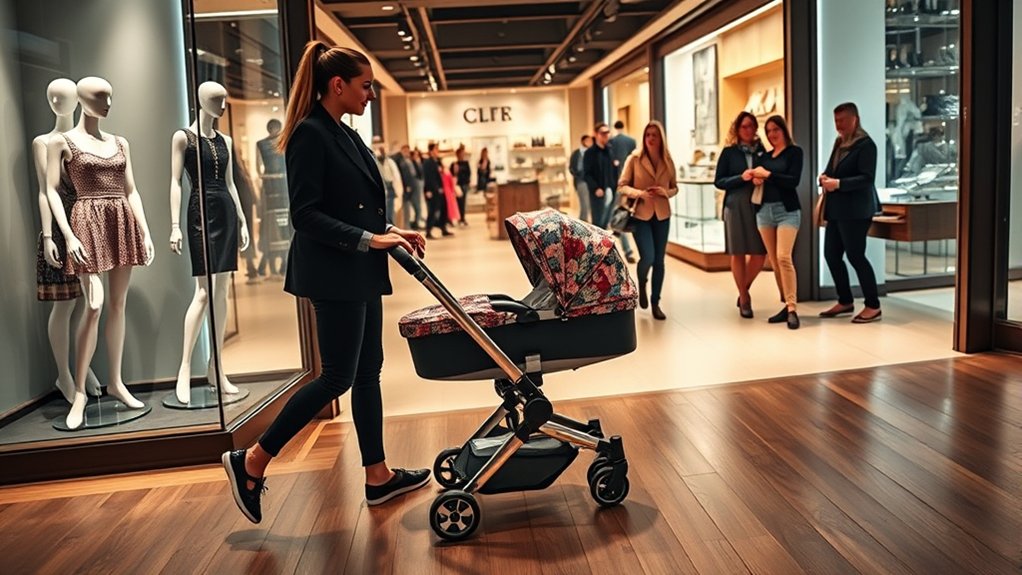
Can you bring a stroller into stores? In many everyday retail stores, yes, but stroller access is ultimately location-specific. Larger grocery stores, department stores, malls, and big-box retailers are generally easier to navigate because they have wider traffic paths. Small boutiques, crowded shops, restaurants, and stores with tight layouts may ask you to fold or park the stroller instead.
The safest approach is simple: check posted rules or ask staff when the policy is unclear, keep your child secured, and make sure the stroller does not block aisles, exits, checkout lanes, or other customers.
Quick Answer
Yes, many stores allow strollers, especially larger retailers with enough aisle space. However, there is no single stroller policy that applies to every store. A location may restrict stroller use because of its layout, crowd level, safety rules, or available space. If you are unsure, check the entrance signage or ask an employee before going farther into the store.
Key Takeaways
- Many stores permit strollers, but the final rule depends on the individual location and its available space.
- Compact strollers are easier to use in small shops, checkout lanes, elevators, and crowded aisles.
- Keep your child secured, engage the stroller brake whenever you stop, and do not block walkways or exits.
- Double strollers may be permitted but can still be impractical in narrow aisles or tight checkout lines.
- A baby carrier, appropriate shopping-cart seat, curbside pickup, or online shopping can be a better fallback when stroller use is difficult.
At a Glance
| Usually Easiest | Large grocery stores, malls, big-box retailers, department stores, and other stores with wide traffic paths. |
| Best Stroller Type | A compact, easy-fold stroller with good steering, a secure restraint system, working brakes, and low storage for essentials. |
| Main Safety Rule | Keep your child secured, engage the brake when stopped, keep heavy bags off the handlebar, and never block aisles, exits, or checkout traffic. |
| Best Alternative | Use a properly fitted baby carrier, an appropriate shopping-cart child seat, or curbside pickup when the store is crowded or too narrow for the stroller. |
Can You Bring a Stroller Into Stores?
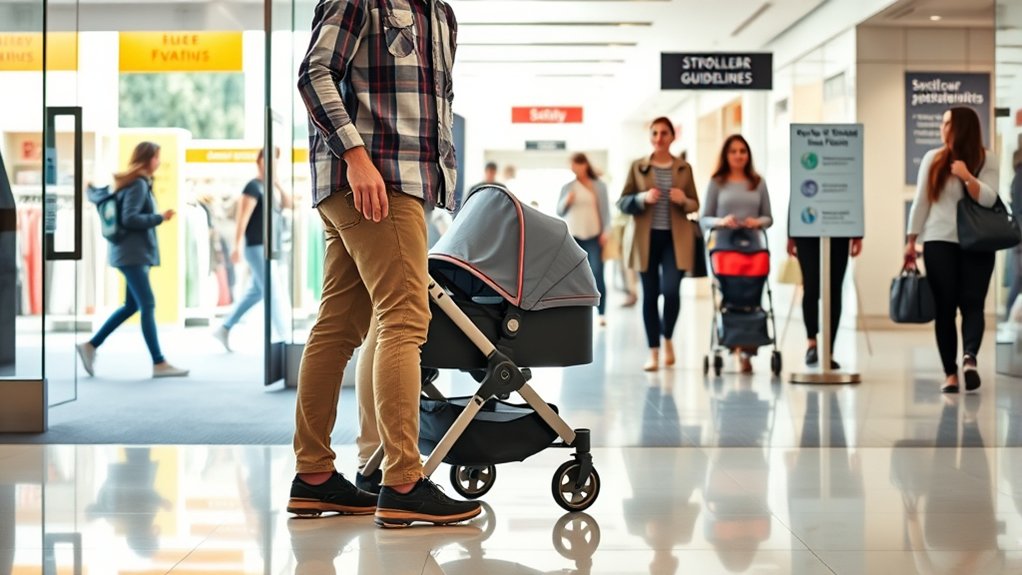
Many stores allow parents and caregivers to bring a stroller inside, but permission should not be treated as universal. Grocery stores, supermarkets, malls, and larger retailers are often easier to navigate because they are designed for higher customer traffic and shopping carts. Smaller shops, crowded restaurants, temporary markets, and stores with narrow walkways may have less room.
A location may also set its own stroller rules because of aisle clearance, exits, crowd control, fragile displays, or the way customers move through the space. Check entrance signs first. If the policy is not obvious, ask an employee whether you can keep the stroller open and whether there is a preferred route or stroller parking area.
Even when a stroller is permitted, practical fit matters. A compact stroller may move through the store comfortably while a large travel system, jogging stroller, stroller wagon, or side-by-side double stroller may struggle through the same space.
Note: Do not assume every location in the same retail chain will handle strollers identically. Store layout, available space, crowd conditions, and local operating rules can differ.
A 30-Second Store Fit Check
Before committing to the stroller, look at the entire shopping route instead of only the front door. A stroller that enters easily can still become difficult at clothing racks, checkout lines, elevators, or narrow turns.
| Entrance | Can you enter without lifting the stroller, squeezing between fixtures, or blocking the doorway? |
| Aisles | Can another shopper or cart pass without either person having to move into a display? |
| Checkout | Is there enough room to queue, pay, and pack purchases without blocking adjacent lanes? |
| Floor Access | If the store has multiple levels, is there a suitable elevator or ramp route? |
| Stopping Space | Can you stop to reach a shelf or tend to your child without parking in a doorway, aisle intersection, or exit route? |
If several of these checks fail, folding the stroller, using a baby carrier when appropriate, or choosing curbside pickup will usually be easier than forcing a large stroller through the store.
Where Strollers Are Usually Easiest to Use
Strollers are generally easiest to manage in retail spaces designed for carts, families, and higher customer traffic. That does not guarantee permission at every location, so posted rules still take priority.
- Grocery stores and supermarkets: Wider main aisles often make stroller use manageable, but produce areas and checkout lanes can become tight.
- Big-box retailers: Large floor plans, wide main paths, elevators, and ramps can make navigation easier.
- Malls and department stores: Strollers are common in shared mall areas, although individual shops can be much narrower.
- Baby stores and toy stores: These spaces often serve families, but product displays can still reduce aisle width.
- Pharmacies and convenience stores: A stroller may fit, but checkout counters and densely stocked aisles can become pinch points.
Where Strollers Can Be Difficult
A stroller may be technically permitted yet still be inconvenient. The deciding issue is often whether you can maneuver without blocking other customers or contacting displays.
- Small boutiques: Tight racks, fragile displays, and narrow turning areas can make stroller use awkward.
- Restaurants and cafes: There may be little space beside tables or along server walkways.
- Busy holiday sales: Dense crowds reduce steering room and make sudden stops more likely.
- Stores with stairs only: A stroller may be impractical if the area you need has no suitable elevator or ramp route.
- Markets and temporary events: Narrow booths, uneven surfaces, and limited stroller parking can make navigation difficult.
Benefits of Using a Stroller While Shopping

A stroller gives a baby or toddler a familiar place to sit or rest while you move through a store. It can be particularly useful when your child is too young for a shopping-cart seat, when the trip involves a lot of walking, or when carrying your child for the full errand would be uncomfortable.
The lower storage basket can also hold diapers, wipes, bottles, a light blanket, and other essentials, provided you stay within the stroller manufacturer’s storage limits. Keeping heavier gear low is preferable to hanging heavy shopping or diaper bags from the handlebar.
A stroller also leaves your hands more available for a shopping list, products, payment, or another child’s hand. The benefit disappears, however, if the stroller is too large for the store. In a tight shop, a carrier or quick pickup order can be simpler.
Tips for Navigating Stores With a Stroller
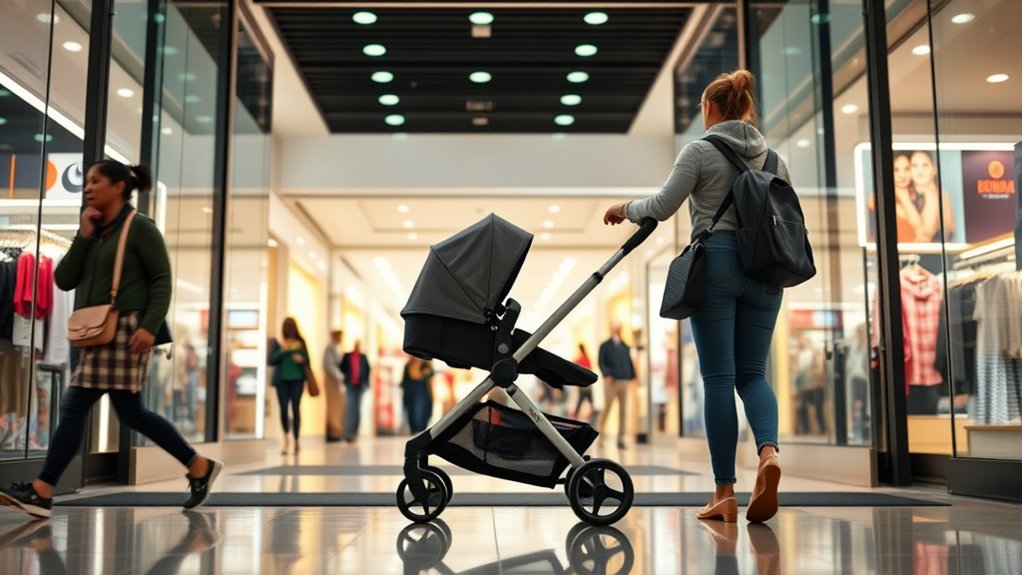
Start by checking the store’s policy and looking at the entrance and first few aisles. If the store is tight, a compact stroller with a narrow footprint and predictable steering is easier to manage than a larger travel system.
When possible, shop outside the busiest periods. Use elevators or appropriate ramp routes between floors rather than trying to maneuver a stroller where it does not safely fit. Plan your path so you are not repeatedly backing up or making tight turns around fragile displays.
Keep the diaper bag organized and avoid attaching heavy bags to the stroller handle. The American Academy of Pediatrics advises using the stroller brake whenever you stop and warns that bags hung from the handles can make a stroller tip backward. Keep heavier items in approved low storage instead.
Pro Tip: Before entering a small store, fold down removable or adjustable accessories such as an extended canopy when the stroller manufacturer permits it and doing so makes the stroller easier to maneuver. Keep required child restraints and safety equipment in use.
Safety Considerations for Stroller Use in Stores
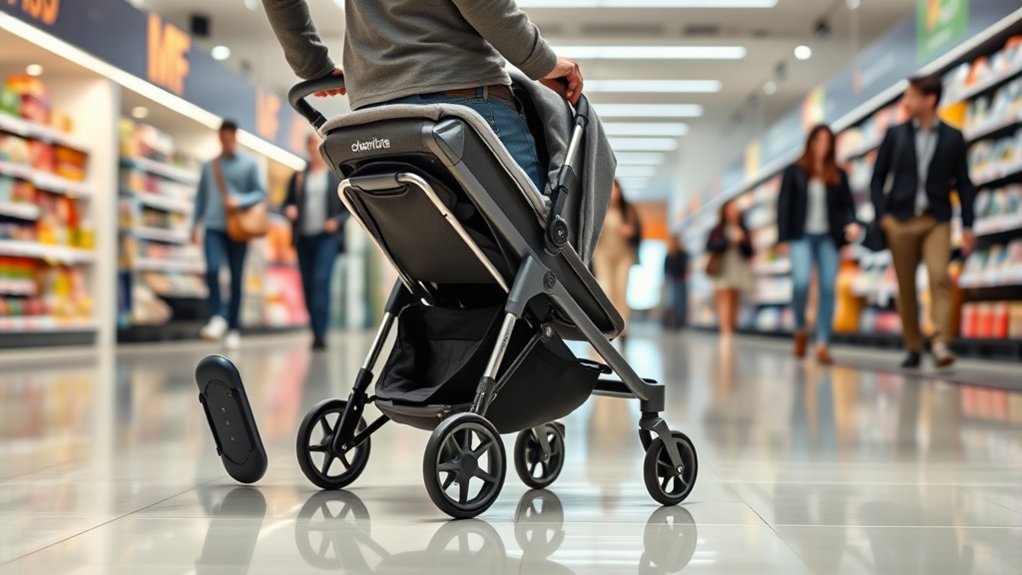
Store etiquette matters, but the child’s safety comes first. U.S. Consumer Product Safety Commission stroller requirements address hazards involving stability, brakes, restraints, folding mechanisms, wheels, and structural integrity. The American Academy of Pediatrics also recommends using the stroller restraint system, engaging the brake when stopped, and avoiding bags hung from the handles.
- Check the Store Policy: If stroller rules are unclear, ask before moving into a crowded or restricted part of the store.
- Secure Your Child: Use the stroller’s restraint system according to the manufacturer’s instructions rather than letting your child ride unsecured.
- Avoid High-Traffic Areas: Do not park the stroller in doorways, aisle intersections, checkout entrances, or other places where people or carts must squeeze around it.
- Use the Brakes When Stopped: Engage the parking brake before reaching for products, paying, feeding your child, or stopping for another reason.
- Keep Bags Low and Within Limits: Heavy bags on the handle can affect stability. Use the stroller’s approved storage areas and follow its weight limits.
- Watch for Displays and Floor Hazards: Loose mats, floor signs, cords, stacked products, and low displays can catch a wheel or suddenly stop the stroller.
Warning: Never leave your child unattended in a stroller while shopping. Keep the stroller within reach and your child in view.
How to Ask About a Store Stroller Policy
If you are unsure about the rules, asking an employee is faster and more reliable than assuming every location follows the same policy. Ask near the entrance, customer-service desk, host stand, or checkout area.
- Ask before entering a crowded area: “Are strollers allowed inside, or is there a stroller parking area?”
- Mention stroller size if needed: “Is a double stroller okay here, or are the aisles too narrow?”
- Ask about an easier route: “Is there an elevator or wider route I should use with the stroller?”
- Follow location-specific instructions: If staff ask you to fold or park the stroller, ask where it can be left without blocking traffic.
Staff may also be able to point you toward wider aisles, family restrooms, elevators, cart areas, or another entrance that is easier to navigate.
What to Do If a Store Says No to the Stroller
If a store does not allow your stroller inside, first ask whether you can fold it and carry it, leave it in a designated stroller area, or use another entrance or shopping route. Do not leave the stroller in an exit path or another place where staff tell you it creates an obstruction.
If keeping the stroller with you is not practical, consider a baby carrier that is appropriate for your child’s age, size, and the carrier manufacturer’s instructions. For a child who can safely use the designated child seat in a shopping cart, secure them using the cart’s restraint when available. Another simple option is curbside pickup or delivery.
If none of those choices works for your child or situation, leaving and choosing a more suitable store is reasonable. The goal is not to make a particular stroller fit at all costs; it is to complete the errand without creating an unsafe or stressful situation.
Bringing a Double Stroller Into Stores
A double stroller may be allowed while still being difficult to use. Side-by-side models are wider, which can create problems at clothing racks, narrow aisles, doors, and checkout lanes. Tandem strollers are usually narrower but longer, so tight turns can still be challenging.
Do not rely only on the stroller type. Use the same store-fit test you would use for a single stroller: entrance clearance, aisle turns, checkout space, floor access, and safe stopping room. For a small shop with heavy foot traffic, a carrier plus an appropriate cart or another shopping method may be easier. In a spacious store, either double-stroller layout may work well if it does not obstruct other customers.
Stroller Etiquette While Shopping
Keep the stroller close to one side when you stop so other shoppers can pass. Avoid parking in doorways, checkout lanes, fitting-room entrances, restroom halls, elevator doors, or exit routes. If someone needs to pass, reposition the stroller rather than making them squeeze around it.
Be especially careful around low shelves and display tables. Stroller wheels can contact products, and toddlers may be able to reach merchandise from their seat. Slow down around fragile displays and keep reachable items out of your child’s hands.
Alternatives to Using a Stroller in Stores
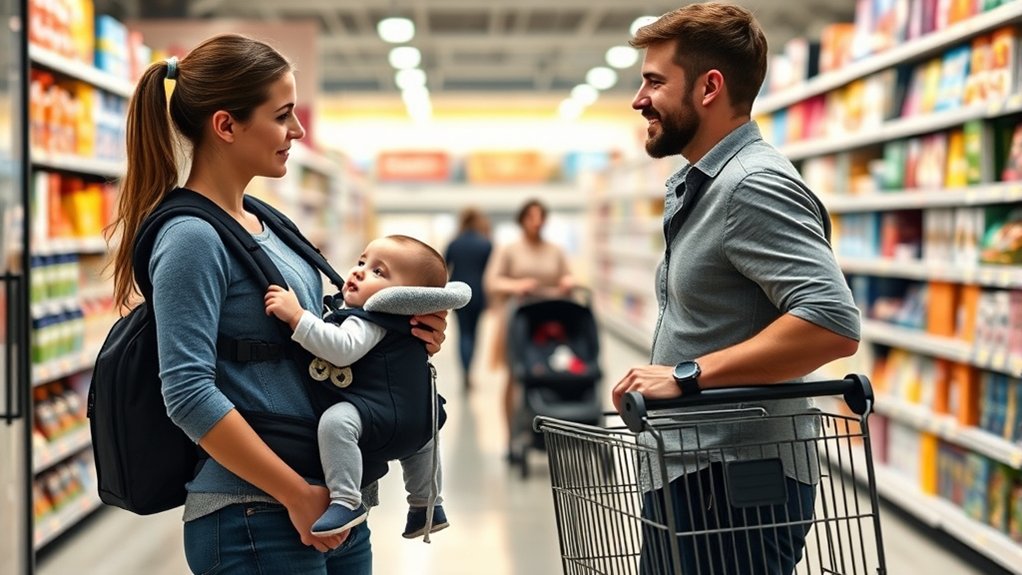
A baby carrier can work well in crowded stores when it is appropriate for your child’s age and size and is used according to its instructions. It keeps your child close while removing the stroller’s footprint from narrow aisles.
If your child is developmentally ready for a shopping-cart child seat, use only the seating area designed for a child and secure the available restraint. The American Academy of Pediatrics advises parents not to place an infant car safety seat on top of a shopping cart because doing so can make the cart unstable. A stroller or baby carrier is one alternative for younger children.
Other options include shopping assistance, family checkout lanes where available, curbside pickup, grocery delivery, and online ordering. These alternatives are particularly useful during peak shopping hours, bad weather, or trips to stores with consistently tight layouts.
Frequently Asked Questions
Are there age restrictions for children in strollers at stores?
There is no single age rule that applies to every store. More importantly, use the stroller only within its manufacturer’s age, height, weight, and seating requirements and follow any location-specific store rule.
Can I leave my stroller outside while shopping?
Only leave a stroller outside if the store permits it and you accept the risk of theft, weather exposure, or damage. A designated stroller-parking area is preferable to leaving it near an entrance, doorway, or walkway.
Do all stores provide stroller rentals?
No. Do not assume a regular retail store will provide a stroller. If a stroller rental is important to your visit, check with the specific store, mall, attraction, or venue before arriving.
What should I do if my stroller gets damaged in a store?
Move your child to a safe place first. Photograph the damage and the surrounding area, note what happened, and speak with store management if store conditions were involved. Stop using the stroller if the damage affects the frame, wheels, brakes, restraint, folding mechanism, or another safety-critical part, and contact the manufacturer or a qualified repair service.
Can I bring a double stroller into stores?
Many stores may permit a double stroller, but permission and practical fit are different questions. Side-by-side strollers need more width, while tandem models need more turning length. Check the entrance, aisles, and checkout area and ask staff if the policy is unclear.
Can a store tell me not to bring a stroller inside?
A store may have its own stroller-access or safety rules. If staff say the stroller cannot be used in a particular area, ask whether you can fold it, use designated stroller parking, take a wider route, or use another shopping option.
Is a stroller safer than putting my baby in a shopping cart?
For a young child who cannot safely use the cart’s designated child seat, the American Academy of Pediatrics recommends considering alternatives such as a stroller or baby carrier. If your child uses a cart seat, secure the available restraint and never place an infant car safety seat on top of the shopping cart.
Conclusion
You can bring a stroller into many stores, but the individual location’s policy and layout decide whether it will actually work. Large retailers are usually easier to navigate, while narrow shops, crowded spaces, and tight checkout areas require more planning.
Check the entrance and route before moving deep into the store. Keep your child secured, engage the brake when stopped, avoid hanging heavy bags from the handlebar, and keep exits and walkways open. If the stroller is not a good fit, switch to an appropriate carrier or shopping-cart seat, use designated stroller parking, or choose curbside pickup instead.

