A jogging stroller is built for active parents who want to run, jog, or move across uneven paths while keeping their child secure and comfortable. Unlike a regular stroller, it uses larger wheels, a stronger frame, better suspension, and a front wheel that can lock for straighter tracking. Before you choose one, you should understand the benefits, safety limits, age guidelines, everyday-use drawbacks, and features that matter most.
Quick Answer
A jogging stroller is a three-wheel stroller designed for running, jogging, brisk walking, and rougher terrain. It usually has air-filled tires, suspension, a five-point harness, a wrist strap, and a lockable front wheel. It works best for active families, but it is bulkier than a regular stroller and should only be used for jogging when your child is developmentally ready.
Key Takeaways
- A jogging stroller is made for active use, not just casual errands.
- Large tires, suspension, and a lockable front wheel help improve stability while running.
- Most children should not ride in a jogging stroller during runs until they have strong head and neck control, often around 12 months.
- Jogging strollers can work for everyday use, but their size, weight, and turning radius may feel inconvenient in tight spaces.
- The most important features include a five-point harness, parking brake, wrist strap, hand brake, strong frame, and adjustable handlebar.
What Is a Jogging Stroller?
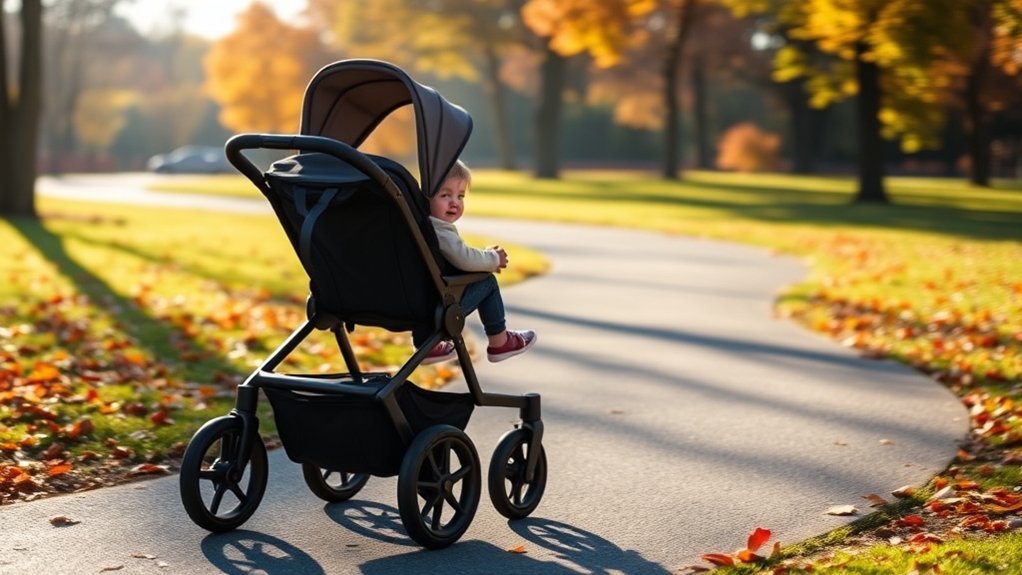
If you want to stay active while spending time with your little one, a jogging stroller can make outdoor movement easier. It is a stroller designed for faster movement, smoother tracking, and better control on sidewalks, park paths, gravel, and light trails. Most jogging strollers use a three-wheel layout with two larger rear wheels and one front wheel.
The biggest difference is the front wheel. Many jogging strollers let you lock the front wheel in a straight position for running. That helps the stroller track forward and reduces sudden swerving. For walking or errands, many models also let the front wheel swivel, which makes turns easier.
Jogging strollers also tend to have a sturdy build, larger wheels, and a suspension system that helps reduce bumps. These design details create better stability and comfort than a basic stroller when you move over uneven ground. They are especially useful for parents who run, jog, hike, or take long walks on mixed surfaces.
Warning: Do not jog with a young baby until your child has enough head, neck, and trunk control. Check your stroller manual and ask your pediatrician if your baby was premature, has low muscle tone, or has any medical concerns.
Jogging strollers typically include a five-point harness, a wrist strap, a parking brake, and sometimes a hand brake. Some models accept infant car seats for walking, but car-seat compatibility does not mean the stroller is safe for running with a newborn. Use the seat and activity mode exactly as the manufacturer recommends.
The jogging stroller’s history dates back to the 1980s, when active parents wanted a safer way to bring children along during runs. Today, many jogging stroller brands focus on performance, safety, comfort, and foldability, giving families more options for city sidewalks, paved trails, parks, and outdoor adventures.
Jogging Stroller Pros
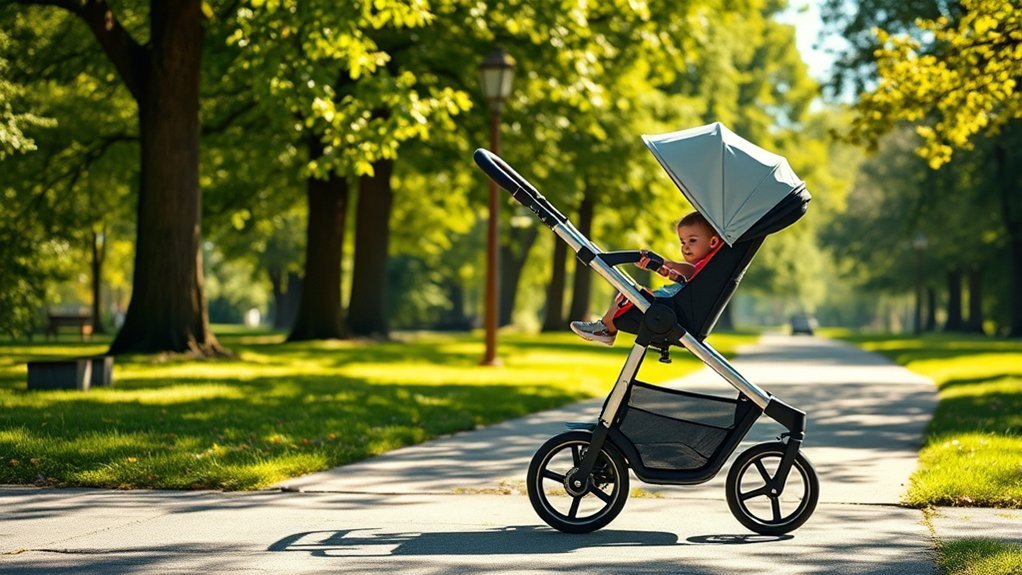
While staying active with your child can feel challenging, jogging strollers offer several practical benefits that make outdoor fitness easier and more enjoyable. They are not just regular strollers with bigger wheels. Their frame, tires, suspension, and safety features are built for movement.
A good jogging stroller helps active parents combine exercise, fresh air, and family time while giving the child a smoother and more secure ride.
- Stability and Comfort: Larger wheels and suspension help absorb bumps, so the stroller feels smoother on sidewalks, park paths, and light trails.
- Safety Features: Air-filled tires, a lockable front wheel, a five-point harness, a parking brake, and a wrist strap help you stay in control during faster movement.
- Adaptability: Many models accept infant car seats for walking, then shift to a regular stroller seat as your child grows.
- Fitness Motivation: Regular use can help you maintain an exercise routine without needing childcare for every workout.
- Outdoor Flexibility: Jogging strollers handle more surfaces than many lightweight or umbrella strollers, which can struggle on cracked pavement, grass, gravel, and packed dirt.
- Longer Use Window: Many jogging strollers have higher weight limits than basic compact strollers, so families may use them through the toddler years.
These advantages make a jogging stroller a strong choice if you often walk fast, run, visit parks, or prefer one rugged stroller for outdoor family time.
Jogging Stroller Cons

While jogging strollers excel in performance, they can be harder to manage during daily errands. Their elongated frames and large wheels can feel awkward in tight spaces, narrow store aisles, small elevators, and crowded sidewalks. You may also find that the bulkier design requires more storage space than a standard stroller.
Before you buy one, think about how you will use it most often. If your main routine is shopping, public transportation, air travel, or quick car trips, a jogging stroller may feel heavy and oversized. If your routine includes running, long walks, parks, and uneven paths, the tradeoff may be worth it.
Handling and Maneuverability Issues
Although jogging strollers are designed for high-speed runs, their handling and maneuverability can pose challenges in everyday situations. You might notice several maneuverability challenges, especially during tight-space navigation.
- The elongated frame can feel cumbersome in crowded areas, including sidewalks, stores, and waiting rooms.
- Large wheels improve stability but can make sharp turns harder, especially when the front wheel is locked.
- Some folding systems require both hands, which can be inconvenient when you are holding a child or carrying bags.
- The locked front wheel is useful for straight tracking but limits quick turns, sudden stops, and fast directional changes.
- Air-filled tires may need more upkeep than solid stroller wheels because they can lose pressure or get punctured.
These factors can make jogging strollers less practical for daily use, even though they perform well on open paths and running routes.
Storage Space Limitations
A jogging stroller’s large frame and wheels can create significant storage space limitations for many parents. Unlike standard strollers, jogging models often lack a compact fold, making them bulkier and less suitable for small closets, apartments, and packed car trunks.
When you try to store one, you may discover it occupies considerable trunk space and limits your ability to carry groceries, luggage, sports gear, or other baby items. Some models let you remove the wheels before storage, but that adds another step when you are in a hurry.
The folding mechanism also matters. A two-handed fold may feel frustrating when you are trying to load the stroller while managing a tired child. If you need space-saving options, compare folded dimensions, stroller weight, wheel-removal design, and how easily the stroller stands when folded. Balancing performance with storage is essential for maintaining a clutter-free environment.
What Is the Right Age for Using a Jogging Stroller With Your Baby
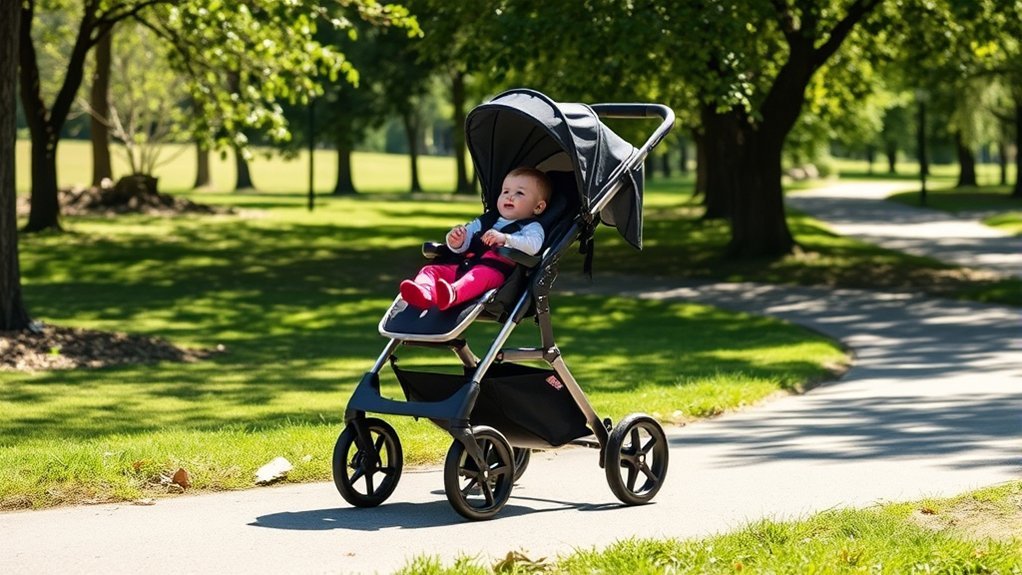
Determining the right age for using a jogging stroller with your baby is vital for safety and development. Running creates more bouncing and side-to-side movement than walking, so your child needs enough physical control before you jog.
- Under 6 months: Avoid jogging. Many parents can use a compatible infant car seat for walks only, but you should follow the stroller and car seat manuals.
- Newborn to 6 months: Some Chicco jogging strollers and other compatible systems allow walking with an infant car seat attached. This does not mean the setup is safe for running.
- Around 6 months: Some babies may be ready for a stroller seat during gentle walks once they can sit with better support. Use the full recline and harness settings your stroller manual recommends.
- Around 12 months and older: This is the safer stage to consider jogging or trail use for many children, as long as your child has strong head and neck control and the stroller manual allows it.
Note: Age guidance can vary by stroller brand, child development, terrain, and activity level. Always follow your stroller manual first, then ask your pediatrician when you are unsure.
Do not rush this stage. A baby who looks comfortable during walks may still not be ready for the motion, vibration, and sudden changes that happen during jogging. Start with smooth, flat paths, short sessions, and a slower pace when your child is ready.
Is a Jogging Stroller Right for Me?
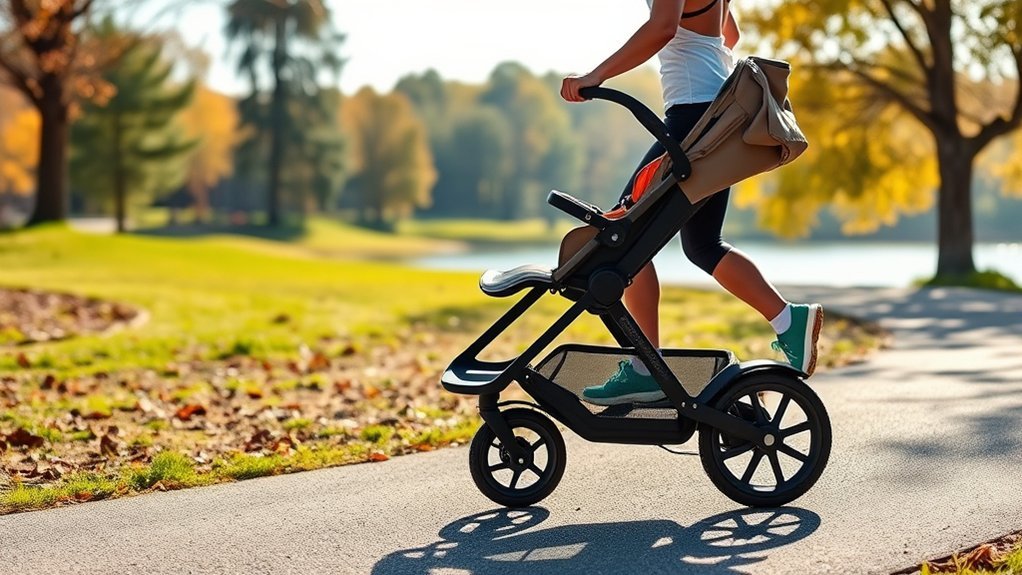
If you’re an active parent who enjoys running, jogging, hiking, or long outdoor walks, a jogging stroller might fit your fitness routine. These specialized strollers come in various jogging stroller types, with designs that handle diverse terrains while giving your child a smoother ride.
A jogging stroller makes the most sense if you regularly use paved trails, neighborhood sidewalks, park paths, dirt paths, or gravel routes. It can also help if your current stroller shakes too much, gets stuck on bumps, or feels unstable during faster walks.
Before choosing a jogging stroller, think about your lifestyle and storage space. If you frequently run or jog, this stroller can make it easier to maintain your fitness goals. If your child is younger than 12 months, consult a pediatrician before using it for jogging. With features like larger wheels, a five-point harness, and hand brakes, you can enjoy more freedom while bonding with your child.
Who Should Buy a Jogging Stroller?
A jogging stroller is a strong fit if you:
- Run, jog, or walk briskly several times a week.
- Spend time on parks, trails, gravel, grass, or uneven sidewalks.
- Want one stroller that feels stable during outdoor exercise.
- Have enough storage space at home and in your vehicle.
- Prefer a stroller with stronger suspension and larger wheels.
Who Should Skip a Jogging Stroller?
You may want to skip a jogging stroller if you:
- Mainly need a stroller for stores, restaurants, airports, or public transportation.
- Live in a small apartment with limited storage.
- Need a lightweight stroller you can lift with one hand.
- Have a small car trunk and need room for other gear.
- Do not plan to jog, run, hike, or use uneven paths often.
Jogging Stroller Features to Look for
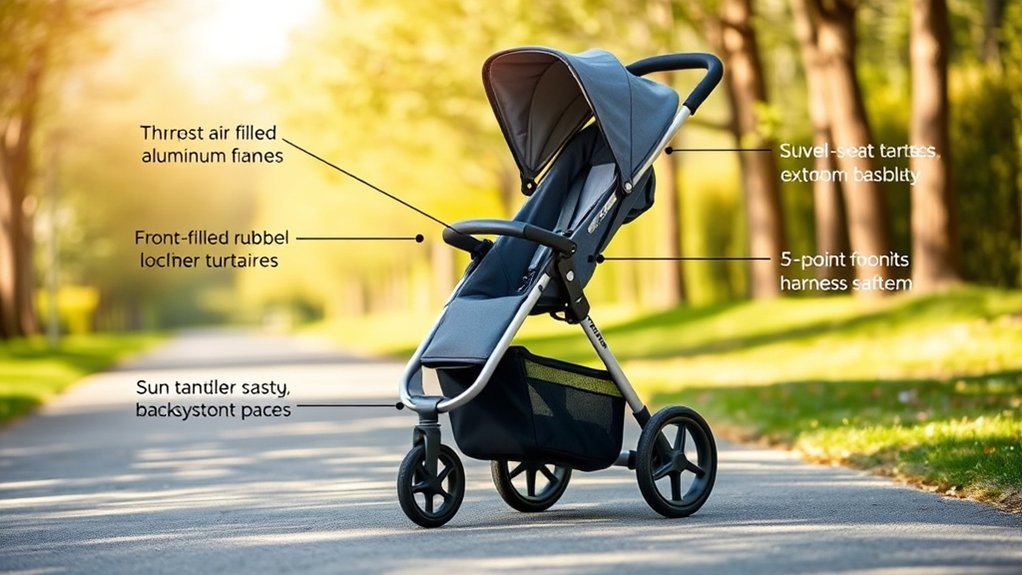
When choosing a jogging stroller, safety features and terrain compatibility should come first. Look for a five-point harness to keep your child secure and large, air-filled tires for a smoother ride on different surfaces. A lockable front wheel can improve stability while jogging, and a swivel mode can make walking and errands easier.
Safety Features Importance
While jogging strollers offer the convenience of outdoor exercise with your child, prioritizing safety features is essential for a worry-free experience. When choosing a jogging stroller, keep these critical safety features in mind:
- Five-point harness: This secures your child at the shoulders, waist, and between the legs.
- Locking front wheel: This helps prevent the stroller from veering off course while you jog.
- Handbrakes and parking brakes: A hand brake helps on hills, while a parking brake keeps the stroller still when stopped.
- Wrist strap: This helps prevent the stroller from rolling away if your hands slip from the handlebar.
- Reflective details: Reflective trim improves visibility during early morning or evening walks.
- Canopy coverage: A large canopy helps protect your child from sun, wind, and light rain.
Pro Tip: Before every run, buckle the harness, lock the front wheel, attach the wrist strap, check tire pressure, and test the brake. This quick habit can prevent many common stroller problems.
Terrain Compatibility Considerations
Choosing the right jogging stroller goes beyond basic safety features. Terrain compatibility is key to ensuring a smooth and enjoyable ride. Look for large-diameter tires, often with bigger rear wheels and a smaller front wheel, for better stability across various terrain types.
A quality suspension system helps absorb bumps and jolts, whether you’re moving across city sidewalks, paved trails, packed dirt, or light gravel. Thick, treaded wheels can help with off-road conditions, though a stroller is still not a replacement for careful route choice. Avoid steep, rocky, muddy, or highly uneven paths when your child is riding.
The ergonomic three-wheel design improves tracking and speed control. However, the best setup depends on your routine. A fixed front wheel may feel best for serious running, while a swivel-lock front wheel offers more flexibility for walking, errands, and mixed use.
Comfort and Parent-Friendly Features
Comfort features matter for both you and your child. Look for a padded seat, adjustable recline, breathable fabric, a large canopy, and good ventilation. A peekaboo window can help you check your child without stopping.
For parents, an adjustable handlebar can reduce wrist, shoulder, and back strain. A storage basket, cup holder, parent console, and easy fold can also make the stroller more useful for daily outings. These features may not affect running performance, but they can make the stroller easier to live with.
Benefits of a Jogging Stroller

Jogging strollers not only make it easier for you to stay active, but they also bring valuable benefits for both you and your child. They can turn exercise into a shared routine instead of something you have to schedule separately.
- Health Benefits: Regular use supports cardiovascular fitness, endurance, and overall activity while helping you spend time outside.
- Family Bonding: A jogging stroller gives you a simple way to share fresh air, movement, and outdoor time with your child.
- Convenience: You can combine workouts with childcare responsibilities, which may reduce the need for a babysitter during short runs.
- Routine Encouragement: A jogging stroller can help you keep a consistent fitness routine, which may support both physical and mental well-being.
- Better Ride Quality: Larger tires and suspension can feel smoother than a basic stroller on bumpy sidewalks and park paths.
- More Outdoor Options: You can use it for more than running, including brisk walks, park visits, light trails, and family outings.
With a jogging stroller, you’re not just working out. You’re creating a healthier family routine that can make outdoor time feel easier and more realistic.
Safety First: Jogging Strollers vs. Regular Strollers
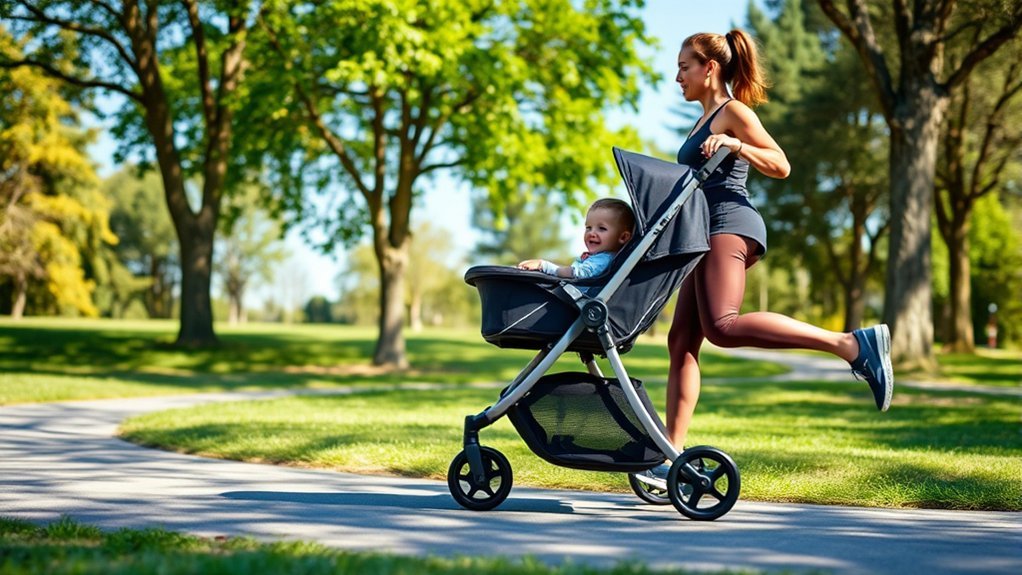
When it comes to taking your little one along for a run, safety is paramount. In a stroller comparison, jogging strollers offer stronger performance features than regular strollers. They are designed with large, air-filled tires, better shock absorption, and more stable tracking on varied terrain.
Regular strollers are usually better for errands, travel, small spaces, and everyday walking. They often have smaller wheels, lighter frames, and a more compact fold. That makes them convenient, but less suitable for jogging or rough surfaces.
Jogging strollers use a three-wheel design and stronger suspension systems for higher stability during faster movement. Safety features like a five-point harness, locking front wheel, wrist strap, parking brake, and hand brake help keep both your child and the stroller secure during runs. If you are serious about running with your child, investing in a jogging stroller can improve control and prioritize your little one’s safety.
Jogging Stroller vs. Regular Stroller
| Best Use | Jogging strollers work best for running, brisk walking, parks, and uneven paths. Regular strollers work best for errands, travel, and everyday walking. |
| Wheels | Jogging strollers usually have larger air-filled tires. Regular strollers usually have smaller wheels that favor compactness. |
| Front Wheel | Jogging strollers often have a lockable front wheel for safer straight tracking. Regular strollers usually prioritize swivel turning. |
| Storage | Jogging strollers are bulkier and need more space. Regular strollers are often easier to fold, lift, and store. |
| Safety During Runs | A proper jogging stroller is the safer option for running. A regular stroller should not be used for jogging unless the manufacturer specifically allows it. |
Maintenance Tips for Longevity
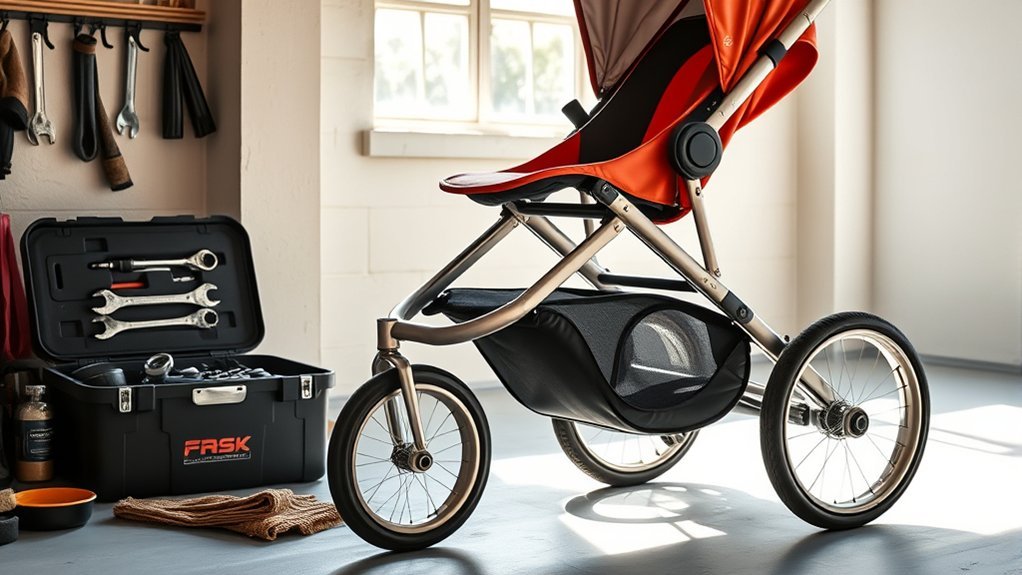
To keep your jogging stroller in top shape and extend its lifespan, regular maintenance is vital. A stroller that carries your child during faster movement needs more attention than a stroller used only for short indoor errands.
Regular maintenance helps your jogging stroller roll smoothly, brake correctly, fold safely, and stay comfortable for your child.
- Fabric Care: Clean fabric parts with mild detergent and warm water. If the manual allows machine washing, follow the exact wash and drying instructions.
- Tire Maintenance: Inspect tires for punctures, worn tread, and low pressure. Proper inflation improves handling, safety, and ride comfort.
- Brake and Harness Check: Check the brakes and harness for wear, stiffness, fraying, or loose parts before regular use.
- Proper Storage: Store the stroller in a cool, dry place to prevent mold growth, rust, fabric fading, and tire damage.
- Wheel Cleaning: Remove dirt, hair, gravel, and debris from the wheels and axles so the stroller rolls smoothly.
- Frame Inspection: Look for loose screws, cracked plastic, bent metal, or unusual rattling after rough outings.
- Manual Review: Follow your stroller manual for lubrication, replacement parts, weight limits, and approved accessories.
If the stroller pulls to one side, squeaks, shakes, or feels harder to push, stop using it for jogging until you inspect the wheels, tires, brakes, and frame. Small issues can become safety problems when you run at a faster pace.
Related Guides
Frequently Asked Questions
What is the point of a jogging stroller?
The point of a jogging stroller is to help you run, jog, or walk briskly while safely transporting your child. Its larger wheels, suspension, lockable front wheel, harness, and wrist strap give you better control than a regular stroller during active outdoor movement.
Can you use a jogging stroller as an everyday stroller?
Yes, you can use many jogging strollers as everyday strollers, especially for walks, parks, and uneven sidewalks. However, they are usually bulkier, heavier, and harder to maneuver in tight spaces than standard strollers, so they may not be ideal for stores, travel, or small cars.
Are all 3-wheel strollers jogging strollers?
No, not all three-wheel strollers are jogging strollers. A true jogging stroller should have running-focused features such as a lockable or fixed front wheel, strong suspension, larger tires, a secure harness, and safety controls. Always check the manufacturer’s instructions before jogging with any stroller.
When should you use a jogging stroller?
Use a jogging stroller when your child is old enough for active movement, has proper head and neck control, and your stroller manual allows jogging. It is best for running, brisk walks, parks, paved trails, and light uneven terrain.
Can you jog with a newborn in a jogging stroller?
No, you should not jog with a newborn in a jogging stroller. Some stroller systems allow an infant car seat for walking, but jogging creates more bounce and movement. Wait until your child meets the stroller maker’s age and development guidance, and ask your pediatrician when unsure.
Do jogging strollers need air in the tires?
Many jogging strollers use air-filled tires because they improve shock absorption and comfort. Check tire pressure regularly and follow the pressure range printed on the tire or listed in the stroller manual. Low tire pressure can make the stroller harder to push and control.
Should the front wheel be locked when jogging?
Yes, in most cases you should lock the front wheel when jogging. A locked front wheel helps the stroller track straight and reduces sudden swerving. Use swivel mode for slow walking and tight turns only if your stroller allows it.
Conclusion
A jogging stroller can be a smart investment if you want to stay active while bringing your child along for the ride. It gives you more stability, smoother movement, better control, and stronger safety features than a regular stroller during runs or brisk outdoor walks.
Still, it is not the perfect choice for every family. Jogging strollers are usually heavier, larger, and harder to store than compact everyday strollers. They also require careful age timing, regular tire checks, brake inspections, and proper use of the harness, wrist strap, and front-wheel lock.
If you run, jog, hike, or spend a lot of time on rough sidewalks and park paths, a jogging stroller can turn your daily exercise into a fun bonding routine. Choose one that matches your child’s age, your terrain, your storage space, and your comfort needs. Then lace up your sneakers, buckle your child safely, and enjoy a more active outdoor lifestyle together.