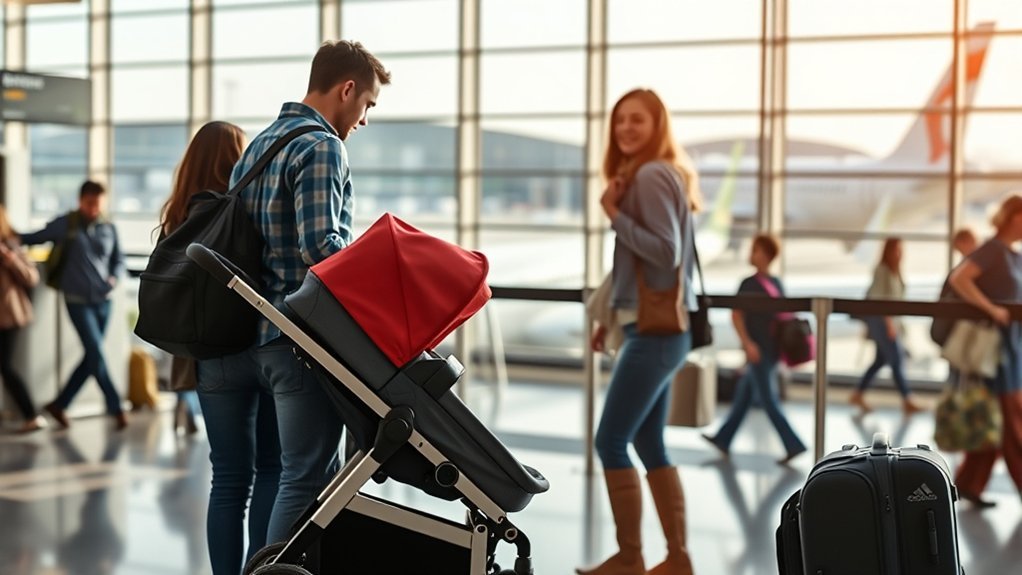
Have you ever wondered whether you can bring a stroller on a plane and still use it through the airport? In most cases, yes. Many airlines allow parents to bring a stroller, gate-check it for free, or use a compact stroller as a carry-on if it meets the airline’s size rules. The key is knowing your airline’s stroller policy before you arrive, because size limits, cabin rules, and pickup procedures can vary.
Quick Answer
Yes, you can usually bring a stroller on a plane. Most airlines let you gate-check a stroller for free, and some compact foldable strollers may qualify as carry-on items if they fit cabin-size limits. Always confirm your airline’s exact stroller size, weight, and gate-check rules before traveling.
Key Takeaways
- Most airlines allow strollers, but policies differ by carrier, aircraft, and stroller size.
- Gate-checking is often the easiest option because you can use the stroller until boarding.
- Compact travel strollers may fit as carry-ons, but they must meet the airline’s cabin baggage limits.
- Remove loose items, use a stroller travel bag, and add a luggage tag before checking or gate-checking.
- Always check your airline’s stroller rules before departure to avoid last-minute surprises.
Understanding Airline Policies on Strollers

When traveling with little ones, understanding airline policies on strollers is essential for a smooth journey. Most major airlines allow strollers in some form, but the rules depend on whether you want to carry the stroller into the cabin, check it at the ticket counter, or gate-check it before boarding.
Many airlines allow a stroller to be checked for free, especially when you are traveling with an infant or young child. Gate-checking is also common, which means you can use the stroller through the airport and leave it at the aircraft door or jet bridge before boarding. After the flight, the stroller is usually returned at the aircraft door, jet bridge, or baggage claim, depending on the airline and airport.
Carry-on stroller rules are stricter. A stroller usually needs to fold small enough to fit within the airline’s cabin baggage dimensions, which are often around 22 x 14 x 9 inches or a similar size. Some carriers may allow slightly different dimensions, while others require all strollers to be checked unless they are very compact. Always confirm your airline’s current stroller policy before your trip, especially if you have a larger travel system, double stroller, jogging stroller, or wagon-style stroller.
Note: Airline stroller rules can change by route, aircraft, and destination. Check your airline’s family travel or baggage page before packing, and take a screenshot of the policy in case airport staff need to verify it.
Types of Strollers Permitted for Air Travel
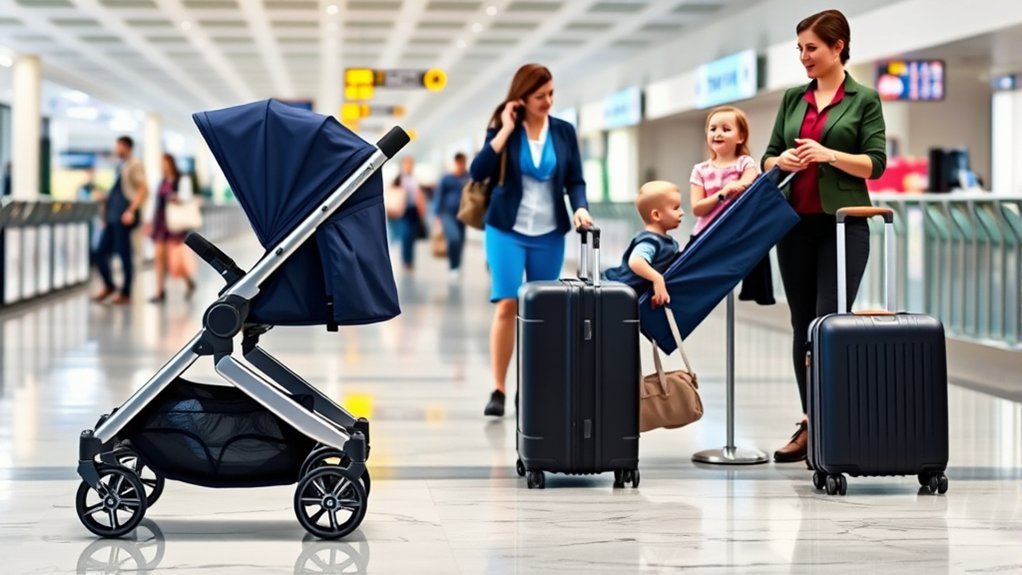
When it comes to bringing a stroller on a plane, the type of stroller matters. Compact, lightweight strollers are the easiest to travel with because they are simpler to fold, carry, screen at security, and store. Larger models may still be allowed, but they are more likely to be gate-checked or checked at the ticket counter.
Carry-On Size Requirements
Traveling with a stroller can be much easier if your stroller meets carry-on size requirements. Many airlines use cabin baggage limits near 22 x 14 x 9 inches, while some may list dimensions such as 22 x 18 x 10 inches or use centimeter-based limits. Because these numbers vary, do not assume that a stroller marketed as “airplane friendly” will be accepted on every flight.
Compact stroller types, such as the TernX Carry On and similar travel strollers, are designed to fold into a small package. Some may fit in overhead compartments on certain aircraft, but final approval depends on the airline, cabin space, and crew instructions. If overhead bins are full or the stroller is slightly oversized, staff may still ask you to gate-check it.
Gate-Check Options Available
Gate-checking is one of the most useful options for parents. It lets you keep your stroller with you through check-in, security, and the terminal. When boarding begins, airline staff usually tag the stroller and place it in the aircraft hold.
Important stroller travel tips include:
- Choose a lightweight and collapsible stroller when possible.
- Check the airline’s size limits before you arrive at the airport.
- Ask at the gate where the stroller will be returned after landing.
- Use a protective travel bag to reduce scratches, dirt, and fabric damage.
- Remove cup holders, toys, snack trays, hooks, blankets, and loose accessories before gate-checking.
Lightweight Travel Strollers
A lightweight travel stroller can make your air travel experience smoother and more enjoyable. These strollers are usually easier to fold with one hand, lift onto a security belt, carry down a jet bridge, and store in a car or hotel room after arrival.
Lightweight strollers often weigh less than full-size strollers, and many are designed with compact folds. A stroller around 11 to 17 pounds is usually easier for one adult to manage while also carrying a diaper bag, backpack, or car seat. Before choosing one, compare the folded dimensions, stroller weight, child weight limit, recline options, sun canopy coverage, and whether it works for your child’s age.
Preparing Your Stroller for Air Travel

Before you head to the airport, prepare your stroller so it is easier to check, screen, and identify. Start by checking your airline’s policies on stroller size, weight, carry-on limits, and gate-check rules. This simple step can prevent delays at the ticket counter or boarding gate.
To help protect your stroller during transit, take these steps:
- Remove all loose items and stroller accessories.
- Empty baskets, cup holders, storage pockets, and parent organizers.
- Fold and lock the stroller before handing it to staff.
- Use a stroller travel bag if you plan to gate-check or check it.
- Attach a luggage tag with your name, phone number, and email address.
- Take a quick photo of the stroller before checking it in case you need to report damage.
It also helps to practice folding your stroller before travel day. Airport security may ask you to collapse it for screening, and boarding areas can be crowded. Knowing how to fold and unfold it quickly will reduce stress when you are managing your child, bags, and documents.
Pro Tip: Put an AirTag, Tile, or another luggage tracker inside the stroller travel bag if you are checking an expensive stroller. It can help you locate it faster if it is delayed or sent to baggage claim instead of the gate.
Gate Checking vs. Checking at the Ticket Counter
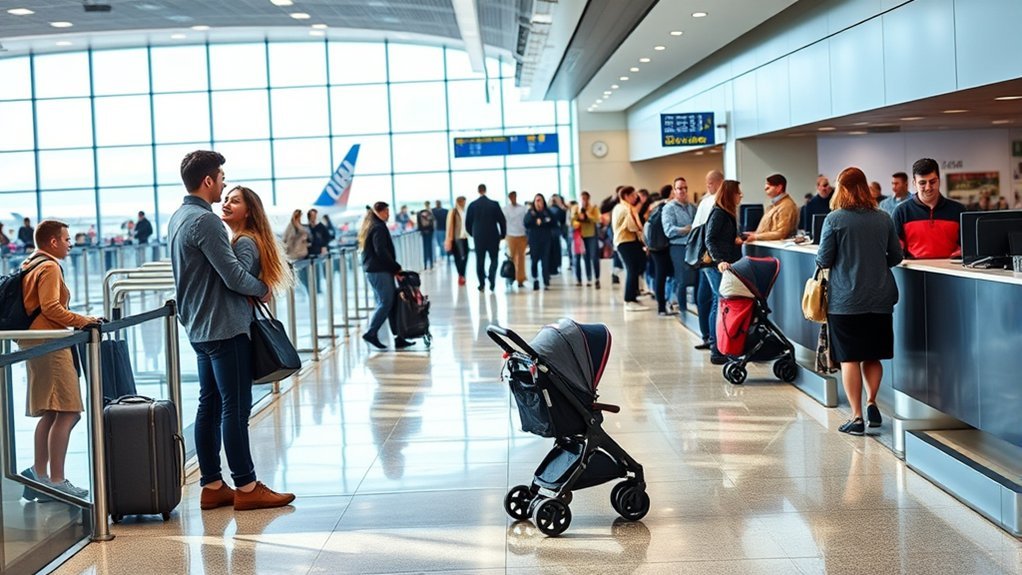
Once you’ve prepared your stroller for air travel, the next decision is whether to gate check it or check it at the ticket counter. Both options work, but they serve different needs.
Gate checking is usually best when you want to use the stroller through the airport. It is helpful for long walks between terminals, layovers, delayed flights, and tired toddlers. The stroller stays with you until boarding, then airport staff load it below the plane.
Ticket-counter checking may be better if your stroller is large, heavy, or difficult to fold. This option keeps your hands free after check-in, but it means you will need another way to carry or guide your child through security and the terminal. It may also expose the stroller to more handling because it travels with checked baggage.
Not every stroller qualifies for gate-checking. Airlines may limit oversized strollers, double strollers, wagons, or bulky jogging strollers. To avoid confusion, confirm the policy before you travel and ask the check-in agent whether your stroller can be gate-checked.
Carry-On Stroller Guidelines

As you prepare for your flight, understanding carry-on stroller guidelines can make your travel experience smoother. A carry-on stroller must usually fold small enough to fit in the overhead bin or another approved cabin storage area. It also needs to meet the airline’s carry-on baggage limits.
Keep these points in mind:
- Compact travel strollers are most likely to qualify as carry-ons.
- Common cabin limits are often near 22 x 14 x 9 inches, but airlines vary.
- Some international airlines use centimeter-based limits, such as 55 x 40 x 23 cm.
- A stroller that fits one airline may not fit another airline’s rules.
- Even approved compact strollers may be gate-checked if overhead bin space is limited.
If you plan to bring your stroller into the cabin, measure it after it is fully folded. Include wheels, handles, bumpers, cup holders, and any protruding parts. If the stroller is close to the limit, be prepared to gate-check it.
Warning: Do not leave your child in the stroller while it is being folded, screened, loaded, tagged, or moved by airport staff. Remove your child first, then fold and hand over the stroller safely.
Tips for Navigating the Airport With a Stroller
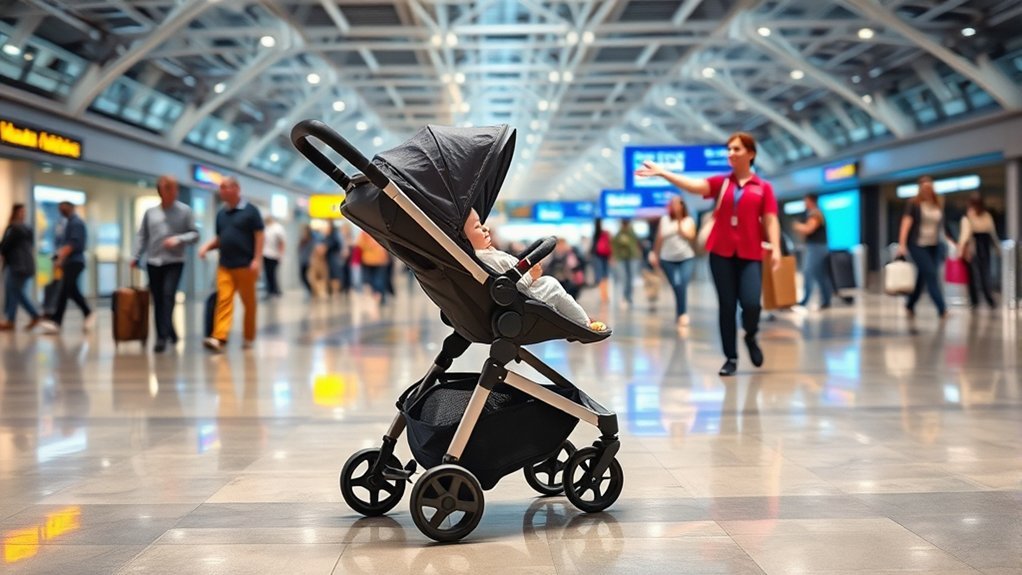
Maneuvering through the airport with a stroller can be smoother when you plan ahead. Airports involve check-in lines, security screening, elevators, moving walkways, crowded gates, and sometimes long walks between terminals. A stroller can help, but only if you keep it organized and easy to fold.
Security Check Preparation
Airport security with a stroller can feel overwhelming, especially if you are traveling alone with a child. A few simple steps can make the process faster:
- Remove toys, blankets, bottles, and loose accessories before reaching the belt.
- Practice folding your stroller before your travel day.
- Place small items in your diaper bag before entering the security line.
- Tell security staff if the stroller cannot fit through the scanner.
- Follow staff instructions for manual inspection when needed.
You may need to collapse the stroller and place it on the conveyor belt. If it is too large, security staff may inspect it separately. Keep your child close, stay calm, and move at a safe pace rather than rushing.
Gate-Checking Procedures Explained
Gate-checking your stroller can simplify your travel experience because you can use the stroller until boarding. When you arrive at the gate, tell the airline staff you want to gate-check your stroller. They will usually give you a tag to attach before boarding.
Before handing over the stroller, fold it securely and remove anything that could fall off. Keep your boarding pass and gate-check tag handy. After landing, ask whether the stroller will be returned at the aircraft door, jet bridge, or baggage claim. Return procedures can vary by airport, especially for international flights, tight connections, or smaller aircraft.
Protecting Your Stroller During Travel
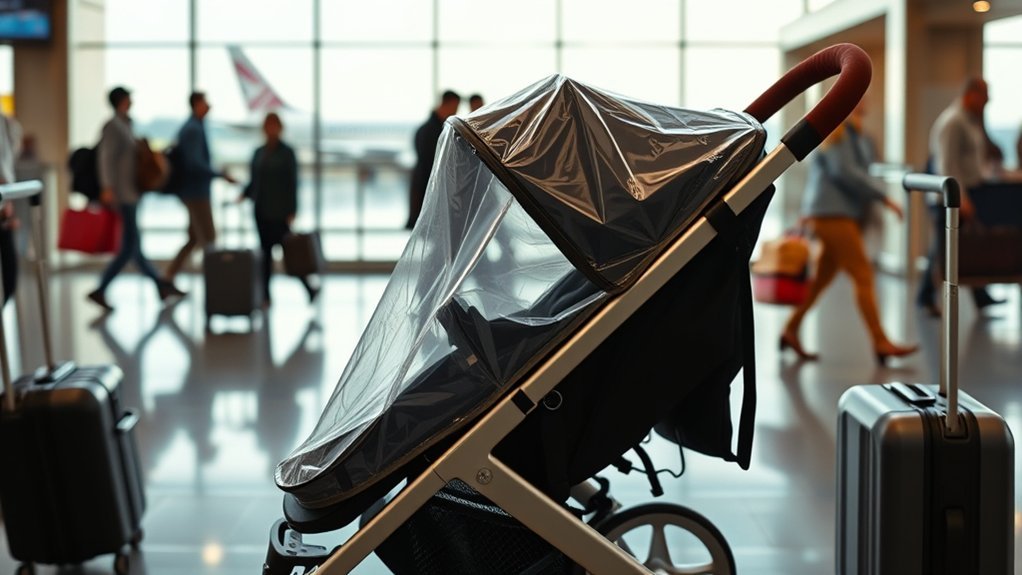
To help your stroller survive the rigors of air travel, take a few protective measures. Strollers can be exposed to conveyor belts, cargo areas, rain, dirt, tight baggage spaces, and rough handling. A little preparation can reduce the chance of damage.
Use these travel tips:
- Attach a luggage tag with clear contact information.
- Use a padded stroller travel bag when possible.
- Remove accessories such as trays, hooks, fans, toys, and cup holders.
- Lock the stroller frame after folding it.
- Keep the stroller manual or model number saved on your phone.
- Inspect the stroller as soon as it is returned to you.
If your stroller is damaged, report it before leaving the airport. Go to the airline’s baggage service desk, show photos if you have them, and ask for a written damage report. Keep baggage tags and gate-check tags until the issue is resolved.
Popular Travel Strollers for Airplane Use
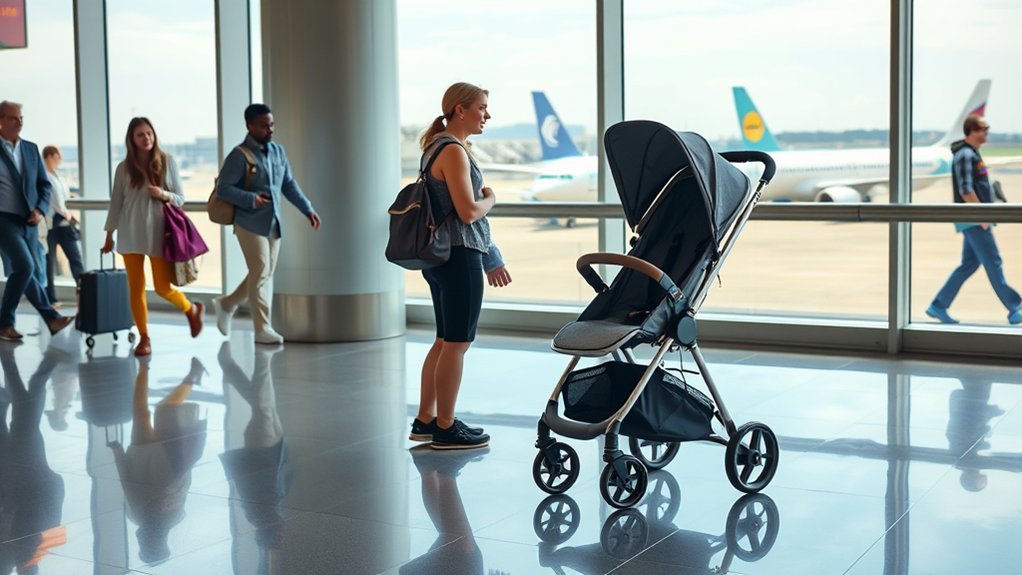
Traveling with a little one can be easier when you choose the right stroller. Popular options such as the TernX Carry On, Babyzen YOYO+, and UPPAbaby G-LITE are often discussed by parents because they focus on portability, compact folding, and easier airport handling.
The TernX Carry On is known for a compact fold and travel-friendly design. The Babyzen YOYO+ is popular because it folds small and can work for different ages with the right setup. The UPPAbaby G-LITE is a lightweight option that is easy to carry, though parents should still check whether it meets their airline’s current cabin rules.
When comparing travel strollers, look beyond the folded size. Check the stroller weight, child weight limit, recline, canopy coverage, storage basket, brake design, shoulder strap, one-hand fold, and whether the stroller is comfortable enough for naps during long travel days. Also confirm that the stroller is appropriate for your child’s age, height, and weight.
Airline-Specific Stroller Regulations

When you’re traveling with a stroller, it is essential to know the specific regulations of your airline. Each carrier has its own size and weight limits, and those limits can affect whether you can take your stroller onboard, gate-check it, or check it at the ticket counter.
Airline Policies Overview
Airline stroller rules are not identical. Some airlines allow one stroller and one car seat to be checked for free when traveling with a child. Others count compact strollers as part of a carry-on allowance if they fit the required dimensions. Some international airlines allow small foldable strollers in the cabin, while larger strollers must be checked.
Examples of common policy differences include:
- Some airlines allow free gate-checking for strollers.
- Some airlines allow compact foldable strollers as carry-ons only if they meet cabin size limits.
- Some airlines require larger strollers, double strollers, or wagons to be checked.
- Some airlines return gate-checked strollers at the aircraft door, while others send them to baggage claim.
Because stroller policies can vary widely, review your airline’s rules before booking if stroller access is important for your family.
Size and Weight Limits
Understanding size and weight limits is essential for a hassle-free flight with your stroller. Many airlines permit compact strollers as carry-on items only if they fit within standard carry-on dimensions. Larger strollers usually need to be checked or gate-checked.
To avoid problems, measure your stroller when fully folded. Check the folded height, width, depth, and weight. If your stroller has detachable wheels or accessories, know how to remove and store them quickly. If the stroller is oversized, use a protective bag and plan to check it instead of relying on cabin storage.
Benefits of Bringing Your Stroller on a Flight
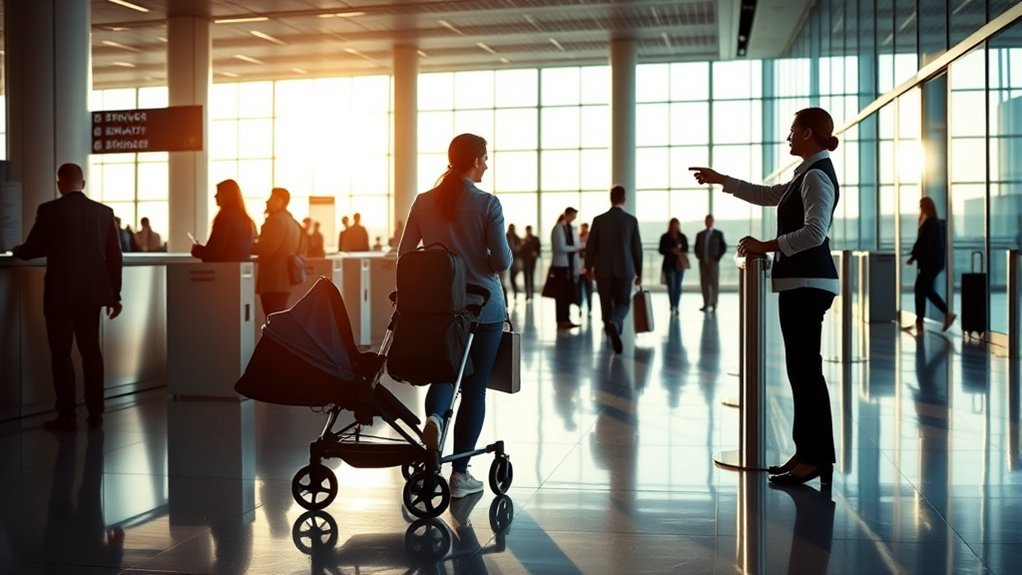
Bringing your stroller on a flight offers several benefits that can make travel easier for both you and your child. A stroller gives your child a familiar place to sit, rest, or nap while you move through the airport.
Key benefits include:
- Easier Navigation: A stroller helps you move through long terminals without carrying your child the entire time.
- Comfortable Resting Spot: During layovers or delays, your stroller gives your child a safe and familiar place to relax.
- Better Bag Management: Many strollers have baskets that can hold small travel essentials while you are in the airport.
- Cost Savings: Many airlines allow stroller gate-checking or checked stroller service at no extra charge when traveling with children.
- Less Stress: A familiar stroller can help reduce fussiness, especially during long travel days.
For parents, the biggest benefit is flexibility. You can keep your child secure while handling documents, luggage, snacks, and boarding announcements. With the right stroller and a clear plan, airport travel becomes much more manageable.
Frequently Asked Questions
Can I use my stroller during layovers?
Yes, you can usually use your stroller during layovers if it is returned to you after the first flight. Ask the gate agent whether your stroller will be returned at the aircraft door or sent to baggage claim. If you have a tight connection, confirm the pickup location before boarding.
Are there weight limits for strollers on planes?
Yes, some airlines have weight limits for strollers, especially if you want to bring one into the cabin. Lightweight, compact strollers are usually easier to travel with. Always check your airline’s baggage and family travel rules before flying.
What happens if my stroller gets damaged?
If your stroller gets damaged, report it to the airline before leaving the airport. Visit the baggage service desk, show your gate-check or baggage tag, and ask for a written damage report. Photos taken before and after the flight can help support your claim.
Can I rent a stroller at the airport?
Some airports offer stroller rental services, but availability is not guaranteed. Rental options vary by airport, terminal, and destination. If your child depends on a stroller, bringing your own is usually safer than relying on an airport rental.
Are there specific stroller brands preferred by airlines?
Airlines typically do not prefer specific stroller brands. They care more about size, weight, foldability, and whether the stroller can be safely checked or stored. Compact travel strollers usually meet airline requirements more easily than bulky full-size models.
Can I bring both a stroller and a car seat on a plane?
Many airlines allow parents to check both a stroller and a car seat for free when traveling with a child. However, policies vary, so confirm with your airline before departure. If you want to use a car seat onboard, it usually needs to be approved for aircraft use and fit the airplane seat.
Do I need a stroller travel bag?
A stroller travel bag is not always required, but it is strongly recommended if you are checking or gate-checking the stroller. A bag helps protect the fabric, wheels, frame, and handles from dirt and scratches during handling.
Conclusion
Bringing a stroller on a plane can make family travel much easier, especially when you have a baby or toddler who needs a safe place to sit, rest, or nap. Most airlines allow strollers, and gate-checking is often the simplest option because you can use the stroller until boarding.
Before your trip, check your airline’s stroller policy, measure your stroller when folded, remove loose accessories, and use a protective travel bag if possible. With the right preparation, you can move through the airport with less stress and keep your little one more comfortable from check-in to arrival.