
When you consider the evolution of parenting tools, the stroller stands out as one of the most important inventions in everyday family life. Its origins trace back to the 18th century, when William Kent created an early carriage-style design for nobility. Over time, the stroller changed from a decorative status item into a practical tool shaped by key innovations, safety needs, manufacturing advances, and changing ideas about parenting. Understanding this history reveals not only how stroller design improved, but also how cultural attitudes toward children, women’s mobility, and family convenience shifted over time.
Quick Answer
The stroller evolved from an 18th-century luxury carriage into a modern parenting essential through better materials, safer designs, foldable frames, lightweight construction, and changing social acceptance. Early models emphasized status, while today’s strollers focus on safety, comfort, portability, and convenience for everyday family life.
Key Takeaways
- The first stroller-style design is commonly linked to William Kent’s 1733 carriage for the Duke of Devonshire.
- Early strollers were luxury items, but legal changes, social acceptance, and royal influence helped normalize their use.
- Major innovations included reversible carriages, collapsible frames, umbrella strollers, jogging strollers, and travel systems.
- Materials shifted from wood and wicker to aluminum, steel, plastics, rubber, and synthetic fabrics for better strength and portability.
- Modern strollers now focus on safety features, flexible designs, easy folding, lightweight frames, and lifestyle-specific use.
Origins of the Stroller
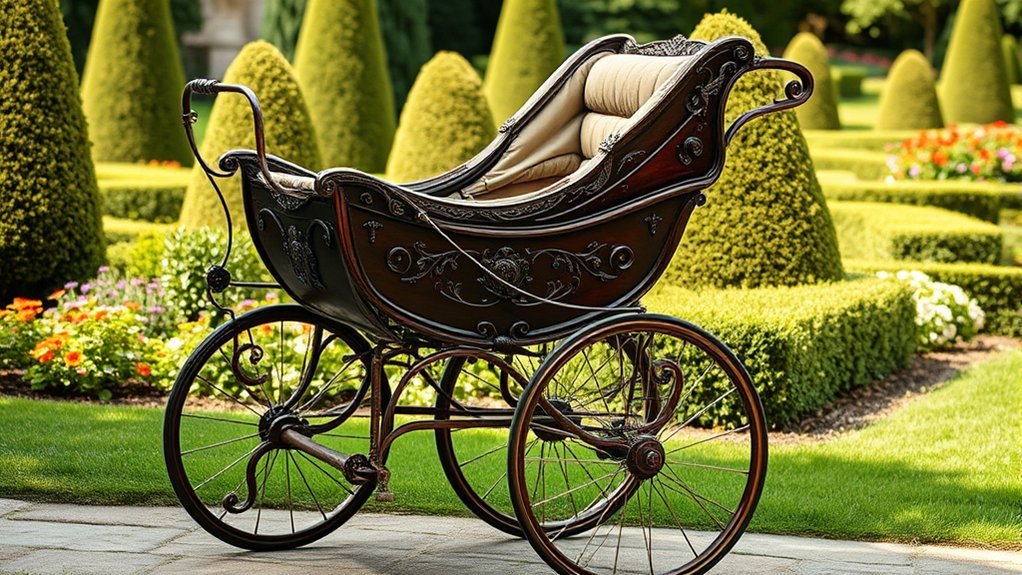
The stroller, now a quintessential tool for modern parenting, traces its roots to the early 18th century. English architect and designer William Kent is often credited with creating an early model in 1733 for the Duke of Devonshire. This first design was closer to a small carriage than a modern stroller, featuring a decorative shell-shaped basket on wheels that reflected wealth, status, and aristocratic taste.
Unlike today’s practical strollers, early baby carriages were not designed for busy sidewalks, car trunks, or quick errands. They were often pulled by small animals or servants and used by wealthy families as a symbol of social standing. Over time, however, designs became more functional. In the 1800s, Benjamin Potter Crandall introduced a more pushable carriage, helping move the design closer to the stroller format parents recognize today.
The perambulator, associated with Charles Burton in 1848, helped expand stroller use even further. Royal endorsements, especially from Queen Victoria, gave these early carriages social approval and helped normalize them among the public. These early advancements laid the groundwork for future stroller innovation, blending practical child transportation with the elegance expected by families of the period.
Note: Early strollers were not originally built for everyday convenience. They began as luxury objects and slowly became practical tools as cities, family routines, and manufacturing methods changed.
Key Innovations in Stroller Design
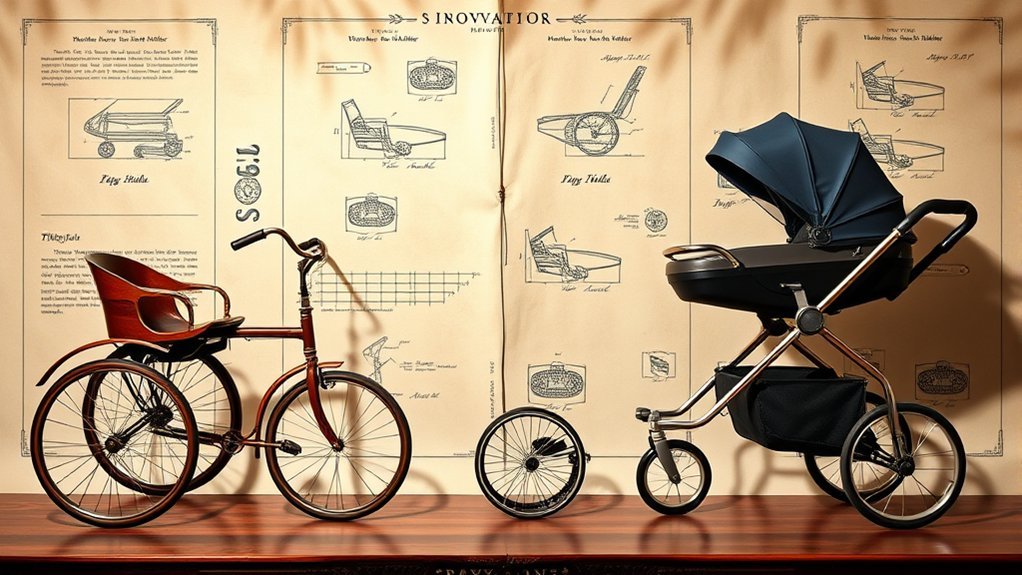
Stroller design has continually advanced, reflecting changing family needs, urban life, safety expectations, and manufacturing technology. The evolution from William Kent’s decorative model in 1733 to modern strollers shows how each generation improved comfort, control, storage, portability, and child protection.
| Innovation | Description |
|---|---|
| Reversible Carriage (1889) | Improved maneuverability and parent-child visibility by allowing the bassinet to face the operator. |
| Umbrella Stroller (1965) | Revolutionized convenience with a lightweight aluminum frame and compact folding structure. |
| Jogging Stroller (1980s) | Allowed active parents to exercise while safely transporting children on smoother outdoor routes. |
These advancements addressed practical concerns that older designs could not solve. Parents needed strollers that were easier to steer, easier to fold, lighter to lift, safer for children, and better suited to sidewalks, parks, public transport, and car travel. Modern strollers now include features such as one-hand folding systems, adjustable handles, reclining seats, shock absorption, parking brakes, sun canopies, parent trays, storage baskets, and infant car seat compatibility.
The biggest design shift was the move from stroller as “display object” to stroller as “daily tool.” Earlier models focused on appearance and status, while modern designs focus on safe movement, parent comfort, child comfort, and flexibility across different family routines.
Legal and Social Challenges

Although regarded today as a staple of parenting, early strollers faced meaningful legal and social challenges that shaped public opinion and everyday use. In the late 19th century, some women reportedly faced restrictions or prosecutions for using strollers on public footpaths. These disputes reflected a time when strollers were sometimes viewed as frivolous luxury items rather than necessary childcare tools.
This stigma also connected to broader social limits on women’s mobility. Public space was not always designed around mothers, caregivers, or children. A woman pushing a carriage could be seen as blocking paths, disrupting public order, or bringing private domestic responsibilities into public life. These attitudes made stroller acceptance slower than the invention itself.
As legal decisions and social expectations evolved, the stroller’s role became easier to defend. Parents and caregivers increasingly saw it as a tool that improved child safety, reduced physical strain, and gave families more freedom outside the home. Endorsements from influential figures such as Queen Victoria helped normalize stroller use and made baby carriages more socially acceptable.
This shift from luxury to necessity mirrored broader changes in parenting practices and women’s roles. The stroller became part of a larger movement toward mobility, independence, and participation in daily public life. Instead of keeping children and caregivers confined to the home, strollers helped make family movement more practical.
The stroller’s history is not only about wheels and frames. It is also about who was allowed to move comfortably through public spaces while caring for children.
Evolution of Materials and Manufacturing

You’ll notice that the materials used in stroller construction have considerably evolved from wood and wicker to modern materials such as aluminum, steel, plastic, rubber, foam, and synthetic fabrics. This shift reflects major manufacturing improvements and a growing focus on strength, portability, safety, and affordability. As materials changed, so did the safety standards and quality control measures that help make modern strollers more reliable for parents and caregivers.
Early Material Choices
In the early days of baby carriages, materials like wood and wicker dominated. Many designs featured elaborate shapes, decorative finishes, large wheels, and brass joints that signaled wealth and craftsmanship. These wooden designs reflected not only the technical skill of the maker but also the social status of the family using the carriage.
Wicker added a lighter yet durable quality to some early carriages. It allowed for decorative patterns and a more refined appearance while still supporting the child’s seating area. However, these early materials had limits. Wood could be heavy, wicker could wear down, and large frames were not always easy to store, lift, or transport.
By the 1920s, the focus began shifting toward practicality and safety. Larger wheels, sturdier frames, and more stable structures became more common. While early material choices emphasized luxury, they laid the foundation for future innovations by proving that parents valued both appearance and function. This history helps explain how the stroller slowly became an accessible, useful item rather than only a status symbol.
Manufacturing Advancements
As demand for baby strollers grew, manufacturers began to use materials and production techniques that improved both safety and convenience. The shift from traditional wood and wicker to aluminum, steel, molded plastic, rubber wheels, and synthetic fabrics marked a major leap in durability and usability.
E. Baumann’s invention of the collapsible baby carriage in 1906 was especially important because it made storage and transport easier. This idea helped shape later folding stroller designs, including the compact umbrella stroller that became popular in the 20th century. Collapsible frames changed the way parents used strollers because they made it easier to bring them into homes, vehicles, shops, and public transport.
Today, manufacturers use advanced bending, welding, molding, stitching, coating, and testing processes. Steel and aluminum tubing may be treated to resist rust. Fabric parts are selected for strength, cleanability, and comfort. Wheels and suspension systems are designed for smoother rides. Lightweight materials and aerodynamic design ideas also support active lifestyles, especially in jogging and all-terrain strollers.
In recent years, sustainability practices have also become more visible. Some companies now highlight recycled fabrics, longer-lasting frames, replaceable parts, and more responsible packaging. Quality control is also more rigorous than in the past, with modern stroller designs expected to meet safety requirements before reaching families.
Material Impact on Design
The evolution of materials has deeply influenced stroller design, shaping everything from weight and comfort to durability and appearance. You can see the impact in several major ways:
- Weight Reduction: Aluminum frames introduced in the 1960s made strollers lighter and easier to carry, fold, and transport.
- Enhanced Safety: Modern materials such as stronger fabrics, better rubber tires, reinforced plastic parts, and secure buckles help improve durability and child protection.
- Sustainable Practices: Some current designs incorporate recycled or eco-conscious materials, reflecting growing interest in responsible manufacturing.
- Production Efficiency: Techniques such as powder coating, molded parts, cutting dies, and automated production help improve consistency while keeping designs affordable.
These elements show how material evolution improved stroller utility while also aligning with modern priorities such as safety, portability, comfort, and environmental responsibility.
Modern Features and Variations
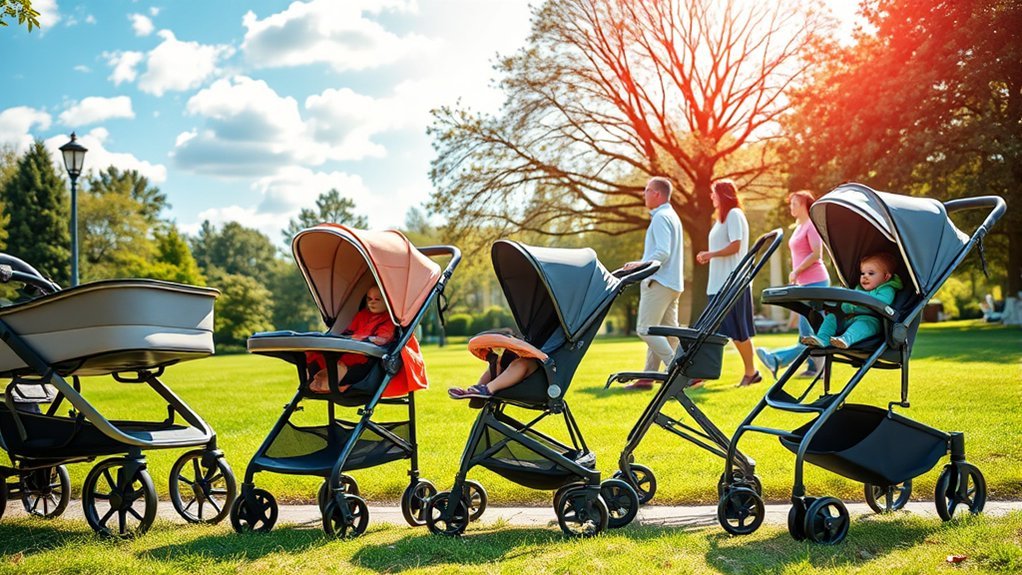
Modern strollers have evolved to include practical safety features such as five-point harnesses, reliable brakes, adjustable canopies, reclining seats, and stronger frames. These improvements help protect children without sacrificing comfort. You’ll also find versatile design options, from lightweight frames that fold easily for travel to travel systems that move between car seat and stroller use.
Innovative Safety Features
While many parents appreciate the convenience of strollers, safety remains a top priority in modern design. Today’s strollers are built with a stronger focus on stability, restraint, braking, visibility, and age-appropriate use. Common safety features include:
- Five-point harness systems: These help hold infants and toddlers securely in place and reduce the risk of falls.
- Adjustable suspension systems: These absorb bumps from uneven surfaces and improve ride comfort.
- Built-in safety brakes: Easy-to-use brakes help keep the stroller stationary when parked.
- Reflective materials or lights: These improve visibility in low-light conditions, helping protect both parent and child.
Other safety-focused features may include lockable front wheels, wrist straps on jogging strollers, peekaboo canopy windows, ventilated panels, flame-resistant material standards, and stronger folding locks. These improvements show how stroller design has moved from simple transportation toward a more complete child-safety system.
Warning: A stroller should match the child’s age, weight, and developmental stage. Infants who cannot sit or support their head usually need a fully reclined seat, bassinet attachment, or compatible infant car seat setup.
Versatile Design Options
Safety innovations have greatly improved stroller usability, but design flexibility has also become a major priority. Modern strollers now serve different family lifestyles, including city walking, travel, jogging, public transit, shopping, newborn care, toddler use, and multi-child households.
Modern strollers showcase adaptable configurations and multifunctional designs, allowing you to shift more easily between daily activities. For instance, travel systems provide a smoother transition from car to stroller, while jogging strollers accommodate active lifestyles with larger wheels and more stable handling.
Here’s a quick comparison of popular stroller types:
| Stroller Type | Key Features |
|---|---|
| Travel Systems | Easy shift from car seat to stroller, helpful for infants and car-based routines. |
| Umbrella Strollers | Lightweight, compact, and easy to store for quick trips or travel. |
| Jogging Strollers | Larger wheels and stable frames for smoother movement during active use. |
| Convertible Strollers | Can adapt for different seating positions, child ages, or family needs. |
| All-Terrain Strollers | Designed for parks, gravel paths, uneven sidewalks, and varied surfaces. |
These features empower parents to navigate urban environments, outdoor spaces, travel situations, and daily routines with more confidence. Instead of one basic stroller serving every purpose poorly, families can now choose a model that fits their lifestyle.
Pro Tip: When comparing modern strollers, focus less on the longest feature list and more on your real routine. A city parent may need compact folding and storage, while an active parent may need better suspension and larger wheels.
Cultural Significance and Future Trends

As strollers transformed from luxury items of the 18th century into indispensable tools for contemporary parents, they began to reflect major shifts in societal norms and values surrounding child-rearing. The stroller is no longer just a piece of baby gear. It is also a sign of how families balance care, mobility, work, leisure, and public life.
- Strollers symbolize the integration of mobility and parenting, showing how modern families move through daily life with children.
- High-end models reflect consumer trends and social status, influencing how some parents view design, branding, and lifestyle.
- Jogging strollers highlight a cultural shift toward active lifestyles and fitness awareness among parents.
- Future designs will likely prioritize versatility, safety, adaptability, sustainability, and easier use in crowded spaces.
Future stroller trends may include lighter materials, more compact folding systems, modular frames, improved suspension, better recycled fabrics, smarter braking systems, and accessories that support changing family needs. As cities become denser and parents continue balancing work, errands, travel, and outdoor activity, stroller design will likely keep adapting.
Together, these elements show the ongoing evolution of strollers as cultural artifacts and essential parenting tools. Their history tells a larger story about family life, technology, public space, and the desire to make caregiving more practical.
Frequently Asked Questions
Who was William Kent and why is he significant?
William Kent was an 18th-century English architect, designer, and landscape designer. He is significant in stroller history because he is commonly credited with creating an early wheeled child carriage in 1733 for the Duke of Devonshire, helping establish the basic idea that later evolved into the stroller.
What materials were used in early stroller designs?
Early stroller and baby carriage designs often used wood, wicker, metal fittings, cloth coverings, and decorative hardware. These materials gave early models a refined appearance, but they were often heavier and less convenient than modern aluminum, steel, plastic, rubber, and synthetic fabric designs.
How did strollers impact parenting in the 20th century?
Strollers helped parents move through daily life more easily in the 20th century. Foldable frames, lighter materials, and more affordable designs made it simpler to take children on walks, errands, trips, and public outings while reducing the need to carry a child for long periods.
Are there any safety regulations for modern strollers?
Yes, modern strollers are expected to meet safety requirements that address stability, restraint systems, locking mechanisms, brakes, materials, labels, and folding hazards. These standards help reduce risks and give parents more confidence when choosing a stroller.
What are popular stroller brands today?
Popular stroller brands today include Bugaboo, UPPAbaby, Baby Jogger, Graco, Chicco, Nuna, Britax, Evenflo, Thule, and BOB Gear. The best brand depends on your budget, child’s age, space needs, car seat compatibility, terrain, and daily routine.
Why did stroller designs become lighter over time?
Stroller designs became lighter because parents needed models that were easier to fold, lift, carry, store, and place in cars. The rise of aluminum frames, plastic parts, synthetic fabrics, and compact folding systems made strollers more practical for everyday use.
What is the biggest difference between early strollers and modern strollers?
The biggest difference is purpose. Early strollers were often decorative luxury items for wealthy families, while modern strollers are practical safety-focused tools built for daily movement, child comfort, storage, transport, and different parenting lifestyles.
Conclusion
In tracing the stroller’s journey from a decorative carriage to a modern parenting essential, you can see how innovation and social acceptance shaped its evolution. Just as a seed grows into a mighty tree, the stroller transformed through new materials, safer structures, foldable frames, better wheels, and changing family needs. Today, it stands not only as a tool for mobility, but also as a symbol of parental care, public independence, and cultural change. As you look ahead, future innovations will likely continue to refine comfort, safety, sustainability, and convenience for the next generation of families.
