
When choosing a stroller, start with your child’s age, your daily routine, your storage space, and the safety features you will use every day. A good stroller should fit your budget, fold easily, steer well, and keep your child secure with a reliable harness and brakes. With so many stroller types available, it helps to compare travel systems, all-purpose strollers, lightweight models, jogging strollers, double strollers, and helpful accessories before you buy.
Quick Answer
Choose a stroller based on your baby’s age, your main use, your storage space, and must-have safety features. Look for a five-point harness, secure brakes, stable wheels, easy folding, washable fabric, and a weight limit that fits your child’s growth. Test the stroller before buying whenever possible.
Key Takeaways
- For newborns, choose a stroller that fully reclines, uses a bassinet, or works safely with an infant car seat.
- For everyday errands, all-purpose strollers offer comfort, storage, and better long-term use.
- For travel or quick trips, lightweight and umbrella strollers are easier to carry and store.
- For running or rough paths, use a true jogging stroller with strong suspension, air-filled tires, and a locking front wheel.
- Always check the harness, brakes, folded size, weight limit, stroller recall status, and cleaning instructions before you buy.
What to Consider When Choosing a Stroller
When it comes to choosing a stroller, your first question should be simple: how will you use it most? A stroller for city sidewalks may need different wheels than one used for parks, gravel paths, or frequent airport travel. Your budget matters too. Strollers can range from basic low-cost models to premium options with stronger frames, smoother suspension, larger canopies, and more flexible seating.
For newborns, prioritize safe positioning. A newborn should not sit upright in a stroller seat that lacks proper recline or head support. Look for a fully reclining seat, a bassinet option, or compatibility with an infant car seat. As your baby grows, you can focus more on seat comfort, canopy coverage, snack access, and storage.
Longevity matters as well. If you plan to have more children, a stroller that converts from single to double may cost more upfront but save money later. Also consider your car trunk, entryway, apartment space, and how often you will lift the stroller. A heavy stroller may feel fine in a store but become frustrating if you carry it up stairs every day.
Warning: Never hang heavy bags from the handlebar unless the stroller manual says it is safe. Extra weight on the handle can make some strollers tip backward.
Key features to evaluate include a five-point harness, effective parking brakes, stable wheel design, easy folding, good maneuverability, enough storage, washable fabrics, and a clear weight limit. You should also keep up with stroller maintenance, including cleaning wheels, checking brakes, tightening loose parts, and reviewing recall notices.
Types of Strollers

When choosing a stroller, it’s important to understand the different types available so you can match the stroller to your lifestyle. Travel systems, all-purpose strollers, lightweight strollers, jogging strollers, and double strollers each solve a different problem. The best choice depends on your child’s age, your daily routine, your storage space, and the terrain you use most.
Stroller Categories Overview
Choosing the right stroller starts with understanding the main categories. Travel systems combine a stroller with an infant car seat and often a car seat base. They are convenient for newborns because you can move a sleeping baby from the car to the stroller without removing the baby from the seat. The downside is that babies eventually outgrow the infant car seat, so you should also consider how useful the stroller frame will be after that stage.
All-purpose strollers are sturdy and versatile. They work well for daily walks, errands, shopping, and neighborhood use. Many all-purpose strollers weigh around 25-30 lbs, so they can feel bulky if you travel often or have limited storage.
Jogging strollers are designed for rougher terrain and faster movement. They often include larger air-filled tires, stronger suspension, hand brakes, and a locking front wheel. Many jogging strollers support one child up to about 75 lbs, depending on the model, but they are usually heavier than standard strollers.
Lightweight or umbrella strollers are easy to fold, carry, and store. Many weigh under 15 lbs, making them useful for travel, public transit, and quick errands. Some lightweight models do not recline enough for young infants, so always check the age and recline guidance.
Double strollers carry two children. They may use side-by-side seats, tandem seats, or convertible seating. They offer more flexibility for siblings or twins, but they are larger, heavier, and harder to fit through narrow spaces.
| Stroller Type | Best For | Watch Out For |
|---|---|---|
| Travel System | Newborns and car-to-stroller transitions | Infant car seat may be outgrown quickly |
| All-Purpose Stroller | Daily errands, walks, and long-term use | Can be bulky or heavy |
| Lightweight Stroller | Travel, quick trips, and small spaces | May lack deep recline or large storage |
| Jogging Stroller | Running, parks, and uneven paths | Not all are suitable for newborns without adapters |
| Double Stroller | Twins or two young children | Wider, longer, and harder to lift |
Choosing Based on Lifestyle
Understanding your lifestyle is key to selecting the right stroller for your family. If you’re always on the go, lightweight or umbrella strollers offer easy portability, though they may sacrifice some comfort for infants. For everyday use, all-purpose or full-sized strollers provide stronger comfort, better storage, and broader accessory compatibility, but they can be harder to travel with.
If running or outdoor adventures are part of your routine, consider jogging strollers. They handle rough terrain better than standard strollers and often feel more stable at higher speeds. For families with two kids, double strollers provide versatile configurations, but you should measure doorways, trunk space, and storage areas before buying.
Pro Tip: Before you buy, list your top three stroller uses. For example: grocery trips, neighborhood walks, and travel. Choose the stroller that handles those uses best instead of buying the model with the most features.
By evaluating how well each stroller fits your routine, you’ll find a model that supports both your needs and your child’s comfort.
Top Stroller Features to Consider
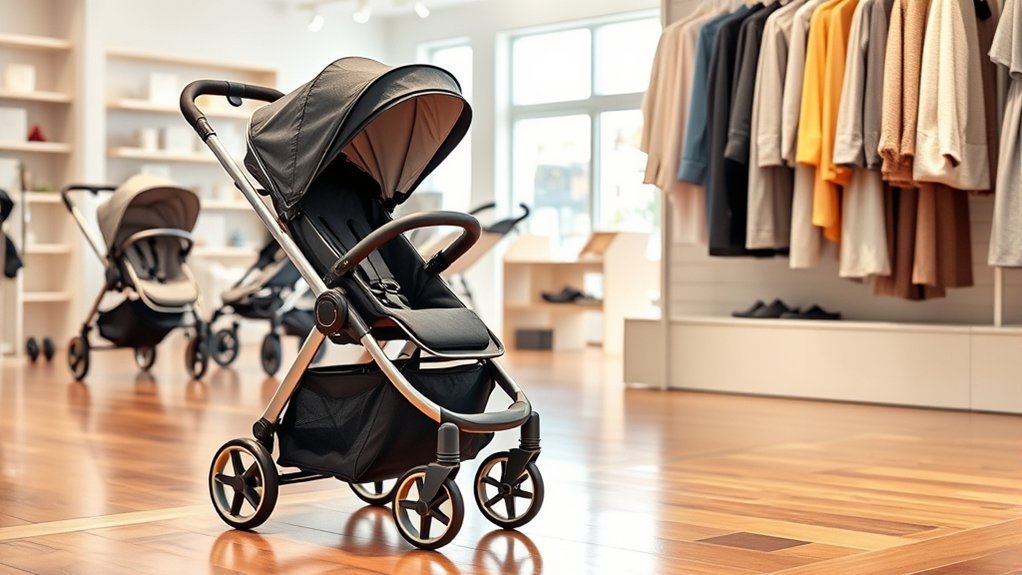
When choosing a stroller, prioritize features you will use every day. Safety features like a five-point harness, effective brakes, and stable wheels help protect your child. Foldability matters too, especially if you have a small trunk, a tight hallway, or stairs. Maintenance is another key point because crumbs, mud, spilled drinks, and pet hair can build up quickly.
Safety Features Overview
As you explore stroller options, prioritizing safety features is crucial for safeguarding your child’s well-being during outings. Look for a five-point harness system to enhance harness safety. This keeps your child secure across the shoulders, waist, and between the legs. A wide base can improve stability and reduce tipping risk, especially on uneven surfaces.
Practical brakes are also essential. Parking brakes help keep the stroller stationary when you stop, while hand brakes can give extra control on slopes or during jogging. A locking front wheel improves stability during sharp turns and higher speeds, especially in jogging strollers. Always verify that materials, frame construction, and the restraint system meet current safety expectations for the stroller’s intended use.
| Feature | Importance | Checkpoints |
|---|---|---|
| Five-point harness | Keeps child secure | Confirm snug fit |
| Stability design | Prevents tipping on uneven terrain | Look for a wide base |
| Practical brakes | Control on slopes and maintain stationary position | Test handbrakes and parking brakes |
| Locking front wheel | Enhances stability during turns and speeds | Confirm locking mechanism works |
Foldability and Storage Options
After confirming your stroller has the necessary safety features, consider its foldability and storage options. Look for strollers with a one-handed folding mechanism if you often hold your child or carry bags while folding. For families with limited space, strollers that fold flat or compactly can fit more easily in small car trunks, closets, or apartment entryways.
Models like the UPPAbaby Minu, weighing just 14.8 lbs, make carrying and storage easier. A stand-up fold feature can also help because the stroller stays upright when stored, which saves space and keeps the seat fabric away from dirty floors. Always evaluate the folded dimensions, such as the UPPAbaby Vista v3’s 25.5W x 15.8H x 33.8L, to confirm the stroller fits your home and vehicle.
Comfort and Adjustability
Comfort matters for both you and your child. For your child, look for a padded seat, adjustable recline, a supportive footrest, smooth suspension, and a large canopy. For you, check handlebar height, grip comfort, basket access, and how easily the stroller turns with one hand.
If caregivers have different heights, an adjustable handlebar can make daily use more comfortable. If your child naps in the stroller, a deep recline and good canopy coverage become more important. If you shop often, an accessible under-seat basket can matter more than cup holders or snack trays.
Maintenance and Cleaning
A stroller gets dirty fast, so cleaning should be simple. Check whether the seat fabric is removable, machine washable, or wipe-clean only. Inspect the wheels for trapped hair, sand, or small stones. Clean the frame with mild soap and water, and avoid harsh cleaners unless the manual allows them.
You should also check screws, wheel locks, brakes, folding joints, and harness straps regularly. If the stroller starts pulling to one side, squeaking, folding poorly, or braking unevenly, stop using it until you inspect the issue.
Shopping for Strollers
Choosing the right stroller can feel overwhelming, especially with so many options available. To simplify your shopping experience, start by narrowing down your family’s needs and desired features. Consider your baby’s age, your lifestyle, your budget, and where you will store the stroller.
Visit retailers like Babies in Bloom Boutique or another local baby gear store to test drive strollers. Push each stroller with one hand, turn it through tight spaces, fold and unfold it, lift it as if placing it into a trunk, and test the brake. A stroller that looks perfect online may feel too heavy, too tall, or too awkward in person.
Don’t forget to research online for stroller reviews and family testimonials. Comparing different brands and models helps you focus on key specifications like weight, folded size, recline angle, wheel type, storage capacity, and safety features. Look for promotions or bundle deals to maximize your budget while still getting the features you need.
Lastly, think about the longevity of your purchase. Strollers that convert for future siblings or are compatible with infant car seats can be more cost-effective in the long run, providing freedom and flexibility as your family grows.
Stroller Shopping Checklist
- Check the stroller’s age, height, and weight limits.
- Confirm the seat recline is safe for your child’s age.
- Test the five-point harness for secure adjustment.
- Lock and unlock the brakes several times.
- Fold and unfold the stroller without help.
- Measure your trunk, closet, hallway, and doorway space.
- Check whether the fabric is washable or easy to wipe clean.
- Review the stroller manual before first use.
- Check for recalls before buying used or accepting a hand-me-down.
Our Favorite Travel Systems
If you’re looking for a practical solution to simplify outings with a newborn, travel systems might be the answer. These all-in-one packages typically include a stroller, an infant car seat, and a base. They make it easier to move from car to stroller without waking your baby.
Travel systems can also save money by combining essential items. They offer travel system benefits like enhanced convenience, easier setup, and better compatibility between the stroller and car seat. However, you should still check the manual for correct car seat installation, stroller attachment, and age or weight limits.
For instance, Nuna Baby travel systems are often recommended for their smooth ride and compatibility with various infant accessories. Similarly, the UPPAbaby MESA car seat integrates with UPPAbaby strollers, helping parents use the system from birth without extra adapters in many setups. Most infant car seats accommodate infants up to around 30 pounds and 30 inches, but limits vary by model, so always check the exact seat label and manual.
Choose a travel system that meets your family’s needs, fits your vehicle correctly, and remains useful after your baby outgrows the infant car seat.
Our Favorite All Purpose Strollers
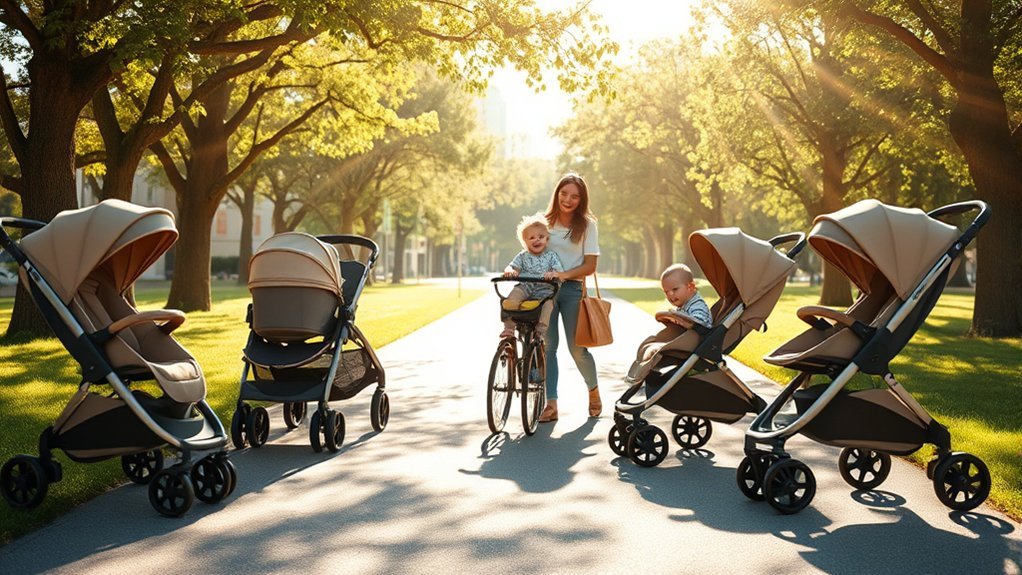
All-purpose strollers are essential tools for parents who need versatility and functionality in their daily routines. The UPPAbaby Cruz V2, weighing 25 lbs and folding flat, is a strong option for errands on flat surfaces. The UPPAbaby Vista V3 accommodates up to two children with various seating configurations, making it ideal for growing families.
If you’re navigating urban environments, consider the Nuna Triv, which is designed for easy maneuverability. For those who enjoy jogging or off-road adventures but still want a daily stroller feel, the Guava Roam Crossover offers a robust 60 lbs capacity and compact size.
To maintain your all-purpose stroller, follow stroller maintenance tips like regular cleaning, checking the wheels, testing brakes, and inspecting fabric wear. You can also explore stroller customization options, such as rain covers, parent organizers, cup holders, snack trays, and infant adapters. With the right choice, you’ll have a reliable companion for daily outings, errands, and family adventures.
Our Favorite Lightweight Strollers
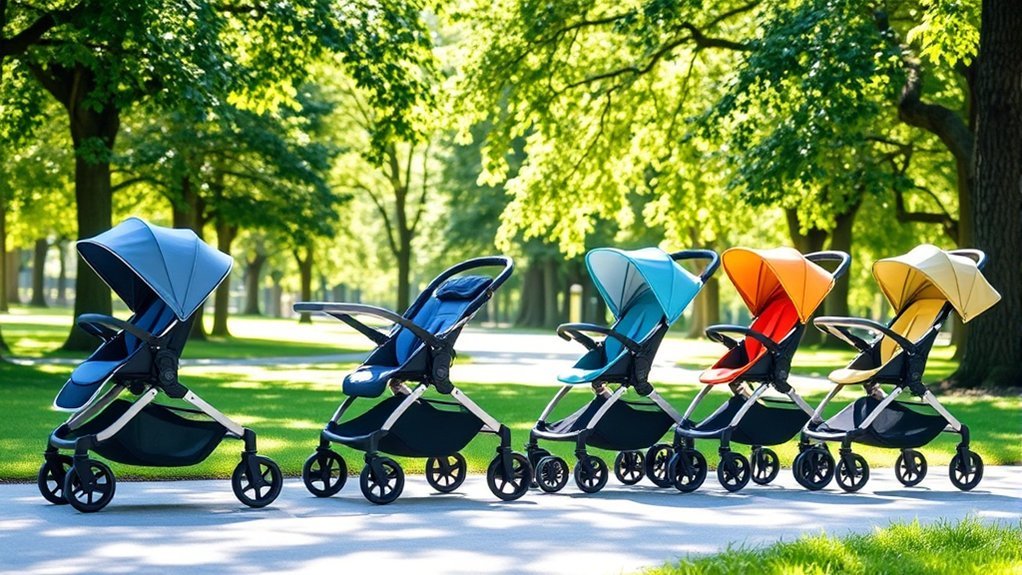
When you’re on the go, lightweight strollers can be a game changer for parents seeking practicality without sacrificing comfort. They are easier to lift, fold, carry, and store than many full-sized strollers. They are especially useful for travel, grandparents, public transportation, and quick errands.
Here are some top picks that highlight lightweight advantages:
- UPPAbaby Minu v3: Weighs 14.8 lbs, holds up to 50 lbs, and offers easy transport and storage.
- Joolz Aer+: At 13.4 lbs, this stylish option folds easily and combines functionality with a price of $499.
- Zoe Traveler: A budget-friendly choice at $249, it features a lightweight design and compact fold for economical families.
- UPPAbaby G-LUXE: Weighs 15 lbs and has a one-handed fold, making it perfect for travel and quick outings.
These models excel in stroller comparisons, emphasizing ease of use and maneuverability while providing helpful features like large canopies and usable storage. Since prices can change, use listed pricing as a general reference and check current retailer pricing before purchase. Lightweight strollers simplify your life without compromising too much on comfort or style.
Note: Some lightweight strollers are not suitable for newborns because they do not recline far enough. Check the manufacturer’s minimum age and weight guidance before using one with a young baby.
Our Favorite Jogging Strollers
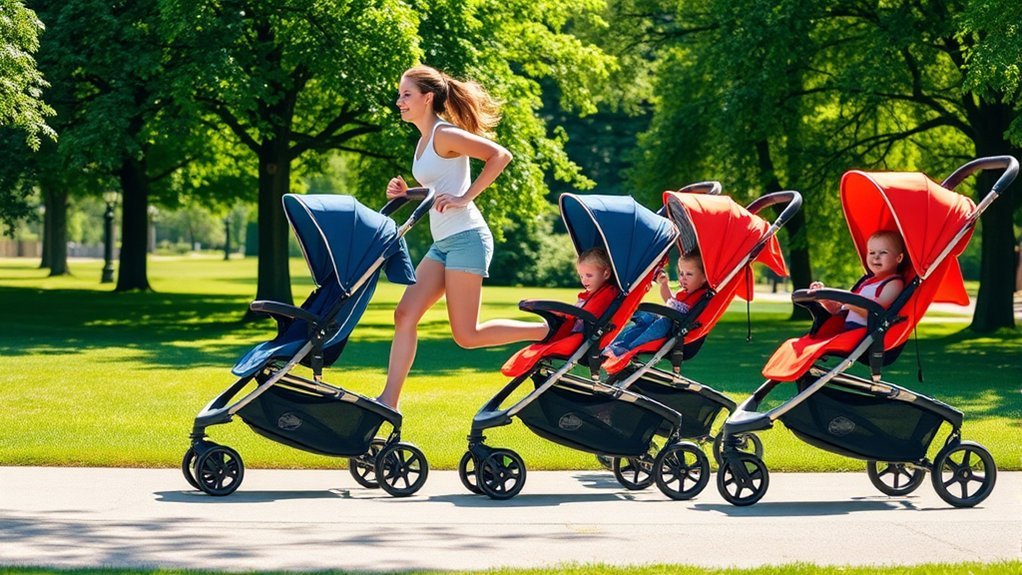
For active families who enjoy staying fit, jogging strollers are a fantastic option that combines exercise with quality time spent with your child. When choosing jogging strollers, consider their benefits, such as stability, safety, wheel strength, suspension, and child comfort.
| Stroller Model | Weight Limit | Key Features |
|---|---|---|
| Bumbleride Indie | 75 pounds | Air-filled tires, solid suspension |
| Speed | 75 pounds | Hand brakes, locking front wheels |
| Guava Roam Crossover | 60 pounds | Compact design, car seat adapter |
| Bob Revolution Flex | 75 pounds | Ergonomic design, adjustable handle |
| Thule Urban Glide 2 | Lightweight, easy to fold | Lightweight frame, smooth ride, folding convenience |
These options typically support children up to 45 inches tall, depending on the model, ensuring longer use as your child grows. With safety features like five-point harnesses, strong brakes, and stable wheels, you can jog more confidently knowing your child is secure.
Warning: Do not jog with a baby in a stroller until your pediatrician says your child has enough head and neck control. Many jogging stroller makers recommend waiting until around 6 months or older, but guidance varies by child and model.
Choose a jogging stroller that best fits your active lifestyle, your terrain, and your child’s age. If you mainly walk, a full-sized stroller may be more practical. If you run often, a true jogging stroller is safer and more comfortable than using a standard stroller at speed.
Stroller Accessories

When choosing a stroller, consider essential accessories that enhance convenience and comfort. Weather protection options like rain covers and sunshades are vital for keeping your child protected during outings, while additional storage solutions such as stroller caddies can help you stay organized.
Accessories should solve real problems, not just add clutter. A cup holder may help on daily walks, but a rain cover may matter more in wet climates. A travel bag can protect your stroller during flights, while a snack tray may be useful for toddlers.
Essential Stroller Accessories
Choosing the right stroller is just the beginning. Equipping it with essential accessories can greatly improve your outings. Here are some must-have accessories to consider:
- Snack trays: These provide easy access to snacks and drinks, helping keep your little one satisfied while you’re on the move.
- Toy attachments: They help entertain your child during trips, reducing fussiness and making outings more enjoyable.
- Stroller caddies: These offer extra storage for diapers, wipes, keys, bottles, and personal items, allowing you to manage essentials without juggling multiple bags.
- Travel storage bags: These protect your stroller during transport, especially when traveling by air or storing it in tight spaces.
You may also consider parent consoles, cup holders, mosquito nets, stroller fans, footmuffs, and car seat adapters. Always check compatibility because not every accessory fits every stroller safely.
Weather Protection Options
As you venture out with your stroller, keeping your child comfortable and protected from the elements is essential. Weather protection options, like rain covers and sunshades, help create a more enjoyable experience. Rain covers shield your child from rain and wind while maintaining visibility. Sunshades improve sun protection by blocking direct sunlight, and many strollers feature extendable canopies with UPF ratings for added protection.
Adjustable weather shields can also adapt to different conditions. In cold weather, a footmuff can add warmth without loose blankets dragging near the wheels. In hot weather, breathable fabric and shade become more important than thick padding.
Here’s a quick comparison of weather protection options:
| Type | Benefits | Considerations |
|---|---|---|
| Rain Cover | Keeps child dry and visible | Requires easy attachment |
| Sunshade | Blocks UV rays | Check UPF rating |
| Adjustable Shield | Versatile for varying climates | May require additional setup |
| Footmuff | Adds warmth in colder weather | Seasonal use |
Additional Storage Solutions
Weather protection options are important for keeping your child comfortable, but having adequate storage solutions is just as vital when you’re out and about. Here are some stroller organization tips for maximizing stroller space:
- Stroller caddies: These provide extra storage for essentials like diapers and snacks, ensuring easy access during outings.
- Snack trays and cup holders: These keep refreshments within reach for both you and your child, enhancing convenience.
- Under-seat baskets: Consider the size and accessibility of these important features to determine how much baby gear or shopping items you can carry.
- Handlebar consoles: They hold drinks and small belongings, helping you stay organized without sacrificing space.
With these accessories, you can enjoy outings more efficiently. Just avoid overloading the handlebar, and follow the stroller’s storage weight limits.
Budget Considerations
When it comes to selecting a stroller, budget considerations play a crucial role in your decision-making process. Start by conducting a budget breakdown to determine what you can afford. Stroller prices vary widely, from basic models under $30 to premium options exceeding $1,000. Mid-range strollers, priced between $300 and $500, often strike a balance between quality and affordability for many families.
If you need something more budget-friendly, options under $300 can cover essential needs without extra features, making them suitable for occasional use. However, consider the value assessment of your choice. Investing in a convertible stroller, although pricier upfront, can save money in the long run, especially if you plan on having more children.
Also consider hidden costs. Some strollers require separate adapters, rain covers, snack trays, bassinets, or parent organizers. A lower upfront price may not be the best value if you must buy several accessories separately. On the other hand, a premium stroller may not be worth it if you only need it for short errands.
Ultimately, weigh both immediate costs and long-term benefits to make an informed decision that aligns with your family’s needs and lifestyle.
Used Strollers and Recall Checks
A used stroller can save money, but you need to inspect it carefully. Check the frame for cracks, bent parts, rust, missing screws, weak brakes, damaged wheels, torn harness straps, and loose folding joints. Make sure the stroller includes the full harness and all required safety parts.
Before using a secondhand stroller, search the model name, model number, and date of manufacture on the manufacturer’s site and on official recall pages. Do not use a recalled stroller unless the manufacturer provides a verified repair and you complete it correctly. Also avoid strollers with missing labels because you may not be able to confirm the model or recall status.
Note: If a used stroller has been in a crash, has missing restraint parts, or has an unknown recall history, choose another option. Saving money is not worth a safety risk.
Common Stroller Mistakes to Avoid
Even a high-quality stroller can become unsafe if you use it incorrectly. Avoid leaving your child unattended in the stroller, even when the brake is locked. Always buckle the harness, even for short trips. Keep fingers away from folding hinges, and make sure the stroller is fully locked open before placing your child inside.
Do not place a car seat on a stroller unless the stroller is designed for that exact car seat or has an approved adapter. Avoid using pillows, thick blankets, or aftermarket inserts that interfere with the harness. Also avoid pushing a standard stroller while jogging, skating, or running because standard wheels and frames are not designed for that movement.
Frequently Asked Questions
What is the best age to start using a stroller?
You can use a stroller from birth only if it is designed for newborns, such as a fully reclining stroller, bassinet stroller, or approved travel system with an infant car seat. Many regular stroller seats are better around six months, when your baby has stronger head and neck control and can sit with support.
How long can I use a stroller for my child?
You can typically use a stroller until your child reaches the stroller’s stated height or weight limit. Many strollers support children up to around 50 pounds or about 4 to 5 years old, while some jogging strollers support higher limits. Always follow the specific stroller manual.
Can I use a stroller for twins or multiples?
Yes, you can use a stroller for twins or multiples. Look for double strollers, tandem strollers, side-by-side strollers, or stroller wagons designed for more than one child. Check each seat’s weight limit, width, fold size, and car seat compatibility before buying.
What safety certifications should I look for in a stroller?
Look for strollers that meet recognized stroller safety standards, such as ASTM standards, and check for certification labels such as JPMA certification when available. You should also review the manufacturer’s manual, weight limits, recall status, harness design, and brake function.
How do I clean and maintain my stroller properly?
To clean and maintain your stroller, wipe the frame with mild soap and water, remove crumbs from the seat, clean the wheels, and wash removable fabric only as the manual allows. Check brakes, wheels, folding locks, screws, and harness straps regularly for wear or damage.
Is a travel system better than a regular stroller?
A travel system is better for many newborn outings because it pairs an infant car seat with a compatible stroller. A regular stroller may be better once your baby is older, especially if you want lighter weight, better storage, or a smoother ride. The best choice depends on your baby’s age and your daily routine.
Do I need a jogging stroller if I only walk?
You usually do not need a jogging stroller if you only walk on smooth sidewalks. A regular all-purpose stroller may be easier to fold, store, and use for errands. Choose a jogging stroller if you run, use rough paths, or need larger wheels and stronger suspension.
Conclusion
When choosing a stroller, safety should stay at the center of your decision. Look for a secure five-point harness, reliable brakes, stable wheels, and a design that fits your child’s age and size. Then compare comfort, folding ease, storage, cleaning, and long-term value.
The best stroller is not always the most expensive one. It is the one that fits your routine, your space, your child’s needs, and your budget. Test different models when possible, read the manual before first use, and check for recalls if you buy used. With a little research and hands-on testing, you can choose a stroller that makes outings safer, easier, and more comfortable for your family.
Sources
- U.S. Consumer Product Safety Commission — stroller safety and recall awareness.
- Juvenile Products Manufacturers Association — product certification context for juvenile products.
- HealthyChildren.org from the American Academy of Pediatrics — stroller selection and child safety guidance.
- National Highway Traffic Safety Administration — infant car seat safety and installation guidance for travel systems.
