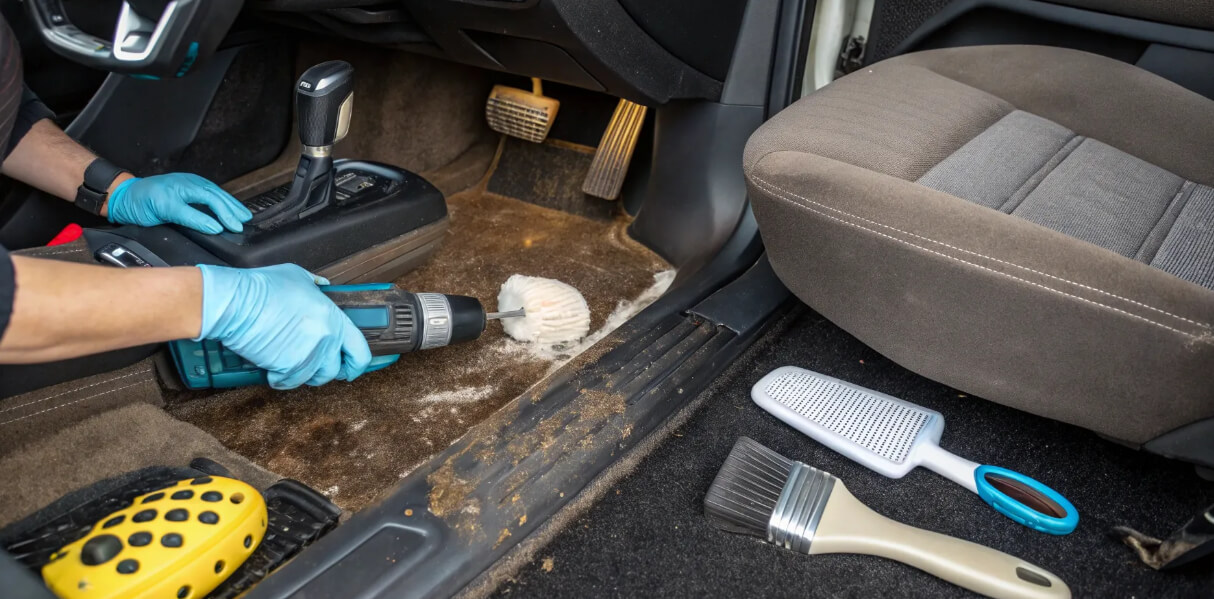
To clean car carpet fast, remove the mats, loosen and vacuum dry debris, lightly apply a carpet-safe cleaner, agitate with a soft brush, blot or extract the dirty moisture, let the carpet dry completely, and vacuum again. I’m Gary from Gary the Car Nut, and this is the process I demonstrate in the video. The hands-on work is fairly quick, but drying takes longer, especially when the carpet is heavily soiled or you need more than one cleaning pass.
Last updated: September 11, 2026
Quick Answer
To clean car carpet, remove the floor mats, loosen dry dirt, vacuum thoroughly, lightly apply a carpet-safe interior cleaner, agitate with a soft brush, blot or extract the dirty moisture, let the carpet dry fully, and vacuum once more. Use controlled moisture instead of soaking the carpet, and match the treatment to the stain when you are dealing with road salt, grease, drinks, or pet accidents.
Key Takeaways
- Start dry. Loosen ordinary dry soil, crumbs, sand, and loose salt before introducing moisture.
- Do not skip vacuuming. Removing loose debris first keeps you from turning dry dirt into muddy residue.
- Use light pressure and a soft brush. Keep a drill brush moving rather than grinding one area.
- Different stains need different treatment. Road salt, grease, sugary drinks, and pet urine should not automatically be treated the same way.
- Blot or extract dirty moisture, dry the carpet completely, and keep floor mats out until the carpet underneath is dry.
At a Glance
| Time Required | About 30–60 minutes of hands-on work for a full car floor, plus drying time; heavily soiled carpet may take longer |
| Difficulty | Easy beginner DIY detail for ordinary dirt and surface stains |
| Tools Needed | Soft drill brush or hand brush, vacuum, carpet-safe interior cleaner, detailing brushes, microfiber towels, old toothbrush, and airflow for drying; a wet/dry vacuum is optional |
| Cost | Low if you already own a vacuum and brush; higher if you need a drill-brush kit, cleaner, or wet/dry vacuum |
Affiliate disclosure:. As an Amazon Associate I earn from qualifying purchases. This article contains affiliate links. I may earn a commission from qualifying purchases made through those links.
Table of Contents
- 🔧 What you’ll need
- Before you start
- 🧼 How to clean car carpet fast: the 5-step method
- Which method should you use for each stain?
- 🪥 Step 1 — Dry drill brushing to loosen dirt
- 🧹 Step 2 — Vacuum thoroughly
- 🧴 Step 3 — Spray and scrub with cleaner
- 🧻 Step 4 — Blotting and drying
- ✅ Final vacuum and the results
- 🛠 Extra tips & product notes
- Troubleshooting car carpet stains
- When should you stop DIY cleaning?
- ❓ Frequently asked questions
- 🚗 Final thoughts
- Sources
🔧 What you’ll need
Gather these items before you start so you can clean one section at a time without leaving damp cleaner sitting in the carpet:
- Drillbrush Automotive Soft White Drill Brush, which fits a drill or impact driver and uses a 1/4-inch quick-change shaft — Check price on Amazon
- Chemical Guys Total Interior Cleaner & Protectant, which the manufacturer lists for carpet, cloth, and other common vehicle interior surfaces — Check price on Amazon
- Detailing brushes, including softer brushes for general agitation and a stiffer brush for stubborn deposits. Recommended: Detail Factory Boar Hair (Large) on Amazon
- Clean microfiber towels — Chemical Guys 16″x16″ 3-pack on Amazon
- Old toothbrush for tight stubborn spots
- Vacuum with crevice tool
- A wet/dry vacuum approved by its manufacturer for liquid pickup, if you want faster moisture removal
- A fan or open windows to speed drying
Warning: Always test your cleaner on a hidden carpet area first. Avoid soaking the carpet and padding. If you use a vacuum on damp carpet, use only a wet/dry model that its manufacturer approves for liquid pickup.
Before you start
Park in a shaded, ventilated spot if you can. Remove floor mats, loose trash, coins, paper, and anything under the seats that could get in the way.
Inspect the carpet before spraying anything. Dry crumbs, sand, loose road salt, dried mud, and pet hair should be removed before wet cleaning. Otherwise, moisture can turn loose debris into residue that is harder to extract.
Also identify the stain. Ordinary soil can use the basic method below, but road salt, grease, sugary drinks, and pet urine may need a different cleaner or an extra extraction step.
🧼 How to clean car carpet fast: the 5-step method
For ordinary automotive carpet dirt, use this order: loosen dry debris, vacuum thoroughly, lightly apply a carpet-safe cleaner, agitate and blot or extract the dirty moisture, then let the carpet dry completely before a final vacuum.
The order matters. Removing loose soil before wet cleaning reduces muddy residue. Controlled moisture also makes drying easier and lowers the chance of cleaner or mineral residue remaining in the carpet.
Which method should you use for each stain?
| Problem | Best first action | What to avoid |
|---|---|---|
| Dry dirt, sand, crumbs, dried mud | Loosen gently while dry, then vacuum thoroughly before adding cleaner. | Spraying cleaner before loose debris is removed. |
| White road-salt residue | Vacuum loose crystals, lightly dampen the residue with a carpet-safe cleaner or treatment, gently agitate, then blot or extract. Repeat if white residue returns after drying. | Grinding a hard salt crust aggressively while dry or flooding the padding. |
| Coffee or sugary drinks | Blot fresh liquid first, then use a carpet-safe stain treatment and remove the dirty moisture with clean towels or extraction. | Hard rubbing that spreads the spill. |
| Grease or oily residue | Use a product specifically labeled for the stain and automotive fabric, test it first, and work in small sections. | Using an unverified solvent or repeatedly wiping with a dirty towel. |
| Pet urine or organic odor | Use an enzyme-based cleaner that is labeled safe for carpet or upholstery and follow its directions for dwell time and removal. | Masking the odor without treating the contamination. |
| Unknown chemical, floodwater, or deeply soaked padding | Stop and identify the contamination before continuing; professional cleaning may be safer. | Treating unknown contamination as an ordinary carpet stain. |
🪥 Step 1 — Dry drill brushing to loosen dirt

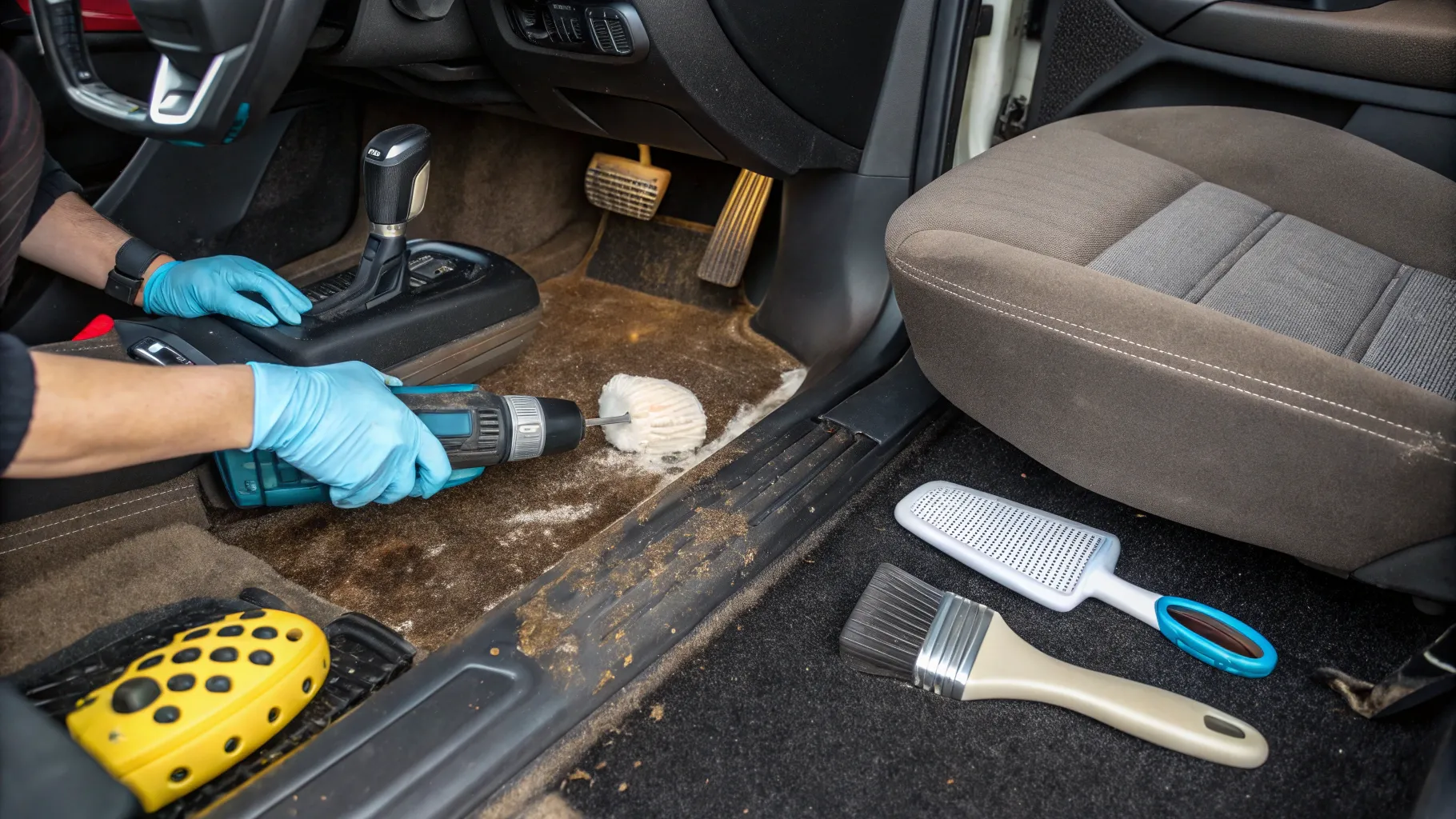
Start with the floor mats removed. Attach a soft white drill brush, start at a low controlled speed, and move the brush across ordinary dry dirt in several directions. Use light pressure and keep the brush moving instead of holding it against one spot.
This dry-agitation step is best for loose soil, sand, crumbs, dried mud, and similar debris. If you have a hard road-salt crust that does not loosen easily, vacuum what you can and soften the remaining residue during the wet-cleaning stage instead of grinding it aggressively while dry.
Pro Tip: Use the dome brush for open carpet areas and the flat-ended brush near pedals, seat rails, seams, and tight corners. Switch to a hand brush if the carpet is delicate or the powered brush is difficult to control.
Tip: I use both the dome brush and a flat-ended brush for edges and around pedals. The Drillbrush Soft White kit used here has a ¼-inch quick-change shaft designed for standard drills and impact drivers.
“Be sure to feed the brush across the stain in different directions to loosen up the dirt from the carpet.”
🧹 Step 2 — Vacuum thoroughly

After brushing, vacuum everything up. Use the crevice tool in corners, around seat mounts, along seams, and near the pedals. Slow overlapping passes give the vacuum more time to collect loosened grit.
At this stage the debris should still be dry, so a normal dry vacuum can be used according to its instructions. Later, if you want to vacuum liquid or damp carpet, use only a wet/dry machine that its manufacturer specifically approves for liquid pickup.
“Get all the loose dirt, salt, crumbs and debris out. Whatever you do, don’t skip this step.”
🧴 Step 3 — Spray and scrub with cleaner

Lightly apply Chemical Guys Total Interior Cleaner & Protectant or another cleaner specifically labeled as safe for automotive carpet. Agitate the damp fibers with a soft brush, then remove the dirty moisture instead of leaving the cleaner in the carpet. You do not need heavy pressure.
Use enough product to dampen the fibers you are cleaning without flooding the carpet padding. Work in small sections so you can agitate and blot each section before moving on.
For hardened road-salt residue, vacuum loose crystals first, then lightly dampen the remaining deposit, give the product time to work according to its label, agitate gently, and blot or extract. Repeating a controlled pass is safer than trying to remove everything with aggressive scrubbing.
For grease, pet urine, or another stain that needs different chemistry, use a product labeled for that contamination and for carpet or upholstery rather than assuming a general interior cleaner will solve every stain.
Note: If you are working near pedals, seat wiring, screens, or electronic controls, apply the cleaner to the towel or brush when practical instead of spraying heavily into the area.
“You don’t need to scrub super hard. Let the cleaner and brush do the work. You’ll see the dirt start lifting immediately.”
🧻 Step 4 — Blotting and drying

Use clean microfiber towels to absorb the dirty moisture. Press down, lift, fold to a clean side, and repeat. Avoid aggressive rubbing, which can spread soil and push dirty liquid deeper into the pile.
If you have a wet/dry vacuum approved for liquid pickup, use slow passes to remove additional moisture. If you do not have an extractor or wet/dry vacuum, work in smaller sections, use less cleaner, and keep changing to dry absorbent towels until very little moisture or soil transfers.
Then let the carpet dry completely. Open the doors or windows when conditions are safe, or direct a fan into the footwell. Do not reinstall floor mats until the carpet beneath them is fully dry.
“Keep blotting until the towel comes away clean. Then let it air dry completely.”
✅ Final vacuum and the results

Once the carpet is fully dry, vacuum again. The final pass lifts the carpet pile, removes loose residue or towel lint, and helps the cleaned section blend with the rest of the interior.
If white salt residue, a sticky feel, or a visible stain reappears after drying, treat that as a sign that contamination or cleaner remains in the fibers. Use another controlled cleaning and removal pass instead of simply scrubbing harder.
“Your carpets went from disaster to almost just like new in just minutes of actual work time.”
🛠 Extra tips & product notes
- If you have heavy pet hair, remove as much as possible before powered brushing so hair and dust do not scatter around the cabin.
- Always test cleaners on a hidden area first to check for color or texture changes.
- For edges and around pedals, use a smaller or flat-ended brush for better control.
- Work with the doors open when conditions are safe so moisture can escape faster.
- Clean removable floor mats separately outside the vehicle so dirty moisture does not transfer back to the interior.
- For winter salt, repeat a controlled dampen-agitate-blot or extraction cycle if white residue returns after the carpet dries.
- Use a stain-specific product when ordinary interior cleaner is not appropriate, especially for pet urine or oily contamination.
- Recommended products I use: Drillbrush white kit, Chemical Guys Total, Detail Factory detailing brush, and quality microfiber towels. Drillbrush Soft White Kit — Check price
- Chemical Guys Total Interior — Check price
- Detail Factory Boar Hair (Large) — Check price
- Chemical Guys Microfiber Towels — Check price
Troubleshooting car carpet stains
Some stains need a second pass because contamination remains deeper in the pile or padding. More force is not always the answer; identify what remains and remove it with the least moisture and agitation that works.
- White salt haze after drying: Vacuum loose residue, lightly dampen the remaining deposit, gently agitate, then blot or extract. Repeat if necessary. The white haze can return when dissolved mineral residue remains in the fibers and moves back toward the surface as moisture evaporates.
- Greasy spots: Use a carpet or upholstery product labeled for oily contamination. Work in small areas and change towels frequently so you do not spread the residue.
- Old coffee or drink stains: Work from the outer edge inward, use a carpet-safe stain product, and remove the dirty solution instead of flooding the area.
- Pet urine or organic odor: Use an enzyme-based cleaner labeled safe for carpet or upholstery and follow its directions. Persistent odor can indicate contamination deeper in the carpet or padding.
- Bad smell after ordinary cleaning: First confirm that the carpet and padding are fully dry. If the odor remains after drying, investigate the stain source rather than adding more fragrance or general cleaner.
- Stiff or crunchy carpet: Residue may remain. Vacuum after drying, then use a light controlled cleaning and blotting or extraction pass if the texture does not improve.
When should you stop DIY cleaning?
Surface dirt and ordinary stains are reasonable DIY jobs. Stop and consider professional help when the carpet or under-padding is deeply soaked, the liquid is unknown, the vehicle has been exposed to floodwater, visible mold is present, or a strong odor keeps returning after the carpet is completely dry.
You should also stop if cleaning requires removing seats, disconnecting electrical components, or lifting large sections of installed carpet and padding. Those jobs go beyond routine surface detailing.
❓ Frequently asked questions
How long does it take to clean car carpet?
For a full car floor, plan on roughly 30–60 minutes of hands-on work for a normal DIY cleaning, plus drying time. Heavy stains, repeated salt treatment, or deeply soiled carpet can take longer.
Can I use another cleaner instead of Chemical Guys Total?
Yes. Use a cleaner whose label says it is safe for automotive carpet, fabric, or upholstery, and test it on a hidden area first. Different stains may need a more specific product rather than one general interior cleaner.
Do I need a drill brush?
No. A soft drill brush speeds up agitation, but you can clean automotive carpet by hand with a suitable detailing or carpet brush. If you use a drill brush, start slowly, use light pressure, and keep it moving.
Can I clean car carpet without an extractor?
Yes. Work in small sections, use less liquid, and repeatedly press clean microfiber towels into the carpet to remove dirty moisture. A wet/dry vacuum can speed up the process, but only use one that is approved for liquid pickup.
How do I remove road salt from car carpet?
Vacuum loose dry crystals first. Lightly dampen the remaining residue with a carpet-safe cleaner or treatment, gently agitate it, then blot or extract the dirty moisture. If white residue returns after drying, repeat a controlled pass instead of scrubbing harder.
Will this remove old, set-in stains?
It can improve many old stains, but the result depends on what caused the stain, how deeply it reached, and whether it changed the carpet dye or backing. Set-in grease, dye transfer, pet contamination, or chemical damage may need stain-specific treatment or professional extraction.
Can I clean the carpet without soaking it?
Yes. Controlled moisture is preferable for this method. Lightly dampen the fibers, agitate them, and remove dirty moisture as you work instead of saturating the carpet padding.
Why does my car carpet smell after cleaning?
The carpet or padding may still be damp, or the original contamination may remain deeper in the material. Dry the carpet fully first. If the smell is from pet urine or another organic stain, use an appropriate enzyme-based carpet or upholstery cleaner instead of simply adding more general cleaner.
Should I clean removable floor mats the same way?
For carpeted mats, you can use the same basic order: remove loose dirt, vacuum, apply an appropriate cleaner, agitate, remove dirty moisture, and dry completely. Clean them outside the vehicle when practical and reinstall them only when both the mats and the vehicle carpet are dry.
🚗 Final thoughts
The safest way to clean car carpet is to remove dry debris before wet cleaning, use the least moisture needed, match the treatment to the stain, remove the dirty solution, and dry everything completely.
A soft drill brush can speed up ordinary detailing, but it is optional. The vacuuming, moisture control, stain identification, and drying steps matter more than aggressive scrubbing.
If the carpet still smells, remains wet underneath, or has contamination that reaches the padding, stop repeating surface-cleaning passes and investigate the underlying problem.
Sources
- Gary the Car Nut — Clean Car Carpets in Minutes! (Pro Results) — source video for the demonstrated workflow and quoted commentary.
- Drillbrush Soft White 3-piece Home & Auto kit — supports the soft-bristle automotive/upholstery use and 1/4-inch quick-change shaft details.
- Chemical Guys Total Interior Cleaner & Protectant — supports carpet and cloth compatibility, soft-brush agitation, and blotting directions.
- Detail Factory Boar Detailing Brush Large — supports the linked detailing-brush recommendation.
- Chemical Guys Professional Grade Microfiber Towels — supports the microfiber towel recommendation and available 16-inch size.
- Chemical Guys — How to Get Salt Out of Car Carpet — supports controlled agitation, extraction, repeat treatment, and complete drying for road-salt residue.
- AutoZone — How to Clean Your Car’s Carpet — supports the general preparation, vacuuming, stain treatment, and cleaning sequence.
- BISSELL — How to Remove Dog and Cat Urine Smell from Carpet — supports enzyme-based treatment for pet urine and organic odor.
