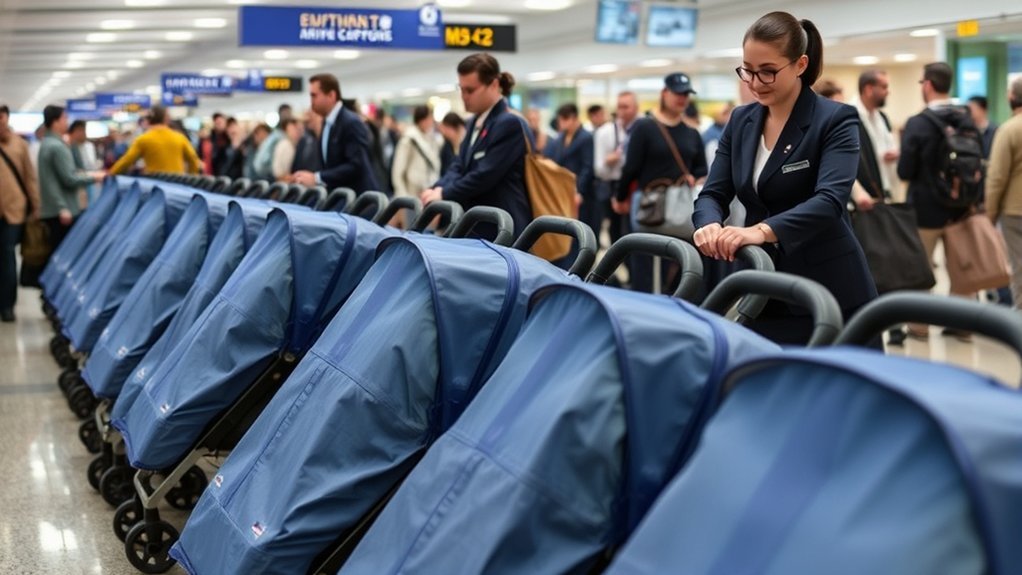
When traveling with kids, knowing whether airlines provide stroller bags can make your journey smoother. In most cases, airlines do not hand out protective stroller bags for free, so you should bring your own travel bag or ask whether one is available for purchase at the airport. Understanding each airline’s stroller size limits, weight rules, gate-check options, and check-in procedures helps you avoid delays and keeps your stroller better protected during the trip. A durable stroller bag is especially useful if you have an expensive stroller, a travel system, or a model with removable parts.
Quick Answer
Most airlines do not provide free stroller bags. They usually allow you to check or gate-check a stroller, but protection is your responsibility. Bring a padded, clearly labeled stroller travel bag, remove loose accessories, and confirm your airline’s stroller size and gate-check rules before flying.
Key Takeaways
- Most airlines let families check or gate-check a stroller, but they usually do not provide a free protective stroller bag.
- A padded stroller bag helps protect against scratches, dirt, torn fabric, bent parts, and rough baggage handling.
- Small, foldable strollers are easier to gate-check, while larger strollers may need to be checked at the ticket counter.
- Always remove cup holders, toys, snack trays, rain covers, and other loose parts before handing over the stroller.
- Label your stroller bag with your name, phone number, destination, and return address before travel.
Understanding Airline Policies on Stroller Bags

When planning your trip with a stroller in tow, it’s essential to understand the airline’s policies on stroller bags, as these can greatly affect your travel experience. Most airlines don’t provide stroller bags for free, so you may need to bring your own or buy one at the airport if available. Policies vary widely, so check with your specific airline before your flight.
Fortunately, many airlines typically allow you to gate-check or check your stroller without counting it toward your regular baggage limit. However, size restrictions, stroller type, and the check-in location can vary. A compact umbrella stroller may be treated differently from a large jogging stroller or a full travel system. Using a stroller bag, especially for larger or more expensive stroller types, offers added protection during transport and reduces the risk of damage.
Note: A stroller bag is not the same as an airline approval tag. You may still need a gate-check tag or baggage tag from airline staff before boarding or checking the stroller.
Checking in Strollers: What You Need to Know

When you’re checking in your stroller, it’s important to know the specific policies of your airline. Most airlines let you check your stroller at the curbside, ticket counter, or gate without it counting toward your baggage limit, making your journey smoother. However, be sure to check the size restrictions for strollers, as they can vary and may affect how you travel with your little one.
At a Glance
| Best Time to Check | Before booking, again before check-in, and once more at the gate |
| Difficulty | Easy, if the stroller is folded, labeled, and packed before boarding |
| Helpful Items | Padded stroller bag, luggage tag, zip ties, small pouch for accessories, and a cleaning wipe |
| Typical Cost | Stroller check is often free, but stroller bags are usually purchased separately |
Stroller Check-in Process
Checking in a stroller can be a straightforward process, but it’s essential to know a few key details before you head to the airport. First, many airlines let you check one stroller per child at no extra cost, and it often won’t count toward your baggage limit. You’ll want to evaluate stroller types carefully. Larger, non-collapsible strollers may need to be checked at the ticket counter, while smaller, foldable strollers can often be gate-checked.
Remember, airlines typically don’t provide stroller bags for free, so bringing your own protective bag is a smart travel tip. Fold the stroller before you reach the counter or gate, remove loose items, and keep the child out of the stroller when airline staff ask you to hand it over. Always verify your specific airline’s policies regarding sizes and check-in procedures to avoid any last-minute surprises.
Airline-Specific Stroller Policies
Understanding airline-specific stroller policies is vital for a smooth travel experience, especially for families with young children. Many airlines, including Delta, United, and Southwest, allow you to check your stroller for free at curbside, ticket counters, or gates. However, it’s important to verify stroller dimensions and weight restrictions to avoid unexpected airline fees or counter-check requirements.
Alaska Airlines may allow gate-checking for smaller strollers, enabling you to use them until boarding. Since many airlines don’t provide stroller bags, investing in one can protect your stroller during check-in and transit. If your stroller is too large for cabin storage, checking it using a protective bag helps it arrive at your destination in better condition.
Benefits of Using a Stroller Bag for Travel
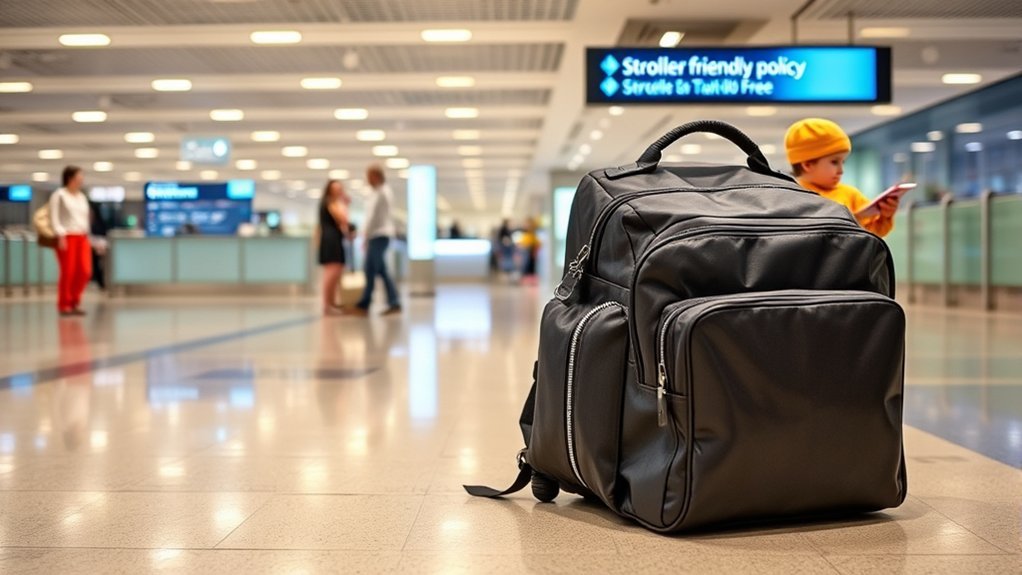
Using a stroller bag for travel not only protects your stroller from the bumps and bruises of airport handling but also makes your journey smoother. With added padding and durable materials, your stroller stays cleaner and more secure, helping preserve its durability when you reach your destination. Plus, many airlines allow you to check stroller bags with the stroller, enhancing your travel convenience.
| Benefit | Description |
|---|---|
| Damage Protection | Safeguards against scratches, scuffs, dirt, and wear during transit |
| Cost Efficiency | Often checked alongside your stroller without using a regular checked-bag allowance |
| Streamlined Boarding | Gate-checking lets you use the stroller until shortly before boarding |
| Easy Handling | Lightweight designs, shoulder straps, and backpack straps make airport movement easier |
| Enhanced Durability | Built to withstand the rigors of air travel better than a loose stroller alone |
Embrace the freedom of traveling smart with your little one by preparing your stroller before you reach the airport.
Recommended Stroller Bags for Air Travel
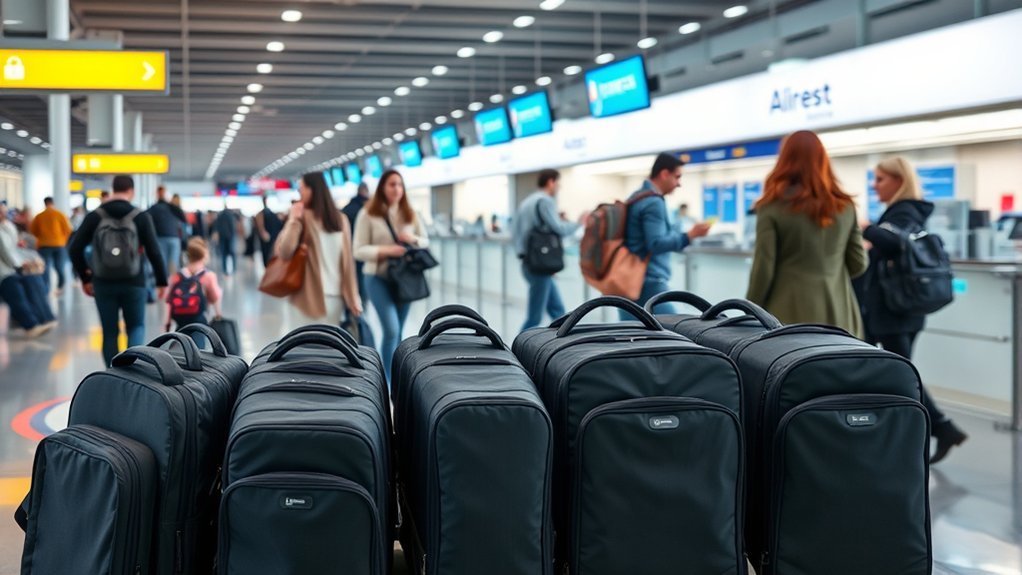
When traveling with a stroller, choosing the right bag can make all the difference in keeping it safe. Look for options that feature padding and durable, water-resistant materials for better protection. Brands like J.L. Childress and BABY JOY offer travel-friendly solutions, so you can find a practical fit for your stroller while enjoying added convenience with backpack straps, shoulder straps, or handles.
Top Stroller Bag Options
As you prepare for air travel with your little one, choosing the right stroller bag can make all the difference in protecting your stroller and easing your journey through the airport. The J.L. Childress Ultimate Backpack Padded Car Seat Travel Bag stands out for its travel bag durability and padded protection, helping keep your stroller or child gear safer during transit. Alternatively, consider the BABY JOY 5-in-1 Convertible Travel Bag, which offers versatility and lightweight convenience.
Both bags feature convenient carrying options like shoulder straps, making navigation through crowded terminals easier. Some options even include pockets for accessories, adding to their practicality. Just be sure your chosen bag complies with airline size regulations and fits your stroller model before check-in.
Features to Consider
Choosing the right stroller bag for air travel is essential, especially since many airlines don’t provide them for free. Look for features that enhance stroller durability and travel convenience. Padded protection is vital to shield your stroller from bumps during transit, while weather-resistant materials help keep it safe from dirt, rain, and spills.
Make sure the bag is compatible with your specific stroller model to avoid any hassles. Checking the dimensions and weight limits against airline regulations can save you from additional fees. Consider options like the J.L. Childress Gate Check Bag, known for its durable, water-resistant fabric. A stroller travel bag with wheels can also simplify your journey, making it easier to navigate through busy airports.
Pro Tip: Choose a brightly colored stroller bag or add a visible luggage strap. It makes your stroller easier to identify at the aircraft door, baggage claim, or oversized luggage area.
How to Protect Your Stroller During Transit
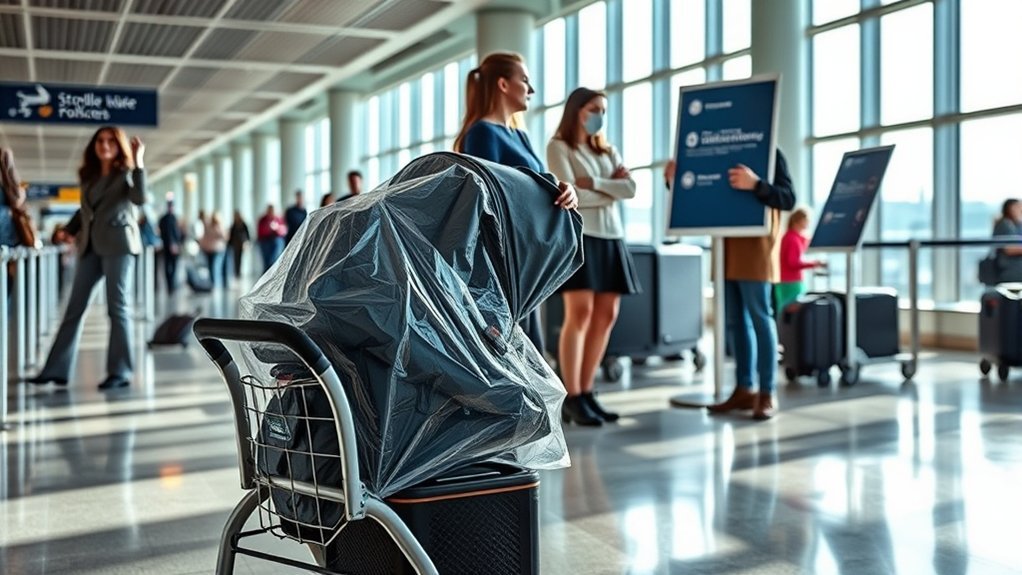
To help your stroller remain in great shape during air travel, investing in a protective travel bag is essential. Many airlines don’t provide stroller bags, so consider these tips to enhance stroller safety and travel convenience:
- Choose a padded travel bag to shield against scratches, dents, dirt, and rough handling.
- Select a lightweight, compact design that meets airline size restrictions for easy handling.
- Check airline policies regarding stroller bags and associated fees to avoid surprises.
- Opt for a bag with sturdy handles, backpack straps, or wheels for comfortable carrying through the airport.
- Remove detachable parts such as cup holders, snack trays, toys, organizers, and rain covers before check-in.
- Lock the stroller frame if your model has a fold lock, then secure the bag zipper fully.
- Add a luggage tag inside and outside the bag in case the outer tag is torn off.
Warning: Do not leave phones, passports, wallets, medicine, formula, car keys, or other essentials inside the stroller bag. Gate-checked items can still be delayed, misplaced, or sent to baggage claim.
Common Challenges When Traveling With Strollers
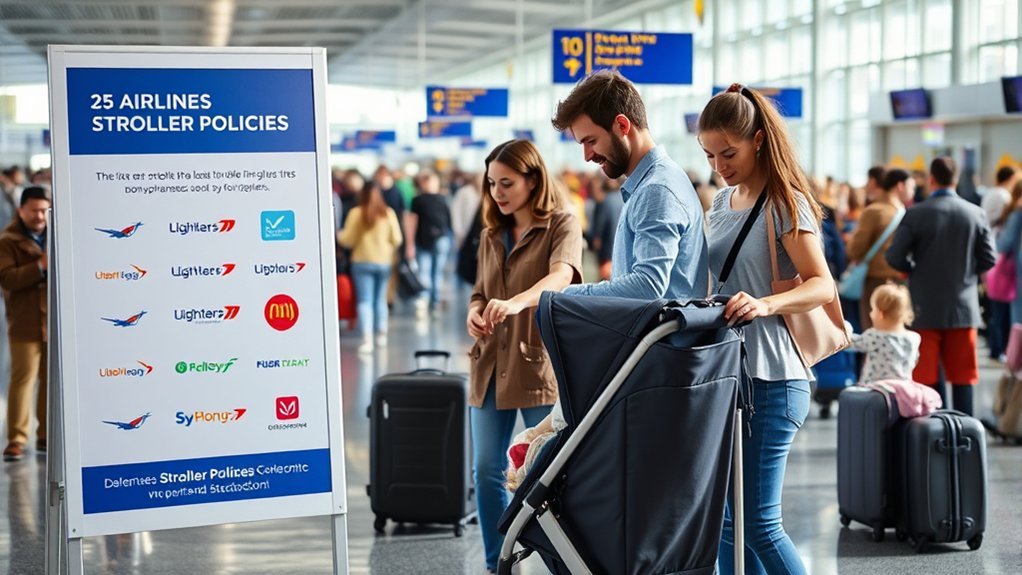
Traveling with a stroller can come with its own set of hurdles, especially when you face size restrictions and varying airline policies. You’ll need to familiarize yourself with gate-checking procedures, as they differ from one airline to another and can lead to unexpected delays. Plus, don’t forget to double-check the allowed stroller dimensions to avoid any surprises at check-in.
Size Restrictions and Guidelines
When planning your trip, understanding size restrictions and guidelines for strollers can be essential to ensuring a smooth travel experience. Pay attention to your stroller dimensions to avoid last-minute surprises. Here are some key points to consider during your travel preparation:
- Some compact strollers may fit near common carry-on dimensions, such as 22 x 14 x 9 inches, but airline rules vary.
- Larger strollers often must be gate-checked or counter-checked because they may not fit in overhead bins.
- Measure your stroller after it is folded, including wheels, handlebar, and attached accessories.
- Confirm if your airline provides stroller bags, sells them, or expects you to bring your own.
- Check whether your stroller must be placed in a bag before it is accepted at the gate or ticket counter.
Gate-Checking Procedures Explained
Managing the gate-checking process for strollers can feel overwhelming, especially for families balancing the excitement of travel with the logistics of managing children and their gear. To ease this, arrive early at the gate and ask about specific gate-checking procedures. Most airlines allow free gate checking, letting you use the stroller until boarding, but check size and weight restrictions to avoid surprises.
For stroller safety, use a travel bag to protect it during the journey, as airlines typically don’t provide these. Finally, secure any loose parts or accessories, since they often can’t accompany the stroller safely. With these gate-checking tips, you can confidently navigate the process and focus on enjoying your trip.
Airline Policy Variability
Managing the complexities of airline policies regarding strollers can be an intimidating task for families. To navigate this landscape effectively, keep these key points in mind:
- Check Airline Policies: Some airlines offer complimentary stroller checks, while others may charge fees for oversized items or extra baggage.
- Size & Weight Limits: Be aware of restrictions, as strollers often need to be folded and may need to be placed in specific bags.
- Use a Travel Bag: Invest in a stroller travel bag for enhanced protection and stroller safety.
- Arrive Early: Inquire about gate-checking options, as policies may differ between the ticket counter and the gate.
- Ask Where to Pick It Up: Some strollers are returned at the aircraft door, while others may go to baggage claim or oversized luggage.
Armed with this knowledge, you can travel with more confidence and ease.
Tips for Checking Your Stroller at the Airport
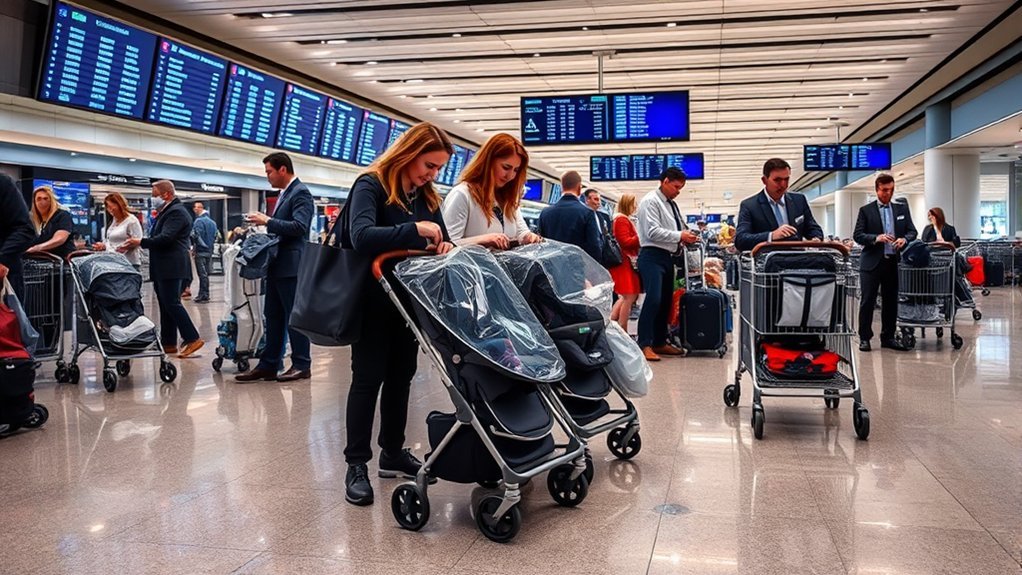
As you prepare for your journey, checking your stroller at the airport can be a seamless process with a little planning. Invest in a durable travel bag to protect your stroller, especially if it’s a travel-friendly model that folds compactly. Before you check it in, remove detachable parts like toys, cup holders, snack trays, stroller hooks, organizers, and loose blankets to avoid any losses.
Also, be sure to clean your stroller to meet airline standards and avoid carrying dirt into the stroller bag. Label it with a luggage tag featuring your contact information for easy identification. Finally, familiarize yourself with your airline’s stroller check-in policies, as they can differ and might require you to check larger strollers at the ticket counter instead of the gate.
Step-by-Step Stroller Checklist Before You Fly
- Measure the stroller folded: Include wheels, handles, snack trays, and anything that sticks out.
- Check the airline policy: Look for rules on gate-checking, counter-checking, stroller bags, weight, and oversized items.
- Clean the stroller: Wipe down the frame, wheels, handlebar, seat fabric, and storage basket.
- Remove loose accessories: Pack cup holders, toys, rain covers, fans, and organizers in your regular luggage.
- Fold and lock the stroller: Make sure the frame is secure before placing it in the travel bag.
- Add identification: Use an outside luggage tag and place a second tag or paper with your details inside the bag.
- Ask about pickup: Confirm whether the stroller will be returned at the gate, jet bridge, baggage carousel, or oversized baggage area.
Size and Weight Restrictions for Strollers

When traveling with a stroller, understanding size and weight restrictions is essential to guarantee a smooth experience at the airport. Most airlines have their own limits, so keep these in mind:
- Stroller Dimensions: Compact folded strollers may need to be near carry-on size, but each airline sets its own standard.
- Weight Limits: Lighter strollers are easier to gate-check and carry through the airport.
- Checking Requirements: Strollers exceeding airline dimensions may need to be checked at the ticket counter.
- Pre-Travel Verification: Always confirm your stroller’s folded dimensions with the airline to avoid surprises.
- Bag Fit: Check the stroller bag’s dimensions too, since a bulky bag may affect handling or acceptance.
If you are flying internationally, do not assume the same rules apply on every leg of the trip. A stroller accepted by one carrier may be handled differently by a partner airline, smaller regional aircraft, or international airport staff.
Alternatives to Stroller Bags
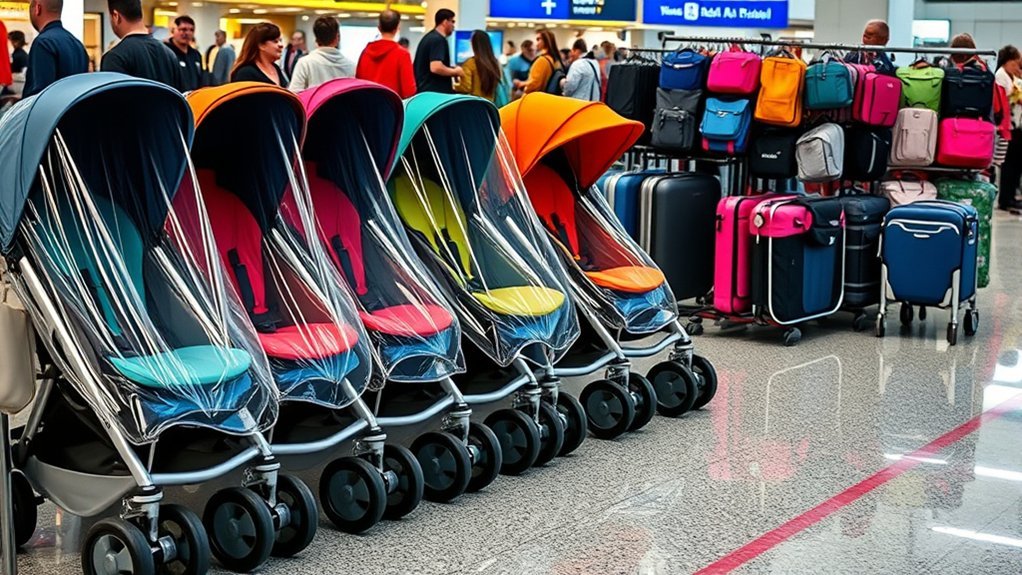
Packing a stroller for air travel can be challenging, especially if you’re unsure about the best way to protect it during transit. If you don’t have a stroller bag, consider using padded blankets or bubble wrap to cushion your stroller during check-in or gate-checking. You can also wrap fragile areas, such as the handlebar, wheel joints, and frame corners.
Specialized travel bags designed for strollers can also be a great investment, offering added protection with convenient handles and wheels for easy transport. If you opt for a compact stroller, you’ll find it’s easier to maneuver without a bag, as its lightweight design minimizes the need for extra protection. Remember, good stroller maintenance and smart travel hacks can save you from potential issues, ensuring your stroller arrives safely at your destination.
Airline-Specific Policies on Stroller Handling
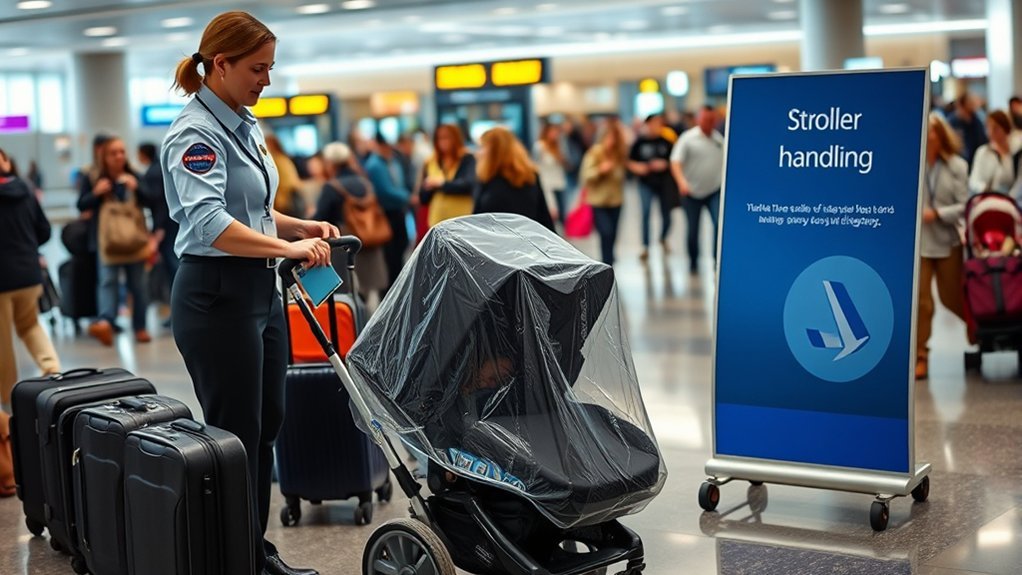
Understanding airline policies on stroller handling can be essential for a stress-free travel experience. Policies can change, so use this as a starting point and confirm directly with your airline before your flight. Here’s a quick overview of how different airlines may manage stroller types:
- Alaska Airlines: Free check-in may be available at the gate or ticket counter; stroller bags are usually not provided.
- Delta Airlines: Complimentary stroller check may be available at curbside, gate, or ticket counter; using a protective bag is recommended for safety.
- United Airlines: Strollers may be checked for free; small, collapsible strollers may be handled differently depending on aircraft and available space, but using a bag is advisable.
- American Airlines: One stroller per adult may be checked for free; travelers should bring their own protective bags.
Note: Airline stroller rules can differ by route, aircraft size, ticket type, airport staff instructions, and whether you are traveling on a partner airline. Always confirm the current policy before departure.
What to Do if Your Stroller Bag Is Lost or Damaged
Even with good preparation, stroller bags can be delayed, damaged, or sent to a different pickup area. If your stroller or stroller bag does not appear where expected, speak to airline staff before leaving the airport. Ask whether the item was sent to oversized baggage, the baggage service office, the jet bridge, or another carousel.
If the stroller is damaged, take clear photos before leaving the airport. Capture the bag, stroller frame, wheels, fabric, baggage tag, and any broken parts. Then report the damage to the airline’s baggage service desk as soon as possible. Keep receipts for repairs, replacement parts, and the stroller bag if you plan to file a claim.
Related Guides
Frequently Asked Questions
Can I take a stroller to the gate?
Yes, many airlines allow you to take a stroller to the gate and gate-check it before boarding. Check your stroller dimensions against your airline’s guidelines and ask gate staff for a gate-check tag before you board.
Are there fees for oversized strollers?
There can be fees or special handling rules if your stroller exceeds the airline’s standard dimensions or weight limits. Some airlines still check strollers for free, while others may treat oversized models differently. Always check before packing a large jogging stroller, wagon stroller, or travel system.
What happens if my stroller is damaged?
If your stroller is damaged, report it to the airline before leaving the airport if possible. Take photos, keep the baggage tag, and ask about the claim process. Stroller insurance or travel insurance may offer extra peace of mind, depending on your coverage.
Can I use a stroller bag for other items?
You can often place small stroller accessories inside the stroller bag, but avoid using it as a general luggage bag unless the airline allows it. Do not pack valuables, medicine, passports, electronics, or essentials inside the stroller bag.
Do airlines offer stroller rentals?
Some airports or travel services may offer stroller rentals, but airlines do not always provide stroller rentals directly. Rental availability and fees vary, so check in advance if you want to travel without packing your own stroller.
Do airlines give you stroller bags for free?
Most airlines do not give stroller bags for free. They may let you check or gate-check the stroller, but you usually need to bring your own protective stroller bag if you want extra protection.
Is a padded stroller bag worth it for air travel?
A padded stroller bag is worth considering if your stroller is expensive, heavy, difficult to replace, or has exposed wheels and frame parts. It adds bulk, but it can reduce scratches, dirt, torn fabric, and handling damage.
Conclusion
When it comes to traveling with your stroller, knowing the basics of airline policies can save you from a world of hassle. Most airlines do not provide free stroller bags, so bringing your own sturdy stroller bag is a smart move. It helps keep your stroller cleaner, safer, and easier to identify while you move through the airport.
With a little preparation, you can navigate the airport more smoothly and keep your little one’s wheels in better shape. Measure your stroller, check your airline’s policy, remove loose accessories, label the bag, and ask where to pick it up after landing. It’s better to be safe than sorry, so don’t leave your stroller’s fate to chance.