
Have you ever wondered whether your stroller counts as luggage when flying? In most cases, airlines treat strollers as special child-travel items, not regular checked bags. That usually means you can check one stroller per child for free, but the exact rules depend on the airline, stroller size, stroller type, and whether you check it at the ticket counter or the gate.
Quick Answer
A stroller usually does not count as standard luggage when flying with a child. Most airlines let you check one stroller per child for free at the ticket counter, curbside, or gate. However, oversized, heavy, double, or non-collapsible strollers may need to be checked earlier instead of gate-checked.
Key Takeaways
- Most airlines allow one stroller per child to be checked for free.
- A compact, collapsible stroller is usually easier to gate-check or carry through the airport.
- Large, double, jogging, or non-collapsible strollers may need to be checked at the ticket counter.
- Car seats used on board usually require a purchased seat and must be approved for aircraft use.
- Always check your airline’s current stroller policy before flying, because size and weight rules can vary.
General Airline Policies for Strollers and Car Seats
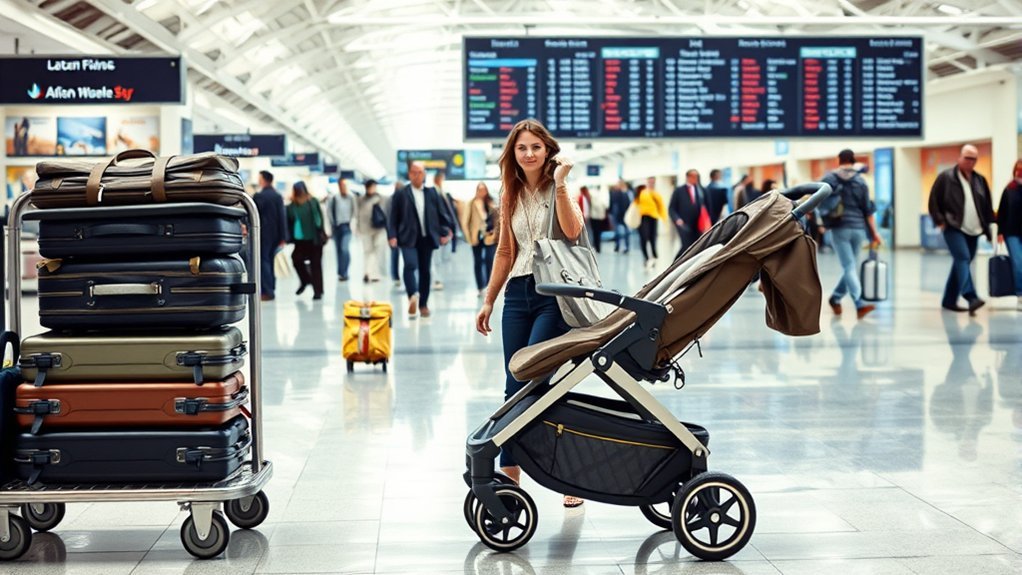
When you travel with kids, understanding airline policies for strollers and car seats can make your journey much smoother. Most airlines allow you to check a stroller for free, treating it as a child-travel item rather than standard luggage. This can help you move through the airport without using part of your normal baggage allowance.
Airlines often allow one stroller and one car seat per child at no extra charge, but the details can vary. Some carriers allow both items to be checked at the ticket counter, curbside, or gate. Others may limit gate checking to compact, collapsible strollers only. If your stroller is large, heavy, non-folding, or shaped like a wagon, the airline may ask you to check it at the counter instead.
To simplify your trip, choose compact, collapsible stroller types whenever possible. They are easier to move through security, easier to fold at the gate, and less likely to cause problems during boarding. If your stroller is non-collapsible or exceeds the airline’s size restrictions, plan to check it before security so you are not surprised at the gate.
Note: Airline stroller rules can change by carrier, aircraft, airport, and destination. Before your flight, review your airline’s stroller, car seat, and special-items policy so you know whether your stroller can be gate-checked.
Free Check-in Benefits for Strollers

Although traveling with children can be challenging, taking advantage of free check-in benefits for strollers can greatly ease the process. Most airlines allow one stroller per child to be checked for free, so it usually will not count against your baggage allowance.
You can typically check strollers at curbside check-in, the ticket counter, or the gate. Gate checking is especially helpful because you can keep using the stroller through the airport and hand it over right before boarding. This is useful when you have a tired toddler, a long terminal walk, or extra carry-on items to manage.
Compact strollers often work best because they fold quickly and are easier for airline staff to handle. Larger stroller types may still be accepted for free, but they may need to travel as checked baggage from the ticket counter. Before you fly, it is wise to verify your airline’s stroller policies so you know where to check the stroller and whether any size or weight limits apply.
Size and Weight Restrictions for Strollers

Understanding size and weight restrictions for strollers is essential for a hassle-free travel experience. Most airlines allow you to check strollers for free, but stroller dimensions can vary significantly by airline and by whether you want to gate-check the stroller or bring a compact stroller into the cabin.
For cabin-size travel strollers, many parents look for folded dimensions close to common carry-on limits, such as about 22 x 14 x 9 inches. However, that size is not guaranteed to be accepted on every airline or aircraft. Overhead-bin space can be limited, and some airlines may still require the stroller to be gate-checked even if it folds small.
Larger models, including double strollers, jogging strollers, stroller wagons, and non-collapsible strollers, may need to be checked at the ticket counter instead of the gate. Some airlines also set weight limits for gate-checked strollers, so a lightweight model can make the whole process easier.
At a Glance
| Best Stroller Type | Compact, lightweight, collapsible stroller |
| Usually Free? | Yes, most airlines allow one stroller per child at no extra charge |
| Best Check Option | Gate check for small folding strollers; counter check for large models |
| Main Risk | Oversized or non-collapsible strollers may not qualify for gate check |
To help avoid problems, measure your stroller when folded and check its weight before leaving for the airport. If the stroller is close to the airline’s limit, bring a stroller travel bag and be ready to check it at the counter.
Bringing Car Seats on Board: Requirements and Guidelines
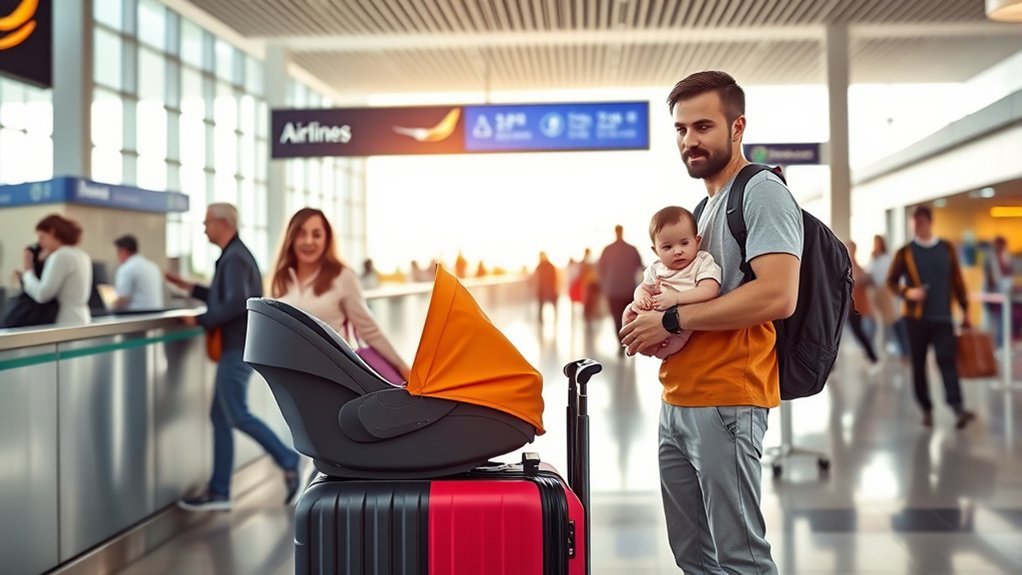
When you’re planning to bring a car seat on board, make sure it is approved for aircraft use. You will also usually need to purchase a separate seat for your child if you want to install the car seat during the flight. Rules can vary by airline and aircraft, so check your airline’s specific policies before you travel.
FAA Approval Necessity
To help keep your child secure during air travel, use an FAA-approved child safety seat or another child restraint system approved for aircraft use. A car seat used on a plane should have a proper label showing that it is certified for use in motor vehicles and aircraft. Booster seats without a harness are generally not used during takeoff, landing, or turbulence because aircraft seats use lap belts instead of shoulder belts.
If you have reserved a seat for your child, you can usually use the approved safety seat as long as it fits the aircraft seat and does not block another passenger’s exit path. Window seats are often preferred for car seat installation because they keep the aisle clear. Car seats are not allowed in exit rows, and some premium or angled seats may not allow child restraints.
Warning: Do not assume every car seat fits every aircraft seat. Check the car seat label, your airline’s policy, and the aircraft seating rules before travel, especially if you booked a premium cabin or bulkhead seat.
Seat Purchase Requirement
Purchasing a separate seat for your child is essential if you plan to bring a child safety seat on board and use it during the flight. Without a purchased seat, the car seat usually must be checked, either at the ticket counter or at the gate.
For children under 2, many airlines allow lap infant travel, but using an approved child restraint in a purchased seat can provide a more secure option during takeoff, landing, and turbulence. If you are flying American Airlines, see this guide on adding an infant in lap on American Airlines. If you decide not to purchase a seat, ask the airline how to check the car seat and whether a protective bag is recommended.
Gate Checking Options for Strollers

When you’re flying with a stroller, gate checking is a convenient option that lets you keep your little one comfortable until the last moment. Most airlines allow this service at no extra charge, so your stroller usually will not count against your baggage limit. Just remember to arrive early and check your airline’s specific guidelines to make the process smoother.
Gate Check Procedure Overview
Most airlines let you gate-check a stroller for free, which means you can use it until right before boarding. When you arrive at the gate, ask the gate agent for a stroller gate-check tag. Fold the stroller, remove loose accessories, and attach the tag where it can be seen clearly.
Airline staff will usually take the stroller at the end of the jet bridge or near the aircraft door. When you land, the stroller is often returned near the aircraft door or jet bridge, although some airports send gate-checked items to baggage claim. Ask the gate agent where you should pick it up after arrival.
| Stroller Type | Gate Check Procedure |
|---|---|
| Collapsible | Gate check at the gate |
| Non-collapsible | Check at ticket counter |
| Lightweight | Gate check at the gate |
| Double stroller | Check at ticket counter |
Benefits of Gate Checking
Gate checking a stroller offers several advantages for traveling families. You can use the stroller through long terminals, security lines, boarding areas, and layovers. This is especially helpful if your child naps in the stroller or if you need a safe place to keep your toddler while managing documents, bags, and boarding passes.
Gate checking also reduces the amount of time your stroller spends in the baggage system. While it does not remove the risk of damage, it may reduce handling compared with checking the stroller at the ticket counter. For maximum ease, choose a compact stroller that folds quickly and has fewer detachable parts.
Pro Tip: Before handing over your stroller, remove cup holders, snack trays, toys, hooks, organizers, and rain covers. Place small accessories in your carry-on so they do not fall off during handling.
Tips for Traveling With a Stroller and Child Safety Seats

Traveling with a stroller and child safety seat can be easier when you prepare before airport day. A little planning helps you avoid last-minute gate issues, broken accessories, and confusion about where to pick up your stroller after landing.
- Choose the right stroller types: Compact or collapsible strollers are ideal for air travel because they are easier to handle and may be accepted for gate checking or overhead storage.
- Know your airline’s policies: Verify the specific rules for stroller dimensions, gate checking, child safety seats, and stroller wagons before you travel.
- Use a stroller travel bag: A padded or clearly labeled stroller bag can help protect the stroller and make it easier to identify.
- Remove loose parts: Take off cup holders, toys, trays, hooks, fans, and organizers before checking the stroller.
- Label everything: Add your name, phone number, and email to the stroller and car seat bag.
- Gate-check your safety seat if needed: If you have not purchased a seat for your child, ask the airline whether the car seat should be gate-checked or checked at the counter.
- Take photos before checking: A quick photo of the stroller and car seat can help if you need to report damage later.
What to Do at Airport Security With a Stroller
At airport security, you usually need to remove your child from the stroller and place the stroller through the screening machine if it fits. If the stroller is too large for the scanner, security staff may inspect it separately. You may also need to remove bags, blankets, toys, and accessories from the stroller before screening.
To keep the line moving, pack the stroller basket lightly and place small items in a carry-on before you reach security. If you are traveling with baby food, formula, breast milk, or medically necessary liquids, keep them easy to remove and declare them when required.
How to Protect Your Stroller From Damage
Even when a stroller is checked for free, it can still be handled like other checked items. Protecting it before you hand it over can reduce scratches, bent parts, and missing accessories.
- Use a stroller bag to reduce dirt, scuffs, and loose straps.
- Fold and lock the frame so it does not open during handling.
- Remove detachable wheels only if your stroller design makes that quick and practical.
- Keep accessories with you instead of leaving them attached to the stroller.
- Use an ID tag with your contact details and destination information.
- Check the stroller immediately after arrival so you can report damage before leaving the airport.
The easiest stroller for flying is usually the one that folds fast, weighs less, has fewer loose parts, and can be handled with one hand while you manage your child and carry-on bags.
Frequently Asked Questions
Can I bring a double stroller on the plane?
Yes, you can usually travel with a double stroller, but it may not be allowed in the cabin or at the gate. Many double strollers are too large for gate checking and may need to be checked at the ticket counter. Check your airline’s rules before you fly.
Do I need to pay for oversized strollers?
Many airlines still check oversized strollers for free as child-travel items, but they may require you to check them at the ticket counter instead of the gate. Oversized rules vary, so confirm your airline’s size and weight policy before travel.
What happens if my stroller gets damaged?
Inspect your stroller before leaving the airport. If you notice damage, report it to the airline’s baggage service office right away. Photos taken before check-in can help support your claim. You can also check whether your travel insurance or credit card offers baggage protection.
Can I use my stroller in the airport?
Yes, you can usually use your stroller inside the airport until you reach the gate or security screening area. At security, you may need to remove your child and fold the stroller for screening. If the stroller is too large for the scanner, staff may inspect it separately.
Are there stroller rental services at airports?
Some airports, destinations, and private travel services offer stroller rentals, but availability is not guaranteed. If you want to rent instead of bring your own stroller, check the airport, hotel, theme park, or local baby-gear rental service before your trip.
Does a stroller count as checked baggage?
Usually, no. Most airlines treat a stroller as a special child-travel item and allow one stroller per child at no extra charge. However, airline rules vary, and oversized models may need special handling.
Can I take a travel stroller as a carry-on?
Some ultra-compact travel strollers may fit within carry-on size limits, but acceptance depends on the airline, aircraft, and overhead-bin space. Even if your stroller folds small, be prepared to gate-check it if the crew requires it.
Conclusion
When traveling with kids, knowing airline policies on strollers can save you a lot of stress. Most airlines let you check one stroller per child for free, so it usually does not count as standard luggage. The key is to check your airline’s current size, weight, and gate-check rules before you arrive at the airport.
For the smoothest trip, use a compact folding stroller, remove loose accessories, label your gear, and ask at the gate where your stroller will be returned after landing. With a little preparation, you can move through the airport more easily and keep your child comfortable from check-in to arrival.
