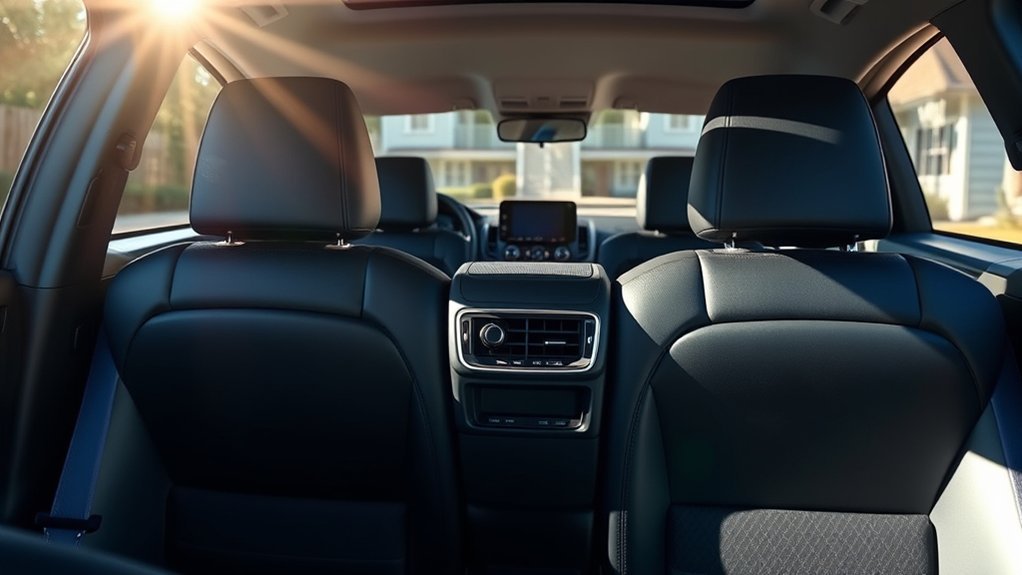
Yes. Every 2026 U.S.-market Toyota RAV4 lists rear-seat air vents and dual-zone automatic climate control. The rear outlets send heated or cooled air from the vehicle’s main HVAC system to second-row passengers; they do not create a separate rear blower or independent third temperature zone. Older RAV4s can differ by model year, powertrain, trim, and market.
Last updated: September 19, 2026
Quick Answer
The current 2026 U.S. Toyota RAV4 has rear-seat vents across the lineup. They are usually positioned on the rear face of the center console and share the vehicle’s main front climate-control system. Rear passengers can direct the outlet airflow, but the RAV4 does not normally give them a separate rear fan speed or independent rear temperature setting. Check the exact model year when shopping used because older RAV4 equipment varies.
Key Takeaways
- Toyota lists rear-seat vents and dual-zone automatic climate control across the 2026 U.S. RAV4 lineup.
- Rear-seat vents do not mean the RAV4 has a separate rear temperature zone or rear blower.
- Older model years differ: the 2021 U.S. gasoline LE did not list rear-seat vents, while Toyota listed them on the gasoline LE by 2022.
- On RAV4s equipped with S-FLOW, the system can prioritize the front seats and reduce airflow or climate effect in the rear.
- Weak airflow can result from closed louvers, airflow settings, obstructions, a restricted cabin filter, or an HVAC fault.
Does the Toyota RAV4 Come With Rear Air Conditioning Vents?
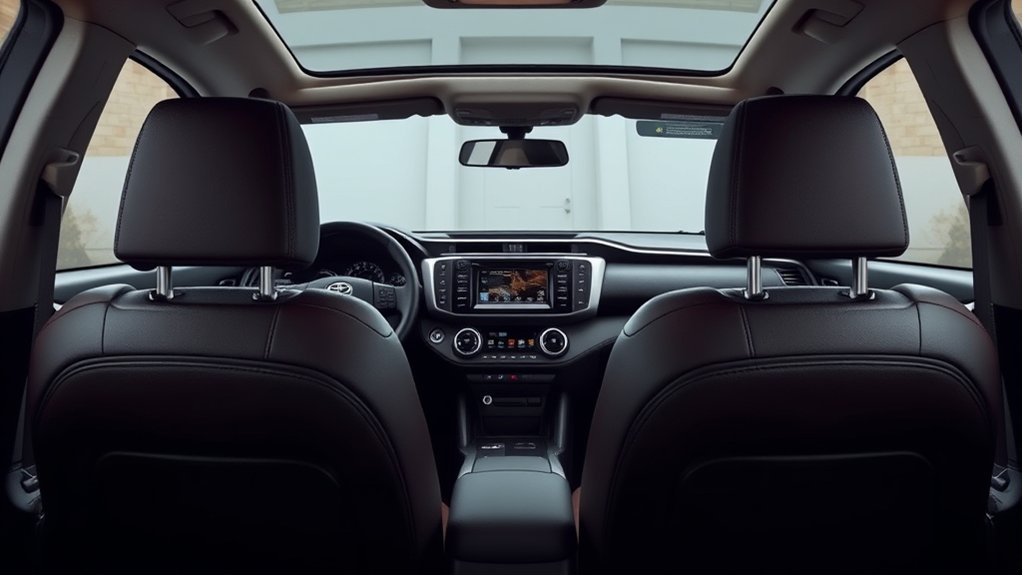
Yes. Toyota’s official 2026 RAV4 brochure lists dual-zone automatic climate control with rear-seat vents across the current U.S. lineup. These outlets distribute air from the main heating, ventilation, and air-conditioning system toward second-row passengers.
The arrangement is different from an SUV or minivan with an independent rear HVAC system. The rear-seat outlets can direct conditioned air toward passengers, but the main fan speed, A/C operation, airflow mode, and climate settings are controlled from the front system.
Model year matters if you are shopping used. Toyota’s 2021 RAV4 brochure lists basic climate control without rear-seat vents on the gasoline LE, while the Hybrid LE and gasoline XLE included rear-seat vents. Toyota’s 2022 RAV4 brochure then lists rear-seat vents on the gasoline LE.
For a more detailed model-year and trim timeline, see the RAV4 rear air vent availability guide.
Note: Equipment can differ outside the United States. When checking an older or imported RAV4, use the original brochure, owner’s manual, window sticker, or a physical inspection of the vehicle rather than assuming that the trim name alone determines the vent layout.
Rear Vents Versus Separate Rear Air Conditioning
A rear-seat vent is not the same as an independent rear air-conditioning system. This distinction answers much of the confusion around whether the RAV4 has “rear A/C.”
| Feature | What It Means | Current RAV4 Setup |
|---|---|---|
| Rear-seat vents | Adjustable outlets deliver conditioned air to the second row. | Yes |
| Separate rear blower | Rear passengers select their own fan speed. | No separate rear blower |
| Separate rear temperature zone | Rear passengers select a temperature independently of the front occupants. | No independent third rear zone |
What Affects RAV4 Rear-Seat Cooling?
Rear-seat comfort depends on the whole climate system, not only on whether the vehicle has visible rear outlets. Cabin heat, sunlight, humidity, blower speed, airflow mode, vent direction, filter condition, and the selected climate settings can all change how much conditioned air reaches the second row.
A RAV4 that has been parked in direct sun may take longer to cool because the seats, dashboard, glass, and interior trim continue releasing stored heat after the A/C starts. Releasing that trapped heat before switching to recirculation can reduce the initial cooling load.
Rear vents improve air distribution, but they do not add a second A/C system. Rear comfort still depends on the settings and condition of the vehicle’s main HVAC system.
On RAV4s equipped with S-FLOW, front-seat-priority operation can reduce airflow or climate effect in the rear when the system is not prioritizing rear occupants. Rear passengers may also feel less air when the blower is set low, the rear louvers are partly closed, or bags and clothing obstruct the console outlets.
To check the system, open both rear louvers, select a face-level or combined face-and-floor airflow mode, raise the blower to a medium or high setting, and turn off S-FLOW if your RAV4 has that function. Compare the rear outlets with the front vents before assuming that the rear ductwork has failed.
How Does the Toyota RAV4 Rear Climate System Work?
The rear vents are supplied by the same HVAC system used at the front of the cabin. Front controls determine temperature, blower speed, recirculation, A/C operation, airflow mode, and available automatic or economy functions.
Rear Vent Location and Adjustment
On many recent RAV4 models, the visible second-row outlets are located on the rear face of the front center console. Rear passengers can move the louvers to redirect the air and, depending on the vent design, reduce or close airflow through the individual outlet.
Floor-level outlets can also route air toward the footwells when an appropriate floor or combined airflow mode is selected. Those lower ducts should not be confused with the dedicated center-console rear vents.
| Component | Purpose | What to Check |
|---|---|---|
| Rear center-console vents | Direct conditioned air toward second-row passengers. | Make sure the louvers are open and unobstructed. |
| Front dashboard vents | Supply the front cabin and support overall circulation. | Use an airflow mode that sends air through the face-level vents when stronger rear-console airflow is needed. |
| Floor outlets | Direct air toward the footwells in applicable airflow modes. | Keep the areas below the front seats clear. |
| Cabin air filter | Filters air entering or circulating through the HVAC system. | Inspect it when airflow is weak from multiple vents. |
Climate Control Functionality Explained
The current 2026 U.S. RAV4 uses dual-zone automatic climate control, allowing the driver and front passenger to select separate front temperature settings. That does not create a third temperature zone for the rear seats. Earlier model years can use different climate-control arrangements.
Toyota’s 2024 RAV4 Quick Reference Guide shows ECO climate and S-FLOW as separate climate functions. Their exact availability and operation should be checked in the manual for your model year.
- AUTO: Automatically adjusts available climate functions to approach the selected temperature.
- SYNC: Links the driver and front-passenger temperature settings on compatible systems.
- ECO climate mode: Reduces climate-system demand to support efficiency and can make heating or cooling feel less aggressive.
- S-FLOW: On equipped RAV4s, prioritizes airflow toward occupied front seating areas and can reduce rear airflow or climate effect when rear occupants are not being prioritized.
- Recirculation: Reuses cabin air instead of continuously drawing in outside air, which can help during initial hot-weather cooling after trapped hot air has been released.
Note: Drive-mode ECO and ECO climate operation are not necessarily the same control. Follow the labels and instructions in the owner’s manual for your exact RAV4.
How Do RAV4 Rear-Vent Features Vary by Model Year?
Toyota has changed rear-vent availability and climate-control equipment during the RAV4’s production run. A trim badge alone is therefore not enough when you are checking an older vehicle.
| U.S. Model-Year Example | Rear-Seat Vents | What Toyota Listed |
|---|---|---|
| 2021 gasoline LE | Not listed | Basic climate-control system with dust and pollen filter. |
| 2021 Hybrid LE | Yes | Dual-zone automatic climate control with rear-seat vents. |
| 2022 gasoline LE | Yes | Climate-control system with rear-seat vents. |
| 2024 gasoline LE | Yes | Climate control with rear-seat vents; XLE and higher grades add upgraded automatic functions. |
| 2026 RAV4 lineup | Standard | Dual-zone automatic climate control with dust and pollen filter and rear-seat vents. |
For years or markets not listed above, verify the individual vehicle instead of extrapolating from another model year. The dedicated RAV4 rear air vent trim guide covers the availability question in more detail.
Pro Tip: When inspecting a used RAV4, look at the rear face of the center console, start the climate system, open both rear louvers, raise the blower speed, and confirm that air reaches the rear outlets. If equipped, turn off S-FLOW during the check.
How to Optimize Rear Seat Comfort in Your RAV4
You can improve second-row cooling without modifying the vehicle’s factory ductwork. Start with the installed climate controls and make sure the existing outlets are open and unobstructed.
- Release trapped heat first. Briefly open the doors or windows after the RAV4 has been parked in direct sun.
- Turn on the A/C. Use a medium or high blower setting during the initial cooldown.
- Use recirculation after the hottest air escapes. Recirculating cooler cabin air can reduce the amount of hot outside air the system must continually cool.
- Open and aim the rear vents. Point the louvers toward occupied seating positions instead of the seatbacks.
- Check S-FLOW if equipped. Select all-seat airflow when rear passengers need stronger ventilation.
- Temporarily reduce economy-oriented climate operation. If your model allows it, turn off ECO climate operation when maximum cooling matters more than efficiency.
- Use AUTO mode when available. Automatic climate control can manage blower output and airflow as the cabin approaches the selected temperature.
- Reduce solar heat. Legal window tint, a windshield shade, or securely fitted rear-window sunshades can reduce heat buildup.
- Keep outlets clear. Move bags, blankets, and clothing away from the rear console and floor-airflow paths.
- Inspect the cabin filter when airflow is weak throughout the cabin. A heavily restricted filter can reduce airflow from multiple outlets.
Warning: Secure portable fans and other accessories with hardware designed for automotive use. Keep them away from airbags, seat tracks, pedals, driver controls, and locations where they could strike an occupant during sudden braking or a crash.
What Common Problems Can Affect RAV4 Rear Airflow?
Weak rear airflow does not automatically mean the rear ducts have failed. Check the vent position and climate settings first, then determine whether the problem affects only the rear outlets or the whole cabin.
Quick Rear-Airflow Check
- Open both rear vent outlets fully.
- Select a face-level or combined face-and-floor airflow mode.
- Raise the main blower to a medium or high setting.
- Turn off S-FLOW if your RAV4 is equipped with it.
- Remove bags, covers, or other objects blocking the center console or floor outlets.
- Compare the rear airflow with the dashboard vents. If every outlet is weak, investigate the cabin filter or main HVAC system rather than the rear duct alone.
| Symptom | Possible Cause | What to Check |
|---|---|---|
| No air from rear vents | Closed louvers, low blower speed, S-FLOW on an equipped vehicle, an obstructed outlet, or an airflow mode that is not feeding the console vents | Open the louvers, raise the blower, select a suitable airflow mode, turn off S-FLOW if equipped, and remove obstructions. |
| Weak air from every vent | Dirty cabin filter, blower problem, HVAC restriction, or another system fault | Inspect the cabin filter and compare airflow at several blower settings. |
| Airflow is strong but not cold | A/C switched off, economy-oriented climate operation, refrigerant or compressor problem, or extreme cabin heat | Confirm A/C operation, reduce ECO climate operation if applicable, and seek service if cooling remains poor. |
| One front side feels different | Different dual-zone temperature settings or an HVAC air-door problem | Use SYNC if available and compare outlet temperatures. |
| Musty smell | Dirty filter, moisture, or buildup in the HVAC system | Inspect an overdue filter and arrange service if the odor persists. |
| Clicking or knocking behind the dashboard | Possible actuator or airflow-door fault | Arrange professional diagnosis rather than forcing the controls. |
Toyota’s car A/C troubleshooting guidance identifies a clogged or extremely dirty cabin air filter as a possible cause of severely restricted airflow. Toyota also recommends professional diagnosis when basic checks do not restore normal cooling or airflow.
Do not add refrigerant simply because the rear vents feel weak. If the dashboard vents are strong and cold but the rear outlets remain abnormal after the settings and louvers have been checked, have the ducting and HVAC controls inspected. Hybrid and plug-in-hybrid climate systems also require appropriate service equipment and procedures.
Related Guides
Frequently Asked Questions
Can I manually adjust the RAV4’s rear air vents?
Yes. On RAV4s with rear console vents, passengers can move the louvers to redirect airflow and may be able to reduce or close the individual outlet. The main fan speed, temperature, airflow mode, and A/C operation remain controlled through the front climate system.
Does the RAV4 have a separate rear A/C system?
No separate rear blower or independently controlled third temperature zone is normally provided. The rear-seat outlets distribute air from the vehicle’s main HVAC system.
Are rear-seat vents standard on every RAV4 trim?
They are standard across the current 2026 U.S. RAV4 lineup, but that rule does not apply to every older model year. For example, the 2021 gasoline LE did not list rear-seat vents, while Toyota listed them on the gasoline LE by 2022. Check the exact year, powertrain, trim, and market when buying used.
Why is little or no air coming from the rear vents?
Make sure the rear outlets are open, increase the main blower speed, select a face-level or combined airflow mode, remove anything blocking the console, and turn off S-FLOW if your RAV4 is equipped with it. If airflow is weak throughout the cabin, inspect the cabin air filter and have the HVAC system checked if necessary.
Does S-FLOW reduce rear-seat airflow?
On RAV4s equipped with S-FLOW, the function prioritizes climate airflow toward the front seats when conditions allow. That can reduce airflow or climate effect in the rear. Select all-seat airflow when rear passengers need stronger ventilation.
Does ECO mode reduce rear-seat cooling?
ECO climate operation can reduce HVAC demand or fan response to support efficiency. It is separate from S-FLOW. If maximum cooling is needed, temporarily use normal climate operation according to the instructions for your model year.
Can I use an aftermarket fan to improve rear circulation?
A securely mounted automotive fan can improve circulation, but first make sure the factory vents and HVAC settings are working correctly. Keep any fan and its wiring away from airbags, seat tracks, controls, pedals, and the driver’s field of view.
Conclusion
The current 2026 U.S. Toyota RAV4 has rear-seat air vents across the lineup. Those outlets share the vehicle’s main HVAC system rather than providing an independent rear blower or third temperature zone.
For an older RAV4, check the exact model year instead of relying on the trim badge alone. Toyota’s equipment changed during the previous generation, including the gasoline LE. For weak rear airflow, start with the vent position, blower setting, airflow mode, obstructions, and S-FLOW if equipped before assuming that the A/C system needs repair.
If airflow is weak throughout the cabin, cooling never becomes cold, unusual noises are present, or basic checks do not restore normal operation, have the HVAC system inspected by a qualified service professional.
Sources
- Toyota 2026 RAV4 Brochure — current U.S. climate-control and rear-seat-vent equipment
- Toyota 2024 RAV4 Brochure — 2024 trim-by-trim climate-control and rear-seat-vent specifications
- Toyota 2022 RAV4 Brochure — documents rear-seat vents on the 2022 gasoline LE
- Toyota 2021 RAV4 Brochure — documents the 2021 gasoline LE, Hybrid LE, and XLE climate-control differences
- Toyota 2024 RAV4 Quick Reference Guide — climate controls including ECO operation, S-FLOW, AUTO, and SYNC
- Toyota 2026 Owner’s Manual — current climate-system operation and limitations
- Toyota: Troubleshooting Common Car A/C Issues — cabin-filter restriction, weak airflow, cooling problems, and service guidance

I have a 2014 Rav4 and the rear seat cooling and heat is terrible. I live in Ohio. This car would be totally unacceptable in AZ. Also no back lighting on the mirror switch and other switches at night time is also unacceptable.