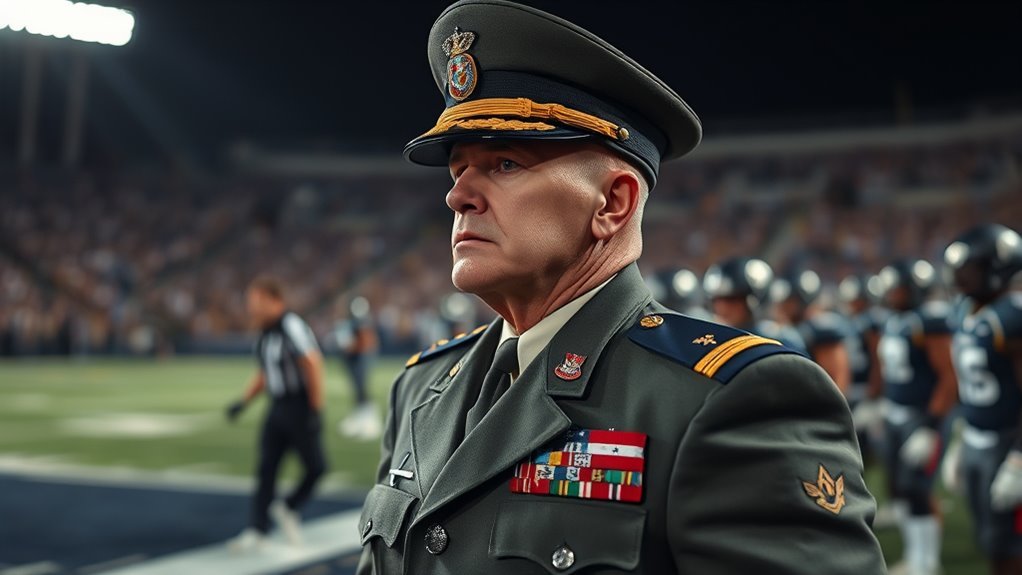
The phrase Fhwa Colonel Sports.com Army appears in an account of Army athletics and Army–Navy football traditions, but it is not a verified name for an official Army sports platform. The subject behind the account is the annual football rivalry between the United States Military Academy at West Point and the United States Naval Academy. Its ceremonies, uniforms, mascots, and postgame rituals tell a larger story about the two institutions.
Quick Answer
Fhwa Colonel Sports.com Army is not a confirmed official Army athletics website. The documented subject is the Army–Navy football rivalry. Its traditions include the March On, game-ball relays, a midfield student exchange, special uniforms, live mascots, and postgame alma mater singing. The Army and Navy athletic programs provide the official game information and records.
Last checked: September 26, 2026. Key event dates and figures were verified against official sources.
What Is Fhwa Colonel Sports.com Army?
The name appears to combine unrelated terms rather than identify an established military sports organization. FHWA stands for the Federal Highway Administration, whose work concerns highways and transportation infrastructure, not college athletics. Its role is described on the official FHWA website.
The sports content in the original account concerns the Army–Navy Game. Army represents West Point in New York, while Navy represents the Naval Academy in Annapolis, Maryland. The football rivalry began in 1890 and has developed traditions that extend well beyond the result on the field.
The 126th Army–Navy Game took place on December 13, 2025, in Baltimore. Navy defeated Army 17–16, according to the official Army athletics game report. The 127th meeting is scheduled for December 12, 2026, at 3 p.m. Eastern at MetLife Stadium in East Rutherford, New Jersey, as listed by the stadium’s event page.
For readers searching this unusual phrase, the useful distinction is simple: FHWA is a civilian federal agency; the football game and its ceremonies belong to the two service academies.
Army Core Values and Mission
Army athletics reflects an institution built around service, teamwork, and responsibility, but sports traditions should not be confused with the Army’s formal mission or values. The Army dates its founding to 1775 and organizes its professional expectations around seven Army Values.
The Army’s official description of its purpose and values identifies them as:
- Loyalty: Bear true faith and allegiance to the Constitution, the Army, your unit, and fellow Soldiers.
- Duty: Fulfill your obligations.
- Respect: Treat people as they should be treated.
- Selfless Service: Put the welfare of the nation, the Army, and subordinates before your own.
- Honor: Live up to all the Army Values.
- Integrity: Do what is right, legally and morally.
- Personal Courage: Face fear, danger, or adversity.
These values apply to military service, not only to athletes. They also explain why the Army–Navy rivalry puts so much emphasis on representing an academy well, respecting the opposing team, and remaining accountable after a loss.
For a student considering military service, football provides a visible example of teamwork and discipline. It does not, by itself, explain every part of Army training, daily duties, or military careers.
Army–Navy Game Traditions
The Army–Navy Game combines college football with formal military ceremonies. The March On is one of its best-known sights: the Corps of Cadets and Brigade of Midshipmen enter the stadium in formation before the teams play.
Several customs help explain the rivalry. The Army’s guide to the 2025 game traditions describes the event’s academy participation, mascots, and postgame observances.
- March On: Thousands of cadets and midshipmen take part in organized formations. The original account describes roughly 3,000 Army cadets and 4,000 Navy midshipmen.
- Game-ball runs: Relay teams bring footballs toward the game venue. The original account describes an Army route of about 240 miles across four states and a Navy run beginning in Annapolis; routes can differ with the host stadium.
- Midfield exchange: Academy students participating in the formal service-academy exchange return to their home sides before the game.
- Alma maters: Both teams sing their school songs after the final whistle. The losing team sings first, and the winning team sings second.
The March On brings thousands of future officers together before they become opponents for the afternoon.
The postgame songs are particularly distinctive. Players stand with their fellow students regardless of the score, then remain for the other academy’s song. Winning and losing matter on the field, but both schools take part in the closing ceremony.
Uniforms, Mascots, and Game-Day Logistics
Special uniforms and live mascots make the Army–Navy Game visually different from a typical college football matchup. Their details change from year to year, so a symbol used in one game should not be presented as a permanent feature of every uniform.
What Did the 2025 Uniforms Represent?
Army’s 2025 uniform marked 250 years of Army service and sacrifice. Its design included imagery inspired by the marble headstones at Arlington National Cemetery, according to the Army’s uniform announcement.
Navy’s 2025 uniform honored the Navy’s 250th anniversary and its early naval history. The official Navy uniform release explains references to the original six frigates and the design’s use of rope and knot imagery.
Uniform designs are kept confidential during development to preserve the reveal. The original account describes a two-year period with advance access limited to select officials; the official announcements establish the public reveal and design details rather than a universal secrecy period.
Which Mascots Attend the Game?
Army’s mascots are mules, while Navy’s mascot is a goat named Bill. The original account names Army mules Paladin and Ranger IV. The animals are part of game-day tradition, but their care is a practical responsibility rather than just another piece of pageantry.
Assigned academy personnel manage the mascots’ travel, movement, and welfare. Navy’s Goat Squad has a particular role in caring for Bill. Stadium entry rules and crowd management also help keep the animals, participants, and spectators separated when needed.
For spectators, the useful lesson is that the ceremonies require preparation. Arriving only at kickoff can mean missing the March On and other pregame activities.
Exchange Students and Alma Maters
The midfield “prisoner exchange” involves actual academy students, not captured opponents. Through the Service Academy Exchange Program, selected students spend a term at another service academy before returning to their home institution. The ceremonial return at the Army–Navy Game turns that educational arrangement into a lighthearted rivalry tradition.
The program’s history and purpose are described in the Department of Defense account of 50 years of Army–Navy student exchange. It is distinct from the pranks that sometimes take place during game week.
Those pranks have included photographs of Navy quarterbacks taped to Army dorm doors, as described in the original account. A separately documented event occurred on December 5, 2022, when Navy midshipmen carried out an air-to-ground spirit mission at West Point involving ping-pong balls and leaflets. The Naval Academy’s announcement identifies that as a particular event, not an annual part of the student-exchange ceremony.
Players also learn their academy’s alma mater. The original account describes a preseason camp requirement to memorize the song exactly before traveling with the team. Regardless of any team-specific travel rule, the song has an unmistakable place in the public ceremony: the winner sings second.
That order gives the losing team its moment with its own school before both sides finish the day together. It also helps explain why this rivalry is remembered for more than its final score.
Frequently Asked Questions
What Is the Rarest Rank in the Army?
The answer depends on whether you mean current ranks or historical ones. Four-star general is among the Army’s most senior regular ranks, but the five-star rank of General of the Army is historically rarer. It was held by a small number of officers and is not a routine promotion in today’s Army.
What Are the 5 C’s in the Army?
One Army leadership lecture described the five C’s as character, commitment, competence, courage, and caring. These are leadership qualities from that discussion, not a replacement for the seven official Army Values. The original account uses compassion in place of caring, which expresses a related idea but differs from the wording in that lecture.
Is a Colonel in the Army a Big Deal?
Yes. Colonel is a senior commissioned officer rank, designated O-6. A colonel may command a brigade, which the Army describes as typically containing 1,500 to 3,200 Soldiers, or serve in a senior staff assignment. The role brings significant responsibility for personnel, planning, and operations.
What Are 20,000 Soldiers Called?
A force of about 20,000 Soldiers can be corps-sized, although the correct name depends on its organization and command structure. The Army lists a division at roughly 10,000 to 16,000 Soldiers and a corps at about 20,000 to 40,000. A head count alone does not determine a unit’s official designation.
Conclusion
The useful story behind the phrase Fhwa Colonel Sports.com Army is the Army–Navy football rivalry, not a confirmed sports platform of that name. The March On, student exchange, uniforms, mascots, and alma mater ceremony explain how the academies connect competition with institutional tradition. Use official academy and venue information for game records and event details.
Sources
- Federal Highway Administration: FHWA identity and transportation mission.
- Army West Point Athletics: 2025 Army–Navy Game date and result.
- MetLife Stadium: Scheduled 2026 game date, time, and location.
- GoArmy: Army history and seven Army Values.
- U.S. Army game guide: Army–Navy traditions and mascots.
- U.S. Army uniform announcement: Army’s 2025 uniform design and symbolism.
- Navy Athletics uniform announcement: Navy’s 2025 uniform design and symbolism.
- U.S. Indo-Pacific Command: Service Academy Exchange Program and its history.
- U.S. Naval Academy: The documented 2022 spirit mission at West Point.
- U.S. Army ranks and unit structure: Colonel responsibilities and brigade, division, and corps sizes.
- U.S. Army leadership lecture: The five C’s terminology used by a senior Army leader.
- U.S. Army Center of Military History: Historical five-star rank.
