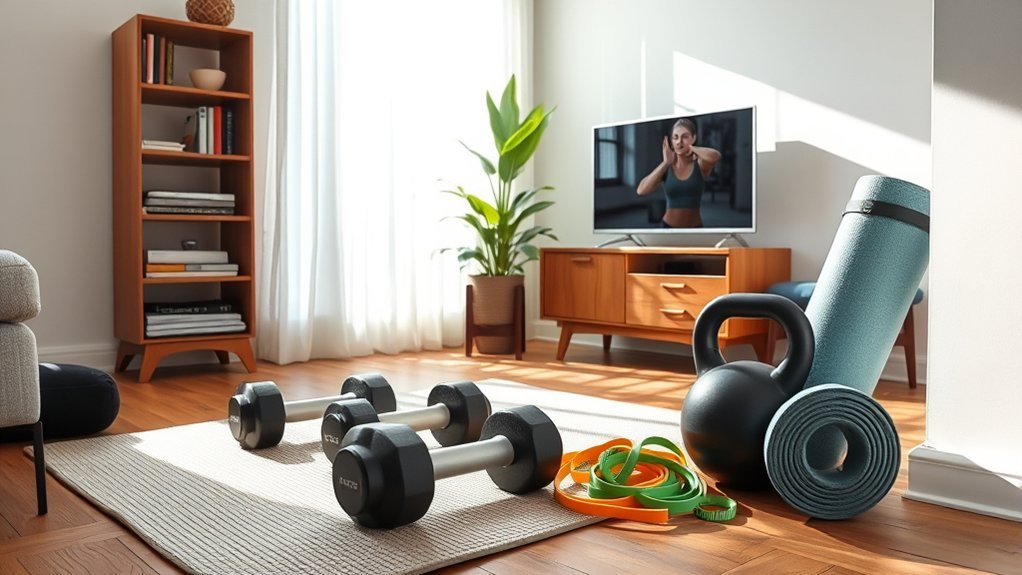
A good home gym setup does not require a large room or expensive machines. It starts with choosing a suitable space, selecting equipment that matches your fitness goals, and arranging everything so you can exercise safely. Whether you have a spare bedroom, basement, or garage, a practical plan can help you build a workout area you will actually use.
Quick Answer
To build a home gym, measure your available space, choose suitable flooring, and start with versatile equipment such as resistance bands, adjustable dumbbells, and an exercise mat. Add a bench, power rack, or cardio machine only when your goals and space justify them. Keep the layout clear, follow equipment safety instructions, and establish a consistent workout schedule.
At a Glance
| Difficulty | Beginner-friendly; larger equipment requires additional planning. |
| Tools Needed | Tape measure, suitable flooring, and equipment matched to your workout goals. |
Choosing the Right Space for Your Home Gym Setup
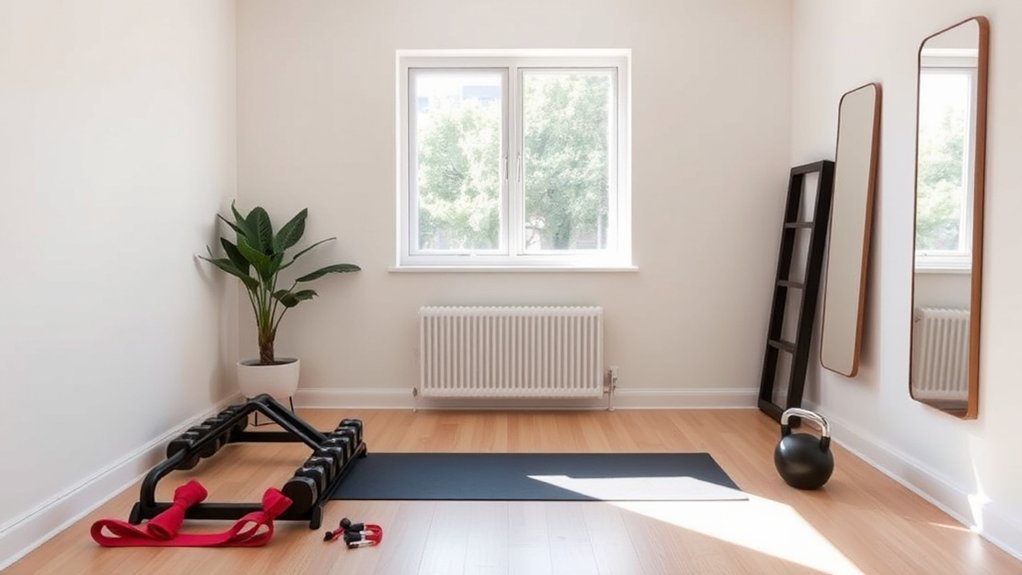
The right home gym location provides enough room for your equipment and the movements you plan to perform. A garage, basement, spare bedroom, or quiet corner can work, depending on your training style and available space.
Choose the location before buying equipment. This prevents the common problem of purchasing a machine that fits through the doorway but leaves too little room for safe use.
1. Measure the Available Floor Space
Measure the room’s length and width, including any areas occupied by doors, cabinets, furniture, and other permanent fixtures.
Then measure the equipment footprint and the clearance needed around it. Remember that an adjustable bench needs room for movement, while a barbell requires space beyond the rack itself.
The National Strength and Conditioning Association’s home gym guidance identifies approximately 25–49 square feet as a recommended activity area for exercises such as calisthenics and bodyweight movements.
That figure describes exercise space, not the total area needed for a complete gym. Larger equipment requires additional room.
2. Check Ceiling Height and Floor Strength
Stand upright and raise your arms overhead to check basic clearance. If you plan to perform overhead presses or use a pull-up bar, account for the equipment and your full movement.
Watch for ceiling fans, light fixtures, garage door tracks, and low basement beams.
For heavy equipment, consider the combined weight of the machine, stored weights, and user. A loaded power rack places much greater demands on the floor than an exercise mat or resistance bands.
If you plan to install substantial free weights on an upper floor, have a qualified structural professional assess the floor before installation.
3. Consider Temperature, Ventilation, and Moisture
A comfortable exercise area needs adequate airflow and manageable temperatures. Garages and basements may require more attention to heating, cooling, and humidity than finished living spaces.
Depending on the room, useful improvements include:
- Ventilation to remove stale air and reduce lingering odors.
- Heating or cooling appropriate for the space.
- A dehumidifier where excess moisture is a recurring problem.
- Dry storage to help protect metal equipment from corrosion.
Keep equipment away from standing water and address leaks before installing flooring.
Choose a space that supports both your equipment and your movements. Comfortable conditions make regular workouts easier to maintain.
Designing Your Home Gym for Optimal Workouts
An effective home gym design gives every piece of equipment a purpose while preserving enough open floor space to exercise. You do not need to fill the room with machines to make it useful.
Organize the layout around your main activities, then add storage, lighting, and floor protection.
1. Create Separate Workout Zones
Divide the available area according to how you train.
- Strength zone: Place dumbbells, a bench, or a rack where you can lift without hitting nearby objects.
- Cardio zone: Allow the clearance specified by the machine manufacturer, including space for safe entry and exit.
- Floor exercise zone: Keep an open area for stretching, push-ups, core exercises, and mobility work.
- Storage zone: Keep weights and accessories in secure, accessible locations.
In a small room, these zones can share space. For example, move a portable bench aside when you need the floor for stretching.
2. Choose Flooring for Your Equipment
Suitable flooring protects the underlying surface, improves footing, and helps manage equipment noise.
Rubber mats are common in home gyms because they provide a durable surface for many strength-training activities. However, not every rubber product offers the same protection.
- Exercise mats: Useful for floor exercises, yoga, and stretching.
- Rubber gym tiles: Suitable for many general-purpose workout areas.
- Rubber stall mats: A possible option for heavier equipment, provided the material is suitable for indoor use.
- Dedicated lifting platforms: Useful for certain barbell activities when designed and installed appropriately.
Check the flooring manufacturer’s intended use, thickness, installation instructions, and compatibility with your existing floor.
Rubber flooring may reduce noise and surface damage, but it does not make an overloaded floor structurally safe.
3. Improve Lighting and Storage
Use bright, even lighting that lets you see your equipment and body position clearly. Avoid placing lights where they shine directly into your eyes during floor exercises or bench presses.
Daylight-style LEDs can create a bright environment, but there is no need to treat one color temperature as essential for workout performance.
Vertical storage can also help preserve floor space. Pegboards, shelves, and wall-mounted organizers work well for lightweight accessories when properly installed.
Store heavy weights on racks designed for their load. Keep walkways clear and avoid leaving loose equipment where someone could trip.
4. Check Electrical and Household Safety
Motorized exercise equipment needs suitable electrical power. Follow the manufacturer’s instructions rather than assuming a nearby outlet can safely run every machine.
For example, Life Fitness electrical guidance specifies grounded connections and warns against extension cords and power strips for its equipment.
Other models may have different requirements. Check the machine’s manual before installation and consult a qualified electrician when electrical upgrades are needed.
Warning: Keep children and pets away from exercise equipment during use. Secure the workout area when unattended, store weights safely, and remove treadmill safety keys when appropriate. The CPSC’s Tread+ safety information documents serious injuries involving children and pets. Follow the safety instructions for your specific machine.
Select Your Essential Home Gym Equipment
The best home gym equipment matches your fitness goals, available space, and budget. Start with versatile items that support several exercises before considering specialized machines.
You can build a useful workout routine with bodyweight exercises, resistance bands, and free weights. A power rack or expensive cardio machine is not necessary for everyone.
Start With Basic Equipment
For a beginner-friendly setup, consider these items:
- Exercise mat: Provides a suitable surface for stretching, floor exercises, and mobility work.
- Resistance bands: Support pulling exercises, strength training, and exercise variations.
- Adjustable dumbbells: Allow you to change resistance without storing several separate pairs.
- Adjustable bench: Expands your options for pressing, rowing, and supported exercises.
- Jump rope: Offers a compact cardio option when ceiling height, space, and joint comfort allow.
These items support a wide range of movements without requiring a dedicated machine for each muscle group.
Match Additional Equipment to Your Fitness Goals
| Fitness Goal | Equipment to Consider | Practical Consideration |
|---|---|---|
| General fitness | Mat, resistance bands, dumbbells | Compact and suitable for varied workouts. |
| Strength training | Dumbbells, bench, barbell, power rack | A rack needs sufficient clearance and appropriate safety equipment. |
| Cardiovascular fitness | Exercise bike, treadmill, rowing machine | Consider floor space, noise, and power requirements. |
| Flexibility and mobility | Exercise mat, bands, stretching accessories | Prioritize unobstructed movement space. |
Do You Need a Power Rack?
A power rack is useful if your training includes barbell squats, bench presses, or other lifts that benefit from adjustable safety supports.
However, it is not a basic requirement for a home gym. Dumbbells, bands, and bodyweight exercises provide many alternatives for beginners and people with limited space.
If you purchase a rack, check its load rating, dimensions, assembly requirements, and safety instructions. Use the safety bars or straps correctly, especially when lifting without a spotter.
Build Your Gym in Stages
Buying equipment gradually helps you understand what you actually use.
- Start with a mat and basic resistance equipment.
- Add adjustable dumbbells or a bench when your routine calls for them.
- Introduce larger strength equipment if your training requires it.
- Add a cardio machine if you prefer indoor cardio and have room for safe operation.
- Expand storage as your equipment collection grows.
Before buying used equipment, inspect its condition, moving parts, cables, fasteners, and safety features.
Build a Personalized Workout Plan
A personalized workout plan turns your home gym into a useful training space. Choose exercises based on your goals, fitness level, and available equipment.
A balanced routine should include strength work, cardiovascular activity, and flexibility or mobility exercises.
1. Identify Your Main Fitness Goal
Decide what you want your training to accomplish.
- Build strength: Focus on resistance exercises and gradual increases in difficulty.
- Improve endurance: Include walking, cycling, rowing, or other suitable aerobic activities.
- Support weight management: Combine regular activity with nutrition habits that support your goal.
- Improve mobility: Include controlled movements and stretching suited to your abilities.
Your main goal determines which activities receive the most attention, but your routine should still cover the rest of your fitness needs.
2. Choose Exercises That Cover Major Muscle Groups
Include movements that train your legs, hips, back, chest, shoulders, arms, and core.
The CDC’s strength-training guidance recommends exercises involving all major muscle groups. It describes 8–12 repetitions as a useful starting range, with one set providing benefits and additional sets offering further gains.
A simple full-body workout could include:
- Squats or chair squats for your lower body.
- Push-ups or dumbbell presses for pushing strength.
- Resistance-band or dumbbell rows for pulling strength.
- Hip hinges or suitable deadlift variations for your hips and posterior muscles.
- A controlled core exercise, such as a plank.
Choose resistance that challenges you while allowing controlled movement. Learn the exercise technique before increasing the load.
3. Schedule Cardio and Strength Training
The CDC’s adult physical activity guidelines recommend at least 150 minutes of moderate-intensity aerobic activity each week, or 75 minutes of vigorous activity, or an equivalent combination.
Adults should also perform muscle-strengthening activities on at least two days each week.
Here is one practical example of a balanced weekly routine:
| Day | Activity | Duration |
|---|---|---|
| Monday | Full-body strength training | According to your routine |
| Tuesday | Moderate cardio | 30 minutes |
| Wednesday | Full-body strength training | According to your routine |
| Thursday | Moderate cardio | 30 minutes |
| Friday | Moderate cardio | 30 minutes |
| Saturday | Moderate cardio | 30 minutes |
| Sunday | Moderate cardio and gentle mobility work | 30 minutes of cardio |
This example provides 150 minutes of moderate cardio and two strength sessions. It is a planning example, not a requirement to exercise every day.
You can combine cardio and strength on the same day or spread activities differently to allow complete rest days.
4. Include Recovery and Track Progress
Recovery is part of a sustainable training plan. Avoid repeatedly training the same muscles hard without giving them time to recover.
Track your exercises, sets, repetitions, and resistance in a notebook, fitness app, or simple journal.
When an exercise becomes easier, gradually increase the challenge by adjusting resistance, repetitions, or exercise difficulty.
Note: If you have a chronic medical condition, an injury, or symptoms that affect exercise tolerance, consult a healthcare professional about suitable activities and intensity. Stop exercising if you develop concerning symptoms, such as chest pain or severe dizziness.
Stay Motivated and Consistent in Your Home Workouts
Consistency matters more than having an elaborate home gym. A simple setup that supports regular activity is more useful than a room filled with equipment you rarely use.
Make your training routine easy to follow and your progress easy to measure.
Set Achievable Workout Goals
Choose goals you can measure, such as completing scheduled sessions, improving exercise technique, or gradually increasing resistance.
Break larger goals into smaller milestones so you can see improvement without expecting every workout to produce a major change.
Make Exercise Part of Your Schedule
Choose workout times that fit your daily routine and treat them like regular appointments.
The CDC’s getting-started guidance recommends choosing enjoyable activities, starting slowly, and increasing activity gradually.
If your schedule changes, a shorter workout can help you maintain the habit.
Use Variety Without Constantly Changing Your Plan
Mix strength training, cardio, and mobility work to keep your sessions engaging.
Workout apps and online classes can provide structure, demonstrate exercise variations, and offer a sense of community when you train alone.
However, keep enough consistency in your main exercises to measure progress. Changing every movement at every session makes improvement harder to track.
Keep Your Equipment Ready to Use
Return weights and accessories to their storage locations after each session. Wipe down equipment as directed by its manufacturer and inspect it regularly for wear.
Check resistance bands for cracks or damage, and look for loose hardware on benches, racks, and machines.
A clean, organized workout area reduces setup time and makes your next session easier to start.
Frequently Asked Questions
What Is the 3-3-3 Rule in Gym?
The 3-3-3 rule is not one standardized gym program. One interpretation involves performing three sets of three exercises for a selected muscle group. Another uses three strength sessions, three cardio sessions, and three recovery sessions that can overlap within a week. The appropriate routine depends on your goals, fitness level, and recovery needs.
How to Build a Simple Home Gym?
Start by measuring your available space and choosing suitable flooring. Add an exercise mat, resistance bands, and adjustable dumbbells. Include a bench or larger machine only if your workout routine requires one. Provide adequate lighting and ventilation, organize your equipment, and keep enough open space for movement.
What Is the 5-3-1 Rule in Gym?
The 5/3/1 rule refers to Jim Wendler’s strength-training system. It organizes training around progressively structured sets of five, three, and one repetitions, using a calculated training max. The main lifts include the squat, bench press, deadlift, and overhead press. It is a structured strength program rather than a general rule for every workout.
What Are the Basics for a Home Gym?
The basics are a suitable workout space, safe flooring, versatile equipment, adequate lighting, and organized storage. An exercise mat, resistance bands, and dumbbells can support many beginner routines. A power rack, bench, or cardio machine becomes useful when your training goals and available space justify the additional equipment.
Can You Build a Home Gym in a Small Bedroom?
Yes, a small bedroom can accommodate a useful home gym. Choose compact equipment such as adjustable dumbbells, resistance bands, and a portable bench. Use secure storage to preserve floor space. Avoid large machines unless you can maintain the clearance required for safe use.
Do You Need a Treadmill for a Home Gym?
No, a treadmill is optional. Walking outdoors, cycling, suitable bodyweight cardio, and other aerobic activities can support cardiovascular fitness. Choose a treadmill if you prefer indoor walking or running and have sufficient space, electrical capacity, and clearance for safe operation.
Conclusion
A successful home gym setup starts with practical space planning, suitable equipment, and a workout routine that fits your life. Begin with the essentials, protect your exercise area, and add equipment as your needs develop.
Measure your available space, choose your first exercises, and establish a schedule you can maintain. A simple gym used consistently can support your fitness goals without requiring a room full of machines.
Sources
- National Strength and Conditioning Association: Home gym facility planning, exercise space, and household safety.
- Life Fitness: Home workout equipment and electrical installation requirements.
- U.S. Consumer Product Safety Commission: Documented treadmill hazards and precautions for households with children and pets.
- CDC — What Counts as Physical Activity for Adults: Strength-training exercises, repetitions, sets, and major muscle groups.
- CDC — Adult Activity Guidelines: Weekly aerobic activity and muscle-strengthening recommendations.
- CDC — Steps for Getting Started With Physical Activity: Gradual progression, scheduling, and maintaining activity.
- Jim Wendler — Boring But Big: 3-Month Challenge: Official 5/3/1 programming and main strength-training lifts.
