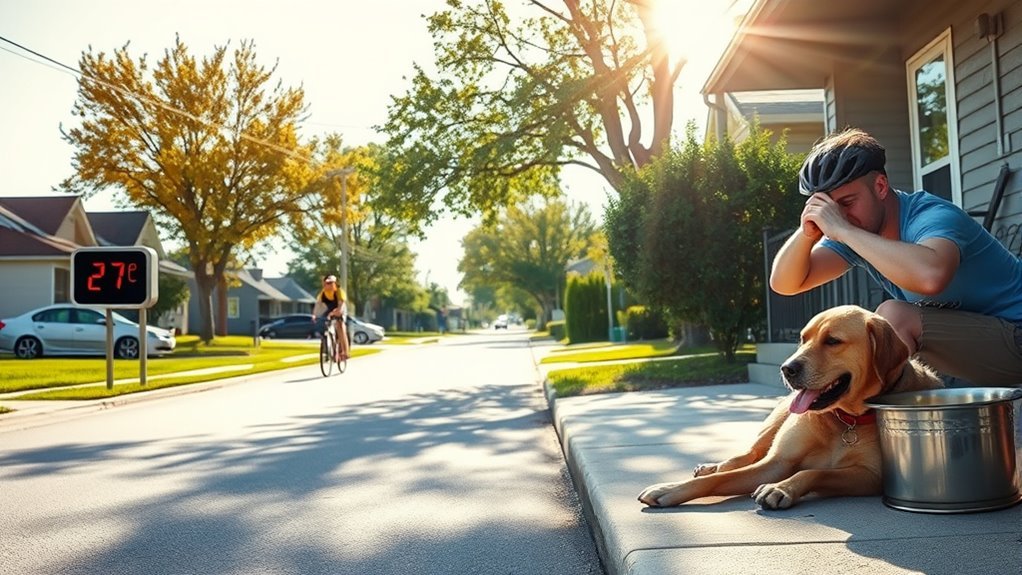
A temperature of 27°C (80.6°F) is warm, but it is not automatically dangerous or unusually high. How it feels depends on humidity, direct sunlight, airflow, physical activity, clothing, and your personal heat tolerance. In shade with light activity, many people can manage 27°C comfortably, while humid air, strong sun, or strenuous exercise can make the same temperature feel much hotter.
Quick Answer
27°C (80.6°F) is generally warm rather than dangerously hot. At 70% relative humidity, the National Weather Service heat-index formula gives an apparent temperature of about 28.9°C (84°F). Risk rises more when high humidity combines with direct sun, strenuous activity, heavy clothing, poor airflow, or long exposure.
Key Takeaways
- 27°C is warm, but for most healthy people it is not dangerous by itself.
- At 27°C and 70% humidity, the NWS heat index is about 28.9°C, not 32°C.
- Full sunshine can make conditions feel much hotter than the standard shaded heat-index value.
- Strenuous exercise, heavy clothing, long exposure, poor airflow, and lack of acclimatization can increase heat stress.
- Stay hydrated, seek shade, use airflow or air conditioning when needed, and reduce intense activity if you develop heat-illness symptoms.
What 27 Degrees Feels Like

An ambient temperature of 27°C normally feels warm. In dry or moderately humid air, especially in shade with a breeze, it may still be comfortable for walking, relaxing, or other light activities. People who are accustomed to hot weather may also tolerate it better than people who have not had time to acclimatize.
Temperature alone, however, does not describe the body’s total heat load. Humidity affects how efficiently sweat evaporates, sunlight adds radiant heat, and physical activity produces additional heat inside the body. Clothing can also trap heat and moisture.
The National Weather Service uses the heat index to describe how hot the combination of air temperature and relative humidity may feel. Standard heat-index values assume shade and light wind, so actual conditions in direct sun can feel considerably hotter.
The National Weather Service says exposure to full sunshine can increase heat-index values by as much as 15°F, or about 8°C, compared with the standard shaded calculation.
Why Humidity Makes 27°C Feel Hotter
Your body releases heat partly by allowing sweat to evaporate from the skin. When the surrounding air already contains a lot of moisture, sweat evaporates more slowly. You may therefore feel sticky or overheated even though the thermometer still reads 27°C.
The effect is real, but the original article overstated it. Using the official National Weather Service heat-index calculation, approximate shaded, light-wind values at 27°C are:
| Relative Humidity | Approx. Heat Index | Typical Impression |
|---|---|---|
| 40% | 26.9°C (80.4°F) | Warm; evaporation works relatively well |
| 60% | 28.1°C (82.5°F) | Warmer and somewhat muggy |
| 70% | 28.9°C (83.9°F) | Noticeably humid |
| 80% | 29.7°C (85.5°F) | Muggy; sweat evaporates more slowly |
| 90% | 31.1°C (88.0°F) | Very humid and uncomfortable for many people |
| 100% | 32.9°C (91.2°F) | Extremely humid; evaporative cooling is strongly limited |
These values are estimates for the conditions assumed by the NWS formula. Direct sunshine, strenuous exercise, protective clothing, nearby hot surfaces, or poor ventilation can create considerably more heat stress than this table suggests.
Note: Relative humidity is only one part of heat comfort. Wind, solar radiation, activity level, clothing, and acclimatization can matter just as much, so do not use a single humidity percentage as a universal danger threshold.
Health Risks at 27 Degrees
For most healthy people doing light activity, 27°C is not normally a dangerous temperature by itself. Heat-related illness becomes more plausible when several stressors occur together—for example, high humidity, direct sun, intense exercise, prolonged exposure, limited drinking water, heavy or protective clothing, or poor airflow.
Work and exercise deserve extra attention because muscles generate heat. OSHA notes that heat index alone can underestimate workplace risk and that strenuous work, radiant heat, clothing, acclimatization, and other factors should be considered when assessing heat stress.
The CDC also identifies groups that may need extra precautions during hot weather, including older adults, infants and young children, pregnant people, people with certain chronic medical conditions, and people who work or exercise outdoors.
Signs of Heat Exhaustion
According to CDC/NIOSH heat-illness guidance, symptoms of heat exhaustion can include headache, nausea, dizziness, weakness, thirst, heavy sweating, irritability, elevated body temperature, and reduced urine output.
If these symptoms develop, stop strenuous activity, move to a cooler place, loosen unnecessary clothing, cool the skin, and take frequent sips of cool water if the person is alert and able to drink.
Warning: Confusion, altered mental status, loss of consciousness, seizures, or a very high body temperature can indicate heat stroke. Heat stroke is a medical emergency. Contact local emergency services immediately, move the person to a cooler area, and begin rapid cooling while help is on the way.
How to Stay Cool in 27°C Weather
Most people do not need extreme cooling measures at 27°C, but simple steps can make humid or sunny conditions much more comfortable:
- Drink regularly. Water helps replace fluid lost through sweating. During hot weather or exercise, do not rely solely on thirst if you are sweating heavily.
- Choose loose, lightweight clothing. Light-colored, breathable clothing generally allows heat and moisture to escape more easily than heavy or tightly fitted garments.
- Use shade. Avoiding direct solar radiation can make a large difference even when the measured air temperature stays the same.
- Move hard exercise to cooler hours. Early morning or evening is often more comfortable than the hottest, sunniest part of the day.
- Use air movement indoors. Fans can improve comfort by increasing evaporation when conditions are appropriate.
- Use air conditioning or dehumidification when needed. Lowering indoor humidity can improve comfort without requiring an extremely low thermostat setting.
- Take breaks. If you feel unusually weak, dizzy, nauseated, faint, or overheated, stop and cool down rather than trying to push through the symptoms.
Houseplants should not be treated as a cooling or indoor-air-quality strategy. The U.S. Environmental Protection Agency says ordinary numbers of houseplants have limited ability to remove indoor air pollutants compared with normal ventilation. Plants and damp soil can also add moisture indoors.
Pro Tip: In humid climates, a room can feel uncomfortable even when the thermostat says 27°C. Check indoor relative humidity with a hygrometer. EPA generally recommends keeping indoor humidity below 60%, with roughly 30–50% preferred for indoor air-quality and moisture control.
Indoor vs. Outdoor 27°C
Indoors: 27°C can feel reasonably comfortable when humidity is controlled and air is moving. A still room with high humidity may feel much warmer. Air conditioning helps because it can remove both heat and moisture from indoor air.
Outdoors: 27°C in shade with a breeze can feel pleasant, while the same temperature in direct midday sun can feel significantly hotter because your body absorbs additional radiant energy.
The U.S. Department of Energy generally advises setting a cooling thermostat as high as is comfortably possible while maintaining appropriate humidity control. That means 27°C can be a reasonable AC setting for some homes and people, but it is not a universal target.
Exercise and Physical Work at 27°C
You can often exercise safely at 27°C, but intensity and conditions matter. Running, cycling, sports, construction work, or other strenuous activity generates substantial metabolic heat. High humidity and direct sun reduce your margin for cooling.
The CDC recommends scheduling exercise for cooler parts of the day when possible, starting gradually, drinking more water than usual, and stopping activity if you feel faint or weak.
People who are new to working or training in hot conditions also need time to acclimatize. Heavy uniforms, pads, protective equipment, or non-breathable workwear can trap heat and increase risk even when the weather reading seems moderate.
When 27 Degrees Becomes Dangerous
There is no single humidity percentage at which 27°C suddenly changes from safe to dangerous. Instead, heat stress rises as multiple risk factors accumulate.
| Condition | What It Means at 27°C |
|---|---|
| High humidity | Sweat evaporates more slowly, increasing discomfort and apparent temperature. |
| Direct sunlight | Radiant heat can make conditions feel substantially hotter than a shaded temperature reading suggests. |
| Strenuous activity | Metabolic heat from exercise or physical work adds to environmental heat load. |
| Heavy or protective clothing | Insulation and limited evaporation can trap body heat. |
| Long exposure | Fluid loss and accumulated heat strain can increase over time. |
| Little acclimatization | People newly exposed to hot conditions may tolerate heat less effectively. |
| Higher individual vulnerability | Age, pregnancy, some health conditions, and certain medicines can change heat tolerance. |
Pay attention to how you actually feel rather than assuming 27°C is always safe or always dangerous. Persistent dizziness, weakness, nausea, unusual heavy sweating, fainting, confusion, or other signs of overheating deserve immediate attention.
Note: This article provides general heat-safety information and is not a substitute for individualized medical advice. People with medical conditions or medicines that affect heat tolerance or hydration should follow guidance from their healthcare professional.
Frequently Asked Questions
How Hot Can Ambient Temperature Get?
The World Meteorological Organization recognizes 56.7°C (134°F), measured at Furnace Creek in Death Valley, California, on July 10, 1913, as the official world record for air temperature. WMO also notes that some weather historians have questioned old extreme-temperature records, and the organization reviews credible new evidence when it becomes available.
Is It Okay to Run My AC at 27 Degrees Celsius?
Yes. An AC setting of 27°C can be comfortable and energy-conscious for some households, particularly when indoor humidity is controlled and fans provide air movement. There is no single ideal setting for everyone. The U.S. Department of Energy recommends using the highest cooling temperature that remains comfortable while controlling humidity as needed.
How Warm Is 27 Degrees Celsius in Fahrenheit?
27°C equals 80.6°F. Most people would describe that as warm weather rather than extreme heat, although humidity, sun exposure, airflow, and activity can substantially change how it feels.
Is 27 a High Temperature?
27°C is warm, but there is no universal cutoff that makes it a “high” or dangerous ambient temperature. For normal light activity it is often manageable. Direct sun, high humidity, strenuous exercise, heavy clothing, long exposure, or individual health factors can make it more stressful.
What Does 27°C Feel Like at 70% Humidity?
Using the National Weather Service heat-index formula, 27°C at 70% relative humidity has an apparent temperature of about 28.9°C (83.9°F) in shade with light wind. Direct sunlight or strenuous activity can make your actual heat stress higher.
Can You Exercise Outside at 27°C?
Many healthy people can exercise at 27°C, but intensity, humidity, sunlight, fitness, acclimatization, clothing, and hydration matter. Use cooler times of day when possible, drink water, reduce intensity when conditions are humid or sunny, and stop if you feel faint, weak, dizzy, nauseated, or unusually overheated.
Conclusion
27°C (80.6°F) is warm, but it is not inherently a dangerous ambient temperature. In shade and moderate humidity, many people can remain comfortable with normal hydration and light activity. Humidity raises the apparent temperature, while direct sunlight, strenuous exercise, heavy clothing, poor airflow, and long exposure can increase heat stress further.
Instead of treating 27°C as a fixed safety threshold, consider the complete environment and how your body responds. Seek cooling and stop strenuous activity if you develop signs of overheating, and treat confusion, loss of consciousness, seizures, or other signs of heat stroke as a medical emergency.
Sources
- National Weather Service — Heat Index — explains apparent temperature, humidity, shade assumptions, and the effect of full sunshine.
- NOAA/NWS Weather Prediction Center — Heat Index Equation — provides the official heat-index calculation used for the humidity examples.
- CDC — About Heat and Your Health — supports hydration, cooling, activity timing, and higher-risk-group guidance.
- CDC/NIOSH — Heat-Related Illnesses — supports symptoms and first-aid guidance for heat exhaustion and heat stroke.
- U.S. EPA — Care for Your Air — supports indoor humidity and ventilation recommendations.
- World Meteorological Organization — Temperature Extremes — supports the officially recognized 56.7°C world temperature record.
