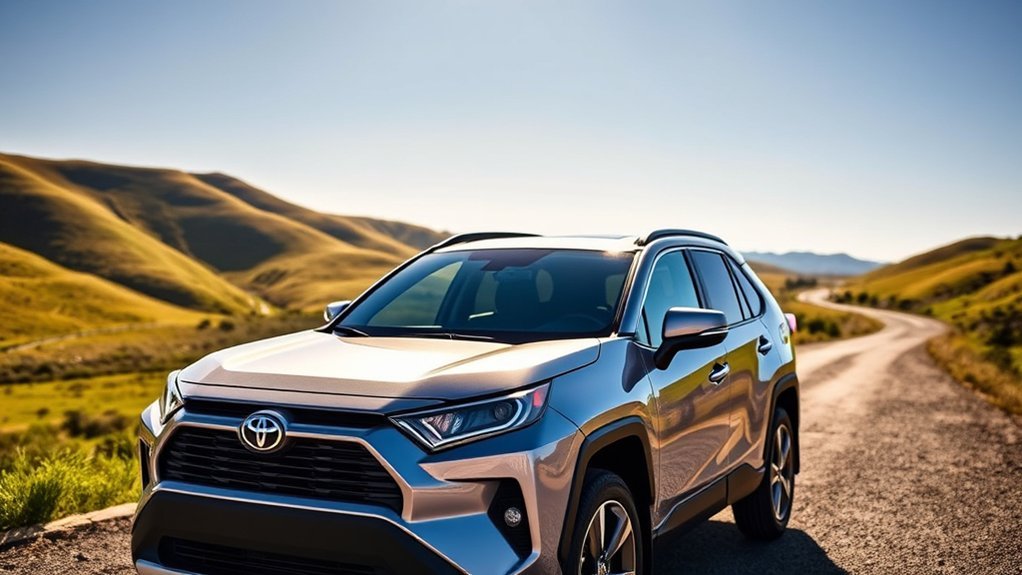
Last updated: September 16, 2026. This guide covers the regular Toyota RAV4 Hybrid (HEV), not the RAV4 Plug-in Hybrid.
The current Toyota RAV4 Hybrid range varies by model year, trim, and drivetrain. For the 2026 U.S. model, the most efficient front-wheel-drive LE, SE, and XLE Premium configurations are EPA-rated at 43 combined MPG. With the RAV4 Hybrid’s 14.5-gallon nominal fuel tank, that works out to a simple full-tank estimate of about 624 miles. AWD versions are rated lower, ranging from 38 to 42 combined MPG depending on trim, so their calculated full-tank range is roughly 551 to 609 miles. Actual distance between fill-ups will vary with weather, speed, traffic, terrain, cargo, HVAC use, and when you choose to refuel.
Quick Answer
- The most efficient 2026 RAV4 Hybrid configurations are rated at 47 city / 40 highway / 43 combined MPG, which equals about 624 miles using 14.5 gallons × 43 MPG.
- 2026 LE and SE AWD models are rated at 42 combined MPG, or about 609 miles by the same calculation.
- 2026 XLE Premium AWD, XSE, and Limited models are rated at 41 combined MPG, or roughly 595 miles.
- The 2026 Woodland is rated at 38 combined MPG, producing a simple full-tank estimate of about 551 miles.
- Most 2024–2025 RAV4 Hybrid trims are rated at 39 combined MPG, while most 2023 trims are rated at 40 combined MPG.
- These are comparison estimates based on nominal tank capacity and EPA fuel economy, not guaranteed distances before the tank runs dry.
RAV4 Hybrid Range by Model Year
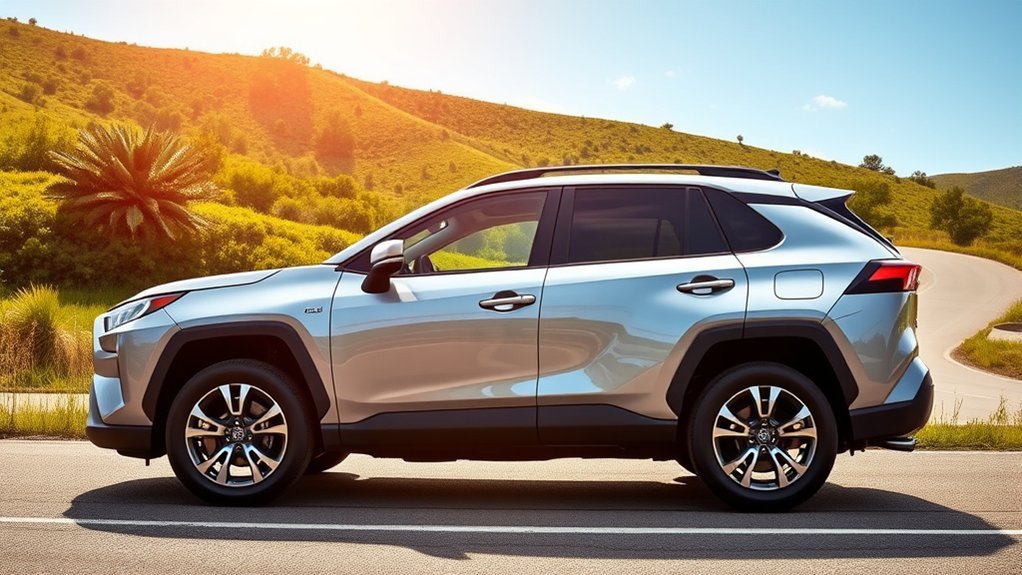
The RAV4 Hybrid’s EPA ratings have changed across recent model years, so one range number does not apply to every vehicle. The redesigned 2026 model is especially important because Toyota moved the U.S. RAV4 lineup to hybrid and plug-in-hybrid powertrains and introduced both front-wheel-drive and AWD configurations for the regular Hybrid.
| Model / Configuration | Combined MPG | Nominal Tank | Simple Full-Tank Estimate |
|---|---|---|---|
| 2026 LE / SE / XLE Premium FWD | 43 | 14.5 gal. | ~624 miles |
| 2026 LE / SE AWD | 42 | 14.5 gal. | ~609 miles |
| 2026 XLE Premium AWD / XSE / Limited | 41 | 14.5 gal. | ~595 miles |
| 2026 Woodland AWD | 38 | 14.5 gal. | ~551 miles |
| 2024–2025 Hybrid, most trims | 39 | 14.5 gal. | ~566 miles |
| 2024–2025 Woodland | 37 | 14.5 gal. | ~537 miles |
| 2023 Hybrid, most trims | 40 | 14.5 gal. | ~580 miles |
| 2023 Woodland | 37 | 14.5 gal. | ~537 miles |
The range column above is calculated by multiplying the nominal 14.5-gallon tank capacity by the EPA combined MPG rating. It is best used for comparing configurations. Your normal refill interval can be shorter because your actual MPG changes and you usually refuel with gasoline still remaining in the tank.
What Affects RAV4 Hybrid Range?
Your actual range depends on the MPG you achieve rather than the EPA number alone. Speed, trip length, temperature, traffic, elevation, tire pressure, cargo, roof-mounted equipment, towing, and climate-control use can all change fuel consumption.
City driving can work well with a hybrid because regenerative braking recovers some energy during deceleration and lower-speed operation gives the electric side of the hybrid system more opportunities to assist. Sustained high-speed highway driving normally relies more heavily on the gasoline engine and also increases aerodynamic drag.
Cold weather deserves special attention. U.S. Department of Energy and EPA guidance has found that conventional hybrids can experience roughly a 30% reduction in city fuel economy at 20°F compared with 77°F under laboratory test conditions. That does not mean every RAV4 Hybrid will lose exactly 30%. Short trips, cabin heating, defrosting, snow, wind, and individual driving conditions can make the result better or worse. EPA fuel-economy ratings should therefore be treated as comparison figures rather than guaranteed mileage. See FuelEconomy.gov for official fuel-economy guidance.
How Does the Toyota RAV4 Hybrid Achieve Its Range?
The RAV4 Hybrid combines a gasoline engine, electric motor-generators, a traction battery, and regenerative braking. The electric side can assist the engine when conditions allow, while regenerative braking converts some of the vehicle’s kinetic energy back into electrical energy during deceleration instead of losing all of it as heat at the brakes.
The redesigned 2026 RAV4 uses Toyota’s newer hybrid system and is offered with front-wheel drive or Electronic On-Demand All-Wheel Drive depending on trim. The most efficient FWD configurations reach 43 combined MPG, while AWD versions trade some efficiency for additional driven-wheel capability.
Fuel Efficiency Factors
- Speed and Route: High sustained speeds increase aerodynamic drag, while lower-speed mixed driving can give the hybrid system more opportunities to use regenerative braking.
- Driving Style: Smooth acceleration and anticipating stops generally reduce unnecessary energy use.
- Weather: Cold temperatures increase warm-up demands and can reduce hybrid efficiency significantly.
- HVAC Use: Heating, defrosting, and air conditioning require energy and can reduce your final miles per gallon.
- Vehicle Load: Towing, heavy cargo, and rooftop equipment can increase the energy required to move the vehicle.
Battery Use and Regenerative Braking
The regular RAV4 Hybrid is not a plug-in vehicle. Its hybrid system manages traction-battery charging and discharging as part of normal driving. Regenerative braking captures energy during deceleration and stores part of it in the hybrid battery so that energy can later assist propulsion.
Drivers do not need to target a particular traction-battery state of charge to achieve the published fuel economy. EV drive mode is also not a substitute for normal hybrid operation. Toyota describes it as a condition-dependent mode intended for short distances at low speed, such as parking areas, rather than a way to force extended electric-only driving.
How Driving Conditions Shape Range
- Stop-and-go driving can give the regenerative-braking system more chances to recover energy.
- Cold starts and repeated short trips can reduce fuel economy because the powertrain spends more time warming up.
- Heating and windshield defrosting can cause the gasoline engine to operate more frequently in cold conditions.
- Highway speeds, headwinds, hills, towing, and rooftop cargo can reduce range even when traffic is light.
For trip planning, your recent real-world MPG and the vehicle’s fuel gauge are more useful than assuming you will always achieve the theoretical full-tank number.
2026 RAV4 Hybrid Trim Levels and Range
The 2026 RAV4 Hybrid’s range changes mainly with drivetrain, trim equipment, tires, and its resulting EPA fuel-economy rating. All of the regular Hybrid configurations below use a nominal 14.5-gallon fuel tank.
| 2026 Configuration | EPA City / Highway / Combined MPG | Calculated Combined Range |
|---|---|---|
| LE / SE / XLE Premium FWD | 47 / 40 / 43 | ~624 miles |
| LE / SE AWD | 46 / 39 / 42 | ~609 miles |
| XLE Premium AWD | 45 / 38 / 41 | ~595 miles |
| XSE / Limited AWD | 43 / 37 / 41 | ~595 miles |
| Woodland AWD | 41 / 35 / 38 | ~551 miles |
The FWD configurations provide the highest published fuel economy. The Woodland sits at the other end of the range because its configuration emphasizes rugged-use equipment rather than maximum MPG.
Real-World Conditions and Range Impact
EPA ratings give you a standardized comparison, not a guaranteed number of miles from every tank. Two RAV4 Hybrid owners with the same trim can see different range because their speeds, routes, temperatures, trip lengths, tire pressures, loads, and climate-control use differ.
How Does Cold Weather Affect RAV4 Hybrid Range?
Cold temperatures reduce hybrid efficiency for several reasons. The gasoline engine and fluids need time to warm, the cabin heater and defroster require energy, and short winter trips can end before the vehicle reaches its most efficient operating condition.
DOE laboratory testing found that conventional hybrid city fuel economy can be around 30% lower at 20°F than at 77°F. Treat that as general cold-weather guidance rather than a fixed RAV4 Hybrid penalty. A longer warmed-up trip may perform differently from repeated five- or ten-minute trips in the same temperature.
How Does Driving Style Affect Efficiency?
Rapid acceleration, unnecessary braking, and sustained high speeds generally increase fuel use. Smooth inputs help the hybrid powertrain use gasoline and recovered electrical energy more efficiently.
City driving does not automatically guarantee better mileage, however. Heavy HVAC use, very short trips, steep terrain, aggressive acceleration, or congested traffic with little opportunity to move efficiently can offset the hybrid’s normal city advantage.
How Does HVAC Use Affect Fuel Consumption?
- Cabin heating: In cold weather, heating and warm-up demands can keep the gasoline engine operating more often.
- Defrosting: Windshield defrosting adds another winter energy demand.
- Air conditioning: Cooling the cabin also consumes energy and can lower fuel economy.
- Short trips: Heavy HVAC use has a larger proportional impact when the trip itself is short.
RAV4 Hybrid Fuel Tank Capacity
Recent U.S.-spec RAV4 Hybrid models use a nominal 14.5-gallon fuel tank. Range changes primarily because MPG changes by year, trim, drivetrain, and driving conditions rather than because the standard Hybrid uses a dramatically different fuel-tank size from one current trim to another.
| Model | Fuel Tank Capacity | Combined-MPG-Based Estimate |
|---|---|---|
| 2026 Hybrid FWD, 43 MPG | 14.5 gallons | ~624 miles |
| 2026 Hybrid AWD, 41 MPG | 14.5 gallons | ~595 miles |
| 2026 Woodland, 38 MPG | 14.5 gallons | ~551 miles |
| 2024–2025 Hybrid, most trims | 14.5 gallons | ~566 miles |
| 2023 Hybrid, most trims | 14.5 gallons | ~580 miles |
Do not expect to pump exactly 14.5 gallons at every fill-up. Tank capacity is the nominal maximum, while normal refueling happens with some fuel still remaining. That is also why a dashboard distance-to-empty figure may not match the simple tank-size calculation.
RAV4 Hybrid vs. Gas RAV4: A Model-Year Difference
There is no conventional gas-only RAV4 in the U.S. 2026 lineup, so a current “Hybrid versus regular gas RAV4” comparison is no longer apples-to-apples. Buyers comparing used or remaining 2025 models can still see the efficiency difference clearly.
| 2025 Model | City MPG | Highway MPG | Combined MPG |
|---|---|---|---|
| RAV4 Hybrid, most trims | 41 | 38 | 39 |
| RAV4 Gas LE AWD | 27 | 34 | 30 |
For a 2025 comparison, the Hybrid’s higher MPG produces a substantially longer calculated range from the same nominal 14.5-gallon fuel capacity. For 2026 shoppers, the more relevant decision is which Hybrid drivetrain and trim delivers the balance of range, AWD capability, equipment, and towing capacity they need.
How to Maximize Your RAV4 Hybrid’s Range
The most useful range improvements come from reducing unnecessary energy use rather than trying to force the vehicle to stay in EV mode.
For the longest practical range, focus on smooth driving, correct tire pressure, moderate speeds, sensible cargo loads, and regular maintenance.
- Maintain Correct Tire Pressure: Check cold tire pressure against the vehicle’s door-jamb specification. Under-inflation increases rolling resistance.
- Drive Smoothly: Accelerate progressively and anticipate traffic so you can slow down without unnecessary hard braking.
- Watch Highway Speed: Higher speeds increase aerodynamic drag and can reduce MPG even on an uninterrupted road.
- Remove Unneeded Drag and Weight: Roof-mounted cargo and unnecessary load can increase energy use.
- Plan Around Cold Weather: Expect lower MPG during cold starts and repeated short winter trips rather than assuming the EPA figure will hold year-round.
- Use EV Mode for Its Intended Purpose: Toyota limits EV drive mode to suitable conditions and short, low-speed operation. Normal hybrid mode is designed to manage engine and electric-motor use automatically.
Which RAV4 Hybrid Range Figure Applies to You?
Start with the exact model year, trim, and drivetrain rather than one generic RAV4 Hybrid number. A 2023 standard Hybrid, a 2025 Woodland, and a 2026 FWD Hybrid have different EPA ratings even though all are called RAV4 Hybrids.
| If You Drive… | Range Number to Start With |
|---|---|
| 2026 FWD LE, SE, or XLE Premium | ~624-mile nominal-tank estimate at 43 combined MPG |
| 2026 LE or SE AWD | ~609-mile nominal-tank estimate at 42 combined MPG |
| 2026 XLE Premium AWD, XSE, or Limited | ~595-mile nominal-tank estimate at 41 combined MPG |
| 2026 Woodland AWD | ~551-mile nominal-tank estimate at 38 combined MPG |
| 2024–2025 standard Hybrid | ~566-mile nominal-tank estimate at 39 combined MPG |
| 2023 standard Hybrid | ~580-mile nominal-tank estimate at 40 combined MPG |
Once you have the correct baseline, adjust your trip planning for your own recent MPG, weather, speed, terrain, cargo, and fuel-stop availability. Do not plan a trip around reaching the exact mathematical maximum before refueling.
Frequently Asked Questions
What Is the RAV4 Hybrid Battery Warranty?
For Toyota hybrid vehicles from the 2020 model year onward, Toyota covers the hybrid traction battery for 10 years or 150,000 miles from the original date of first use, whichever comes first. Certain other hybrid-related components have separate coverage. Review the warranty guide for your exact model year and market for complete terms. Toyota’s current hybrid warranty information is available here.
Can I Tow With a Toyota RAV4 Hybrid?
Yes, but the limit depends on model year and configuration. Recent pre-2026 RAV4 Hybrid models are generally rated to tow up to 1,750 pounds when properly equipped. For 2026, selected Hybrid AWD grades are rated for up to 3,500 pounds, while FWD versions and the LE AWD have a 1,750-pound rating. Always confirm the limit for the exact vehicle and account for passengers, cargo, hitch equipment, and trailer tongue weight.
How Does Cold Weather Affect Range?
Cold weather can reduce RAV4 Hybrid fuel economy through longer powertrain warm-up, cabin heating, defrosting, cold fluids, and short trips. DOE laboratory testing has found around a 30% city-fuel-economy reduction for conventional hybrids at 20°F compared with 77°F, but that is a general test result rather than a guaranteed RAV4-specific loss. Your actual change depends on the trip and conditions.
Are There Special Maintenance Needs?
Follow the maintenance schedule for your exact RAV4 Hybrid model year. The regular Hybrid does not need to be plugged in or manually charged. Correct tire pressure, the specified fluids, scheduled inspections, and prompt attention to warning messages all help the vehicle operate as intended.
What Safety Features Come Standard?
Safety equipment depends on model year. The redesigned 2026 RAV4 includes Toyota Safety Sense 4.0, while earlier RAV4 Hybrid model years use earlier Toyota Safety Sense generations. Check the specification sheet or owner’s information for the exact trim because additional parking, blind-spot, camera, and driver-assistance equipment can vary.
Conclusion
A current 2026 Toyota RAV4 Hybrid can produce a simple full-tank estimate of about 551 to 624 miles, depending on trim and drivetrain, when its EPA combined MPG is multiplied by the nominal 14.5-gallon fuel capacity. Older versions differ: most 2024–2025 Hybrids calculate to about 566 miles, while most 2023 trims calculate to about 580 miles.
Use those numbers as standardized comparison baselines, not promises of how far you should drive before refueling. For real trip planning, start with the rating for your exact year and trim, then account for your recent MPG, temperature, speed, terrain, cargo, and normal fuel-stop margin.
