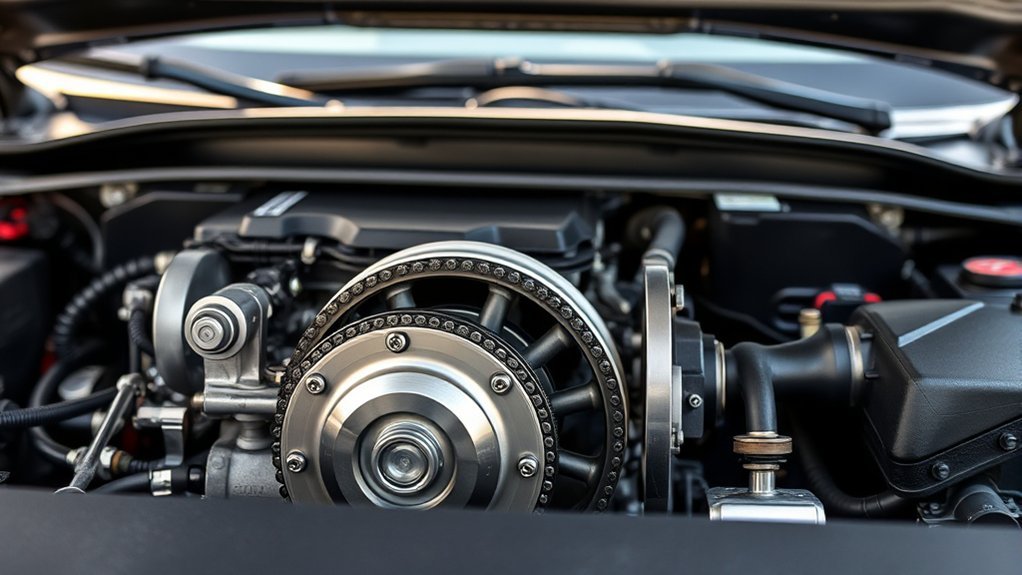
The 2019 Toyota RAV4 uses a timing chain, not a timing belt, in both the U.S.-market 2.5-liter gasoline model and RAV4 Hybrid. Toyota does not list routine timing-chain replacement in the 2019 maintenance schedule. The gasoline model has a separate external accessory drive belt, while the 2019 RAV4 Hybrid does not use an engine accessory drive belt.
Last updated: September 19, 2026 — clarified gasoline-versus-hybrid belt differences and refreshed the 2019-specific guidance.
Quick Answer
The 2019 Toyota RAV4 has a timing chain, not a timing belt. Toyota lists no routine timing-chain replacement interval. Maintain the correct oil and oil level, and diagnose persistent rattling or timing-related engine problems before replacing parts. On the gasoline model, the visible external belt is an accessory drive belt; the Hybrid does not use an engine accessory drive belt.
Key Takeaways
- U.S.-market 2019 RAV4 gasoline and hybrid models use a timing chain.
- The chain has no scheduled preventive replacement interval, but “no interval” is not a lifetime guarantee.
- Correct engine oil, proper oil level, and timely service are central to timing-chain longevity.
- Persistent startup rattling, timing-related fault codes, rough running, or hard starting require diagnosis.
- On the gasoline 2019 RAV4, the external accessory drive belt is separate from the timing chain; the 2019 RAV4 Hybrid does not use an engine accessory drive belt.
Does the 2019 Toyota RAV4 Have a Timing Belt or Chain?
The 2019 Toyota RAV4 has an internal timing chain. The chain synchronizes the crankshaft and camshafts so the engine’s valves open and close at the correct points in each combustion cycle.
Unlike a traditional rubber timing belt, the chain operates inside the engine and is lubricated by engine oil. Toyota’s official 2019 RAV4 Warranty & Maintenance Guide does not list routine timing-chain replacement as a scheduled maintenance item.
That does not mean the chain is guaranteed to last forever. A chain, hydraulic tensioner, guide, sprocket, or related oil-control component may eventually require repair if it becomes worn, damaged, contaminated, or inadequately lubricated.
Note: The gasoline RAV4 and RAV4 Hybrid use different versions of Toyota’s 2.5-liter engine, but both use a chain-driven camshaft timing system. Owners of imported or non-U.S. RAV4 models should verify the engine specification by VIN because powertrains have varied by country.
Timing Chain vs. Timing Belt

A timing chain and a timing belt perform the same essential job: they keep the crankshaft and camshafts synchronized. Their construction and maintenance needs are different.
| Feature | Timing Chain | Timing Belt |
|---|---|---|
| Material | Metal links operating with guides, sprockets, and a tensioner | Reinforced rubber or composite material with molded teeth |
| Location | Sealed inside the engine and lubricated by engine oil | Usually behind protective covers and normally operates dry |
| Routine replacement | Often no scheduled interval; replaced when diagnosis confirms wear or damage | Usually replaced at the engine-specific mileage or time interval |
| Noise | Can produce mechanical noise, especially if lubrication or tension is inadequate | Generally quieter because of its rubber construction |
| Primary maintenance concern | Oil condition, oil pressure, guide wear, and tensioner operation | Age, mileage, cracking, contamination, and scheduled replacement |
A timing chain’s main ownership advantage is that it normally avoids the scheduled belt-replacement service required by many belt-driven engines. It is not inherently quieter, and it still depends on proper lubrication and healthy supporting components.
Was the RAV4 Always Chain-Driven?
No. For U.S.-market gasoline models, 1996–2000 RAV4s used a timing belt, while 2001-and-newer gasoline-engine RAV4s moved to timing chains. The 2019 gasoline and hybrid powertrains both use timing chains. For the full year-by-year breakdown, see which RAV4 years use a timing belt or timing chain.
Timing Chain vs. Drive Belt: Gasoline and Hybrid Difference
On the gasoline-only 2019 RAV4, an externally mounted accessory drive belt—often called a serpentine belt—is separate from the timing chain enclosed inside the engine. The 2019 RAV4 Hybrid does not use an engine accessory drive belt.
For the gasoline model, a mechanic may recommend inspecting or replacing the accessory drive belt without suggesting any timing-chain work. The Hybrid has no equivalent engine drive belt to replace. Neither powertrain uses a rubber timing belt to synchronize the camshafts.
Note: If a service estimate for a gasoline 2019 RAV4 says only “belt,” ask whether it means the accessory drive belt. If the vehicle is a 2019 RAV4 Hybrid, ask the shop to identify the exact component because the hybrid engine does not use an accessory drive belt.
How Long Does a 2019 RAV4 Timing Chain Last?
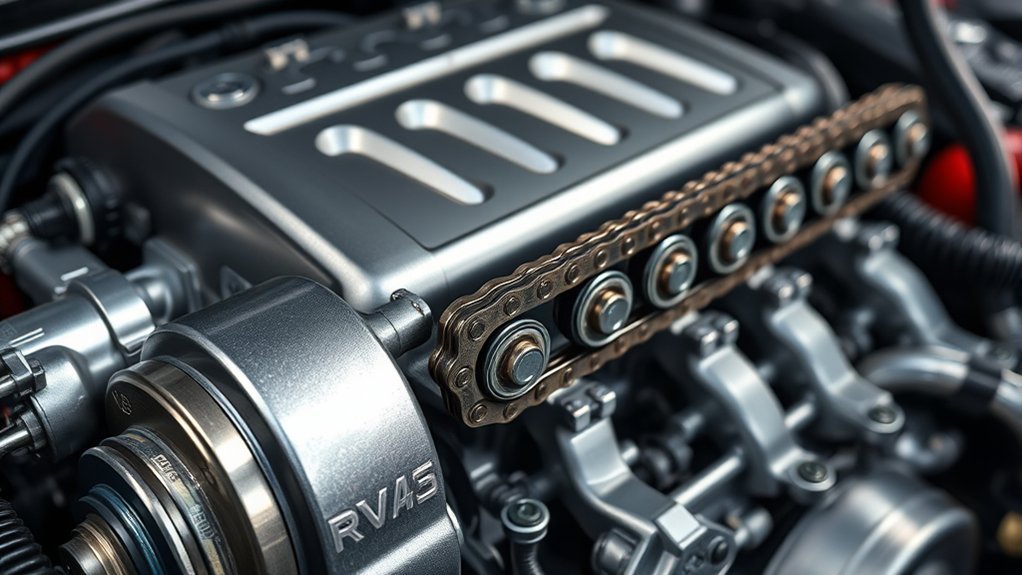
Toyota does not provide a fixed replacement mileage for the 2019 RAV4 timing chain. In a properly maintained engine, the chain is intended to remain in service for a long time and may never require replacement during ordinary ownership.
Its actual lifespan depends on factors such as:
- Using engine oil that meets Toyota’s required viscosity and quality specification
- Changing the oil and filter at the correct interval for the vehicle’s operating conditions
- Maintaining the proper oil level between services
- Correct oil pressure and tensioner operation
- Avoiding sludge, coolant contamination, and prolonged overheating
- Addressing engine warning lights and abnormal noises promptly
A chain should therefore be treated as a condition-based component rather than a scheduled replacement item. Replacing a quiet, properly operating timing chain solely because the odometer reached an arbitrary mileage is generally unnecessary unless Toyota service information for the specific engine or a qualified diagnosis says otherwise.
What Maintenance Does Toyota Require?
Toyota recommends scheduled maintenance for the 2019 RAV4 every 5,000 miles or six months, whichever comes first. A scheduled visit does not always include an oil change; it may include tire rotation, fluid checks, brake inspection, and other items.
For vehicles using the specified 0W-16 engine oil under normal operating conditions, Toyota lists engine-oil and filter replacement at 10,000 miles or 12 months. The oil and filter interval becomes 5,000 miles or six months when the vehicle is driven primarily under specified special operating conditions, including certain dusty-road, towing, repeated short-trip, extensive-idling, or low-speed uses. Review the official 2019 maintenance guide for the complete conditions and requirements.
| Maintenance item | 2019 RAV4 guidance | Why it matters |
|---|---|---|
| Scheduled maintenance visit | Every 5,000 miles or six months | Covers the inspection and service items due at that mileage. |
| Oil and filter, normal conditions | Every 10,000 miles or 12 months when the specified 0W-16 oil is used | Clean oil supports the chain, tensioner, variable valve timing system, and other internal parts. |
| Oil and filter, special operating conditions | Every 5,000 miles or six months when the listed conditions apply primarily | Demanding operation can contaminate or degrade the oil more quickly. |
| Timing-chain inspection | No separate routine mileage interval is listed | Inspection is normally prompted by symptoms, diagnostic results, or related engine work. |
| Oil-level check | Check periodically and before long trips | An engine can consume or leak oil before the next scheduled service. |
How to Recognize Possible Timing-Chain Problems
A timing-chain problem cannot be confirmed from one sound or warning light alone. Several other engine or accessory-drive faults can create similar symptoms. Arrange a professional diagnosis if you notice one or more of the following:
- Persistent metallic rattling: especially from the timing-cover area during startup or while the engine is running
- Check-engine light: including camshaft/crankshaft timing or correlation faults
- Rough idle or misfiring: particularly when accompanied by timing-related diagnostic codes
- Hard starting or stalling: if valve timing is no longer being controlled correctly
- Noticeable loss of power: caused by incorrect camshaft timing
- Metal debris in the oil or filter: which requires investigation rather than an assumption about the source
| What you notice | First diagnostic priority | Do not assume |
|---|---|---|
| Brief or persistent startup rattle | Check oil level, oil condition, viscosity, pressure concerns, and isolate the noise source. | That the timing chain itself is stretched. |
| Check-engine light with timing or cam/crank correlation faults | Scan stored and pending codes and compare camshaft/crankshaft data before disassembly. | That a chain replacement is automatically required. |
| Oil-pressure warning with severe rattling | Shut the engine off and arrange professional diagnosis. | That it is safe to keep driving to “see if it clears.” |
| Rough idle, hard starting, or power loss | Check diagnostic codes, oil condition, ignition/fueling faults, and variable-valve-timing operation. | That timing-chain wear is the only possible cause. |
A brief sound during a cold start does not automatically prove that the chain is worn. Oil level, oil viscosity, oil pressure, variable-valve-timing components, heat shields, accessory pulleys on the gasoline model, and other parts may produce similar noise.
Warning: Shut the engine off and arrange professional assistance if the oil-pressure warning remains on, the engine develops severe or continuous rattling, it stalls repeatedly, or it suddenly runs very poorly. Continuing to drive with lost valve timing or inadequate oil pressure can cause major engine damage.
How a Technician Diagnoses the Timing System
A qualified technician should diagnose the cause before recommending timing-chain replacement. Depending on the symptoms, the process may include:
- Confirming the customer’s noise or drivability complaint
- Checking engine-oil level, condition, viscosity, leakage, and service history
- Scanning for stored and pending diagnostic trouble codes
- Comparing camshaft and crankshaft sensor data
- Checking oil pressure or variable-valve-timing operation when indicated
- Listening at the timing-cover area and, on gasoline models, the accessory-drive area to isolate the source
- Inspecting internal chain, guide, tensioner, and sprocket components if testing justifies disassembly
Factory procedures and specifications are available through the official Toyota Technical Information System. Because timing work requires precise engine positioning and torque procedures, it is not a routine visual inspection or beginner repair.
Tips to Extend Your Timing Chain’s Life
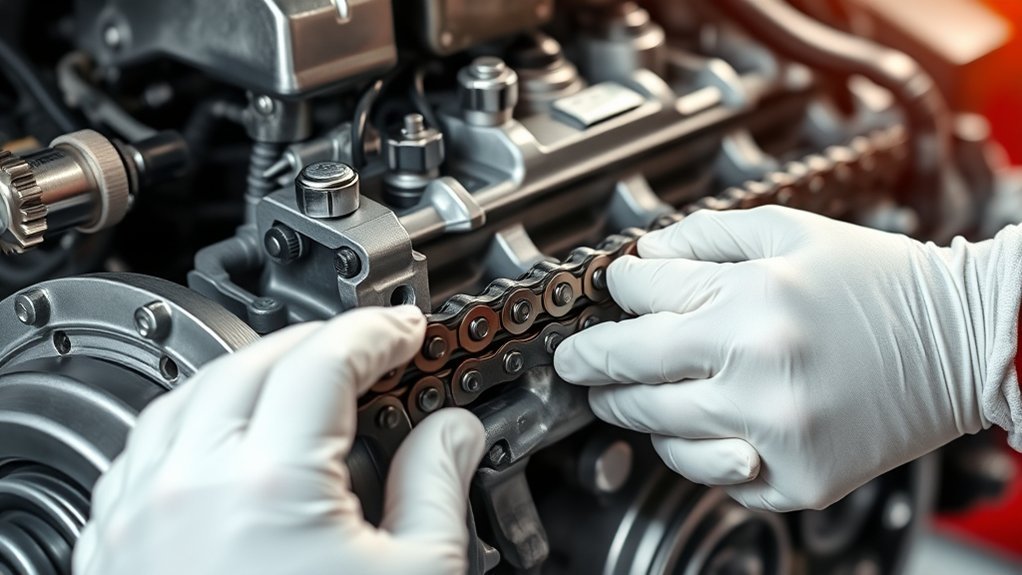
Use the Correct Engine Oil
Use the viscosity and quality specified in the owner’s documentation. The hydraulic chain tensioner and variable-valve-timing components depend on clean oil at the correct pressure. Oil that is badly degraded, contaminated, too low, or unsuitable for the engine can interfere with proper operation.
Check the Oil Level Between Services
An oil change performed on time does not guarantee that the level will remain correct until the next visit. Check the dipstick on level ground according to the owner’s manual, especially before a long trip or if you notice leakage, burning-oil odor, or an oil warning.
Match the Service Interval to Your Driving
Use the normal oil interval only when your vehicle and driving conditions qualify. Owners who primarily make repeated short trips in freezing weather, tow or carry heavy loads, drive on dusty roads, or operate for long periods at low speed may need the shorter interval described in Toyota’s maintenance guide.
Address Warning Signs Early
Investigate a persistent engine rattle, oil-pressure warning, overheating event, or check-engine light instead of waiting for the next scheduled visit. Early diagnosis may identify an oil, sensor, tensioner, or, on gasoline models, accessory-drive issue before secondary damage occurs.
Avoid Unnecessary Preventive Replacement
A timing chain should not be replaced merely because the vehicle reaches a generic mileage found online. Ask the repair facility to document the fault codes, measurements, noise source, or inspected wear that supports the recommendation.
Pro Tip: Keep dated oil-change invoices showing the oil viscosity, mileage, and service date. A complete maintenance history helps a technician diagnose lubrication-related problems and may also be important when reviewing warranty or service-contract coverage.
Why the 2019 RAV4 Matters in the Timing-System Timeline
Early U.S.-market RAV4 gasoline models used a timing belt. Toyota changed to chain-driven gasoline engines for the 2001 model year, eliminating the routine timing-belt replacement service on later U.S. models.
The 2019 redesign introduced Toyota’s newer 2.5-liter Dynamic Force engine family in the RAV4. Its timing chain continues the chain-based approach but works with modern variable valve timing and oil-control systems. This makes correct oil maintenance especially important.
The change from a belt to a chain primarily reduced scheduled timing-component maintenance. It did not make the engine automatically quieter, eliminate all possible timing wear, or guarantee a specific maximum mileage.
When Is Timing-Chain Replacement Necessary?
Replacement is appropriate when testing or inspection confirms excessive chain wear, a failed tensioner, damaged guides, worn sprockets, incorrect mechanical timing, or related internal damage. It may also be required after another failure damages the timing components.
A complete repair may involve more than the chain itself. Depending on the diagnosis, the estimate may include:
- Timing chain
- Chain guides and hydraulic tensioner
- Sprockets or variable-valve-timing components
- Timing-cover, valve-cover, and crankshaft seals
- Engine oil, filter, coolant, and sealants required during reassembly
- Repairs to valves, pistons, or the cylinder head if the chain jumped and internal contact occurred
There is no reliable universal replacement price. Labor rates, engine version, diagnostic time, parts availability, regional pricing, and the presence of secondary damage can change the total substantially. Request a written estimate that separates diagnosis, labor, parts, fluids, taxes, and any recommended related work.
Buying a Used 2019 RAV4: What to Check
A timing chain is normally a low-maintenance feature, but a used vehicle’s service history still matters. Before purchase:
- Review oil-change records and confirm that the correct oil specification was used.
- Inspect the oil level and look for visible oil or coolant leakage.
- Listen to a true cold start rather than an engine that was warmed before the inspection.
- Check for warning lights and scan for stored or pending diagnostic codes.
- Arrange an independent pre-purchase inspection if records are incomplete or symptoms are present.
- Check the VIN for unrepaired safety recalls and confirm that completed campaigns are documented.
Toyota provides model-year manuals through its 2019 RAV4 manuals and warranties page. These documents are more dependable than a generic service schedule that does not identify the engine or operating conditions.
Warranty and Recall Information
The original U.S. powertrain warranty for the 2019 RAV4 was 60 months or 60,000 miles, whichever came first. Toyota’s warranty guide lists the timing chain or belt and its cover among covered engine components. Coverage applies to qualifying defects in materials or workmanship and remains subject to the full warranty terms and exclusions.
Normal maintenance, ordinary wear, improper service, unsuitable fluids, neglect, modifications, and damage caused by an uncovered condition may not be covered. Most 2019 vehicles are now outside the original five-year time limit, but owners should verify the original in-service date, current mileage, certified-used coverage, extended warranty, or vehicle service contract before authorizing a major repair.
A complaint or repair pattern is not automatically a safety recall. Enter the vehicle’s 17-character VIN in the official NHTSA recall lookup to check for unrepaired safety recalls associated with that specific vehicle.
Related Guides
Frequently Asked Questions
Does the 2019 Toyota RAV4 have a timing belt or timing chain?
It has a timing chain. Both the U.S.-market gasoline RAV4 and RAV4 Hybrid use chain-driven camshaft timing systems.
What are the benefits of a timing chain over a timing belt?
A timing chain normally has no scheduled belt-style replacement interval and can remain in service for a long time when the engine is maintained correctly. It is not necessarily quieter than a belt and still depends on clean oil, proper pressure, guides, and a working tensioner.
How often should the 2019 RAV4 timing chain be inspected?
Toyota does not list a separate routine timing-chain inspection interval for the 2019 RAV4. Have the system evaluated when symptoms, diagnostic codes, oil-pressure concerns, or related engine repairs justify inspection.
Can timing-chain problems damage the engine?
Yes. If the chain becomes excessively loose, jumps timing, or fails, the engine may run poorly, stall, or suffer internal damage. Severe rattling, an oil-pressure warning, or sudden drivability problems should be addressed immediately.
Is the 2019 RAV4 timing chain covered under warranty?
The original Toyota powertrain warranty listed the timing chain or belt and cover among covered engine components for 60 months or 60,000 miles, subject to defects, exclusions, and other warranty terms. Check the vehicle’s in-service date, mileage, and any additional service contract because original coverage may have expired.
How much does RAV4 timing-chain replacement cost?
There is no dependable universal price. The total depends on local labor rates, diagnostic time, the parts being replaced, engine damage, fluids, seals, and whether related variable-valve-timing components require service. Obtain an itemized estimate based on a confirmed diagnosis.
Is the visible belt under the hood the timing belt?
On a gasoline 2019 RAV4, no. The visible belt is the accessory or serpentine drive belt, while the timing chain is enclosed inside the engine. The 2019 RAV4 Hybrid does not use an engine accessory drive belt.
Does the 2019 RAV4 Hybrid have a serpentine belt?
No. The 2019 RAV4 Hybrid does not use an engine accessory or serpentine drive belt. Its gasoline engine still uses an internal timing chain for camshaft timing.
Conclusion
The 2019 Toyota RAV4 uses a timing chain and does not have a scheduled timing-belt replacement service. The gasoline model’s external accessory belt is a separate component, while the 2019 RAV4 Hybrid has no engine accessory drive belt. Protect the timing system with the correct oil, proper oil level, maintenance suited to your driving conditions, and prompt diagnosis of persistent rattling, warning lights, or drivability problems. When a shop recommends timing work, ask for the test results and inspected condition supporting the repair.
Sources
- Toyota 2019 RAV4 Warranty & Maintenance Guide — scheduled maintenance, oil intervals, powertrain warranty terms, and covered engine components
- Toyota 2019 RAV4 Manuals and Warranties — official model-year owner-document portal
- Toyota Technical Information System — factory repair procedures, specifications, and technical service information
- National Highway Traffic Safety Administration Recall Lookup — VIN-specific unrepaired safety-recall information
