
The Toyota RAV4 has been a staple in the automotive industry since 1994. It essentially created the crossover SUV segment with its innovative design and everyday practicality. Over the years, the RAV4 has progressed through six distinct generations. Each version introduced major advancements in performance, safety, and hybrid technology. Its evolution perfectly reflects changing consumer needs and automotive trends. Here is a look at the key changes and innovations that transformed the RAV4 into a global best-seller.
Key Takeaways
- The Toyota RAV4 launched in 1994, sparking the creation of the modern compact SUV market.
- Over six generations, it evolved from a small, playful runabout into a highly versatile crossover.
- Hybrid technology debuted in the fourth generation and completely replaced gas-only engines by the 2026 model year.
- The RAV4 remains one of Toyota’s best-selling vehicles globally, continually dominating its segment.
- Continuous safety upgrades, now culminating in Toyota Safety Sense 4.0, provide cutting-edge driver protection.
The Birth of the RAV4: From Concept to Production
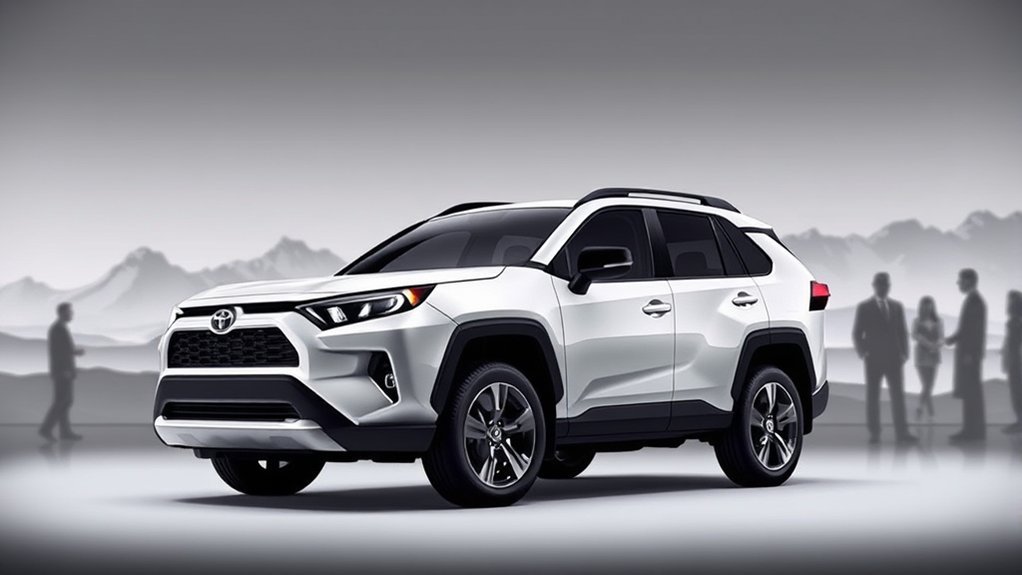
Toyota revealed the RAV4 concept at the 1989 Tokyo Motor Show. Its playful, toy-like design captured immediate attention and signaled a major shift in the automotive landscape.
This concept design laid the groundwork for a new vehicle category that blended functionality with fun. The RAV4 officially hit the Japanese and European markets in May 1994. North America followed closely in January 1996.
This transition from concept to production showcased Toyota’s ability to adapt to an evolving market. The RAV4’s introduction marked the birth of the compact SUV segment. It strongly appealed to drivers looking for versatility without the bulk of a traditional truck.
Its unique design and strategic market introduction set the stage for massive commercial success, securing its status as an industry pioneer.
The First Generation RAV4: Key Features and Market Impact
The first-generation RAV4 debuted in May 1994 and instantly changed what drivers expected from an SUV. Toyota offered both two-door and four-door models, along with fun hardtop and soft-top convertibles. This variety captivated driving enthusiasts and practical buyers alike.
| Key Feature | Description | Market Impact |
|---|---|---|
| Engine | 2.0-liter four-cylinder, 120 hp | Set a new benchmark for compact power |
| Drive Options | Front-wheel and four-wheel drive | Enhanced everyday versatility |
| Sales Growth | Rapid rise in global popularity | Strengthened Toyota’s market presence |
Evolution of the RAV4: Significant Changes in the Second Generation
With the launch of the second-generation RAV4 in 2001, Toyota took a significant leap forward. The design team focused heavily on practicality, making the vehicle noticeably larger and roomier to cater to growing families.
Key changes included:
- Discontinuing the two-door variant to focus entirely on the more popular four-door model.
- Introducing a robust 2.4-liter inline-four engine in 2004, which improved both passing power and efficiency.
- Making essential safety features, including stability control and optional side airbags, standard equipment.
The market response was overwhelmingly positive. This evolution improved the vehicle’s everyday appeal and set a new baseline for compact SUVs, prioritizing passenger space and safety.
How the Third Generation RAV4 Enhanced Performance
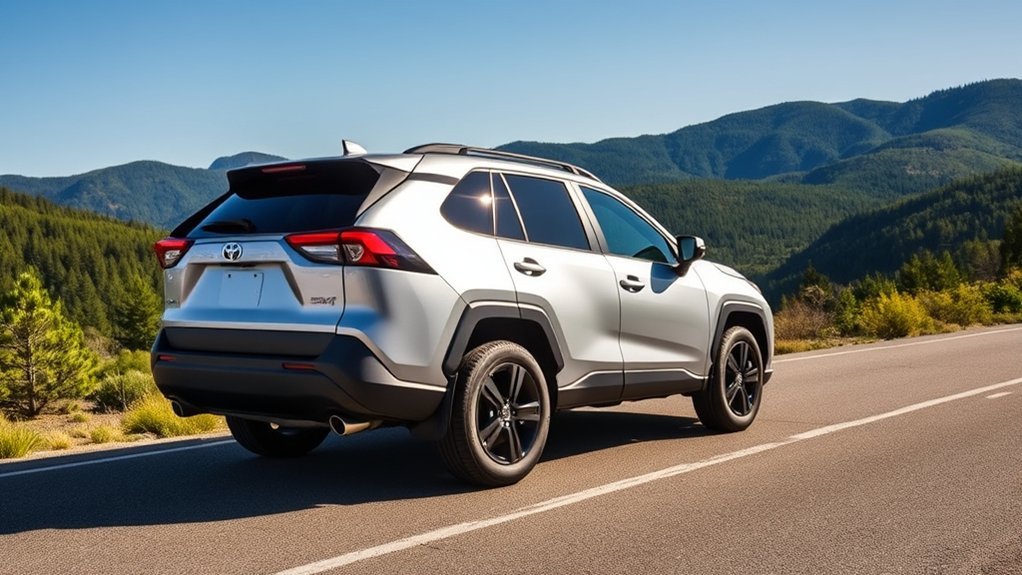
Produced from 2006 to 2012, the third-generation RAV4 brought major performance upgrades that appealed to a wider audience.
The standout addition was an available 3.5-liter V6 engine that delivered nearly 270 horsepower. This massive power boost transformed acceleration and highway driving dynamics. Toyota also updated the automatic transmissions, offering a five-speed option for the V6 and a four-speed for the inline-four.
Additionally, interior space grew by 21%. This offered mid-size comfort without sacrificing the vehicle’s easy-to-park nature.
A new double-wishbone rear suspension system greatly improved ride quality and handling. Paired with features like electronic power steering, the third-generation RAV4 dominated the mid-size crossover market.
RAV4 Hybrid Technology Innovations in the Fourth Generation
Launched for the 2013 model year, the fourth-generation RAV4 completely dropped the V6 engine. However, its biggest milestone came in 2016 with the launch of the RAV4 Hybrid. This marked a major leap into vehicle electrification.
Here are three key innovations that defined this hybrid model:
- Powertrain: A 2.5-liter four-cylinder engine paired with electric motors achieved up to 34 mpg in the city and 31 mpg on the highway.
- Hybrid Synergy Drive: This advanced system seamlessly optimized power distribution to maximize efficiency in stop-and-go traffic.
- Electronic All-Wheel Drive: An independent electric motor powered the rear wheels directly. This improved wet-weather traction without the weight of a traditional mechanical driveshaft.
These updates positioned the RAV4 Hybrid as a technological leader, driving a massive surge in sales.
Innovations in the Fifth Generation RAV4
Launched in late 2018, the fifth-generation RAV4 blended sharp styling with heavy sustainability initiatives.
Toyota offered both traditional gasoline and hybrid powertrain options. The hybrid model pushed fuel economy up to 41 mpg in the city, greatly reducing emissions.
In late 2020, Toyota introduced the RAV4 Prime (Plug-in Hybrid). It delivered an impressive 302 horsepower and an estimated 42 miles of all-electric driving range.
Technology also stepped up with the Toyota Safety Sense 2.5 suite, adding advanced driver assistance features. Meanwhile, the RAV4 TRD Off-Road trim gave buyers robust off-road capabilities right from the factory.
What’s Next for the RAV4?
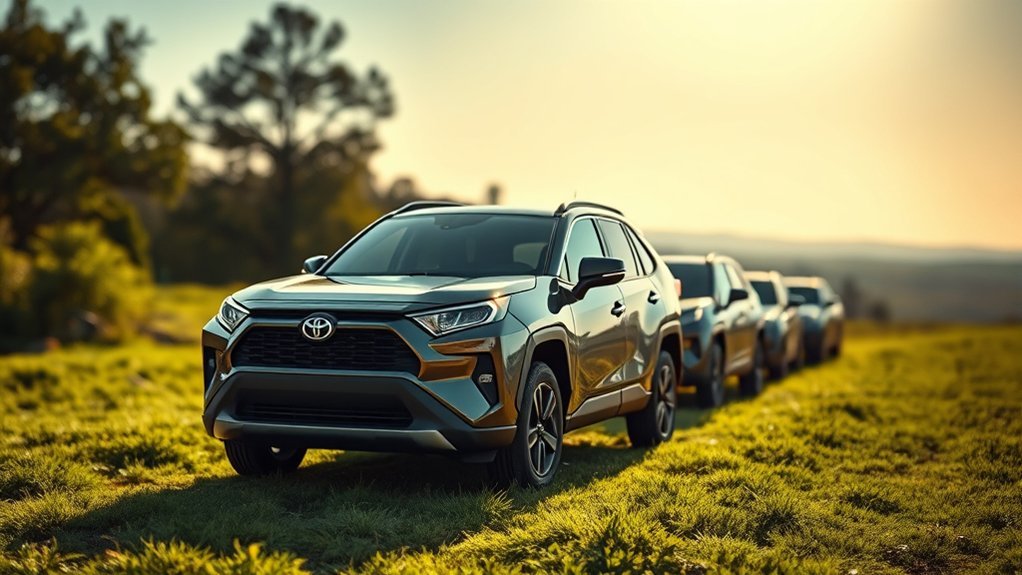
For the 2026 model year, Toyota launched the highly anticipated sixth generation of the RAV4. The biggest news is that Toyota officially dropped the gas-only engine. The new RAV4 features a 100% electrified lineup, offering only hybrid and plug-in hybrid (PHEV) options.
This bold move strengthens the RAV4’s position as a leader in the competitive SUV market. Toyota also introduced the new Arene software platform, vastly improving the digital interface and vehicle connectivity.
Advanced Hybrid Innovations
The 2026 RAV4 completely redefines its lineup around three distinct styling themes: Core, Rugged, and Sport.
Toyota engineered several key advancements that align with its sustainability commitment:
- Enhanced Electrification: The standard hybrid powertrain now produces up to 236 horsepower, while the updated PHEV system delivers 324 horsepower and nearly 50 miles of electric-only range.
- Performance Variants: The new GR Sport trim merges high-performance suspension tuning with the plug-in hybrid powertrain for an aggressive, thrilling ride.
- Consumer-Centric Tech: A massive new 12.9-inch touchscreen and standard digital gauge clusters ensure the cabin meets modern digital expectations.
Enhanced Safety Features
With the automotive landscape evolving, the sixth-generation RAV4 prioritizes passenger protection by introducing Toyota Safety Sense 4.0 (TSS 4.0). This cutting-edge suite includes enhanced collision prevention, proactive driving assists, and deeper integration with the vehicle’s software.
| Feature | Description | Benefit |
|---|---|---|
| Toyota Safety Sense 4.0 | Advanced adaptive cruise control | Reduces driver fatigue in traffic |
| Proactive Driving Assist | Gentle braking and steering support | Enhances vehicle control on curves |
| Automated Emergency Braking | Collision prevention with detection | Protects occupants and pedestrians |
| Blind Spot Monitoring | Alerts for hidden vehicles | Boosts confidence while changing lanes |
| Arene Software Platform | Over-the-air networking updates | Keeps safety systems current |
Related Guides
Frequently Asked Questions
What Are the Most Popular RAV4 Trims Available Today?
Today, the RAV4 lineup features three distinct styles: Core, Rugged, and Sport. Popular trims include the LE, the well-equipped XLE Premium, and the adventure-ready Woodland Edition. Each trim caters to a different lifestyle and budget.
How Does the RAV4 Compare to Competitors in Its Class?
The RAV4 stands out for its legendary reliability and fully electrified (hybrid/PHEV) powertrains. While some competitors might offer slightly more rear legroom, the RAV4 provides an unbeatable balance of fuel efficiency, standard safety tech, and daily comfort.
What Are Common Reliability Issues With Older RAV4 Models?
Older RAV4 models are known for their durability, but they aren’t flawless. Common complaints include transmission hesitations in certain model years and minor engine oil leaks. Regular maintenance greatly extends the lifespan of these older vehicles.
How Fuel-Efficient Is the Latest RAV4 Compared to Earlier Models?
The newest RAV4 models are incredibly fuel-efficient. Because the 2026 lineup is exclusively hybrid and plug-in hybrid, standard models achieve up to 44 mpg combined. This is a massive leap forward compared to the gas-only SUVs of the past.
What Safety Ratings Has the RAV4 Received Over the Years?
The RAV4 consistently earns top safety ratings from organizations like the IIHS and NHTSA. Toyota continually updates the vehicle with advanced safety equipment, ensuring excellent crash test results and strong preventative technology.
Conclusion
After more than three decades, the RAV4 hasn’t settled into a dull routine. It continuously evolves with each generation to meet changing driver needs. From its humble two-door beginnings to a fully electrified 2026 lineup, the RAV4 proves that adapting to the market is the key to longevity. The only constant in the RAV4’s journey is change, ensuring it remains a top choice in the crossover market for years to come.
