
As your child grows, shifting from a stroller can feel exciting, helpful, and a little tricky. Most children are ready to use a stroller much less by around age three, but the right timing depends on your child’s walking stamina, safety awareness, health, and the type of outing. The goal is not to quit the stroller overnight. It is to help your child build confidence on their own two feet while keeping a stroller available when it truly helps.
Quick Answer
A child may be too old for regular stroller use when they can walk steadily, follow simple safety directions, and handle short outings without becoming overwhelmed. For many children, that happens around age three, but strollers can still be useful for long walks, crowded places, travel, naps, medical needs, or developmental delays.
Key Takeaways
- Most children can start using a stroller less often around age three, but readiness varies.
- A child is usually ready when they walk confidently, listen to basic safety directions, and prefer exploring on foot.
- Long-term stroller use can reduce chances for walking, balance practice, independence, and social engagement.
- Strollers are still reasonable for travel, crowded events, long distances, naps, disabilities, medical needs, or sensory overload.
- A gradual transition works best: start with short walks, praise effort, and keep the stroller as backup when needed.
At a Glance
| Typical Transition Age | Around age 3 for many children, with flexibility for individual needs |
| Best Readiness Signs | Confident walking, simple safety listening, interest in exploring, and enough stamina for short outings |
| Transition Difficulty | Easy to moderate, depending on your child’s habits, energy level, and routine |
| Helpful Alternatives | Short walks, scooters, ride-on boards, walking games, hand-holding, child-safe backpacks, or a stroller used only as backup |
Purpose of a Stroller

Strollers play an essential role in modern parenting. They give you a practical way to transport children during errands, walks, trips, and busy family outings. With helpful stroller features, such as storage baskets, cup holders, reclining seats, canopies, and safety harnesses, you can carry baby necessities like diapers, wipes, snacks, jackets, and water without overloading your hands.
When you move through crowded areas or longer routes, a stroller gives your child a comfortable place to sit while you keep a steady pace. That can make outings easier when your toddler is tired, overstimulated, or not ready to walk the whole way. A stroller also helps you manage daily tasks when you need both hands free.
Stroller safety is a major reason parents continue using one. A stroller creates a secure spot for your child in parking lots, malls, airports, festivals, sidewalks, and other busy spaces. It can reduce the chance of your child running ahead or getting separated from you in a crowd.
Strollers also serve as resting places for tired toddlers, giving them a cozy space to recharge during longer outings. For some families, they make vacations, doctor visits, school pickups, and public transportation much less stressful. Strollers are more than a mode of transport. Used wisely, they can support comfort, safety, and smoother family routines.
Note: “Too old for a stroller” does not mean your child can never use one again. It usually means the stroller should become a backup tool instead of the default way your child moves through every outing.
Expert Opinions: The Ideal Age to Leave the Stroller
When should you consider shifting your child out of the stroller? Many child-development and pediatric safety discussions point to around age 3 as a common time when regular stroller use can decrease. At this stage, many children can walk independently, communicate basic needs, and follow simple instructions such as “stop,” “wait,” or “hold my hand.”
That does not mean every child must stop using a stroller on their third birthday. Every child is unique. Some toddlers show strong walking confidence before age three, while others need more time because of temperament, stamina, medical needs, sensory sensitivities, or developmental delays.
The bigger question is how often your child needs the stroller and why. If your child can walk, listen, and safely manage short outings, you can begin encouraging more walking. If the stroller is used mainly from habit, it may be time to create new routines. If it is used for safety, disability, travel, long distances, or rest, it may still be appropriate.
Prolonged stroller use as the default choice can limit physical activity, outdoor exploration, balance practice, and social interaction. Walking gives your child chances to build strength, coordination, confidence, and awareness of their surroundings. So instead of focusing only on age, look at your child’s readiness, the environment, and the purpose of the outing.
It’s also helpful to introduce stroller alternatives such as short walking routes, hand-holding games, a ride-on board for a younger sibling’s stroller, a scooter for safe areas, or a child-safe backpack with a chest strap. These options can support the transition without making your child feel forced or rushed.
Common Signs: Your Child Is Ready to Graduate From the Stroller

As your child grows, you’ll notice signs that they may be ready to leave the stroller behind more often. If they walk confidently, ask to get out, and show a clear interest in exploring their surroundings, they may be ready for more independence. Pay close attention to their ability to follow simple instructions, because that skill matters for safe walking near streets, crowds, parking lots, and playgrounds.
Readiness is usually a mix of physical ability, listening skills, patience, and emotional maturity. A child may be physically able to walk but still need support in busy places. Another child may be eager to walk but tire quickly after a few blocks. The best approach is to watch patterns across several outings instead of judging from one good or bad day.
Independent Walking Ability
Recognizing the signs that your child is ready to shift from a stroller can be an exciting milestone in their development. Around age 3, many children demonstrate walking confidence and growing independence. You might notice they prefer walking over sitting and often refuse the stroller during outings.
This interest in movement is a clear sign that they are physically building the skills needed for the change. Look for steady walking, fewer falls, better balance, and the ability to walk short distances without needing to be carried. Your child does not need to handle a full day on foot. They only need to start handling small parts of an outing safely.
Also watch whether your child can follow simple commands like “stop,” “wait,” “come back,” and “hold my hand.” These skills show that your child has the early safety understanding needed for independent walking. Remember, every child develops at a different pace, and readiness can vary based on their physical activity level, sleep, mood, and environment.
Preference for Exploration
While every child develops at their own pace, a noticeable preference for exploration often signals that it is time to shift away from full-time stroller use. Once your child shows excitement for walking, it is a clear sign they may be ready for curiosity-driven adventures.
Refusing the stroller, asking to walk, pointing out things they want to see, or trying to climb out safely when stopped can all show a desire for autonomy. These moments are opportunities to teach safe independence rather than automatically placing them back in the stroller.
Outdoor exploration helps your child notice sounds, textures, people, animals, signs, and movement around them. That kind of active engagement builds confidence, language, coordination, and problem-solving. A stroller can still be nearby, but your child should get chances to participate in the outing instead of only watching from a seat.
| Signs of Readiness | Examples | Benefits |
|---|---|---|
| Prefers walking | Asks to walk instead | Encourages confidence |
| Follows simple instructions | Stops when asked | Enhances listening skills |
| Engages with environment | Explores parks/playgrounds | Fosters curiosity and learning |
Good and Bad Sides of Using a Stroller for a Long Time
Using a stroller for an extended period can offer both advantages and drawbacks. The right answer depends on your child, your routine, and where you are going.
On the positive side, strollers provide a safe haven for children in busy environments. They help you move through airports, public transport, shopping centers, theme parks, festivals, and crowded sidewalks with less stress. They also work as convenient storage for essentials, which can lighten your load during outings.
Strollers can also be helpful when a child needs a nap, feels overwhelmed, or has a hard time staying close in crowded spaces. For long-distance walking, a stroller can prevent fatigue and meltdowns. For some children with medical, physical, or sensory needs, continued stroller use can support comfort and inclusion.
The drawbacks matter too. Excessive reliance on strollers can limit your child’s physical activity, which may reduce opportunities to build strength, balance, coordination, and stamina. If a child always rides instead of walking, they may miss chances to practice real-world movement skills.
Long-term stroller use can also restrict opportunities for exploration and learning. Walking lets children stop, look, ask questions, touch safe objects, and engage with their environment. These experiences can support language, curiosity, social skills, and confidence.
Another possible downside is dependence. If your child expects the stroller for every outing, they may resist walking even when they are capable. That can delay the habit of walking independently. The best solution is balance: use the stroller when it solves a real problem, but encourage walking when your child is safe, rested, and able.
Warning: Always follow your stroller’s weight and height limits. An older or heavier child who exceeds the limit can make the stroller unstable, harder to brake, and less safe.
Transition Techniques: How to Ease Your Child Out of the Stroller
As your child grows, finding ways to gradually move away from stroller use can create a positive shift in their development. Start with short walks, allowing your child to walk for part of the outing before using the stroller. This approach helps them build confidence and independence without making the change feel sudden.
Begin with easy places, such as a quiet sidewalk, park path, driveway, backyard, or short trip to the mailbox. Give your child a clear goal: “Let’s walk to the big tree,” or “You can walk until we reach the corner.” Small goals feel manageable and help your child experience success.
Use positive reinforcement. Praise your child for walking, stopping when asked, holding hands, and staying close. You can offer small rewards, but simple praise often works well: “You walked all the way to the playground. That was strong and safe walking.”
Model walking behavior by joining family walks. Show that walking can be fun, calm, and adventurous. Children often copy what they see, especially when the activity feels like family time instead of a rule.
Incorporate stroller alternatives and fun activities such as scavenger hunts, nature walks, counting red cars, spotting birds, or looking for leaves. These games keep your child engaged and make walking feel less like work.
It can also help to set a stroller rule before leaving home. For example, “You will walk to the store entrance, then you can rest in the stroller if you feel tired.” Clear expectations reduce arguments and help your child understand that walking is now part of the routine.
Avoid turning the transition into a power struggle. If your child is sick, exhausted, hungry, or overwhelmed, it is okay to use the stroller. The goal is steady progress, not perfection. Over time, your child will likely need the stroller less often as their strength and confidence grow.
Pro Tip: Use the stroller as a planned backup, not a bribe. Tell your child when they can walk and when they can rest, so the routine feels predictable.
Are There Any Specific Strollers Designed for Older Toddlers?
Are you wondering if there are strollers specifically designed for older toddlers? Yes, there are. High-capacity options, often labeled as toddler strollers or strollers for bigger kids, may support children up to higher weight limits than standard lightweight strollers. Some models are built for children weighing up to 75 pounds, but limits vary by brand and model.
Before buying or continuing to use a stroller for an older child, check the manufacturer’s weight limit, height guidance, harness fit, seat width, recline support, wheel strength, brake system, and stability. The stroller should fit your child comfortably without their head, shoulders, knees, or feet being cramped in an unsafe way.
If you’re an active family, consider jogging strollers, which often offer stronger frames, larger wheels, and smoother handling on outdoor routes. These can be helpful for long walks, uneven paths, and family fitness routines. However, not every jogging stroller suits every child, so the size and safety limits still matter.
Convertible strollers are another good choice. Some adapt from infant use to toddler seating, giving you extended use as your child grows. Some brands also offer specialized strollers that convert into wagons, giving you a flexible option for transporting older children and their belongings during parks, beaches, sports events, and travel.
Wagons, ride-on boards, and stroller boards can also work well for older toddlers who want some independence but still need rest during long outings. Choose the option based on your child’s size, your walking environment, and how often you truly need extra support.
Investing in the right stroller type can help you support your child’s mobility while still meeting their needs. The best option is one that keeps your child safe, fits your daily routine, and encourages more walking when they are ready.
What Are the Exceptions to the Stroller Age Limit?
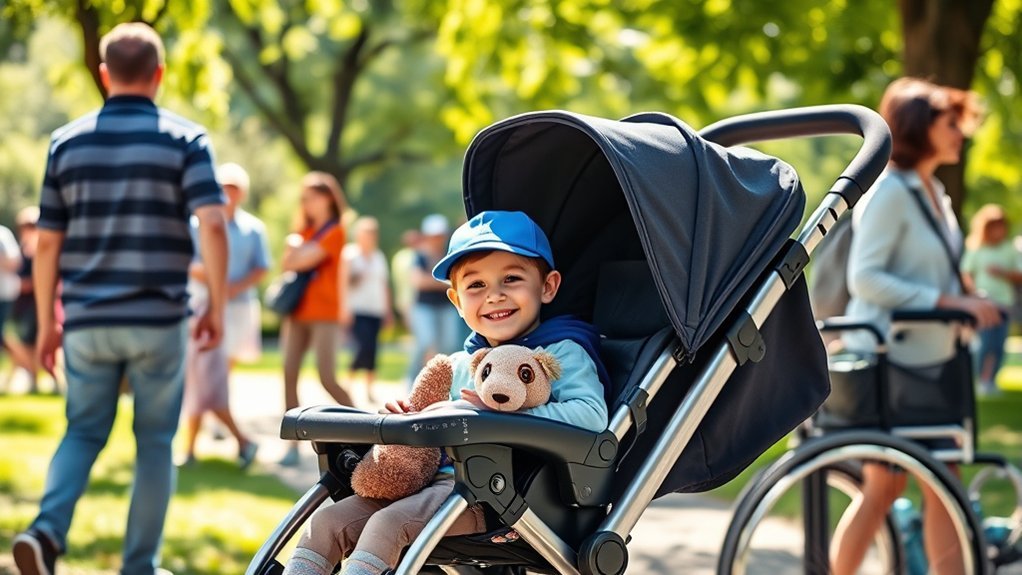
While many families begin moving away from regular stroller use by age 3, there are valid exceptions. The stroller age limit should never be treated as a strict rule for every child in every situation.
If you are managing crowded places, long distances, travel days, or events with lots of walking, a stroller can provide necessary support and comfort for older children. A stroller can also help when your child needs a safe place to rest, nap, eat a snack, or calm down.
Children with medical conditions, physical disabilities, low muscle tone, developmental delays, sensory overload, chronic fatigue, or recovery needs may benefit from continued stroller use. In these cases, a stroller can support participation in family life rather than limit independence.
The main point is to match stroller use to the child’s real needs. If the stroller helps your child stay safe, included, and comfortable, it may still be the right tool. If it is used mainly because walking takes more patience, then gradual change may be healthier.
Special Circumstances for Usage
Though many parents consider age three as a typical point to reduce stroller use, special circumstances may make extended use beneficial. If your child has medical conditions or disability considerations, a stroller can help support mobility, safety, and energy management.
In crowded areas or during long outings, even older children may need a place to rest, especially if they tire easily. Theme parks, airports, museums, shopping centers, festivals, and vacation days can involve far more walking than a normal day at home. In those cases, a stroller can prevent exhaustion and help everyone enjoy the outing.
Strollers may also help children who become overwhelmed by noise, crowds, lights, or unexpected changes. Having a familiar seat can give them a calm place to reset. For families with multiple children, a stroller can also help keep everyone together safely.
Flexibility in stroller use is important because every family’s needs and outing dynamics differ. Prioritizing your child’s comfort, safety, and well-being should guide your decision.
Individual Child Needs
Many parents find that individual child needs strongly influence the decision to continue stroller use past age three. Differences in stamina and energy levels matter. Some children tire easily during long outings, making a stroller a practical backup.
Certain physical conditions, developmental differences, or sensory needs may also make continued stroller use appropriate. A child who can walk at home may still struggle in a loud airport, busy city street, or full-day outdoor event. That does not mean the child is not progressing. It means the environment is more demanding.
Flexibility is key. You may use a stroller less for short local trips but still bring it for vacations or crowded events. You may let your child walk first, then rest later. You may also use a higher-capacity stroller or wagon if your child has outgrown a standard model.
Evaluate the context of each outing. A quick walk to the mailbox is different from a full day at a theme park. A calm park path is different from a packed train station. Understanding your child’s unique needs helps you make a choice that supports independence without ignoring comfort or safety.
How to Decide If Your Child Still Needs a Stroller
Before you decide that your child is too old for a stroller, look at how the stroller is being used. The answer is usually not “always use it” or “never use it.” A more helpful question is: does the stroller solve a real safety, stamina, health, or travel need for this outing?
Ask yourself whether your child can walk the expected distance, follow safety directions, stay near you, and handle the environment. Also consider whether the outing includes traffic, crowds, stairs, heat, long lines, or nap time. These details can change the best choice.
If your child can manage the outing with hand-holding and short breaks, encourage walking. If your child is likely to become exhausted, unsafe, or overwhelmed, bring the stroller as backup. Over time, increase walking time and reduce stroller time as your child becomes more capable.
A helpful middle ground is the “walk first, ride later” approach. Your child starts the outing on foot and uses the stroller only after meeting a clear walking goal. This encourages independence while still respecting their limits.
Related Guides
Frequently Asked Questions
Can using a stroller longer affect my child’s development?
Using a stroller too often can limit your child’s chances to practice walking, balance, coordination, and social interaction. Occasional stroller use is not usually a problem, especially for long outings or special needs. The concern is using it as the default when your child is ready and able to walk safely.
What are some alternative transportation options for older children?
Good alternatives include walking scooters, balance bikes for safe areas, ride-on stroller boards, child-safe backpacks, wagons, and short walking breaks. Bike trailers can also work for family rides when they are used according to the manufacturer’s age, weight, helmet, and safety rules.
How can I encourage my child to walk more?
Start with short, easy walks and praise your child for safe walking. Turn walks into games by counting steps, spotting colors, looking for animals, or racing to a nearby tree. Set clear goals and use the stroller as backup instead of making it the first option.
Are there strollers suitable for taller or heavier children?
Yes, some strollers are designed for taller or heavier children. Always check the stroller’s weight limit, height guidance, harness fit, seat size, brakes, and stability before use. A stroller that is too small or overloaded can become uncomfortable and unsafe.
What are the safety concerns for older children in strollers?
The main safety concerns are exceeding the weight limit, poor harness fit, tipping, feet dragging near the wheels, weak brakes, and a child climbing in or out without help. Check the stroller before each outing and stop using it if your child no longer fits safely.
Is age 3 a strict stroller cutoff?
No. Age 3 is a common time to reduce regular stroller use, but it is not a strict cutoff. Some children are ready earlier, and some need stroller support longer because of stamina, safety, medical needs, developmental differences, travel, or crowded environments.
Should I bring a stroller to a theme park or airport for an older toddler?
Often, yes. Theme parks and airports can involve long distances, crowds, waiting, missed naps, and sensory overload. Even if your child usually walks well, a stroller can be useful as a rest spot and safety tool during demanding trips.
Conclusion
Knowing when your child is too old for a stroller is less about one exact birthday and more about readiness. By around age three, many children can begin trading regular stroller rides for more walking, much like a caterpillar slowly becoming ready to spread its wings.
Pay attention to your child’s cues. If they walk confidently, listen to simple safety directions, and enjoy exploring, start giving them more chances to move on their own. If they still need support during long trips, crowded places, naps, medical situations, or overwhelming environments, using a stroller can still make sense.
The healthiest path is balance. Keep your child safe, but give them room to build strength, confidence, independence, and curiosity. A stroller can remain a helpful tool, but your child’s own two feet should gradually become the main way they discover the world.
