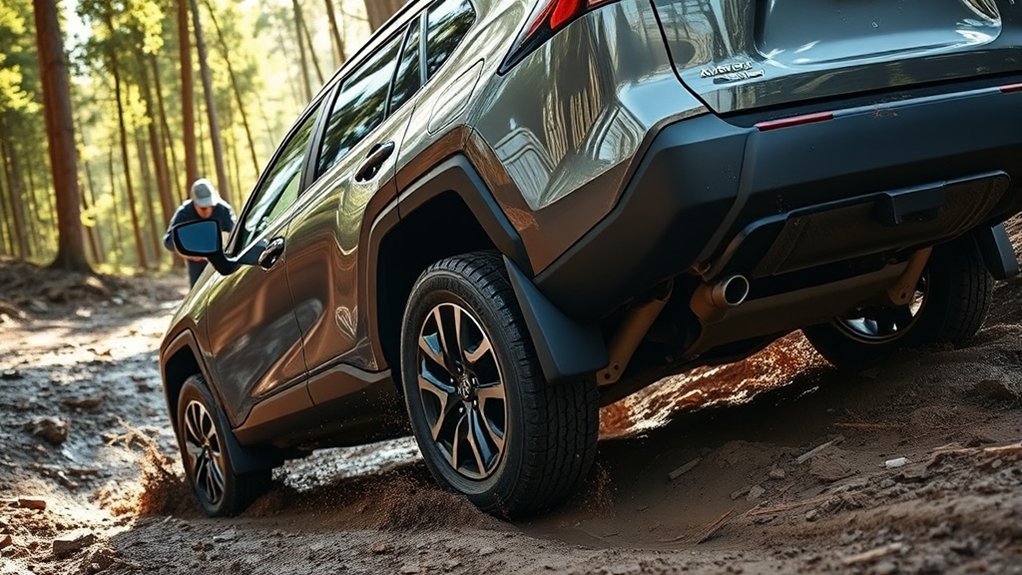
Toyota RAV4 AWD is generally a dependable choice, but reliability depends on the model year and AWD design. The biggest distinction is between older gas models with mechanical AWD hardware and hybrid or plug-in-hybrid models that use a rear electric motor. Tire mismatch, neglected driveline service, corrosion, warning lights, and underbody damage can all create problems that owners may mistake for a complete AWD failure.
Last updated: September 11, 2026 — updated for the sixth-generation 2026 RAV4 and Toyota AWD service-program information.
Research basis: Toyota owner documentation, Toyota technical/service-program information published through NHTSA, and NHTSA tire and recall guidance. This article does not claim first-hand long-term fleet testing.
Quick Answer
Yes. Toyota RAV4 AWD can be reliable when the vehicle has matched tires, correct maintenance, and no unresolved warning lights or leaks. However, the hardware varies by generation. Many 2019–2025 gas AWD models use a mechanical rear driveline, while 2019–2025 hybrids and the redesigned 2026 HEV/PHEV models use an electric rear motor for Electronic On-Demand AWD. Used buyers should also check model-specific Toyota service information before purchase.
Key Takeaways
- Confirm the model year, powertrain, trim, and AWD type before applying maintenance or repair advice.
- The 2026 U.S. RAV4 is fully electrified: HEV models offer FWD or Electronic On-Demand AWD depending on grade, while PHEV models use AWD as standard equipment.
- Matched tire size, inflation, tread depth, and wear are essential for predictable AWD operation.
- AWD improves propulsion on slippery surfaces, but tire grip still controls braking and much of the steering performance.
- Certain earlier RAV4 AWD variants have model-specific Toyota bulletins or support programs, so a VIN-specific check matters.
- Used buyers should review maintenance records, tire condition, Toyota campaigns, NHTSA recalls, and the underbody before purchase.
Understanding the Different Toyota RAV4 AWD Systems
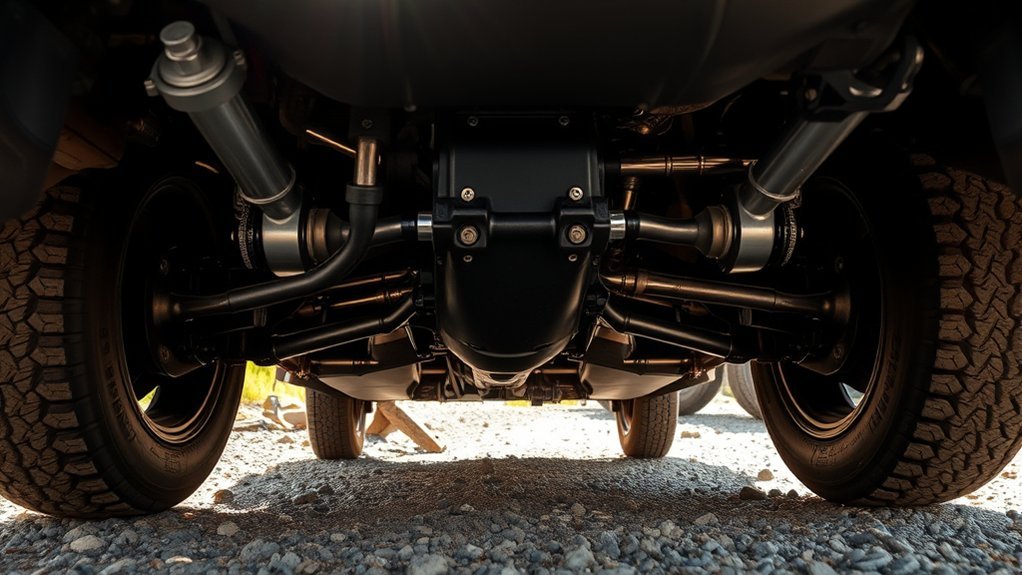
“RAV4 AWD” does not describe one identical system across every model year. The current 2026 U.S. RAV4 is especially important to separate from the outgoing generation because Toyota moved the lineup to hybrid and plug-in-hybrid powertrains rather than continuing a gas-only model.
For 2026, Toyota offers RAV4 HEV models with front-wheel drive or Electronic On-Demand AWD depending on grade, while RAV4 PHEV models have AWD as standard equipment. Toyota says AWD HEV models use a dedicated rear electric motor, so there is no conventional propeller shaft connecting the front powertrain to the rear axle.
| RAV4 group | AWD design | Reliability / service focus |
|---|---|---|
| 2019–2025 gas AWD | Mechanical AWD. Depending on trim, Toyota used standard Dynamic Torque Control AWD or Dynamic Torque Vectoring AWD with rear-driveline disconnect. | Inspect the transfer assembly, rear differential, seals, propeller shaft where fitted, tire match, and model-specific Toyota bulletins. |
| 2019–2025 RAV4 Hybrid AWD | Electronic On-Demand AWD uses a dedicated rear electric motor rather than a conventional mechanical connection from the front powertrain. | Do not apply gas-model transfer-case advice. Check Toyota campaign/support-program eligibility for the rear traction-motor cable on affected VINs. |
| 2021–2024 RAV4 Prime / 2025 RAV4 Plug-in Hybrid | Plug-in-hybrid AWD uses electric rear drive rather than the gas model’s conventional rear driveline layout. | Follow PHEV-specific inspection and high-voltage safety procedures; check applicable Toyota campaign/support-program status by VIN. |
| 2026 RAV4 HEV / PHEV AWD | Electronic On-Demand AWD with a dedicated rear electric motor. PHEV models have AWD standard; HEV availability depends on grade. | Use sixth-generation owner and service information. Do not carry over mechanical AWD service assumptions from a 2019–2025 gas model. |
Toyota’s 2026 RAV4 technical overview describes the current Electronic On-Demand AWD system. For the outgoing generation, Toyota’s 2025 RAV4 technical overview documents the mechanical and torque-vectoring systems used on gas grades and the electric rear drive used by hybrids.
Is Toyota RAV4 AWD Reliable?
Yes, a properly maintained RAV4 AWD system can be dependable for daily use, but “reliable” should not be treated as a promise that every model year or component is problem-free. The correct answer depends on the exact AWD design, vehicle age, mileage, climate, accident history, tire condition, maintenance record, and whether Toyota has issued model-specific service information for that VIN.
A healthy system should operate without persistent AWD warnings, fluid leaks, grinding or whining noises, driveline vibration, harsh engagement, or binding during slow turns. All four tires should be the approved size and should have compatible wear.
For a used RAV4, the strongest reliability evidence is a clean inspection, matched tires, complete maintenance records, normal road-test behavior, and a VIN check for recalls and Toyota service campaigns.
Two known examples show why model-year specificity matters. Toyota issued service information for abnormal AWD disconnect-system noise on certain 2019–2020 Adventure and Limited models with Dynamic Torque Vectoring AWD. Toyota also established a support/service program covering rear traction-motor cable corrosion on certain 2019–2024 RAV4 Hybrid AWD and 2021–2024 RAV4 Prime vehicles. Neither issue applies to every RAV4 AWD.
AWD reliability must also be separated from general vehicle reliability. A brake concern, engine fault, weak 12-volt battery, wheel-speed sensor problem, or tire-pressure issue can change vehicle behavior or trigger related messages without proving that the rear drive unit itself has failed.
What Problems Affect Toyota RAV4 AWD Systems?
The symptoms below do not prove that an AWD assembly has failed. They are reasons to inspect the vehicle, read stored diagnostic codes, confirm tire condition, and identify the exact system before replacing parts.
- AWD or master warning message: The system may reduce or disable rear-wheel assistance after detecting a fault. Read current, pending, and history codes before replacing parts.
- Check-engine light with an AWD message: Some engine or control-system faults can limit AWD operation even when the rear driveline is not the original cause.
- Whining, humming, grinding, buzzing, or clunking: Possible causes include tires, wheel bearings, CV joints, the transfer assembly, rear differential, couplings, or other driveline components on vehicles that use them.
- Fluid beneath a mechanical AWD vehicle: Inspect the transfer assembly, differential, seals, and nearby components to identify the actual source.
- Binding or hopping during slow turns: Incorrect tire sizes, major tread-depth differences, inflation problems, or a driveline fault may be involved.
- Vibration under acceleration: Inspect tires, wheels, axles, CV joints, mounts, and the propeller shaft where fitted.
- Reduced traction despite no warning: Worn or unsuitable tires may be the problem even when the AWD hardware is operating normally.
Known Model-Specific Toyota AWD Service Information
- 2019–2020 RAV4 Adventure and Limited with Dynamic Torque Vectoring AWD: Toyota T-SB-0022-22 addresses abnormal noise from the AWD disconnect system that can come from the transfer assembly or rear differential carrier during connect/disconnect operation. Applicability is limited to the specified models and production ranges.
- Certain 2019–2024 RAV4 Hybrid AWD and 2021–2024 RAV4 Prime vehicles: Toyota Customer Support Program 22TE09 and Limited Service Campaign 25TD01 address excessive corrosion at the rear traction-motor cable connection on affected vehicles. Eligibility and coverage depend on the VIN and campaign requirements, so check Toyota’s VIN lookup rather than assuming every vehicle is included.
A different brake feel in a hybrid does not automatically indicate an AWD problem. Hybrid braking blends regenerative and friction braking. Any sudden, severe, or inconsistent braking behavior still requires professional diagnosis.
Warning: Do not touch, disconnect, probe, or attempt to repair orange high-voltage cables or hybrid drive components. High-voltage diagnosis and repair should be performed by a properly trained technician.
Essential Maintenance for RAV4 AWD Longevity
The correct maintenance schedule comes from the Warranty and Maintenance Guide for your exact model year and powertrain. A fixed fluid interval copied from another RAV4 may be wrong for your vehicle.
Keep All Four Tires Compatible
Use the tire size listed in the owner’s manual or on the driver-door tire placard. Keep the tires properly inflated and avoid mixing substantially different sizes, constructions, or wear levels.
NHTSA recommends checking cold tire pressure at least monthly and following the vehicle manufacturer’s rotation instructions. Rotation, balancing, and alignment can reduce irregular wear and help the tires maintain predictable contact with the road.
When one tire is damaged, ask a qualified tire professional whether the remaining tread-depth difference is acceptable for your exact RAV4. Depending on wear, replacing a pair or all four tires may be more appropriate than installing one full-depth tire beside heavily worn tires.
Follow the Correct Driveline Service Schedule
Mechanical AWD gas models from earlier generations may have a transfer assembly, rear differential, propeller shaft, couplings, seals, and related fluids that require inspection or service. Use Toyota’s schedule for the exact model year, especially when towing, driving off pavement, or operating in severe conditions.
RAV4 Hybrid, RAV4 Prime, and 2026 HEV/PHEV Electronic On-Demand AWD use an electric rear drive unit instead of the same conventional mechanical layout. Do not apply a gas-model transfer-case or propeller-shaft maintenance schedule to a vehicle that does not use those components.
Address Leaks and Warning Lights Promptly
A minor leak can become an expensive bearing or gear problem if the fluid level falls. Likewise, clearing a warning light without diagnosing its cause can allow an electrical, sensor, engine, tire, or driveline issue to continue.
Maintain the Supporting Systems
AWD performance depends on more than the rear drive unit. Keep the following items in good condition:
- Tires and tire pressures
- Wheel alignment and balance
- Wheel bearings and CV joints
- Brakes and wheel-speed sensors
- Engine and hybrid control systems
- 12-volt battery and charging condition
- Suspension and steering components
Pro Tip: Save tire invoices and record tread depth when replacing fewer than four tires. This gives a technician useful evidence if vibration, binding, or traction complaints develop later.
How RAV4 AWD Improves Traction and Stability

AWD helps the vehicle use available tire grip by sending driving force to the rear wheels when front-wheel traction alone is insufficient. Depending on the generation, that rear assistance comes through a mechanical driveline or an electric rear motor. Toyota says the 2026 Electronic On-Demand AWD system can add rear drive preemptively during starts and can respond to front-wheel slip, steering, speed, and accelerator input.
Traction During Acceleration
On rain, loose gravel, packed snow, or a slippery incline, distributing driving force across more tires can reduce excessive front-wheel spin. This is most useful when starting from a stop, climbing, or accelerating through a low-traction area.
AWD cannot create traction that the tires do not have. Worn all-season tires can still slide on ice, while suitable winter tires can make a major difference in cold and snowy conditions.
Stability in Turns
AWD can help a RAV4 remain composed as power is applied through a bend. On models equipped with Dynamic Torque Vectoring AWD, the system can distribute rear torque from side to side when needed.
That feature is trim-specific and should not be attributed to every RAV4. Vehicle stability control, tires, suspension condition, speed, and steering input remain important.
What AWD Cannot Do
AWD primarily helps the vehicle accelerate and maintain propulsion. It does not repeal the limits of tire grip, shorten every stopping distance, increase ground clearance, or make excessive speed safe.
- All four vehicle wheels already contribute to braking, including on a front-wheel-drive vehicle.
- AWD does not prevent hydroplaning.
- AWD cannot overcome glare ice without suitable tires and cautious speed.
- Electronic traction aids cannot protect the underside from rocks, ruts, or deep mud.
Note: Seeing an AWD indicator operate briefly does not necessarily mean something is wrong. System displays and power distribution can change as road conditions, speed, steering, and acceleration change.
RAV4 AWD in Snow and Off-Road Conditions
Snow and Ice Performance
A RAV4 with AWD can move away from a stop more confidently than an otherwise similar front-wheel-drive vehicle when the rear tires have useful grip. However, snow performance depends heavily on tire type and condition.
The National Highway Traffic Safety Administration states that winter tires are more effective than all-season tires in deep snow. In severe winter climates, four suitable winter tires generally provide a more meaningful safety improvement than relying on AWD alone.
Use gentle acceleration, smooth steering, and extra following distance. Brake early and avoid abrupt inputs. Even a well-equipped AWD crossover can lose traction when speed exceeds the available grip.
Off-Road Capability and Limits
The RAV4 is a crossover rather than a traditional low-range four-wheel-drive vehicle. It can handle maintained dirt roads, gravel, light snow, and some mild trails, but its capability depends on tires, ground clearance, approach angles, suspension, surface conditions, and driver judgment.
| Surface | How AWD may help | Main limitation |
|---|---|---|
| Gravel road | Reduces front-wheel spin during starts and climbs. | Loose stones still increase braking distance and can damage tires or the underside. |
| Packed snow | Helps distribute propulsion across both axles. | Tire compound and tread remain critical for steering and braking. |
| Light mud | Can send power rearward when front traction decreases. | Street tires can pack with mud, and the vehicle can become high-centered. |
| Rocky or deeply rutted trail | May help maintain movement over minor uneven sections. | Limited clearance, wheel travel, and underbody protection can stop progress or cause damage. |
| Deep sand or mud | Can reduce immediate front-wheel spin. | Heat, sinking, insufficient clearance, and unsuitable tires can quickly immobilize the vehicle. |
On equipped hybrid models, Trail Mode coordinates AWD, braking, and drive-force control to direct power where additional traction is useful. Availability and operation vary, so follow the owner’s manual for your model year.
Toyota RAV4 AWD and Fuel Efficiency
Mechanical AWD on earlier gas RAV4s can add weight, rotating components, and drivetrain losses compared with front-wheel drive. Some Dynamic Torque Vectoring systems can disconnect portions of the rear driveline when rear assistance is unnecessary.
Electronic On-Demand AWD works differently. The rear wheels are driven by a dedicated electric motor, avoiding a conventional propeller shaft from the front powertrain. The redesigned 2026 RAV4 uses this approach on AWD HEV models, and the 2026 PHEV also has standard AWD.
For the 2026 RAV4 HEV, Toyota’s current U.S. specifications show AWD combined fuel-economy estimates that vary by grade, from about 38 mpg on Woodland to about 43 mpg on the most efficient AWD grades. Do not apply one trim’s rating to every RAV4. Wheel and tire choice, temperature, speed, cargo, terrain, tire pressure, and driving style all change real-world consumption.
To protect efficiency:
- Use the correct tire size and cold inflation pressure.
- Correct alignment problems and dragging brakes.
- Remove unnecessary cargo.
- Accelerate smoothly and maintain steady highway speeds.
- Investigate warning lights instead of assuming increased fuel use is normal.
Comparing RAV4 AWD With Competing Crossovers
No AWD crossover wins every comparison. Claims that the RAV4 always outperforms a Honda CR-V, Subaru Forester, Mazda CX-5, or another rival require controlled testing with equivalent tires, trims, loads, drivers, and conditions.
A more useful comparison considers the following factors:
- System design: Mechanical coupling, torque vectoring, or an electrified rear axle
- Standard versus optional AWD: Availability can affect price and trim choice
- Tires: Factory tire type can influence a test more than the AWD badge
- Ground clearance and angles: Important for snow depth and uneven trails
- Drive modes: Useful only when they match the intended surface and are used correctly
- Fuel economy: Compare the exact powertrain and wheel configuration
- Maintenance requirements: Consider fluids, inspections, tire sensitivity, and repair access
- Warranty coverage: Review the component-specific terms rather than the basic warranty alone
The RAV4’s AWD story depends heavily on generation. Used shoppers may encounter conventional gas AWD, torque-vectoring gas AWD, Hybrid Electronic On-Demand AWD, or RAV4 Prime AWD. New 2026 U.S. shoppers choose between HEV and PHEV powertrains, with Electronic On-Demand AWD available or standard depending on grade. The best choice depends on climate, fuel priorities, towing needs, road conditions, and budget.
What to Look for When Buying a Used RAV4 With AWD
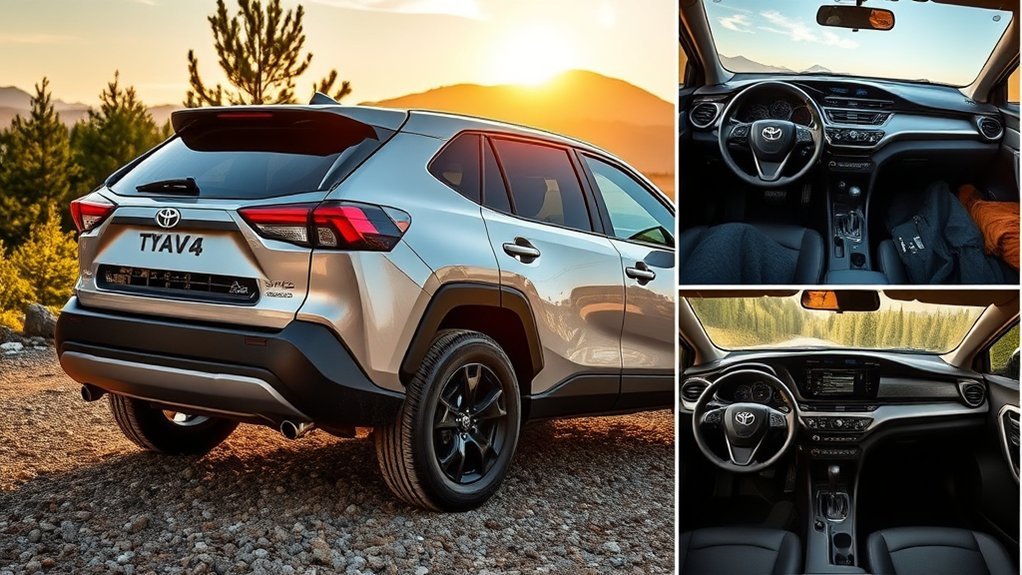
A used RAV4 can look clean while hiding uneven tires, underbody damage, leaks, warning codes, or incomplete campaign work. Inspect the vehicle before discussing whether its AWD system is reliable.
Confirm the Exact Configuration
Decode the VIN and verify the model year, engine or hybrid powertrain, trim, and installed AWD system. Do not rely only on a seller’s description or exterior badge.
Review Maintenance Records
Look for documented oil changes, tire rotations, alignments, brake work, and model-specific driveline services. A record showing that all four tires were maintained together is especially useful.
Inspect the Tires
- Confirm that all four tires are the approved size.
- Compare brand, model, construction, and tread pattern.
- Measure tread depth at several points.
- Look for uneven shoulder wear, cupping, cracks, repairs, and sidewall damage.
- Check the tire date codes and cold pressures.
Inspect the Underbody
Look for leaks, impact marks, bent shields, damaged wiring, missing fasteners, severe corrosion, and evidence of off-road contact. On a hybrid, visually inspect from a safe distance and leave high-voltage evaluation to a trained technician.
Perform a Thorough Road Test
Drive at neighborhood and highway speeds. Include gentle acceleration, deceleration, sweeping turns, and slow full-lock turns in both directions. On a 2019–2020 Adventure or Limited with torque-vectoring AWD, pay special attention to abnormal buzz, groan, grinding, or clunking during acceleration and deceleration after the vehicle has warmed up. On every model, note vibration, pulling, binding, delayed engagement, or warning messages.
Check Recalls and Service Campaigns
Use Toyota’s Safety Recall and Service Campaign Lookup with the VIN or license plate. Also check the NHTSA recall database. Toyota’s tool is especially important because a customer support program or limited service campaign is not the same thing as a federal safety recall and may not appear as an open NHTSA recall.
Arrange a Pre-Purchase Inspection
Ask a qualified technician familiar with Toyota gas or hybrid vehicles to inspect the vehicle. A scan for current, pending, and history codes can reveal problems that a short test drive misses.
Improving AWD Performance With Tires and Driving Technique
Tires determine how effectively the AWD system can use the road surface. Select them for the climate and the type of driving you actually do.
| Tire type | Best use | Trade-off |
|---|---|---|
| All-season | Mild climates and mixed daily driving | Less effective than winter tires in deep snow and severe cold |
| Winter | Frequent snow, ice, and sustained low temperatures | Seasonal changeover and faster wear in warm weather |
| All-terrain | Gravel, dirt roads, campsites, and occasional mild trails | May add noise, weight, rolling resistance, or reduced wet-road refinement |
| Performance-oriented | Responsive warm-weather road handling | Some designs are unsuitable for freezing temperatures or snow |
Good driving technique also reduces wheel slip and driveline stress:
- Accelerate progressively rather than flooring the pedal on a slippery surface.
- Look ahead and brake before entering a turn.
- Avoid rapid steering corrections.
- Reduce speed before standing water, loose gravel, snowdrifts, or deep ruts.
- Do not spin the tires repeatedly when the vehicle is stuck.
- Use the correct drive mode only when conditions justify it.
Be Careful With Aftermarket Modifications
Lift kits, oversized tires, wheel spacers, and major tire-diameter changes can alter suspension geometry, alignment, steering feel, braking, speedometer accuracy, wheel-bearing load, and CV-joint angles. They may also affect driver-assistance calibration and warranty decisions.
Before modifying the vehicle, confirm component compatibility, load ratings, clearance, alignment requirements, and local regulations. Professional installation does not automatically make an unsuitable modification safe.
What Long-Term RAV4 AWD Owners Should Expect
Owner experiences can reveal repeated symptoms, but anecdotes do not establish an official failure rate. A RAV4 that reaches high mileage with its original AWD components does not prove that every RAV4 will do the same. Likewise, one expensive repair does not prove that the entire design is unreliable.
Long-term ownership usually depends on several connected factors:
- Following the correct maintenance guide
- Keeping tires matched and evenly worn
- Repairing leaks before fluid levels fall
- Diagnosing warning lights instead of clearing them
- Protecting the underbody from impacts and severe corrosion
- Avoiding repeated wheelspin and excessive loads
- Using technicians familiar with the installed AWD or hybrid system
When comparing owner reports, match the model year, powertrain, trim, mileage, climate, and repair diagnosis. A 2019–2020 torque-vectoring disconnect complaint should not be generalized to every AWD RAV4, and a hybrid rear-motor cable issue does not automatically apply to a gas RAV4 with mechanical AWD.
Frequently Asked Questions
How does Toyota RAV4 AWD compare with other AWD systems?
The answer depends on the model year and trim. RAV4s may use standard mechanical AWD, Dynamic Torque Vectoring AWD, or hybrid Electronic On-Demand AWD. Compare exact vehicles by tires, ground clearance, system design, fuel economy, drive modes, maintenance requirements, and controlled test results rather than relying on the badge alone.
What warranty covers RAV4 AWD components?
Coverage depends on the component, model year, original in-service date, mileage, and cause of failure. Toyota currently describes basic coverage as 36 months or 36,000 miles and powertrain coverage as 60 months or 60,000 miles, including rear-wheel-drive components. Hybrid-related components and the hybrid battery have separate terms. Read the Warranty and Maintenance Guide for the specific vehicle.
Can driving habits affect RAV4 AWD longevity?
Yes. Repeated wheelspin, abrupt acceleration on high-grip pavement, aggressive off-road use, severe impacts, overloading, and ignoring tire or warning-light problems can increase stress. Smooth inputs and prompt maintenance reduce unnecessary wear.
Does AWD help a RAV4 stop faster in snow?
Not by itself. AWD helps distribute driving force while accelerating. Braking and steering depend heavily on tire grip, road conditions, vehicle speed, and electronic stability systems. Four suitable winter tires can improve winter control more than AWD paired with worn or unsuitable tires.
Can I replace only one tire on an AWD RAV4?
It depends on the remaining tires’ condition and Toyota’s requirements for your vehicle. A new full-depth tire can differ substantially from three worn tires. Have a qualified tire professional measure tread depth and determine whether one, two, or four tires should be replaced.
How does weather affect RAV4 AWD performance?
Rain, snow, ice, mud, and loose gravel reduce available tire grip. AWD can help the vehicle accelerate when one axle has limited traction, but cold temperatures, tread condition, tire type, visibility, and stopping distance remain important.
What modifications can improve RAV4 off-road capability?
Suitable tires and underbody protection may help in mild off-road conditions, but every modification has trade-offs. Lift kits, larger tires, and wheel spacers can affect alignment, CV-joint angles, braking, handling, driver-assistance calibration, component life, and warranty decisions. Confirm compatibility before installation.
Which RAV4 AWD model years have known Toyota service issues?
Toyota has model-specific service information rather than one failure that applies to every RAV4 AWD. Examples include abnormal Dynamic Torque Vectoring AWD disconnect-system noise on certain 2019–2020 Adventure and Limited vehicles, and rear traction-motor cable corrosion coverage for certain 2019–2024 RAV4 Hybrid AWD and 2021–2024 RAV4 Prime vehicles. Always check the VIN for exact applicability.
Does the 2026 Toyota RAV4 use mechanical AWD?
The 2026 U.S. RAV4 is offered as a hybrid or plug-in hybrid. AWD versions use Electronic On-Demand AWD with a dedicated rear electric motor rather than the outgoing gas model’s conventional mechanical connection to the rear axle. PHEV models have AWD standard; HEV availability depends on grade.
Is Toyota RAV4 AWD full-time?
RAV4 AWD is not best understood as a fixed 50/50 full-time system. Depending on the generation, the vehicle varies rear-wheel assistance as driving conditions change. The 2026 Electronic On-Demand AWD system controls the rear electric motor automatically based on factors such as acceleration, wheel slip, vehicle speed, and steering input.
Conclusion
The Toyota RAV4’s AWD system can be a reliable choice for rain, snow, daily commuting, and light off-pavement driving. The key is identifying which AWD design the vehicle uses and maintaining it accordingly.
Keep the tires correctly sized, inflated, and evenly worn. Follow the exact Toyota maintenance guide, investigate warnings and leaks promptly, and avoid expecting AWD to replace winter tires or careful driving. When buying used, combine service records, recall checks, a detailed road test, and a professional inspection rather than relying on mileage or owner anecdotes alone.
Sources
- Toyota USA Newsroom: 2026 RAV4 Technical Overview — sixth-generation HEV/PHEV lineup, Electronic On-Demand AWD, rear electric motor, powertrain availability, and fuel-economy information
- Toyota: 2026 RAV4 — current U.S. grade and fuel-economy information
- Toyota USA Newsroom: 2025 RAV4 Technical Overview — outgoing-generation mechanical AWD, Dynamic Torque Vectoring AWD, hybrid Electronic On-Demand AWD, and Trail Mode
- Toyota T-SB-0022-22 Rev1 via NHTSA — abnormal AWD Dynamic Torque Vectoring disconnect-system noise on certain 2019–2020 RAV4 Adventure and Limited vehicles
- Toyota Customer Support Program 22TE09 via NHTSA — rear traction-motor cable corrosion coverage for specified electrified Toyota models, including certain RAV4 Hybrid AWD and RAV4 Prime vehicles
- Toyota Limited Service Campaign 25TD01 Technical Instructions via NHTSA — rear traction-motor cable corrosion campaign procedures and affected model ranges
- Toyota Owners: 2026 RAV4 Warranty Information — basic, powertrain, and hybrid battery coverage
- NHTSA TireWise — tire selection, cold-pressure checks, rotation, tread, alignment, and winter-tire guidance
- Toyota Safety Recall and Service Campaign Lookup — VIN-based Toyota recall and campaign checks
- NHTSA Recall Lookup — federal safety recalls, investigations, complaints, and manufacturer communications
