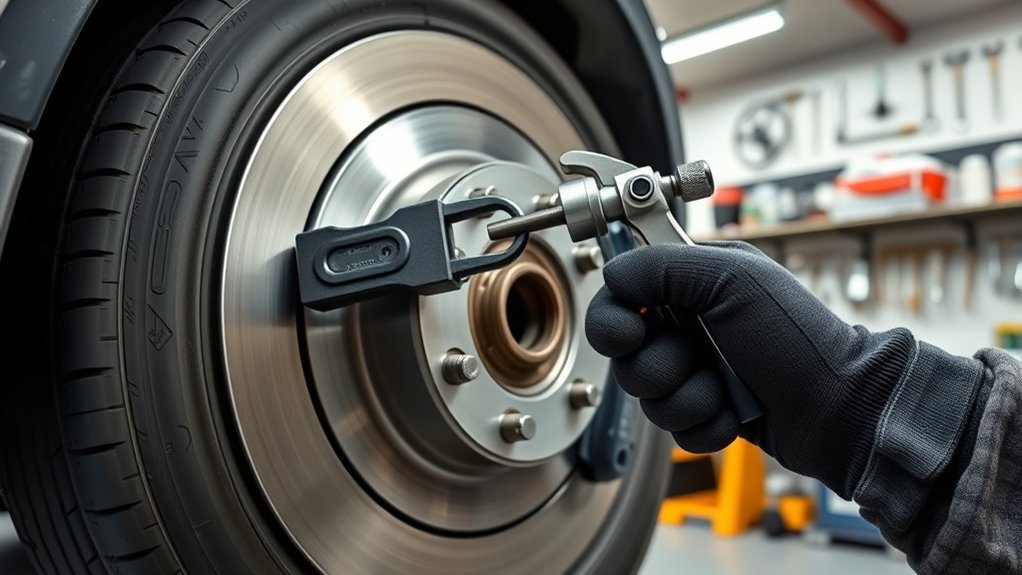
No special caliper-removal tool is required for a 2016 Toyota RAV4. Standard hand tools handle the job, including a 21 mm socket for lug nuts, 14 mm for the banjo bolt, and 17 mm for caliper bracket bolts. A C-clamp or brake caliper piston tool is only needed when retracting the piston during installation. Proper torque, fresh banjo washers, and correct bleeding procedure are critical. The next sections outline sockets, steps, and common installation errors.
Do You Need a Special Tool for a 2016 RAV4?
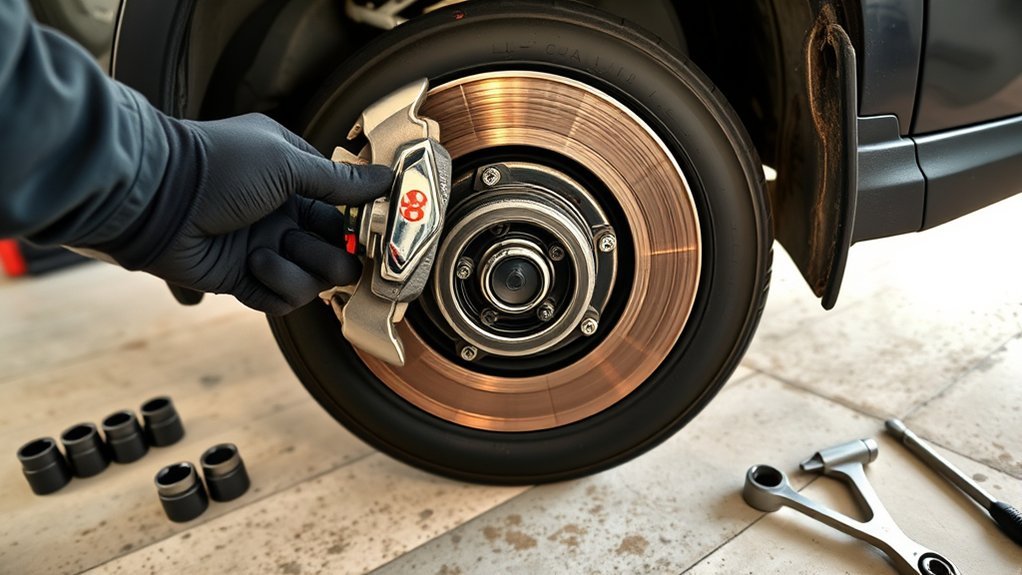
Generally, no special caliper-removal tool is required for a 2016 Toyota RAV4, as the job can typically be completed with standard hand tools. Diagnosis begins by confirming the service scope: caliper removal, hose detachment, bracket access, or pad replacement.
Generally, no special tool is needed to remove a 2016 Toyota RAV4 caliper; standard hand tools usually handle the job.
For most procedures, conventional sockets and wrenches provide sufficient control and access, allowing the technician to work without dependency on proprietary equipment. A brake caliper tool may assist when retracting the piston for pad installation, especially when fitting a new one, but it is optional rather than essential.
The practical requirement is to make sure all brake components match the exact RAV4 configuration before disassembly or reassembly. Proper hose alignment and bolt seating must be verified during service.
After completion, the operator should not start the car until pedal firmness is restored and visual inspection confirms secure assembly. This approach supports efficient, self-directed maintenance without unnecessary tool constraints or costly delays.
What Sockets Remove a 2016 RAV4 Caliper?
Once standard hand tools have been identified as sufficient, the next step is confirming the exact socket sizes used on the 2016 RAV4 caliper assembly. For removal, a 21 mm socket commonly handles the wheel lug nuts, opening access to the brake hardware.
At the caliper itself, a 14 mm socket fits the banjo bolt, while two 17 mm sockets are used on the caliper bracket bolts. Selecting the correct sizes is not optional; it is the disciplined path to stripped-fastener avoidance and mechanical liberation from guesswork.
- 21 mm removes the lug nuts to expose the brake assembly.
- 14 mm removes the banjo bolt from the caliper body.
- 17 mm removes the two bracket bolts securing the caliper assembly.
During installation, an 11 mm socket is required to tighten the banjo bolt on the replacement caliper. An 8 mm wrench may also prove useful for smaller fittings.
Technicians should always use exact sizes.
Which Brake Caliper Tool Works on a 2016 RAV4?
Tool choice on a 2016 RAV4 depends on the piston-compression method required by the caliper: a standard C-clamp or a brake caliper wind-back tool is typically used to retract the piston during pad replacement. These are the primary caliper tool types relevant to this model, and selection should be guided by fit, control, and piston movement characteristics.
For procedural efficiency, the caliper is commonly accessed with 14 mm and 17 mm sockets. Then the piston is compressed using appropriate piston compression techniques. A ratcheting brake tool can simplify rotation and retraction where resistance is higher, giving the technician more controlled leverage and fewer interruptions.
Brake pad compatibility should be verified before compression since pad thickness and hardware dimensions influence clearance during reassembly. A torque wrench remains advisable for final tightening of bracket and caliper bolts to manufacturer specification.
To preserve independence during service, any chosen tool should be confirmed compatible with the specific 2016 RAV4 caliper design and piston geometry.
When Do You Need a Caliper Piston Tool?
A caliper piston tool is needed during brake pad replacement on a 2016 RAV4 when the caliper piston must be retracted to create clearance for new, thicker pads. This requirement becomes critical when integrated parking brake hardware demands controlled rotation and compression at the same time.
Correct piston retraction techniques preserve seal integrity, reduce resistance, and support reliable brake pad compatibility during installation.
- Before service begins, the technician confirms piston design and keeps the proper tool ready to prevent interruption.
- During retraction, the tool applies even force and rotation, giving cleaner control than improvised pliers or clamps.
- After compression, the piston sits correctly in the housing, allowing new pads to fit without forcing components.
From a diagnostic standpoint, the tool is not optional when resistance, parking brake integration, or seal protection are factors.
Among practical caliper maintenance tips, using the dedicated tool minimizes damage risk and enables a smoother, more independent brake service process overall.
How to Remove a 2016 RAV4 Caliper Safely
Begin by removing the front wheel to expose the 2016 RAV4 caliper and improve working clearance. Position a catch basin below the assembly to control fluid release and keep the process disciplined. For tools organization strategies, stage a 14 mm socket for the banjo bolt and a 17 mm socket for bracket bolts.
| Task | Tool | Purpose |
|---|---|---|
| Hose disconnect | 14 mm socket | Loosen banjo bolt |
| Bracket removal | 17 mm socket | Release caliper bracket |
Next, loosen the flex hose banjo bolt and allow brake fluid to drain fully into the basin. Awareness of brake fluid types helps prevent contamination during service. Remove the caliper once hydraulic pressure is relieved. Inspect pads and rotor immediately for abnormal wear patterns. As part of caliper maintenance tips, note slide pin condition and bracket contact surfaces for later lubrication. After service completion, a gravity bleed and pedal firmness check are required before returning the vehicle to operation.
How to Install a New RAV4 Brake Caliper
After the caliper removal steps are completed, installation begins with the front wheel off, the correct 14 mm and 17 mm sockets prepared, and a catch basin positioned for brake fluid control.
The replacement caliper is then mounted using a new banjo bolt and two sealing washers, with one washer placed on each side of the flex hose fitting before the fasteners are tightened to specification.
The procedure concludes with torquing the caliper bracket bolts to 65 ft-lbs, the caliper bolts to 20 ft-lbs, and performing a gravity bleed to confirm pedal firmness and restore proper hydraulic operation.
Caliper Removal Steps
Remove the 2016 RAV4 caliper by disconnecting the brake hose banjo bolt with a 14 mm socket, then loosening the two caliper bracket bolts with 17 mm sockets. This procedure supports efficient diagnosis and disciplined caliper maintenance tips, while keeping brake fluid types and wear indicator placement in view for later service.
- Support the caliper immediately after bolt removal to prevent hose strain and preserve technician control.
- Observe the hose connection, noting crush washer orientation and banjo bolt condition for accurate parts verification.
- Inspect bracket contact points, slide pins, and pad hardware for drag patterns, corrosion, or uneven wear signatures.
With the unit free, the assembly can be isolated for comparison testing and fault confirmation. This method gives the operator mechanical independence without special tools or unnecessary disassembly today.
New Caliper Installation
Position the new 2016 RAV4 brake caliper at the mounting location, then reconnect the flex hose with the 14 mm banjo bolt using new sealing washers, with one washer placed on each side of the hose fitting. Confirm brake pad compatibility before seating components.
| Item | Tool | Spec |
|---|---|---|
| Banjo bolt | 14 mm socket | New washers |
| Bracket bolts | 17 mm socket | 65 ft-lbs |
| Caliper bolts | Ratchet | 20 ft-lbs |
Apply a light coat of caliper grease to the bracket and slide pins; these caliper maintenance tips support free pad movement and reduce binding. Install the bracket bolts, then tighten per installation torque specifications. Reassemble the caliper over the pads and torque the caliper bolts correctly. Finish by gravity bleeding the brake system to expel air and restore liberated, reliable pedal response.
How to Bleed 2016 RAV4 Brakes
To bleed the brakes on a 2016 RAV4, a brake bleeder kit or a clear hose and catch container is required, along with the correct wrench for the bleeder screws. This step supports brake fluid maintenance by keeping contamination controlled and fluid loss visible. Effective bleeding techniques begin with the reservoir filled to specification before any screw is loosened.
- Attach a clear hose to the caliper bleeder screw and place the opposite end below fluid level in a catch container.
- Direct an assistant to pump the brake pedal several times, then hold pressure while the bleeder screw is opened briefly.
- Close the screw before pedal release, then repeat until fluid exits in a steady, bubble-free stream.
These air removal tips help restore firm pedal response and hydraulic freedom after caliper service.
During the procedure, the reservoir must be monitored and refilled as needed so it never runs dry, or air will re-enter the system.
Common 2016 RAV4 Caliper Mistakes to Avoid
While caliper replacement on a 2016 RAV4 is straightforward, several installation errors can create immediate brake performance issues or shorten component life. Technicians seeking liberation from repeat repairs focus on torque specifications importance: caliper bracket bolts require 65 ft-lbs, while caliper bolts require 20 ft-lbs. Under- or over-tightening risks movement, thread damage, or brake system failure.
| Mistake | Consequence | Prevention |
|---|---|---|
| Reusing banjo washers | Fluid leaks | Install new washers |
| Twisted flex hose | Stress, seepage | Verify natural alignment |
| Skipping gravity bleed | Air, soft pedal | Bleed after assembly |
Additional caliper maintenance tips include cleaning the caliper bracket, removing corrosion, and applying proper caliper grease to contact points. This prevents uneven pad wear and brake noise. Final verification should include brake fluid inspection, hose routing confirmation, and a leak check under pedal pressure. Each step reduces uncertainty and restores confident, controlled braking.
Frequently Asked Questions
Do You Need a Special Tool for Brake Calipers?
Not always; brake caliper maintenance usually uses standard hand tools, while some rear designs require specialized brake system tools for piston retraction. Following service manuals provides caliper replacement tips, minimizes damage risk, and supports independent, confident repairs.
What Is the Class Action Lawsuit Against the Toyota RAV4?
The Class action alleges 2013-2018 Toyota RAV4 issues involving excessive oil consumption, concealed defects, engine damage, and repair costs. It seeks compensation or a Toyota settlement, enabling owners to pursue reimbursement, diminished value recovery, and accountability.
What Is the Size of the Bolts on a Toyota Brake Caliper?
Toyota brake caliper bolts are typically 17 mm; banjo bolts use 14 mm, and some bracket bolts use 11 mm. Accurate caliper bolt specifications support brake caliper maintenance, helping operators navigate Toyota brake systems with procedural confidence.
What Tools Do I Need to Replace a Caliper?
A sextant-like checklist identifies needed tools: 21, 17, 14, and 11 mm sockets, plus an 8 mm wrench, catch basin, and spacer; caliper replacement tips include verifying brake fluid types and diagnosing common caliper issues.
Conclusion
For a 2016 RAV4, caliper service typically requires standard sockets for removal and a proper piston tool for controlled compression, especially during pad or caliper replacement. Careful component support, correct bolt torque, clean fluid handling, and precise bleeding prevent performance problems. Skipping steps, mixing methods, or forcing fittings can create costly complications. With systematic inspection and methodical procedure, brake caliper work remains safe, serviceable, and mechanically sound for consistent stopping performance.
