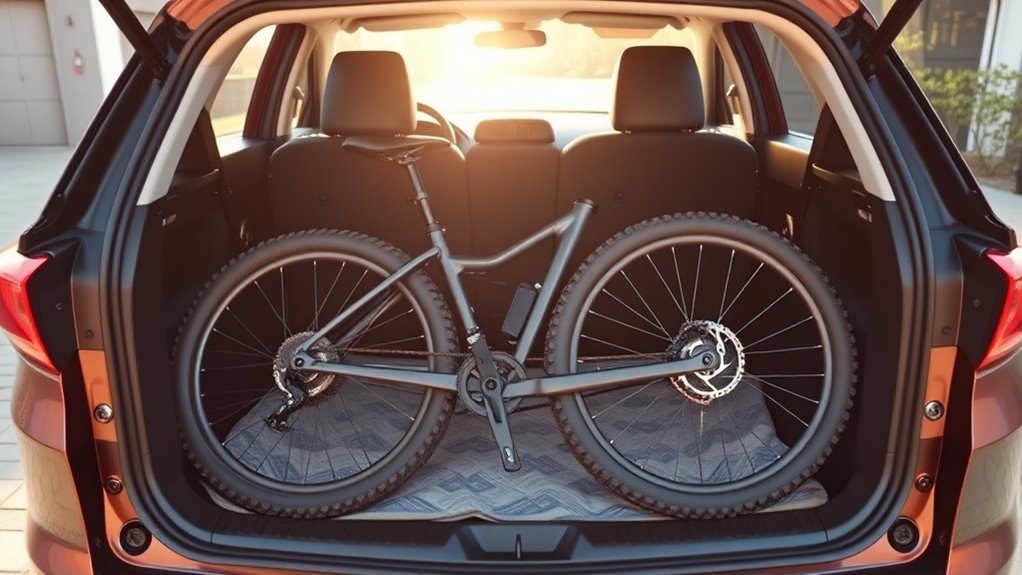
An adult mountain bike can fit in a Hyundai Tucson with the rear seats folded, since cargo space expands to 61.9 cubic feet. The easiest method is to remove the front wheel, clear the cargo floor, and load the bike rear wheel first at a gentle angle. A blanket or padding helps protect the frame and drivetrain. If more secure transport is needed, a compatible hitch rack can be used, and the details below explain the setup.
Key Takeaways
- Fold the Tucson’s rear seats down to expand cargo space to 61.9 cubic feet and clear loose items from the area.
- Remove the front wheel to shorten the bike, and place the wheel in a protective bag or blanket.
- Load the bike rear wheel first at a gentle angle, keeping the frame upright to avoid damaging the interior.
- Wrap the frame with a blanket and secure loose parts, with gears facing up to protect the drivetrain.
- If using a hitch rack, confirm the bike weighs under 55 pounds and test hatch clearance before driving.
Check Tucson Cargo Space and Bike Size
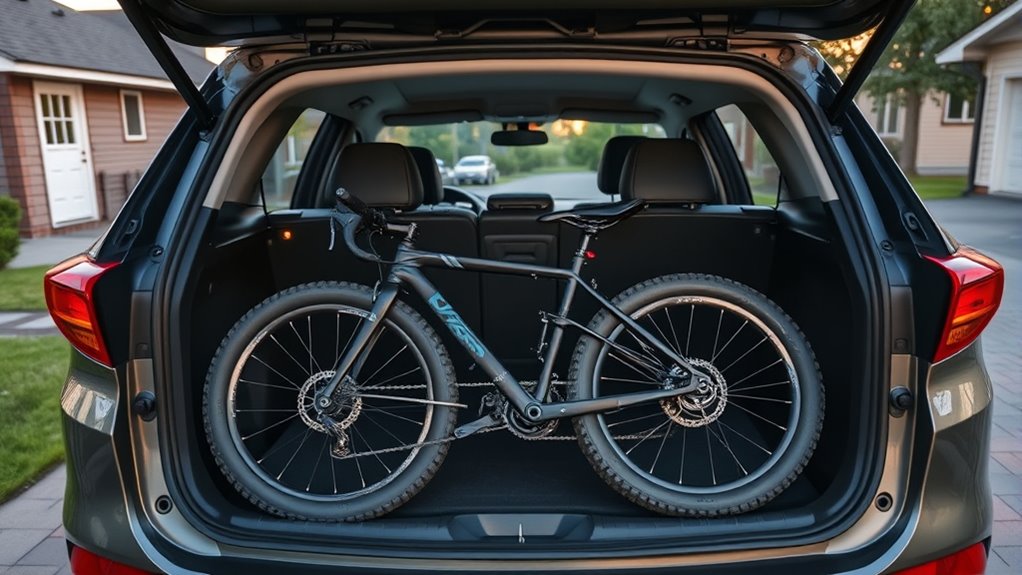
Before loading a mountain bike into a Hyundai Tucson, it is important to compare the vehicle’s cargo capacity with the bike’s dimensions. The Tucson provides about 31 cubic feet of space with the rear seats raised and about 61.9 cubic feet with them folded, giving a workable volume for transport.
Before loading a mountain bike into a Hyundai Tucson, compare the cargo space with the bike’s dimensions.
The cargo area measures roughly 68 inches long and 36 inches wide, so the bike’s length and height should be checked against these limits before loading. Most adult mountain bikes have frame sizes between 15 and 20 inches and stand about 45 to 50 inches tall when fully assembled.
That profile can exceed available clearance unless the front wheel is removed, which reduces overall length and simplifies placement. A measured fit allows the bike to be secured without unnecessary restriction, supporting efficient transport and personal mobility.
With dimensions verified, the loader can avoid forced positioning and preserve access to the rear hatch.
Prepare the Rear Cargo Area First
The rear seats should be folded down to maximize available cargo space in the Hyundai Tucson, and the cargo area should be cleared of any loose items or obstructions that could interfere with loading. This creates a controlled platform for efficient bike loading techniques and reduces unnecessary handling.
A quick sweep or wipe of the floor is advisable to remove dirt and grit, limiting transfer onto the frame, drivetrain, and interior surfaces. For added protection, a blanket or padding should be positioned in advance, especially where the rear triangle, handlebars, or pedals may contact trim.
These cargo organization tips support stable placement and help preserve both vehicle and bicycle condition. Space optimization strategies work best when the area is leveled, uncluttered, and ready before lifting begins.
The objective is a secure, accessible space that enables straightforward transport without wasted motion or avoidable damage.
Remove the Front Wheel for a Tight Fit
Removing the front wheel can substantially reduce the mountain bike’s overall length, making it easier to fit inside a Hyundai Tucson with the rear seats folded. This step supports wheel removal tips centered on efficiency and control.
A quick-release skewer or Allen wrench should be available before beginning, so the wheel can be detached without delay or unnecessary force. Once removed, the wheel should be placed in a protective bag or wrapped in a blanket to limit abrasion and preserve bike transport safety during the drive.
The bike frame can then be aligned with the Tucson interior measurements, with attention to the rear wheel position and available cargo space. A snug arrangement helps prevent shifting and supports stable transport.
Align the bike frame with the Tucson’s cargo space, ensuring a snug fit that prevents shifting during transport.
Both the frame and detached wheel should be secured so they do not block visibility, interfere with safety features, or constrain the liberated use of the vehicle’s cargo area.
Load the Mountain Bike Rear Wheel First
The mountain bike is loaded rear wheel first, with the wheel aligned toward the Tucson opening to support a controlled entry.
A gentle loading angle reduces contact with the interior surfaces and helps protect bike parts from scraping.
The frame remains upright during insertion to improve stability and limit the risk of damage.
Rear Wheel First
With the rear seats folded down, the mountain bike should be positioned rear wheel first to maximize clearance inside the Hyundai Tucson. This method supports practical bike positioning tips by aligning the frame with available cargo volume and reducing interference with the hatch opening.
Effective loading techniques begin with keeping the bike upright, which preserves balance and limits contact with trim, upholstery, and glass. The rear wheel should enter fully before the front end is guided inward, giving the operator better control of the bike’s path.
Clear cargo organization follows from this sequence: the bike remains stable, components stay protected, and the load can be checked for protrusions. Once positioned, the doors should close without obstruction, confirming that the vehicle remains ready for use and movement.
Gentle Loading Angle
Positioning the mountain bike at a gentle angle with the rear wheel aimed toward the Hyundai Tucson’s opening helps guide the frame into the cargo area smoothly.
This method supports efficient loading techniques by aligning the bike’s dimensions with the available aperture before any forward push is applied. The rear wheel should enter first while the frame stays upright, reducing torsion and limiting contact with interior trim.
A steady grip preserves control and avoids forcing the bicycle through a restricted gap. Clear the loading path in advance so cargo organization remains orderly and clearance is adequate.
Once the bike is inside, adjust its position so it sits securely, does not protrude, and remains stable for transit.
Protect Bike Parts
Loading the mountain bike rear wheel first helps preserve balance and reduces the chance of damage to exposed components. The rear wheel should enter the Hyundai Tucson before the frame or front wheel, with the bike kept upright to shield the derailleur, chainring, and cables from impact.
A gentle angle reduces scraping while the bike is maneuvered into the cargo area. The wheel must be fully seated before the remaining sections are loaded.
Once positioned, the bicycle should be checked for stability and restrained against movement during transit. This method supports secure transport, lowers the likelihood of repair needs, and aligns with practical maintenance tips.
If coverage exists, bike insurance may help with losses, but careful loading remains the primary safeguard for liberation through reliable travel.
Protect the Frame and Derailleurs
The bike frame should be wrapped with a blanket or padding to reduce scratches and impact during loading.
The drivetrain should be oriented with the gears facing up so the derailleurs are less exposed to damage.
Any loose parts should be secured before the bike is placed in the vehicle.
Frame Padding
A blanket or other protective padding should be wrapped around the mountain bike’s frame and derailleurs to reduce the risk of scratches, abrasion, and impact damage during transport.
Effective frame protection techniques include full-frame coverage, with particular attention to contact points that may rub against vehicle interior surfaces.
A padding materials comparison typically favors foam, soft cloth, or purpose-made bike blankets, depending on thickness, conformity, and shock absorption.
A securing methods overview should emphasize ties, straps, or hook-and-loop fasteners that prevent the padding from shifting while the vehicle moves.
Loose accessories, pedals, and protruding parts should be padded or removed.
After loading, the frame and covering should be inspected to verify stable placement, intact protection, and freedom from movement before driving.
Derailleur Protection
With the frame already padded, attention should shift to the derailleur assembly, which is more vulnerable to bending or impact during transport.
The bike should be loaded with the gears facing up, reducing exposure to compression and side contact. A blanket or similar padding can add a buffer around the rear mech and chainstay, supporting bike transport safety.
During placement, the bike should remain stable and upright to limit shifting that may stress alignment. Any loose hardware near the derailleur should be secured, since snagging on the Tucson interior can cause damage.
After loading, a brief inspection should confirm clear clearance, proper positioning, and unobstructed movement.
These derailleur maintenance tips and gear adjustment techniques help preserve function and protect the rider’s liberated mobility.
Mount the Bike on a Hitch Rack
Before loading a mountain bike, the Benton Shifts and Grins hitch carrier should be verified as compatible with the 2026 Hyundai Tucson and the bike’s weight, since the rack supports up to 55 pounds, including lighter e-bikes.
Among hitch rack options, this unit offers a practical path for riders who want cargo freedom without interior compromise. Its bike weight limits should be checked before use, then the frame can be positioned on the carrier and restrained with standard securing techniques.
Three contact points provide stability during transport and help keep the bike clear of the vehicle body. The powder-coated steel construction adds durability for repeated use.
The design also preserves access to the cargo area, allowing the lift gate to open and close with the bike installed. When removed, the stowaway function reduces the carrier’s footprint to 17 inches, keeping the rear of the Tucson less obstructed.
Set the Wheel Trays for a Steady Fit
Set the Benton Shifts and Grins Carrier’s wheel trays to match the mountain bike’s wheelbase and wheel size so the frame sits securely and remains stable in transit. This wheelbase adjustment supports a secure fit and reduces lateral shift under road vibration. The trays should also remain within the carrier’s 55 lb limit, including lightweight e-bikes, to preserve transport stability.
| Setting | Effect |
|---|---|
| Tray length | Matches wheelbase |
| Wheel size range | Snug tire support |
| Weight limit | Stable carry |
Position the rims fully in the trays, then tension the ratcheting wheel straps with rubber pads to protect the wheels while holding the bike down. The adjustable trays accommodate varied wheel diameters without slack, which helps keep the machine aligned and free of motion. Before travel, confirm the bike sits centered in the wheel trays, with no points of contact against the vehicle.
Test Hatch Access Before You Drive
Before driving, the lift gate should be opened and closed with the mountain bike loaded to confirm adequate clearance for the handlebars and frame.
Cargo access space should be verified to guarantee the hatch can be operated without interference and the bike remains stable.
The closed hatch should fit securely, with no contact points or visibility issues from the rear window or camera.
Check Lift Gate Clearance
Check the Hyundai Tucson’s lift gate clearance to confirm the hatch opens fully and provides unobstructed access for loading the mountain bike. Lift gate functionality should be verified before any lift, because limited opening angle can restrict bike loading techniques and complicate vehicle compatibility considerations. Measure from ground to hatch apex, then compare it with the bike’s upright height. Simulate entry through the opening, noting handlebars, pedals, and saddle clearance. Inspect carriers, racks, or mounts for interference with hatch motion. Confirm the gate closes securely after positioning, with no protruding parts.
| Check | Result |
|---|---|
| Full hatch opening | Pass |
| Upright height fit | Pass |
| Simulated bike passage | Pass |
| Attachment interference | None |
| Secure closure | Required |
Verify Cargo Access Space
With lift gate clearance confirmed, cargo access space should be verified by opening the Hyundai Tucson hatch fully and measuring the cargo area to guarantee an adult mountain bike can be loaded rear wheel first without contact.
This check supports efficient bike loading techniques and identifies any interference from lift gate supports or interior trim. The bike should be test-fitted with any planned gear to confirm practical use of the available volume.
Cargo organization tips matter here: loose items should be arranged to preserve a clear path and reduce shifting.
Rear visibility importance should also be assessed by checking the rear view camera and mirror line after the bike is positioned.
A precise fit test before departure reduces uncertainty and preserves autonomous travel readiness.
Confirm Door Closure Fit
Position the mountain bike rear wheel first and confirm that the hatch can close securely without interference from the frame, handlebars, or pedals. This placement improves cargo organization and allows a direct check of hatch stability before departure.
The bike should remain stable, with no part extending beyond the hatch frame or blocking the opening and closing mechanism. A gentle test closure verifies clearance and reveals any protrusion that could compromise bike security.
If the hatch resists, the bike should be adjusted slightly until the fit is snug and the rear opening operates freely. The objective is a secure, unobstructed arrangement that supports practical transport and preserves the vehicle’s function.
Check Rear Clearance and Visibility
A rear clearance of at least 31 inches should be maintained from the Hyundai Tucson’s bumper to the back of the mounted bike system, matching the 31-inch footprint of the Benton Shifts and Grins Carrier. This limit keeps clearance measurements aligned with the carrier geometry and supports rear visibility tips during transport. Safety checks should confirm that the rear window, license plate, and camera view remain usable with the bike loaded. The carrier’s design can improve sightlines, but the load still requires verification after tightening.
| Check | Target |
|---|---|
| Bumper-to-rear distance | 31 in |
| Carrier footprint | 31 in |
| Ground clearance | 17 in |
| Rear window view | Unobstructed |
| Camera function | Operational |
The 17-inch ground clearance at the furthest point helps avoid contact with obstacles during loading and unloading. Regular inspection preserves a clear, controlled setup and supports practical, liberated movement on the road.
Stow the Rack After the Ride
After the ride, the Benton Shifts and Grins Carrier can be removed from the hitch and stowed to shrink its footprint to 17 inches, simplifying storage in a Hyundai Tucson.
Its 63.12-pound frame is built for easy removal, allowing the rack to be cleared from the vehicle without extended handling.
Rack storage tips include placing the carrier in a dry, accessible area and keeping the hardware organized for the next use.
The powder-coated steel structure supports repeated transport and compact stowing without compromising durability.
Once removed, the rack frees rear window, license plate, and tail light visibility, which supports safer driving and fewer constraints on movement.
Before storage, safety checks should confirm that the hitch, retention points, and contact surfaces are free of debris or damage.
The design returns quickly to riding position, without additional engagement, keeping the shift efficient and reducing dependence on cumbersome equipment.
Frequently Asked Questions
Can I Fit a Mountain Bike in My Car?
Yes—if bike dimensions match car measurements, it can fit. Practical storage solutions include folding rear seats, removing the front wheel, and loading the bike gently upright, with stability and clearance verified before travel.
Which SUV Is Best for Fitting Bikes In?
The Subaru Forester and Honda CR-V best support bike storage, while the Toyota RAV4 excels in cargo access. Rear racks increase capacity; folding bikes fit easiest. All favor practical transport, flexibility, and liberated mobility.
Will a 26 Inch Bike Fit in My Car?
Yes, a 26-inch bike usually fits if the bike dimensions match available trunk space and the rear seats fold flat. Secure orientation and wheel removal may improve clearance, enabling practical, self-directed transport.
How to Carry a Bike Inside a SUV?
Folded rear seats, measured interior measurements, and careful bike storage can carry a bike inside a SUV. Like a courier fitting a telescope in a van, one wheel off, rear wheel first, secures liberation through precision.
Conclusion
Fitting an adult mountain bike into a Hyundai Tucson is usually manageable with the rear seats folded and the front wheel removed. In many compact SUVs, cargo space exceeds 40 cubic feet, which helps explain why careful loading works. Rear-wheel-first placement, frame protection, and clearance checks reduce damage risk and improve visibility. A final hatch test confirms fit before driving. With proper setup, the Tucson can transport a full-size bike efficiently and securely.

