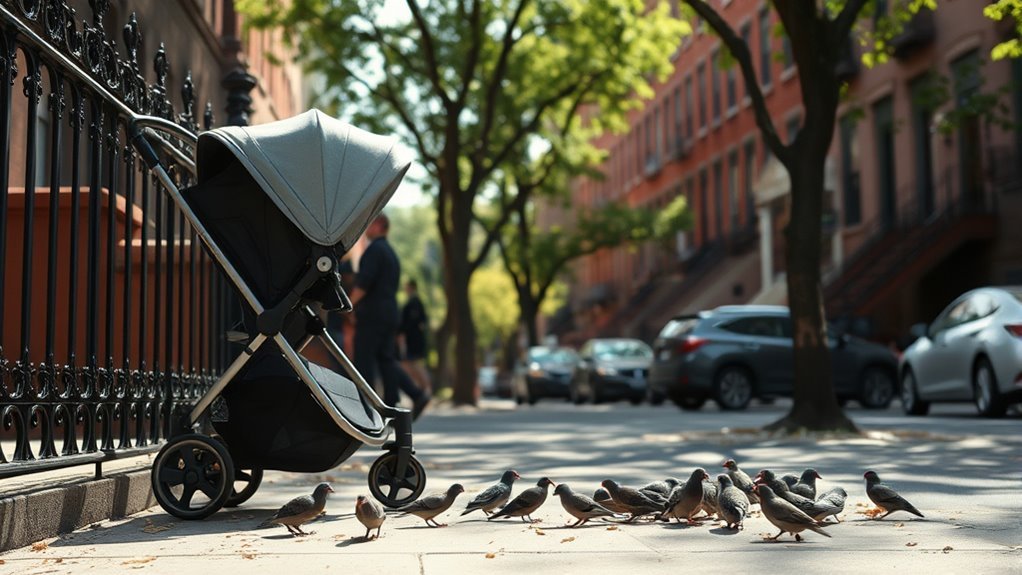
Bird Feed NYC brings together urban birdwatching, family outings, and the everyday wildlife of New York City. A baby stroller can make these experiences easier by carrying children’s supplies while parents observe birds in parks and neighborhoods. The most useful approach combines responsible wildlife observation, safe stroller use, and respect for local feeding rules.
Quick Answer
Bird Feed NYC describes the connection between urban birds, family birdwatching, and stroller-friendly outdoor activities. Families can use strollers to carry supplies and observe pigeons, sparrows, starlings, and other local birds. However, birdwatching does not require feeding wildlife, and any feeding activity must follow NYC Parks rules and responsible wildlife practices.
Key Takeaways
- Strollers make family birdwatching more practical by carrying supplies while keeping children comfortable and supervised.
- New York City offers opportunities for bird observation in neighborhood parks, wooded areas, and other green spaces.
- Bird feeders require suitable food, careful placement, and regular cleaning to reduce disease risks.
- NYC Parks rules contain exceptions for feeding unconfined birds and squirrels, but feeding can be prohibited in designated areas.
- Photographs and bird observations can support environmental education and community science when accurately documented.
What Is Bird Feed NYC?
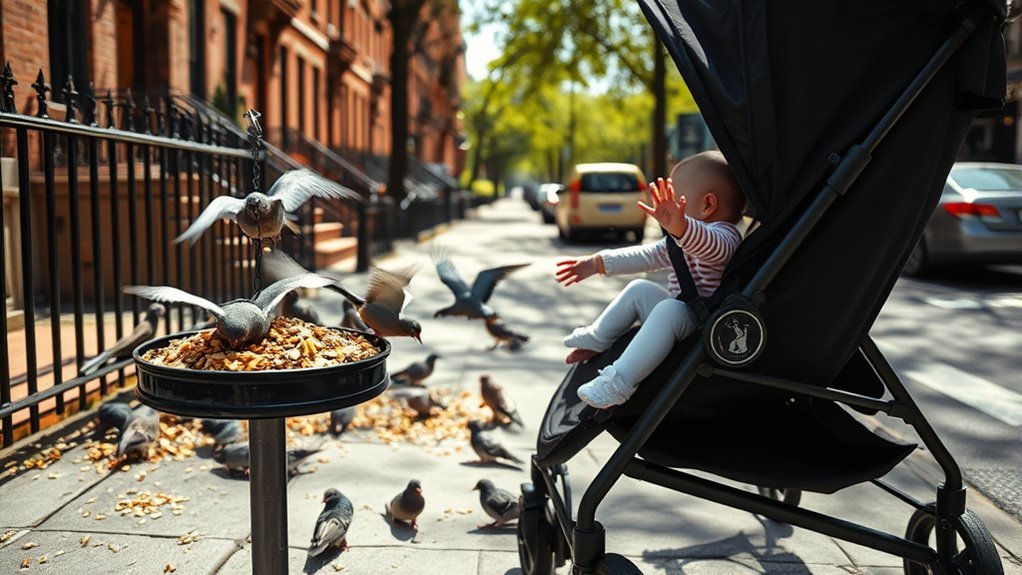
Bird Feed NYC can be understood as a way of exploring the relationship between New York City residents and urban birds. It brings together bird observation, family recreation, environmental education, and interest in local habitats.
The name should not be confused with an independently established conservation organization without supporting documentation. The wider activities described here are part of New York City’s existing birdwatching and conservation culture.
For example, NYC Bird Alliance, formerly NYC Audubon, organizes educational programs, guided bird outings, and community science activities across the five boroughs.
These programs introduce residents to bird behavior, habitat protection, species identification, and the importance of recording observations.
Citizen science allows ordinary people to contribute useful wildlife information. Participants record the birds they see or hear, helping researchers understand species distribution and changes in bird populations.
For families with young children, a stroller can make this type of outdoor observation more accessible. It offers a practical way to combine parenting, walking, and learning about nature.
The main goal is not simply to attract birds with food. It is to understand the wildlife already living in the city and learn how everyday human activity affects it.
Why Parents Use Strollers for Bird Feeding
Parents use strollers during birdwatching outings because they simplify transportation, child supervision, and carrying supplies. A stroller makes it easier to stop, observe birds, and continue walking without carrying everything by hand.
Although a stroller can transport birding equipment, it should not be treated as a purpose-built feeder or wildlife platform.
Hands-Free Bird Feeding
Stroller-based outings allow parents to keep essential supplies nearby while watching birds with their children. This makes neighborhood walks and park visits easier to organize.
The main benefits include:
- Keeping children’s supplies together during outings.
- Carrying binoculars, identification guides, and a notebook.
- Allowing comfortable stops for bird observation.
- Making outdoor activities accessible to younger children.
- Encouraging regular family engagement with nature.
Parents can park the stroller in a suitable location, apply its brake, and observe birds from a safe distance.
Any feeding activity should take place separately from the child. Avoid placing feeders where a child can reach them or where birds can land directly on the stroller.
Portable Seed Storage
A stroller’s storage basket can carry birdwatching supplies and, where appropriate, a sealed container of birdseed. This keeps equipment organized without interfering with the child’s seating area.
Use a closed container to prevent accidental spills and keep bird food separate from snacks, bottles, and other children’s belongings.
For an ordinary birdwatching trip, the most useful items are:
- Binoculars or a small field guide.
- A notebook or phone for recording sightings.
- Drinking water and suitable child supplies.
- A small bag for collecting personal litter.
- Birdseed only where feeding is permitted and appropriate.
Stroller compartments were designed primarily for personal belongings. Keep within the manufacturer’s storage and weight limits rather than adding heavy containers or hanging equipment from the handle.
Mobility for Birding
Mobility helps families explore different habitats without making every outing a long walk. A stroller allows children to rest while adults observe birds in trees, shrubs, lawns, and nearby water.
This is particularly useful in a city where wildlife habitats are spread across many parks and neighborhoods.
Families can use stroller-accessible paths to:
- Observe birds in different habitats.
- Compare species found in open and wooded areas.
- Watch seasonal changes in bird activity.
- Practice identifying birds by appearance and sound.
- Build a regular outdoor routine.
Not every trail is stroller-friendly. Paved or firm paths generally provide easier access than steep, muddy, or uneven routes.
For a comfortable outing, choose a route that suits the stroller and the child’s needs. Birdwatching can be rewarding even without traveling far from home.
Why Bird Feeding Fits NYC Life
Birdwatching fits New York City life because residents can encounter wildlife during ordinary activities. Parks, street trees, gardens, and waterfronts provide opportunities to observe birds without leaving the city.
Urban birding can turn a routine family walk into an opportunity to learn about local ecology.
It also connects New York residents with a much larger American interest in wildlife observation.
According to the U.S. Census Bureau’s 2011 wildlife recreation survey, approximately 46.7 million Americans aged 16 and older observed wild birds that year.
The figure describes national participation, not stroller-based birdwatching or participation specifically within New York City.
The history of organized bird observation also extends well beyond modern family outings.
The Christmas Bird Count began in 1900 and became a long-running community science program.
Participants record bird species and numbers, creating information that can support conservation research.
These activities show why observation and accurate recordkeeping matter. A family does not need to feed birds to take part in learning about urban wildlife.
Native vegetation and suitable habitats also support birds by providing natural food, shelter, and places to rest.
Best Bird Foods and Feeders
The best bird food depends on the species you want to attract and the location where feeding takes place. For families interested in responsible bird feeding, food quality and feeder cleanliness matter as much as the type of seed.
According to Cornell Lab’s Project FeederWatch guidance, different foods and feeder designs attract different birds.
Common options include:
- Black-oil sunflower seeds: A versatile choice for many seed-eating birds, including cardinals, chickadees, finches, and sparrows.
- Nyjer seeds: Particularly attractive to finches and best offered through feeders with small openings.
- Suet: A high-energy food that can attract insect-eating birds, including woodpeckers. It requires appropriate handling, particularly in warm weather.
- Tray feeders: Open feeding surfaces that accommodate several bird species but require attention to drainage and cleanliness.
- Hopper or gravity feeders: Covered containers that hold seed and dispense it as birds feed.
- Tube feeders: Feeders that can help keep seed dry and, depending on their design, accommodate smaller birds.
Sunflower seed is a practical starting point for a permitted, properly maintained feeder. Nyjer is more specialized, while suet suits birds that benefit from energy-rich food.
Avoid offering salty snacks, seasoned food, or spoiled seed. Food intended for human consumption is not automatically suitable for wild birds.
Regular cleaning is essential because droppings, moisture, and spoiled food can contribute to disease transmission.
Keep the ground beneath feeders free of accumulated seed and waste. Spilled food can also attract rodents.
Where feeding is allowed, clean water and suitable native plants can complement responsible feeding practices.
However, installing feeders in public spaces is different from maintaining a feeder on private property. Do not attach equipment to park trees, fences, or structures without authorization.
Bird Feeding Etiquette in Parks
Responsible birdwatching in NYC means respecting park rules, wildlife, and other visitors. Feeding rules are not identical across every public space, and an activity permitted in one location may be restricted elsewhere.
Watching birds from a distance is the simplest way to enjoy them without creating unnecessary disturbance.
Park Feeder Placement
Feeder placement matters because poorly positioned equipment can obstruct paths, attract unwanted animals, or bring birds into conflict with people.
Under NYC Parks Section 1-04(g), feeding park animals is generally prohibited, with an exception for unconfined squirrels and birds. The Parks Commissioner can also designate areas where all animal feeding is prohibited.
This exception does not grant unrestricted permission to install feeders or disregard local restrictions.
Warning: Never assume that feeding wildlife is permitted everywhere in NYC. Follow posted restrictions, avoid feeding in prohibited areas, and do not attach feeders to public property without authorization. Keep birds away from children, food containers, and stroller seating areas.
When a feeder is permitted, responsible placement means choosing a location that:
- Does not obstruct walkways or stroller access.
- Allows birds to approach without constant disturbance.
- Does not create unnecessary food spillage.
- Can be cleaned and maintained properly.
- Complies with the rules governing that location.
There is no universal NYC Parks rule requiring every feeder to be placed a specific distance from a path. Appropriate placement depends on the site and applicable restrictions.
Shared Space Courtesy
Courtesy helps families, birdwatchers, and other visitors enjoy the same park comfortably. Avoid blocking paths, gathering large groups around feeding areas, or encouraging birds to approach people for food.
New York City’s WildlifeNYC guidance advises residents against feeding wild animals because human food and repeated handouts can disrupt natural behavior.
Although the NYC Parks rule contains an exception for certain birds and squirrels, the city’s broader wildlife guidance favors allowing animals to find natural food.
That distinction matters: something may be legally permitted in a particular location without being the most responsible choice for wildlife.
For families, good shared-space habits include:
- Keeping the stroller clear of pedestrian routes.
- Observing wildlife without chasing or crowding it.
- Preventing children from throwing food at birds.
- Removing personal litter and spilled snacks.
- Respecting other visitors who prefer not to be approached by birds.
Do not touch sick or injured birds. Keep children away from droppings and wash hands after contact with feeding equipment or contaminated surfaces.
What Birds Gather Around Strollers?
Pigeons, house sparrows, and European starlings are among the familiar birds people may notice around strollers in urban parks. They can investigate areas where people have dropped crumbs or other food.
However, different species use different feeding strategies, and not every bird near a stroller is looking for human food.
- Rock pigeons: Often forage on the ground in busy urban spaces.
- House sparrows: May gather near outdoor eating areas and dropped food.
- European starlings: Frequently forage on lawns and other open ground.
- American robins: Search lawns for worms and other natural food.
- Blue jays: May visit nearby trees, wooded areas, and suitable feeding locations.
Food availability, season, habitat, and human activity influence which birds appear.
A stroller’s basket or snack tray can unintentionally attract birds when food remains accessible. Keep children’s snacks covered and clean up crumbs after eating.
Birds that become accustomed to receiving food may approach people more closely. This is not necessarily a sign that they are tame or comfortable with handling.
For better observation, watch natural behavior instead of encouraging birds to gather around the stroller.
Notice how different species walk, perch, search for food, communicate, and react to nearby activity.
What Photos Reveal About the Scene
Photographs of NYC birdwatching can reveal how families interact with wildlife and public space. They may document birds, feeding equipment, children, stroller arrangements, and the surrounding habitat.
However, a photograph alone cannot establish the history of a conservation initiative or prove that a particular activity was widespread.
Its meaning depends on the date, location, photographer, and context.
| Visual clue | What it can reveal |
|---|---|
| Homemade feeder | How someone provides food for birds |
| Stroller in frame | How family activities connect with outdoor observation |
| Dense crowd of observers | Shared interest in a wildlife encounter or organized birding activity |
Photographs can also help identify species by recording plumage, body shape, markings, and behavior.
A useful bird photograph includes enough detail to distinguish the bird from similar species. When possible, record the location, date, and habitat separately.
For historical interpretation, older photographs need reliable captions or archival records. A stroller beside a feeder may show a family birdwatching outing, but it does not independently establish a named movement or organized project.
Likewise, photographs from the Christmas Bird Count can document organized observation without implying that feeding birds was part of every count.
The strongest visual record combines the bird, its environment, and accurate background information.
Raising the Next Generation of Birders
Family birdwatching can introduce children to environmental education through direct observation. Even a short stroller walk offers opportunities to notice birds, listen to calls, and compare species.
The activity does not require advanced equipment or prior birding knowledge.
Parents can make outings more engaging by encouraging children to notice:
- Different bird colors and body shapes.
- The sounds birds make.
- How birds walk, fly, and search for food.
- Differences between birds in trees and on the ground.
- Changes in the species seen across seasons.
Picture guides and photographs can help children recognize familiar birds.
Older children can keep a simple birding notebook with the species, location, and date of each observation.
For families interested in contributing to research, Cornell Lab’s eBird beginner guide explains how to record and submit bird sightings.
Useful records include where you observed the birds, when you saw them, which species were present, and how many individuals you counted.
Accurate records are more valuable than guessing. If a bird cannot be identified confidently, note its appearance and behavior rather than inventing a species name.
Parents can also use photographs to compare observations over time.
For younger children, short sessions work well. A few minutes watching a pigeon walk, a robin search the grass, or a blue jay move between branches can become a memorable lesson.
These experiences encourage patience, curiosity, and an understanding that wildlife belongs in the city alongside people.
Frequently Asked Questions
How Did Stroller Bird Feeding Become a Recognizable NYC Trend?
Stroller-based birdwatching reflects the practical overlap between family recreation and urban wildlife observation. Parents can carry children and equipment while exploring neighborhood parks. However, a specific origin date or organized NYC stroller-feeding movement has not been established. Documented birdwatching and conservation activities provide the broader context.
Are There Legal Restrictions on Feeding Birds in City Parks?
Yes. NYC Parks rules generally prohibit feeding park animals but contain an exception for unconfined birds and squirrels. The Parks Commissioner can designate locations where all animal feeding is prohibited. Other park jurisdictions may have different rules. Watching birds without feeding them avoids many of these concerns.
Which Neighborhoods Are Most Associated With Stroller Bird Feeding?
No reliable neighborhood ranking has been established for stroller-based bird feeding in NYC. Families can encounter birds throughout the city, including parks in Harlem, Washington Heights, and other neighborhoods. Choose a convenient green space with suitable paths and opportunities to observe birds safely.
How Do Photographers Capture Candid Stroller Bird-Feeding Moments?
Photographers can capture these moments by observing from a respectful distance and anticipating natural bird behavior. Include the surrounding habitat when it adds context. Avoid disturbing wildlife or blocking public paths. Seek permission before photographing identifiable children, and record accurate locations and dates when documenting the scene.
Can Stroller Bird Feeding Affect Interactions With Other Park Visitors?
Yes. Food can attract birds to busy areas, creating crowding, litter, or unwanted contact with visitors. Responsible stroller etiquette means keeping walkways clear, supervising children, and avoiding food spillage. Watching birds from a distance offers a more predictable experience for families, wildlife, and other park users.
Conclusion
Bird Feed NYC reflects the connection between family recreation, urban birdwatching, and everyday encounters with wildlife. A stroller makes it easier for parents and children to explore local parks, carry supplies, and observe birds together.
The most valuable part of the experience is learning to recognize and respect the birds already living in New York City. Start with a comfortable neighborhood walk, observe from a safe distance, and record the species you discover.
Sources
- NYC Bird Alliance — Programs and Events: Local birdwatching, education, accessible activities, and community engagement.
- U.S. Census Bureau — 2011 Wildlife Recreation Survey: Historical national birdwatching participation figures.
- NYC Bird Alliance — Christmas Bird Count: History and community science activities.
- Cornell Lab — Project FeederWatch: Bird foods, feeder designs, cleaning, and safe feeding practices.
- NYC Parks Rules — Section 1-04: Regulations concerning park animals and feeding restrictions.
- WildlifeNYC — Frequently Asked Questions: Official guidance on feeding and interacting with urban wildlife.
- Audubon New York — Keeping Your Feeder Birds Safe: Feeder maintenance and reducing disease risks.
- Cornell Lab — Getting Started With eBird: Recording bird observations and contributing to community science.
