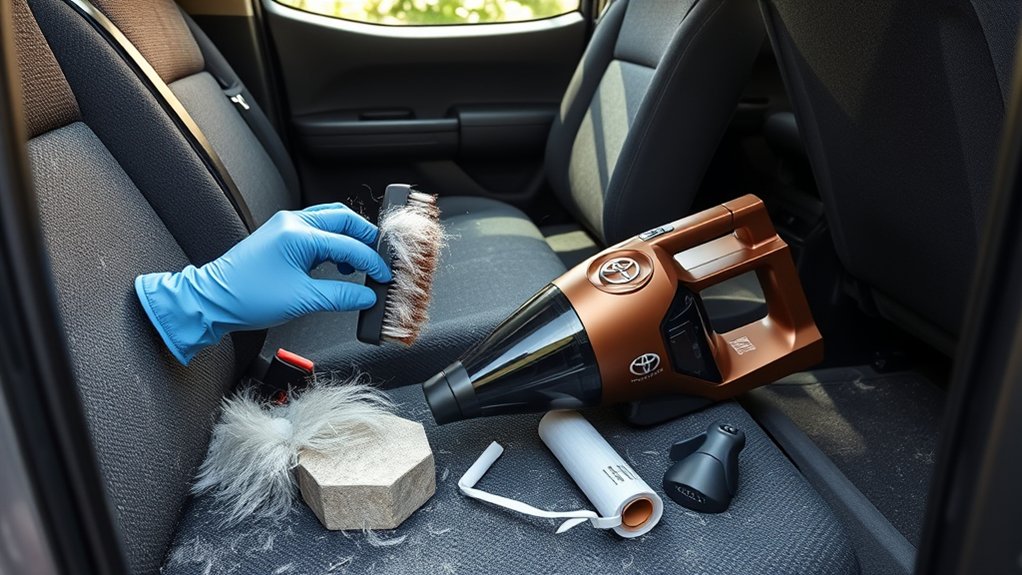
Pet hair can work deep into a Toyota Tacoma’s seat fabric, carpet, seams, and floor-mat fibers. You’ll get better results by removing it in stages instead of relying on one tool. Start dry, loosen the embedded hair, vacuum again, and use moisture only when the seat material and your model-year owner’s manual allow it.
Reviewed for accuracy: July 13, 2026
Quick Answer
Vacuum the Tacoma seats and carpet first, then use a clean rubber glove, rubber brush, or lint roller to pull out hair the vacuum missed. Work in short strokes, vacuum the clumps, and use a crevice tool around seams and rails. Test any damp method first, and avoid sharp scrapers or high-pressure air near airbags and electronics.
Key Takeaways
- Use a dry-first process: vacuum, loosen the hair, collect the clumps, and vacuum again.
- Choose soft rubber or fabric-safe tools instead of metal blades or aggressive scrapers.
- Check your Tacoma’s seat material and model-year manual before using water or cleaner.
- Use compressed air only with strict pressure control, eye protection, and care around safety equipment.
- Prevent buildup with washable seat covers, quick cleanups after pet rides, and regular tool maintenance.
At a Glance
| Time Required | About 20 to 60 minutes, depending on buildup and cab size |
| Difficulty | Easy to moderate |
| Tools Needed | Vacuum, upholstery and crevice attachments, rubber glove or brush, lint roller, and microfiber cloth |
| Cost | No added cost if you already own basic cleaning tools; otherwise it depends on the tools you need |
Essential Tools for Removing Pet Hair From Toyota Tacoma Interiors
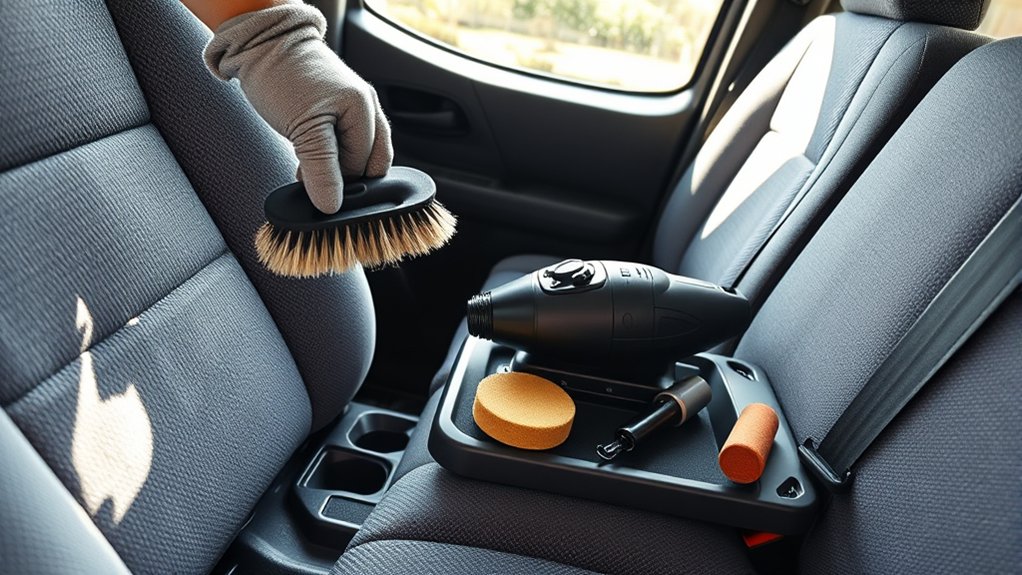
You don’t need a large detailing kit. A few soft, fabric-safe tools can remove most loose and embedded hair without damaging the cabin.
- Vacuum with upholstery and crevice attachments: Use the upholstery tool on broad areas and the crevice tool along seams, seat tracks, and carpet edges. A powered brush can help on durable cloth, but stop if it pulls threads or causes fuzzing.
- Clean rubber glove or rubber brush: Short, overlapping strokes create friction and gather hair into clumps that are easier to vacuum.
- Lint roller or low-tack tape: Use it for surface hair and final touch-ups. Press lightly on delicate fabric and avoid leaving adhesive residue.
- Soft detailing brush: Sweep hair out of stitching, plastic trim gaps, cup holders, and seat-mount areas while holding the vacuum nozzle nearby.
- Microfiber cloth: A barely damp cloth can collect fine hair on water-safe surfaces after you test a hidden area.
- Optional low-pressure air tool: Use it only when brushing and vacuuming cannot reach a gap, and follow the safety limits explained below.
Pro Tip: Hold the vacuum nozzle a few inches from the rubber glove or brush as you work. It captures each clump before the hair spreads to another part of the cabin.
Check Your Tacoma’s Upholstery Before Cleaning
Tacoma interiors vary by model year, trim, options, and previous repairs. You may have woven cloth, coated synthetic material, leather-trimmed seating, rubber floor liners, or aftermarket covers. Before adding water or cleaner, identify the surface and check the cleaning guidance in your exact Toyota owner’s manual.
- Cloth seats and carpet: Start with dry tools. Test any damp glove or cleaner on a hidden area and avoid soaking the foam below.
- Leather or coated synthetic seats: Use a soft cloth or a vacuum with a protected nozzle. Avoid aggressive rubber scraping that can dull or mark the finish.
- Headliner: Use very light pressure. Pulling, scrubbing, or saturating it can loosen the fabric or adhesive.
- Seat belts: Do not coat the webbing with dressings, oils, or sticky cleaners. Remove loose hair gently and follow the manual’s care instructions.
- Airbag and electrical areas: Avoid forcing tools, liquid, or compressed air into seat seams marked “SRS AIRBAG,” switches, connectors, vents, speakers, or sensors.
Step-by-Step Guide to Cleaning Pet Hair From Your Tacoma
- Park safely and ventilate the cab. Turn the truck off, remove the key or disable the ignition, open the doors, and work in a dry, well-lit area.
- Clear the interior. Remove loose items, child seats when appropriate, washable pet blankets, and floor mats. Do not disturb electrical connectors under powered seats.
- Inspect and test. Look for loose stitching, damaged leather, wet areas, or aftermarket upholstery. Test each tool on a hidden spot before cleaning a visible panel.
- Vacuum loose debris first. Make slow passes in more than one direction. Clean the seats, seatbacks, carpet, floor mats, and the open areas under the seats.
- Loosen embedded hair. Use a dry rubber glove, soft rubber brush, or fabric-safe pet-hair tool in short strokes. Gather the hair into small piles rather than pushing it around the cabin.
- Vacuum the clumps. Use the upholstery nozzle on flat areas and the crevice nozzle along seams, rails, and trim edges.
- Finish tight spots. Sweep hair outward with a soft brush while vacuuming. Use low-pressure air only when the safer mechanical methods cannot reach the area.
- Spot-clean only when needed. Hair removal usually does not require detergent. For a separate stain, use a cleaner approved for the material, follow its label, and blot instead of soaking. An EPA Safer Choice label can help you identify products with reviewed ingredients, but it does not replace a material-compatibility check.
- Dry and inspect. Let any damp surface dry fully with the doors open in a secure location. Recheck seams and floor edges, then reinstall dry mats and accessories.
The most reliable process is simple: remove loose debris, create friction to lift embedded hair, collect the clumps, and vacuum a second time.
Removing Stubborn Pet Hair in Tight Spaces
Hair often collects beside seat rails, between cushions, under plastic trim edges, and around the rear-seat hinges. Start with a crevice nozzle and a soft detailing brush. Move the brush toward the nozzle so you remove the hair instead of pushing it deeper.
A barely damp microfiber cloth or rubber glove may help fine strands clump on water-safe cloth. Test first, use very little moisture, and keep liquid away from switches, connectors, and seat-mounted airbag seams. Low-tack tape can lift a few remaining hairs, but stop if it pulls fibers or leaves adhesive behind.
Warning: Do not use an unregulated shop-air nozzle or spray aerosol duster close to your skin, eyes, upholstery, vents, switches, sensors, or airbag seams. If you use compressed air, follow the tool label, wear eye protection, ventilate the cab, and keep the pressure low. OSHA’s workplace rule limits compressed air used for cleaning to less than 30 psi and also requires guarding and personal protective equipment.
Professional detailers may use pulsed-air tools, sometimes called Tornador-style tools, to loosen embedded debris. These tools can move dirt quickly, but they also require pressure control, ventilation, hearing and eye protection, and care around delicate trim. A vacuum and brush are the safer starting point for most do-it-yourself cleaning.
Maintain Your Cleaning Tools for Lasting Results
Dirty tools can spread hair, dust, odors, and cleaner residue back onto the upholstery. Empty the vacuum before airflow drops, cut wrapped hair from removable brush rolls only after unplugging the machine, and clean attachments according to the manufacturer’s directions.
Regular Cleaning Schedule
Your ideal schedule depends on how often your pet rides in the truck, how much it sheds, and whether the seats are protected. Use this condition-based plan instead of treating every Tacoma the same.
| Task | When to Do It |
|---|---|
| Quick vacuum or lint-roll | After a shedding-heavy trip or when loose hair is visible |
| Full seat and carpet cleaning | When hair begins collecting in seams, carpet edges, or under the seats |
| Tool maintenance | After each heavy cleaning or whenever suction and pickup weaken |
Proper Storage Techniques
Wash reusable rubber gloves and brushes with mild soap when their labels allow it, rinse them well, and let them dry before storage. Keep lint rollers covered so the adhesive stays clean. Store vacuum attachments together in a dry container.
Follow the manufacturer’s storage directions for any aerosol can or compressed-air tool. Keep pressurized containers away from heat, direct sunlight, flames, and children. Do not puncture or modify a canister or nozzle.
Additional Tips and Tricks for a Hair-Free Tacoma Interior
- Use a washable seat cover or pet hammock: Secure it so it does not interfere with seat belts, child restraints, airbag seams, or the driver’s controls.
- Place a washable blanket under your pet: Shake it outdoors and remove loose hair before laundering it.
- Groom your pet before longer rides: Removing loose coat outside the truck reduces what reaches the seats and carpet.
- Clean while the buildup is light: Fresh surface hair is easier to collect than hair that has been pressed into the fibers for weeks.
- Work from top to bottom: Clean seatbacks before cushions and cushions before carpet so fallen hair is collected at the end.
- Use good lighting: A flashlight held low across the fabric makes fine hair easier to see around seams and rails.
Note: Removing visible fur does not remove every pet allergen. The National Institute of Environmental Health Sciences explains that fur can carry allergens from dander, saliva, and urine. If allergies are a concern, vacuum regularly with a HEPA-filter machine, clean with the allergic person away from the area, and ventilate the cab.
What Tools Do Others Recommend for Pet Hair Removal?
Detailers and pet owners often combine tools because no single remover works equally well on every weave, pile, seam, or seat material. The most useful options are:
- Rubber gloves or soft rubber brushes: Best for gathering hair from durable cloth into vacuum-ready clumps.
- Handheld or full-size vacuums: Choose upholstery and crevice attachments that fit your seat seams and floor edges.
- Lint rollers: Useful for surface hair and quick touch-ups, but less effective on deeply embedded strands.
- Soft detailing brushes: Helpful around stitching, trim gaps, cup holders, and seat-mount areas.
- Pulsed-air detailing tools: Effective in trained hands, but unnecessary for most home cleanups and riskier around delicate or safety-related components.
A rubber-toothed or fabric-safe hair tool is generally a better choice than a metal scraper. Metal edges can snag threads, shave carpet fibers, scratch trim, or mark coated seating. Even with a soft tool, use light pressure and test a hidden area first.
Understanding the Challenges of Pet Hair in Your Tacoma
Pet hair sticks differently depending on the hair’s length and stiffness, the upholstery weave, static charge, moisture, and how firmly passengers or cargo have pressed it into the surface. Short, stiff hairs may spear into woven cloth, while long hair can wrap around brush rolls and collect in seams.
No reliable rule says dog hair is always harder to remove than cat hair. The individual animal, coat type, seat material, and amount of buildup matter more than the species. That is why a test area and a staged process give you better results than aggressive scraping.
Hair may also hide below the visible surface. Check the lower seat edges, under removable mats, beside the center console, under rear-seat cushions when your manual allows access, and around child-seat anchor areas. Do not remove trim panels or disconnect seats only to chase hair unless you have the correct service information.
Troubleshooting Common Pet Hair Cleaning Problems
The Vacuum Is Not Picking Up the Hair
Empty the bin or bag, check the filter and hose, remove hair wrapped around the brush, and confirm the attachment is seated correctly. Loosen embedded hair with a rubber tool before the next vacuum pass.
The Fabric Starts Fuzzing or Pilling
Stop using the current brush or scraper. Switch to a softer glove, reduce pressure, and vacuum without rubbing. Do not cut or shave the upholstery unless a qualified trim professional recommends it.
Hair Keeps Returning From Seams
Spread the seam gently with your fingers, brush toward the opening, and hold the crevice nozzle beside the gap. Repeat from both directions instead of forcing the nozzle deep into the seat.
The Seat Stays Damp or Smells Musty
Stop adding moisture. Ventilate the truck in a secure, dry place and allow the seat to dry fully. If odor or dampness remains, the cushion may be oversaturated and may need professional extraction and drying.
Tape or a Roller Leaves Residue
Do not add more adhesive. Check the material-care instructions, then use a cleaner approved for that surface on a hidden test spot. Professional help is safer for delicate leather, suede-like materials, or unknown aftermarket fabric.
Related Guides
Frequently Asked Questions
What is the best tool to get pet hair out of a car?
For most Tacoma cloth interiors, start with a vacuum that has upholstery and crevice attachments. Follow with a clean rubber glove or soft rubber brush to lift embedded hair, then vacuum the clumps. The best tool depends on the seat material and how deeply the hair is lodged.
What do car detailers use to remove pet hair?
Detailers may combine strong vacuums, rubber brushes, crevice tools, specialty hair removers, and controlled pulsed-air equipment. The air tools require more safety equipment and experience, so a vacuum-and-rubber-tool method is the better starting point for home cleaning.
What is the best way to get dog hair out of car upholstery?
Vacuum loose debris, pull embedded hair into clumps with a rubber glove or soft brush, and vacuum again. Work in several directions because short hairs can enter woven cloth at different angles. Use a lint roller only for the final surface hairs.
Which technique is effective for removing pet hair from upholstery?
A staged dry-cleaning technique works well: vacuum, create gentle friction with a rubber tool, collect the hair, and vacuum again. Test the tool first and use less pressure on leather, coated synthetic seating, loose weaves, and headliners.
Can I use compressed air to remove pet hair from my Tacoma?
Use compressed air only as a last step for inaccessible gaps. Keep pressure low, wear eye protection, ventilate the cab, and never aim air at people, airbag seams, switches, vents, sensors, speakers, or electrical connectors. A crevice nozzle and soft brush are safer for most areas.
Can I use a damp rubber glove on leather or synthetic seats?
Do not assume the method is safe for every surface. Check your model-year manual, test a hidden area, and use very light pressure. A soft microfiber cloth or protected vacuum nozzle is usually a safer choice for smooth leather or coated synthetic seating.
Conclusion
You can remove most pet hair from a Toyota Tacoma without harsh chemicals or aggressive scraping. Vacuum first, lift embedded strands with a soft rubber tool, vacuum the clumps, and finish the seams with a brush and crevice nozzle. Match every method to the seat material, keep moisture and pressure under control, and clean soon after pet rides so the next job takes less effort.
Sources
- Toyota Manuals and Warranties – model-year owner’s manuals and vehicle-specific care guidance
- Occupational Safety and Health Administration, 29 CFR 1910.242 – compressed-air cleaning pressure and protective-equipment rule
- National Institute of Environmental Health Sciences: Pet Allergens – how fur carries allergens and guidance on HEPA vacuuming
- U.S. EPA Safer Choice – safer-ingredient product-label criteria
- U.S. EPA: Air Cleaners and Air Filters in the Home – filtration as a supplement to source control and ventilation

