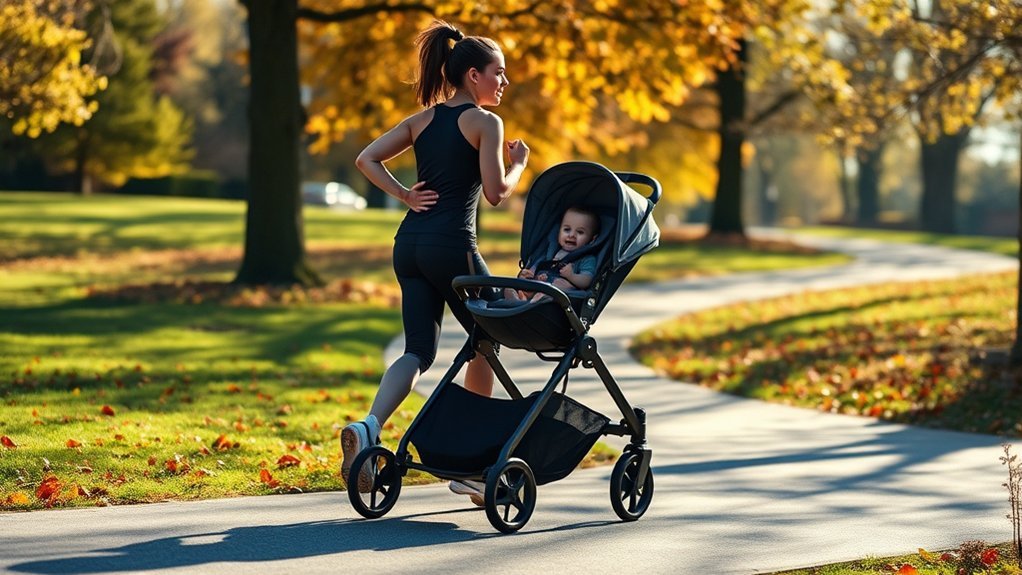
Running with a stroller can be a fun way to stay active while spending time with your child, but it needs the right setup and safe habits. You need a jogging stroller, a secure harness, good posture, steady pacing, and a route that helps you stay in control from start to finish.
Quick Answer
To run safely with a stroller, use a jogging stroller, secure your child with the five-point harness, lock the front wheel when needed, use the wrist strap, choose smooth routes, and keep an upright running form with short, controlled strides.
Key Takeaways
- Use a jogging stroller rather than a regular stroller for running, because it is built for better stability and control.
- Secure your child with the five-point harness and use the wrist strap every time you run.
- Check the brakes, wheels, canopy, handlebar, and harness before each run.
- Run with relaxed arms, short strides, an engaged core, and steady pacing.
- Choose flat, smooth, low-traffic routes and avoid rough surfaces, steep hills, and crowded paths.
At a Glance
| Best Stroller Type | Jogging stroller with a secure harness, stable frame, reliable brakes, and a lockable front wheel |
| Difficulty | Moderate, because pushing extra weight changes your form, pace, and balance |
| Pre-Run Check | Harness, brakes, wheels, wrist strap, canopy, tire condition, and route conditions |
| Best Route | Flat, smooth, well-lit paths away from heavy traffic, loose gravel, sharp turns, and steep hills |
Safety Guidelines for Running With a Stroller
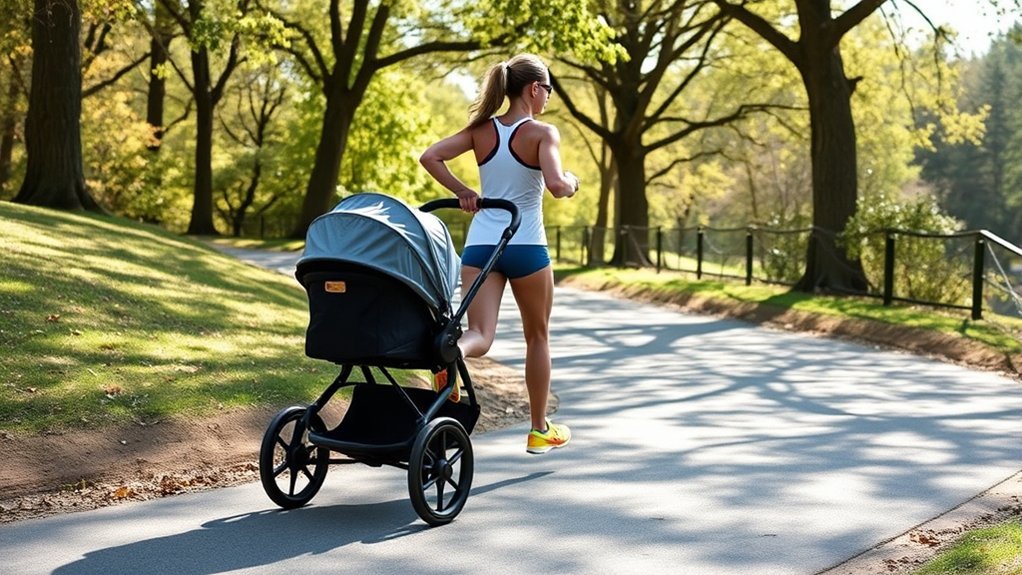
When you decide to run with a stroller, safety should come first for both you and your child. Make sure your baby is old enough to sit comfortably with steady head and neck control before starting stroller runs. Many parents wait until around six months, but your child’s development and your pediatrician’s guidance matter most.
Choose a stroller type designed specifically for running. A true jogging stroller usually has better stability, larger wheels, stronger suspension, and a design that handles movement more safely than a standard everyday stroller. Always secure your child with the five-point harness so they stay properly positioned during your jog.
Use the wrist strap every time. It helps stop the stroller from rolling away if your hand slips, especially on slopes or during a sudden stop. Choose safe running routes away from traffic, potholes, loose gravel, crowded sidewalks, and uneven surfaces. With the right setup, stroller running can feel smooth, controlled, and enjoyable.
Warning: Do not run with a baby in a stroller before they have enough head and neck control. If you are unsure, ask your child’s healthcare provider before starting stroller runs.
Pre-Run Safety Checks
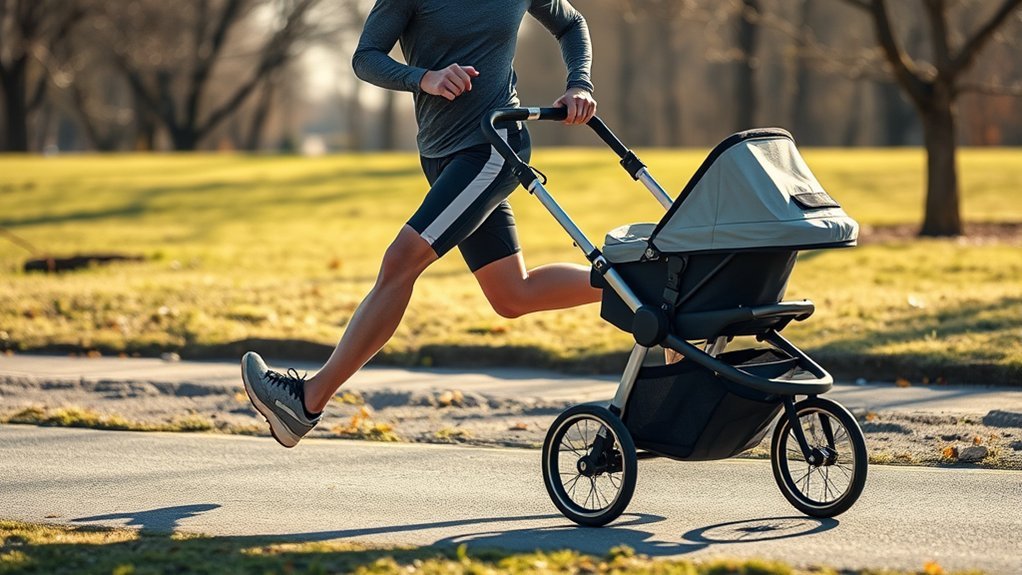
Before you hit the pavement with your stroller, take a few minutes to complete a careful pre-run check. This habit can prevent loose parts, brake problems, and avoidable safety issues once you are already moving.
Start by checking the five-point harness, hand brake, parking brake, and wrist strap. The harness should sit snugly without pinching, and the straps should not be twisted. Test the brakes to confirm they lock securely and release smoothly. A brake that sticks or slips can make the stroller harder to control.
Make sure the front wheel is locked straight when your stroller manual recommends it for running. Check that all wheels are fully attached and spin properly. Look over the tires for low pressure, cracks, or debris. Inspect the canopy for secure attachment and sharp edges. Regular stroller maintenance helps keep the stroller functional and supports a safer running experience for both you and your child.
Quick Pre-Run Checklist
- Check that the five-point harness is snug and properly buckled.
- Test the parking brake and hand brake before leaving home.
- Confirm the wrist strap is attached and ready to use.
- Make sure the front wheel is locked or set according to the stroller manual.
- Check that all wheels are secure and tires are in good condition.
- Inspect the canopy, frame, handlebar, and storage basket for loose parts.
- Remove heavy loose items that could shift and affect balance.
- Review your route for traffic, steep hills, construction, or rough pavement.
Techniques for Running With a Jogging Stroller
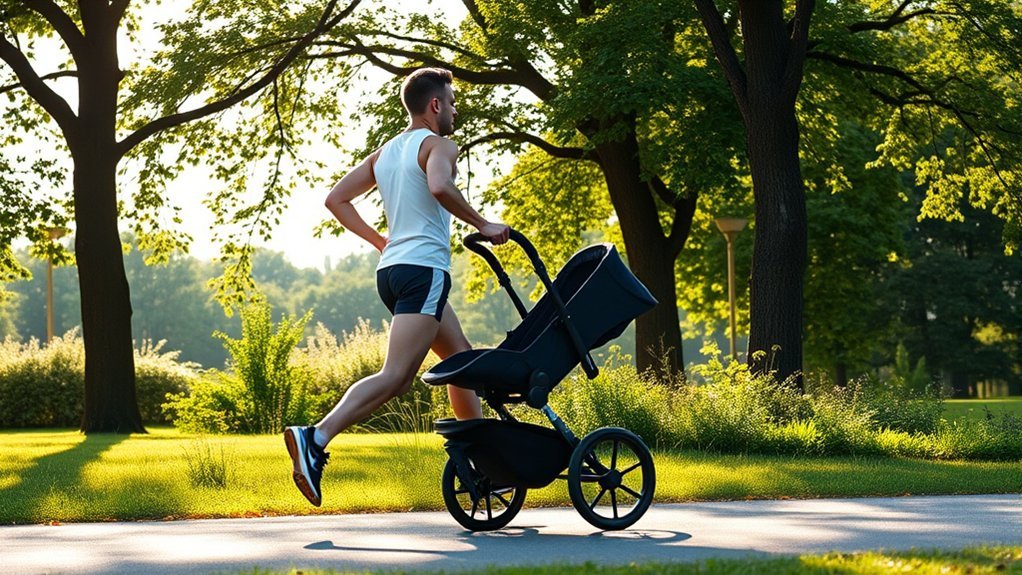
When you’re running with a jogging stroller, proper grip and posture are essential for safety and efficiency. Keep a light grip on the handlebar and switch hands periodically to reduce fatigue. Engage your core and maintain an upright position so you can run smoother, breathe better, and stay more comfortable.
Proper Grip Techniques
A proper grip on the jogging stroller helps you run with better control. Keep your hands relaxed instead of squeezing the handlebar tightly. A tight grip can tense your shoulders and make your stride feel stiff.
Using the wrist strap is vital because it helps prevent the stroller from rolling away when you pause, trip, or lose grip. To avoid strain, alternate hands every 30 to 60 seconds when conditions allow. This helps balance muscle use and reduces tension on one side of your body.
Shorten your stride so the stroller stays close to you. Long strides can push your body too far behind the stroller, which may reduce control. Engaging your core muscles and keeping your shoulders relaxed will improve your running efficiency.
| Technique | Benefits |
|---|---|
| Light grip | Improved handlebar control and less shoulder tension |
| Wrist strap usage | Helps prevent the stroller from rolling away |
| Hand alternation | Reduces body strain and balances muscle use |
| Shortened strides | Enhances stability and keeps the stroller close |
Smooth Running Posture
To achieve a smooth running posture while pushing a jogging stroller, maintain alignment and engage your core. Keep your back straight, your head up, and your gaze forward. This promotes good posture alignment and helps you react sooner to bumps, turns, and people on the path.
Your elbows should be slightly bent, with your arms relaxed enough to move naturally. Focus on using your legs to drive the motion rather than leaning heavily into the handlebar. Leaning too much can place extra stress on your shoulders, wrists, and lower back.
Aim for a steady pace with short, controlled strides. This supports better balance, smoother stroller handling, and stronger endurance. Keeping the stroller close improves maneuverability and makes the run more comfortable for both you and your little one.
Pro Tip: Start your stroller run slower than your normal solo pace. The extra weight changes your stride, so give your body time to settle into a comfortable rhythm.
Tips for Improving Stroller Running Form

While pushing a stroller during your run, maintaining proper form is essential for both safety and efficiency. Start by adjusting the stroller handle height if your model allows it. Your arms should stay relaxed with slightly bent elbows, allowing a natural motion rather than a stiff push.
Keep your back straight and engage your core muscles to support your lower back. Let your legs drive the run. If you rely too much on your upper body, your shoulders and arms may tire quickly, and your running rhythm may become uneven.
Focus on a steady pace that accounts for the added weight of the stroller. Do not expect your stroller-running pace to match your usual solo pace right away. Build gradually and focus on control before speed. By following these tips, you can enjoy a smoother, safer, and more effective running experience.
Common Stroller Running Mistakes to Avoid
- Overstriding: Long steps can reduce control and increase impact on your joints.
- Leaning into the stroller: This can strain your shoulders, wrists, and lower back.
- Running too fast too soon: Build pace slowly so your body adapts to the extra load.
- Skipping the wrist strap: This removes an important layer of safety.
- Ignoring route conditions: Wet leaves, gravel, curbs, and potholes can make stroller control harder.
Injury Prevention Strategies
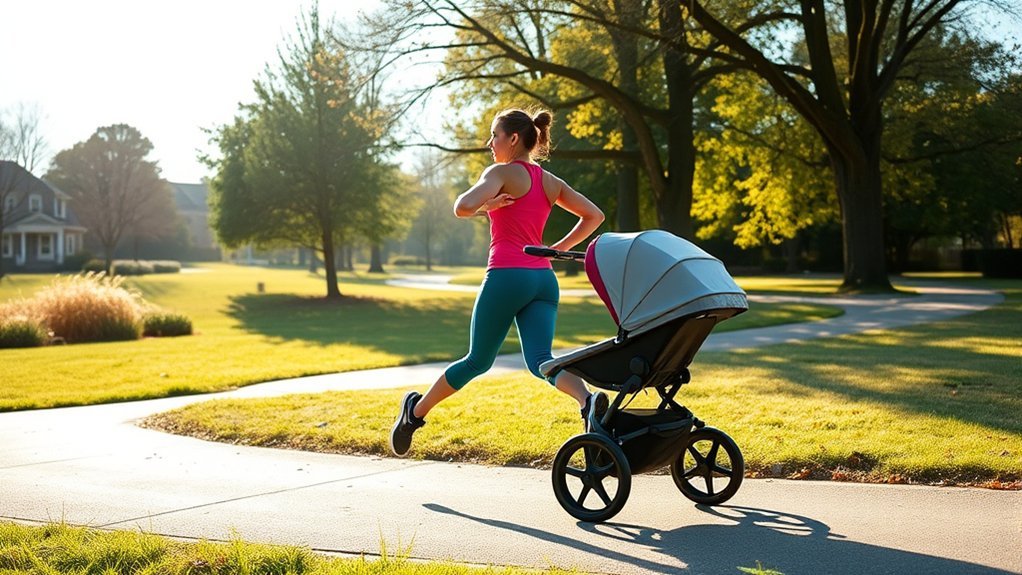
Injury prevention is essential when running with a stroller because the added weight can strain your body if you do too much too soon. Start every run with 5 to 10 minutes of warm up routines. Walk briskly, loosen your hips, roll your shoulders, and ease into your first few minutes of jogging.
Gradually increase your running distance and intensity. A safe approach is to make small weekly increases instead of jumping from short easy runs to long hard workouts. Listen to your body’s signals. If you feel sharp pain, dizziness, unusual pressure, or worsening discomfort, stop running and recover.
Incorporate strength training exercises that target your core, hips, glutes, and lower body. These areas help stabilize your stride while pushing the stroller. After your run, stretch key muscle groups, including calves, hamstrings, hip flexors, glutes, chest, and shoulders. This can help maintain flexibility and reduce soreness.
Safe Progression for Beginners
If you are new to stroller running, begin with walk-jog intervals. For example, walk for a few minutes, jog for one minute, then repeat. As your comfort improves, increase the jogging portions gradually. This helps your body adapt to the stroller’s weight without forcing your pace.
Postpartum runners should be especially patient. Your core, pelvic floor, hips, and joints may need extra time to recover. Start gently, and seek professional guidance if you have pain, pressure, leaking, or heaviness during or after running.
Note: Stroller running changes your mechanics. It is normal to feel slower at first, so measure success by comfort, control, and consistency instead of pace alone.
Choosing the Right Running Route
The right route can make stroller running safer and more enjoyable. Look for flat, smooth surfaces with enough space to pass walkers, pets, and other runners. Parks, paved trails, quiet neighborhood paths, and wide sidewalks are often better than narrow roads or crowded streets.
Avoid routes with heavy traffic, poor lighting, sharp turns, loose gravel, broken pavement, steep downhill sections, or frequent curb cuts. Downhills can be especially challenging because the stroller may pull ahead of you. If you run near roads, stay alert, avoid headphones at high volume, and use reflective gear in low light.
Best Route Features
- Wide paved paths with good visibility
- Low traffic and minimal street crossings
- Flat or gently rolling terrain
- Good lighting for early morning or evening runs
- Safe places to stop for feeding, diaper changes, or rest
- Access to water, shade, and restrooms when possible
Keeping Your Child Comfortable During the Run
Your child’s comfort matters as much as your running form. Dress your child for the weather, but avoid bulky layers that interfere with the harness. Use the stroller canopy for sun protection, and bring small essentials such as water, wipes, a light blanket, and a favorite toy if your child enjoys one.
Check on your child often. Watch for signs of discomfort, overheating, cold hands, fussiness, or slumping posture. Keep runs shorter at first so your child gets used to the experience. If they seem unhappy, pause, adjust, or head home. A positive routine will make future stroller runs easier.
Community and Resources

Connecting with local running groups can make a big difference in your stroller running journey. You can find support, accountability, and practical tips from other parents who understand the challenges of running with a child in tow.
You may also gain access to expert advice, group runs, stroller-friendly routes, and local events. Community support can help you stay motivated and make the experience more fun.
Local Running Groups
Joining a local running group can enhance your experience as a stroller runner. These groups often welcome different paces and experience levels, making it easier to start without feeling pressured.
- Parent Motivation: Connect with fellow parents who share your goals and encourage consistency.
- Stroller Races: Join family-friendly events or stroller divisions when available.
- Expert Advice: Learn from experienced runners, coaches, and physical therapists about form and injury prevention.
- Social Interaction: Attend meetups and events that combine fitness with community.
Expert Support Resources
While learning stroller running can feel overwhelming at first, expert support resources can make the process easier. Running stores, physical therapists, postpartum fitness specialists, local coaches, and parent running communities can all provide useful guidance.
Consider these options for support:
| Resource Type | Benefits | Where to Find |
|---|---|---|
| Expert Advice | Injury prevention and form tips | Physical therapists or running coaches |
| Running Workshops | Skill building and safe training guidance | Local running stores or fitness studios |
| Online Forums | Motivation and shared parent experiences | Parent running groups and social communities |
| Community Groups | Support, accountability, and stroller-friendly meetups | Local meetups, parks, and running clubs |
Use these resources to feel more confident, safer, and supported as you build your stroller running routine.
Related Guides
Frequently Asked Questions
What type of stroller is best for running?
The best stroller for running is a jogging stroller with a stable frame, larger wheels, a secure five-point harness, reliable brakes, and a front wheel that can lock straight when needed. These features help improve control and comfort during runs.
Can I run with a regular stroller?
Running with a regular stroller is not ideal. Regular strollers are usually designed for walking, shopping, and everyday use, not running impact or higher speeds. A jogging stroller is the safer and more stable choice for stroller running.
How do I choose the right running route?
Choose a flat, smooth route with wide paths, low traffic, good visibility, and minimal obstacles. Avoid broken pavement, loose gravel, steep hills, sharp turns, crowded areas, and busy roads whenever possible.
Should I wear a baby carrier while running?
You should not wear a baby carrier while running. A carrier may feel close and convenient, but it can affect balance, increase impact on your body, and create safety concerns for your baby. A proper jogging stroller gives better stability and control.
How can I keep my child entertained while running?
Use simple stroller-safe toys, a small snack when age-appropriate, a favorite blanket, or calm music at a safe volume. Keep runs short at first and choose routes with interesting scenery so your child can enjoy the ride.
How fast should I run with a jogging stroller?
Start slower than your normal running pace. Stroller running adds weight and changes your stride, so focus on smooth control, relaxed posture, and steady breathing before trying to increase speed.
What should I check before every stroller run?
Check the harness, brakes, wrist strap, wheels, tire condition, canopy, frame, and handlebar. Also check the weather and route conditions before leaving so you can avoid unsafe surfaces or poor visibility.
Conclusion
By following these guidelines, you can turn your stroller runs into a safe, active, and memorable part of family life. Start with the right jogging stroller, complete your pre-run checks, secure your child properly, and choose routes that help you stay in control.
Focus on proper form, a relaxed grip, short strides, and a steady pace. Build gradually so your body can adjust to the added stroller weight. With practice, you can improve your fitness while creating cherished memories with your little one. Lace up your shoes, check your gear, and enjoy the pavement with confidence.
