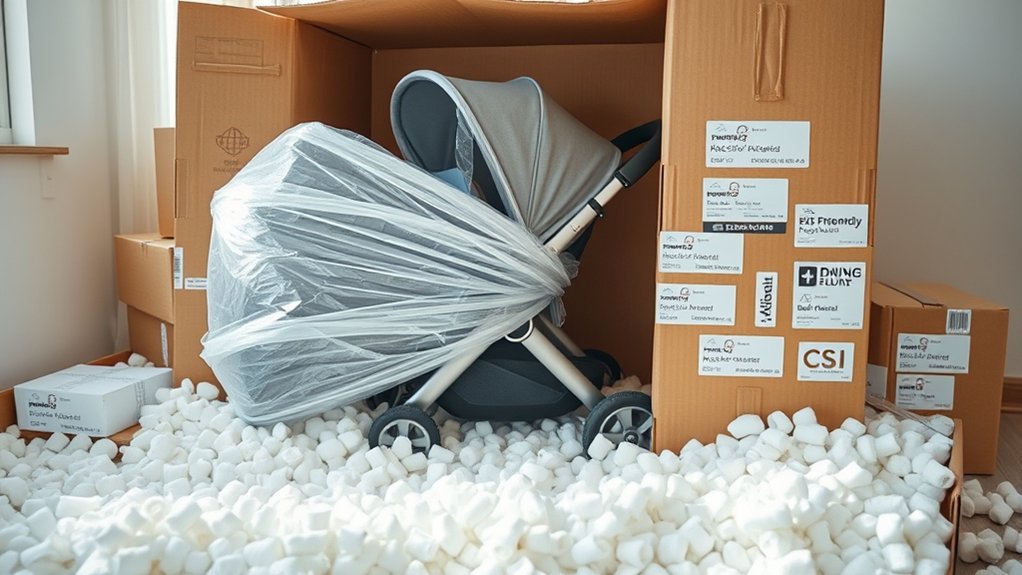
Shipping a stroller safely is not just a matter of folding it and dropping it into the nearest box. A stroller has moving parts, fabric, wheels, axles, hinges, plastic joints, and sometimes expensive accessories that can crack, bend, or shift if the package is not prepared correctly. With the right cleaning, documentation, disassembly, cushioning, box choice, carrier selection, tracking, and delivery instructions, you can lower the risk of damage and help the stroller arrive ready to use.
Quick Answer
To ship a stroller, clean and photograph it first, remove detachable parts, wrap the frame and wheels with cushioning, pack everything tightly in a strong corrugated box, seal the box with the H-pattern method, compare carrier rates, buy insurance for valuable strollers, and send the recipient tracking and inspection instructions.
Key Takeaways
- Measure the folded stroller before choosing a box so you do not overpay for unnecessary package size.
- Remove wheels, canopies, trays, cup holders, adapters, and other detachable parts when possible.
- Use labeled bags for screws and small parts so the stroller can be reassembled easily after delivery.
- Fill every empty space in the box because shifting is one of the biggest causes of shipping damage.
- Compare UPS, FedEx, USPS, and other available services before buying a label, especially for oversized strollers.
At a Glance
| Time Required | 45 minutes to 2 hours, depending on stroller size and how many parts must be removed |
| Difficulty | Moderate DIY task; easier with the stroller manual and a helper for large models |
| Tools Needed | Measuring tape, mild soap, towels, phone camera, plastic bags, marker, bubble wrap, foam sheets, packing tape, and a heavy-duty box |
| Cost | Packing supplies may cost about $15 to $60; shipping cost varies by carrier, distance, size, weight, speed, and insurance |
A Step-By-Step Guide to Shipping Your Stroller
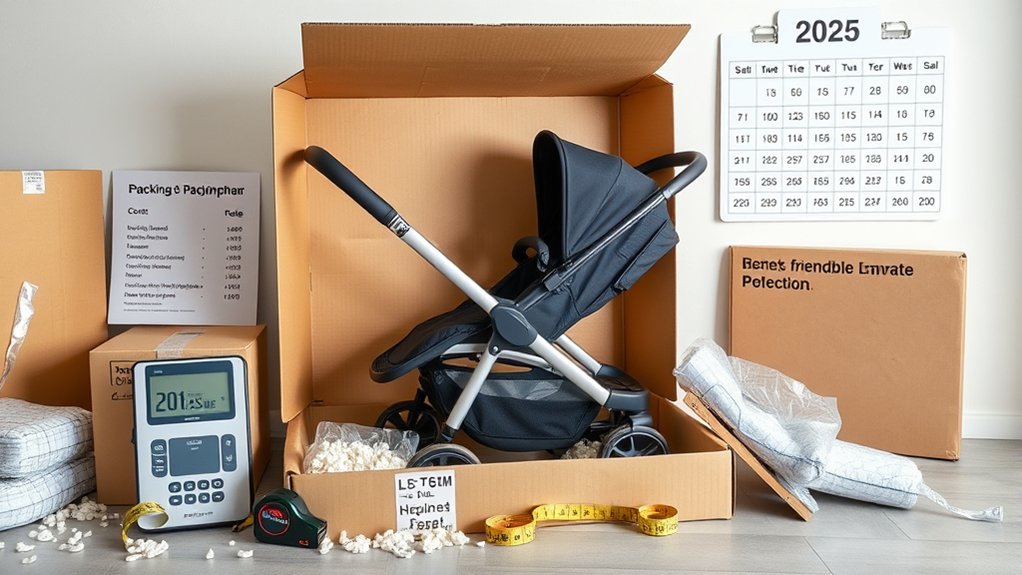
When you’re ready to ship your stroller, starting with disassembly is essential because it reduces size and minimizes the risk of damage during transit. Begin by removing the wheels and any detachable parts that the manufacturer allows you to remove. Next, choose appropriate packaging materials, such as a heavy-duty corrugated box that gives the stroller room for cushioning without leaving too much empty space. For many folded strollers, boxes in the range of 36 x 18 x 18 inches to 48 x 24 x 24 inches may work, but the right size depends on your stroller’s folded dimensions. Allow about 2 to 4 inches of extra space for cushioning on the sides, top, and bottom. Secure the stroller with bubble wrap and foam sheets, then fill empty spaces to prevent movement. Use the H-pattern method to seal the box firmly. Finally, compare shipping rates among major carriers like UPS, FedEx, and USPS because costs can vary widely based on weight, dimensions, speed, insurance, and distance.
Note: Before you buy a label, measure the final packed box rather than the stroller alone. Carriers usually price large packages by size, weight, distance, and service level, so a slightly smaller box can make a noticeable difference.
Clean and Document the Stroller’s Condition
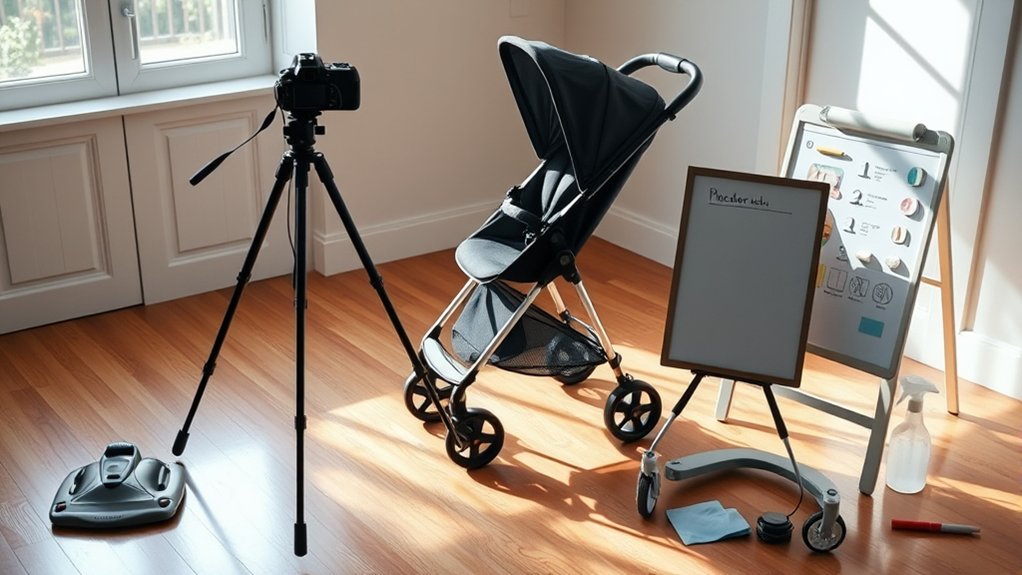
Before you pack your stroller for shipping, clean it thoroughly. Use mild soap and water on washable surfaces, wipe away crumbs and dirt, and let every part dry completely before packing. Moisture trapped inside a box can create odors, stains, mildew, or fabric damage during transit. This simple stroller maintenance step also improves presentation if you are shipping the stroller to a buyer, family member, or repair service.
Next, take detailed photographs and short videos of the stroller’s condition. Capture the frame, wheels, brakes, handlebar, seat fabric, canopy, folding mechanism, labels, model number, serial number, accessories, and any existing wear. Open and close the stroller on video if the folding mechanism is a concern. Keep these records until the package is delivered and accepted. This documentation can help if you need to file damage claims with carriers, support a sale dispute, or prove the stroller’s pre-shipping condition for shipping insurance.
Pro Tip: Photograph the stroller before packing, during wrapping, after it is placed in the box, and after the box is sealed. These extra photos can show that you used reasonable packing care.
Disassemble the Stroller
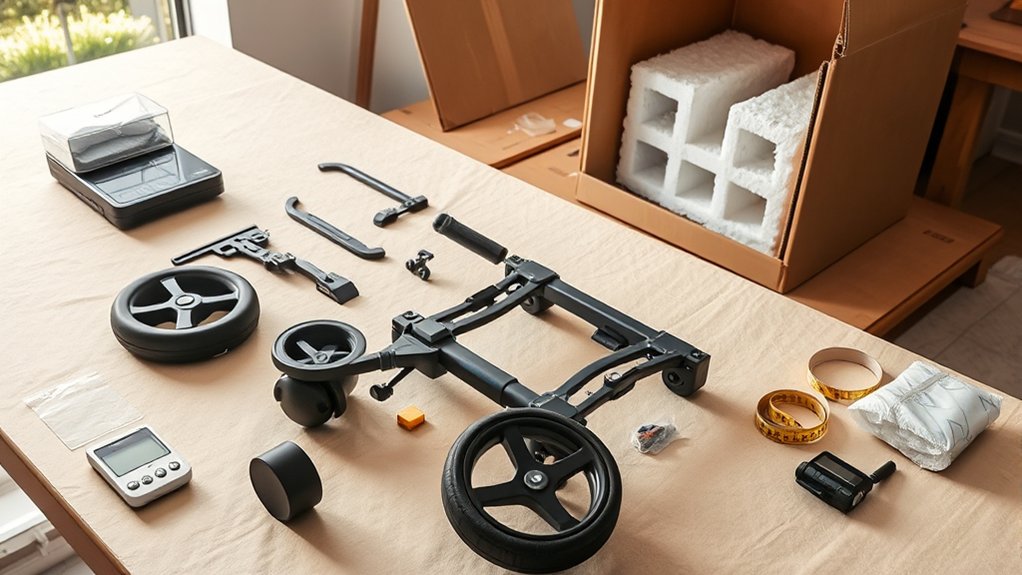
To ship your stroller safely, start by disassembling it enough to reduce size and protect the most exposed parts. Focus on removing essential parts like the wheels and canopy if your model allows it, and organize small components in labeled bags for easy reassembly. If you’re unsure about the process, check the stroller manual, manufacturer support page, or model-specific video instructions before forcing any part. Some strollers have quick-release wheels, while others use pins, clips, screws, or special adapters.
Warning: Do not force a stuck wheel, hinge, tray, or canopy clip. If a part does not release easily, confirm the correct removal method first because cracked plastic clips and bent axles can be difficult to repair.
Essential Parts to Remove
Disassembling your stroller is essential for safe shipping, and there are several crucial parts you should remove when the stroller design allows it. Start with wheel removal, as this can reduce the stroller’s size and help prevent wheel or axle damage during transit. Next, focus on canopy detachment. Removing the canopy can decrease bulk and protect the fabric and support arms from pressure inside the box. Take off detachable trays, cup holders, snack holders, car seat adapters, bumper bars, rain covers, bassinets, organizer bags, and other detachable accessories. Place screws, clips, pins, washers, and fasteners in labeled plastic bags for easy reassembly later. For fragile components, double-wrap the frame joints and wheel axles in bubble wrap for added protection. Consult your stroller’s manual or manufacturer instructions for safe disassembly. Properly removing these parts can also lower your shipping costs by minimizing package dimensions and weight.
Disassembly Techniques and Tips
One essential technique for disassembling your stroller involves a systematic approach that focuses on individual components. Work from the outside inward. Start with the wheels, canopy, trays, and detachable accessories because these parts often fit neatly in separate, labeled bags or small inner boxes. Use the appropriate disassembly tools, such as a small screwdriver or Allen key if your model requires one, and avoid using excessive force. Always take safety precautions. Watch for pinch points, sharp metal edges, spring-loaded clips, and small parts that could roll away or cause injury. Consult online resources or the stroller manual for visual guidance tailored to your model. Keeping all screws and small parts organized in labeled plastic bags prevents loss during shipping. Properly disassembling and securely wrapping your stroller minimizes potential damage during transit and may also reduce shipping costs by creating a more compact package.
Organizing Small Components Efficiently
While you disassemble the stroller, organizing small components efficiently is crucial for a smooth reassembly process. Start by removing wheels, canopies, and detachable accessories to minimize size for shipping. As you do this, focus on organizing screws and other small parts. Store them in labeled bags marked with clear descriptions such as “front wheel pins,” “canopy clips,” “tray screws,” or “adapter parts.” Tape each labeled bag to the wrapped stroller frame or place all small bags together inside a larger labeled bag so nothing gets lost. This way, you’ll easily find everything when it’s time to reassemble. Consult instructional videos or manuals for proper disassembly techniques to avoid damaging components. Remember to clean all parts before packing because dirt and grit can scratch fabric or plastic during movement. Finally, wrap fragile elements like the frame, brake assembly, folding joints, and wheel axles in bubble wrap or foam sheets for added protection. Your careful organization will pay off later.
Choose Between DIY or Professional Packaging
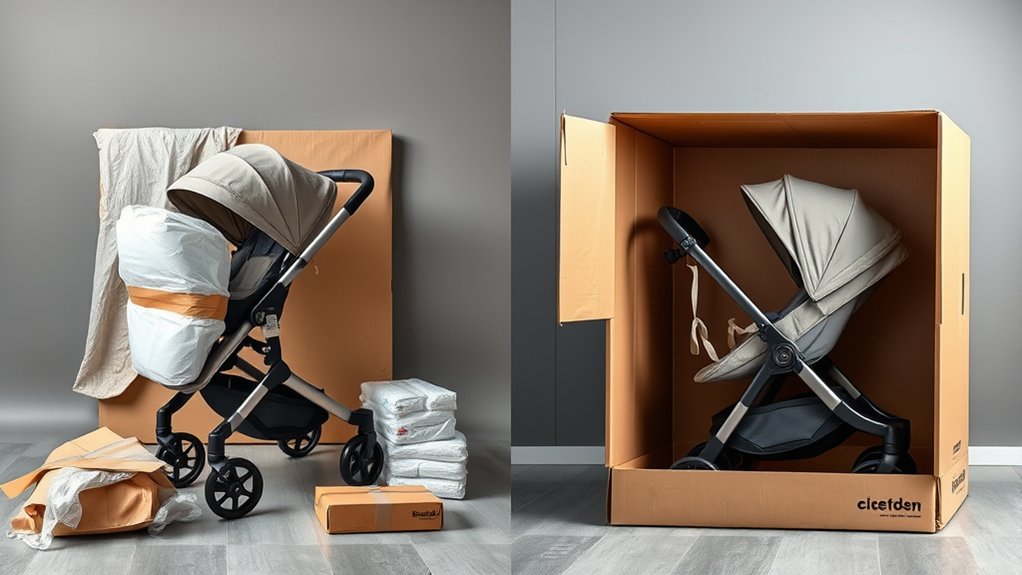
When deciding between DIY and professional packaging for your stroller, consider the cost implications, packing efficiency, and the time you’ll need to invest. DIY methods can save money, but they require careful attention to packing techniques to avoid damage. On the other hand, professional services may come with added fees but can offer expertise, materials, and convenience that streamline the process. A lightweight umbrella stroller may be simple to pack at home, while a premium travel system, double stroller, jogging stroller, or stroller with fragile accessories may be worth professional help.
Cost Analysis Comparison
Choosing between DIY packing and professional services for shipping a stroller involves weighing costs and benefits carefully. A cost comparison reveals distinct advantages for each option based on your needs:
- DIY packing supply costs may range from about $15 to $60, depending on box size, cushioning, tape, and protective materials.
- Shipping prices vary by carrier, service speed, package size, package weight, destination, and insurance level.
- Disassembling the stroller can lower shipping costs by reducing size and limiting awkward protruding parts.
- Local sourcing of packing materials may minimize expenses, but reused boxes must be sturdy, clean, dry, and undamaged.
- Professional packing services can add cost, but they may provide better materials and experience for expensive or oversized strollers.
- Regularly comparing DIY shipping expenses and carrier rates can help you avoid overpaying on future shipments.
Ultimately, your choice hinges on the balance between cost-effective shipping strategies and the peace of mind that comes from professional packing expertise. For a low-cost stroller, DIY packing may make sense. For a high-value stroller, a professional packing option and added insurance may be a better investment.
Packing Efficiency Assessment
Packing efficiency is vital when deciding between DIY and professional packaging for your stroller. First, assess your stroller’s dimensions and weight after it is folded and after detachable parts are removed. If it is oversized, unusually shaped, heavy, or delicate, professional services might be necessary. Disassembling the stroller can lower shipping costs and reduce damage risk, making DIY packing a practical choice for many families. Make sure you use heavy-duty corrugated boxes and adequate cushioning materials because these are essential for protecting your stroller during transit. Be mindful of shipping regulations and carrier package limits because they can affect your packing choices and available services. Finally, compare quotes for both options. You may discover cost differences that allow you to make an informed decision based on your budget, stroller value, delivery timeline, and specific shipping requirements.
Time and Effort
While deciding between DIY and professional packaging for your stroller, it’s vital to take into account the time and effort each option demands. Consider the following factors to assist your time management:
- Disassembly: DIY packing requires you to take apart the stroller, which can take time if you are unfamiliar with the model.
- Cleaning: Fabric, wheels, and frame pieces should be dry and clean before they are sealed inside the package.
- Packing Materials: Sourcing quality materials to ensure protection can be a hassle, especially for larger strollers.
- Cushioning: Proper cushioning is significant to prevent damage during transit and requires careful attention.
- Cost vs. Convenience: Weigh the cost of DIY supplies and your time against the convenience of professional services.
- Expert Handling: Professionals may expedite the process and pack the stroller according to common shipping standards.
Ultimately, evaluate your priorities to choose the best path for shipping your stroller. If speed and convenience matter most, professional packaging may be easier. If budget matters most and you have the right materials, DIY packing can still work well.
Gather Your Packing Materials
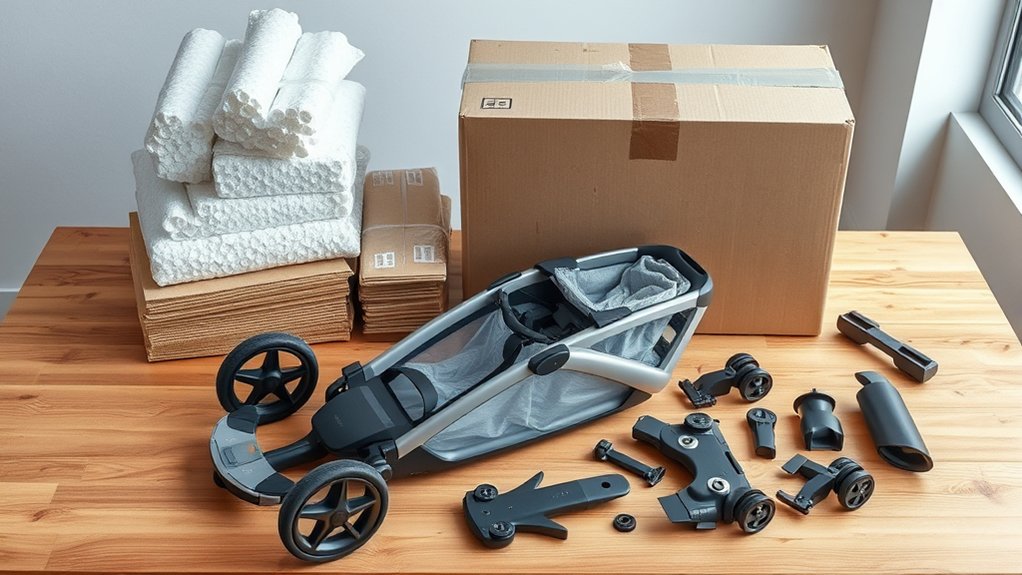
To guarantee your stroller arrives safely at its destination, start by selecting a heavy-duty corrugated box that offers 2 to 4 inches of extra space around the stroller and accessories. Common box sizes for strollers may range from 26 x 26 x 20 inches to 48 x 24 x 24 inches, but the best size depends on your specific stroller. Measure your stroller’s folded length, width, height, and removable parts before ordering a box to avoid unnecessary shipping costs. Next, gather essential packing materials like bubble wrap, foam sheets, corner protectors, packing paper, and heavy-duty tape. These help ensure your stroller is securely wrapped and protected during transit. Add extra protective cushioning, such as packing peanuts, crumpled paper, molded inserts, or air pillows, to fill any gaps in the box. Finally, use labeled plastic bags for small parts and screws removed during disassembly for easier reassembly upon arrival.
Packing Materials Checklist
- Heavy-duty corrugated box sized to the folded stroller
- Bubble wrap for frame, wheels, axles, hinges, and handlebar areas
- Foam sheets or corner protectors for exposed edges
- Packing paper, air pillows, or packing peanuts for empty spaces
- Plastic bags for screws, clips, adapters, and small parts
- Permanent marker for labeling parts and the box
- Heavy-duty packing tape for sealing the bottom, top, and seams
- Clear tape or label pouch to protect the shipping label from moisture
- Optional inner box for accessories, wheels, or fragile parts
Prepare and Wrap the Stroller
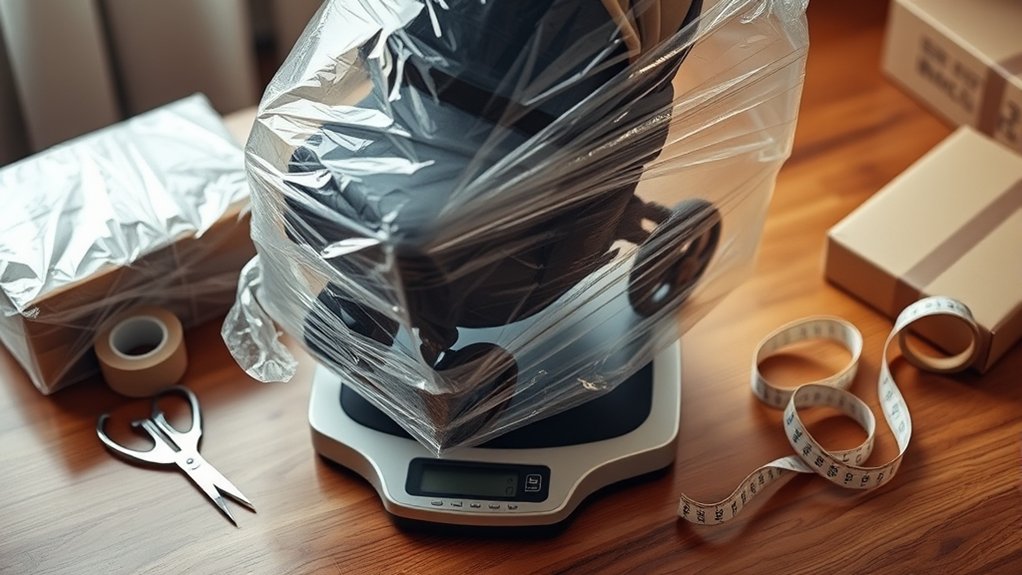
Before you start packing the stroller, make sure it is secured in a folded position to prevent any damage during transit. Use the stroller’s built-in fold lock if it has one. If the lock is weak or loose, use soft straps or stretch wrap around padded areas, but avoid placing tape directly on fabric, leatherette, foam handles, or painted surfaces. Prioritize stroller safety by following these essential steps:
- Cover sharp corners with foam protectors or bubble wrap.
- Remove detachable components like wheels and accessories; place them in labeled plastic bags.
- Double-wrap fragile parts, such as wheel axles, brake pieces, hinge areas, and adapters, in bubble wrap.
- Use heavy-duty packing materials; fill all gaps in the box to prevent movement.
- Place heavier pieces low and centered so the package does not become unbalanced.
- Test the wrap security by gently shaking the package to verify that no parts shift.
Consider obtaining shipping insurance for added peace of mind, especially if the stroller is valuable, new, or difficult to replace. This thorough preparation helps the stroller arrive intact and ready for the next use.
Warning: Never pack loose wheels, metal axles, screws, or adapters directly against the stroller fabric. Movement inside the box can scratch plastic, tear fabric, or damage the frame.
Pack Your Stroller Using the H-Pattern Method
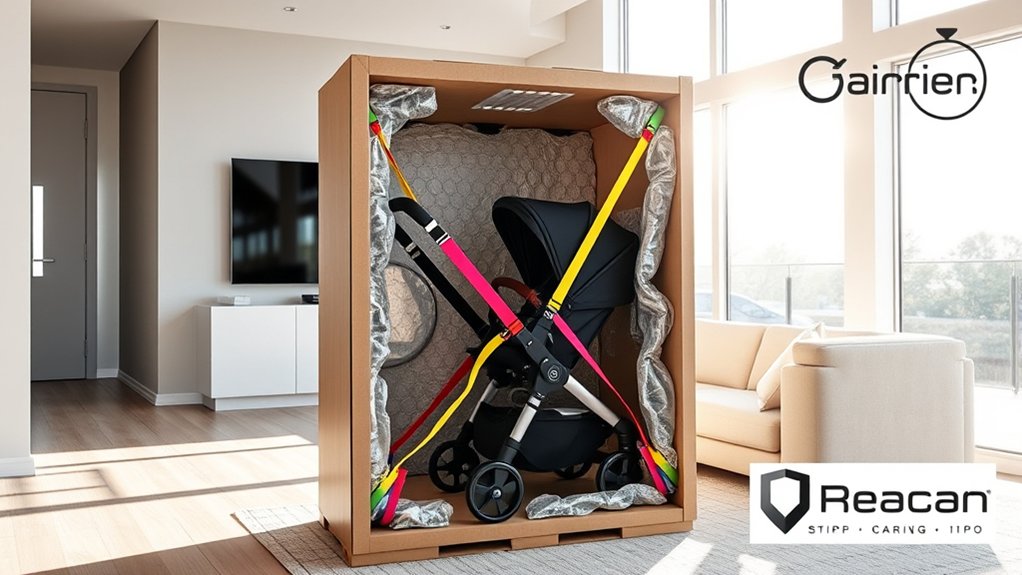
Once the stroller is properly prepared and wrapped, it’s time to pack it using the H-pattern method. Start by assembling a heavy-duty cardboard box. Reinforce the bottom seam with strong packing tape, then tape both side edges so the tape forms an “H” shape across the bottom. For extra moisture protection, line the inside of the box with a clean plastic bag or plastic sheet before placing the stroller inside.
Center the wrapped stroller frame in the box, ensuring that heavier parts are evenly distributed around it to maintain balance during transit. Place detached wheels, trays, adapters, and accessories in wrapped bundles or a smaller inner box. Fill any gaps with packing peanuts, crumpled paper, foam, or air pillows, providing cushioning and preventing movement, which is essential for stroller safety. Close the box and gently move it from side to side. If you feel shifting, reopen it and add more cushioning. Finally, seal the top seam and side edges with the same H-pattern method. Place shipping labels flat on the box and cover them with clear tape or a label pouch to shield them from water damage. This method minimizes the risk of damage and helps use space within the box efficiently.
Choose Your Shipping Carrier and Speed
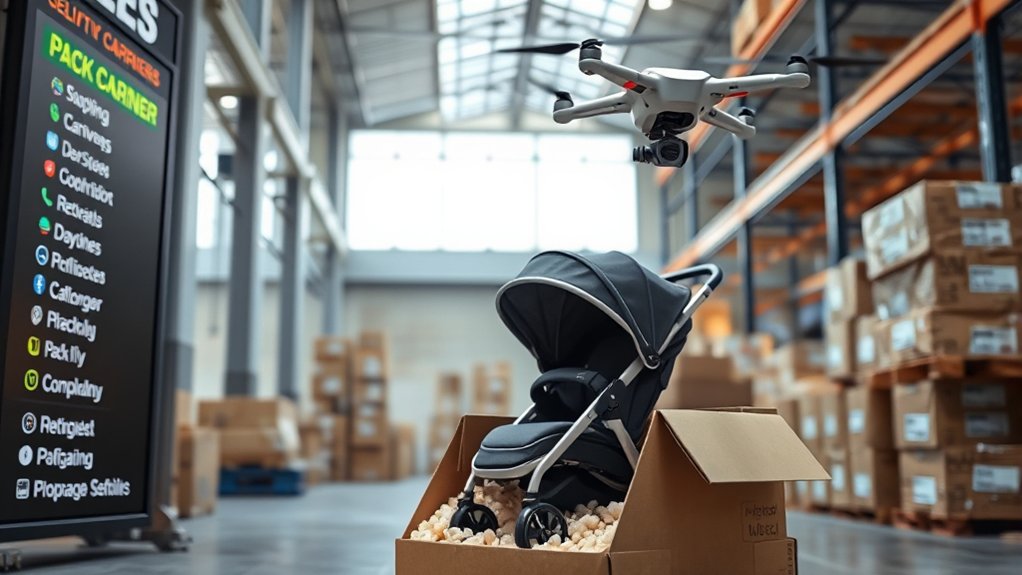
Which shipping carrier and speed should you choose for your stroller? Start by exploring carrier comparisons to find the best fit. Major carriers like UPS, FedEx, and USPS offer various shipping options, but oversized packages, long distances, residential delivery, and insurance can change the final price. Consider these factors before buying a label:
The best stroller shipping choice is usually the carrier and service that balances package size, delivery speed, tracking, insurance, and total cost rather than the cheapest label alone.
- Weight and dimensions of your boxed stroller
- Carrier package limits for weight, length, girth, and oversized items
- Shipping speed, such as ground, economy, two-day, or express options
- Rate comparisons, since differences can be large for bulky packages
- Pickup availability if the box is too large to carry easily
- Insurance options for valuable strollers, which may affect overall costs
- Tracking detail and delivery confirmation options
USPS may work for smaller packages that fit its size and weight rules, while UPS and FedEx are often used for heavier or bulkier shipments. Regional carriers, marketplace labels, and shipping platforms may also offer competitive rates. Always enter the exact packed dimensions and weight so the carrier does not re-rate the package later.
How to Avoid Common Shipping Mistakes
- Do not guess the box size: Measure length, width, height, and weight after packing.
- Do not rely on thin retail boxes: Use a strong corrugated shipping box that can handle transit handling.
- Do not leave empty space: Fill gaps so the stroller cannot slide, bounce, or hit the box wall.
- Do not skip insurance on valuable strollers: Standard carrier coverage may not match the stroller’s replacement value.
- Do not hide damage: Photograph existing scratches, stains, and wear before packing.
- Do not pack damp fabric: Moisture can cause mildew, odor, and staining during shipping.
Send Tracking and Delivery Instructions
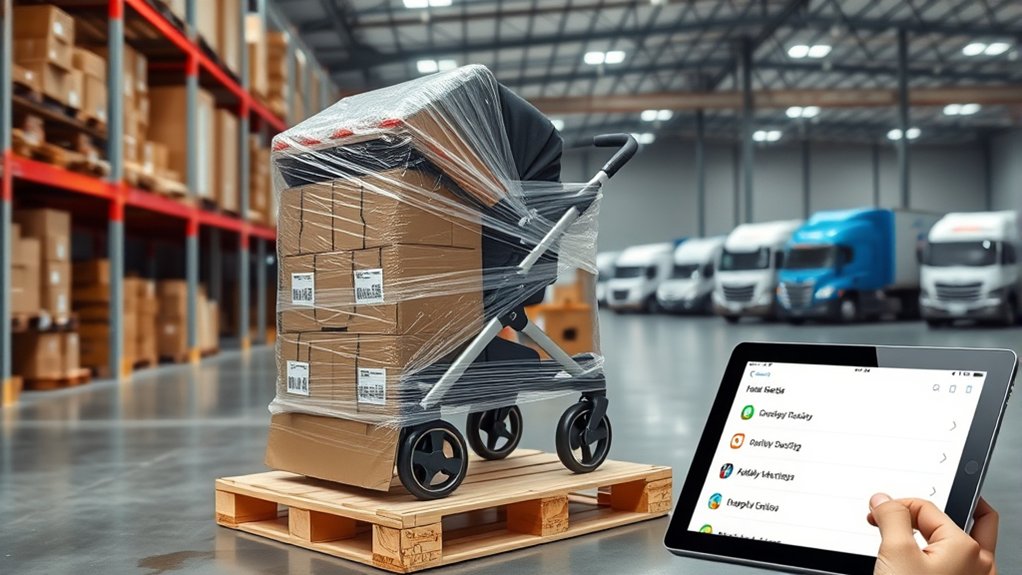
To guarantee a smooth delivery experience for the recipient, promptly send them the tracking number, carrier name, and expected delivery date after shipping the stroller. This ensures they receive timely tracking updates and delivery notifications, keeping everyone informed. It is also wise to include assembly instructions or a link to the stroller manual, making reassembly easier for the recipient.
Provide your contact information so they can reach out with any questions or concerns about the shipment. Advise them to inspect the package for visible damage before accepting delivery when possible. If the carrier leaves the package unattended, ask the recipient to photograph the box before opening it. Encourage them to document any damage with photos before unpacking fully because this can help with any potential claims with the carrier. They should also save the box, cushioning, label, and damaged parts until the claim is resolved.
What the Recipient Should Check After Delivery
- Look for crushed corners, punctures, water damage, torn seams, or retaped areas on the box.
- Photograph the sealed box before opening it.
- Remove the stroller carefully without cutting into fabric or tires.
- Confirm that all labeled bags, wheels, adapters, and accessories are present.
- Check the frame, hinge points, brakes, wheels, canopy, handlebar, and folding mechanism.
- Compare the delivered condition with the pre-shipping photos if damage is suspected.
- Contact the sender and carrier quickly if there is missing or damaged content.
Related Guides
Frequently Asked Questions
Can I ship a stroller internationally?
Yes, you can ship a stroller internationally, but you need to check the destination country’s import rules, carrier restrictions, package size limits, customs forms, duties, taxes, and delivery requirements. Clean the stroller well before international shipping because some countries may inspect used baby gear more closely.
What should I do if my stroller gets damaged during shipping?
If your stroller is damaged during shipping, photograph the unopened box, damaged packaging, cushioning, label, and stroller damage. Keep all packing materials. Contact the carrier or shipping platform quickly, follow its claim process, and provide proof of value, pre-shipping photos, delivery photos, and insurance details if available.
Are there size restrictions for shipping strollers?
Yes, carriers set size and weight restrictions for packages, and the limits can vary by service. Measure the fully packed box, not just the folded stroller. If the stroller box is oversized, compare ground services, freight-style options, and professional packing services before choosing a label.
How can I insure my stroller for shipping?
To protect your stroller’s value, review the carrier’s declared value or shipping insurance options before purchasing the label. Choose coverage that matches the stroller’s realistic replacement value, and keep proof of value such as a receipt, order confirmation, marketplace listing, or repair estimate.
Can I reuse packing materials from previous shipments?
Yes, you can reuse packing materials from previous shipments if they are clean, dry, strong, and undamaged. Avoid crushed boxes, weak tape, popped air pillows, dirty padding, or materials with old labels that could confuse the carrier. Reinforce reused boxes with fresh packing tape.
Should I remove the stroller wheels before shipping?
You should remove the stroller wheels if your model allows safe wheel removal. Detached wheels often make the package smaller and protect axles from bending. Wrap each wheel separately, label the parts, and keep pins, clips, or washers in a sealed bag.
Can I ship a stroller without the original box?
Yes, you can ship a stroller without the original box. Use a heavy-duty corrugated box that fits the folded stroller with room for cushioning. If one box is not strong enough, consider double-boxing or using professional packing for expensive or oversized models.
Conclusion
When you’re shipping a stroller, every detail matters. Cleaning the stroller, documenting its condition, removing detachable parts, choosing a strong box, wrapping fragile areas, filling empty space, sealing the package well, and comparing carriers can greatly reduce the risk of mishaps. The safest approach is to treat the stroller like a bulky, delicate item rather than ordinary luggage. Take the time to prepare it properly, and you’ll not only save on potential costs but also gain peace of mind knowing it has a better chance of arriving clean, complete, and ready for your little one when it reaches its destination.
Sources
- FedEx: How to Pack — general packing guidance for cushioning, sealing, and protecting shipments.
- UPS Packaging Tips — carrier guidance for preparing and sealing packages.
- USPS Package Shipping — package shipping options and carrier service considerations.
- USPS Insurance and Extra Services — insurance and extra service options for shipped packages.
