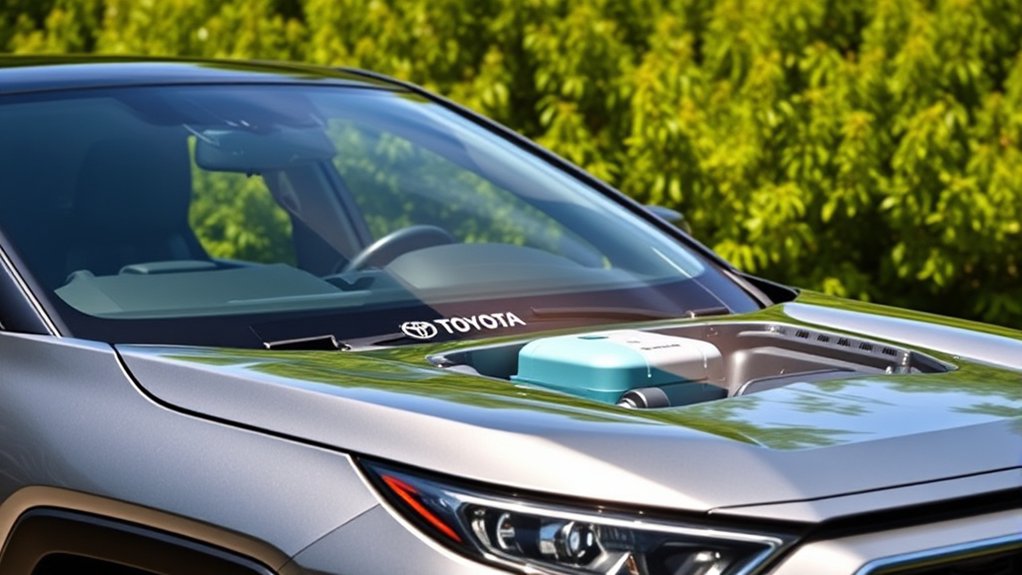
The Toyota RAV4 Prime combines a gasoline engine, a rechargeable high-voltage battery, front electric motor-generators, and a separate rear electric motor. That combination lets it handle many local trips on electricity while retaining gasoline-powered hybrid operation for longer journeys. Specifications differ substantially by model year, so owners and shoppers should distinguish the 2021–2025 generation from the redesigned 2026 RAV4 Plug-in Hybrid.
Quick Answer
The RAV4 Prime is a plug-in hybrid: charge it from an outlet for electric driving, then continue in gasoline-electric hybrid mode after the usable EV charge is depleted. The 2021–2025 generation offers about 42 miles of rated EV range, while the redesigned 2026 RAV4 Plug-in Hybrid reaches up to an EPA-estimated 54 miles on the SE grade.
Key Takeaways
- Toyota used the RAV4 Prime name for 2021–2024 U.S. models and changed it to RAV4 Plug-in Hybrid for 2025.
- The 2021–2025 generation is rated at 302 net combined horsepower and approximately 42 miles of EV range.
- The redesigned 2026 model produces 324 net combined horsepower and offers up to 54 EPA-estimated EV miles on the SE grade.
- The vehicle remains drivable in hybrid mode when the usable plug-in charge is depleted, but regular external charging is needed to maximize electric driving and fuel savings.
- Charging speed, connector type, EV range, and available drive modes can vary by model year, trim, and equipment.
What Is the RAV4 Prime’s Plug-In Hybrid System?
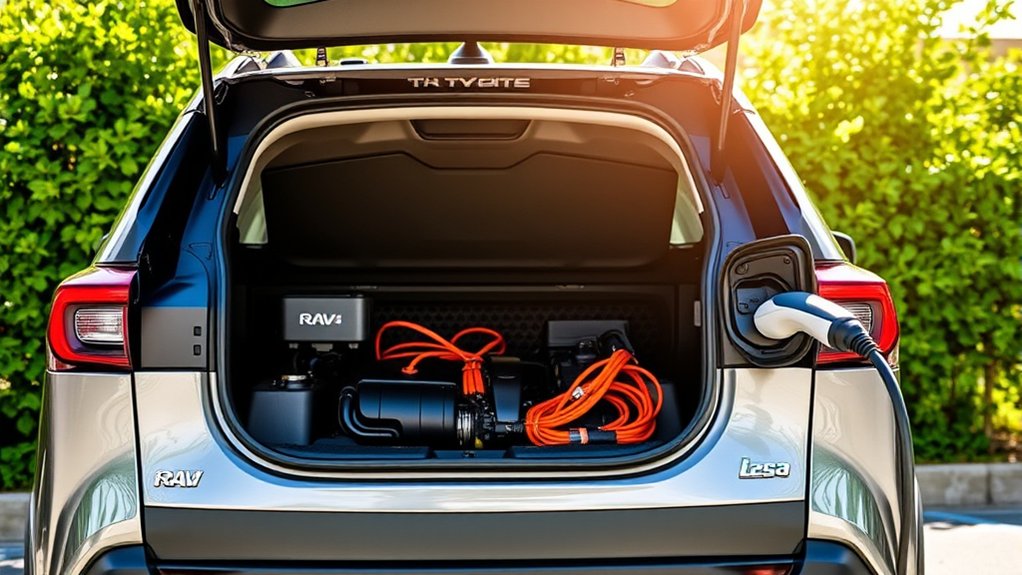
The RAV4 Prime is a plug-in hybrid electric vehicle, commonly shortened to PHEV. Unlike a conventional RAV4 Hybrid, its larger traction battery can be charged from an external electrical source. That stored energy can power the vehicle for a meaningful distance before the powertrain begins operating primarily as a gasoline-electric hybrid.
The vehicle does not become unusable when its displayed EV range reaches zero. It automatically preserves a protected battery reserve and continues in hybrid operation, using the gasoline engine, electric motors, and regenerative braking together.
Note: Toyota changed the U.S. name from RAV4 Prime to RAV4 Plug-in Hybrid for model year 2025. The 2025 vehicle retained the previous powertrain, while the 2026 model introduced a redesigned plug-in hybrid system. See Toyota’s official 2025 announcement for the naming change.
RAV4 Prime and RAV4 Plug-In Hybrid Model-Year Comparison
| Specification | 2021–2024 RAV4 Prime | 2025 RAV4 Plug-In Hybrid | 2026 RAV4 Plug-In Hybrid |
|---|---|---|---|
| U.S. model name | RAV4 Prime | RAV4 Plug-in Hybrid | RAV4 Plug-in Hybrid |
| Net combined output | 302 hp | 302 hp | 324 hp |
| Rated EV range | Approximately 42 miles | Approximately 42 miles | Up to an EPA-estimated 54 miles on SE; other grades may differ |
| Driven wheels | Electronic On-Demand AWD | Electronic On-Demand AWD | AWD |
| DC fast charging | Not supported | Not supported | Available on XSE and Woodland; not offered on SE or GR SPORT |
Because trim specifications and EPA ratings can change, use the vehicle’s window sticker, charging-port label, and owner’s manual as the final authority for a specific vehicle.
Key Components of the RAV4 Prime System
The plug-in hybrid system works because its gasoline and electric components are coordinated by a power-control system. The driver normally does not need to manage individual motors or decide when to start the engine.
Gasoline Engine and Hybrid Transaxle
The gasoline engine can propel the vehicle, assist the electric drive system during high power demand, and generate electricity through the hybrid transaxle. During ordinary EV driving, the engine can remain off, although it may start under certain operating conditions to protect the system, provide additional power, warm components, or meet climate-control demands.
The transaxle electronically blends engine power with the front electric drive system. It does not use a conventional stepped automatic transmission with a fixed sequence of gears.
Electric Motor Configuration
Descriptions that say the RAV4 Prime has “two electric motors” usually refer to its front and rear traction motors. A more complete technical description also includes the smaller motor-generator inside the front hybrid transaxle.
| Electrical Machine | Primary Function | How It Helps |
|---|---|---|
| MG1 motor-generator | Starts the gasoline engine and generates electricity | Controls engine speed and supplies electrical energy within the hybrid system |
| MG2 front drive motor | Drives the front wheels and recovers braking energy | Provides most electric propulsion and strong low-speed response |
| Rear drive motor | Drives the rear wheels when requested | Creates Electronic On-Demand AWD without a conventional mechanical driveshaft between the axles |
The rear motor can contribute during acceleration and when the control system detects a need for additional rear-wheel traction. AWD can improve the vehicle’s ability to move on slippery surfaces, but it does not replace suitable tires or shorten braking distances on ice.
High-Voltage Battery System
The lithium-ion traction battery stores electricity for propulsion. It is much larger than the battery in a conventional hybrid, allowing the vehicle to travel a substantial distance before routine hybrid operation begins.
The displayed battery percentage and EV-range estimate do not represent unrestricted access to every watt-hour in the battery. The battery-management system maintains operating reserves to protect the pack and support hybrid functions after the displayed EV range is used.
Battery temperature, vehicle speed, acceleration, tire pressure, road grade, payload, heating, and air-conditioning use can all change the number of electric miles available from a charge.
Onboard Charger and Charging Port
The onboard charger is built into the vehicle. It converts alternating-current electricity from a household outlet or Level 2 charging station into the direct current the battery needs.
The portable cable or wall-mounted charging unit is technically the electric vehicle supply equipment, or EVSE. It communicates with the car and safely delivers the available electrical current, but the vehicle’s onboard charger determines how much AC power the car can accept.
For 2021–2025 vehicles, charging is AC-only through a J1772 connection. For 2026, SE and GR SPORT continue with J1772 AC charging, while XSE and Woodland use a CCS1 inlet that supports both AC charging and compatible DC fast charging.
How Do the Gas Engine and Electric Motors Work Together?
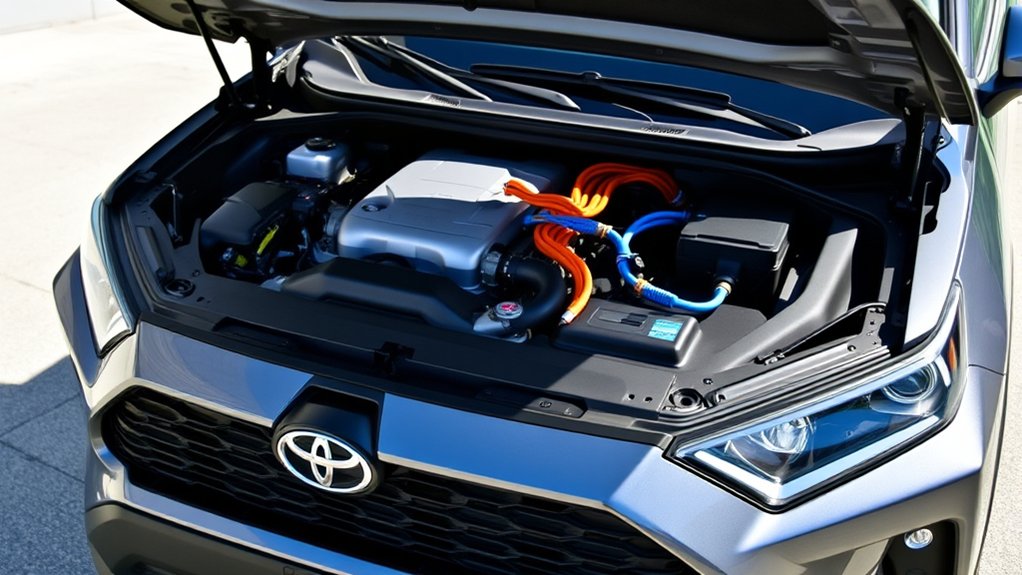
The power-control system continuously chooses an efficient combination of engine power, electric propulsion, and energy recovery. What happens depends on the selected operation mode, available battery charge, accelerator demand, temperature, and road conditions.
| Driving Situation | Typical Power Flow | What the Driver May Notice |
|---|---|---|
| Starting and light urban driving | Battery sends energy to the electric drive motor or motors | Quiet operation and immediate low-speed torque |
| Strong acceleration or steep grade | Electric power may be supplemented by the gasoline engine, depending on mode and conditions | Higher combined output and possible engine noise |
| Steady hybrid driving | The system alternates or combines engine and electric power | Automatic transitions with no manual shifting required |
| Coasting or braking | Drive motors operate as generators and return some energy to the battery | Regenerative deceleration before or alongside friction braking |
| Displayed EV range depleted | Vehicle continues as a gasoline-electric hybrid | The engine runs more often, but no roadside charging stop is required |
Regenerative braking improves efficiency, but it cannot recover all the energy used to accelerate the vehicle. Energy is lost through aerodynamic drag, tire resistance, heat, and electrical conversion. Plugging in is therefore the practical way to restore the full EV-driving portion of the battery.
The Role of the High-Capacity Battery in Electric Driving
The traction battery is what separates the RAV4 Prime from a conventional hybrid. A regular hybrid stores enough energy for brief electric assistance and short low-speed electric operation. The RAV4 Prime stores enough externally supplied energy for many complete local trips.
Electric motors can deliver torque immediately, so the vehicle does not need to wait for engine speed to rise before producing strong initial acceleration. When additional power is needed, the gasoline and electric systems can work together.
Once the plug-in portion of the charge is depleted, the battery is not truly empty. The system retains an operating reserve for starting the engine, assisting acceleration, recovering braking energy, and powering the vehicle during suitable hybrid-driving conditions.
A displayed EV range of zero means the plug-in portion of the charge has been used—not that the traction battery has become completely empty.
What Electric Range Can You Expect?
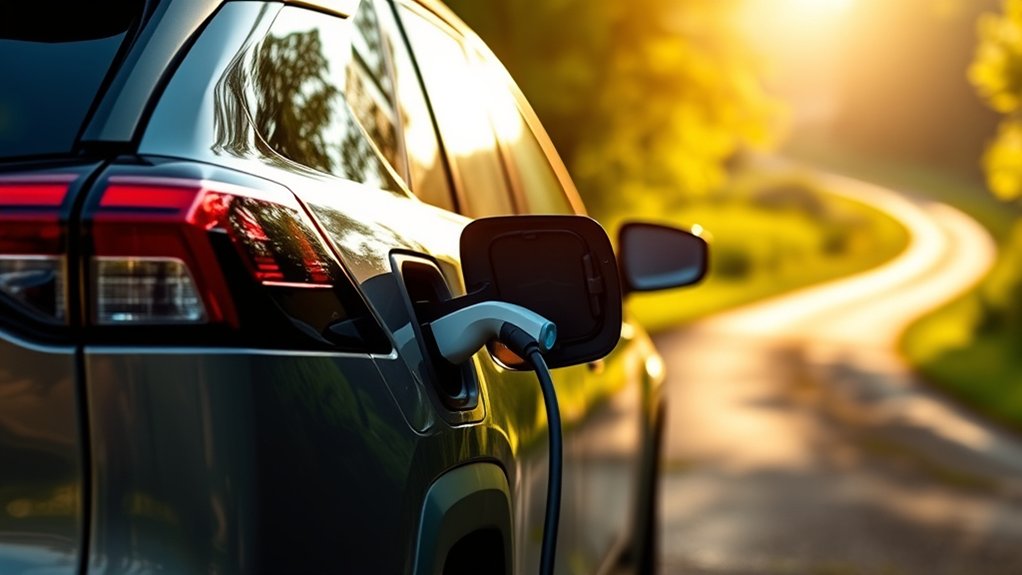
The 2021–2025 RAV4 plug-in generation is rated for approximately 42 miles of electric driving. Toyota’s current U.S. product page lists an EPA-estimated 54-mile electric range for the 2026 SE grade. Ratings for other trims can differ because wheels, tires, weight, aerodynamics, and equipment affect energy use.
An EPA range rating is a standardized comparison figure, not a promise that every trip will produce the same mileage. Your dashboard estimate also adapts to recent driving and climate-control use.
Factors That Can Reduce Electric Range
- Cold weather: The battery and cabin require additional energy for heating.
- Very hot weather: Air conditioning and battery thermal management consume energy.
- High speed: Aerodynamic resistance rises quickly as speed increases.
- Hard acceleration: Rapid power demand increases energy consumption.
- Hills and heavy loads: Moving more mass uphill requires additional energy.
- Low tire pressure: Higher rolling resistance reduces efficiency.
- Roof accessories: Cargo boxes and racks can increase aerodynamic drag.
- Short winter trips: Repeatedly warming the cabin can use a large share of the energy consumed on each trip.
Pro Tip: When available, precondition the cabin while the vehicle is still connected to external power. This can improve comfort while preserving more battery energy for driving, especially in cold weather.
When the gasoline engine remains off, the vehicle produces no tailpipe emissions. Total emissions still depend on how the electricity was generated, how often the vehicle is charged, and how much gasoline is used. The EPA’s plug-in vehicle guidance explains this distinction.
How Can You Charge a RAV4 Prime at Home and Elsewhere?
You can charge the vehicle from a suitable household outlet, a Level 2 AC charging unit, or a compatible public charging station. Select 2026 trims also support DC fast charging.
Home Charging Options
Level 1 charging uses a 120-volt household circuit. It is the slowest option but may be sufficient when the vehicle remains parked overnight.
Level 2 charging uses 240-volt service. It normally requires a suitable outlet or permanently installed EV charging unit. Because electrical capacity and local codes differ, a licensed electrician should evaluate the circuit before installation.
| Vehicle | Charging Hardware | Official Charging Guidance |
|---|---|---|
| 2024–2025 generation | 6.6-kW onboard charger | About 12 hours on 120V or 2.5 hours on Level 2 under ideal conditions |
| Earlier RAV4 Prime | Equipment can vary by model year and package | Consult the vehicle-specific charging guide; some earlier configurations charge more slowly on 240V |
| 2026 SE and GR SPORT | 7-kW onboard charger and J1772 inlet | Toyota estimates approximately four hours from 10% to 80% on Level 2 under ideal conditions |
| 2026 XSE and Woodland | 11-kW AC charger and CCS1 inlet | Supports AC charging and compatible DC fast charging; Toyota estimates approximately 30 minutes from 10% to 80% on DC under ideal conditions |
Actual charging time can change with battery temperature, starting charge, available circuit power, charger output, battery protection limits, and energy used for cabin conditioning.
Warning: Use only compatible, undamaged charging equipment connected to a properly grounded circuit. Do not use an ordinary extension cord, modify a charging connector, or open any orange high-voltage component. Have damaged equipment or charging faults inspected by a qualified technician.
Public Charging Stations
Most 2021–2025 RAV4 Prime and RAV4 Plug-in Hybrid vehicles can use public Level 2 stations fitted with a J1772 connector. They cannot use a DC fast charger because the vehicle lacks the required DC charging inlet and hardware.
For 2026, connector compatibility depends on trim:
- SE and GR SPORT: J1772 AC charging only.
- XSE and Woodland: CCS1 inlet supporting J1772-compatible AC charging and CCS DC fast charging.
A charging network’s listed maximum power is not the same as the power the vehicle will accept. The vehicle, charging station, battery temperature, and state of charge jointly determine the actual rate.
Charging Time Considerations
Charging usually slows as the battery approaches a high state of charge. That is one reason DC charging times are commonly quoted from 10% to 80% instead of from empty to full.
Public fast charging may be useful during a trip, but a PHEV has a relatively small battery and a gasoline engine. Cost per kilowatt-hour, parking fees, station availability, and the time needed to connect should all be considered. Home charging is often the most convenient way to begin each day with the available EV range.
When Should You Use EV, Auto EV/HV, Hybrid, or Charge Mode?
The available operation modes depend on model year and equipment. The 2021–2025 generation provides several ways to prioritize battery energy or gasoline-electric operation.
| Mode | What It Does | Useful Situation |
|---|---|---|
| EV mode | Prioritizes battery-powered driving while sufficient charge and suitable conditions are available | Local roads, commuting, and trips within the available EV range |
| Auto EV/HV mode | Uses electric power in ordinary driving but can start the engine when stronger performance is requested | Mixed routes with hills, merging, or varying power demand |
| HV mode | Operates as a gasoline-electric hybrid and preserves more of the plug-in charge for later | Saving battery energy for slower urban driving later in the trip |
| Charge mode | Runs the gasoline engine to generate additional battery charge while driving | Limited situations where external charging is unavailable and stored EV energy is specifically needed later |
Note: Charge mode is not a substitute for plugging in. Converting gasoline into engine motion, then electricity, then stored battery energy creates additional losses. Use the mode according to the owner’s manual rather than as a routine charging strategy.
For many drivers, the simplest approach is to use EV operation for daily local travel and let the vehicle enter hybrid operation automatically when needed. Selecting HV mode early can make sense when saving battery energy for a later low-speed or restricted-emission portion of a journey.
How Does the RAV4 Prime Compare With a Traditional Hybrid?
The RAV4 Prime’s main advantage over a conventional hybrid is not that it is universally better in every category. Its advantage is that it can replace a significant amount of gasoline use with externally supplied electricity while still offering long-distance hybrid operation.
Enhanced Performance Features
The 2021–2025 system produces 302 net combined horsepower, while the redesigned 2026 model produces 324 net combined horsepower. Electric torque contributes to quick initial response, and the rear electric motor provides AWD capability without a conventional driveshaft connecting the front and rear axles.
Regenerative braking recovers energy during deceleration, while the gasoline engine supplies long-distance flexibility. This combination can provide stronger acceleration than the conventional RAV4 Hybrid from the corresponding generation.
Extended Electric Driving Range
A conventional hybrid cannot be plugged in and normally travels only brief distances using electricity alone. A charged RAV4 Prime can complete many commutes without starting the engine.
The benefit depends on charging behavior. A driver who plugs in regularly and travels mostly within the vehicle’s EV range may use little gasoline. A driver who rarely charges will carry the cost and weight of a larger battery while using the vehicle mainly as a hybrid.
Limitations Compared With a Full Electric Vehicle
The RAV4 Prime still has a gasoline engine, fuel system, exhaust system, engine oil, and related maintenance needs. It also produces tailpipe emissions whenever gasoline is burned.
A battery-electric vehicle may travel much farther on electricity and can accept higher DC charging rates, depending on the model. The RAV4 Prime instead prioritizes flexibility: local electric operation without relying on public charging for every long trip.
How Do You Maintain the RAV4 Prime’s High-Capacity Battery?
The traction battery does not require oil changes or owner servicing. Its battery-management, cooling, and charging systems operate automatically. Good ownership practices focus on following Toyota’s maintenance schedule and protecting the supporting systems.
- Use approved charging equipment. Replace a charging cable or connector that is cracked, overheated, corroded, or otherwise damaged.
- Keep battery-cooling air inlets clear. Do not block vents with luggage, fabric, pet hair, or debris.
- Follow the storage instructions. If the vehicle will sit unused for an extended period, use the model-specific owner’s manual rather than a generic battery-percentage rule.
- Maintain the gasoline engine. The vehicle still requires engine oil, filters, fluids, and inspections at the specified intervals, even if much of the driving is electric.
- Maintain tires carefully. Correct pressure, alignment, and rotation support range, traction, and even wear.
- Respond to warning messages. A charging fault, hybrid-system warning, damaged cable, or unusual odor should be evaluated promptly.
- Check for recalls and service campaigns. Use the VIN-specific lookup supplied by Toyota or the National Highway Traffic Safety Administration.
There is no need to force the displayed charge to remain above an arbitrary percentage during normal daily use. The vehicle protects the high-voltage battery with a managed operating buffer.
Battery and Hybrid-System Warranty
For applicable U.S. Toyota hybrid and plug-in hybrid vehicles, the traction battery is covered for 10 years or 150,000 miles from the original in-service date, whichever comes first, subject to the warranty’s terms and exclusions.
Specified hybrid-related components generally carry separate coverage of 8 years or 100,000 miles, whichever comes first. Warranty terms can be affected by market, model year, emissions certification, and component, so consult the warranty guide supplied with the vehicle. Toyota summarizes its current coverage on its manuals and warranties page.
Why Choose the RAV4 Prime for Eco-Conscious Driving?
The RAV4 Prime is most compelling for a driver who can charge at home or work, makes frequent trips within the available EV range, and still wants gasoline-powered flexibility for occasional long journeys.
While running only on electricity, the vehicle produces no tailpipe emissions. Its total environmental impact still depends on the local electricity mix, battery and vehicle manufacturing, charging frequency, driving efficiency, and how often the gasoline engine runs.
The vehicle may be a less suitable choice when reliable charging is unavailable, most travel consists of long high-speed trips, or the owner wants to eliminate gasoline-engine maintenance entirely. In those situations, a conventional hybrid or full battery-electric vehicle may better match the intended use.
Before buying, compare the purchase price, insurance, charging access, electricity rates, gasoline prices, real-world commute length, and model-year-specific range. The best PHEV results come from treating charging as a normal part of ownership rather than an occasional extra.
Frequently Asked Questions
What is the warranty coverage for the RAV4 Prime battery?
Toyota’s U.S. hybrid-battery warranty is generally 10 years or 150,000 miles from the original in-service date, whichever comes first. Specified hybrid-related components generally have separate 8-year/100,000-mile coverage. Review the warranty guide for the exact model year and vehicle.
How does weather affect the RAV4 Prime’s electric range?
Cold temperatures can reduce available electric range because the battery and cabin require heating. Hot weather, air conditioning, high speeds, wind, wet roads, and extreme temperatures can also increase energy use. Preconditioning while connected to external power may reduce the amount of battery energy used for initial cabin heating or cooling.
Can the RAV4 Prime use regular gasoline?
U.S.-spec RAV4 Prime models are designed to use regular unleaded gasoline. Confirm the required octane and permitted fuel formulations on the fuel-door label and in the owner’s manual for your specific model year and market.
Are federal tax credits available for a RAV4 Plug-In Hybrid in 2026?
Federal clean-vehicle credits cannot be claimed for vehicles acquired after September 30, 2025, under current IRS guidance. State, local, utility, charging-equipment, or employer programs may still be available. Check the IRS and the U.S. Department of Energy’s Alternative Fuels Data Center before relying on an incentive.
What are the maintenance costs of a RAV4 Prime?
There is no single reliable maintenance-cost figure. Costs depend on mileage, labor rates, tires, climate, driving conditions, model year, and warranty coverage. The vehicle still needs gasoline-engine maintenance, filters, fluids, tire service, brake inspections, and scheduled checks, even when much of its mileage is electric.
Can you drive a RAV4 Prime without ever charging it?
Yes. The vehicle can operate as a gasoline-electric hybrid when external charging is unavailable. However, rarely plugging it in reduces the primary benefit of owning a PHEV because the vehicle will use more gasoline and complete fewer miles in electric operation.
Is the RAV4 Prime the same vehicle as the RAV4 Plug-In Hybrid?
The names refer to the same basic type of Toyota PHEV, but model year matters. Toyota used RAV4 Prime for U.S. model years 2021–2024 and adopted RAV4 Plug-in Hybrid for 2025. The 2025 model retained the earlier powertrain, while 2026 introduced a redesigned generation.
Can a RAV4 Prime use a DC fast charger?
The 2021–2025 RAV4 Prime and RAV4 Plug-in Hybrid do not support DC fast charging. For 2026, XSE and Woodland trims use a CCS1 inlet and support compatible DC charging, while SE and GR SPORT remain AC-only with a J1772 inlet.
Conclusion
The RAV4 Prime’s plug-in hybrid system is designed to combine useful electric driving with the long-distance convenience of gasoline-electric hybrid operation. For 2021–2025 models, the key figures are approximately 42 EV miles and 302 net combined horsepower. The redesigned 2026 RAV4 Plug-in Hybrid raises output to 324 horsepower and offers up to 54 EPA-estimated EV miles on the SE, while select trims add DC fast charging.
The system delivers its greatest value when the vehicle is charged regularly and most routine trips fit within the available EV range. Owners should use model-year-specific charging instructions, follow Toyota’s maintenance schedule, and treat EPA range, charging time, and incentive figures as specifications that require the correct year, trim, equipment, and date.
Sources
- Toyota: 2026 RAV4 Plug-In Hybrid — current horsepower and EPA-estimated SE electric range.
- Toyota USA Newsroom: 2025 RAV4 Plug-In Hybrid — name change, 2025 range, output, battery, drive modes, AWD, and charging times.
- Toyota USA Newsroom: 2026 RAV4 Technical Details — trim-specific chargers, connectors, DC charging, output, range estimates, and warranty.
- Toyota Manuals and Warranties — hybrid-battery and hybrid-component warranty guidance.
- Internal Revenue Service: Form 8936 Instructions — federal clean-vehicle credit acquisition cutoff.
- U.S. Environmental Protection Agency: Electric and Plug-In Hybrid Vehicles — PHEV operation, charging, range, and emissions qualifications.
