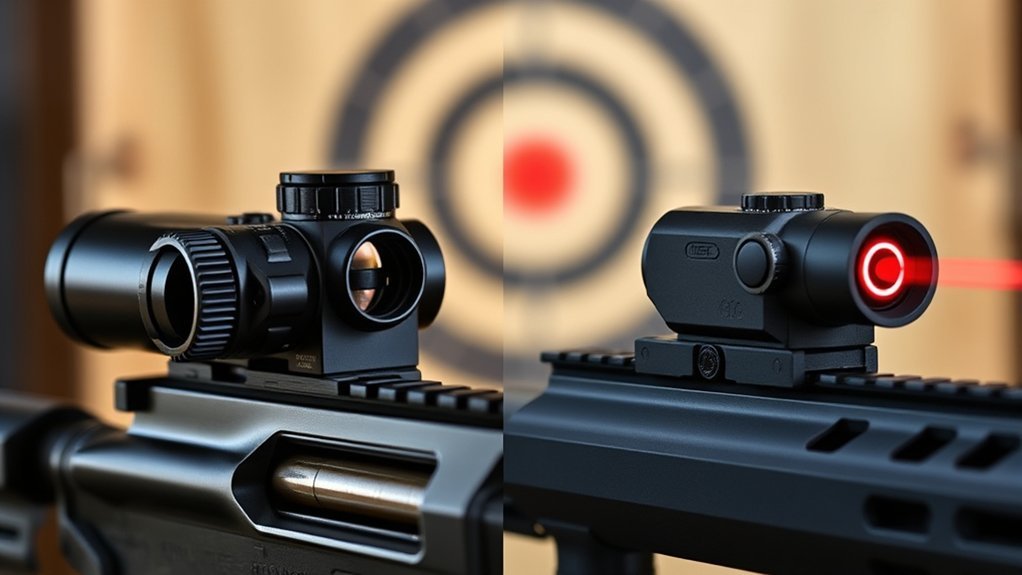
Many shooters underestimate how much sight selection affects speed, accuracy, comfort, and confidence. Iron sights and red dot sights both work well, but they support different shooting habits. Iron sights build strong fundamentals and need no batteries. Red dots simplify aiming, speed up target acquisition, and help many shooters keep better awareness. The better choice depends on your firearm, lighting conditions, eyesight, budget, and training goals.
Quick Answer
Choose iron sights if you want a simple, durable, low-cost sighting system that builds marksmanship fundamentals. Choose a red dot sight if you want faster target acquisition, easier aiming with both eyes open, and better visibility in many low-light or fast-moving shooting situations.
Key Takeaways
- Iron sights are rugged, affordable, battery-free, and excellent for learning sight alignment and trigger control.
- Red dot sights usually offer faster target acquisition because you place the dot on the target instead of aligning front and rear sights.
- Lighting, weather, eyesight, training time, firearm use, and budget all affect which sighting system fits you best.
- Many shooters benefit from learning iron sights first, then adding a red dot once they understand basic marksmanship.
Overview of Iron Sights
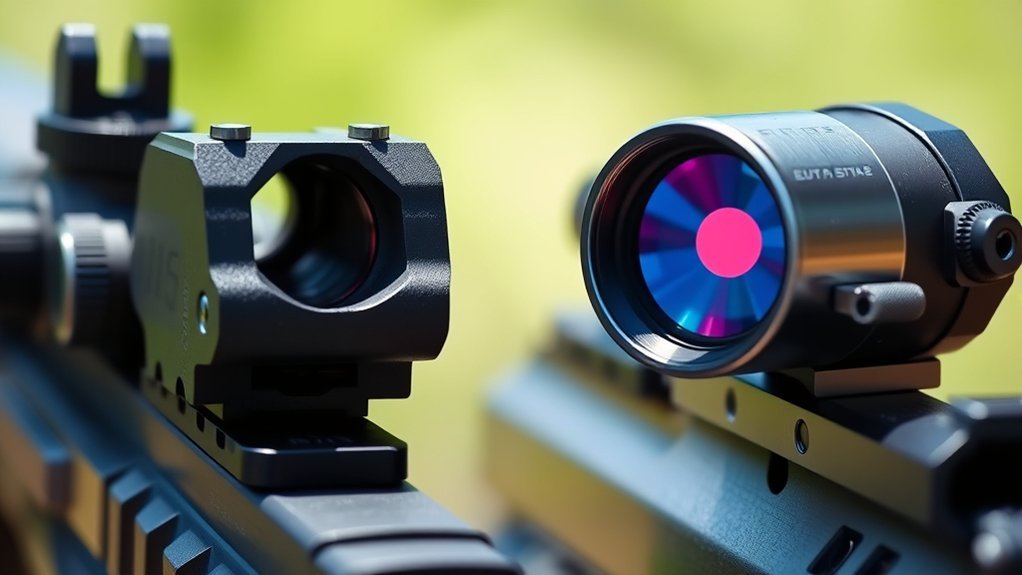
Iron sights are the traditional aiming devices found on many firearms. They usually include a front sight post and a rear sight notch, aperture, or blade. To aim, you align your eye, rear sight, front sight, and target into one clear sight picture.
When using iron sights, you normally focus on the front sight while keeping the target slightly softer in your vision. That focus helps you maintain proper sight alignment and avoid pulling shots off target. Mastering this process improves core marksmanship skills, including grip, stance, trigger control, follow-through, and visual discipline.
Iron sights are popular because they are simple, durable, and reliable. They do not need batteries, electronics, lenses, or brightness settings. They also handle rough field use well when made from quality steel or aluminum. However, they can be slower to use under stress and harder to see in poor light, especially for shooters with aging eyes or vision challenges.
Overview of Red Dot Sights
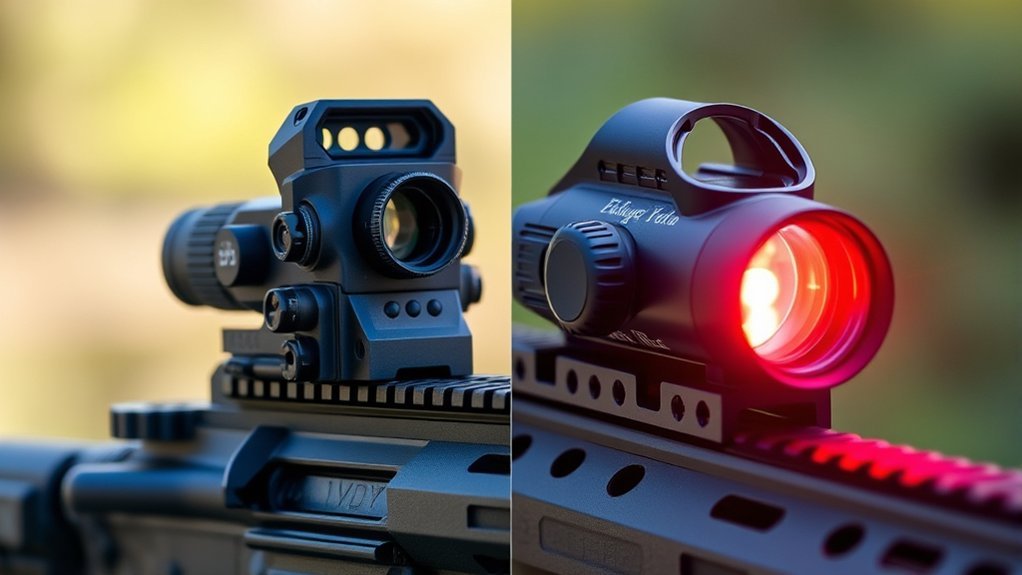
Red dot sights use an illuminated aiming point that appears on a lens. Instead of aligning a front sight with a rear sight, you place the dot where you want the shot to go, then press the trigger with proper control. This makes red dots feel more intuitive for many shooters.
Red dot sights can enhance situational awareness because they allow you to keep both eyes open while aiming. This helps you see more of the target area, track movement, and transition between targets faster. They are common on rifles, shotguns, and handguns, especially for competitive, defensive, tactical, and recreational shooting.
Most red dots include adjustable brightness settings for different lighting conditions. Some models are compact and lightweight, while others are larger and built for harsh duty use. Their main trade-offs include higher cost, battery dependence, lens maintenance, mounting requirements, and the need to confirm zero after installation.
Note: A red dot does not replace safe handling or good fundamentals. You still need proper grip, stance, trigger control, and a confirmed zero before relying on it.
Accuracy and Precision

Accuracy and precision matter when comparing iron sights and red dot sights. Both systems can be accurate when they are properly installed, zeroed, and used with good shooting technique. The difference is how much visual work each system requires from you.
- Iron Sights: They require you to align the front and rear sights while also managing the target, breathing, and trigger press. Small alignment errors can move shots away from your intended point of impact.
- Red Dot Sights: They simplify the aiming process because the dot acts as the main aiming reference. This can help many shooters maintain practical accuracy, especially during faster shooting.
- Environmental Factors: Lighting, target contrast, distance, and target size can affect both sight types. Red dots often help in dimmer settings, while iron sights may stay clearer in bright glare if the dot brightness is not adjusted correctly.
For slow, deliberate shooting, skilled shooters can perform well with either option. For fast target engagement, movement, or multiple targets, a red dot often makes accuracy easier to maintain.
Speed of Target Acquisition
When it comes to speed of target acquisition, red dot sights usually have a clear advantage over traditional iron sights. Red dots let you keep both eyes open, which improves peripheral vision and helps you stay aware of the target area.
With a red dot, you do not need to perfectly align a front sight and rear sight before every shot. You bring the firearm up, find the dot, place it on the target, and press the trigger smoothly. This can reduce visual clutter and speed up decision-making.
Iron sights can still be fast with training, especially at close distances. However, they demand more visual alignment. Under stress, poor light, awkward shooting positions, or quick transitions, that extra alignment step can slow you down.
With practice, red dots can also improve quicker tracking and target transitions. That makes them useful for dynamic shooting environments, competition stages, defensive training, and moving targets.
Sight Picture and Field of View
Red dot sights can improve your sight picture and field of view compared with traditional iron sights. Because the dot overlays the target, you do not have to divide your attention between the rear sight, front sight, and target.
- Wider Field of View: Red dots help you see more of your surroundings, which can matter in competition, training, and tactical use.
- Unobstructed Sight Picture: The dot gives you a simple aiming point without needing to center a front post inside a rear notch.
- Both-Eyes-Open Shooting: Keeping both eyes open helps you track movement, maintain depth perception, and reduce tunnel vision.
Iron sights provide a more traditional sight picture. Some shooters prefer that clean mechanical reference, especially for careful marksmanship. Others find that iron sights block more of the target or slow their visual processing.
Durability and Reliability
When considering durability and reliability, the build material quality of your sights plays an essential role. Iron sights are often praised for their rugged simplicity, while red dots vary more widely based on housing quality, electronics, seals, battery system, and lens protection.
Build Material Quality
While both iron sights and red dots enhance target acquisition, their build material quality greatly affects durability and reliability. Iron sights commonly use steel or aluminum. Steel often provides excellent impact resistance, while aluminum can reduce weight without giving up too much strength.
Red dot sights often use aluminum, polymer, or a mix of materials. Quality models may include sealed housings, reinforced lenses, shock-resistant construction, and protective coatings. Budget models may work well for casual range use but may not tolerate heavy recoil, hard impacts, or severe weather as well.
Here are three critical factors to evaluate regarding build material quality:
- Material Composition: Steel offers strong impact resistance, while polymer reduces weight but may vary in long-term durability.
- Construction Techniques: Machined parts and well-sealed housings usually hold up better than loose, poorly fitted components.
- Finish and Coating: Anodized, coated, or treated surfaces can improve scratch resistance, corrosion resistance, and service life.
Choosing the right build material is crucial for field use, competition use, and long-term reliability.
Weather Resistance Features
Build material quality does not only influence durability. It also affects how well iron sights and red dots perform in rain, dust, snow, humidity, and temperature changes. Iron sights, typically made from steel or aluminum, offer strong basic weather resistance because they have no electronics to fail.
Red dot sights often include sealed housings designed to protect the optic from moisture and dust. Many quality models are also marketed as water-resistant, fog-resistant, and shock-resistant. Those features can help keep the sight working in adverse conditions.
Still, red dots need more care than iron sights. Mud, water spots, fingerprints, cracked lenses, loose mounts, or a dead battery can affect performance. Iron sights remain a valuable backup because they keep working even when electronics stop.
Warning: Do not rely on any sighting system until you confirm it is securely mounted, properly zeroed, and safe to use with your firearm. Follow all firearm safety rules and local laws.
Lighting Conditions and Visibility
Effective shooting requires an understanding of how lighting conditions affect visibility. Iron sights and red dot sights respond differently to bright sunlight, shade, indoor lighting, low light, glare, and target contrast.
- Bright Conditions: Red dots can work well in daylight when the brightness setting is high enough. If the dot is too dim, it may wash out against a bright target or background.
- Low Light: Iron sights can become difficult to see without enough light. Red dots often help because the illuminated reticle remains visible when properly adjusted.
- Glare and Reflection: Iron sights may suffer from glare on shiny surfaces. Red dots can also show reflections or lens glare, but quality coatings and correct brightness settings can reduce the problem.
Your expected shooting conditions should guide your choice. A range shooter, hunter, home-defense user, and competition shooter may all need different levels of visibility, speed, and backup reliability.
Cost Considerations
Cost is one of the biggest differences between iron sights and red dots. Iron sights usually cost less upfront and require little ongoing maintenance. Red dot sights can cost more because they include lenses, electronics, brightness controls, mounts, batteries, and more complex housings.
Initial Purchase Price
The initial purchase price of iron sights and red dot sights can vary greatly. Iron sights are often the more affordable option, especially when they come installed on the firearm. They can also be cheaper to replace or upgrade.
Red dot sights often have a higher price because of their technology and construction. Entry-level models may be fine for casual range use, while duty-grade or competition-grade optics can cost significantly more.
Here are three key factors to consider:
- Quality: Stronger materials, better lenses, and tighter manufacturing can raise the price of both sight types.
- Brand Reputation: Established brands may charge more for proven reliability, warranty support, and consistent performance.
- Features: Brightness settings, motion activation, waterproofing, larger windows, solar backup, and long battery life can increase red dot pricing.
Understanding these factors helps you choose a sight that fits your shooting needs and budget.
Long-term Maintenance Costs
While both iron sights and red dot sights offer clear advantages, their long-term maintenance costs differ. Iron sights usually need minimal upkeep. You may only need to check alignment, clean the sight surfaces, tighten hardware, and watch for rust or damage.
Red dot sights can create higher costs over time. You may need battery replacements, lens cleaning supplies, replacement mounts, protective covers, or repairs after hard use. You also need to confirm zero if the sight is removed, bumped hard, or remounted.
For casual use, these costs may stay low. For heavy training, competition, or defensive use, the long-term investment can matter more. Your choice should match how often you shoot and how much maintenance you are willing to manage.
Weight and Bulkiness
Although you might prioritize accuracy and target acquisition speed, the weight and bulkiness of your sighting system can affect your overall shooting experience. A heavier sight can cause fatigue during long sessions, while a bulky sight may interfere with holsters, storage, balance, or fast handling.
- Iron Sights: They are usually lightweight and add minimal bulk to your firearm, making them ideal for simple handling and easy carry.
- Red Dots: They are often lightweight, but they can still add height, width, and complexity, especially on handguns or compact firearms.
- Balance: The sight’s weight and mounting position can affect how the firearm points, swings, and settles back on target.
For rifles, the extra bulk of a red dot may feel minor. For concealed-carry handguns or lightweight hunting setups, even a small optic can change handling and storage needs.
Personal Preference and Shooting Style
Your best choice often comes down to personal preference and shooting style. Some shooters like the direct mechanical feel of iron sights. Others shoot faster and more confidently with a red dot. Your eyesight, experience level, training goals, and firearm purpose all matter.
Vision and Target Acquisition
Understanding vision and target acquisition can greatly improve your shooting performance, whether you prefer iron sights or red dots. Each option changes how your eyes process the target and aiming reference.
- Field of View: Red dots often support a wider visual field, which helps with quicker target transitions.
- Focus: Iron sights require strong focus on the front sight, while red dots let many shooters stay more target-focused.
- Light Conditions: Red dots can be easier to see in low light, while iron sights may be harder to pick up unless they include high-visibility inserts or night-sight features.
Older shooters or shooters with certain vision challenges may find red dots easier to use. However, red dots require practice too. Finding the dot during presentation can take time if your grip and draw are inconsistent.
Shooting Discipline Impact
Your choice between iron sights and red dots often reflects your shooting discipline and personal style. Iron sights appeal to shooters who value traditional marksmanship, simple equipment, and low maintenance. Red dots appeal to shooters who prioritize fast target acquisition, movement, and quick transitions.
| Feature | Iron Sights | Red Dots |
|---|---|---|
| Accuracy | High with practice | Quick, but requires zeroing |
| Speed of Targeting | Slower, needs alignment | Fast, both eyes open |
| Preference | Classic, disciplined shooters | Tactical, competitive shooters |
Ultimately, your preference can greatly affect your performance. Choose the sighting system that supports how you train, how often you shoot, and what you expect the firearm to do.
Environmental Considerations
While both iron sights and red dots have advantages, environmental factors can strongly influence your choice. Think about where you shoot most often before choosing one system over the other.
- Lighting Conditions: In bright sunlight, a red dot can wash out if the brightness is too low. In low light, a red dot can provide faster visibility than plain iron sights.
- Weather Conditions: Rain, fog, dust, and mud can affect any sight picture. Iron sights do not rely on electronics, while red dots need clean lenses, working batteries, and sealed housings.
- Distance and Target Size: At closer distances, both systems can work well. For fast transitions or small targets under time pressure, red dots often help shooters acquire the target faster.
Your personal shooting style and environment should guide the final decision. A simple range pistol, hunting rifle, competition firearm, and defensive carbine may each benefit from a different setup.
Training, Learning Curve, and Backup Use
Iron sights and red dots both require training, but they challenge you in different ways. Iron sights teach alignment, sight picture, and visual discipline. Red dots teach presentation consistency, target focus, brightness control, and optic maintenance.
If you are new to shooting, learning iron sights can build a strong foundation. It helps you understand why shots miss and how small alignment errors affect impact. That knowledge still helps even if you later move to a red dot.
If you already have solid fundamentals, a red dot can make your shooting faster and more efficient. However, you still need dry practice and live-fire practice to present the firearm correctly and find the dot quickly.
Pro Tip: If you use a red dot for serious purposes, consider keeping usable backup iron sights when your firearm setup allows it. They provide a fallback if the optic fails.
Which Option Is Better for Beginners?
Beginners can succeed with either system, but the best starting point depends on the goal. Iron sights are often better for learning fundamentals because they show you how alignment, grip, trigger press, and follow-through affect each shot.
Red dots can also help beginners because the aiming reference is simpler. The dot gives clear feedback during trigger press because you can often see movement before the shot breaks. That feedback can reveal flinching, poor grip pressure, or inconsistent presentation.
For a new shooter on a budget, iron sights are practical and dependable. For a new shooter who struggles with sight focus or wants faster target acquisition, a red dot may reduce frustration. Either way, safe handling and consistent training matter more than the sighting system itself.
Iron Sights vs Red Dot Sights: Side-by-Side Comparison
| Factor | Iron Sights | Red Dot Sights |
|---|---|---|
| Best For | Fundamentals, durability, low cost | Speed, target focus, fast transitions |
| Power Needed | None | Battery or electronic power source |
| Learning Curve | Requires sight alignment practice | Requires dot presentation practice |
| Low-Light Use | Can be difficult without enhanced sights | Often easier with proper brightness setting |
| Maintenance | Low | Moderate, including batteries and lens care |
| Cost | Usually lower | Usually higher |
Conclusion
In choosing between iron sights and red dot sights, start with your shooting needs, training level, budget, eyesight, and environment. Iron sights are simple, durable, affordable, and excellent for building marksmanship fundamentals. Red dots are faster for many shooters, easier to use with both eyes open, and helpful in many low-light or dynamic situations.
For example, a competitive shooter may prefer a red dot for rapid target acquisition during fast-paced drills. A hunter, traditional marksman, or budget-focused shooter may prefer iron sights for their simplicity and reliability. Many shooters eventually use both, keeping iron sights as a foundation and red dots as a speed-focused upgrade.
The right choice is the one you can use safely, confidently, and consistently. Train with your chosen system, confirm your zero, maintain your equipment, and practice enough to understand its strengths and limits.
