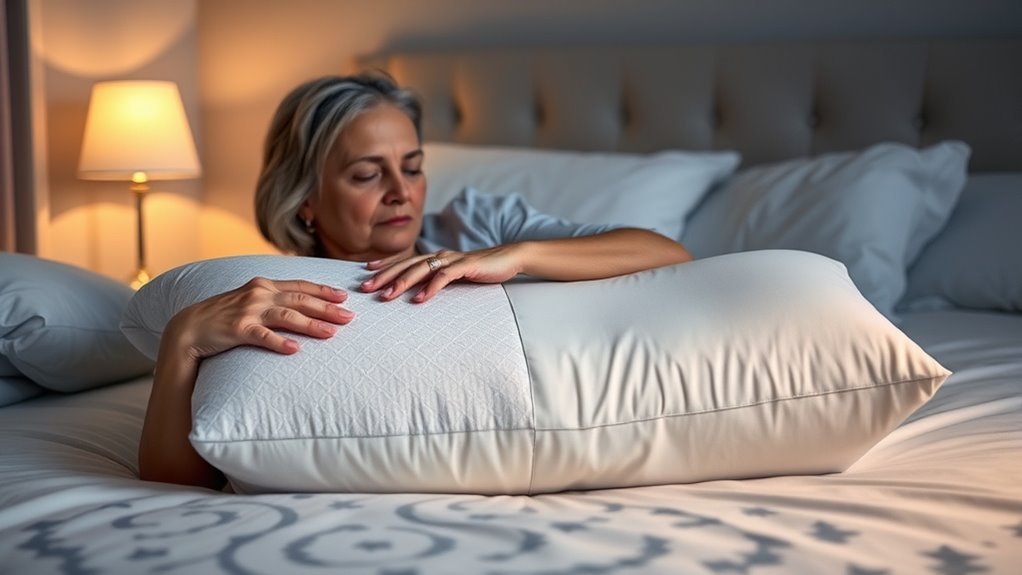
A menopause pillow can make sleep feel more comfortable when hot flashes or night sweats leave the head and neck feeling warm. If the pillow has two different surfaces, use the side specifically designed for cooling when you feel hot and the other side when you prefer a softer or smoother feel. Do not assume that a patterned surface is always the cooling side; the materials and manufacturer instructions matter more than the appearance.
Quick Answer
Use the cooling side of a menopause pillow when heat around your face, head, or neck is bothering you. On a dual-sided pillow, this may be a knitted or cool-to-touch surface rather than simply the patterned side. Flip to the smoother side when you prefer its feel. Follow the manufacturer’s labeling because designs differ.
Key Takeaways
- The cooling side is the surface made with the pillow’s cooling fabric or technology; pattern alone does not reliably identify it.
- A cool-to-touch or breathable pillow may make night sweats feel less uncomfortable, but it is not a proven treatment for menopausal hot flashes.
- Pillow height matters as much as the surface: side sleepers usually need enough loft to fill the shoulder-to-neck gap, while back sleepers generally need less.
- Left-side sleeping can help nighttime reflux, while people with positional obstructive sleep apnea may also benefit from avoiding back sleeping.
- Persistent hot flashes, drenching night sweats, insomnia, loud snoring, gasping, or severe daytime sleepiness should be discussed with a healthcare professional.
What This Menopause Pillow Does
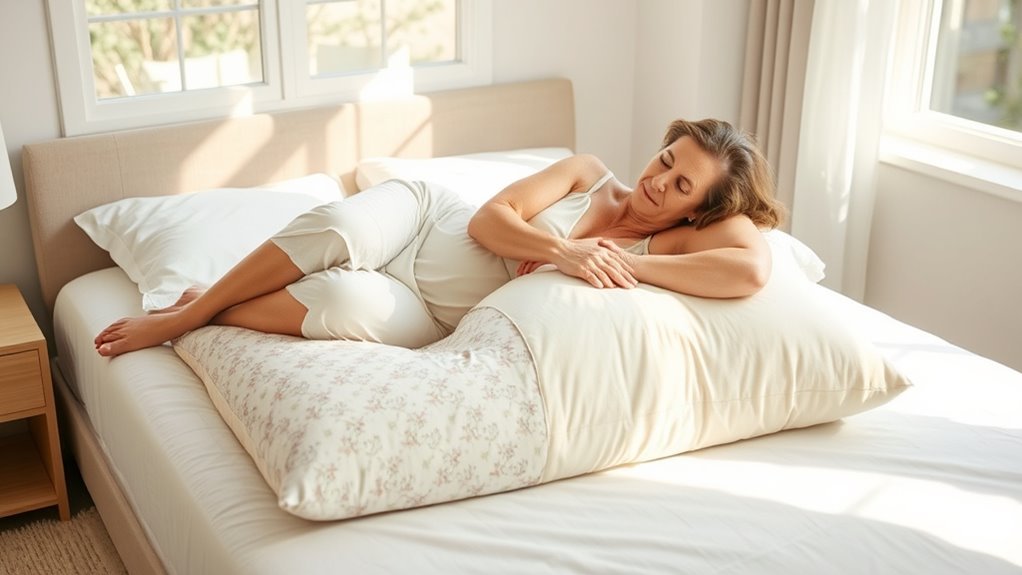
A menopause pillow is mainly a comfort product. Depending on its construction, it may use breathable fabric, moisture-managing textiles, mesh ventilation, cool-to-touch fibers, gel, or other materials intended to reduce heat buildup around the head and neck.
These features may make the sleep surface feel cooler or less clammy during a night sweat. They do not correct the hormonal mechanisms that cause menopausal vasomotor symptoms, and a pillow should not be described as a treatment for hot flashes.
Thermal comfort still matters. The National Institute on Aging notes that hot flashes and night sweats can contribute to poor sleep during the menopausal transition. Small studies of nighttime cooling systems have also reported improvements in perceived sleep or thermal comfort, although this evidence does not prove that any generic cooling pillow will reduce hot-flash frequency.
The pillow also needs to support the neck appropriately. Pillow height, shape, mattress firmness, shoulder width, and sleeping position all influence whether the head and neck stay in a comfortable position.
Note: A cooling pillow can be useful for comfort, but the Menopause Society’s evidence review does not consider cooling techniques a proven treatment for menopausal vasomotor symptoms.
Patterned Side vs Plain Side
Whether the patterned side or plain side should face upward depends on the actual materials used in the pillow. Texture alone does not tell you which surface has the cooling technology.
Some dual-sided menopause pillows use one knitted, cool-to-touch surface and one smoother cotton or sateen surface. In that design, the knitted cooling surface is normally the better choice when you are feeling hot, while the opposite side may be preferred when cooling is less important or you simply like its feel better.
- Cooling surface: use it when warmth around the head or neck is disturbing your comfort.
- Smoother surface: choose it when you prefer its texture or do not need the cool-to-touch effect.
- Unsure which is which? Check the sewn label, product instructions, packaging, or manufacturer’s description rather than relying on the fabric pattern.
For example, the My Nature Menopause Pillow is described by its manufacturer as having a knitted cooling top fabric and a cotton-sateen fabric on the reverse. That does not mean every other menopause pillow uses the same arrangement.
Pro Tip: Try each surface for several complete nights rather than deciding from the first few minutes. A surface that feels cold immediately is not automatically the one that will be most comfortable throughout the night.
How to Tell Which Side Is the Cooling Side
If the pillow does not clearly label its sides, look for differences in construction. The cooling surface may feel slicker, cooler, more tightly knitted, or more technical than the opposite side. Some pillows also place ventilation panels or special fabric only on one surface.
- Check the pillow tag, packaging, or manufacturer instructions first.
- Look for words such as cooling, cool-to-touch, phase change, gel, ventilated, or knitted cooling fabric.
- Compare both surfaces with your hand after they have been in the same room for a while.
- Sleep on the identified cooling side during warmer nights and compare comfort with the reverse side on another night.
- Follow washing and cover instructions so you do not damage the cooling fabric.
A thick pillow protector or heavy pillowcase can sometimes reduce how strongly a cool-to-touch fabric feels against the skin. However, whether a pillow should be used bare or with a case depends on its design, so follow its care instructions.
Why Back Sleeping Feels Easier
Back sleeping can feel comfortable because body weight is distributed across a broad area and the spine can remain relatively neutral when the head is not pushed too far forward.
A pillow under the knees may help relax the lower back, while the head pillow should support the neck without forcing the chin toward the chest. The Mayo Clinic recommends knee support as one option for people who prefer sleeping on their backs and have back discomfort.
There is no single ideal pillow height for every back sleeper. A very high pillow can flex the neck too much, while a pillow that is too low may not provide enough support. Your body proportions and mattress also matter.
Warning: Back sleeping is not automatically better for breathing. In people with positional obstructive sleep apnea, sleeping on the back can worsen airway obstruction. The National Heart, Lung, and Blood Institute notes that some people with sleep apnea are advised to sleep on their side rather than their back.
Best Sleep Positions for Menopause
There is no menopause-specific sleeping position that is best for everyone. The most useful position depends on the problem you are trying to solve: overheating, reflux, neck or back discomfort, snoring, or sleep apnea.
Side sleeping is often comfortable and can be particularly useful when reflux or positional snoring is present. Back sleeping may feel better for some people with musculoskeletal discomfort when the pillow height is appropriate and the knees are supported.
The menopause pillow itself should keep the head and neck comfortable without creating excessive bending or rotation. Cooling features can be used in either position if the pillow has suitable loft.
Side Sleeping Benefits
Side sleeping can provide a comfortable neutral position when the pillow fills the space between the shoulder and the side of the head. A pillow between the knees can also help keep the hips, pelvis, and lower spine in a more comfortable alignment.
The left side has one especially well-supported use: nighttime reflux. The American College of Gastroenterology includes left-side sleeping and head-of-bed elevation among measures that may help nighttime GERD symptoms.
That benefit should not be extended into claims that left-side sleeping treats menopausal hot flashes or universally improves circulation. For most people without a condition that favors a particular side, comfort is a reasonable guide.
- Use enough pillow loft to keep the neck from dropping toward the mattress.
- Try a pillow between the knees if side sleeping causes hip or low-back strain.
- Consider the left side if nighttime reflux is a problem.
- If one shoulder becomes sore or numb, change sides or reassess pillow and mattress support.
Back Sleep Support
Back sleepers typically need less pillow height than side sleepers because there is no shoulder-width gap to fill. The goal is to support the natural neck curve while keeping the head reasonably aligned with the chest.
A low-to-medium loft may work for many people, but there is no universal measurement. Pillow research shows that height and shape can influence cervical loading and alignment, so comfort and fit are more important than labels such as “flat,” “contoured,” or “orthopedic.”
If the lower back feels tense, placing a pillow beneath the knees may help. If you have diagnosed or suspected obstructive sleep apnea, however, discuss sleeping position with your clinician rather than assuming back sleeping is appropriate.
Cooling Position Tips
Sleep position can change how much skin contacts the mattress and pillow, but there is limited evidence that one particular position directly reduces menopausal hot flashes.
For temperature comfort, focus more on the sleep environment and materials:
- Use the pillow’s cooling surface when you feel overheated.
- Choose lightweight bedding that can be removed easily.
- Keep the bedroom at a comfortable temperature.
- Use breathable sleepwear if night sweats make clothing damp.
- Keep a dry pillowcase or sleepwear nearby if sweating regularly wakes you.
If reflux is also present, left-side sleeping or appropriate upper-body elevation may provide additional reflux relief. Upper-body elevation should not be presented as a treatment for hot flashes themselves.
Cooling Benefits at Night
A cooling pillow may reduce the sensation of trapped heat around the face, scalp, and neck. Breathable covers can also allow moisture to spread or evaporate more readily, making a night sweat feel less clammy.
These are comfort benefits. They should be separated from the medical treatment of menopausal vasomotor symptoms.
Research on broader nighttime cooling interventions is promising but still limited. A small 2022 pilot study of 15 perimenopausal and postmenopausal women reported improvements while using a cooling mattress-pad system, but it was a small single-arm study and cannot establish that an ordinary cooling pillow produces the same results.
Heat-Blocking Pillow Materials
Cooling pillows use several different approaches. Some focus on airflow, while others use materials designed to feel cool at first contact or manage moisture.
- Breathable fabrics: allow more air and water vapor to move around the sleep surface.
- Moisture-managing covers: can reduce the wet or clammy feeling caused by sweating.
- Ventilated foam or mesh panels: create channels that may reduce heat buildup.
- Gel or cool-to-touch materials: can make initial contact feel cooler, although the sensation may change as the material absorbs body heat.
- Phase-change materials: are designed to absorb or release heat within a particular temperature range, but performance varies by product.
Cooling technology should not distract from pillow fit. A pillow that feels cool but bends your neck into an uncomfortable position may still cause poor sleep.
Side-Sleeping For Coolness
Side sleeping can be comfortable on a cooling pillow, but there is not strong evidence that the left or right side meaningfully changes menopausal body temperature.
| Sleep Need | Useful Pillow Feature | Practical Goal |
|---|---|---|
| Feeling overheated | Cooling or breathable surface | Reduce perceived warmth around the head and neck |
| Night sweating | Moisture-managing cover | Reduce clamminess |
| Side sleeping | Adequate loft | Fill the shoulder-to-neck gap |
| Neck discomfort | Appropriate height and support | Avoid excessive neck bending |
| Nighttime reflux | Left-side positioning when comfortable | Reduce nighttime reflux symptoms |
The best combination is the one that keeps you reasonably cool without sacrificing neck comfort.
Menopause Night Sweat Relief
Hot flashes and night sweats are common vasomotor symptoms of the menopausal transition and can interrupt sleep. The National Institute on Aging describes night sweats as hot flashes that occur during the night and notes that they may disrupt sleep.
A cooling pillow cannot prevent the hormonal process that causes these episodes. What it may do is make the sleep surface more comfortable before, during, or after an episode of sweating.
Other basic sleep measures include using lightweight bedding, maintaining a consistent sleep schedule, limiting late caffeine and alcohol when they interfere with sleep, and keeping the bedroom comfortable.
A menopause pillow is best viewed as a comfort tool: it may make an overheated pillow feel easier to sleep on, but it does not replace evidence-based treatment for persistent hot flashes or night sweats.
How Support Affects Comfort During Hot Flashes
Pillow support does not directly stop a hot flash. Its role is to reduce additional discomfort while a person is trying to sleep.
If the pillow is too high, too low, or poorly shaped for the sleeper, neck pressure and repeated repositioning can make an already disrupted night feel worse. A pillow with suitable height and a comfortable surface may reduce the need to keep adjusting the head and neck.
Cooling fabric may also feel more comfortable when the face or scalp feels hot. Moisture-managing materials can reduce the sensation of sleeping against a damp surface.
These mechanical and comfort effects should not be confused with altering the underlying vasomotor episode. Current evidence does not show that better cervical alignment or side sleeping directly reduces menopausal hot-flash frequency.
Easing Neck and Back Pain
For people who also experience neck or back pain, pillow fit and sleeping position can make a noticeable difference in comfort.
When side sleeping, the pillow should be thick enough to support the space created by the shoulder. A pillow between the knees can help keep the pelvis and lower spine more comfortably aligned.
When sleeping on the back, the head usually requires less elevation. Supporting the knees may also reduce strain on the lower back.
There is no single pillow material or contour that works for everyone. A systematic review of pillow research found that pillow design can influence neck symptoms and that height and shape matter, while evidence does not support assuming that one contour is universally superior.
- Side sleeping: use enough loft to support the head without tilting it sharply up or down.
- Back sleeping: avoid excessive height that forces the chin toward the chest.
- Stomach sleeping: this position can strain the neck or back for some people because the head remains rotated, although it is not accurate to call it universally “the unhealthiest” position.
- Persistent pain: seek assessment if pain is severe, worsening, associated with weakness or numbness, or does not improve.
Tips for Changing Sleep Positions
If you want to change your sleeping position, make the adjustment gradually. It can take time for a new posture to feel natural.
Side sleepers can place a pillow behind the back to reduce rolling and another between the knees for comfort. Back sleepers can use a pillow beneath the knees if it reduces lower-back tension.
If nighttime reflux is the main reason for changing positions, try the left side first. If diagnosed positional sleep apnea is the concern, follow the position and treatment plan recommended by your sleep clinician.
Reassess your head pillow whenever you change sleeping position. A pillow that works perfectly on the back may be too low for side sleeping because the shoulder creates more distance between the head and mattress.
Pro Tip: Judge a new pillow by three things together: temperature comfort, neck comfort when you wake, and how often you need to reposition during the night.
When to Ask Your Healthcare Provider
Talk with a healthcare provider if night sweats, hot flashes, or insomnia are persistent enough to interfere with daytime energy, mood, concentration, or quality of life.
A pillow can improve comfort, but significant menopausal vasomotor symptoms have evidence-based treatment options. Depending on your medical history and preferences, a clinician may discuss menopausal hormone therapy or nonhormonal approaches. Current options also include prescription treatments specifically approved for moderate-to-severe vasomotor symptoms.
Medical assessment is particularly useful when sleep problems may have another cause. Loud habitual snoring, witnessed pauses in breathing, nighttime gasping, morning headaches, or marked daytime sleepiness can be signs of obstructive sleep apnea.
New or unexplained drenching night sweats should also not automatically be assumed to be menopause, particularly when they occur with other new symptoms.
- Seek advice when night sweats or hot flashes remain troublesome despite basic comfort measures.
- Discuss suspected sleep apnea rather than treating it only by changing pillows or sleep position.
- Get persistent neck or back pain evaluated if simple positioning changes do not help.
- Review medication and menopause-treatment options with a qualified clinician if symptoms are affecting daily life.
Frequently Asked Questions
Which side of a menopause pillow should I use?
Use the side specifically made with the cooling fabric when you want the coolest available surface. Use the reverse side when you prefer its texture or do not need as much cooling. Do not rely only on whether the surface is patterned or plain; check the label or manufacturer’s instructions.
Which side of a cervical pillow do I use?
It depends on the pillow design. Many contour pillows offer different neck-support heights, but there is no universal rule that one contour must always face a particular way. Follow the manufacturer’s diagram and choose the height that keeps your neck comfortable and reasonably aligned with your torso.
What is the unhealthiest sleeping position?
There is no single worst position for everyone. Stomach sleeping can strain the neck and back because the head remains turned, while back sleeping can worsen obstructive sleep apnea in some people. Side sleeping is often useful for reflux and positional snoring. Your medical conditions and comfort determine which position is most suitable.
Should a woman sleep on her left or right side?
Either side can be comfortable. The left side has evidence for reducing nighttime reflux in some people, but it is not a universal menopause requirement and has not been shown to be a general treatment for hot flashes. If reflux is not a concern, use whichever side is more comfortable unless your healthcare provider recommends otherwise.
Should your pillow be flat or angled?
Choose the height and shape that keep your head and neck comfortable in your normal sleep position. Side sleepers generally need more loft than back sleepers because the shoulder creates a larger gap. An angled or wedge pillow is mainly useful when elevation is needed for a specific reason, such as nighttime reflux.
Can a cooling pillow stop menopause night sweats?
No cooling pillow has been established as a treatment that stops menopausal night sweats. A cooling surface may reduce perceived heat or dampness and make it easier to get comfortable, but persistent vasomotor symptoms may need medical treatment.
Can I put a pillowcase over a cooling menopause pillow?
Follow the manufacturer’s care instructions. Some cooling pillows are designed to be used without an additional pillowcase so the cooling fabric contacts the sleeper directly, while others are intended for normal pillowcases. A thick protector or heavy case may reduce a cool-to-touch sensation.
Conclusion
The best side of a menopause pillow is the one designed for the effect you want. Use the designated cooling surface when heat around your head and neck is uncomfortable, and use the reverse surface when you prefer its feel. Do not assume that pattern alone identifies the cooling side.
Just as important, choose a pillow height that suits your sleep position. Side sleepers generally need more loft than back sleepers, while people with reflux or obstructive sleep apnea may have additional position considerations. Cooling bedding can make menopausal nights more comfortable, but it should be viewed as a comfort measure rather than a treatment for persistent hot flashes or night sweats.
Sources
- National Institute on Aging — Sleep Problems and Menopause — menopause-related sleep disruption and practical sleep guidance.
- The Menopause Society — 2023 Nonhormone Therapy Position Statement — evidence regarding cooling techniques and treatment of vasomotor symptoms.
- National Heart, Lung, and Blood Institute — Sleep Apnea Treatment — guidance on side sleeping and obstructive sleep apnea.
- American College of Gastroenterology — GERD Clinical Guidance — left-side sleeping and head elevation for nighttime reflux.
- Clinical Biomechanics — Systematic Review of Pillow Design — evidence on pillow height, shape, neck pain, and cervical alignment.
- Menopause — Pilot Study of a Cooling Mattress Pad — preliminary evidence on nighttime cooling, vasomotor symptoms, and sleep.
