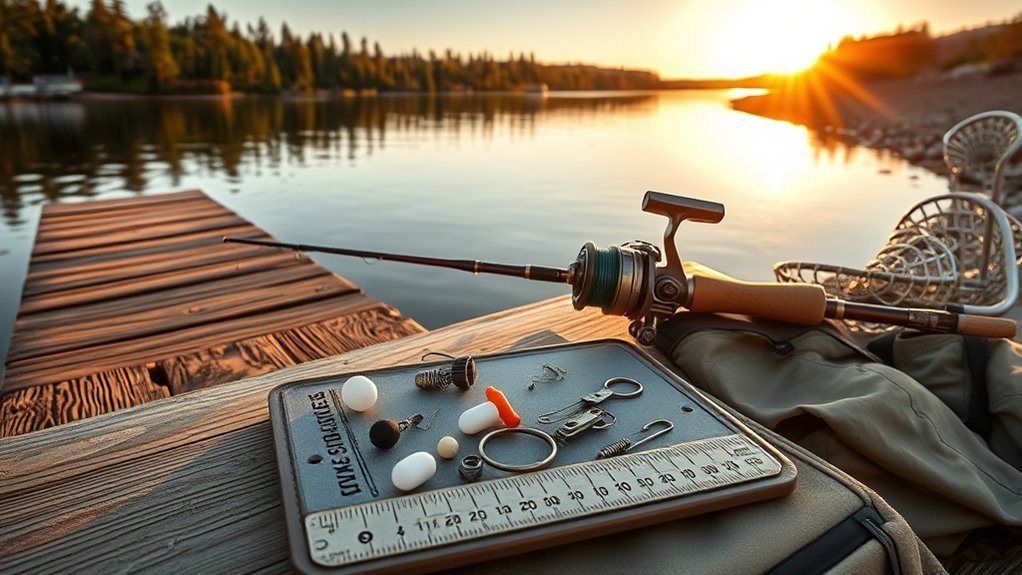
River fishing is easier to learn when the setup stays simple. For many beginners, a 6- to 7-foot medium-power spinning rod, a matching spinning reel, suitable monofilament line, a few hooks and weights, and simple lures such as jigs or spinners are enough to start. The bigger skills are learning to read moving water, present bait naturally, and fish safely around changing current.
Quick Answer
For beginner river fishing, start with a 6- to 7-foot medium-power spinning rod, a compatible spinning reel, roughly 6- to 12-pound monofilament for general freshwater use, hooks and weights matched to the fish, and a few bobbers, jigs, or spinners. Check local rules, river conditions, and safety hazards before every trip.
Key Takeaways
- A 6- to 7-foot medium-power spinning rod is a practical all-around starting point, but the rod’s line and lure ratings should match the tackle you use.
- About 6- to 12-pound monofilament works for many beginner freshwater situations, although lighter or heavier line may be better for specific species, cover, and current.
- Size 6-10 hooks are useful general-purpose freshwater sizes, but hook size should match the bait and target fish.
- Fish current breaks such as eddies, seams, pools, undercut banks, and the slower water behind rocks instead of casting randomly into the strongest flow.
- Check fishing regulations, access rules, weather, and river conditions before leaving home, and obtain a fishing license when your jurisdiction requires one.
- Wear a properly fitted PFD around hazardous moving water, use secure footwear, avoid unsafe wading, and handle released fish quickly with wet hands.
At a Glance
| Time Required | A few minutes to assemble and rig basic gear; allow extra time to check regulations, weather, river level, and access. |
| Difficulty | Beginner, provided the river conditions and access point are suitable for your experience. |
| Tools Needed | Rod, spinning reel, line, hooks, weights, bait or lures, pliers or hemostats, tackle container, landing net when useful, PFD, first-aid supplies, and suitable footwear. |
| Cost | Varies by existing gear, tackle choice, and local license or permit fees; check current prices and licensing requirements before buying. |
What Do You Need for River Fishing?
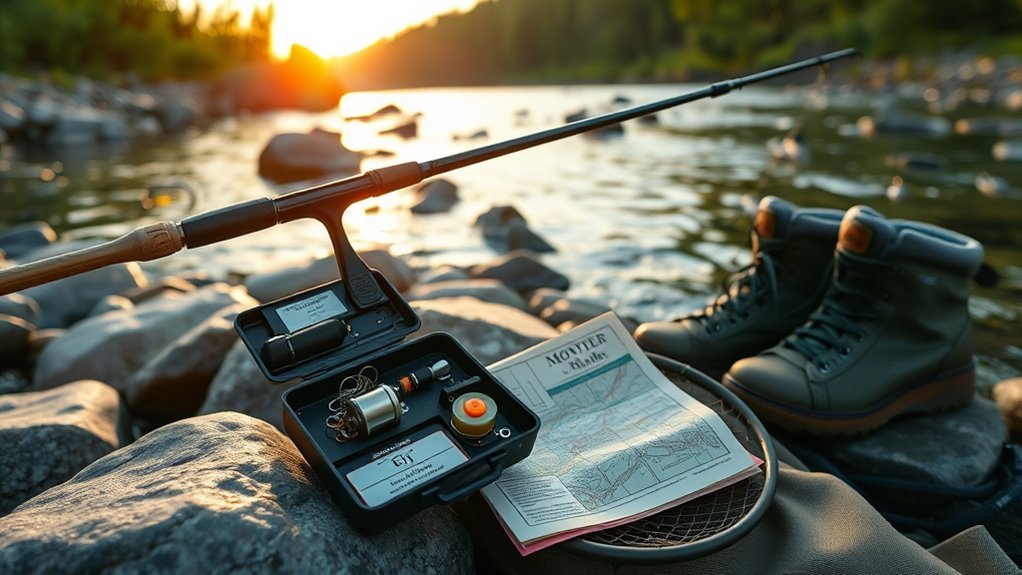
For general river fishing, a lightweight 6- to 7-foot medium-power spinning rod is a versatile starting point. Rod power describes how much force is required to bend the rod, while action describes where the rod bends. Always stay within the rod manufacturer’s recommended line and lure ranges.
A spinning reel is beginner-friendly and handles many common river presentations. For freshwater fishing, 6- to 12-pound monofilament is a practical starting range for many situations because it is inexpensive and manageable. Clear, open water may allow lighter line, while rocks, wood, stronger current, or larger fish may call for heavier tackle.
General-purpose size 6-10 hooks work with many freshwater baits, but hook size is not universal. Match the hook to the bait, fish species, and local rules. Carry several small split-shot weights so you can change how quickly the bait sinks.
Start simple: one spinning outfit, a few hook and weight sizes, a bobber, a jig or spinner, pliers, and tackle matched to the fish you actually expect to catch.
Bobbers help control depth and make bites easy to see. Jigs and inline spinners allow you to cover more water. Live or natural bait can also work well, but some waters restrict particular bait species, collection methods, hooks, or tackle.
Before fishing, check the agency responsible for the water you plan to visit. In the United States, fishing-license rules vary by state, age, residency, location, and exemptions. Seasons, size limits, harvest limits, hook rules, and bait restrictions may also vary.
Safety equipment belongs in the basic kit too. Bring a properly fitted PFD when fishing near hazardous moving water, a first-aid kit, drinking water, sun protection, pliers or hemostats, and footwear with reliable traction.
Best River Fishing Gear for Beginners
A beginner setup does not need dozens of lures or specialized rods. Choose tackle that covers the most common situations on your local river and add specialized equipment only after you know what you need.
| Gear | Beginner Starting Point | Why It Helps |
|---|---|---|
| Rod | 6-7 ft medium-power spinning rod | Versatile for many common freshwater rigs and lures. |
| Reel | Spinning reel matched to rod and line | Easy to cast and manage for beginners. |
| Main line | About 6-12 lb mono for general use | Manageable and suitable for many freshwater applications. |
| Hooks | Several sizes around #6-10 | Covers many small and medium freshwater bait presentations. |
| Weights | Assorted split shot | Lets you adjust depth and drift speed. |
| Lures | Small jigs and inline spinners | Simple choices for searching different depths and current speeds. |
| Fish handling | Pliers/hemostats and rubber or knotless net | Helps remove hooks quickly and reduce unnecessary handling. |
The correct tackle ultimately depends on the species, river size, current, cover, water clarity, and lure or bait. A smaller trout stream may call for much lighter equipment than a large river where an angler targets catfish, salmon, carp, or other powerful fish.
How to Set Up Your Rod and Reel
Begin by assembling the rod sections carefully. Align the guide rings so the line can travel through them without rubbing against the blank. Seat the spinning reel firmly in the reel seat and tighten the locking mechanism without forcing it.
| Step | Action | Purpose |
|---|---|---|
| 1 | Join and align rod sections | Keeps guides aligned and supports smooth line flow. |
| 2 | Mount the reel | Creates a secure rod-and-reel connection. |
| 3 | Thread or spool the line correctly | Prevents missed guides, twists, and unnecessary friction. |
| 4 | Attach terminal tackle and test the knot | Creates a secure connection before fishing. |
When the Reel Is Already Spooled
Open the bail and pull line from the reel. Feed it through the guide closest to the reel and continue through every guide toward the rod tip. Check that you have not accidentally passed the line around the rod blank instead of through a guide.
When You Are Spooling an Empty Spinning Reel
Mount the reel on the rod first and open the bail. Run the new line through the rod guides toward the reel, then secure the line to the spool using a suitable spool knot such as an Arbor knot. Close the bail and wind the line onto the reel under light, even tension while following the reel and line manufacturer’s instructions.
If you are filling the reel with ordinary monofilament, a separate backing layer is not automatically required. When using braid, some reel designs or line setups benefit from monofilament backing or another manufacturer-approved method to prevent the braid from slipping around the spool.
Pro Tip: Before making your first cast, pull firmly on every knot, check that the line passes through every guide, confirm the bail opens and closes normally, and make sure the drag releases line smoothly rather than locking solid.
Which Knots, Leaders, and Line Work Best?
For a basic spinning setup, you do not need a complicated leader system. Monofilament main line can often run directly to the hook or lure. A leader becomes more useful when you need extra abrasion resistance, lower visibility, a different line characteristic, or a connection between braid and terminal tackle.
The Clinch Knot or Improved Clinch Knot can attach many hooks, swivels, and small lures. A Double Uni Knot is one option for joining two lines. Whatever knot you choose, tie it carefully, wet it before tightening when appropriate for the line, trim the tag end, and pull-test the finished knot.
Best Leader Choices
Leader choice should follow the presentation rather than a single rule. Nylon monofilament is easy to handle and works well for many general applications. Fluorocarbon leader material sinks faster than nylon and is commonly used for subsurface presentations or where abrasion resistance and reduced visibility are useful.
A spinning angler using monofilament main line may not need a separate leader at all. An angler using braid can add a mono or fluorocarbon leader, with the strength selected for the species and cover.
For fly fishing, tapered leaders are common because their decreasing diameter helps transfer energy from the fly line to the fly. Trout leaders are often selected by length and X-size, but the right tippet depends on fly size, fish size, water clarity, current, and required presentation. A 5X or 6X tippet may suit small trout flies in some conditions, but it is not a universal trout specification.
Reliable Fly Knots
If you are fly fishing, the Clinch Knot, Improved Clinch Knot, and Davy Knot are common fly-to-tippet options. None should be treated as automatically strongest in every combination of tippet material and hook-wire diameter. A correctly tied knot that suits the material is more important than simply choosing the most complicated version.
The Davy Knot is compact and useful for small flies. Clinch-style knots are familiar and easy to inspect. When the tippet is very fine compared with the hook eye or hook wire, another suitable knot may provide a better connection.
Loop-to-loop connections make some fly leaders easy to replace when both the fly line and leader are designed with compatible loops. Inspect welded or braided loops regularly for abrasion rather than relying on adhesive to rescue a damaged connection.
Line Setup Essentials
A spinning and fly-fishing outfit use different line systems:
| Setup | Typical Line System |
|---|---|
| Beginner spinning | Monofilament main line directly to terminal tackle, or main line plus a short leader when needed. |
| Braid spinning setup | Braided main line plus mono or fluorocarbon leader where useful. |
| Fly fishing | Backing, fly line, tapered leader, and tippet when the setup requires it. |
On a fly reel, an Arbor knot can secure backing to the reel. The backing-to-fly-line connection depends on the specific fly line and whether it has a welded loop. Select the tapered leader and tippet for the fly, target fish, and presentation rather than choosing solely by pound-test.
Three Simple River Fishing Rigs for Beginners
1. Bobber or Float Rig
Tie on a suitable hook, place one or more small split-shot weights above it, and attach a bobber at the depth you want to fish. This rig works well when you want bait to drift through slower current, pools, or seams while staying above rocks and debris.
2. Weighted Drift Rig
Use a hook or small jig with enough weight to reach the target depth without anchoring it permanently to the bottom. Cast upstream or slightly upstream and let the current carry the presentation naturally through likely holding water. Add or remove weight until the bait reaches the fish without dragging uncontrollably.
3. Jig or Spinner
A small jig or inline spinner lets a beginner search several depths and current speeds. Cast toward current breaks, allow the lure to reach the desired depth, then retrieve it with enough speed to make the lure work correctly. Retrieve speed should follow the lure and fish response rather than one fixed “moderate” pace.
Note: Natural bait, hook styles, weights, and even particular lures may be restricted on certain waters. Check local regulations before choosing a rig.
How Do You Cast and Fish in River Water?
River fishing is less about casting as far as possible and more about placing the bait or lure where fish can hold without fighting the strongest current.
For drifting bait or a jig, cast upstream or slightly upstream of the target so the presentation has time to sink before entering the fish-holding area. Keep enough contact to detect a bite without pulling the bait unnaturally against the flow.
If you are using a spinner, crankbait, or other retrieved lure, the best casting angle varies. An upstream, across-current, or downstream presentation can each work depending on lure depth, current strength, and where the fish are positioned.
Read the River Before You Cast
Look for places where fast water meets slower water. These transitions often allow fish to conserve energy while watching food move past.
- Current seams: visible boundaries between faster and slower water.
- Eddies: slower or circulating water behind structure or along bends.
- Boulders and bridge structure: often create a slower pocket downstream.
- Deep pools: provide depth, cover, and slower current.
- Riffle-to-pool transitions: can concentrate drifting food.
- Undercut banks and woody cover: can provide shade and shelter, although snag risk is higher.
Pro Tip: Instead of repeatedly casting into the center of the strongest current, work the edges of fast water and slower pockets behind structure. Move after several good presentations if a spot produces no signs of fish.
A casting plug or practice weight can help a beginner learn smooth spinning-reel casts in an open area before fishing near trees, people, rocks, or other obstacles. Accuracy and line control normally matter more in a river than maximum distance.
Check River Conditions Before Fishing
The river you fished safely last week may behave very differently after heavy rain, snowmelt, a dam release, or a storm upstream. Before leaving home, check the current weather forecast, recent rainfall, river level or flow information when available, access notices, and any closures.
Do not assume shallow water is automatically safe. Moving water can knock an angler off balance, and the bottom may contain slippery rocks, deep holes, submerged wood, or sudden drop-offs.
Water temperature also affects fish differently. Warm-water fish and cold-water fish do not respond the same way. For trout and other cold-water species, unusually warm water can create severe stress and poor catch-and-release survival. Follow local fishery guidance and consider targeting a different species or waterbody when cold-water fish are thermally stressed.
River Fishing Safety and Conservation Tips
River fishing requires more caution than standing beside still water. Strong currents may be difficult to judge from the surface, and water levels can change quickly.
Warning: Do not enter water that is faster, deeper, colder, or less predictable than your skill and equipment can safely handle. Leave immediately for higher ground if the river begins rising unexpectedly, and get away from the water when thunderstorms threaten.
| Practice | Purpose | Action |
|---|---|---|
| PFD | Reduce drowning risk | Wear a properly fitted PFD around hazardous moving water and follow all applicable boating or site-specific requirements. |
| Wading | Reduce falls and entrapment | Use secure footwear, move slowly, and avoid water where you cannot safely judge depth, footing, and current. |
| Fishing regulations | Protect fish stocks and comply with law | Check current seasons, limits, bait rules, hook restrictions, and closures. |
| Catch-and-release | Improve survival | Land fish promptly, keep them wet, minimize handling, and use appropriate release tools. |
| Waste control | Protect wildlife and habitat | Pack out trash and dispose of used fishing line properly. |
A partner can help during an emergency, but if you fish alone, tell someone exactly where you are going and when you expect to return. Keep a phone or signaling device protected from water, remembering that some river corridors have limited reception.
Catch-and-Release Basics
If a fish will be released, avoid playing it to exhaustion. A rubber or soft knotless landing net can reduce handling. Keep the fish in the water whenever practical, wet your hands before touching it, avoid the eyes and gills, and support its body rather than hanging a large fish vertically.
Remove hooks promptly with pliers, hemostats, or a dehooking tool. If a hook is deeply embedded and cannot be removed easily without causing more damage, cutting the line close to the hook may be safer than prolonged handling. Follow species-specific and local guidance.
Return the fish as quickly as practical and give a tired fish time to regain control in the water before release. In flowing water, keep it upright and facing into the current so water naturally passes through the gills.
Common River Fishing Problems and Fixes
The Bait Drifts Too Fast
Reduce the casting distance, move closer to the current seam, or add a small amount of weight. Add weight gradually; too much can make the rig snag constantly.
You Keep Getting Snagged
Use less weight, fish slightly higher in the water column, shorten the drift, or change the casting angle. River fish often hold near rocks and wood, so some snag risk is normal, but repeated bottom contact means the rig may be too heavy or too deep.
The Line Twists or Tangles
Check that the line is correctly loaded on the reel, avoid overfilling the spool, remove badly twisted sections, and make sure spinning lures are working correctly. Inspect the rod guides for missed threading before casting again.
You Are Not Getting Bites
Change location before constantly changing tackle. Fish a current seam, slower pocket, pool, undercut bank, or another obvious current break. Then experiment with depth, lure size, bait, and retrieve speed.
Your Knots Keep Failing
Retie after abrasion, snags, or contact with rocks. Make sure the knot suits the line and hook, tighten it correctly, trim it neatly, and test it firmly before casting.
Frequently Asked Questions
What Is the 80/20 Rule in Fishing?
The 80/20 rule is a Pareto-style fishing rule of thumb suggesting that a relatively small portion of the water often produces a large share of the bites. It is not a biological law or guaranteed 80/20 ratio. The practical lesson is to concentrate on productive habitat such as current seams, pools, cover, depth changes, and other places where fish can feed efficiently.
What Is the Best Setup for River Fishing?
For a general beginner setup, a 6- to 7-foot medium-power spinning rod, compatible spinning reel, roughly 6- to 12-pound monofilament, a few hook and weight sizes, and simple jigs, spinners, or a bobber rig cover many situations. Adjust the tackle for your target species, lure weight, cover, and current.
What Are Some Tips for Fishing in Rivers?
Look for slower water next to faster current, including seams, eddies, pools, and the downstream side of rocks. For drifting rigs, cast upstream of the target and let the current carry the bait naturally. Change depth, weight, location, and lure presentation when fish do not respond. Water temperature and seasonal patterns are species-specific, so avoid broad rules that warmer water is always better.
What Is a Basic Fishing Setup for Beginners?
A simple beginner freshwater outfit is a spinning rod and reel, manageable monofilament line, several hooks, split-shot weights, a bobber, and a few basic baits or lures. A rod around 6 to 7 feet is more versatile for general river use than prescribing one short rod length for every situation.
Do You Need a Leader for River Fishing?
Not always. Monofilament main line can often connect directly to the hook or lure. A leader is useful when you use braided main line, need more abrasion resistance around rocks, want a different line characteristic near the lure, or are building a fly-fishing setup.
Where Should a Beginner Cast in a River?
Start around current breaks rather than the middle of featureless fast water. Good targets include the edge of an eddy, a seam between fast and slow current, the slower pocket behind a boulder, the head or tail of a pool, and shaded cover along the bank when access is safe.
Conclusion
River fishing becomes much more approachable when you simplify the equipment and pay close attention to moving water. Start with a versatile spinning outfit, learn a few reliable knots, and practice one or two uncomplicated rigs before buying more tackle. Then focus on current seams, eddies, pools, and other places where fish can hold efficiently.
Just as important, check regulations and river conditions before every trip. Wear appropriate safety equipment, avoid wading beyond your ability, and handle released fish carefully. Better river fishing comes from accurate presentation, observation, and safe decisions—not from carrying the most gear.
Sources
- U.S. Fish & Wildlife Service — A Guide to Fishing for the First Time — beginner freshwater tackle, line, hooks, licensing, and regulation basics.
- U.S. Fish & Wildlife Service — Purchase a Fishing License — current state-specific licensing guidance.
- National Park Service — River and Stream Safety — current, wading, cold-water, and river-hazard guidance.
- NOAA Fisheries — Catch and Release Fishing Best Practices — fish handling, nets, hook removal, and release practices.
- Shimano — Fishing FAQ — spinning-reel line setup and threading guidance.
- St. Croix Rod — Rod Engineering — distinction between rod power and rod action.
