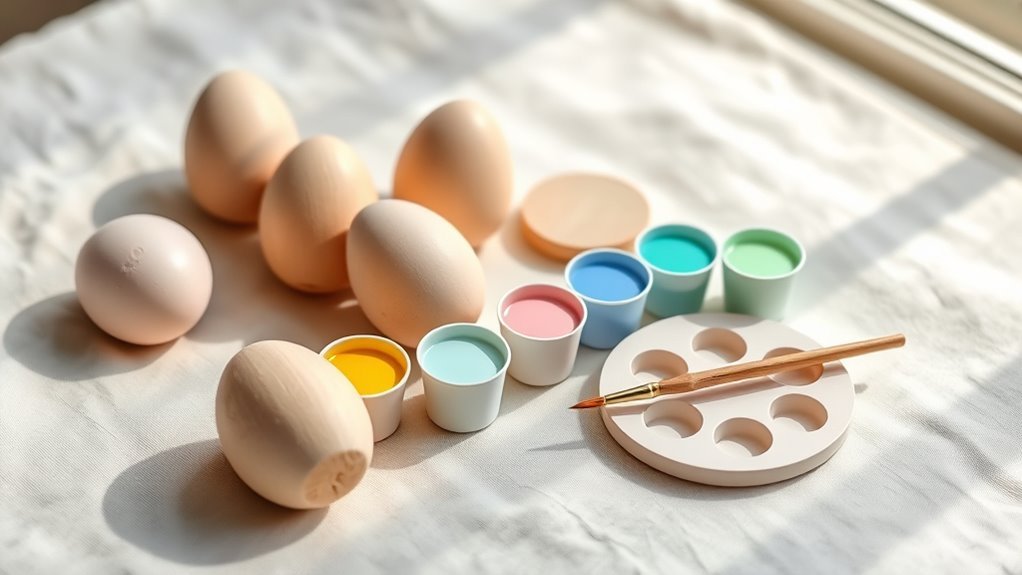
A wooden Easter egg craft kit can turn unfinished wooden shapes into colorful spring decorations with only a few supplies. Kits vary widely, so check the exact listing before buying rather than assuming a specific number of eggs, paints, brushes, stickers, or ribbons. For the best results, choose age-appropriate art materials, prepare the wood first, apply paint in thin layers, and allow each coat to dry before decorating.
Quick Answer
A good wooden Easter egg craft kit should include smooth wooden shapes, clearly labeled paint, suitable brushes, and age-appropriate decorations. Kit contents vary by seller, so confirm the quantity and materials before ordering. Paint thin coats, let each layer dry, add details afterward, and keep small decorations away from young children.
Key Takeaways
- Wooden Easter egg kits vary in the number of eggs, paint colors, brushes, and decorations included.
- Check the product’s age recommendation, paint label, and small-parts warnings before giving a kit to a child.
- Thin coats usually produce a smoother finish than one heavy coat of paint.
- Let the base color dry before adding dots, stripes, stickers, lettering, or other details.
- Treat shipping times, review totals, return policies, and stock status as changeable information that should be confirmed on the current seller listing.
What’s Inside the Easter Craft Kit
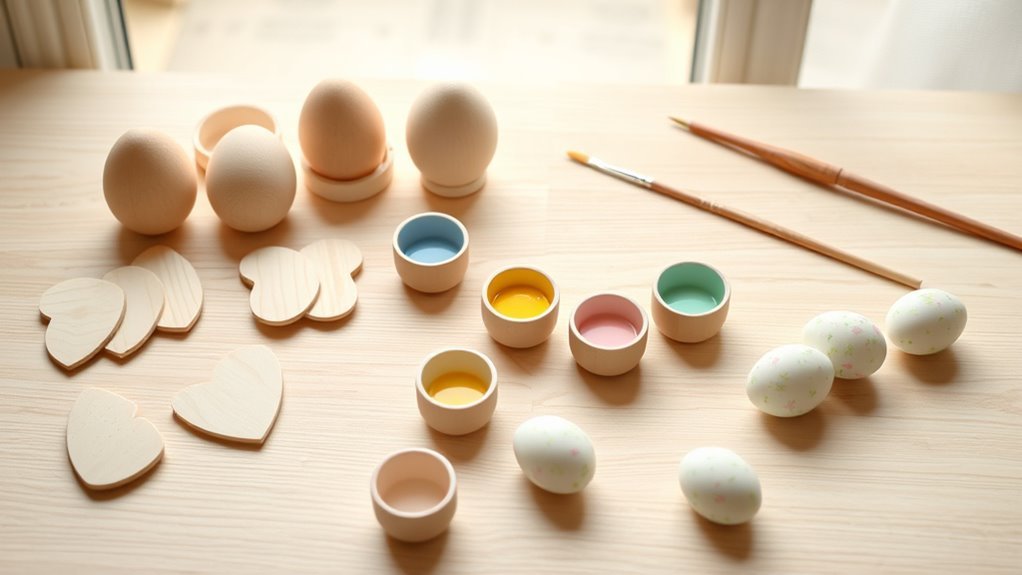
A typical wooden Easter egg craft kit combines unfinished wooden shapes with basic decorating supplies. However, there is no standard kit size. One seller may include a single egg and a few paint colors, while another may bundle several eggs, a larger paint set, multiple brushes, stickers, ribbon, stencils, or other embellishments.
Before ordering, read the exact product description and variation menu. Check how many wooden pieces are included, whether paint comes with the kit, how many brushes are supplied, and whether the photographed decorations are actually part of the package.
| Item to Check | Why It Matters |
|---|---|
| Number of wooden pieces | Some kits contain one decoration; others are designed for several children. |
| Paint type and colors | The supplied colors and safety labeling can differ between kits. |
| Brushes | A wider brush helps with base coats, while a smaller brush makes details easier. |
| Stickers, ribbon, gems, or other decorations | These may create a small-parts concern for younger children. |
| Wood type | Do not assume the pieces are Baltic birch or another specific wood unless the listing says so. |
[Amazon Products Picked for You]

Complete Easter Craft Kit: Includes 30 smooth wooden eggs for painting, 12 non-toxic vibrant markers and hemp cords to create vibrant decorative easter eggs.

Complete DIY Easter Craft Kit: Everything you need to create beautiful, personalized Easter decor! This set includes 9 natural blank wooden eggs, each measuring the perfect 3.94-inch size for easy handling and display, along with a variety of painting tools, color paints, sparkling glitter, and decorating accessories.

Complete Easter Craft Kit: Unleash your creativity with our comprehensive Easter wooden painting kit! This set includes 40 pieces of unfinished wood cutouts blanks, featuring 8 charming Easter-themed designs (Bunny, Hen, Butterfly, and various Easter egg shapes), with 5 pieces per design, 12 color paints, 6 sparkling glitter.
Why a Good Wooden Egg Kit Stands Out
The best wooden Easter egg kits make the activity easy without limiting creativity. Smooth wooden pieces, clearly labeled paint, usable brushes, and simple decorating extras give beginners enough structure while still leaving room for original designs.
Wood also has an advantage over a one-time paper project: once the paint has dried, the finished eggs can be displayed again during future Easter seasons. Children can create simple faces or stripes, while older kids and adults can experiment with florals, gradients, geometric patterns, lettering, or detailed spring scenes.
Quality matters more than the number of accessories. Look for wooden pieces without sharp splinters, paint containers that are properly labeled, brushes that do not shed heavily, and instructions that clearly identify the intended age range.
At a Glance
| Time Required | About 30–60 minutes of hands-on decorating, plus additional drying time |
| Difficulty | Beginner-friendly |
| Tools Needed | Wooden eggs, suitable craft paint, brushes, table covering, water cup, and paper towels; decorations are optional |
| Cost | Varies by kit size, seller, materials, and included accessories |
[Amazon Products Picked for You]

Egg-citing Spin Art: Place an egg on the officially licensed Peeps Bunny motorized spinner, touch 1 of the 8 vibrant markers to the spinning surface, and watch one-of-a-kind spirals, stripes, dots, and swirl patterns appear in seconds; layer colors while the egg spins to blend shades into totally unique designs. No dye tablets to dissolve, no vinegar smells, no stained countertops - just pure marker-on-egg spin art powered by our patented spinning mechanism

Size: 2.36 inch x 1.58 inch(6 cm x 4 cm).It looks like real eggs, Wooden eggs weigh almost as much as real eggs
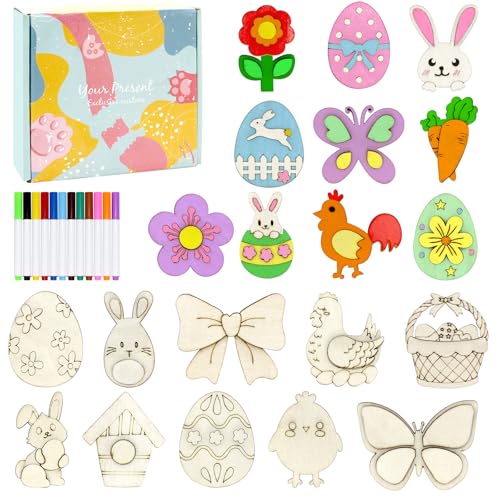
Package Included:36 wooden Easter crafts, 12 colored pens, 36 magnet stickers. easy for everyone to meet creative needs. There are different designs such as Easter eggs, chicks, carrots, bunny, flowers, etc.
How to Use the Included Paint and Brushes
Painting wooden Easter eggs is straightforward, but a few preparation steps can improve the finish considerably.
- Inspect the wood. Check each piece for splinters, rough edges, dust, or loose fibers. If the seller says the pieces are ready to paint, only light cleaning may be necessary. Otherwise, an adult can carefully smooth minor rough spots if appropriate for the product.
- Protect the work area. Cover the table with paper, a reusable craft mat, or another paint-resistant surface. Acrylic and other craft paints can stain clothing and furniture.
- Stir or mix the paint if instructed. Follow the paint manufacturer’s directions rather than adding water automatically.
- Apply a thin base coat. Use a wider brush for the background and avoid loading the brush with excessive paint.
- Let the first coat dry. Follow the supplied paint’s drying and recoat directions. Painting details over a wet base can cause colors to blend or smear.
- Add details. Use a smaller brush for dots, stripes, flowers, faces, names, or geometric patterns.
- Add stickers or decorations last. Apply adhesive decorations only after the painted surface is dry enough to handle.
- Allow the finished egg to dry completely. Place it where children and pets will not touch it while the coating is still wet or tacky.
Warning: Follow the kit’s age recommendation and all paint and adhesive labels. Small stickers, gems, decorations, or detachable pieces can create a choking risk for young children. Adult supervision is especially important when a craft kit contains small parts.
Pro Tip: Two thin coats usually give better control than one heavy coat. Thin layers are less likely to pool around the curved sides of a wooden egg and make it easier to add clean details later.
[Amazon Products Picked for You]
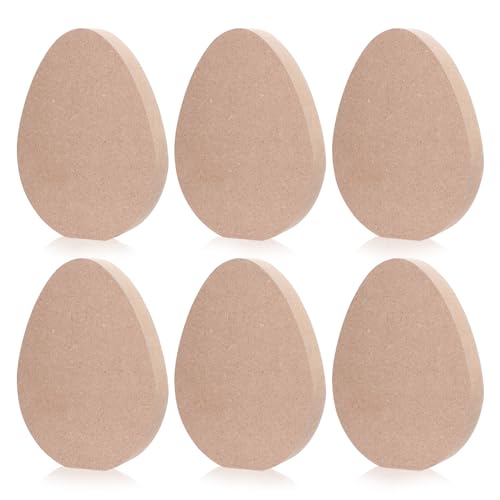
Package Includes: 6 Pieces unfinished wooden Easter egg slices. The wooden Easter eggs for crafts are blank and colorless. Easter eggs are essential decorations for Easter and spring.

With 9 different colors of dye, this kit is perfect for making eggs of every imaginable shade and hue. Also includes a PAAS Magic Crayon to help you make complex and customized designs!
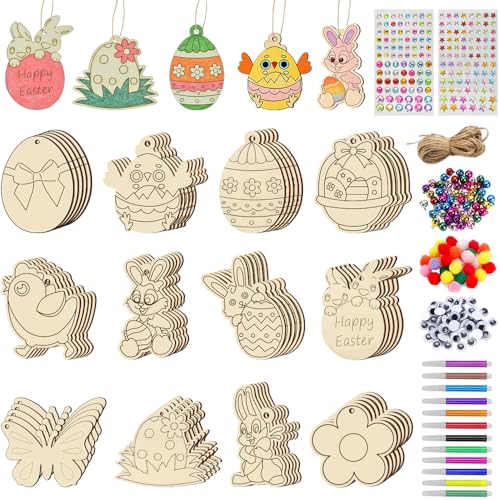
【60Pcs Easter Crafts Set】This Easter craft kits include 60 pcs unfinished wooden Easter cutouts (12 Shapes), each shape is 5pcs,12 Color Markers and assorted cute decorations,sufficient quantity and vibrant colors meet your various needs.
Easy Easter Egg Craft Ideas for Kids
A wooden egg gives children an easy starting point because almost any simple pattern works. Beginners can use dots and broad stripes, while older children can try flowers, animals, names, color gradients, or repeating geometric designs.
Keep the activity manageable by limiting the number of paint colors on the table at one time. A few organized supplies often work better than a large pile of decorations.
Simple Paint-and-Decorate Kits
For young or first-time crafters, choose a kit with a small number of clearly labeled materials. A basic wooden shape, several paint colors, and one or two brushes are usually enough to create a complete project.
Pre-engraved or outlined designs can help children who want guidance, while completely blank wooden eggs provide more freedom. Neither option is automatically better; the right choice depends on the child’s age, patience, and interest.
When several children are painting together, provide a separate drying area so completed pieces are not accidentally touched or mixed up.
Fun Easter Egg Patterns
Easy decorating ideas include:
- Polka dots: Use the end of a small brush or a round foam tool.
- Horizontal or diagonal stripes: Alternate two or three colors.
- Spring flowers: Paint simple five-dot petals around a contrasting center.
- Bunny faces: Add eyes, a nose, whiskers, and simple ears if the wooden shape allows.
- Color blocks: Divide the egg visually into two or three bold sections.
- Names or initials: Add lettering after the base coat is dry.
- Geometric patterns: Use triangles, diamonds, zigzags, or repeating lines.
Stickers and craft embellishments can add texture after painting, but only use decorations appropriate for the child’s age and the intended use of the finished piece.
Kid-Friendly Craft Table Ideas
A well-organized craft table makes Easter egg decorating easier to supervise and easier to clean. Cover the working surface, keep wet paint away from food, and give each child a defined painting space.
| Item | Purpose |
|---|---|
| Stickers | Add quick patterns after paint dries |
| Ribbons | Add a hanging or decorative detail when the kit design supports it |
| Templates or stencils | Help guide simple shapes and repeated patterns |
| Paper towels | Handle small spills and wipe brushes |
| Water cups | Rinse water-compatible paint from brushes when permitted by the paint instructions |
For a classroom or party, label each child’s drying space with a name. This avoids confusion when several painted eggs look similar or need to remain untouched after the activity ends.
How to Choose a Safe Easter Craft Kit
When a craft kit is intended for children, look beyond the colors and decorations. Check the age recommendation, warnings, paint labeling, and the size of removable accessories.
In the United States, the Consumer Product Safety Commission explains that art and craft kits marketed to children can be considered children’s products. Art materials are also subject to applicable hazard-labeling requirements. When buying paints separately, read the complete label and use the product only as directed.
For additional guidance when selecting children’s art materials, the ACMI AP (Approved Product) Seal identifies participating art materials that have undergone toxicological evaluation for their intended use. The absence of an AP seal does not by itself prove that a product is unsafe, but clearly documented safety information is preferable to vague claims such as “kid safe” with no supporting details.
Note: A “non-toxic” claim does not mean paint should be eaten, used as face paint, or applied to the skin unless the product is specifically labeled for that use. Follow the manufacturer’s intended-use instructions.
How to Check Sustainable Wood Claims
A wooden craft item should not automatically be described as sustainably sourced simply because it is made from wood. Look for documented sourcing information from the seller or a recognized certification.
One common indicator is an FSC label. The Forest Stewardship Council explains that its labels identify products made with material from FSC-certified, recycled, and/or controlled sources depending on the specific label.
If the listing merely says “eco-friendly,” “natural,” or “sustainable” without identifying a certification or sourcing policy, treat the statement as a marketing claim rather than verified proof of the wood’s origin.
Common Wooden Egg Painting Problems and Fixes
| Problem | Likely Cause | What to Do |
|---|---|---|
| Visible brush streaks | Too much paint or repeated brushing as the coat begins to dry | Use a thinner coat and avoid repeatedly brushing over partially dried paint. |
| Paint stays tacky | Heavy coating, unsuitable conditions, or insufficient drying time | Stop handling the piece and follow the paint manufacturer’s drying instructions. |
| Second color smears into the first | Base coat is still wet | Allow the first color to dry before applying details. |
| Surface feels rough | Raised wood fibers or unfinished edges | Inspect before painting. An adult can address minor roughness if appropriate for the product and material. |
| Stickers will not stay attached | Paint is damp, dusty, or heavily textured | Wait until the surface is fully dry and clean before applying stickers. |
Shipping, Returns, and Shop Policies
Shipping times and shop policies can matter when buying an Easter craft for a party, classroom activity, or holiday basket. However, these details change by seller, destination, season, and product.
Before paying, check the current listing for:
- processing or dispatch time;
- estimated delivery window;
- whether the seller ships to your country;
- the cancellation deadline;
- whether returns or exchanges are accepted;
- who pays return shipping;
- conditions for returning opened or customized items; and
- whether personalized products have different rules.
Do not rely on an old review, cached search result, or another product from the same shop for these terms. Confirm the policy displayed for the exact item you intend to purchase.
How to Evaluate Reviews for an Easter Craft Kit
Review scores can be useful, but an average rating alone does not tell you whether a kit is right for your child or project. Review counts and ratings also change over time, so check the current product page rather than relying on an older figure.
Look for comments that specifically discuss wood quality, paint condition, brush quality, packaging, completeness, ease of use, shipping reliability, and whether the received kit matched the listing photos and description.
Photos submitted by verified buyers can be especially helpful because they show the real size of the wooden pieces, the amount of paint supplied, and how the finished project looks outside the seller’s promotional photography.
Read several recent reviews rather than only the most enthusiastic one. If multiple buyers repeatedly mention missing pieces, dried paint, rough wood, misleading dimensions, or damaged packaging, that pattern is more useful than the headline star rating.
Frequently Asked Questions
Is the Wood Sustainably Sourced?
It depends on the product. Do not assume wooden eggs are sustainably sourced unless the seller provides supporting information. Look for documented sourcing or a recognized certification such as an FSC label. If the listing provides no evidence, the sourcing remains unverified.
Are the Eggs Pre-Sanded and Ready to Paint?
Some are, but this varies by seller. Check the description for terms such as smooth, sanded, unfinished, or ready to paint. Inspect every wooden piece before use and do not let a child handle a piece with sharp splinters or damaged edges.
Can the Kit Be Used for Classroom Activities?
Yes, many wooden Easter egg kits can work well for classrooms if the materials are age-appropriate and there are enough supplies for the group. Check paint labels and small-parts warnings, cover tables, provide supervised paint stations, and create a labeled drying area for each student’s project.
Are Replacement Eggs Available Separately?
Possibly. Replacement pieces depend on the seller, and some shops sell unfinished wooden egg blanks separately. Check the seller’s current inventory or contact the shop before assuming identical replacement pieces are available.
Is This Kit Suitable for Outdoor Decorating?
Assume indoor use unless the seller and coating manufacturers specifically say the wood, paint, adhesive, and finish are suitable for outdoor exposure. Ordinary craft paint, stickers, ribbons, and unfinished wood may deteriorate when exposed to rain, moisture, sunlight, or changing temperatures.
Conclusion
A wooden Easter egg craft kit can be an easy seasonal project for children, families, classrooms, and beginner crafters, but the details matter. Check exactly what is included, follow the product’s age and safety instructions, protect the workspace, and build the design in thin, dry layers rather than rushing the paint.
For buyers, the most important rule is simple: verify the current product listing instead of assuming every kit has the same wood, paint, accessories, reviews, shipping terms, or return policy. With suitable materials and a little preparation, plain wooden eggs can become durable Easter decorations that are personal, colorful, and enjoyable to make.
Sources
- U.S. Consumer Product Safety Commission — Children’s Products — guidance on when art and craft kits are considered children’s products.
- U.S. Consumer Product Safety Commission — Art Materials — art-material labeling and ASTM D-4236 guidance.
- U.S. Consumer Product Safety Commission — Small Parts Ban and Choking Hazard Labeling — small-parts guidance for children’s products.
- Art & Creative Materials Institute — Materials Safety — information about AP and CL certification seals for art materials.
- Forest Stewardship Council — What the FSC Labels Mean — information for verifying responsible wood-sourcing claims.
