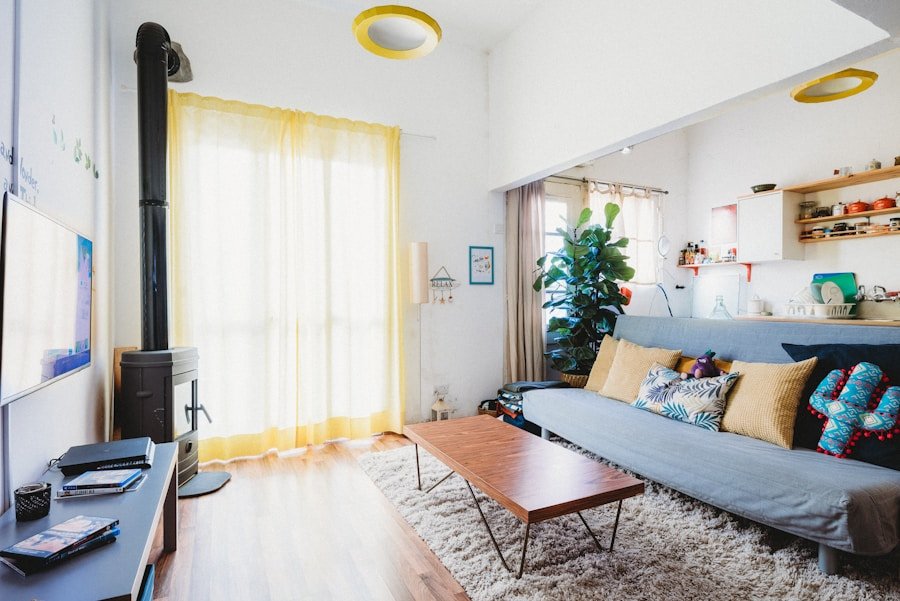
The color scheme of a room can dramatically change how a rental apartment feels, even when you cannot paint or renovate. Start by thinking about the purpose of each space and the mood you want to create. Soft blues, greens, creams, and warm neutrals can make bedrooms and living areas feel calmer, while brighter accents like yellow, coral, or red can add energy to kitchens, desks, and small dining corners.
Light also matters. Natural light can change how colors look throughout the day, so test removable decor, rugs, curtains, and peel-and-stick samples before you commit. Lighter colors can help a small room feel more open, while darker accents can make a large or plain rental feel cozy and finished.
Quick Answer
To decorate a rental apartment, use renter-friendly updates like removable wallpaper, area rugs, plug-in lighting, wall art, mirrors, multi-functional furniture, and temporary storage solutions. Focus on changes you can take with you when you move, and avoid anything that damages walls, floors, cabinets, or fixtures.
Key Takeaways
- Choose a simple color palette first so your furniture, textiles, and decor feel connected.
- Use multi-functional furniture to make small rooms work harder without adding clutter.
- Add personal style with art, photos, textiles, books, plants, and removable wall decor.
- Prioritize storage that uses vertical space, hidden compartments, and under-bed areas.
- Keep rental changes temporary, removable, and damage-free whenever possible.
At a Glance
| Time Required | A few hours for small updates; a weekend for a full-room refresh |
| Difficulty | Beginner-friendly |
| Tools Needed | Measuring tape, removable hooks, level, baskets, lamps, rugs, and renter-friendly adhesive products |
| Cost | Low to moderate, depending on furniture, rugs, lighting, and storage needs |
Maximizing Small Spaces
Multi-Functional Furniture
One effective method is to utilize multi-functional furniture that serves more than one purpose. For instance, a sofa bed can transform a living room into a guest room, while an ottoman with storage capabilities can provide both seating and a place to stow away blankets, magazines, toys, or extra linens.
Look for pieces that solve more than one problem at once. A drop-leaf table can work as a dining table, desk, or entryway surface. A storage bench can hold shoes near the door while offering a place to sit. Nesting tables can spread out when you need them and tuck away when you do not.
Optimizing Storage and Layout
Additionally, wall-mounted shelves can free up floor space while providing essential storage and display areas for books, plants, or decorative items. By thinking creatively about how furniture can serve dual roles, you can enhance both the utility and visual appeal of compact areas. Placing larger pieces against walls can create an open pathway in the center of the room, making it feel less cramped.
Before buying new furniture, measure the room, doorways, and walking paths. Small apartments feel more comfortable when you leave enough space to move around beds, sofas, tables, and chairs. In tight rooms, clear acrylic furniture, slim metal frames, and exposed legs can make pieces feel lighter.
Visual Tricks and Illusions
Moreover, using mirrors strategically can create an illusion of depth and openness; a large mirror opposite a window can reflect light and make the space feel brighter and more expansive. Vertical storage solutions, such as tall bookshelves or hanging organizers, can also draw the eye upward, emphasizing height rather than width. By employing these techniques, you can transform even the tiniest of spaces into functional and inviting areas.
Pro Tip: Choose one main storage zone for each room. When every item has a clear home, your apartment feels larger, calmer, and easier to clean.
Selecting the Right Furniture

Choosing the right furniture is pivotal in achieving a cohesive and functional interior design. When selecting pieces, consider not only their aesthetic appeal but also their scale and proportion relative to the space. Oversized furniture in a small room can overwhelm the area and make it feel cluttered, while too-small pieces may fail to provide adequate comfort or utility.
A well-proportioned sofa that fits comfortably within the dimensions of your living area will enhance both comfort and style. Additionally, opting for furniture with clean lines and minimal ornamentation can create a more streamlined look that complements modern design sensibilities.
Durability and material choice are also critical factors when selecting furniture. High-quality materials not only ensure longevity but also contribute to the overall aesthetic of your home. For example, solid wood furniture offers timeless appeal and durability, while metal accents can add an industrial touch to contemporary spaces.
Upholstery fabrics should be chosen based on their intended use. For high-traffic areas, stain-resistant materials may be more practical than delicate fabrics. If you have pets, children, or frequent guests, washable slipcovers and performance fabrics can help your furniture last longer.
By carefully considering both form and function in your furniture selection process, you can create an inviting environment that reflects your personal style while meeting your practical needs.
Adding Personal Touches
| Personal Touch | Impact |
|---|---|
| Framed Family Photos or Travel Prints | Makes a rental feel personal without permanent changes |
| Decorative Throw Pillows and Blankets | Adds color, comfort, and seasonal style at a low cost |
| Plants, Books, and Meaningful Objects | Creates warmth and shows your personality without renovation |
Incorporating personal touches into your home decor is essential for creating a space that feels uniquely yours. Personalization can take many forms, from displaying cherished photographs to showcasing artwork that resonates with your experiences or interests. For instance, creating a gallery wall with framed family photos or travel mementos not only adds character but also serves as a conversation starter for guests.
Additionally, incorporating items collected from travels or family heirlooms can infuse your space with history and sentimentality. Another way to add personal touches is through color and pattern choices that reflect your personality. If you have a penchant for bold colors or eclectic patterns, consider using them in accent pieces like throw pillows or area rugs rather than committing to an entire room’s color scheme.
This approach allows you to express your individuality without overwhelming the space. Furthermore, DIY projects such as hand-painted furniture or custom art pieces can provide a sense of accomplishment while ensuring that your decor is one-of-a-kind. By thoughtfully integrating personal elements into your home, you create an environment that tells your story and fosters a sense of belonging.
Utilizing Wall Decor
Wall decor plays a crucial role in defining the character of any room and can significantly enhance its visual appeal. The options for wall decor are virtually limitless, ranging from paintings and prints to tapestries and wall sculptures. When selecting wall art, consider the overall theme of your space; for instance, abstract art may suit a modern aesthetic, while vintage prints could complement a more traditional design.
Additionally, varying the scale of wall decor can create visual interest. Pairing large statement pieces with smaller accents can draw the eye around the room. In a rental, you can use removable hanging strips, adhesive hooks, leaning frames, picture ledges, or tension rods to decorate without making holes.
Incorporating functional wall decor is another innovative way to enhance your space. For example, wall-mounted shelves not only provide storage but also serve as platforms for displaying decorative items or plants.
Pegboards are increasingly popular for organizing tools or craft supplies while adding an artistic element to utility spaces like garages, workshops, home offices, or hobby corners. Furthermore, using wallpaper or decals can transform an entire wall into a focal point without requiring extensive renovations. By thoughtfully curating wall decor that aligns with your style and functional needs, you can elevate your interior design significantly.
Warning: Before using adhesive hooks, peel-and-stick tile, or removable wallpaper, test a small hidden area first. Some products can pull paint from weak, textured, or poorly primed walls.
Creating Functional Storage Solutions

Customized Storage Solutions
Built-in cabinetry is an excellent option for creating seamless storage that blends with your decor; custom shelving units can be designed to fit specific dimensions while accommodating various items from books to decorative objects.
If built-ins are not possible in your rental, you can create a similar effect with freestanding bookshelves, modular cube storage, or matching storage cabinets placed side by side. Choose pieces that reach upward rather than outward so you use wall height without crowding the floor.
Multi-Functional Furniture
Additionally, under-bed storage containers are perfect for stowing away seasonal clothing or extra linens without sacrificing valuable floor space. Another innovative approach to storage is incorporating furniture that doubles as storage solutions. Coffee tables with hidden compartments or benches with internal storage can provide practical places to keep items out of sight while maintaining easy access when needed.
Entryways often need the most help in a rental apartment. A slim shoe cabinet, wall hooks, catchall tray, and small bench can prevent bags, coats, and shoes from spreading into the living room.
Display and Storage
Floating shelves are also an excellent way to display decorative items while providing additional storage for books or small plants. By prioritizing functional storage solutions in your design plan, you not only enhance organization but also contribute to a more visually appealing living space.
Incorporating Textiles and Accessories
Textiles play an integral role in adding warmth and texture to any interior design scheme. From area rugs to curtains and throw pillows, textiles can soften hard surfaces and create a more inviting atmosphere. When selecting textiles, consider layering different materials to achieve depth; for example, combining a plush area rug with lightweight linen curtains creates contrast while enhancing comfort.
Additionally, incorporating various patterns, such as stripes, florals, or geometric designs, can add visual interest without overwhelming the space. If your rental has plain walls and basic flooring, textiles are one of the easiest ways to add personality. A large rug can define a living area, reduce echo, and cover flooring you do not love.
Accessories are another vital component in completing your interior design narrative. Items such as vases, candles, and decorative trays not only serve functional purposes but also contribute to the overall aesthetic of your home.
When choosing accessories, aim for a cohesive color palette that complements your existing decor while allowing for some variation in texture and shape. Grouping accessories in odd numbers often creates a more visually appealing arrangement; for instance, three vases of varying heights on a shelf can draw attention while maintaining balance. By thoughtfully incorporating textiles and accessories into your design scheme, you create layers of interest that enhance both comfort and style.
Making Temporary Changes
For those who may be hesitant about committing to permanent changes in their living spaces, temporary alterations offer an excellent alternative for refreshing your home without long-term implications. Removable wallpaper has gained popularity as an easy way to introduce bold patterns or colors without the permanence of traditional wallpapering methods; this allows renters or those who frequently change their decor style to experiment with different looks easily.
Similarly, peel-and-stick tiles can transform backsplashes or flooring without requiring extensive renovations. Use them carefully, and always check your lease before applying anything to cabinets, walls, floors, or existing tile.
Another temporary change involves swapping out hardware such as cabinet knobs or drawer pulls; this simple update can dramatically alter the look of furniture or cabinetry without significant investment or effort. Save the original hardware in a labeled bag so you can reinstall it before moving out.
Additionally, using removable adhesive hooks allows for flexible hanging options for artwork or decorative items without damaging walls, which is ideal for renters or those who frequently rearrange their decor. By embracing temporary changes in your home design approach, you maintain flexibility while still achieving a fresh and updated look that reflects your evolving style preferences.
Note: Keep a small move-out box with original knobs, screws, fixture parts, and paint names if your landlord provides them. This makes restoring the apartment easier later.
Lighting Ideas for Rental Apartments
Lighting can make a rental apartment feel more polished, even when the finishes are basic. Many rentals rely on overhead lighting that feels harsh or flat. You can soften the room by layering different light sources, including floor lamps, table lamps, plug-in wall sconces, and battery-powered accent lights.
Use warm white bulbs in bedrooms and living rooms for a cozy feel. In kitchens, closets, and desk areas, brighter task lighting can make everyday activities easier. Under-cabinet adhesive lights, clamp lamps, and plug-in pendants can improve function without requiring electrical work.
If your apartment has an outdated light fixture, ask your landlord before changing it. In some cases, you may be allowed to replace a shade or install a temporary fixture as long as you keep the original parts and restore them before moving out.
Renter-Friendly Kitchen and Bathroom Updates
Kitchens and bathrooms can be the hardest rental spaces to personalize because they often include fixed cabinets, tile, counters, and fixtures. Still, small changes can make a big difference. In the kitchen, try peel-and-stick backsplash tiles, a washable runner rug, countertop organizers, and matching containers for daily items.
In the bathroom, update the shower curtain, bath mat, towels, soap dispenser, and storage baskets. Over-the-toilet shelving, suction-cup organizers, and adhesive hooks can add storage without drilling. If the mirror feels plain, add removable trim or place decorative lighting nearby to create a more finished look.
Keep all updates moisture-safe. Bathrooms need decor that can handle humidity, and kitchens need surfaces you can wipe clean. Avoid covering vents, blocking outlets, or placing adhesive products too close to heat, steam, or water.
Budget-Friendly Decorating Ideas
You do not need to buy everything new to decorate a rental apartment well. Start with the items that affect the room most: rugs, lighting, curtains, bedding, and storage. These pieces can change the entire feel of a space and usually move with you to your next home.
Second-hand furniture, online marketplaces, thrift stores, and discount retailers can help you find affordable pieces. You can also refresh existing furniture with slipcovers, peel-and-stick contact paper, new knobs, or a fresh arrangement.
Before spending money, shop your own home. Move art from one room to another, stack books as decor, use trays to group small objects, and rearrange furniture to improve flow. Sometimes the best update costs nothing.
If you’re looking to add some personal touches to your rental apartment, you may also be interested in checking out this article on 5 Best Home Sausage Making Kits. These kits can help you create delicious homemade sausages right in your own kitchen, adding a unique and flavorful touch to your meals.
Related Guides
Frequently Asked Questions
What are some tips for decorating a rental apartment?
Some tips for decorating a rental apartment include using removable wallpaper or decals, adding temporary lighting fixtures, using area rugs to cover up unsightly flooring, and incorporating furniture and decor that can easily be moved or taken with you when you move out.
How can I personalize a rental apartment without making permanent changes?
You can personalize a rental apartment without making permanent changes by using temporary decor such as removable wall art, adding your own furniture and accessories, using decorative throw pillows and blankets, and incorporating your own personal style through artwork, books, plants, and decorative items.
What are some ways to maximize space in a rental apartment?
Some ways to maximize space in a rental apartment include using multi-functional furniture, utilizing vertical storage solutions such as shelves and hanging organizers, keeping the space clutter-free, and using mirrors to create the illusion of a larger space.
Is it possible to update the kitchen and bathroom in a rental apartment?
Yes, it is possible to update the kitchen and bathroom in a rental apartment without making permanent changes. You can use temporary adhesive tiles, removable wallpaper, removable hooks, over-the-door storage, shower curtains, rugs, and temporary fixtures to update the look of these spaces without causing damage.
What are some budget-friendly ways to decorate a rental apartment?
Budget-friendly ways to decorate a rental apartment include shopping for second-hand furniture and decor, DIY projects such as painting or upcycling furniture you own, using temporary decor solutions, rearranging existing pieces, and shopping for affordable decor items at discount stores or online marketplaces.
Can I hang pictures in a rental apartment?
You can often hang pictures in a rental apartment, but you should check your lease first. If nails are not allowed, use removable picture-hanging strips, adhesive hooks, leaning frames, or picture ledges that do not damage the wall.
How do I make a rental apartment feel cozy?
To make a rental apartment feel cozy, layer soft lighting, rugs, curtains, throw blankets, pillows, art, plants, and personal items. Warm textures and a consistent color palette can make even a plain rental feel welcoming.
Sources
- U.S. Department of Housing and Urban Development — general renter rights and lease awareness.
- U.S. Environmental Protection Agency — indoor air quality considerations for homes and apartments.
- U.S. Department of Energy — lighting choices and energy-saving bulb guidance.

2 thoughts on “Rental Apartment Decorating: Tips and Tricks”