As an Amazon Associate I earn from qualifying purchases.
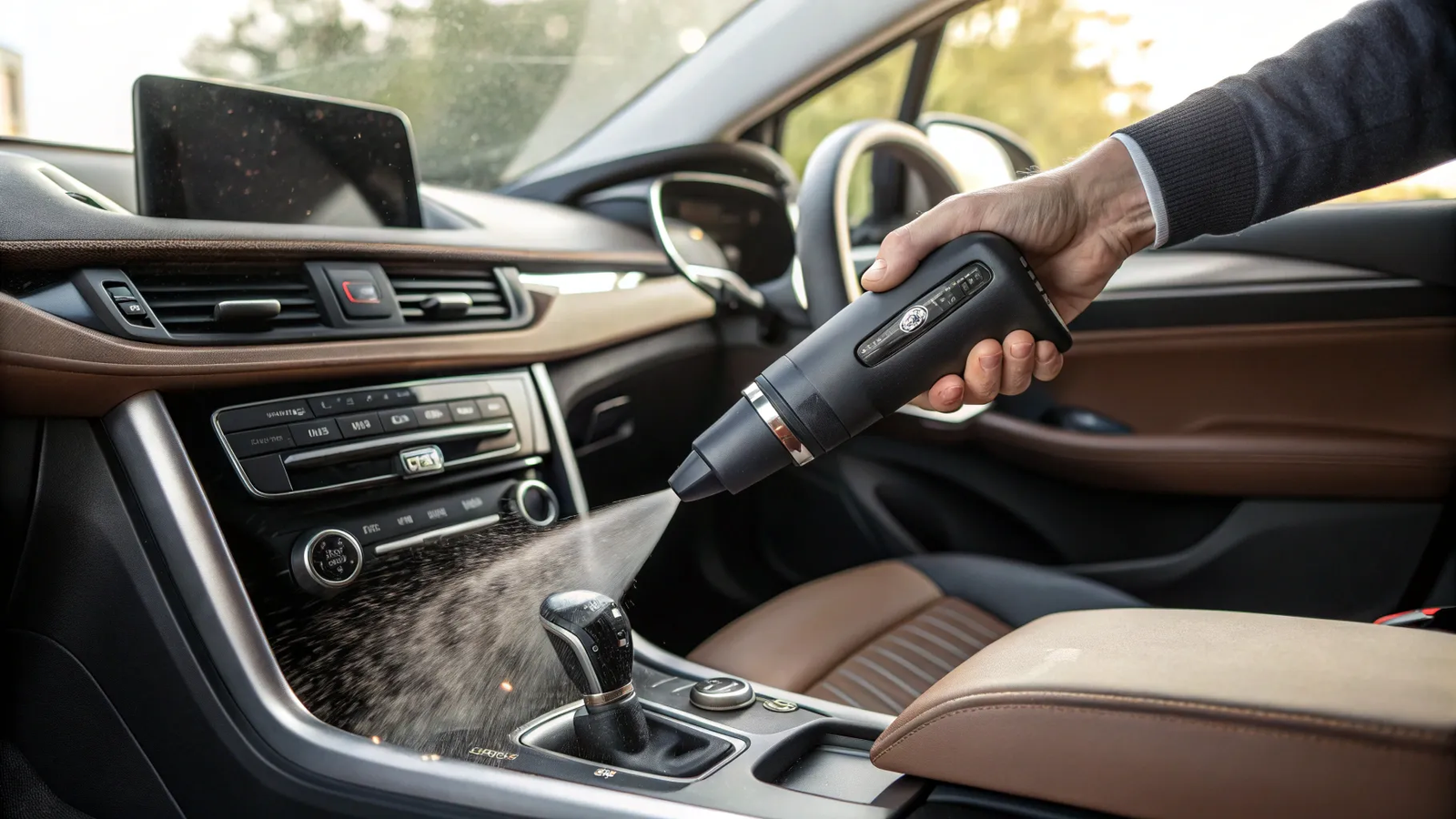
Keeping a car clean gets much easier when you can move dust, crumbs, and trapped water out of tight spaces before they turn into a bigger mess. The Wolfbox MF100 electric air duster is a compact cordless blower built for that exact job. I tested it as a car-detailing tool, but it also works well around electronics, workbenches, and small household cleanup tasks.
Quick Answer
The Wolfbox MF100 is best for car owners who want a rechargeable blower for vents, seams, seat gaps, badges, mirrors, and other areas a vacuum or towel struggles to reach. It does not replace a vacuum, but it makes interior detailing and post-wash drying faster, cleaner, and easier.
Key Takeaways
- The MF100 works best as a support tool for detailing, not as a full vacuum replacement.
- Its narrow airflow helps clear dust, crumbs, lint, and water from tight interior and exterior gaps.
- The soft brush is better for glossy trim, while the stiff brush helps loosen carpet and fabric debris.
- Use short bursts to save battery, reduce noise, and control where debris or water moves.
- Avoid forcing water or dust into electronics, speakers, switches, or open connectors.
At a Glance
| Best For | Interior detailing, vent cleaning, seat gaps, console crevices, light exterior drying, and electronics dusting. |
| Difficulty | Easy. Most jobs only need short controlled bursts and the right nozzle or brush. |
| Tools Needed | MF100 blower, nozzle attachments, brush attachments, microfiber towel, vacuum, and optional safety glasses. |
| Best Technique | Start high, blow debris downward, loosen stubborn dirt with a brush, then vacuum or wipe the loosened debris. |
Table of Contents
- Introduction: Why I Tried the Wolfbox MF100
- What the Wolfbox MF100 Is and What It Comes With
- Inside the Box: Accessories That Actually Matter
- How I Use the MF100 Inside the Car: Step-by-Step Routine
- The Exterior Drying Trick: How This Blower Helps After Washing
- Beyond Cars: Other Practical Uses
- Real-World Performance: What Worked and What Could Be Better
- Battery, Charging, and Practical Runtime Tips
- Safety and Best Practices
- Final Verdict: Who Should Buy the MF100?
- Frequently Asked Questions
- Closing Thoughts
Introduction: Why I Tried the Wolfbox MF100
I’m always chasing faster, smarter ways to keep my cars looking great with less elbow grease. That’s why when Wolfbox sent over the MF100 electric air duster, I jumped at the chance to put it through a proper detailing test.
In this post, I’ll walk you through what’s in the box, how the unit performs inside the car and outside, the techniques I use while detailing, and the practical pros and cons I noticed after real-world use.
Full disclosure: Wolfbox kindly supplied the MF100 for review and shared discount codes for readers. I’ll mention the code and where to find it later, but the hands-on impressions below come from actual use during detailing and cleaning tasks.
“I’m always looking for a better and faster way to clean my cars.”
What the Wolfbox MF100 Is and What It Comes With
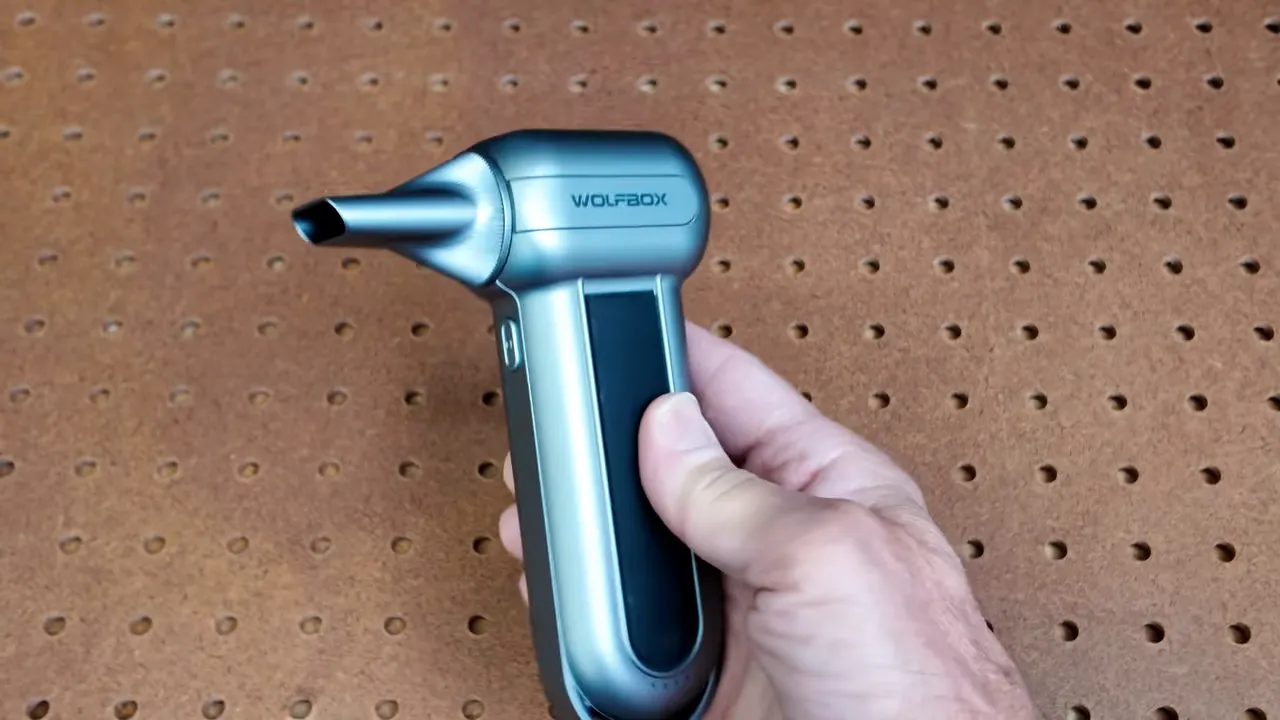
The MF100 is a compact, cordless electric air duster designed to replace disposable canned air and make light cleaning faster. It is useful for car interiors, electronics, workshop surfaces, small inflatables, and quick dusting jobs where a focused stream of air helps.
Here’s a breakdown of the key specs and included accessories mentioned in the product materials and listing details:
- Battery: 6,000 mAh rechargeable battery.
- Runtime: Up to 100 minutes on the lowest setting; roughly 15 minutes at full power in real-world use.
- Speeds: Three speed settings, with maximum airflow rated around 45 m/s, or about 101 mph.
- Weight: Compact and light at about 0.66 lb, or roughly 10.6 oz, so it is easy to hold during longer detail sessions.
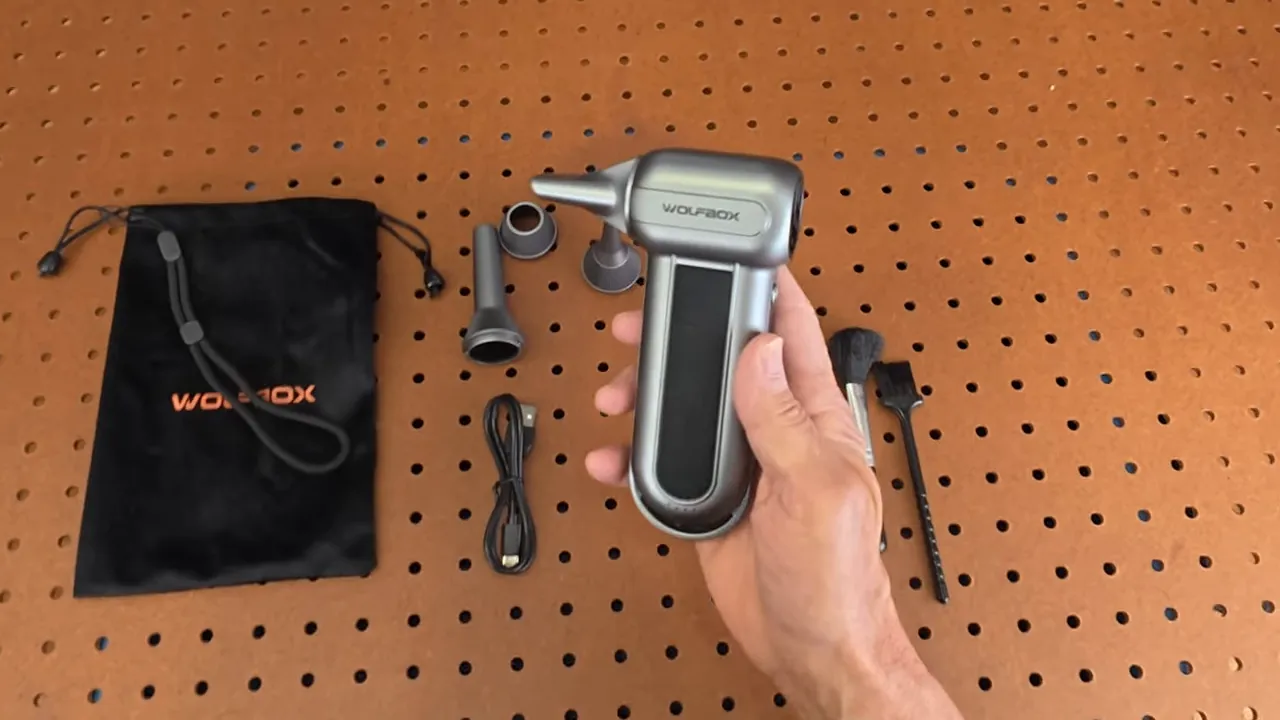
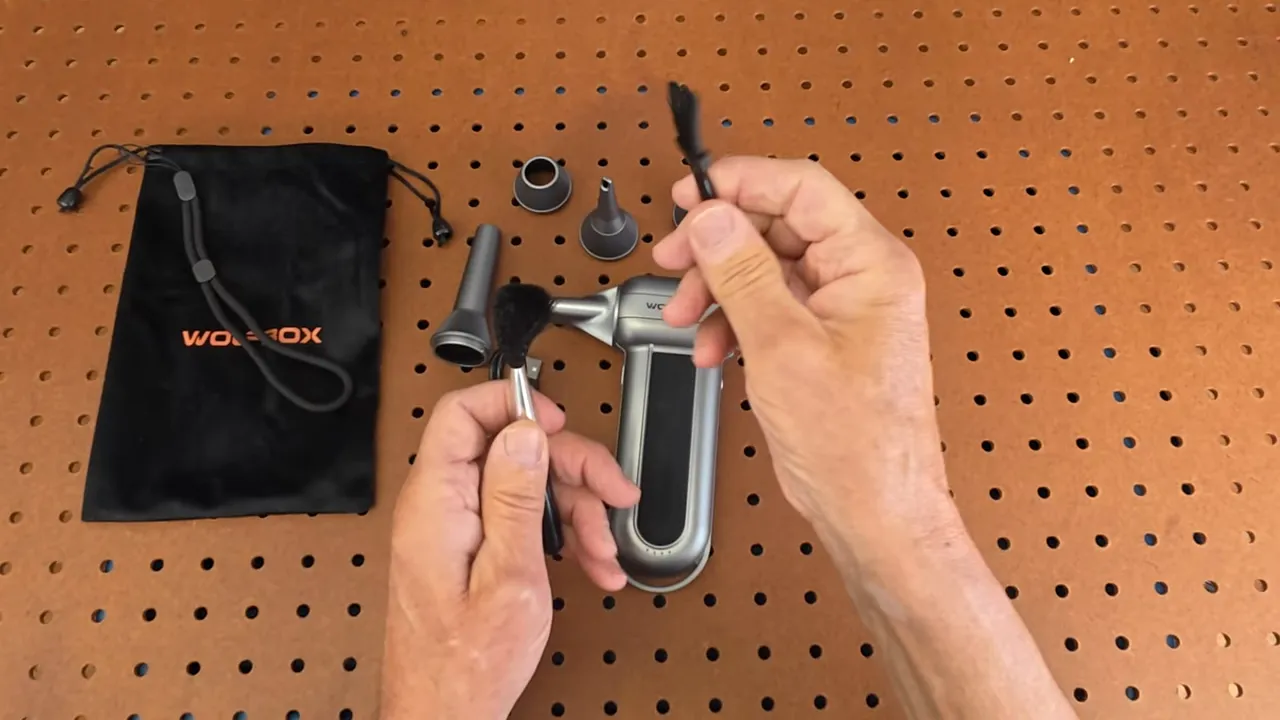
- Nozzles and Attachments: Comes equipped with five nozzles and two brush heads, including a stiff brush for carpets and a soft brush for delicate glossy surfaces.
- Bag: Includes a Wolfbox carrying bag in the reviewed package, which helps keep the blower and accessories together.
This is a thoughtfully packaged product: lightweight, cordless, and equipped with practical tool-head options. The two brush types are especially useful because car cabins include several different materials, from carpet and fabric to piano-black plastic and soft-touch trim.
Note: Accessory bundles can vary by seller, promotion, or region. Before buying, check the current product page so you know exactly which nozzles, brushes, cable, or storage bag are included.
WOLFBOX MF100 Electric Air Duster
Check out this really cool thing
Inside the Box: Accessories That Actually Matter
People who treat their cars right will appreciate the accessory selection here. The five nozzles give you useful flexibility. Narrow tips work well for focused bursts into seams, cupholders, seat rails, vents, and dashboard cracks. Wider tips help move dust or water across broader surfaces.
For most interior detailing chores, you’ll probably rely on one main nozzle and switch brushes depending on the surface. That keeps the process simple without turning a quick cleanup into a complicated setup.
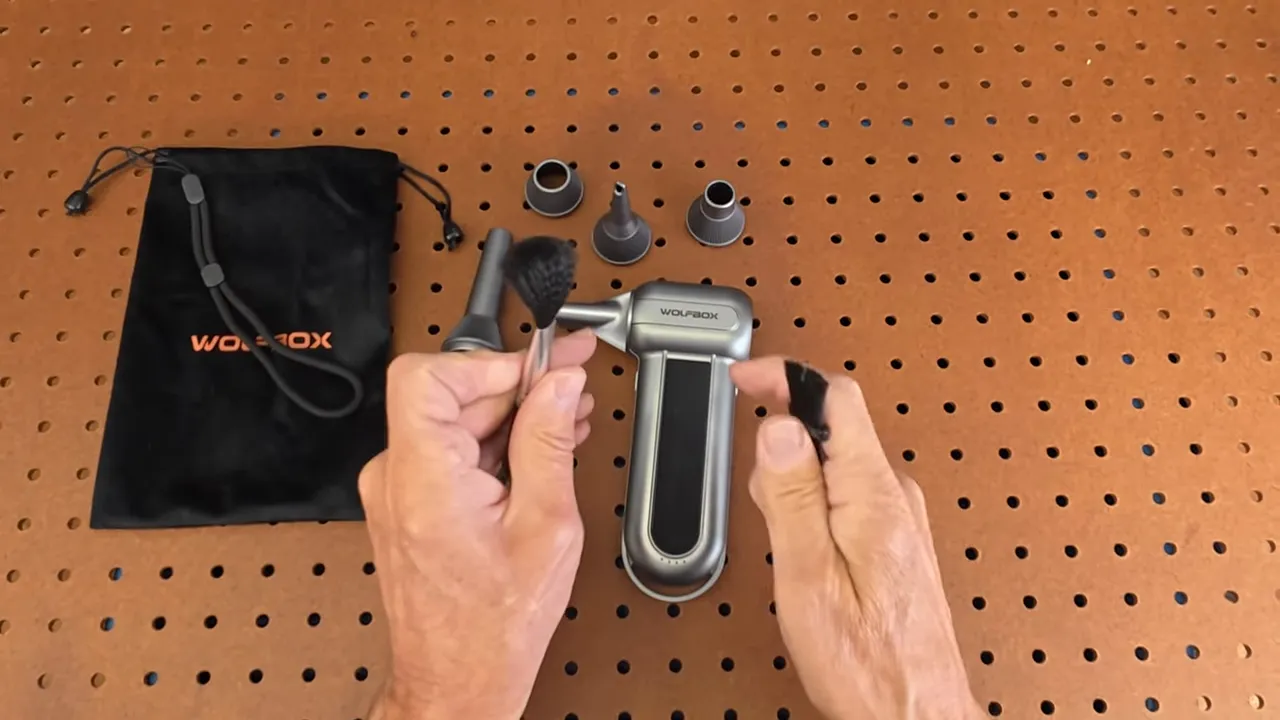
- Stiff brush: Great for loosening stuck-on dirt in carpeted areas, footwells, floor mats, and deeper fabric seams.
- Soft brush: Better for delicate surfaces like piano-black trim, touchscreens, gauge surrounds, and glossy plastics where scratches would stand out.
- Carrying bag: Keeps everything together so the blower isn’t loose in the trunk, rolling around a garage shelf, or missing the nozzle you need.
The brushes matter because airflow alone cannot always free sticky crumbs, grit, pet hair, or dust that has settled into textured materials. Loosen the debris first, then use air to move it into a place where your vacuum can finish the job.
How I Use the MF100 Inside the Car: Step-by-Step Routine
My detailing routine with the MF100 is straightforward and designed to save time while getting deeper into the nooks a vacuum can’t reach. The basic principle is simple: start high, work down, free the debris, then vacuum the big stuff.
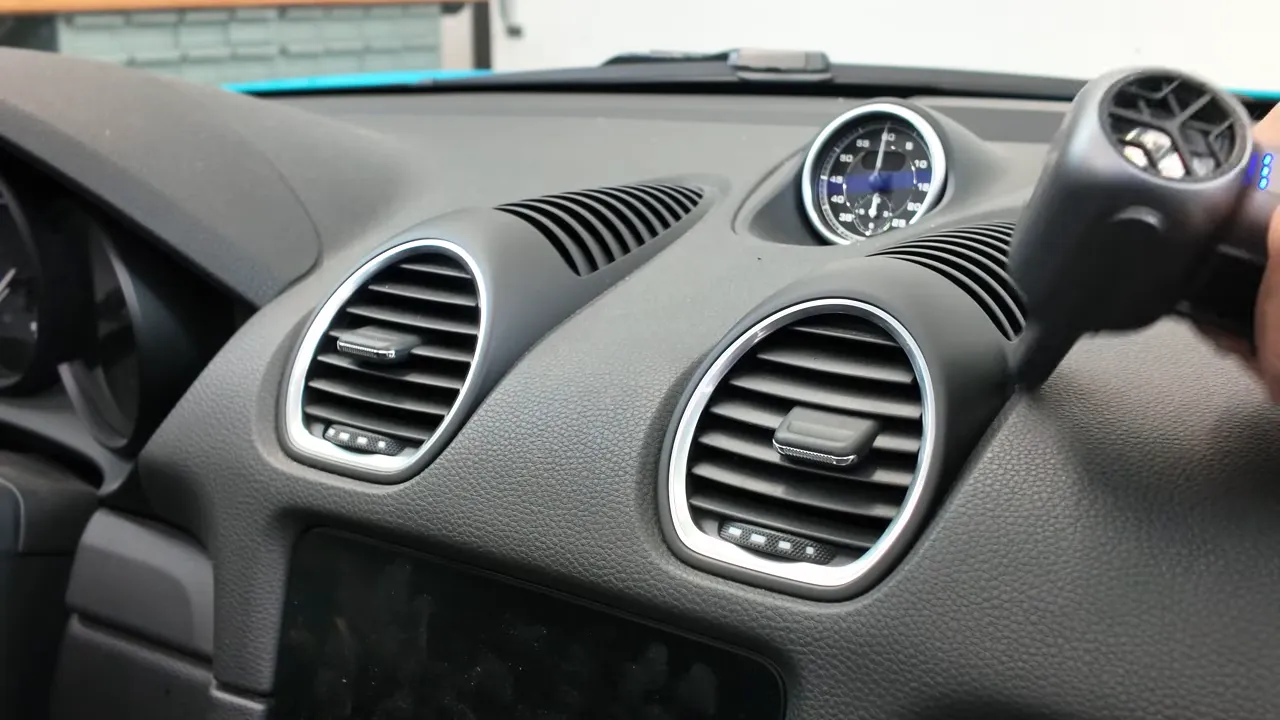
- Start at the top: Begin with the headliner edges, vents, dashboard creases, gauge areas, and upper trim. Blowing from the top down directs dust and crumbs downward so you can collect them more easily later.
- Attack the vents: Vents trap dust and small food particles. Aim the nozzle into the vents and sweep along the fins to dislodge buildup. It’s faster than trying to clean each slat with a cotton swab.
- Clean window switches and control clusters: Use short bursts to blow debris from around switches, buttons, knobs, and shifter trim. Use the soft brush if the trim is glossy or delicate.
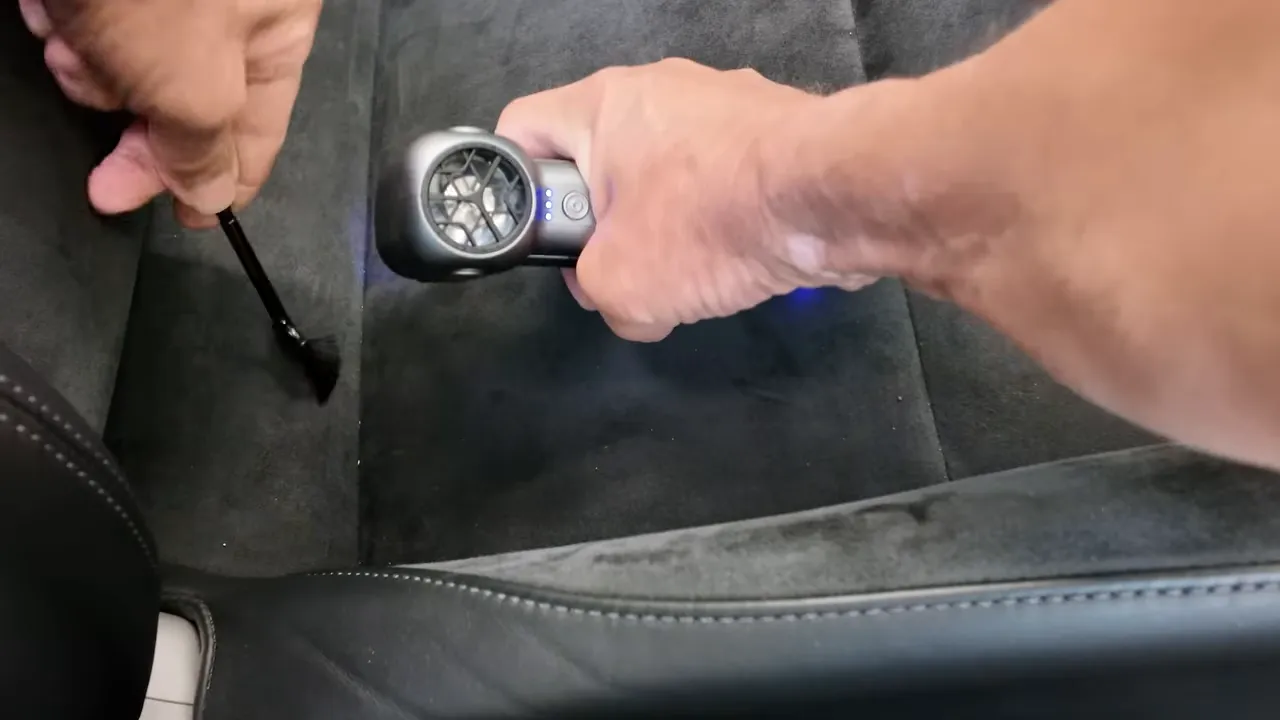
- Work across seats and seams: Run the nozzle across seat seams, between cushions, and along bolsters. The blower gets dirt out of places a vacuum wand can’t reach directly.
- Clear under and beside seats: These gaps are always a pain. Use a narrow nozzle and blow debris into an accessible area before vacuuming.
- Empty the glovebox and center console: Remove contents first, then use the MF100 to blow crumbs, lint, receipts dust, and dirt out of corners and hinge areas.
- Finish on the floor: Blow loosened debris into a small pile so your vacuum can pick it up quickly.
For stubborn, stuck-on dirt, I pair the blower with the stiff brush to loosen material before blowing it free. For piano-black surfaces or delicate trim, the soft brush prevents scratches while moving dust out of seams and curves.
Pro Tip: Do not blast everything at full speed from the start. Begin on a lower setting, watch where the dust moves, then increase power only when the debris needs more force.
The Exterior Drying Trick: How This Blower Helps After Washing
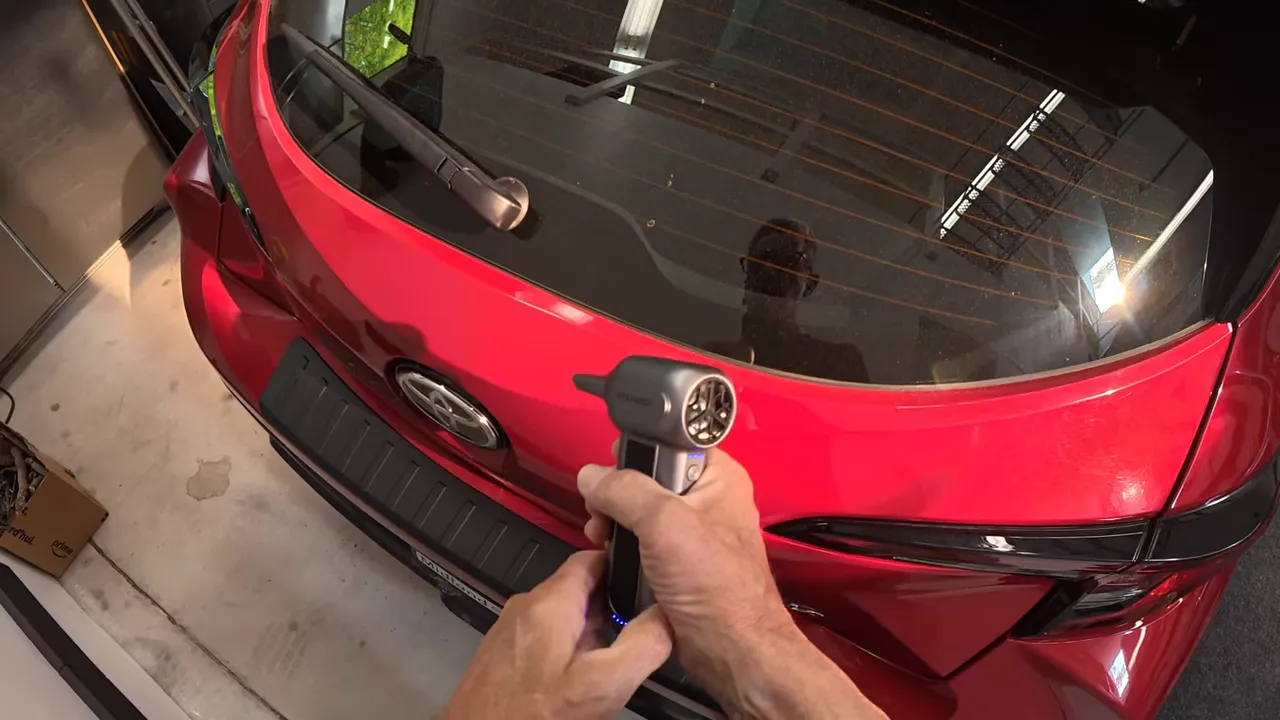
Here’s the little trick I teased in the video that you’ll really appreciate: after washing and towel-drying your car, small beads and dribbles often hide inside seals, seams, badges, mirrors, grille openings, fuel doors, and door jambs.
Those trapped droplets can leave water marks or create streaks as they migrate out. The MF100 helps solve that problem by pushing hidden water into the open so you can wipe it before it dries.
- After drying with a microfiber towel, use the blower to channel air into nooks and crannies to force trapped water out. It helps reduce tiny drips that later create spots.
- Use a narrow nozzle for deep channels, badges, mirrors, and tight trim gaps.
- Use a wider nozzle for broader surfaces where you only need to move light droplets.
- Keep a towel handy. Blow the water into an easy-to-reach area, then wipe it away immediately.
This trick is especially useful around door seals, emblems, badges, mirror housings, license plate frames, and crevices where towels don’t reach. It’s a quick finishing step that gives your wash a cleaner, more professional look.
Warning: Do not force water into speaker grilles, open charging ports, electrical connectors, sensor openings, or damaged trim. Use controlled bursts and aim water away from sensitive areas.
Beyond Cars: Other Practical Uses
The MF100 isn’t just a car tool. It’s useful around the house, garage, office, and workshop too. The key is to treat it as a focused air tool rather than a heavy-duty shop blower.
- Keyboards and electronics: Blow dust from mechanical keyboards, computer cases, heatsinks, vents, and fans. Power off electronics first.
- Camera gear and lenses: Use the soft brush attachment and maintain a safe distance to avoid forcing grit into delicate components.
- Inflation and play: Inflate small beach toys and air mattresses quickly in a pinch.
- Workshop cleanups: Quickly clear sawdust and metal shavings from benches, shelves, and machinery surfaces.
- Home dusting: Clear dust from blinds, window tracks, appliance gaps, and hard-to-reach corners before wiping or vacuuming.
It’s a handy all-around blower that replaces disposable canned air for many tasks and adds the convenience of rechargeability and multiple head options.
Real-World Performance: What Worked and What Could Be Better
After using the MF100 on multiple cars and a handful of household tasks, here are my takeaways based on real work rather than specs alone. The short version: it makes detailing faster, but it works best when paired with a vacuum and microfiber towels.
Strengths
- Powerful bursts: The rated airflow of about 45 m/s, or around 101 mph, is effective at shifting dirt and works faster than a soft microfiber or static brush alone.
- Compact and lightweight: Low fatigue during prolonged use makes it handy if you’re detailing several areas or more than one car.
- Versatile attachments: The two brush options make it suitable for both aggressive carpet work and delicate interior trim.
- Rechargeable convenience: You avoid buying disposable cans of compressed air that lose pressure over time.
- Good control: The smaller size makes it easier to aim into vents, seams, badges, console corners, and tight interior gaps.
Limitations
- Runtime at full speed: About 15 minutes at top speed during real-world use. That’s enough for quick jobs and spot detailing but tight for longer continuous tasks on large surfaces.
- Nozzle length: A longer, rigid nozzle would make deep pockets under seats and some HVAC areas easier to reach. I found myself angling the unit a lot to reach remote spots.
- Noise: Like most high-power blowers, it’s audible. Use ear protection if you’re working in enclosed spaces for prolonged periods.
- Not a debris collector: It moves dust and crumbs, but it does not capture them. You still need a vacuum or towel afterward.
Overall, I was impressed. This little tool speeds up my detailing flow significantly. If Wolfbox extends the full-power runtime and includes a longer rigid nozzle, it would be even closer to perfect for automotive use.
Battery, Charging, and Practical Runtime Tips
The MF100’s 6000 mAh battery delivers a useful balance of power and portability. Battery life depends heavily on the speed setting, how often you use continuous airflow, and whether you use the blower indoors, outdoors, or after a wash.
Here’s how I manage battery life and get the most from each charge:
- Choose the right speed: Use the lower speeds for lightweight dusting inside the cabin and bump to full power only for stubborn areas or exterior drying. The lowest speed greatly extends runtime.
- Plan short bursts: Use 2–5 second bursts rather than continuous blasts. Short bursts dislodge debris while saving battery and minimizing noise.
- Keep it charged between sessions: Don’t let the battery sit fully depleted for long periods. A top-up after each detailing session will keep it ready for the next job.
- Work in sections: Clean the dashboard, vents, seats, console, and floors in zones. This keeps your airflow controlled and prevents dust from spreading everywhere.
- Pair it with a vacuum: Blow dirt toward an area you can vacuum right away instead of pushing debris around the whole cabin.
If you’re a professional detailer or frequently clean many vehicles back-to-back, you might want a second unit or an additional battery option if available so you’re not waiting to recharge mid-job.
Safety and Best Practices
Powerful air can be a double-edged sword if used incorrectly. It can clean tight spaces quickly, but it can also push dust, grit, or water into places you do not want it to go.
- Keep a safe distance: Don’t press the nozzle hard against fragile trim, screens, buttons, or electronics. Start a few inches away and adjust as needed.
- Power off electronics: When cleaning sensitive devices like a computer, keyboard, camera area, or infotainment screen, power them down first.
- Avoid blowing liquid into electronics: When using the blower around damp areas after a wash, avoid directing air that drives water into connectors, speaker openings, or switch gaps.
- Wear eye protection: Safety glasses help when you’re dislodging dust, sand, grit, or crumbs near your face.
- Ventilate enclosed spaces: In a closed garage, use the blower carefully and follow with a vacuum or wipe-down. Don’t let dust float around the cabin or workspace.
- Test delicate surfaces first: Glossy trim, soft plastics, and older interior pieces can mark easily. Use the soft brush and light pressure.
Note: The MF100 works best when you control where debris goes. Blow dust toward a vacuumable area, not deeper into vents, seat rails, or electronics.
Final Verdict: Who Should Buy the MF100?
If you’re a car enthusiast who spends time on interior detailing, or someone who wants a rechargeable alternative to canned air for electronics and home use, the Wolfbox MF100 is worth a serious look.
It speeds up routine cleaning by reaching spots vacuums can’t access. It also finishes off washes by removing trapped water in crevices, seals, badges, and mirrors before those droplets create streaks or water spots.
It’s not perfect. Longer full-speed runtime and a longer rigid nozzle would make it better for deeper automotive tasks. Even so, for most weekend detailers and hobbyists, it’s an excellent multi-use tool that adds convenience to everyday cleaning.
Related Guides
Frequently Asked Questions
Is the Wolfbox MF100 loud?
Yes. At higher speeds, the blower is audible, much like other small handheld blowers. Use short bursts to reduce the noise, and consider ear protection if you’re working in a tight garage for a long period.
How long does the battery last?
Battery life varies by speed. The lowest setting can run much longer, while full power is better for short demanding jobs. In real-world use, full power is best saved for stubborn debris, trapped water, and quick spot-cleaning tasks.
Can I use the MF100 on electronics?
Yes. It can work as a rechargeable canned-air alternative for keyboards, computer cases, vents, and light electronics dusting. Power off electronics first, use the soft brush for delicate parts, and keep the blower a safe distance away.
Is it safe to use on the car’s painted surfaces?
Yes, when used properly. Don’t press the nozzle directly against painted surfaces or hold it extremely close for long periods. Use controlled bursts, keep a towel nearby, and avoid forcing water into panel gaps or electrical openings.
Does it replace a vacuum?
No. It complements a vacuum. The MF100 helps dislodge debris and move it to a spot where a vacuum can pick it up. It works best as an initial cleaning tool or finishing tool alongside a good vacuum or extractor.
Where can I get one and are there discounts?
Wolfbox often lists the MF100 on its site and through retailers. Wolfbox may rotate site promos, and codes like WBBESTGEAR may appear during some sales, but promo-code availability can change. Check your cart for active discounts, and use the Amazon link above for current availability in your region.
What surfaces should I avoid blasting at full power?
Avoid blasting loose trim, speaker grilles, open ports, damaged seals, touchscreens, delicate camera gear, and wet electrical areas at full power. Start with lower airflow and increase only when needed.
Closing Thoughts
The Wolfbox MF100 is a compact, powerful, and versatile tool that fits neatly into my detailing toolkit. It speeds up interior clean-ups, helps finish exterior drying chores, and replaces the need for disposable canned air in many everyday situations.
The included brushes and nozzles add real value, especially if you clean different surfaces inside the same car. The stiff brush helps with carpet and fabric debris, while the soft brush gives you more confidence around glossy trim and delicate areas.
Would I recommend it? If you value speed, convenience, and a rechargeable solution that covers both automotive and household tasks, yes. My wish list for the next version is simple: a longer rigid nozzle for deeper reach and longer full-speed runtime. If Wolfbox makes those tweaks, the MF100 would be near-perfect for car work.
If you have questions about using the MF100 on a specific part of your car or want a walk-through of my 13-minute car wash routine that pairs nicely with this blower, drop a comment below and I’ll cover it in another post.
WOLFBOX MF100 Electric Air Duster |
|
Check out this really cool thing |
| Check The Latest Price |