
Choosing wheels for a Toyota Camry requires more than matching five lug holes. Many modern North American Camrys use a 5×114.3 mm bolt pattern, but wheel offset, width, center bore, brake clearance, lug-seat type, tire size, and load rating can vary by model year and trim. Verify the complete fitment before buying or installing any wheel.
Quick Answer
Many modern U.S.-market Toyota Camrys use a 5×114.3 mm bolt pattern, but there is no universal Camry offset or wheel size. Confirm the exact year, trim, market, wheel width, offset, center bore, load rating, brake clearance, tire specification, and lug-seat type before purchasing wheels.
Key Takeaways
- A 5×114.3 bolt pattern is common on modern Camrys, but older vehicles, imported models, and market-specific configurations must be checked separately.
- A +50 mm offset is not a universal Toyota Camry specification; acceptable offset depends partly on wheel width and clearance.
- Matching the bolt pattern does not confirm brake clearance, load capacity, tire compatibility, or correct lug-nut seating.
- Use the VIN, driver-door placard, original wheel markings, owner’s manual, and a vehicle-specific parts catalog to verify fitment.
- Stop driving if newly installed wheels rub, vibrate, loosen, interfere with steering, or produce an abnormal TPMS warning.
At a Glance
| Time Required | About 10–20 minutes to record and verify the main specifications; longer for a physical test fit |
| Difficulty | Moderate; professional verification is recommended for non-OEM sizes |
| Tools Needed | VIN, owner’s manual, door placard, tape measure or caliper, straightedge, and the wheel manufacturer’s specification sheet |
| Cost | No cost to check specifications; installation cost varies with the wheel, tire, TPMS hardware, balancing, and required service |
Understanding the Toyota Camry Wheel Bolt Pattern
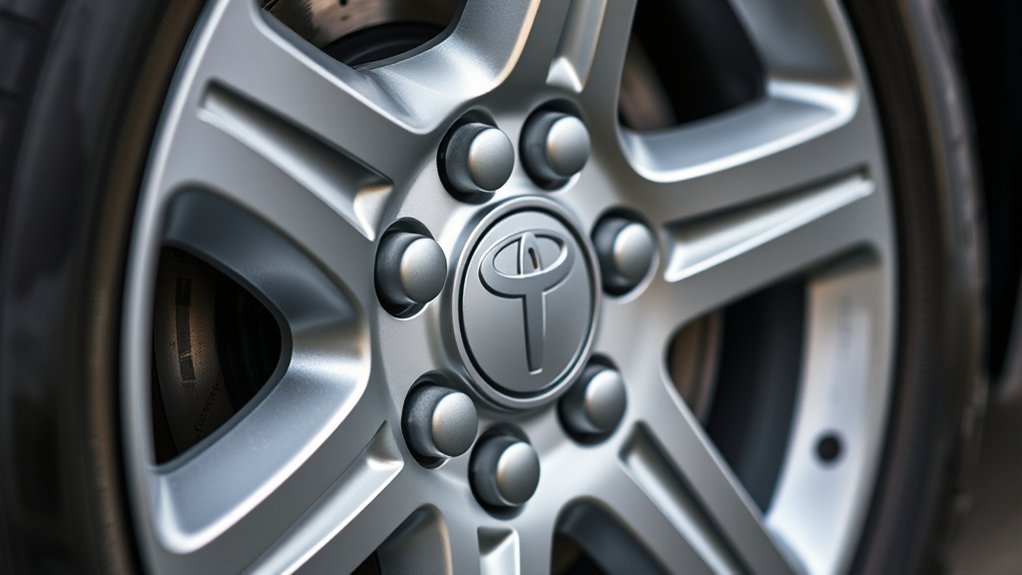
A wheel bolt pattern identifies the number of mounting holes and the diameter of the imaginary circle passing through their centers. A specification of 5×114.3 means the wheel has five mounting holes arranged on a 114.3 mm pitch-circle diameter. The same pattern is also commonly described as 5×4.5 inches.
Toyota lists a 5-on-114.3 mm bolt circle for a current genuine Camry replacement wheel, confirming this pattern for that specific modern application. However, the bolt pattern is only one part of wheel compatibility. A wheel with five correctly positioned holes may still contact the brake caliper, sit too far inward or outward, use an unsuitable lug seat, or have an inadequate load rating.
Warning: Never elongate mounting holes, force a wheel onto the hub, use wobble fasteners, or install a bolt-pattern adapter merely because the wheel is visually appealing. An adapter or spacer changes the wheel mounting system and should be used only when the vehicle, wheel, hardware, and installation have been approved for that exact application.
Is 5×114.3 Universal for Every Toyota Camry?
No. The 5×114.3 pattern is common across modern North American Camrys, including the 2010 and 2018–2026 applications discussed in this article, but it should not be treated as a guarantee for every Camry ever sold. Earlier generations, overseas models, specialty configurations, and vehicles with changed hubs require separate verification.
| Camry application | Fitment guidance |
|---|---|
| 2010 North American Camry | Commonly uses 5×114.3. Confirm the VIN, original wheel, and parts listing before ordering. |
| 2018–2024 U.S.-market Camry | Uses 5×114.3 in normal factory applications, but wheel diameter, width, offset, tire size, and finish vary by year and trim. |
| 2025–2026 U.S.-market Camry | Modern replacement wheels use 5×114.3, while the remaining specifications still need trim- and wheel-specific confirmation. |
| Earlier, imported, or modified Camry | Do not rely on a model-wide chart. Check the VIN, hub, wheel stamping, and market-specific parts documentation. |
The safest buying process begins with the complete VIN. A VIN-based Toyota parts catalog or qualified wheel retailer can account for the model year, trim, drivetrain, brake package, and sales market more reliably than a generic “fits Toyota Camry” product description.
What Is Wheel Offset?
Wheel offset is the distance, measured in millimetres, between the wheel’s hub-mounting surface and its centerline. It may be positive, zero, or negative:
- Positive offset: The mounting pad is toward the wheel’s outer face, placing more of the wheel inward.
- Zero offset: The mounting pad sits on the wheel’s centerline.
- Negative offset: The mounting pad is toward the rear of the wheel, moving more of the wheel outward.
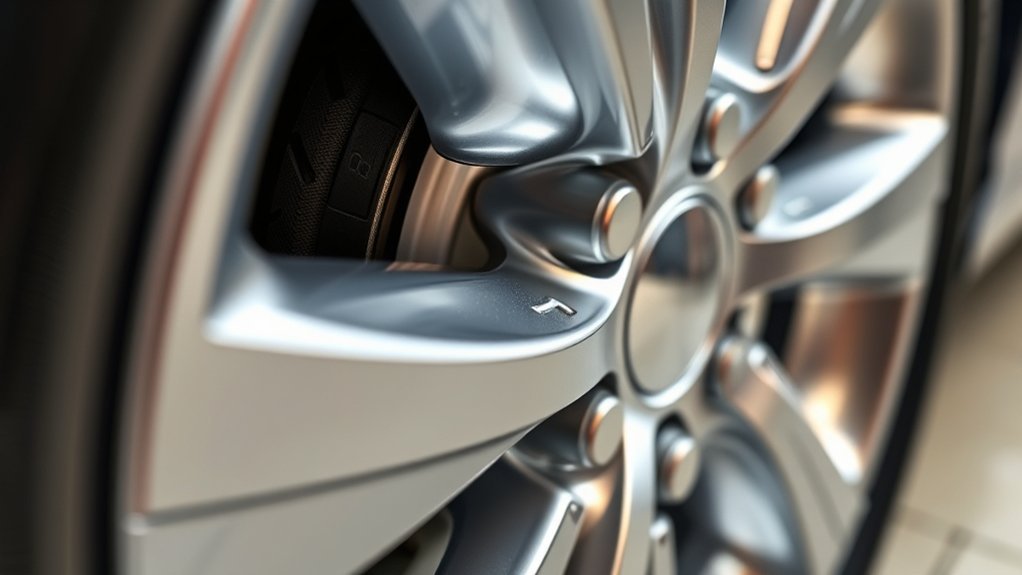
A +50 mm offset appears on some Camry wheels, including certain 18- and 19-inch applications, but it is not a universal target. The effect of an offset depends on wheel width. An 8-inch wheel with a given offset does not occupy the same inner and outer space as a 9-inch wheel with that offset.
Matching the bolt pattern only confirms the location of the mounting holes; it does not confirm where the wheel will sit or whether it will clear the vehicle.
How Offset Affects Camry Fitment and Handling
Changing offset changes the wheel’s position relative to the hub. Too much positive offset may move the tire or wheel close to the strut, spring, control arm, or inner liner. Too little positive offset may move it toward the fender and can increase the chance of rubbing during steering, braking, or suspension compression.
A substantial offset change can also alter scrub radius, steering feedback, kickback, bearing loads, and how road forces reach the suspension. A wider stance does not automatically improve handling, and a wheel that appears flush while parked may still rub when the steering is at full lock or the suspension is compressed.
How to Measure Wheel Offset Correctly
The straightedge measurement commonly taken from the rear wheel lip to the mounting pad is backspacing, not offset. To calculate offset from a loose wheel:
- Remove the tire if necessary so the wheel’s lips and mounting surface can be measured accurately.
- Lay the wheel face down on a protected, level surface.
- Measure the wheel’s actual overall width from the outer edge of one rim flange to the outer edge of the other. Do not rely only on the advertised bead-seat width.
- Place a straightedge across the rear rim flange.
- Measure from the hub-mounting pad to the straightedge. This is the backspacing.
- Subtract half the actual overall wheel width from the backspacing.
- Multiply the result in inches by 25.4 to convert it to millimetres.
Offset formula: Offset in mm = (backspacing in inches − half the actual overall wheel width in inches) × 25.4.
Pro Tip: Check the back of the wheel for a cast or stamped marking such as “ET45.” “ET” is commonly followed by the wheel’s offset in millimetres. Verify the marking against the wheel manufacturer’s specification sheet rather than relying on measurement alone.
Complete Toyota Camry Wheel Fitment Checklist
Before purchasing a factory or aftermarket wheel, verify every item below. A product listing that supplies only the diameter and bolt pattern is incomplete.
| Specification | What to verify | Why it matters |
|---|---|---|
| Bolt pattern | Number of mounting holes and pitch-circle diameter | The wheel must align exactly with the vehicle’s studs or bolts. |
| Wheel diameter | Approved diameter for the tire and brake package | A smaller wheel may not clear the brakes; a larger wheel requires a suitable tire. |
| Wheel width | Width approved for the selected tire and available space | Width affects tire shape, inner clearance, fender clearance, and offset requirements. |
| Offset and backspacing | Wheel position relative to the hub | Incorrect positioning can cause rubbing and unwanted steering-geometry changes. |
| Center bore | The bore must clear and correctly center on the hub | A bore that is too small will not mount. A larger aftermarket bore may require the manufacturer’s approved hub-centric ring. |
| Brake clearance | Barrel diameter, spoke shape, and mounting-pad clearance | Two wheels with the same listed size can have different caliper clearance. |
| Wheel load rating | Manufacturer-rated capacity for each wheel | The wheel must safely support the vehicle’s axle load. |
| Lug thread and seat | Thread diameter, pitch, seat shape, shank length, and engagement | Toyota factory lug nuts may use a different seat from an aftermarket wheel. |
| Tire specification | Size, approved rim-width range, load index, speed rating, and rolling diameter | The tire must support the vehicle and operate correctly with its safety and drivetrain systems. |
| TPMS compatibility | Sensor type, valve-hole design, programming, and initialization | Incompatible hardware can damage a sensor or leave the warning system inoperative. |
Common Toyota Camry Wheel Sizes
Camry wheel sizes vary substantially by year and trim. The original claim that the normal range stops at 18 inches is no longer current. Toyota’s U.S. 2025 Camry brochure lists the following factory wheels:
| 2025 U.S. trim | Factory wheel example |
|---|---|
| LE | 16-inch 10-spoke silver-painted alloy wheel |
| SE | 18-inch multi-spoke black-finished alloy wheel |
| XLE | 18-inch two-tone machined and black-finished alloy wheel |
| XSE | 19-inch black and smoke-gray-finished alloy wheel |
Toyota’s current 2026 Camry specifications also show trim-specific 16-, 18-, and 19-inch wheels. Earlier Camrys may use other factory sizes. The driver-door Tire and Loading Information label is the controlling source for the original tire size and cold inflation pressure on the vehicle in front of you.
Note: A 20-inch wheel can be available for some aftermarket Camry applications, but diameter alone does not make it suitable. The complete wheel-and-tire package must maintain adequate brake, suspension and body clearance, an appropriate load rating, and an acceptable overall tire diameter.
Stock vs. Aftermarket Wheels
Advantages of Stock Toyota Wheels
Factory wheels are designed around the vehicle’s hub, brakes, fasteners, suspension, load requirements, and original tire package. They normally provide the simplest route to predictable fitment, serviceability, and replacement.
A stock wheel is still not interchangeable with every other Camry wheel. A factory wheel from another year or trim can have a different diameter, width, offset, lug-seat design, finish, or brake clearance. Verify its Toyota part number and vehicle application before installation.
Advantages and Trade-Offs of Aftermarket Wheels
Aftermarket wheels provide more choices in style, diameter, width, finish, and weight. A well-engineered wheel can be a suitable replacement or upgrade when its manufacturer approves it for the exact Camry application and supplies its load rating, offset, center bore, required fasteners, and applicable testing information.
Do not assume that an aftermarket wheel is lighter, stronger, or better at dissipating heat. Those traits depend on the individual wheel’s engineering, material, manufacturing process, dimensions, and test results. SAE’s J2530 recommended practice describes performance, test, certification, and marking requirements for aftermarket passenger-car and light-truck wheels.
| Option | Main benefits | Main checks |
|---|---|---|
| Stock/OEM | Vehicle-specific design, predictable hardware and service fitment | Correct part number, year, trim, brake package, condition, and lug hardware |
| Aftermarket | More styles, sizes, finishes, and weight choices | Fitment approval, load rating, test standard, offset, bore, brake clearance, fasteners, and warranty |
Total cost depends on more than the wheel price. Include compatible tires, mounting, balancing, TPMS sensors or service kits, hub rings when approved, correct lug hardware, alignment when needed, taxes, and future replacement availability.
How to Ensure Proper Camry Wheel Fitment Before Buying
- Record the full VIN. The VIN helps identify the correct model year, vehicle configuration, and parts application.
- Read the driver-door placard. Record the original tire size and recommended cold pressure.
- Check the owner’s manual. Review wheel, tire, TPMS, tire-changing, and torque instructions for the exact model year.
- Inspect the original wheel markings. Look for the wheel size, offset marking, Toyota part number, and other cast or stamped information on the rear of the wheel.
- Obtain the replacement wheel’s complete specification sheet. Do not accept a listing that omits width, offset, center bore, load rating, or required lug hardware.
- Confirm tire compatibility. The selected tire must be approved for the wheel width and meet the vehicle’s load and speed requirements.
- Perform a physical test fit. Check caliper, strut, control-arm, tie-rod, liner, and fender clearance before mounting all four tires.
- Check steering and suspension travel. Verify clearance at full steering lock and through normal suspension compression.
- Confirm TPMS service requirements. Determine whether existing sensors can be transferred or whether new compatible sensors must be programmed.
On an AWD Camry, use four tires with compatible size, construction, and rolling circumference. Significant circumference differences can affect driveline operation and vehicle-control systems. Follow the tire and vehicle manufacturers’ limits rather than using a generic percentage rule.
Tools Needed for Installing Toyota Camry Wheels
A professional shop is the safest choice when changing wheel diameter, width, offset, lug hardware, or tire size. For a normal wheel change using a confirmed package, the basic equipment includes:
- Wheel chocks
- A vehicle-rated jack used only at the approved lift point
- Properly rated jack stands when support beyond a roadside wheel change is required
- The correct socket and breaker bar
- A calibrated torque wrench covering the specified torque range
- A soft brush or appropriate tool for cleaning the hub and wheel mating surfaces
- A tire-pressure gauge
- Any wheel-specific key, hub ring, or lug hardware supplied or approved by the wheel manufacturer
Warning: Work on firm, level ground, apply the parking brake, chock the vehicle, and use the lift points shown in the owner’s manual. Never place any part of your body beneath a vehicle supported only by a jack.
Safe Wheel-Installation Checklist
- Confirm that the wheel, tire, TPMS hardware, and fasteners are correct before lifting the vehicle.
- Loosen the fasteners slightly while the tire remains on the ground.
- Lift the vehicle only at an approved point and follow the owner’s manual.
- Remove rust, dirt, or other foreign material from the wheel-to-hub contact surfaces without damaging them.
- Inspect the studs, threads, lug seats, hub, and wheel for damage.
- Install the wheel and start every fastener by hand. A fastener that will not turn freely may be cross-threaded or incorrect.
- Snug the fasteners gradually in a crisscross pattern.
- Lower the vehicle as directed and tighten the fasteners in stages to the exact model-year specification with a calibrated torque wrench.
- Set cold tire pressure to the vehicle placard and initialize or register the TPMS when required.
- Follow the wheel or vehicle manufacturer’s instruction regarding a post-installation torque check.
A U.S. 2010 Camry owner’s manual lists 76 ft-lbf (103 N·m) for the wheel configurations covered by that manual. That figure is a model-year example, not a universal Camry torque specification. Consult the manual for the exact vehicle before tightening its wheels.
Note: Do not apply oil, grease, or anti-seize to wheel studs or fastener seats unless the vehicle or wheel manufacturer explicitly specifies that procedure and provides a corresponding torque value. Lubrication changes the clamping force produced by a given torque.
How Wheel and Tire Changes Affect Your Camry
Wheel changes can alter ride quality, steering response, braking feel, noise, fuel use, acceleration, and resistance to pothole damage. The result depends on the complete wheel-and-tire assembly rather than diameter alone.
- More wheel diameter and less tire sidewall: May produce a more immediate steering feel but usually gives the tire less sidewall compliance over potholes and sharp road edges.
- More assembly weight: Can increase unsprung and rotational mass, although the actual effect depends on where the mass is located and how much the package changes.
- More tire width: May affect steering feel, wet-road behavior, road noise, rolling resistance, and clearance.
- Different offset: Changes inner and outer position and may affect steering geometry and component loading.
- Different rolling diameter: Can affect speedometer accuracy, gearing, ground clearance, TPMS logic, and vehicle-control systems.
Uneven tire wear is not proof that the wheel offset is wrong. It can also result from incorrect pressure, alignment, worn suspension parts, tire imbalance, damaged wheels, rotation practices, or driving conditions. Diagnose the cause instead of replacing parts based on the wear pattern alone.
Essential Tips for Selecting Camry Wheels and Tires

- Shop by the exact vehicle: Enter the full year, trim, drivetrain, market, and preferably the VIN.
- Use the placard as the original-tire reference: NHTSA recommends using the owner’s manual or driver-side Tire and Loading Information label when identifying the correct replacement size.
- Demand a stated load rating: Do not use a wheel when its manufacturer cannot provide the rated capacity.
- Verify the lug-seat design: A factory flat-seat or washer-style lug nut must not be used on a wheel requiring a conical or spherical seat unless the wheel manufacturer specifically approves it.
- Test fit before mounting all tires: Spoke and barrel shapes can create brake-clearance differences even between wheels with identical listed dimensions.
- Choose a serviceable package: Consider replacement-wheel availability, lug-key availability, TPMS parts, tire supply, and repairability.
- Inspect after installation: Stop and have the vehicle checked if you notice rubbing, vibration, steering pull, unusual noise, a loose-fastener indication, or contact marks.
Frequently Asked Questions
What Toyotas have a 5×114.3 bolt pattern?
Toyota has used 5×114.3 on many Camry, Avalon, RAV4, Highlander, Sienna, and other applications, but it is not universal within each model name. Wheel interchangeability also depends on center bore, offset, width, brake clearance, load rating, and lug-seat type. Verify both vehicles by year, trim, and market.
What is the bolt pattern of a Toyota Camry?
Many modern North American Toyota Camrys use 5×114.3 mm, also written as 5×4.5 inches. Do not apply that answer blindly to every historical or imported Camry. Check the VIN, original wheel markings, and a vehicle-specific parts catalog.
What is the bolt pattern on a 2010 Toyota Camry?
A normal North American 2010 Toyota Camry uses a 5×114.3 mm bolt pattern. Confirm the exact vehicle before buying because wheel width, offset, center bore, finish, tire size, and required lug hardware remain application-specific.
Is the Toyota Corolla bolt pattern 4×100?
Not as a universal rule. Corolla bolt patterns vary by year, generation, market, and body style. Many Corolla wheels use specifications other than 4×100, and a Corolla wheel should never be assumed to fit a Camry based only on the Toyota badge or number of lugs.
What offset does a Toyota Camry use?
There is no single offset for every Camry wheel. Values around the mid-positive range are common on modern applications, and +50 mm appears on some factory-style wheels, but the correct value depends on the exact wheel width, year, trim, brakes, and suspension clearance.
Can I install 20-inch wheels on a Toyota Camry?
A properly engineered 20-inch package may fit some Camry applications, but it is not automatically safe because it has a 5×114.3 pattern. Verify wheel width, offset, bore, load rating, brake clearance, tire size and load index, suspension travel, fender clearance, TPMS hardware, and required fasteners.
Conclusion
Many modern Toyota Camrys use a 5×114.3 mm bolt pattern, but that number does not complete the fitment decision. Offset, width, center bore, load rating, brake clearance, tire specification, TPMS hardware, and lug-seat design must all match the exact vehicle. Use the VIN, placard, owner’s manual, original wheel markings, and manufacturer documentation before ordering, then have any non-OEM package test-fitted and installed correctly.
Sources
- Toyota 2026 Camry Specifications — current U.S. trim and wheel information
- Toyota 2025 Camry eBrochure — factory 16-, 18-, and 19-inch wheel examples by trim
- Toyota Genuine 19-Inch Camry Alloy Wheel — example of Toyota-listed 5-on-114.3 mm PCD and wheel-nut seat information
- Toyota Camry Owner’s Manual — tire, wheel, flat-tire, mounting-surface, and model-year torque guidance
- NHTSA TireWise — tire sizing, pressure, tread, balance, alignment, and replacement safety guidance
- SAE J2530 Aftermarket Wheel Standard — aftermarket passenger-wheel performance, testing, certification, and marking requirements
